−11%
Moderate
Spotted Silver Dollar (Metynnis maculatus)
24–28°C · pH 6–7.2
£10.67£11.99

Blackberry Silver Dollar is the dark Lamax III trade form: a large, active, mainly plant-eating shoaling fish for experienced keepers with a long, mature 500-litre-or-larger aquarium. Each quantity is one unsexed fish in the selected size.
Myleus sp. "Lamax III"
Shoaling fish: kept in a group they feel safer, stay calmer and show their best colour.
Blackberry Silver Dollar is the dark Lamax III trade form: a large, active, mainly plant-eating shoaling fish for experienced keepers with a long, mature 500-litre-or-larger aquarium. Each quantity is one unsexed fish in the selected size.
Maintain these water conditions for optimal health and vibrant colors
Blackberry Silver Dollar is the aquarium trade form usually labelled Myleus sp. “Lamax III”, Blackberry Myleus or Myloplus cf. schomburgkii. It is a deep-bodied, dark-blotched shoaling fish for experienced keepers with a genuinely large, mature aquarium. The “Blackberry” name refers to the smoky blue-black or purple-black area that develops across much of the silver body, often set off by orange-red lower fins.
This is not a small community tetra and it should not be bought for a temporary tank. Plan for a social group, a long swimming footprint, strong filtration and a mainly plant-based diet. The exact taxonomy and final adult size of Lamax III are not formally settled. Conservative space, group and husbandry planning is therefore essential.
| Sold identity | Blackberry Silver Dollar, usually traded as Myleus sp. “Lamax III” |
|---|---|
| Other trade labels | Blackberry Myleus, Myloplus sp. Lamax III and Myloplus cf. schomburgkii |
| Taxonomy | Unresolved trade form; an assignment to true Myloplus schomburgkii has not been securely demonstrated |
| What one quantity buys | One unsexed fish in the selected size |
| Available size options | Use the live variant selector for the sizes currently in stock; the product carries 2.5-3 cm, 3-4 cm, 4-5 cm and 5.5-7 cm options |
| Adult planning size | Published hobby reports conflict; plan conservatively for approximately 20-30 cm |
| Social need | Keep at least 5-6 together, with a larger group only when the aquarium can support it |
| Aquarium | 500 litres is a planning floor for a group; prefer at least 180 cm of swimming length and more space for full adults or tank mates |
| Water | 24-28°C, approximately pH 6.0-7.5, soft to moderately hard, stable and well oxygenated |
| Diet | Predominantly plant-based foods and vegetables, with varied prepared foods and modest occasional protein |
| Temperament | Generally peaceful and social, but fast, powerful and capable of intimidating small or slow fish |
| Care level | Difficult: large group housing, high waste output, identity uncertainty and long-term space requirements |
Each quantity is one unsexed Blackberry Silver Dollar in the size chosen from the live selector. It is not a pair, a sexed fish or a complete shoal. If you intend to keep the recommended group, select the quantity deliberately and confirm that your mature aquarium can house the whole group at adult size. A single juvenile may look small in a large display, but buying one with the idea of “adding the rest later” can create avoidable social and quarantine problems.
The centimetre measurement describes the approximate sale size, not the final size. Live fish vary slightly in body depth, colour, fin condition and exact length. Young Blackberry Silver Dollars can be paler than mature examples, and shipping stress can temporarily reduce the dark body colour. Colour usually returns as the fish settles, but no individual can be promised to match the lighting, posture or intensity shown in a representative image.
Sex is not reliably identifiable at the sizes offered here. Related mature disk pacus may develop sex-linked fin differences, but the Blackberry/Lamax III form is not documented well enough for a juvenile visual promise. Treat every size option as unsexed unless the live selector explicitly states otherwise.
This fish is also sold as “Myleus schomburgki blackberry”. In the wider aquarium trade, the same dark domestic form is commonly called Blackberry Silver Dollar, Blackberry Myleus, Myleus sp. “Lamax III”, Myloplus sp. “Lamax III” or Myloplus cf. schomburgkii. The abbreviation cf. means “compare with” and signals an uncertain relationship; it is not the same as a confirmed species identification.
True Myloplus schomburgkii is a valid South American serrasalmid, but a 2024 integrative taxonomic study showed that fish formerly grouped under that name included more than one black-barred species. The revision redescribed M. schomburgkii and recognised two additional species, Myloplus aylan and Myloplus sauron. Specialist aquarium sources continue to treat Blackberry/Lamax III as a domestic trade form whose exact systematic position has not been resolved.
The confirmed wild species has a published maximum of 42 cm standard length, but that figure does not establish the adult size of the domestic Blackberry form. Trade-form reports vary from around 15 cm to 30 cm. For long-term aquarium planning, allow approximately 20-30 cm while recognising that the final size is not securely documented.
An honest trade-form label helps you compare like with like. A thin-bar wild-type fish, a broad-bar fish now assignable to another species and a domestic Blackberry fish may all appear online under “Myleus schomburgkii”, yet they can differ in pattern, trade history and reported adult size. When seeking care advice, include “Blackberry” or “Lamax III” in the search rather than relying on the old species label alone.
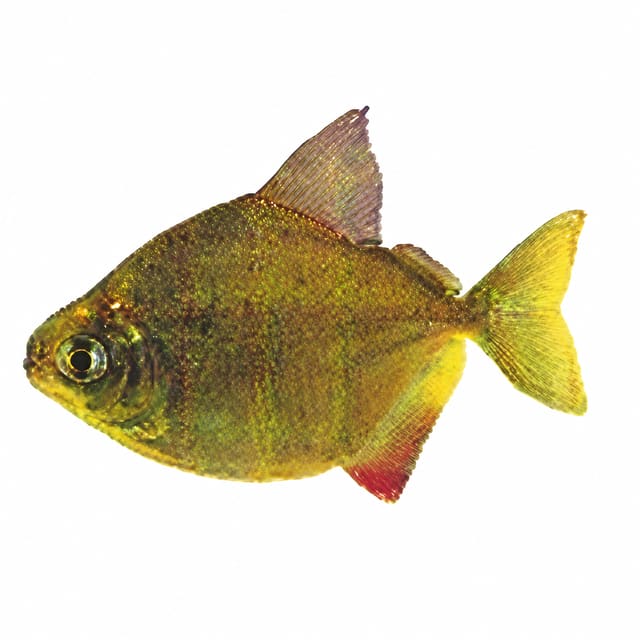
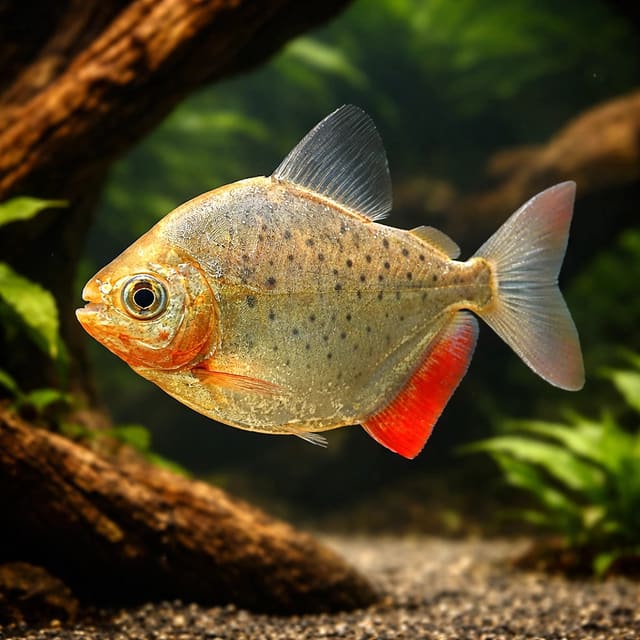
Blackberry Silver Dollars have the tall, laterally compressed profile associated with disk pacus and large silver dollars. The base colour is metallic silver to blue-grey. A dense charcoal, blue-black or purple-black blotch covers much of the central body, and the anal and pelvic fins may show orange or red. The depth and shape of the dark area can change with age, mood, lighting and individual variation.
Juveniles may be comparatively pale. A newly delivered fish can also look washed out while it recovers from the dark transport bag and adjusts to unfamiliar water. Judge condition by breathing, balance, fin posture and gradual feeding response rather than expecting full adult colour immediately. Do not intensify lighting to force a colour response; a calm environment usually does more.
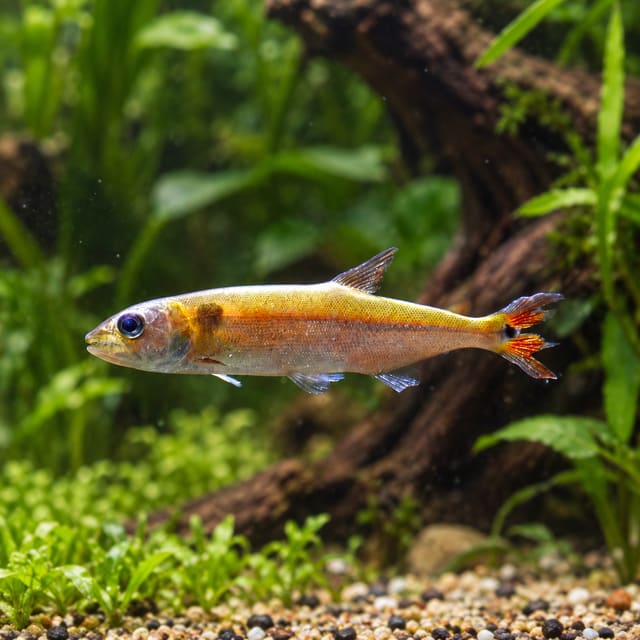
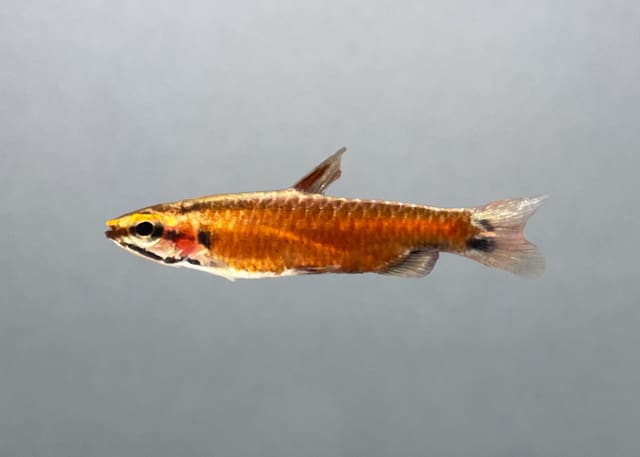
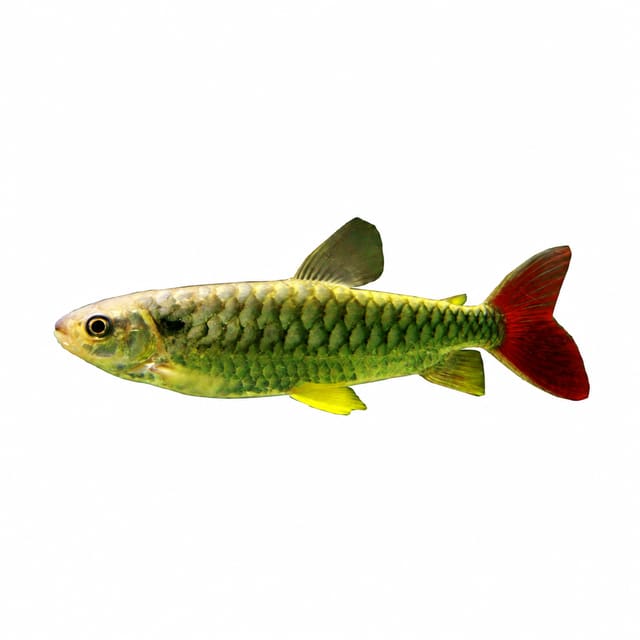
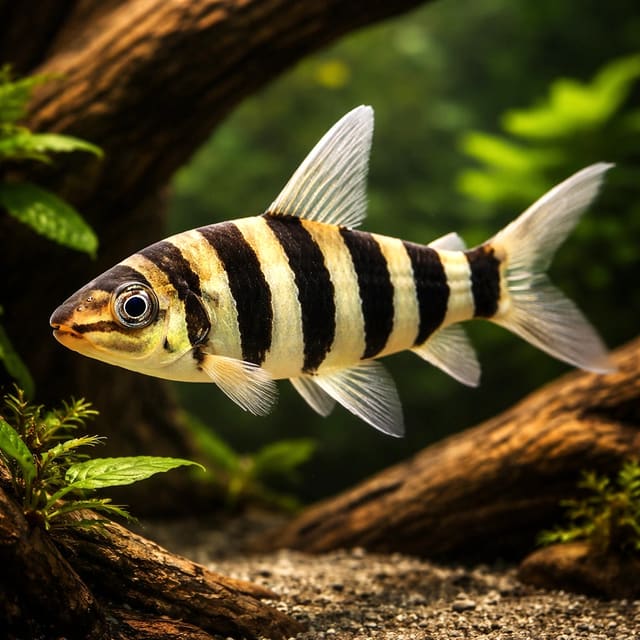
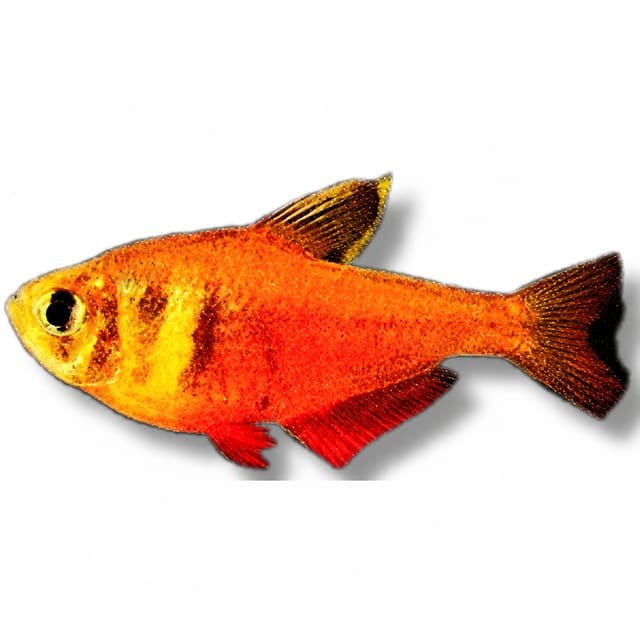
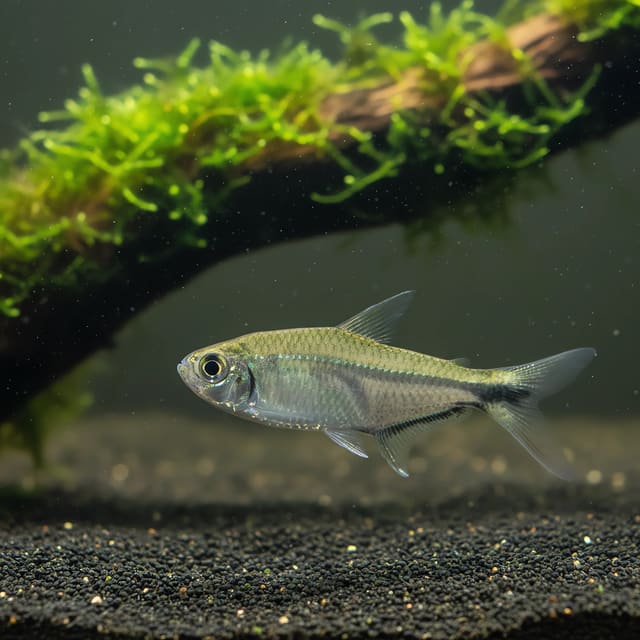
The four existing gallery images are representative digital illustrations of the Blackberry trade form. They are not photographs of the exact fish that will be selected for your order. They show the expected deep body, dark central blotch and warm lower-fin colour, but individual fish can be lighter, darker or differently marked.
There is no single defensible adult-size number for Lamax III. Retail reports for the Blackberry form range from roughly 15 cm to 30 cm, and the form has not been formally described in a way that would make every imported line directly comparable. For welfare planning, assume approximately 20-30 cm and remember that body depth makes this fish much more substantial than a slender fish of the same length.
Do not use the selected sale size to choose the permanent aquarium. A 3 cm or 5 cm juvenile still needs a plan for a broad adult body, fast group turns and the combined waste output of at least five or six fish. If your aquarium can only house the group while they are young, arrange the permanent upgrade before ordering rather than relying on an uncertain future rehome.
The exact lifespan of the Blackberry form is not reliably documented, so it is best treated as a long-term large-fish commitment without relying on a precise number. Good water quality, balanced nutrition, social housing and adequate space all influence longevity.
| Figure found online | What it refers to | How to use it |
|---|---|---|
| About 15 cm | Some domestic Blackberry retail lines | Possible, but too small to use as the only planning assumption |
| About 20-30 cm | Lamax III specialist reports | Our conservative practical planning range |
| 42 cm standard length | Maximum record for confirmed wild Myloplus schomburgkii | Important taxonomic context, not a promised size for this unresolved domestic form |
For a group of Blackberry Silver Dollars, treat 500 litres as a planning floor, not a universal guarantee. Aim for a tank at least 180 cm long, with enough front-to-back width for a group of deep-bodied fish to turn without colliding. A larger aquarium is the better choice when the fish approach the upper size reports, when the group is larger than six, or when other substantial fish share the system.
Length and width matter more than a tall but narrow litre figure. The group needs a clear midwater route across the aquarium and room to turn together. Leave the centre and front open, then place heavy structure around the back and ends so the fish can retreat without losing the swimming lane. A sparse, brightly exposed box can make nervous fish dash; a completely crowded aquascape removes the space they need. The useful middle ground is open water with shaded edges and visual breaks.
These fish can accelerate suddenly when startled. Site the aquarium away from repeated door slams, fast foot traffic and flashing light. Approach maintenance calmly and avoid trapping the group between nets and hard decor. A secure cover is essential because a frightened disk-shaped fish can leave the water with surprising force.
A smaller grow-out aquarium may be used only by an experienced keeper with a defined, ready upgrade path. It is not the permanent minimum and should not be used to justify buying the fish before the adult group aquarium exists.
Use stable tropical water at 24-28°C and approximately pH 6.0-7.5. Soft to moderately hard water is a practical target for the trade form. Avoid repeated chemical adjustment to chase a perfect decimal: a stable value within the suitable range is safer than daily swings caused by aggressive buffering.
A large group of active, plant-eating fish produces substantial solid waste. Use mature biological filtration plus effective mechanical prefiltration that can be cleaned without destabilising the biofilter. Provide broad surface movement and enough circulation to prevent low-oxygen pockets, while leaving calmer positions near structure. Match turnover to the aquarium and filter design rather than aiming a narrow jet directly at the fish.
Ammonia and nitrite should remain at zero. Keep nitrate and dissolved waste controlled through stocking discipline, feeding control and regular water changes. A weekly maintenance rhythm is a sensible starting point, but the required volume depends on the group, aquarium, feeding and measured water quality. Test before and after changes until you understand the system's real accumulation rate.
| Task | Routine | Reason |
|---|---|---|
| Observe the group | Daily, before feeding | Spot rapid breathing, isolation, injury or a fish being excluded |
| Remove plant-food remains | After each meal | Vegetables foul warm water if left to break down |
| Test ammonia and nitrite | Frequently in a new or changed setup | Both should remain at zero |
| Check nitrate and pH trend | At least weekly while learning the system | Shows whether the water-change schedule is sufficient and stable |
| Water change and substrate clean | Usually weekly, adjusted to test results | Controls dissolved and solid waste without relying on a fixed percentage |
| Clean mechanical media | As flow and debris require | Maintains oxygenation and prevents trapped vegetable matter from decaying |
Always condition replacement water and match its temperature closely. Large, sudden shifts in temperature, pH or mineral content can stress an entire group at once. Never add these fish to an uncycled aquarium, and do not assume a large tank is biologically mature simply because it contains a large volume of water.
Blackberry Silver Dollars are social, active midwater fish. Keep at least five or six, with more only where the aquarium's footprint and filtration support them. A proper group allows normal following, turning and hierarchy behaviour and can make the fish more secure. A single specimen or pair is more likely to remain nervous or direct all social pressure at one companion.
“Peaceful” does not mean passive. The fish are fast, strong and food-motivated. A group can dominate the feeding zone and may unsettle timid fish. Use an appropriately large container when moving them, avoid prolonged chasing and do not corner an adult against the glass.
Watch the group rather than relying on a label. Repeated chasing, one fish staying behind decor, torn fins, loss of appetite or frantic dashing can indicate insufficient space, poor group structure, incompatible tank mates or an exposed layout. Correct the cause instead of assuming the species is naturally aggressive.
The social minimum and the aquarium minimum must be considered together. Five or six juveniles may look lightly stocked at first, but the same group can become a major part of the aquarium's adult biomass. Calculate the permanent plan using the upper adult-size report, the body depth of each fish, the waste produced by a plant-rich diet and the needs of every existing tank mate. Do not fill the remaining space with other juveniles simply because the aquarium looks empty during the first months.
Whenever possible, introduce the planned Blackberry group together after quarantine. Fish added one at a time may face an established hierarchy, and each later addition creates another disease-introduction event. If stock availability forces staged purchasing, use a separate mature quarantine system, avoid large size mismatches and be prepared to rearrange structure when the new fish joins the group. Never place a newly delivered juvenile directly into an adult group without watching feeding access and physical safety.
Five is a commonly cited lower practical group size, while several specialist sources prefer six. Six provides a better social buffer, but only if the aquarium can support all six as adults. A larger shoal can look more natural and distribute social attention, yet adding fish does not solve cramped housing. The correct number is the largest socially appropriate group that the permanent footprint, filtration and maintenance routine can support without compromising water quality.
Do not deliberately buy a pair for breeding. Sexing is uncertain at sale size, Lamax III breeding information is sparse, and a pair does not meet the normal group need. If breeding behaviour ever occurs in a mature group, treat it as an advanced observation and protect water quality rather than separating a guessed male and female based on juvenile colour.
The safest companions are robust, peaceful fish of comparable size that accept similar warm, clean water and will not compete destructively for the same space. Large suitable catfish may use the lower level, while carefully chosen South American cichlids or other substantial characins can work in an aquarium large enough for every adult. Compatibility is still individual and depends on footprint, group size, feeding and the temperament of the other species.
Avoid very small, slow, delicate or long-finned fish that may be intimidated or overwhelmed at feeding time. Highly territorial cichlids are also poor choices because a conflict involving a fast shoal in a confined space can injure both sides.
Do not use a list of product names as a guarantee. Compare adult size, temperature, water chemistry, social needs, feeding speed and required tank area for every species. Our pages for Black-Barred Myleus, Spotted Silver Dollar, Schreitmuller’s Silver Dollar and Red Head Tapajos Geophagus are useful comparisons, not automatic stocking recommendations. Use the wider freshwater fish collection to research complete adult requirements before combining purchases.
| Potential companion | Assessment | What to verify |
|---|---|---|
| Robust, similarly sized peaceful fish | Potentially suitable | Adult size, water range, swimming level and feeding competition |
| Large peaceful catfish | Potentially suitable | Bottom area, diet, wood or cave needs and total waste load |
| Carefully chosen South American cichlids | Case by case | Territoriality, spawning aggression and whether the tank has enough separate zones |
| Very small, delicate or slow fish | Avoid | May be intimidated or unable to compete for food |
| Highly aggressive or territorial fish | Avoid | Collision, chasing and injury risk |
Build the diet around plant matter. Good staples include quality spirulina or herbivore pellets, vegetable-rich flakes, algae wafers and clean blanched vegetables such as courgette, spinach, romaine, peas or green beans. Rotate foods so the fish receive varied fibre, vitamins and particle sizes rather than one product every day.
Offer modest occasional frozen or prepared animal foods, such as brine shrimp, mysis or a suitable insect-based food, but do not let protein-heavy meals replace the plant-based foundation. The trade form is usually described as predominantly herbivorous or plant-focused omnivorous. Heavy meaty feeding increases waste and may not suit its digestive needs.
Spread food over a broad area so every fish can feed without colliding at one point. Juveniles may benefit from several small feeds; established larger fish can be managed with measured meals suited to the aquarium's maintenance capacity. Portion by body condition and water quality rather than by a rigid minute count. Remove uneaten vegetables before they soften and foul the water.
Watch for one fish hanging back. A timid individual can lose condition even when the group appears eager. Use more than one feeding point, provide food that remains available long enough for the slower fish, and investigate persistent exclusion. At the same time, avoid leaving large pieces in overnight merely to make feeding easier.
| Food type | Role | Use |
|---|---|---|
| Spirulina or herbivore pellets | Reliable plant-rich staple | Choose a size the current fish can take cleanly |
| Vegetable-rich flakes and wafers | Variety and broad distribution | Spread across more than one feeding area |
| Blanched courgette, spinach, romaine, peas or green beans | Fresh plant matter and fibre | Offer clean portions and remove remains promptly |
| Brine shrimp, mysis or suitable insect-based foods | Occasional supplement | Use sparingly rather than as the main diet |
| Large amounts of meat or mammal/poultry foods | Not appropriate | Avoid: poor dietary fit and excessive pollution risk |
Expect soft aquarium plants to be eaten, stripped or uprooted. Even a well-fed group may browse because plant damage is part of its normal feeding behaviour, not proof of hunger. Tough plants such as Anubias or Java fern sometimes survive when attached securely to wood, but they are not guaranteed to remain untouched. Artificial plants can provide cover if they are soft-edged and securely fixed.
Use sand or smooth fine gravel and choose decor without sharp points. Large wood pieces, rounded stones and shaded side areas are more useful than a dense carpet of delicate plants. The fish need visual security without losing open water. Any heavy item must be stable enough to withstand maintenance and a startled group.
Moderate to subdued lighting is usually more comfortable than an exposed high-intensity display. If plants require stronger light, create shaded zones and increase brightness gradually. Preserve surface movement and do not cover so much of the top that gas exchange or access for feeding and observation is impaired.
Have the aquarium fully cycled, heated, covered and stable before ordering. Confirm that the current pH and temperature are suitable, that the filter is mature, and that the group has open swimming room. Prepare plant-based food in sizes the selected juveniles can eat. Do not plan to cycle the aquarium while the fish are in transit.
On the confirmed delivery day, make sure someone is present to receive the parcel. Inspect the sealed bags promptly and follow the current acclimation instructions supplied with the order. Keep the aquarium lights low, avoid crowding the fish with a net, and give them time to settle before expecting a full feed. Do not add transport water to the aquarium unnecessarily.
Read the current delivery and Live Arrival Guarantee information before checkout. The policy explains the licensed live-animal courier, confirmed delivery window, packaging and claim evidence. The separate returns and Live Arrival Guarantee page explains the current replacement or refund process. Check both pages when ordering because delivery windows, eligibility and claim requirements can change. Arrange for someone to receive the fish throughout the confirmed delivery window.
Quarantine is strongly recommended for a rare, high-value group. Use a mature, covered system with enough turning room, reliable heating and filtration that is already cycled. Quarantine equipment should not share wet nets, siphons or filter media with the display aquarium. Observe breathing, faeces, skin, fins, appetite and group behaviour before moving the fish. Do not medicate automatically without a diagnosis; large sensitive fish can be harmed by unnecessary treatment, incorrect dosing or reduced oxygen.
When several fish show distress at the same time, check the environment first. Group-wide rapid breathing, surface crowding or sudden loss of balance can point to oxygen, temperature or water-quality trouble rather than an infectious disease appearing identically in every fish. Test ammonia, nitrite, pH and temperature immediately, confirm filter and air movement, and make a carefully matched emergency water change when water quality is unsafe.
| Observation | Possible causes to check | First response |
|---|---|---|
| Whole group breathing rapidly | Low oxygen, ammonia or nitrite, overheating, severe transport stress | Test water, increase safe aeration, verify temperature and correct the environmental cause |
| One fish hides and misses food | Hierarchy pressure, injury, incompatible size, early illness | Observe from a distance, provide multiple feeding points and inspect for damage |
| Repeated panic dashes | Exposed layout, sudden movement, bright light, reflections or cramped turning room | Reduce disturbance, add safe visual cover and review the usable footprint |
| Cloudy water after vegetables | Oversized portions, decaying food, dirty mechanical media | Remove remains, service mechanical filtration and review portion size |
| Faded colour after arrival | Normal transport stress, bright exposure, poor water quality or illness | Keep conditions calm and stable; judge breathing and behaviour before colour alone |
| New fin or body injuries | Sharp decor, collision, chasing or unsuitable tank mates | Remove the physical cause and separate only when safety requires it |
These are deep-bodied, active fish, so capture should be planned. Use a large soft net or rigid fish-safe container, lower the water level when appropriate and remove sharp obstacles before starting. Avoid prolonged chasing. If professional treatment is needed, give the aquatic veterinarian or experienced specialist the exact trade identity, current size, group history, water test results and any recent additions rather than relying on the old Myloplus schomburgkii label alone.
Choose Blackberry Silver Dollar only if you can house a proper group for its full life and accept the uncertainty that comes with an unresolved domestic form. It suits an experienced keeper who values a rare, dramatic shoal and already runs a long, mature aquarium with strong filtration. It is a poor choice for a new tank, a planted aquascape that must remain intact, a small mixed community or a buyer who wants one specimen as a centrepiece.
For broader guidance on ordering livestock, see our UK live-fish buying guide. If your aquarium sits close to any minimum or you are unsure about an existing tank mate, contact Tropical Fish Co before ordering with the tank dimensions, volume, current stock, temperature and pH.
It is often sold under that name, but the Blackberry/Lamax III trade form has not been securely assigned to true Myloplus schomburgkii. The careful label is Myleus sp. “Lamax III” or Myloplus cf. schomburgkii. The familiar species alias remains widely used in the aquarium trade, but it should not be presented as a settled identification.
Reports for the domestic form conflict from about 15 cm to 30 cm. Plan for approximately 20-30 cm and remember that its deep body and group requirement create more space demand than length alone suggests.
Use 500 litres as a planning floor for a group and prefer a tank at least 180 cm long. Choose more space when keeping a larger group, adding tank mates or planning for fish near the upper reported size.
No. This is a social fish that should normally be kept in a group of at least five or six. One fish or a pair can remain nervous and creates an unhealthy concentration of social pressure.
They are generally peaceful within a suitable large community, but they are fast, powerful and boisterous at feeding. They can intimidate small, slow or delicate fish, so choose companions that can feed and swim confidently alongside the group.
Usually. Soft plants are likely to be eaten or damaged even when the fish receive a good vegetable diet. Tough attached plants may survive, but a pristine planted aquascape is not a realistic expectation.
Use plant-rich pellets, spirulina foods, vegetable flakes and varied clean vegetables as the foundation. Small amounts of suitable frozen or insect-based food can be offered occasionally, but meaty food should not dominate.
No. The gallery contains representative digital illustrations, not photographs of the exact dispatch fish. Colour varies with age, line, mood, lighting and transport stress. The supplied trade identity is Blackberry/Lamax III, but each living fish is individual.
One quantity is one unsexed fish in the selected size. Increase the quantity only after confirming that the aquarium can house the complete social group at adult size.
No reviews for this item yet. Bought one? Honest reviews only, good or bad.
What customers say about ordering from us
I have a small group of long finned mountain minnows. So was delighted to be able to order ten of this variety to increase the genetics in my tank . The ones I recieved are healthy but it’s to early to give a verdict on wether they are of a long finned type since they are small currently.
Gordon Walker · 23 Sept 2026
100% success travel and "installation". Pleased with quality of purchase. The Siamese fighter a bit "shy" so have not yet seen him at his best yet but looking good. Happy customer. GG
George E Garratt · 21 Sept 2026
Reviews of our shop, collected by Judge.me, an independent third-party review collector. Newest first.