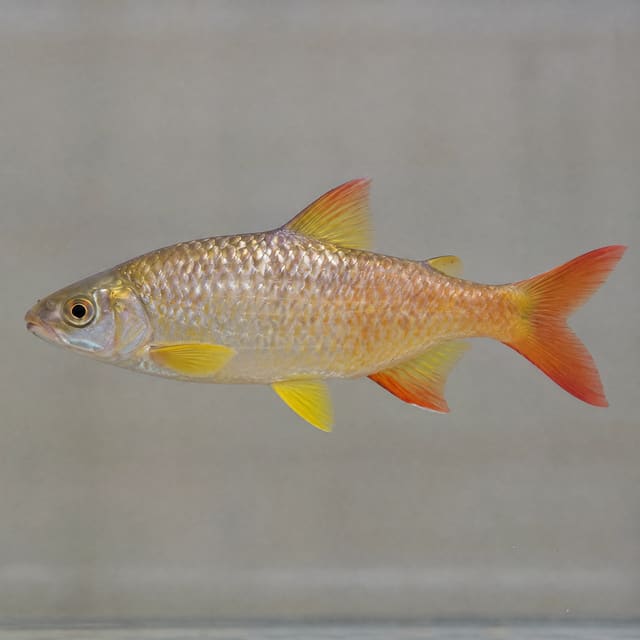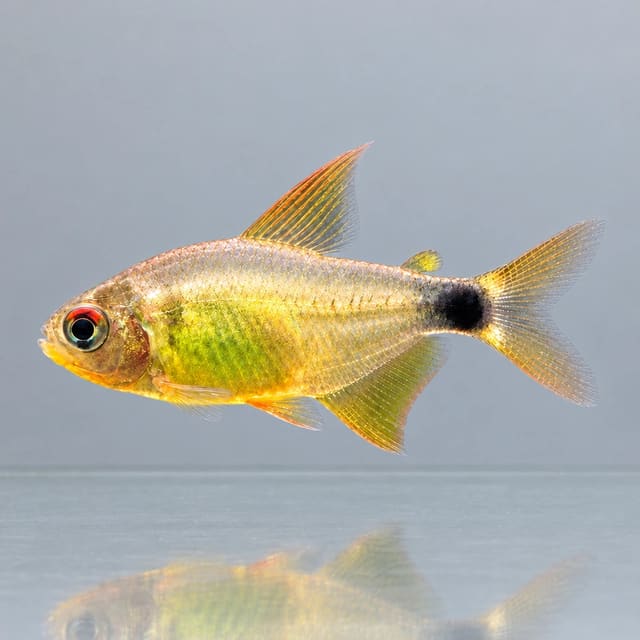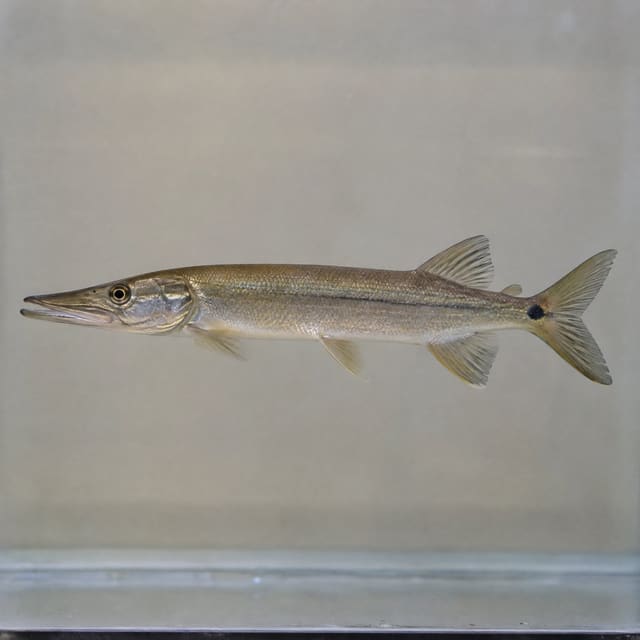
Expert
Manuel's Piranha (Serrasalmus manueli)
1181L
£136.39
The Black Piranha, also called the redeye piranha or rhom (Serrasalmus rhombeus), is a solitary South American predator that grows to about 40 cm, darkens with age and develops a deep red eye. It must live alone in an aquarium of at least 210 × 45 × 45 cm with strong filtration, a secure lid and heaters it cannot bite, and suits experienced keepers only. Sold individually as one live fish.
Serrasalmus rhombeus
The Black Piranha, also called the redeye piranha or rhom (Serrasalmus rhombeus), is a solitary South American predator that grows to about 40 cm, darkens with age and develops a deep red eye. It must live alone in an aquarium of at least 210 × 45 × 45 cm with strong filtration, a secure lid and heaters it cannot bite, and suits experienced keepers only. Sold individually as one live fish.
Read the full care guidance when planning conditions for your aquarium.
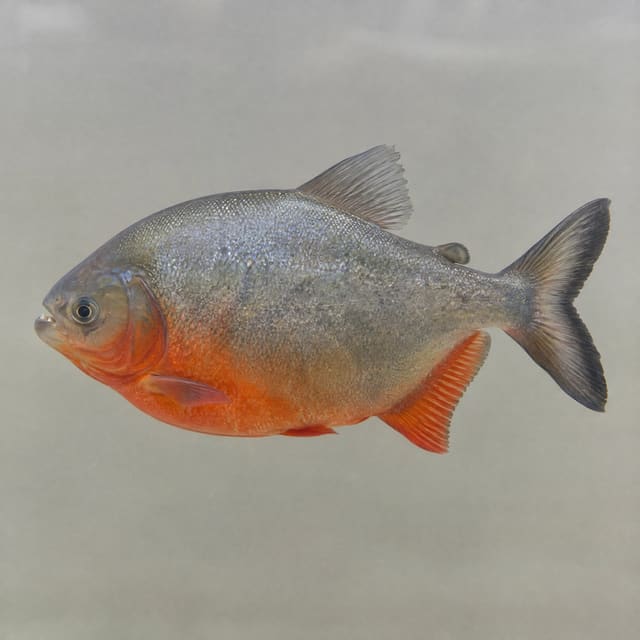
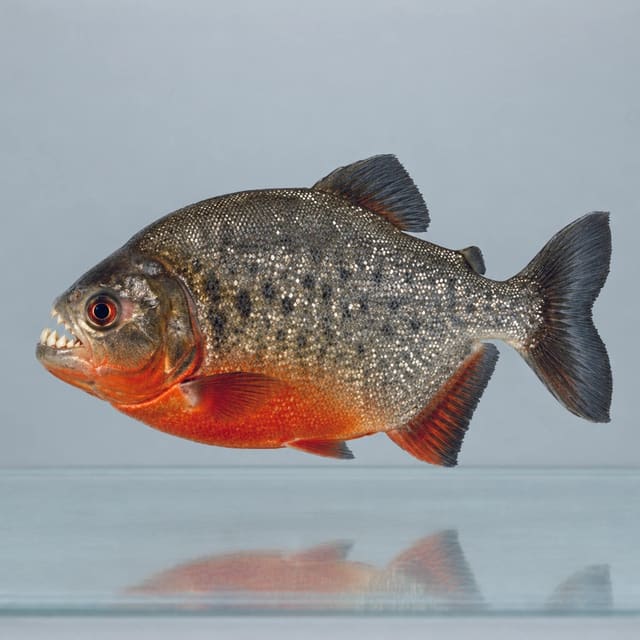
The Black Piranha (Serrasalmus rhombeus), also called the redeye piranha or simply the "rhom", is one of the largest and most impressive piranhas kept in aquariums. Adults are deep-bodied, dark grey to almost black with silvery flecks, and develop a striking deep red eye. It is a solitary predator that lives alone, grows to around 40 cm and can live for well over a decade, so it is a fish for experienced keepers with a large, dedicated aquarium.
FishBase records it from the Amazon and Orinoco basins, the rivers of the northern and eastern Guiana Shield, and coastal rivers of north-eastern Brazil. Adults live in rapids and deep zones of the main rivers. FishBase gives a maximum of 41.5 cm standard length and 3.8 kg, lists it as Least Concern on the IUCN Red List (assessed 2020), and describes it as timid and not aggressive, but with powerful teeth that can cause serious bites.
Seriously Fish calls it suitable only as a specimen fish for enthusiasts. This page explains what that involves, from the 2 m aquarium to safe maintenance, so you can decide with full information.
| Name | What it means |
|---|---|
| Black piranha | The trade name on this listing and the name Seriously Fish uses |
| Redeye piranha | The English name FishBase lists, after the adult's red eye |
| Rhom | Hobby shorthand from the species name rhombeus |
| "White piranha" | Also used for this species in the past, which Seriously Fish says has caused confusion |
| Serrasalmus rhombeus (Linnaeus, 1766) | The scientific name; S. niger is its best-known synonym |
| Serrasalmidae | The family of piranhas, pacus and silver dollars |
Seriously Fish notes that this species has one of the most tangled naming histories in the genus. Several authors suggest it is a complex of similar species, and named forms such as the Xingú form, "Diamond" fish and Peruvian "Jet Black" or "High-back" fish are traded. Browse our South American characins and tetras and characins for its relatives, and our centrepiece fish and rare and collector fish for other single-specimen species.
One purchase quantity supplies one live Black Piranha. The only option is "Standard": the fish is not graded into sizes, so it is sent at the size available on the day. Seriously Fish records no external differences between males and females (females in spawning condition are simply plumper), so sex cannot be chosen.
The photographs show an adult-type fish. Colour varies with the water a fish comes from: Seriously Fish notes that fish from turbid white waters are paler than those from clear or black water. Colour is also paler for a few days after travel.
Seriously Fish says juveniles lack the red eye until they reach about 12.5 cm, and that young fish are easily confused with other Serrasalmus species such as S. marginatus, S. sanchezi and S. compressus. It also warns that some dealers attach false locality names to raise prices. We sell this fish only under its accepted scientific name and do not claim a locality.
Seriously Fish gives a maximum of 450 mm standard length and FishBase 41.5 cm. Seriously Fish rates the species difficult because the aquarium must be at least 2 m long, even though only one fish is kept. Our tank volume calculator turns dimensions into litres.
| Planning point | Figure | Source |
|---|---|---|
| Adult size | 41.5 cm standard length and 3.8 kg; 450 mm standard length | FishBase; Seriously Fish |
| Minimum aquarium for one fish | 210 × 45 × 45 cm, about 425 litres | Seriously Fish |
| Filtration | Turnover of four to five times the volume per hour; Seriously Fish suggests two filters rated about 850–1,065 litres per hour each | Seriously Fish |
| Heating | External or in-line heaters, or a very sturdy guard, because the fish bite equipment | Seriously Fish |
| Lid | A secure lid is recommended | OATA |
| Lifespan | Most live more than ten years | Seriously Fish |
Seriously Fish recommends a well-oxygenated set-up with a sandy substrate and driftwood roots or branches for cover; plants can be tried but may be nipped. Juveniles in the wild live among dense submerged vegetation, so a young fish settles better with plenty of cover. OATA's care sheet for aggressive species adds that all ornaments and rocks must be secured so a large fish cannot knock them over, that heaters must be protected, and that the substrate must be easy to keep clean.
The two main sources give different ranges. FishBase is narrower and softer; Seriously Fish is broader. Aim for the overlap and keep it steady.
| Value | FishBase | Seriously Fish | Our suggested target |
|---|---|---|---|
| Temperature | 23–27°C | 22.2–27.8°C | 24–27°C |
| pH | 5.8–7.0 | 4.5–7.5 | 6.0–7.0 |
| Hardness | Up to 10 dH | 1–20 dGH | Soft to medium, up to about 10 dGH |
| Ammonia and nitrite | Zero (OATA) | Zero | |
| Nitrate | No more than 20 mg per litre above tap water (OATA) | As low as you can keep it | |
UK tap water ranges from very soft to very hard, so test yours before setting up. Treat it with a dechlorinator, test pH and general hardness, and enter the numbers into our water matcher. If your water is hard, our water chemistry guide explains how to soften it gradually, for example by blending with reverse osmosis water; aim for a stable value rather than a perfect one.
A large predator fed on whole shellfish and fish produces a heavy waste load. Seriously Fish considers weekly water changes of up to 50% mandatory, more than OATA's general minimum of about 25% a week. The aquarium must be fully cycled, with ammonia and nitrite at zero, before the fish arrives. Our aquarium filtration guide explains how to size and maintain filtration for a big fish.
In the wild the species is an opportunist. Seriously Fish lists fins and flesh of other fish, smaller fish, insects and crustaceans, plus scavenged carcasses, and FishBase adds crabs, lizards and beetles. New fish may need weaning onto dead foods, and Seriously Fish notes that a short fast can help, especially with larger or newly transported fish.
| Stage | Foods suggested by Seriously Fish | How often |
|---|---|---|
| Juveniles | Live or frozen bloodworm, such as live bloodworm, plus Tubifex, Artemia and chopped prawn | No more than once a day (OATA) |
| Adults | Whole mussels and cockles, for example frozen cockle meat, prawns, chopped squid, whitebait and live earthworms | Two or three times a week |
| Prepared food | OATA suggests large pellets sized for big fish, such as large carnivore sticks, if the fish accepts them | As part of the meals above |
OATA advises never feeding live fish to aquarium residents, and Seriously Fish warns that feeder fish such as livebearers and small goldfish can introduce disease and parasites. Seriously Fish also advises against large amounts of mammal or bird meat, such as beef heart or chicken, because the fats can cause fat deposits and organ damage. Feed with tongs, remove leftovers quickly, and do not overfeed: OATA notes that uneaten food breaks down into toxic waste.
OATA recommends double-bagging fish with sharp teeth, so a bite cannot cause a leak. Read our delivery and live arrival information before ordering, and have the aquarium running, matured and tested before the fish arrives. Our guide on how to acclimatise new fish covers the method in detail; OATA's steps are below.
OATA advises close monitoring of water quality during the first week. A new piranha is often nervous and pale, and may hide in the wood until it settles.
Seriously Fish is clear that the Black Piranha is solitary by nature and not gregarious, and that several kept together will fight until only one is left. It is not a community fish, and Seriously Fish describes reports of it living with catfish or its own kind as tenuous. OATA's care sheet for aggressive species says most should not be housed with other species. That sheet also advises groups of at least five for piranhas in general, but that advice fits shoaling species such as the Red-Bellied Piranha, not this one.
| Suits | Avoid |
|---|---|
| Living alone in its own large aquarium | Any other fish, including catfish and plecos |
| A calm room where the tank is not knocked or startled | Other Black Piranhas or other piranha species |
| Owners who can maintain the tank with long tools | Shrimp, snails and other invertebrates |
If you want a group of piranhas, the Red-Bellied Piranha is the shoaling choice. For a large serrasalmid that eats mostly plant food, see the Red-Bellied Pacu or, on a smaller scale, the Silver Dollar.
FishBase lists the Black Piranha as traumatogenic, meaning it can cause wounds, and notes its powerful teeth. Seriously Fish says piranhas bite mainly when threatened and are not the monsters the media portrays, but asks for care during maintenance. OATA's hazardous aquatic animals guidance advises suitable protective equipment such as gloves and a way of keeping the fish away from your hands while cleaning, and OATA's aggressive species sheet recommends long rubber gloves.
OATA also reminds owners of the Animal Welfare Act 2006 duty of care, and that aquarium fish must never be released into the wild; it is illegal and harmful. If you can no longer keep the fish, rehome it to an experienced keeper or ask us for advice.
OATA describes a healthy fish as having clear, bright eyes, undamaged fins, intact scales, no ulcers or bumps, normal swimming and steady breathing. Look daily for changes in:
Seriously Fish notes that adults become less active as they mature, so a slower older fish is normal. If anything else changes, test the water first, then contact us for advice.
Seriously Fish says the species has rarely bred in captivity and is not known to have bred in the hobby, mainly because of the space needed to stop the fish killing each other. Fish at Duisburg Zoo in Germany spawned in the 1970s in a very large, heavily planted aquarium of 1,200 gallons; the eggs were laid among aquatic moss and the adults defended the area. Young raised separately and returned after a year were tolerated until about 15 cm, when the parents attacked them.
Yes. Black piranha, redeye piranha and rhom are all names used for Serrasalmus rhombeus. Seriously Fish adds that "white piranha" has also been used for it, and that S. niger is its best-known synonym.
FishBase gives a maximum of 41.5 cm standard length and 3.8 kg; Seriously Fish gives 450 mm standard length. Plan for a deep-bodied fish of around 40 cm.
Seriously Fish gives a minimum of 210 × 45 × 45 cm, about 425 litres, for one fish, and rates the species difficult because the tank must be at least 2 m long. Bigger is better for water quality.
No. Seriously Fish says this species is solitary and that several kept together will fight until only one is left. OATA advises groups of at least five for piranhas in general, but that applies to shoaling species such as the red-bellied piranha, not to this one.
It can bite seriously: FishBase lists it as traumatogenic and notes its powerful teeth, although it describes the fish as timid. Seriously Fish says it bites mainly when threatened. Keep hands out of the tank when you can, use long-handled tools and wear long gloves for maintenance.
Young fish take bloodworm, brine shrimp and chopped prawn; adults take whole mussels, cockles, prawns, squid, whitebait and earthworms. Seriously Fish suggests feeding adults two or three times a week. Avoid beef heart and chicken.
No. OATA advises never feeding live fish to aquarium fish, and Seriously Fish warns that feeder fish such as livebearers and small goldfish can bring in disease and parasites.
Juveniles lack the deep red eye until they reach about 12.5 cm, according to Seriously Fish. Young fish are also easily confused with other Serrasalmus species, which is why we sell this fish only under its accepted scientific name.
Seriously Fish says most live for more than ten years and become less active as they mature, so this is a long-term commitment.
No reviews for this item yet. Bought one? Honest reviews only, good or bad.
What customers say about ordering from us
Easy website plenty of info on fish your buying great to pick a time slot
TRACEY DURRANT · 7 Oct 2026
Got some lovely fish thank you
Kevin Mackie · 7 Oct 2026
Reviews of our shop, collected by Judge.me, an independent third-party review collector. Newest first.
Moved by UK carriers licensed to handle live animals
Hand-packed with oxygen bags, poly box, heat pack
Email photos the same day; an optional unboxing video helps us review problems faster — claim terms apply
Klarna & PayPal Pay in 3 at checkout