Expert
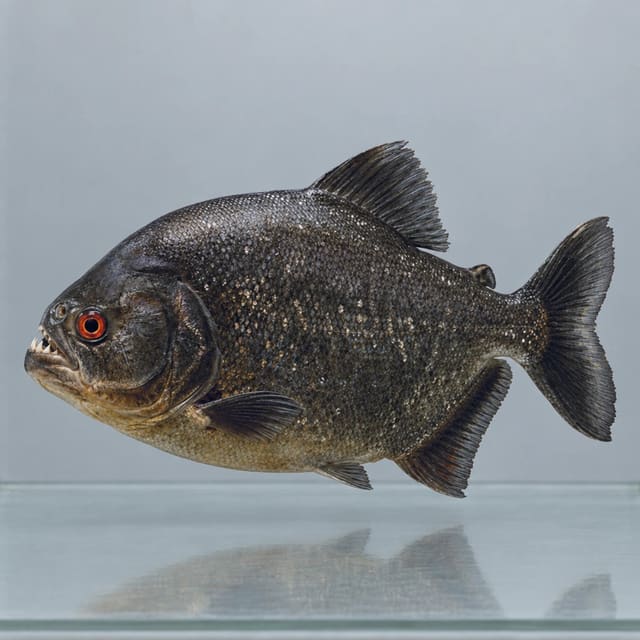
Black Piranha (Serrasalmus rhombeus)
23–27°C · pH 6–7
£136.39
Manuel's Piranha (Serrasalmus manueli), also sold as the Manny or green tiger piranha, is a solitary predator from the Amazon and Orinoco basins that reaches 36-43.5 cm standard length. It needs an aquarium of its own at least two metres long, powerful filtration, a secure lid and dead meaty foods. Sold singly: one live fish, for experienced keepers only.
Adult size is the maximum length this species reaches at full maturity (scientific sources). The livestock you receive will be younger and smaller. Product-photo provenance and any image-specific limitations are stated on the listing.
Serrasalmus manueli
Manuel's Piranha (Serrasalmus manueli), also sold as the Manny or green tiger piranha, is a solitary predator from the Amazon and Orinoco basins that reaches 36-43.5 cm standard length. It needs an aquarium of its own at least two metres long, powerful filtration, a secure lid and dead meaty foods. Sold singly: one live fish, for experienced keepers only.
Adult size is the maximum length this species reaches at full maturity (scientific sources). The livestock you receive will be younger and smaller. Product-photo provenance and any image-specific limitations are stated on the listing.
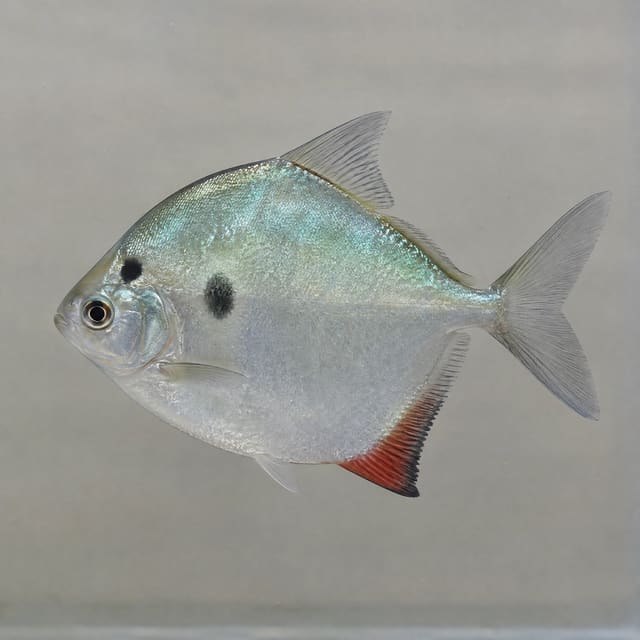
Manuel's piranha (Serrasalmus manueli) is a large, deep-bodied piranha from the Amazon and Orinoco river systems of northern Brazil and Venezuela. In the trade it is also sold as the Manny or the green tiger piranha. It is one of the most handsome members of its genus, with a greenish sheen over silver flanks, a bold dark spot behind the gill cover and red marks on the gill cover and lower jaw, and it grows into an impressive, solitary predator.
This page is deliberately frank. Manuel's piranha is a specimen fish for experienced keepers with a very large aquarium. It cannot share a tank with other fish, it needs a tank of its own about two metres long, and it lives for more than ten years. If that suits you, few freshwater fish are as striking. If it does not, our Red-Bellied Piranha and the rest of our centrepiece fish are worth comparing first.
Seriously Fish records the species from the Rio Negro and Rio Xingu and from tributaries such as the Casiquiare, Atabapo and Cunucunuma, in habitats ranging from dense forest to the open Llanos grasslands of Venezuela, where the water is clear, sunlit and full of plants. Adults are usually caught in deep, flowing sections of the main river channels, in both blackwater and clear or white water. FishBase gives the authors as Fernández-Yépez and Ramírez, 1967, and places the species in Serrasalmidae, the piranha and pacu family.
| Feature | What to look for |
|---|---|
| Body | Deep, laterally flattened and powerful, with a blunt head and a strong lower jaw |
| Sheen | An overall greenish sheen; the similar S. gouldingi has a blue sheen |
| Shoulder spot | A dark humeral spot behind the gill cover, more prominent than in S. gouldingi |
| Red markings | Red on the gill cover (operculum) and on the lower jaw |
| Young fish | Juveniles of many Serrasalmus develop their adult pattern as they mature, so a young fish can look plainer |
Those identification points come from Seriously Fish, which also notes that photographs of this fish have been mislabelled in the past and that some geographic forms may one day be described as separate species. The genus has 24 described species and is overdue a full revision. In South America the word piranha belongs properly to Pygocentrus; fish of the genus Serrasalmus go by other names such as pirambeba, and its native name in Venezuela is caribito parguasero. FishBase explains the genus name as Latin for "saw" and "salmon".
One purchase supplies one live Manuel's piranha. The listing has a single option rather than graded sizes. Seriously Fish notes that adults are rarely available, so expect a young fish, and ask us for the current size before ordering if it affects your plans. Our photographs show the species, not your individual fish: spotting, the amount of red on the throat and the depth of colour vary between fish and change as they grow.
Seriously Fish reports high mortality among imported fish because they are very sensitive to transport, so the first days after arrival matter: have the aquarium ready, cycled and quiet before you order. Our delivery and Live Arrival Guarantee terms explain dispatch days and what to do if anything goes wrong on arrival.
| Question | You are ready if |
|---|---|
| Aquarium | You have, or will have, a cycled tank about 210 x 75 cm (roughly 1,181 litres) |
| Filtration | You can run a large canister or sump with four to five turnovers an hour |
| Tank mates | The piranha will live alone |
| Food | You can buy and store frozen mussel, cockle, prawn and fish |
| Commitment | You can care for it for more than ten years |
Keeping a piranha in a home aquarium is legal in Great Britain, but two pieces of law are worth knowing. First, non-native fish in England and Wales are controlled under the Import of Live Fish Act. The government's guidance links to a checklist of freshwater fish genera that may be kept in indoor aquaria for ornamental purposes under a general licence. The current version (V7, updated 13 October 2026) lists Serrasalmus with no excluded species, so Manuel's piranha may be kept indoors. The licence covers indoor aquaria only, not ponds.
Second, the Schedule of the Dangerous Wild Animals Act 1976, in both its England and Wales and its Scotland versions, lists mammals, birds, reptiles and some spiders and scorpions but no fish, so no dangerous wild animal licence is needed. If you live elsewhere in the UK, check your local rules. Wherever you are, OATA reminds keepers that releasing any aquarium fish into the wild is illegal, and that the Animal Welfare Act 2006 gives every owner a duty of care.
Sources agree that Manuel's piranha is big, but not on the exact maximum. Both measure standard length, from the snout to the base of the tail, so the full fish is longer.
| Source | Maximum size | Aquarium |
|---|---|---|
| FishBase | 36.0 cm SL, 2.5 kg | Not given |
| Seriously Fish | 435 mm SL | Base 210 x 75 cm, about 1,181 litres; at least 2 m long |
| For comparison: Red-Bellied Piranha (Seriously Fish) | 350 mm SL | Base 240 x 90 cm, about 1,296 litres |
Seriously Fish describes the species as particularly active and sometimes skittish when its needs are not met, which is why length matters more than height: give it a long run of open water. Use our tank volume calculator to check what your aquarium really holds.
A young piranha will not stay small for long. If you start it in a smaller, mature aquarium, have the final tank budgeted, built and cycled before it is needed, because a fish that outgrows its tank becomes stressed, nervous and hard to rehome. OATA's advice for every aggressive species is to buy the largest tank practical for the fully grown fish.
Seriously Fish recommends a well-oxygenated aquarium with a sandy floor and large driftwood roots and branches. Cover from the wood helps the fish feel secure and calms it, and dim to moderate lighting suits it better than bright light. Hardy plants such as Vallisneria or Java fern (Microsorum) can be tried, but some members of the genus eat plant matter, so expect nibbled leaves.
| Item | Why |
|---|---|
| Fine sand | Easy to clean and does not injure the fish |
| Large, secured driftwood | Cover and calm; OATA advises securing all decor so a big fish cannot topple it |
| Heater outside the tank, or in a sturdy guard | Seriously Fish advises external mounting; OATA says heaters must be protected |
| Heavy, close-fitting lid | OATA recommends a secure lid for aggressive fish |
| Quiet position | Away from doors, draughts, direct sun, noise and vibration |
Manuel's piranha comes from soft, slightly acidic to neutral rivers, but it does not need extreme water. Seriously Fish notes that wild sites have been measured as low as pH 4.0 and says this does not need to be copied.
| Value | Target | Source |
|---|---|---|
| Temperature | 24–27°C | Seriously Fish |
| pH | 6.0–7.5 | Seriously Fish |
| General hardness | 5–15 °dGH | Seriously Fish |
| Ammonia and nitrite | 0 mg/l | OATA |
| Nitrate | No more than 20 mg/l above your tap water | OATA |
UK tap water ranges from very soft to very hard depending on where you live, so test yours or check your water company's report, then compare it with these values in our water matcher. Our water chemistry guide explains pH and hardness, and our tropical tank temperature guide covers heating a large aquarium evenly. Always treat new water with a dechlorinator that removes chlorine and chloramine.
A piranha eats rich, meaty food and produces a lot of waste, and Seriously Fish says water quality must be very high. It suggests an external canister filter or a sump, with the return running the length of the tank, and as an example three large filters together giving a turnover of four to five times the tank volume every hour. A spray bar that ripples the surface, plus one or two powerheads, adds oxygen and gentle flow. Our guide to aquarium filtration explains how to size it, and the nitrogen cycle guide explains why the filter must be mature before the fish arrives.
| Task | How often |
|---|---|
| Partial water change | Weekly: at least 25% (OATA), up to 50% (Seriously Fish) |
| Test ammonia, nitrite, nitrate, pH and hardness | At least weekly |
| Remove uneaten food | After every meal |
| Rinse filter media in removed tank water, never tap water | When flow drops |
| Check the heater, its guard and the lid | Weekly |
In the wild, Manuel's piranha eats the fins and scales of other fish, smaller fish and insects, and occasionally nuts, fruit and seeds. In the aquarium, Seriously Fish says most can be weaned onto dead foods over time; some resist at first, and a short fast can help, especially with larger or newly transported fish.
| Stage | Foods |
|---|---|
| Juveniles | Bloodworm, Tubifex, brine shrimp and chopped prawn, live or frozen |
| Adults | Whole mussels, cockles, prawns, chopped squid, whitebait and earthworms |
| Avoid | Beef heart, chicken and other mammal or bird meat, and live feeder fish |
From our range, frozen mussel meat, frozen cockle meat, frozen smelts, large frozen krill and earthworms suit a growing fish, while frozen brine shrimp and frozen Tubifex suit a small one. Seriously Fish warns that piranhas cannot fully process some fats in mammal and bird meat, which can lead to fat deposits and organ damage, and that feeder fish carry a risk of disease and parasites. OATA goes further: live fish must not be used as food.
How often? Seriously Fish feeds adults only two or three times a week; OATA advises feeding aggressive fish no more than once a day. A young, growing fish can take a small meal most days; an adult needs far less. Offer what it eats in a few minutes, use long feeding tongs, and remove leftovers so they do not pollute the water.
Before the fish arrives, check that ammonia and nitrite read zero. OATA's floating-bag method is simple: switch off the aquarium lights, float the sealed bag for 10 minutes so the temperatures match, then add small amounts of tank water to the bag over up to 20 minutes. Net the fish into the tank and throw the bag water away rather than adding it to the aquarium. For a larger fish, OATA describes drip acclimatisation through a thin airline instead. Our guide to acclimatising new fish walks through both.
Keep the lights low for the rest of the day and do not feed until the next day. In the first week, test the water often, keep people away from the glass, and expect a nervous fish that hides in the wood; confidence builds once it learns the routine.
Seriously Fish notes that piranhas usually bite only when threatened and are not the monsters of films, and FishBase lists the species as harmless, but the teeth are sharp and care is needed during maintenance. OATA advises double-bagging sharp-toothed fish for transport, wearing long-sleeved rubber gloves when working in the tank, washing your hands afterwards and never starting a siphon by mouth. Work with the fish in view, keep your hands out of the water at feeding time, and use a net or container rather than your hands to move it.
This is the most important point on the page. OATA's general sheet for aggressive fish says piranhas need groups of at least five, but that advice fits shoaling piranhas such as the Red-Bellied Piranha. For Manuel's piranha, Seriously Fish is clear: it is not gregarious, it is a poor tank mate for other species and needs a tank of its own, and if two or more are kept together the adults fight until only one remains.
| Suits | Avoid |
|---|---|
| Living alone in a large, wood-filled aquarium | A second Manuel's piranha or any other piranha |
| Hardy plants it may nibble | Community fish of any size |
| A quiet room and a regular routine | Slow or long-finned fish, which it may bite |
| Dead, meaty foods from tongs | Shrimps, snails and other invertebrates |
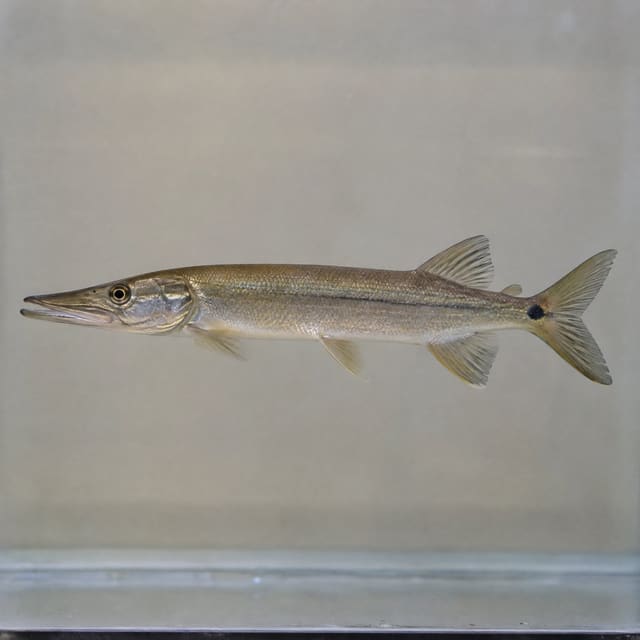
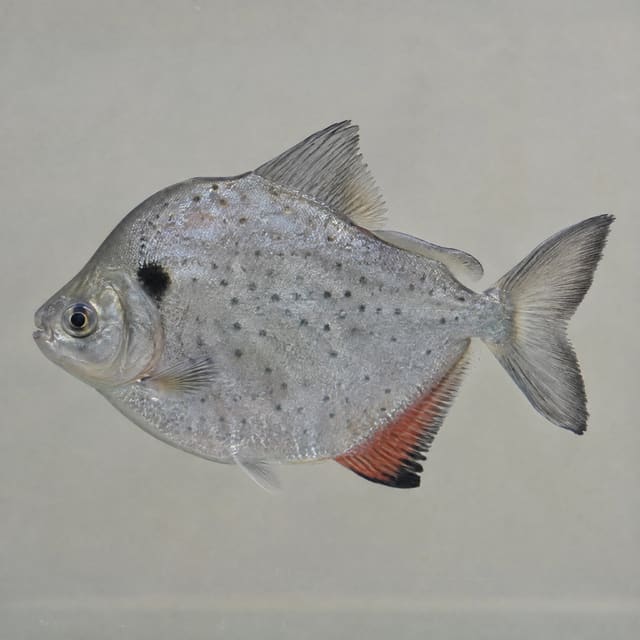
If you want a group of characins in a big South American aquarium, look instead at the Silver Dollar or Red-Bellied Pacu, relatives in the same family, or the Gar Characin, all in our South American characins range. Never add them to the piranha's tank. Our stocking calculator helps plan a separate aquarium.
A healthy fish has clear, bright eyes, intact fins and scales, steady breathing and a good appetite. These warning signs follow OATA's guidance:
| Sign | First step |
|---|---|
| Hanging at the surface or gasping | Test ammonia and nitrite and check oxygenation |
| Clamped fins, flicking or shimmying | Test the water, then look for parasites |
| White spots or fluffy growths | Test the water first, then seek advice before treating |
| Refusing food for days after arrival | Keep the lights low and offer a different dead food at dusk |
| Sudden darkening, paleness or erratic swimming | Check the temperature and the water values |
Most problems in large predators start with water quality, so the first response is almost always a test and a partial water change.
Seriously Fish records no external differences between males and females, and the species, like most of its genus, has not been bred in captivity, so we do not give a breeding method. Most piranhas live for more than ten years and become less active with age. FishBase lists Manuel's piranha as Least Concern on the IUCN Red List (assessed 2020). Explore more large, unusual species in our rare and collector fish collection.
It is Serrasalmus manueli, a large South American piranha from the Amazon and Orinoco basins in northern Brazil and Venezuela. The trade also calls it Manny or the green tiger piranha. It has a greenish sheen, a clear dark shoulder spot and red marks on the gill cover and lower jaw, and it is a solitary fish rather than a shoaling one.
Large. FishBase records 36 cm standard length and 2.5 kg, and Seriously Fish gives 43.5 cm standard length. Standard length leaves out the tail, so a full-grown fish is longer still. Plan the aquarium around the adult, not the size that arrives.
Seriously Fish recommends a base of 210 x 75 cm, about 1,181 litres, and a tank at least two metres long. It needs a big external filter or sump, a guarded or external heater and a secure lid.
No. Seriously Fish says it is not gregarious, needs a tank of its own and that adults kept together fight until only one remains. OATA's general advice of five or more applies to shoaling piranhas such as the Red-Bellied Piranha, not to this species.
Yes, in an indoor aquarium. The genus Serrasalmus is on the government checklist of freshwater fish that may be kept in indoor aquaria in England and Wales under the general licence, and the Dangerous Wild Animals Act 1976 lists no fish. Outdoor ponds are not covered, and releasing any aquarium fish is illegal.
Seriously Fish notes that piranhas usually bite only when they feel threatened, and FishBase lists the species as harmless, but the teeth are sharp. Never put your hands in the tank while it is feeding, use long tongs and long gloves for maintenance, and never siphon by mouth.
Dead meaty foods: mussels, cockles, prawns, chopped squid, whitebait and earthworms for adults, and bloodworm, brine shrimp, Tubifex and chopped prawn for juveniles. Seriously Fish feeds adults two or three times a week. Never feed live fish; OATA advises against it.
One live fish per purchase. The listing has a single option rather than graded sizes, and adults are rarely imported, so expect a young fish. Ask us for the current size before ordering if it matters for your set-up.
No reviews for this item yet. Bought one? Honest reviews only, good or bad.
What customers say about ordering from us
Easy website plenty of info on fish your buying great to pick a time slot
TRACEY DURRANT · 7 Oct 2026
Got some lovely fish thank you
Kevin Mackie · 7 Oct 2026
Reviews of our shop, collected by Judge.me, an independent third-party review collector. Newest first.
Moved by UK carriers licensed to handle live animals
Hand-packed with oxygen bags, poly box, heat pack
Email photos the same day; an optional unboxing video helps us review problems faster — claim terms apply
Klarna & PayPal Pay in 3 at checkout