−12%
Moderate
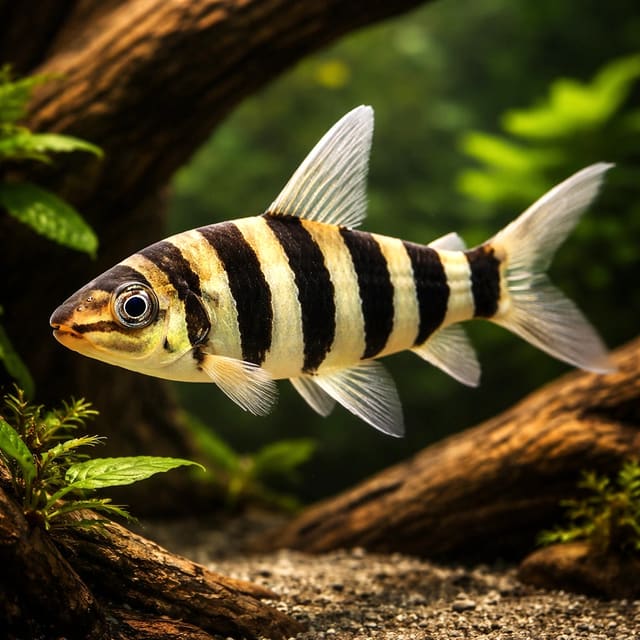
Leporinus affinis
23–27°C · pH 6.5–7.8
£15.83£17.99

The Red-Bellied Piranha (Pygocentrus nattereri) is a freshwater serrasalmid from the Amazon, Paraguay–Paraná and Essequibo basins and north-eastern Brazilian coastal rivers that reaches 50 cm. It suits advanced keepers with about 1,296 litres, either one fish or a group of at least five, and 24–27°C at pH 5.5–7.5. Sold individually in 1.5–10 cm and XL dispatch sizes.
Adult size is the maximum length this species reaches at full maturity (scientific sources). The livestock you receive will be younger and smaller — pick a size above for the actual shipping size. Product-photo provenance and any image-specific limitations are stated on the listing.
Pygocentrus nattereri
Minimum of 2 per order.
The Red-Bellied Piranha (Pygocentrus nattereri) is a freshwater serrasalmid from the Amazon, Paraguay–Paraná and Essequibo basins and north-eastern Brazilian coastal rivers that reaches 50 cm. It suits advanced keepers with about 1,296 litres, either one fish or a group of at least five, and 24–27°C at pH 5.5–7.5. Sold individually in 1.5–10 cm and XL dispatch sizes.
Adult size is the maximum length this species reaches at full maturity (scientific sources). The livestock you receive will be younger and smaller — pick a size above for the actual shipping size. Product-photo provenance and any image-specific limitations are stated on the listing.
Maintain these water conditions for optimal health and vibrant colors
The Red-Bellied Piranha (Pygocentrus nattereri) is a large freshwater fish in the family Serrasalmidae, which includes piranhas and pacus. It occurs in South America across the Amazon, Paraguay–Paraná and Essequibo river basins, north-eastern Brazilian coastal rivers and the Uruguay River in Brazil. FishBase records a maximum of 50 cm standard length, so this is an adult-scale aquarium commitment rather than a small-fish display.
This fish suits an advanced keeper who can provide one of the very largest private aquaria, substantial filtration and a carefully chosen social plan. Its powerful dentition can inflict serious bites, it produces a substantial waste load, and group members form hierarchies. Those combined demands make preparation, cautious maintenance and consistent water testing essential.
Wild adults feed mainly around dusk and dawn on insects, worms and fish. FishBase also describes a lurking-then-dashing daytime behaviour and hierarchies within small schools. Aquarium care should therefore be planned around a powerful, alert animal rather than the exaggerated idea that it spends every moment attacking.
| Suits | Not suited to |
|---|---|
| Advanced keepers with about 1,296 litres | Small or ordinary community aquaria |
| A single fish or a group of at least five | Groups of two to four |
| Dedicated, heavily filtered freshwater systems | Unfiltered or immature aquaria |
| Keepers prepared for cautious maintenance | Anyone seeking a routine mixed-species display |
Plan about 1,296 litres with a base measuring 240 × 90 cm. Seriously Fish recommends those dimensions for this species and describes it as suitable only for public installations or the very largest private aquaria. That footprint and volume apply from the start of the adult plan; a small dispatch size does not turn a smaller aquarium into a lifetime home.
Keep the aquarium at 24–27°C and pH 5.5–7.5. The temperature is the overlap of the FishBase environment range and the Seriously Fish aquarium range, while both references share the stated pH range. Use 2–12 dGH, the aquarium hardness range from Seriously Fish. Aim for stable conditions inside these limits rather than repeatedly moving the values between their extremes.
| Decision | Plan |
|---|---|
| Recorded adult size | Up to 50 cm standard length |
| Aquarium | About 1,296 litres; 240 × 90 cm base |
| Social choice | One fish or at least five; the group is preferred |
| Temperature | 24–27°C |
| pH | 5.5–7.5 |
| Hardness | 2–12 dGH |
Our advanced care assessment reflects the space, waste control, social decisions and bite risk involved. The aquarium, filtration and safe working method should all be ready before the fish arrives.
One purchase supplies one Red-Bellied Piranha. Use the live size selector to choose from the labels 1.5–2 cm, 2.5–3 cm, 4–5.5 cm, 6–8 cm, 8–10 cm and XL. The size you select is the size supplied, not the adult size. Treat every grade as the same long-term species commitment and build the plan around the recorded 50 cm maximum.
Sex is guaranteed only when the selected option explicitly states male or female. This Red-Bellied Piranha listing has no sex-guaranteed option. Seriously Fish notes that females generally become larger and more rounded than males, but the offer does not promise either sex.
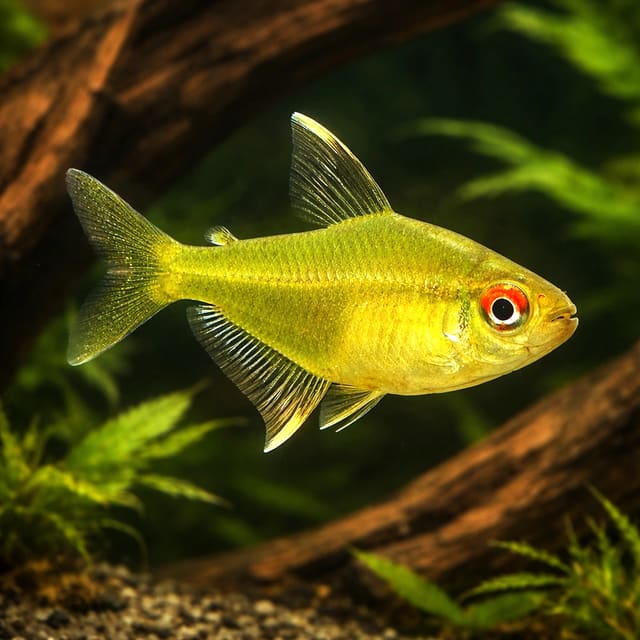
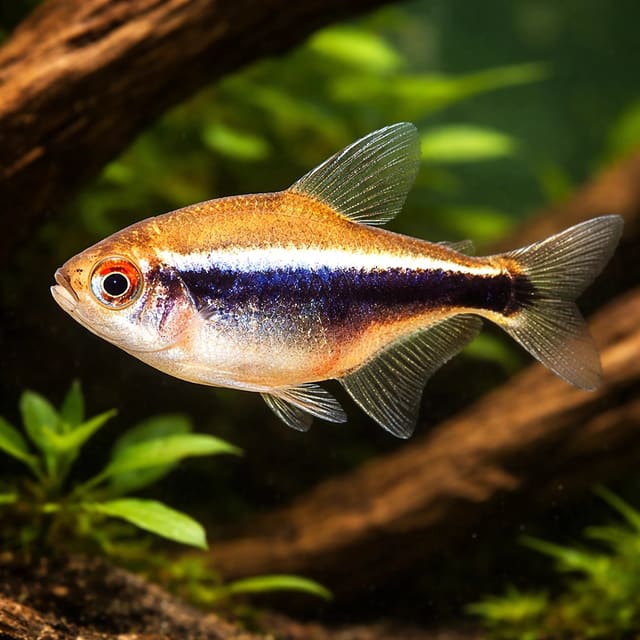
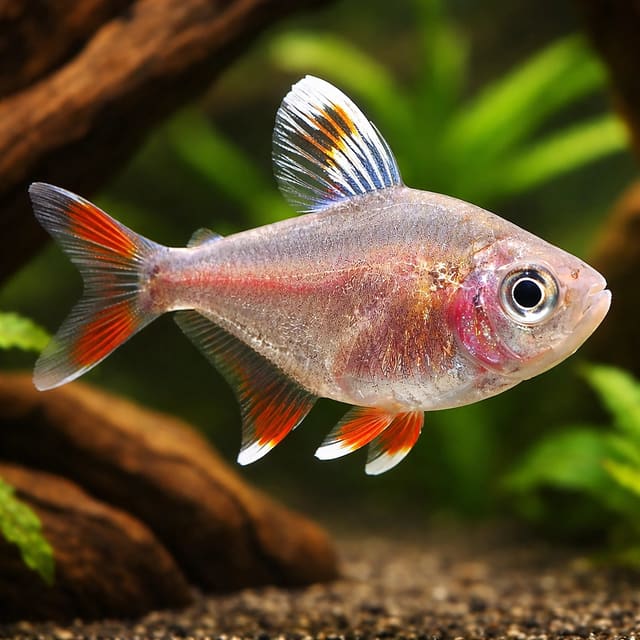
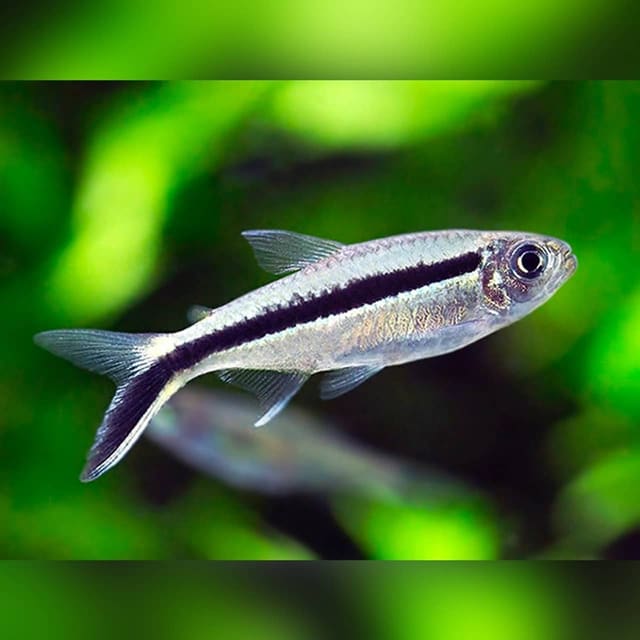
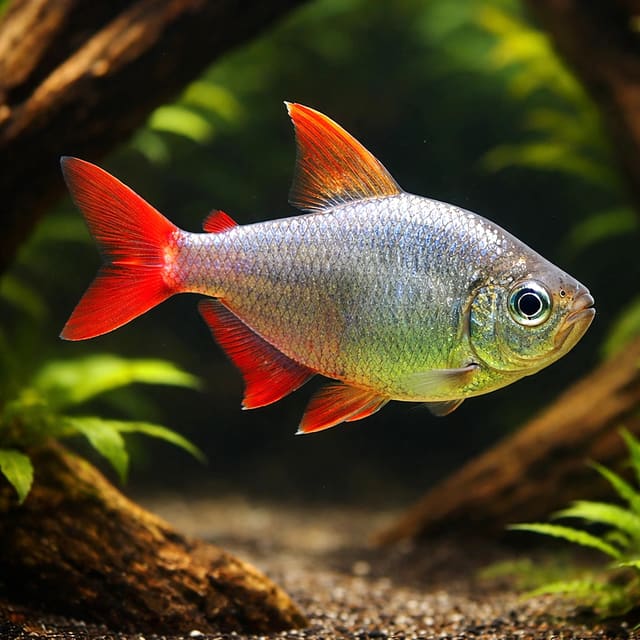
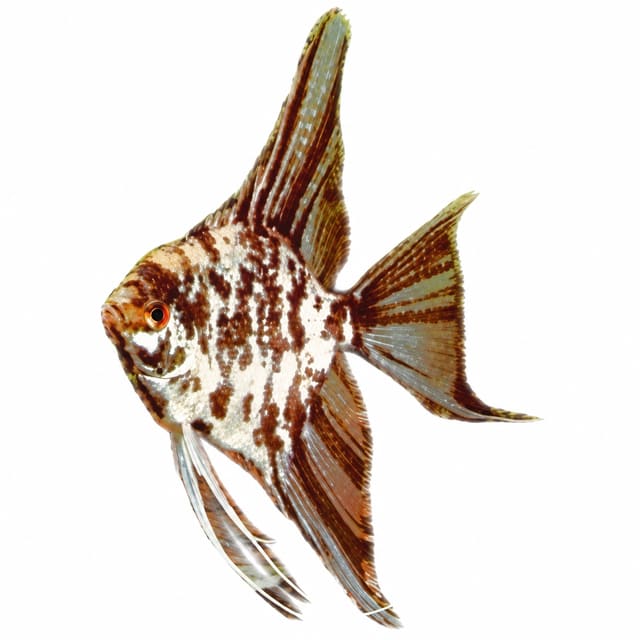
Some gallery images have been digitally enhanced to improve image quality. They show the listed type of animal rather than guaranteeing the exact markings of the individual supplied, so natural colour and pattern can vary. They show representative Red-Bellied Piranhas rather than the exact animal supplied. The separate image showing two fish describes that scene only; one purchase still supplies one animal.
Plan around the FishBase maximum of 50 cm standard length. Seriously Fish uses 35 cm standard length in its aquarium profile, but its housing recommendation is still about 1,296 litres with a 240 × 90 cm base. Use the larger recorded figure when judging the long-term commitment and the profile’s large aquarium dimensions when choosing the system.
A bare-bottomed arrangement can make maintenance easier. Standard aquarium gravel or sand is also suitable, so choose the base according to how reliably you can find and remove food fragments and waste. Décor is a matter of preference, but it must leave the aquarium practical to clean. Plants may be eaten, particularly if the fish decide to spawn.
Lighting can range from dim to strong. Select it for the complete display while retaining clear sight of the fish, equipment and aquarium floor during routine checks. Choose any decorative style that preserves the adult dimensions, waste-removal access and equipment protection this fish needs.
| Checkpoint | Decision |
|---|---|
| Before purchase | Confirm the 240 × 90 cm base and about 1,296-litre plan. |
| During growth | Check that décor still leaves practical cleaning access and clear movement space. |
| At adult size | Keep the same full housing, filtration and protected-equipment standard. |
A dispatch measurement is useful for choosing the animal supplied, but it must never become the basis for reducing the permanent aquarium. Review the complete system as the fish develops so maintenance access and protected equipment remain workable.
Red-Bellied Piranhas typically produce a lot of waste, making one or more oversized external filters essential. Adults have been known to damage submerged equipment. Use filters with built-in heaters where possible, fit a sturdy heater guard when a heater remains in the aquarium, or use a suitable sump arrangement that keeps vulnerable equipment away from the fish.
Keep access practical because maintenance and netting require extreme care. A design that allows filters, heaters and waste to be managed without repeatedly working close to the animal makes the routine safer and easier to sustain.
Keep the aquarium at 24–27°C, pH 5.5–7.5 and 2–12 dGH. The temperature is the FishBase and Seriously Fish overlap, both share the pH range, and the hardness range comes from the Seriously Fish aquarium profile. Measure the aquarium rather than judging its chemistry from clarity alone.
Keep ammonia and nitrite at zero. OATA’s tetra and pencilfish guidance gives these nitrogen-waste targets for the group and a nitrate ceiling of no more than 20 mg per litre above the normal tap-water level; these are broad routine targets, not a species-specific optimum. Test at least weekly and respond to a change before it becomes the new normal.
A well set-up biological filter is vital. The RSPCA explains that filter bacteria convert toxic ammonia to toxic nitrite and then to the safer nitrate. This process depends on an established bacterial population, so prepare and mature the system before livestock enters it. Our guide to preparing and maturing an aquarium explains the sequence.
Use the aquarium water chemistry guide to understand each measurement, then use the water matcher to compare measured values with this fish’s range. Increase livestock numbers slowly because filter bacteria must increase as fish numbers and feeding rise. Stocking too quickly can cause new tank syndrome, allowing ammonia and nitrite to rise to harmful levels.
Use one or more oversized external filters and aim for water turnover of four to five times the aquarium volume each hour. For the profile’s 1,296-litre aquarium, the Seriously Fish worked example uses four filters, each rated at 1,295–1,620 litres per hour. A sump can also keep equipment away from adults while providing the required filtration arrangement.
Change 30–50% of the aquarium volume each week. For 1,296 litres, that is approximately 389–648 litres, so the water-change route, replacement-water preparation and safe access must be practical at that scale. Exercise extreme care during maintenance or netting.
This method reduces the number of beneficial bacteria lost from the media. A working bacterial population is essential because the fish’s waste first becomes ammonia, then nitrite and finally nitrate. Large meals and the waste production typical of Pygocentrus make reliable mechanical and biological filtration central to the care plan.
Prepare for the upper and lower ends of the stated weekly change before choosing the aquarium. At about 1,296 litres, a 30% change is roughly 389 litres and a 50% change is about 648 litres. The equipment, treated replacement water and working time must be able to handle that real volume without rushing the job.
Use weekly test results and visible waste to judge where within the 30–50% range the aquarium needs to sit. If ammonia or nitrite appears, treat that as an immediate water-quality warning rather than waiting for the next routine date. Check flow again after cleaning because a blockage or incorrectly restarted filter reduces the planned turnover.
Inspect the fish while maintenance is taking place. A change in breathing, swimming, colour, temperament or feeding may be an early warning that water quality or another part of the system needs attention. Finish by confirming that the filter is running normally and that the protected heater or sump equipment is operating at the intended temperature.
Base the aquarium diet on foods that match this species’ recorded feeding biology. FishBase records wild adults eating insects, worms and fish, mainly around dawn and dusk. Seriously Fish describes Pygocentrus as opportunistic generalists rather than exclusive carnivores, with live fishes, aquatic invertebrates, insects, nuts, seeds and fruits appearing in the natural diet.
Offer juveniles bloodworm, small earthworms and chopped prawn. Adults can take strips of fish flesh, whole prawns, mussels, live river shrimp and larger earthworms. Match each item to the fish’s present size and use a rotation from the documented aquarium foods rather than relying on only one item.
| Fish size | Suitable documented foods |
|---|---|
| Juveniles | Bloodworm, small earthworms and chopped prawn |
| Adults | Fish flesh, whole prawns, mussels, river shrimp and larger earthworms |
Feed only what can be eaten within a few minutes, once a day. OATA uses that portion and frequency as group feeding guidance. Stop when the planned portion has been consumed and remove uneaten food because leftovers break down and release toxic waste into the water.
Begin with an amount that can be watched from start to finish. If pieces remain when the feeding period ends, remove them and reduce the next portion rather than allowing waste to collect. If a group member repeatedly misses food, record the pattern and reassess the social arrangement as well as the portion.
Rotate among the foods listed for the fish’s size instead of repeating one item every day. This applies the recorded generalist diet while keeping the feeding routine observable. A change from a normal feeding response is also a health checkpoint, so pair every meal with a brief look at breathing, swimming and body condition.
Wild activity changes with size: FishBase records smaller fish as mainly active during the day, while medium and larger individuals may forage at dawn, late afternoon and into the evening. Use the aquarium fish’s observed response to place its single daily meal where it can be watched clearly.
Learn the fish’s normal swimming, colour, breathing, temperament, body condition and feeding response. OATA advises watching for changes in these areas because they can reveal a developing problem before it becomes severe. A healthy fish should have clear, bright eyes, undamaged fins, intact scales and no ulcerations or bumps.
| Change seen | First response |
|---|---|
| Hanging at the surface, sitting on the bottom or erratic swimming | Test water quality and check the filtration |
| Faster or slower gill movement | Check temperature, ammonia and nitrite |
| Darker or paler colour | Compare behaviour and water tests with its normal pattern |
| More aggression or hiding | Review the social plan and inspect for damage |
| White spots, fluffy growths, lost fins or scales | Test the water and seek further guidance |
| Reduced appetite or changing body condition | Review feeding access, portions and water quality |
Test water quality first when a health change appears, then contact us for further guidance. Do not let an apparently clear aquarium replace measurements: ammonia and nitrite are toxic before either can be judged by sight.
Use the same observation points each day: where the fish normally swims, how quickly its gill covers move, how it responds to food and whether its fins and scales remain intact. A repeated change is more useful than a vague impression, particularly when several fish form a hierarchy.
If one member hides more, feeds less or develops damage, inspect the other fish as well and test the aquarium immediately. Record the water results and the behaviour seen. This separates a one-off movement from a developing pattern and gives a clear basis for deciding whether filtration, feeding access or the social plan needs attention.
FishBase describes powerful dentition capable of inflicting serious bites. Seriously Fish also calls for extreme care during maintenance and netting. Keep maintenance controlled, know where the animal is before beginning, and use the external-filter, guarded-heater or sump arrangements described above to reduce unnecessary work close to it.
Its alert behaviour may include lurking followed by rapid dashing. Move deliberately and avoid cornering the fish during routine work. If behaviour changes within a group, inspect every member for damaged fins or scales and reassess whether the chosen social arrangement is working in the adult-scale aquarium.
Prepare the mature, tested aquarium before the parcel arrives and arrange for someone to receive it in person. The current delivery and Live Arrival Guarantee policy sets out the arrival procedure.
The sealed-parcel video is required for a Live Arrival Guarantee claim, and filming every delivery from the sealed parcel onward preserves the complete sequence before the bag is floated or opened.
OATA’s introduction guidance says ammonia and nitrite should be zero before a fish is added. Confirm the receiving aquarium’s temperature, pH and hardness against 24–27°C, pH 5.5–7.5 and 2–12 dGH. Add future livestock slowly because the biological filter’s bacterial population must respond whenever fish numbers and feeding increase.
The arrival process ends with observation in the prepared aquarium, not with the bag being opened. Compare the fish with the normal health indicators used throughout this care plan and base any response on measured water quality and the condition seen.
After release, use the normal health checks: swimming, breathing, colour, temperament, appearance, body condition and feeding. Test the water when any of these changes rather than treating the change as an unavoidable part of settling.
Keep either one Red-Bellied Piranha or a group of at least five, with the group preferred when the full adult-scale plan can support it. Seriously Fish describes juveniles as the life stage that usually forms aggregations. Older individuals live in loose groups and establish dominance hierarchies.
A pair, trio or group of four falls outside the recommended choices, so avoid treating a small group as a compromise between one fish and five. The decision should be made before buying the first animal because a group changes the space, filtration, feeding observation and long-term management required.
| Social plan | Decision |
|---|---|
| One fish | Supported as a single-specimen plan |
| Two to four | Avoid; this falls outside the recommended choices |
| At least five | Supported and preferred when adult-scale housing is ready |
For one fish, the aquarium still needs the full adult dimensions, heavy-waste filtration and cautious maintenance method. For at least five, each daily meal must allow every animal to be observed, while weekly maintenance must remain practical at the complete system volume.
Do not begin with two to four because that number feels easier to fit. Start from the supported social choices, then confirm that the aquarium and maintenance routine can carry the chosen plan for adults. If the five-plus plan cannot be housed properly, use the supported single-fish route rather than reducing the group.
Watch the group’s temperament and physical condition. A change in aggression, increased hiding, lost scales, damaged fins, reduced feeding or declining body condition requires prompt water testing and a review of the social arrangement. Hierarchy is part of the recorded behaviour, but visible deterioration is still a husbandry warning.
The recommendation to keep at least five is not permission to reduce the aquarium dimensions. Start with the profile’s approximately 1,296 litres and 240 × 90 cm base, then assess the full needs of the intended group before purchase.
Keep this fish apart from other species. Seriously Fish describes the Red-Bellied Piranha as best maintained alone from other kinds of fish, even though it also notes that adults do not tend to prey on much smaller fishes. The direct care recommendation remains a dedicated single-species aquarium.
Do not use a period of apparent coexistence as a reason to rewrite that plan. The recorded feeding behaviour includes attacks on sick or dying fish, scavenging carcasses and biting pieces from the fins of larger species. Its natural diet also includes aquatic invertebrates, while live river shrimp are listed among accepted aquarium foods. Avoid treating fish or aquatic invertebrates as companions.
If an animal is not another Red-Bellied Piranha within the chosen one-or-five-plus social plan, do not add it to this aquarium. No general community category overrides the species profile’s recommendation to maintain it alone from other species.
| Proposed addition | Decision |
|---|---|
| Another fish species | Avoid and retain the dedicated single-species plan. |
| Aquatic invertebrate | Avoid; aquatic invertebrates occur in the recorded diet. |
| Two to four piranhas | Avoid; choose one fish or at least five. |
| At least five of its own kind | Use only with the complete adult-scale group plan. |
A compatibility decision is not changed by an animal surviving temporarily in the same aquarium. Apply the care rule before anything is introduced and keep the filtration, space and feeding observations matched to the chosen same-species arrangement.
If your aim is a conventional community display rather than a dedicated large-predator aquarium, browse the tetras collection and make a new plan around fish whose own profiles support community keeping. That is a different aquarium decision, not a tank-mate route for this piranha.
Within a piranha group, continue watching for changed aggression, hiding, damaged fins, lost scales or unequal access to food. Those observations help assess the chosen same-species arrangement without implying that unrelated animals can be added.
A Red-Bellied Piranha reaches a recorded maximum of 50 cm standard length according to FishBase. Plan the aquarium around that figure rather than the dispatch size.
A Red-Bellied Piranha needs about 1,296 litres with a base measuring 240 × 90 cm. Seriously Fish describes this as suitable only for public installations or the very largest private aquaria.
Seriously Fish recommends either one Red-Bellied Piranha or a group of at least five, with the group preferred. Avoid groups of two to four.
A Red-Bellied Piranha is an advanced-care fish because it reaches 50 cm, needs about 1,296 litres, produces substantial waste, forms social hierarchies and has teeth capable of serious bites.
A Red-Bellied Piranha eats a varied generalist diet. Offer juveniles bloodworm, small earthworms and chopped prawn; adults can take fish flesh, whole prawns, mussels, river shrimp and larger earthworms, using only what is eaten within a few minutes once a day.
Keep this fish at 24–27°C and pH 5.5–7.5; that is the FishBase and Seriously Fish overlap. Use 2–12 dGH, the aquarium hardness range from Seriously Fish.
It forms dominance hierarchies and may bite pieces from the fins of larger fish. Its powerful teeth can inflict serious bites, so use the recommended social plan and exercise extreme care during maintenance or netting.
Keep this fish either alone or with its own kind in a group of at least five. Avoid other fish species and aquatic invertebrates because the species is best maintained alone from other kinds of fish and aquatic invertebrates occur in its diet.
Start filming while the parcel is still sealed, before floating the bag. Tropical Fish Co hand-packs the fish in pure oxygen inside an insulated poly box, adds a heat pack when the weather calls for it and uses a licensed live-animal courier; open the parcel in one continuous take, show the fish in the sealed bag, then float the bag for 20–30 minutes before release.
No reviews for this item yet. Bought one? Honest reviews only, good or bad.
What customers say about ordering from us
I have a small group of long finned mountain minnows. So was delighted to be able to order ten of this variety to increase the genetics in my tank . The ones I recieved are healthy but it’s to early to give a verdict on wether they are of a long finned type since they are small currently.
Gordon Walker · 23 Sept 2026
100% success travel and "installation". Pleased with quality of purchase. The Siamese fighter a bit "shy" so have not yet seen him at his best yet but looking good. Happy customer. GG
George E Garratt · 21 Sept 2026
Reviews of our shop, collected by Judge.me, an independent third-party review collector. Newest first.