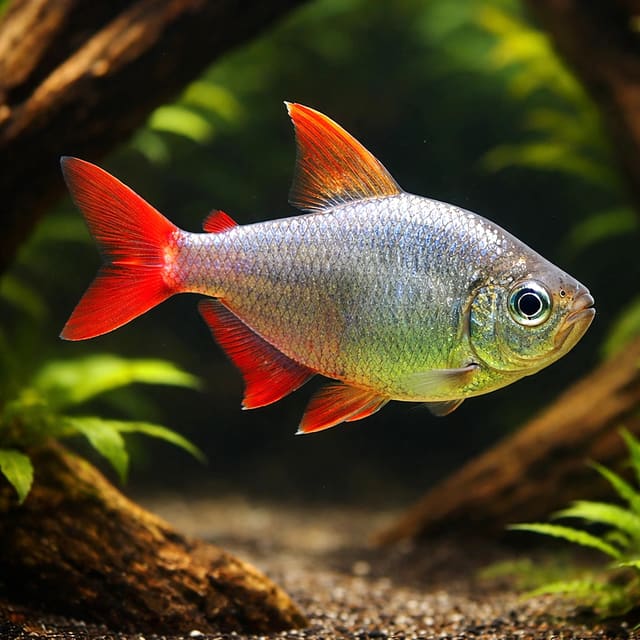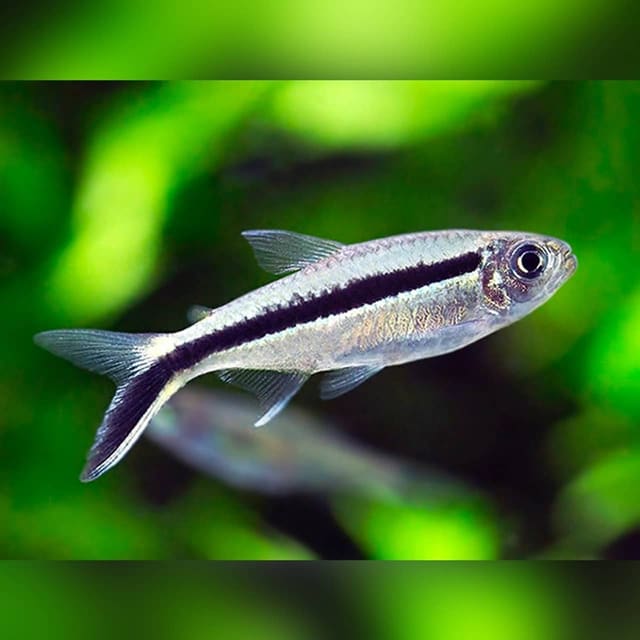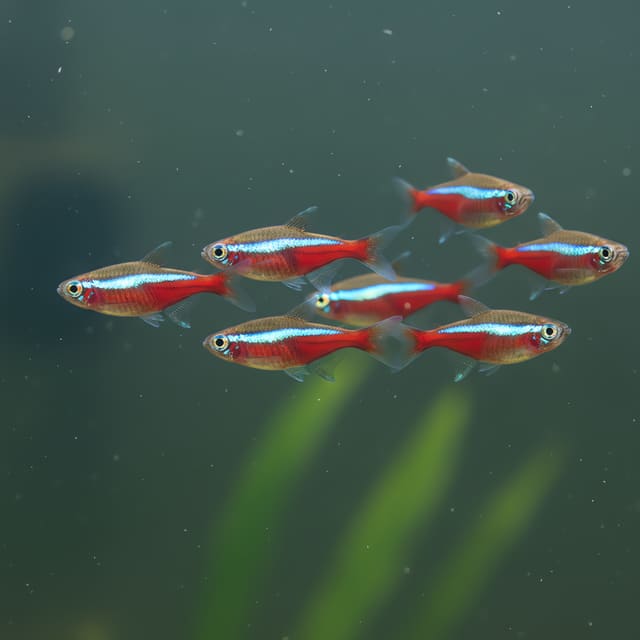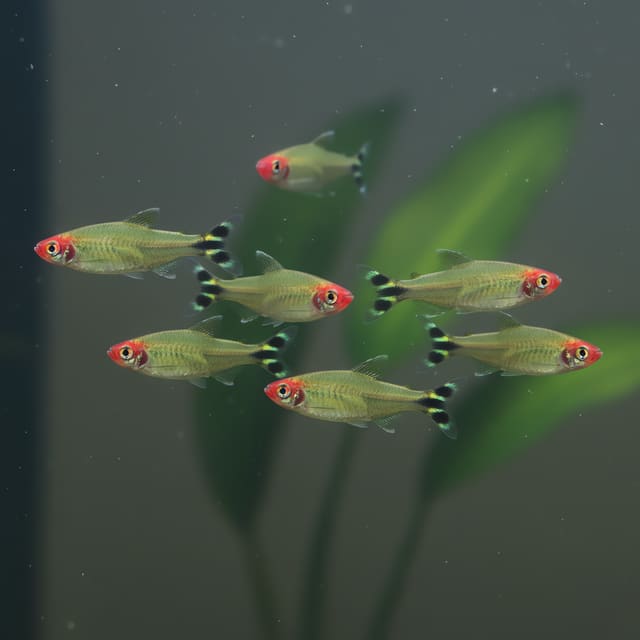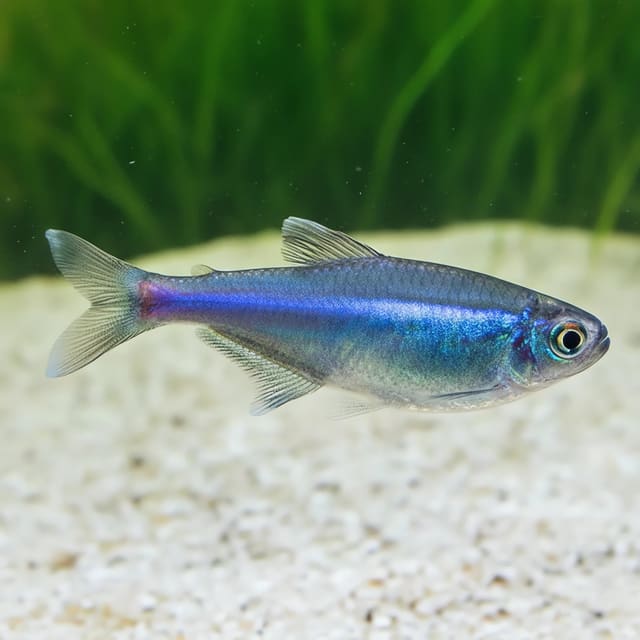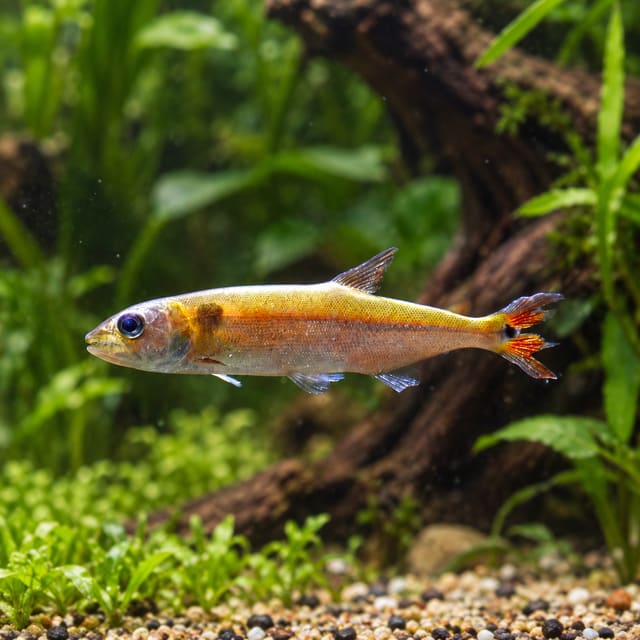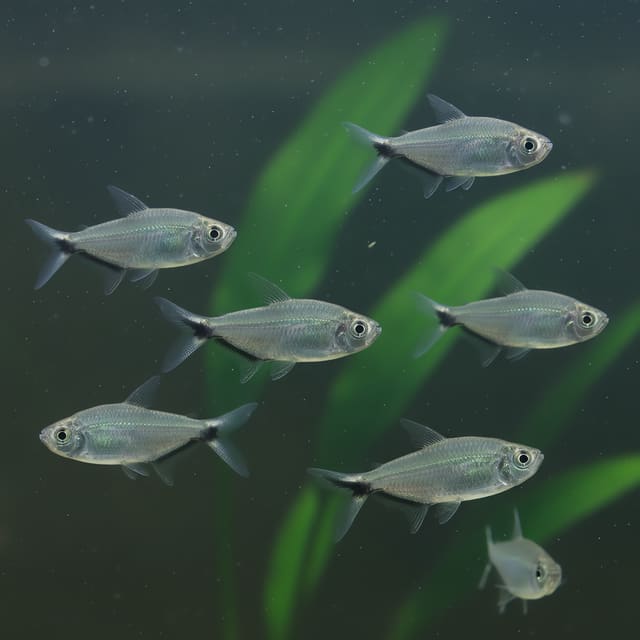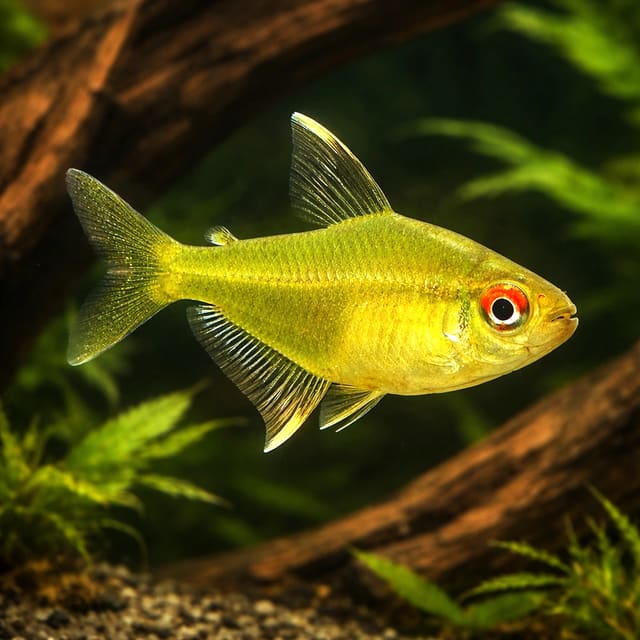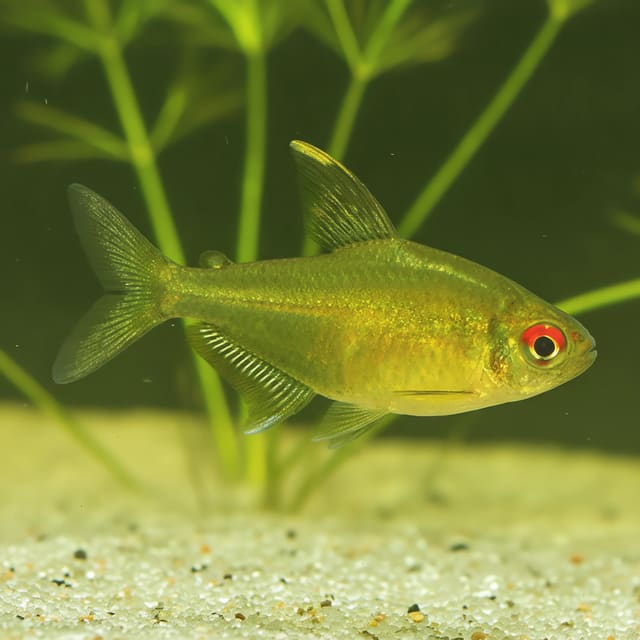
10 × Lemon Tetras (Hyphessobrycon pulchripinnis)
22–27°C · pH 6.5–7.5 · 72L
£16.99

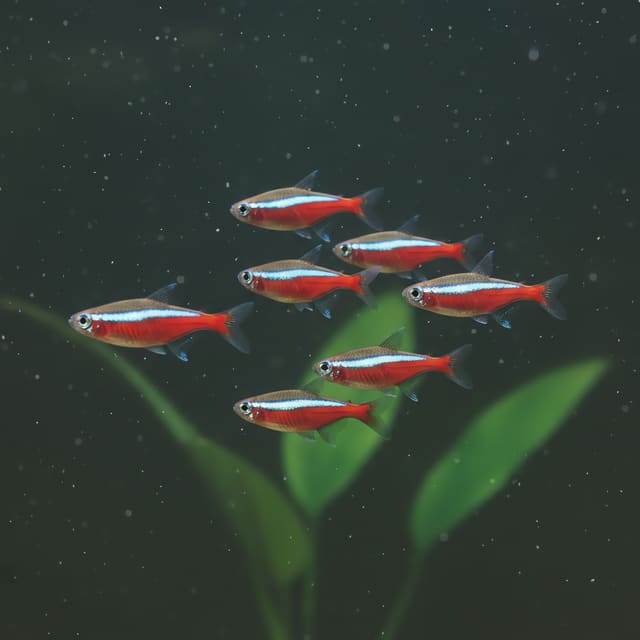
The Ember Tetra (Hyphessobrycon amandae) is a tiny American tetra from South America's Araguaia River basin that reaches 2 cm standard length. It suits a mature, gently filtered aquarium; the relevant FishBase, Seriously Fish and OATA ranges overlap at 24–27°C and pH 6.5–7.0, with a planned group of 8–10 or more. Sold as a pack of six fish.
Adult size is the maximum length this species reaches at full maturity (scientific sources). The livestock you receive will be younger and smaller. Product-photo provenance and any image-specific limitations are stated on the listing.
Hyphessobrycon amandae
The Ember Tetra (Hyphessobrycon amandae) is a tiny American tetra from South America's Araguaia River basin that reaches 2 cm standard length. It suits a mature, gently filtered aquarium; the relevant FishBase, Seriously Fish and OATA ranges overlap at 24–27°C and pH 6.5–7.0, with a planned group of 8–10 or more. Sold as a pack of six fish.
Adult size is the maximum length this species reaches at full maturity (scientific sources). The livestock you receive will be younger and smaller. Product-photo provenance and any image-specific limitations are stated on the listing.
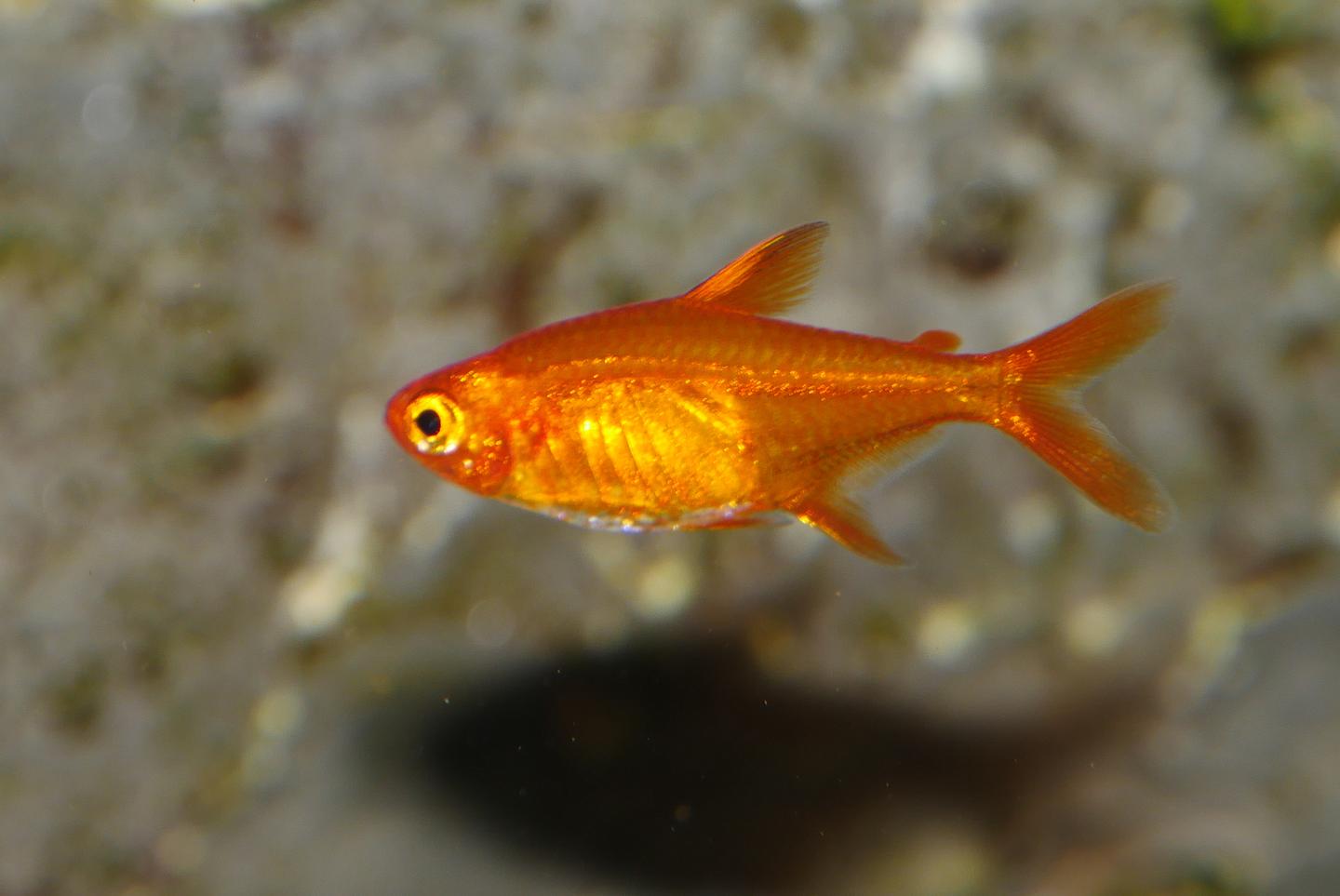
Ember tetras are very small Brazilian social fish, with a maximum recorded length of 2.0 cm excluding the tail. Keep them only in a fully cycled, stable aquarium. We recommend a group of at least 10 and about 45 litres with a 45 × 30 cm footprint rather than using a litres-per-fish formula.
Maintain these water conditions for optimal health and vibrant colors
The Ember Tetra (Hyphessobrycon amandae) is a tiny freshwater American tetra from the Araguaia River basin in South America. FishBase records a maximum length of 2 cm standard length and places the species in the family Acestrorhamphidae. It suits a mature, gently filtered planted aquarium where a proper shoal can use open middle-to-upper water while remaining close to cover.
This is a very peaceful, gregarious fish rather than a bold choice for a busy community. Plan for 8–10 or more Ember Tetras, calm tankmates and an aquarium base measuring at least 45 × 30 cm or an equivalent footprint. A tank of those base dimensions holds roughly 41 litres in the example given by Seriously Fish. The group needs room to move together, but planting, floating cover, wood and leaf litter also give the fish sheltered areas.
| Suits | Not suited to |
|---|---|
| Mature planted aquariums with gentle filtration | Newly filled or biologically immature aquariums |
| Groups of 8–10 Ember Tetras or more | A permanent group limited to the six fish in one pack |
| Calm communities of similarly sized peaceful fish | Very boisterous or much larger tankmates |
| At least a 45 × 30 cm base or equivalent | Containers chosen only because each fish is small |
| The relevant FishBase, Seriously Fish and OATA ranges overlap at 24–27°C, pH 6.5–7.0 and 4–10 dGH | Water outside the planned range or subject to abrupt changes |
The adult length must not be used as a litres-per-fish shortcut. A shoal shares swimming space, cover, oxygen and filtration capacity, while every additional fish adds waste and feeding demand. Assess the complete community against the aquarium footprint and the capacity of its mature biological filter.
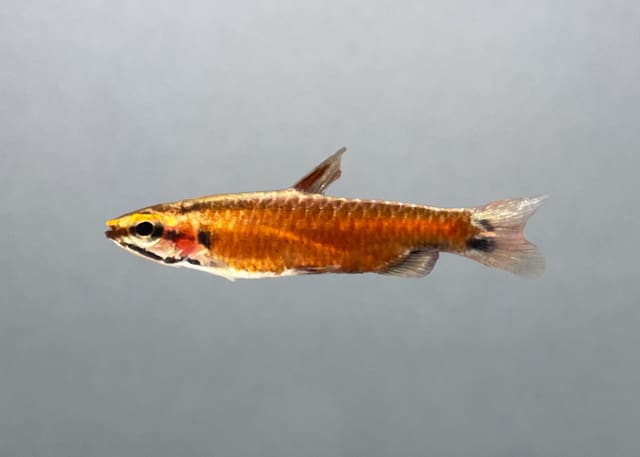
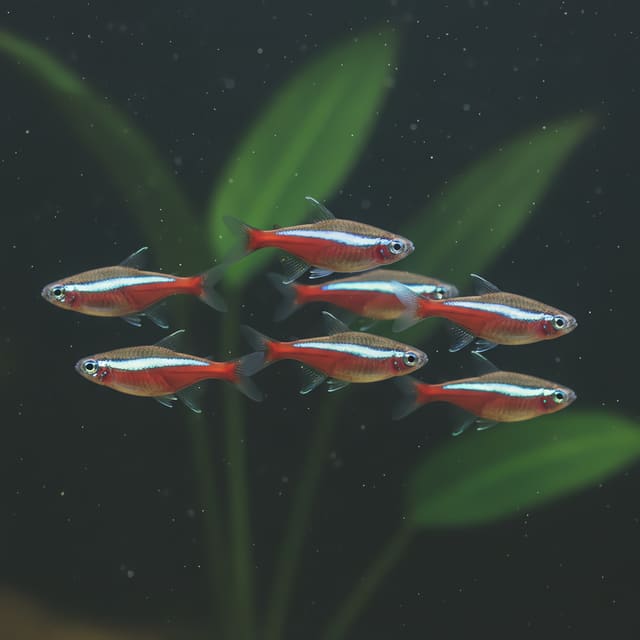
Orange-gold colouring and translucent fins make the group visible against plants and darker materials, but the social display is the main feature. Seriously Fish describes Ember Tetras as naturally schooling fish that become less shy and show more interesting behaviour in an appropriately sized group.
One purchase supplies a pack of six live Ember Tetras. Seriously Fish recommends a minimum purchase of 8–10 specimens because the fish are gregarious and naturally form schools. Use this pack to add to an established compatible Ember Tetra shoal or as part of a clear plan to reach 8–10 or more without exceeding the aquarium’s capacity.
Do not let the pack quantity become the permanent social limit. Before adding another group, count the Ember Tetras already in the aquarium, consider the adult sizes of every resident and confirm that ammonia and nitrite are both zero. Additions increase feeding and waste, so the filter’s beneficial bacteria must adjust to the higher biological load.
Sex is guaranteed only when the selected option explicitly states male or female. This 6 × Ember Tetras listing has no sex-guaranteed option.
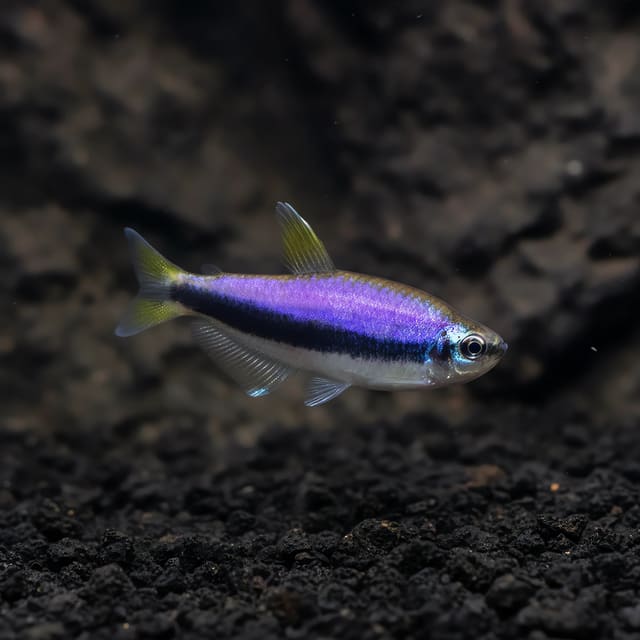
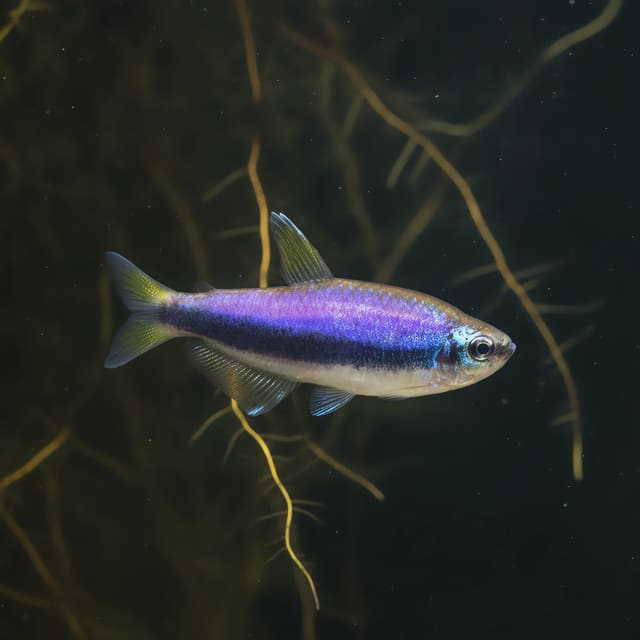
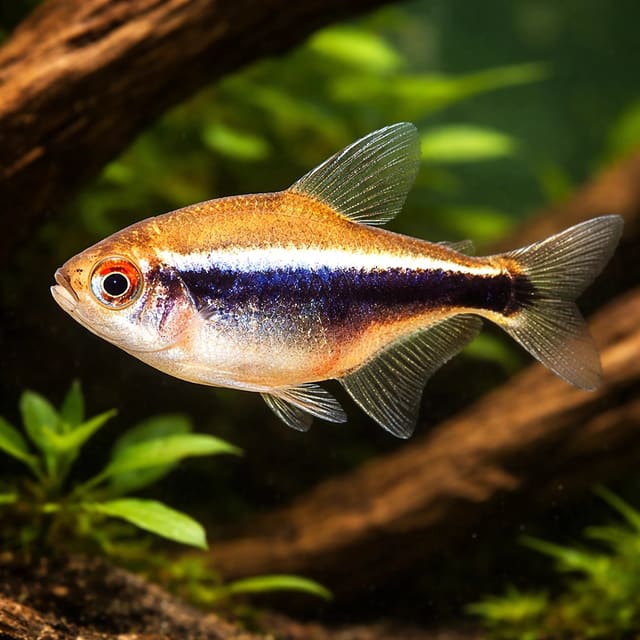
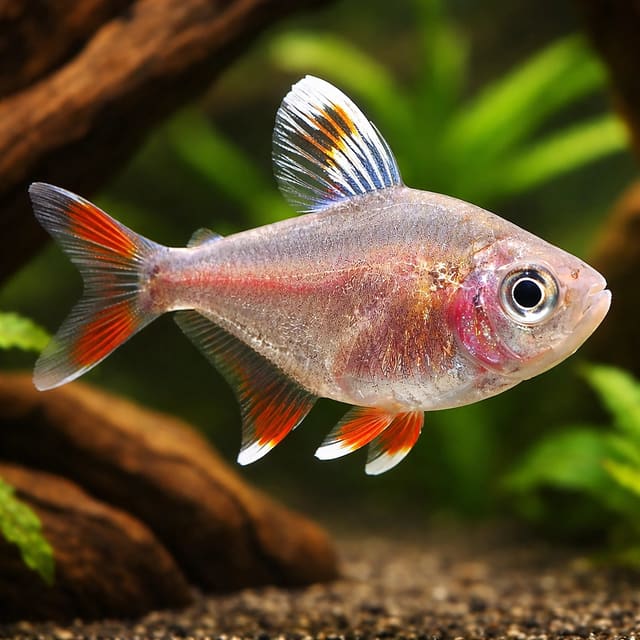
The gallery images are representative of this type of animal rather than photographs of the exact animal supplied, so colours can look slightly different from the live animal.
Prepare an aquarium base measuring at least 45 × 30 cm or an equivalent footprint, then maintain the overlap of the relevant FishBase, Seriously Fish and OATA ranges: 24–27°C, pH 6.5–7.0 and 4–10 dGH. These values belong together: aquarium size cannot compensate for unsuitable water, and suitable water cannot compensate for an immature filter or an incomplete social plan.
The pack can be added only as fast as the aquarium can absorb the extra waste. If six fish would take the aquarium beyond its sensible stocking level, increase capacity before increasing the shoal. If a smaller established group will reach at least 8–10 after the addition, check that existing residents are healthy and that the complete community shares compatible water and temperament.
Use an aquarium with a base measuring at least 45 × 30 cm or an equivalent footprint. The Seriously Fish profile for Hyphessobrycon amandae associates those dimensions with roughly 41 litres and recommends a heavily planted arrangement with gentle filtration.
Balance cover with swimming room instead of choosing one at the expense of the other. A completely open aquarium removes the sheltered areas these small fish can use, while an arrangement packed tightly from front to back leaves too little clear water for coordinated movement. Look across the aquarium at fish level and confirm that there is an uninterrupted route between planted zones.
Keep water movement gentle. Seriously Fish notes that an air-powered sponge-style filter is normally adequate and that some movement is acceptable. For an aquarium around 41 litres, its example filter rating is 80–125 litres per hour. Treat that figure as a matching example for the stated aquarium size, then observe whether the shoal can hold position and feed without being pushed continually into one area.
Floating plants, branches and leaf litter must not prevent routine cleaning or block the filter. Inspect the intake and water return whenever plants are trimmed or leaves shift. A gentle current still needs to circulate clean, oxygenated water through the aquarium and filter.
Dried leaves decompose over time, so use them as part of a maintained aquarium rather than leaving accumulating debris untouched. Seriously Fish notes that decomposing leaf litter encourages microbial colonies and that these microorganisms can become a secondary food source for fry. Remove excessive solid waste during water changes while preserving the planned shelter.
Keep Ember Tetras at 24–27°C, pH 6.5–7.0 and 4–10 dGH. These routine values sit within every relevant range for each measurement: Seriously Fish gives 20–28°C, pH 5.0–7.0 and 1–10 dGH; FishBase records 24–28°C for the wild environment; and OATA’s group guidance for tetras and pencilfish gives 22–27°C, pH 6.5–8.0 and 4–12 dGH.
| Measurement | Routine instruction |
|---|---|
| Temperature | Maintain the relevant-source overlap of 24–27°C |
| pH | Maintain the relevant-source overlap of 6.5–7.0 |
| General hardness | Maintain the relevant-source overlap of 4–10 dGH |
| Ammonia | Keep at 0 mg/l |
| Nitrite | Keep at 0 mg/l |
| Nitrate | Keep no more than 20 mg/l above the normal tap-water level |
Measure the aquarium rather than relying on the heater dial, tap-water report or an earlier test. The water chemistry guide explains the role of each test, while the water matcher helps compare measured values with this planned range.
Test source water as well as aquarium water when diagnosing a change. A rising aquarium nitrate reading means something different from a high starting value in the tap supply, which is why OATA expresses its nitrate limit relative to normal tap water. Record the two readings separately so a trend is visible.
Respond first to toxic nitrogen compounds. Any detectable ammonia or nitrite requires prompt water-quality action because both should remain at zero. Check feeding, dead plant matter, filter flow and recent stocking changes, then carry out an appropriate conditioned water change and continue testing.
A value inside the range is useful only when it remains controlled. Avoid abrupt temperature or chemistry changes during maintenance. Match replacement water sensibly to the aquarium, treat tap water before adding it and make adjustments in measured steps rather than repeatedly moving values back and forth.
Use a fully matured biological filter before adding Ember Tetras. The RSPCA explains that fish release toxic ammonia, which filter bacteria convert first to toxic nitrite and then to the safer nitrate. A filter moving water is not necessarily biologically ready; test results must show that the aquarium can process waste.
The first tropical aquarium guide gives a practical route through preparation and maturation. Complete that work before arranging livestock; the small adult size of an Ember Tetra does not remove the need for established bacterial filtration.
Stock gradually when the aquarium already contains fish. OATA warns that increasing livestock and food raises the demand on the nitrifying bacteria in the filter. Adding animals faster than those bacteria can adjust can cause new tank syndrome, with ammonia or nitrite rising to harmful levels.
Use test results and the behaviour of the whole community to judge each addition. A tank that handled its earlier stocking may react differently after six fish and their food are added. Test after the change instead of assuming that previous stability guarantees future capacity.
Protect the bacterial colony during maintenance. Never rinse biological filter media under the tap because chlorine or chloramine may kill beneficial bacteria. When cleaning is needed, rinse the media lightly in aquarium water removed during a water change. Restore normal flow without making every component sterile.
Check filters for blockages whenever circulation weakens. Plant fragments, leaf litter and fine debris can restrict an intake, while a clogged sponge can reduce both mechanical capture and oxygen delivery to bacteria. Correct the blockage gently and preserve mature media wherever possible.
Feed appropriately tiny dried food together with small live or frozen invertebrate foods. Seriously Fish describes Ember Tetras as probable micropredators that feed on tiny invertebrates and other zooplankton in nature. In the aquarium, it recommends dried foods of a suitable size plus daily offerings such as Artemia nauplii, Moina and grindal worm.
OATA recommends feeding tetras once a day and limiting the portion to what they consume within a few minutes. Watch the complete group throughout that window. Six or more tiny mouths can make a portion disappear quickly at one end of the aquarium while timid fish at the other end receive little.
Particle size is part of nutrition. A food can match the recorded diet but still be impractical if the fish cannot swallow it. Observe several successful feeding responses rather than judging the food by its label or by whether larger tankmates can eat it.
Competition is the main community feeding risk. Seriously Fish notes that Ember Tetras do not compete well with very boisterous or much larger tankmates. If other fish take every particle first, distribute food across a wider area and reassess whether the community is calm enough for Ember Tetras. Do not solve persistent competition by adding excessive food, because leftovers increase the waste entering the filter.
Use body condition and interest in food as routine indicators. A sudden reduction in feeding response, repeated spitting out, inability to reach food or one fish becoming noticeably thinner calls for a water test and closer observation. Check whether the problem affects one fish or the whole shoal, as that distinction helps separate competition from an aquarium-wide water issue.
Change 25% of the water at least once each week and test ammonia and nitrite at least weekly. OATA also advises keeping nitrate no more than 20 mg/l above the normal tap-water level. Increase observation and testing after livestock additions, feeding changes, filter disruption or an unexpected change in behaviour.
Do not turn a partial water change into a complete reset. Beneficial bacteria live on filter media and other wet surfaces, so preserving the mature filter is more useful than making every component look new. Clean enough to restore flow and remove accumulating waste while keeping biological media wet and protected from tap water.
Test trends are more informative than isolated readings. A nitrate level rising faster than usual can point to heavier feeding, increased stocking, decomposing material or a missed water change. Ammonia or nitrite appearing after filter cleaning can indicate disruption to biological filtration. Record what changed alongside the numbers.
Watch for surface hanging, bottom sitting, erratic swimming, faster or slower gill movement, unusual hiding, colour becoming markedly darker or paler, white spots, fluffy growths, damaged fins, lost scales, body-condition changes or reduced feeding. These signs can have different causes, so begin by testing water quality and checking temperature and filter operation.
If a health change persists after immediate water and equipment checks, contact us for guidance. Keep the latest ammonia, nitrite, nitrate, temperature and pH readings ready, along with when the change began and whether it affects one fish or the whole shoal.
Arrange for someone to receive the parcel so live fish are not left unattended. The Tropical Fish Co delivery and Live Arrival Guarantee policy explains that fish are hand-bagged in pure oxygen, placed in an insulated poly box and packed with a heat pack when the weather calls for it. Transport is handled by a tracked courier licensed to carry live animals.
Outside that delivery sequence, prepare and check the aquarium before the parcel arrives. OATA advises confirming that ammonia and nitrite are zero. Maintain the overlap of the relevant FishBase, Seriously Fish and OATA ranges at 24–27°C, pH 6.5–7.0 and 4–10 dGH. Do not use the arrival period to finish cycling the filter, rearrange the complete aquarium or correct a major chemistry mismatch.
During the first month, look for a stable pattern rather than demanding one fixed pose or colour intensity. Ember Tetras use middle-to-upper water, but individuals may move among plants, floating cover and open areas. The important comparison is with the group’s developing normal behaviour in that aquarium.
Review the final shoal plan once the first pack has settled. If the aquarium is intended to hold more Ember Tetras, confirm zero ammonia and nitrite, stable routine readings and adequate capacity before adding fish. The long-term target remains 8–10 or more, but increasing the group gradually is safer than exceeding what the mature filter and total aquarium can support.
Choose peaceful tankmates of a similar adult size that share the same water requirements. Ember Tetras are described by Seriously Fish as very peaceful, but they do not compete well with very boisterous or much larger fish. Avoid fish large enough to eat them, and do not rely on their 2 cm adult length to make them suitable for every community.
| Candidate | Decision |
|---|---|
| Similarly sized peaceful characids | Suitable when water and space match |
| Smaller callichthyid or loricariid catfishes | Suitable when the complete stocking plan fits |
| Sedate surface-dwellers such as hatchetfishes | Suitable when feeding remains calm |
| Smaller rasboras, barbs or anabantoids | Assess the exact species for size and temperament |
| Apistogramma or other dwarf cichlids | Possible in an appropriately planned aquarium |
| Very boisterous or much larger fish | Avoid because Ember Tetras may be intimidated or outcompeted |
| Fish large enough to eat an Ember Tetra | Avoid |
Seriously Fish also describes the species as a useful dither fish for Apistogramma and other dwarf cichlids because Ember Tetras tend to use the middle-to-upper regions and do not normally hunt fry. That is a conditional pairing, not a substitute for checking the cichlid species, aquarium footprint, territories and water requirements.
For an animal not named here, screen its adult size, temperament, feeding pace, water range and usual swimming area before combining it with Ember Tetras. Compatibility remains dependent on the actual species and aquarium arrangement.
Do not use a shared geographical origin as the only test. Two South American fish can still differ in adult size, pace, territorial behaviour or water needs. Likewise, a fish from another region may fit when all practical requirements align.
Group size also affects community planning. Reserve enough capacity for at least 8–10 Ember Tetras before filling the remaining space with companion species. A varied community is not a good trade for leaving a gregarious fish in an incomplete group.
Observe what happens at feeding time and in open water. A community can appear peaceful while one species consistently reaches every food particle first or keeps Ember Tetras pressed into cover. Seriously Fish identifies competition from boisterous or much larger tankmates as a particular weakness for this species.
If feeding competition is mild, distribute appropriately sized food across more than one point and watch whether every fish eats. If the same individuals remain excluded, reassess the combination rather than increasing the total portion. Extra food that Ember Tetras still cannot reach will decay and add waste.
Use adult measurements for every candidate. A juvenile companion may appear similar in size when introduced but become a much larger or more boisterous fish. Compare its planned adult size with the Ember Tetra’s 2 cm standard length before it enters the aquarium.
Check swimming level as one part of the plan. Ember Tetras tend to occupy middle-to-upper water, so a sedate species using another level may reduce direct competition. This does not remove the need to check adult size, temperament, feeding and total biological load.
Reassess after any stocking change. A combination that worked with fewer fish may change when territories, food demand and waste increase. Test ammonia and nitrite, watch the first several meals and confirm that the Ember Tetra shoal still uses the aquarium normally.
When comparing two possible companions, prefer the calmer fish that stays within the same water range and cannot eat an adult Ember Tetra. Then check whether the aquarium still has capacity for the planned shoal of 8–10 or more. That sequence keeps the social needs of the listed fish at the centre of the decision.
It reaches 2 cm standard length. FishBase records that maximum, and Seriously Fish also gives an adult standard length of 20 mm.
Use an aquarium base measuring at least 45 × 30 cm or an equivalent footprint. Seriously Fish associates those dimensions with roughly 41 litres and recommends planting, cover and gentle filtration.
Plan a group of 8–10 or more. Seriously Fish recommends a minimum purchase of 8–10 because the fish naturally form schools and become less shy in an appropriate group.
It can suit a careful first-time keeper who prepares a mature filtered aquarium, maintains the relevant FishBase, Seriously Fish and OATA overlap of 24–27°C and pH 6.5–7.0, and has room for 8–10 or more peaceful fish.
Feed suitably tiny dried food with small live or frozen foods such as Artemia nauplii, Moina or grindal worm. Offer one controlled daily meal that the shoal finishes within a few minutes.
Keep it at 24–27°C and pH 6.5–7.0, with general hardness of 4–10 dGH. This routine range is the overlap of the relevant FishBase, Seriously Fish and OATA values.
Seriously Fish describes it as very peaceful. The main concern is the opposite: very boisterous or much larger tankmates may intimidate it or prevent it from reaching food.
Consider similarly sized peaceful characids, smaller callichthyid or loricariid catfishes, sedate hatchetfishes, smaller rasboras, barbs or anabantoids, and appropriately planned dwarf-cichlid communities. Every candidate must share compatible water, space and temperament.
They are hand-bagged in pure oxygen, placed in an insulated poly box and given a heat pack when weather calls for it. A tracked courier licensed for live animals carries the parcel, and someone must receive it. Start filming before opening the sealed parcel, continue through opening until the fish are visible inside the bag, then float the bag for 20–30 minutes before releasing the fish without pouring bag water into the aquarium.
No reviews for this item yet. Bought one? Honest reviews only, good or bad.
What customers say about ordering from us
I have a small group of long finned mountain minnows. So was delighted to be able to order ten of this variety to increase the genetics in my tank . The ones I recieved are healthy but it’s to early to give a verdict on wether they are of a long finned type since they are small currently.
Gordon Walker · 23 Sept 2026
100% success travel and "installation". Pleased with quality of purchase. The Siamese fighter a bit "shy" so have not yet seen him at his best yet but looking good. Happy customer. GG
George E Garratt · 21 Sept 2026
Reviews of our shop, collected by Judge.me, an independent third-party review collector. Newest first.