

Easy
Blue Moscow Male Guppy (Poecilia reticulata)
22–28°C · pH 7–8 · 45L
£5.99

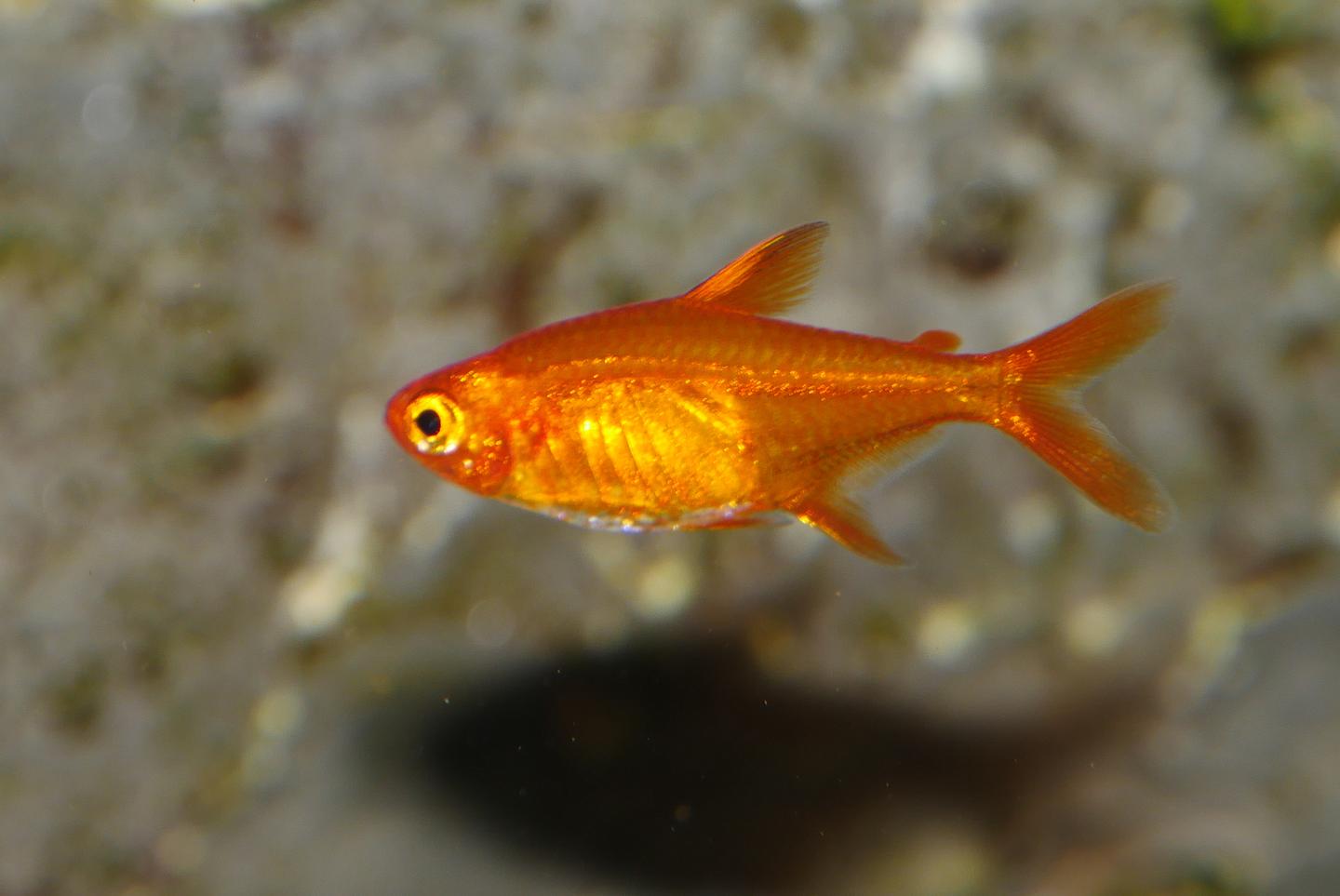
Ember tetras are very small Brazilian social fish, with a maximum recorded length of 2.0 cm excluding the tail. Keep them only in a fully cycled, stable aquarium. We recommend a group of at least 10 and about 45 litres with a 45 × 30 cm footprint rather than using a litres-per-fish formula.
This listing is for a group of 10 Ember Tetras (Hyphessobrycon amandae, 1.5–2 cm).
Ember Tetras are peaceful shoaling fish: in a group of ten they settle faster, hold together more tightly and show their glowing orange colour at its best against planted greenery.
Ember Tetras are one of the smallest fish in the hobby, but they create one of the biggest visual effects in a planted aquarium. Known scientifically as Hyphessobrycon amandae, this tiny South American characin glows with a warm orange-red tone that has earned it names like flame tetra and, occasionally, ruby tetra. Native to Brazil, these fish stay compact, with typical ember tetras size around 2 cm, yet their colour and tight schooling behaviour make them stand out in nano and community aquariums alike. Their small size suits a carefully planned planted aquarium with open swimming space and a mature filter.
They are peaceful, social, and best kept in groups of 10 or more, where their confidence and colour improve noticeably. Their manageable ember tetra requirements, gentle temperament, and ability to thrive in a well-planned planted setup make them a favourite for aquarists who want movement without aggression. Their orange colour contrasts with planted greenery. Whether you want a dedicated nano school or a calm mixed display with other small species, Ember Tetras offer colour, activity, and community-tank charm in one very small package.
For more on species-level care, read the Ember Tetra profile at Seriously Fish.
The amanda tetra hyphessobrycon amandae was described from Brazil and quickly became popular in the aquarium hobby because it combines tiny adult size with bold warm colour. It belongs to the same broad tetra group that includes favourites such as Cardinal Tetras, Glowlight Tetras, and X-Ray Tetras. Unlike larger or more boisterous characins, Ember Tetras are chosen for calm planted aquariums and refined nano displays.
The ember tetras origin lies in South America, specifically Brazil’s Araguaia River basin. In nature, the ember tetra habitat consists of slow-moving margins, shallow tributaries, and floodplain areas rich in leaf litter, roots, and submerged vegetation. This ember tetras natural habitat is often tea-coloured from tannins, with soft, slightly acidic water and filtered light rather than bright open exposure.
Understanding ember tetras habitat helps explain why these fish look and behave best in planted aquariums with darker décor. Ember tetras in the wild spend much of their time moving through cover in loose groups, feeding on tiny invertebrates, microscopic crustaceans, organic matter, and plant-associated foods. If you have ever wondered what do ember tetras eat in the wild, the answer is a mix of very small prey items and fine edible particles rather than large chunks of food.
In practical aquarium terms, this means these fish appreciate gentle flow, visual cover, and subdued surroundings. Their colour deepens when the environment resembles the calm, shaded conditions of their native waters. A bare, brightly lit tank can leave an ember tetra pale, nervous, and reluctant to school tightly.
Mimicking the natural habitat with fine plants, driftwood, leaf-style décor, and a dark substrate usually improves confidence, appetite, and colour. In my experience, Ember Tetras kept in softly lit planted tanks display stronger schooling and a richer ember-orange body tone within days.
Getting the ember tetras aquarium setup right is the key to long-term success. These fish are small, but they are not throwaway “starter fish.” A stable, mature aquarium makes a huge difference to behaviour, colour, and health.
The true ember tetras minimum tank size is 30 litres, but that should be seen as the lower limit for a small group in a carefully maintained setup. A better ember tetras tank size for a proper school of 10-15 is 45-60 litres or more. If you are asking how many ember tetras in a tank, a 30-litre aquarium suits a modest group, while larger tanks allow more natural movement and better social structure.
Because they are schooling fish, floor space and swimming length matter more than height. The ideal ember tetra tank requirements include open midwater swimming space framed by dense planting around the back and sides. Leave a clear midwater swimming lane between planted areas, even in a compact tank.
The recommended ember tetras temperature is 24-28°C, with an ember tetra ideal temperature around 25-26°C for everyday care. This ember tetra temperature range keeps them active and comfortable. In practical terms, the best ember tetras water temperature is stable rather than fluctuating. The ideal ember tetra tank temperature should not swing sharply between day and night.
Water chemistry should be soft to moderately soft, with ember tetras water hardness around 2-10 dGH and an ember tetras ph level between 5.5 and 7.0. They adapt to neutral conditions if acclimated carefully, but they show their best colour in softer, slightly acidic water. Aim for steady conditions, gentle flow and plenty of plant cover.
A gentle sponge filter or a well-baffled internal filter is ideal. Ember Tetras come from calmer waters, so strong current can leave them hiding. Their small size means they do not need heavy turnover, but they do need clean, oxygenated water with low waste levels. A mature, cycled filter is one of the core ember tetra requirements.
A dark sand or fine gravel substrate helps them feel secure and makes their orange colour pop. This is one of the easiest ways to learn how to get ember tetras to color up. For an effective ember tetra tank setup, use clumps of fine-leaved plants, floating cover, and wood. If you enjoy tetra communities, you can also browse the wider tropical fish collection for suitable companions and layout ideas.
Good plant choices include mosses, Cryptocoryne, Limnophila, and stem plants that create broken sight lines. Ember Tetras are especially striking ember tetras in planted tank layouts where orange fish contrast against green foliage. For comparison, hobbyists searching neon tetra tank setup or neon tetra tank requirements usually end up with similar recommendations: soft planting, subdued light, and open midwater lanes.
Moderate lighting works best. Very bright light with no cover can wash them out. Add floating plants or shaded areas to create dappled light. In display tanks, 6-8 hours of light is often enough to support plants while keeping fish comfortable.
Fully cycle the aquarium and confirm stable water conditions before adding fish. Stability matters more than chasing extreme blackwater numbers.
Offer a varied diet of fine foods in small portions. These tiny omnivores take suitably sized prepared food, with occasional frozen or live foods for variety.
In the wild, they pick at tiny invertebrates and suspended edible matter. That is why ember tetra food should include crushed micro flake, fine granules, baby brine shrimp, daphnia, cyclops, and occasional microworms. Match food size to their small mouths and avoid large pieces that fall uneaten.
For everyday feeding, use quality micro flake or tiny granules. If you are wondering what to feed ember tetras, start with foods that stay suspended briefly in the water column so the fish can intercept them midwater.
Frozen cyclops, baby brine shrimp, and daphnia are excellent 2-4 times per week. These help answer the common question can ember tetras eat bloodworms: yes, but only very small bloodworm pieces or occasional finely chopped bloodworms for larger adults, and not as a staple.
A practical ember tetras feeding guide is two small meals daily. If you are asking how often to feed ember tetras, morning and evening works well. For how much to feed ember tetras, offer only what the whole school can finish in about 30-60 seconds. Overfeeding quickly spoils water in small tanks.
Can ember tetras eat betta food? Occasionally, yes, if it is crushed very small, but betta pellets are usually too large and too protein-heavy as a regular staple. Likewise, can neon tetras eat betta food is a similar “sometimes, but not ideal” answer.
One more common question is do ember tetras need a heater. In most UK homes, yes. Their tropical temperature needs are too warm for an unheated aquarium year-round.
| Time | Food | Amount |
|---|---|---|
| Morning | Micro flake or fine granules | Small pinch, eaten within 1 minute |
| Evening | Baby brine shrimp, daphnia, or crushed staple food | Very small portion for the whole school |
Overfeeding causes ammonia spikes, cloudy water, and stressed fish. Ember Tetras are tiny, so a portion that looks “too small” is often exactly right. If food reaches the substrate untouched, you are feeding too much.
The classic ember tetra color is a translucent orange to fiery red-orange, often deeper along the body with clearer fins and a dark eye outline. Adult ember tetra size is usually around 2 cm, though exceptional individuals may approach 2.5-3 cm. Their small, slim body and neat fins give them a delicate look, but a healthy school is surprisingly eye-catching.
If you are searching ember tetras size because you want a fish for a nano display, they are among the best options available. They stay compact without losing the classic tetra shape. This is one reason many aquarists consider them the best tetra for community tank setups where space is limited and peaceful behaviour matters.
Sexing them is subtle. In general, ember tetras male vs female differences show as females being slightly rounder, especially when full of eggs, while males are often slimmer and may appear more intensely coloured when settled. A so-called pregnant ember tetra is not actually pregnant, as this species is an egg scatterer; what you usually see is a ripe female carrying eggs.
A pale Ember Tetra may be unsettled. Check water quality, group size, lighting and whether it has enough cover; allow new arrivals time to settle before judging their colour.
Another common question is do ember tetras nip fins. In a proper group and suitable setup, fin nipping is uncommon. They are far gentler than species such as Serpae Tetras, which are beautiful but much more likely to bother long-finned tank mates.
Ember Tetras are peaceful group fish. They may spar lightly with one another, but they do best with enough companions and plant cover. A small group, an exposed tank or unsuitable tank mates can make them hide rather than swim together.
When choosing ember tetras tank mates, think tiny, calm, and non-predatory. The best ember tetras compatible fish include other peaceful nano species and small bottom dwellers.
Good companions include Glowlight Tetras, Cardinal Tetras, and X-Ray Tetras in larger aquariums where each species has enough group numbers. For a more species-rich South American display, Buenos Aires Tetra is generally too large and active for a small Ember setup, so choose with caution. If you want a dedicated ember display, a second school of similar-sized fish is often better than mixing with boisterous tetras.
Many customers ask can ember tetras live with neon tetras. Yes, in a suitably sized planted aquarium, they can. The same logic applies to what can neon tetras live with: peaceful fish of similar size and temperament. Questions like can neon tetras and guppies live together or can ember tetras live with guppies have a cautious answer. It can work, but guppies prefer harder, more alkaline water than Ember Tetras, so the match is not ideal if you are aiming for best long-term conditions for both.
Can ember tetras live with bettas? Sometimes. The popular search ember tetra with betta or ember tetras with betta depends on the betta’s temperament and tank size. In a well-planted 60-litre or larger aquarium with a calm female or very tolerant male betta, it may work. But if the betta is territorial or the tank is cramped, stress can affect both species. Similar searches like can neon tetras live with bettas follow the same rule.
Can ember tetras live with shrimp? Usually yes, especially with adult shrimp in planted tanks. The common query ember tetra with shrimp is one of the reasons this species is so popular. They are one of the safer fish for shrimp communities, though tiny shrimplets may still be eaten. Can ember tetras live with cherry shrimp? Yes, adult cherry shrimp are usually fine. Can ember tetras live with chili rasboras? Yes, this is an excellent nano combination if the tank is mature and densely planted.
Avoid large cichlids, goldfish, and predatory characins. Searches such as can neon tetras live with angelfish or can neon tetras live with goldfish show why compatibility matters: size mismatch and temperature mismatch cause problems. The same is even more true for Ember Tetras. They should never be housed with large predators such as large predatory fish, where they would simply be viewed as food.
| Species | Compatible? | Notes |
|---|---|---|
| Glowlight Tetras | ✅ Yes | Peaceful, similar behaviour, best in larger planted tanks |
| Cardinal Tetras | ✅ Yes | Works well in warm, soft community aquariums |
| Betta splendens | ⚠️ Caution | Depends on betta temperament and tank layout |
| Cherry Shrimp | ✅ Yes | Adults are usually safe; shrimplets may be eaten |
| Goldfish | ❌ Avoid | Wrong temperature, size, and feeding style |
If you like using a compatibility chart freshwater aquarium fish guide, place Ember Tetras firmly in the “peaceful nano community” category. They are one of the strongest choices for aquarists building a calm planted display with ember tetras with other fish.
Always quarantine new arrivals for 2-4 weeks before adding them to a community tank. This protects delicate schooling fish from parasites and prevents one sick addition from upsetting an otherwise stable aquarium.
Ember tetras breeding is very achievable, but it is more reliable in a dedicated setup than in a general community tank. Are ember tetras easy to breed? Easier than many people expect, but still best described as moderate because the eggs and fry are tiny and need careful feeding.
For breeding ember tetras, use a separate 20-30 litre tank with soft, slightly acidic water, dim lighting, and fine plants or spawning mops. The best ember tetra breeding conditions usually include a temperature around 26-28°C, very gentle filtration, and adults conditioned on live or frozen foods. If you are researching ember tetra how to breed, start by selecting a well-fed group and identifying fuller females and slimmer males.
When do ember tetras breed? They usually spawn at first light after a period of heavy conditioning and stable warm water. When do ember tetras lay eggs? Often in the early morning, scattering eggs among fine plants. Typical ember tetra breeding behavior includes males displaying around females and chasing through cover. If you observe a rounded female and active male attention, spawning may be close.
People often search ember tetra laying eggs or think they have a pregnant ember tetra. In reality, females become egg-laden, then scatter adhesive eggs rather than carrying live young. The same confusion appears in searches like how do you know when a neon tetra is going to lay eggs, when do neon tetras breed, and when do neon tetras lay eggs.
Remove the adults after spawning because they may eat the eggs. Ember tetra laying eggs is usually followed by hatching in roughly 24-36 hours depending on temperature. Fry become free-swimming a few days later. First foods should be infusoria or commercial fry food, followed by baby brine shrimp once large enough.
Those comparing species may also search neon tetra breeding, neon tetra breeding behavior, or neon tetra how to breed. Neon Tetras are generally trickier because they often demand darker, softer, more acidic conditions. Ember Tetras are a more practical first egg-scattering tetra for many hobbyists.
Use a mesh or marbles on the breeding tank base so eggs fall out of reach of the adults. Keep the tank dim for the first few days after hatching, as tiny fry often do better under subdued light with abundant microscopic food.
Choosing between small tetra species often comes down to colour tone, tank size, and community goals. Ember Tetras are ideal if you want a tiny orange school with gentle behaviour. They are often compared with Glowlight Tetras and Cardinal Tetras.
| Feature | Ember Tetras | Glowlight Tetras |
|---|---|---|
| Max Size | 2-3 cm | 4 cm |
| Care Level | Moderate/easy | Easy |
| Temperature | 24-28°C | 24-28°C |
| Best For | Nano planted schools | Larger peaceful community tanks |
| Feature | Ember Tetras | Cardinal Tetras |
|---|---|---|
| Max Size | 2-3 cm | 4-5 cm |
| Care Level | Moderate/easy | Moderate |
| Temperature | 24-28°C | 25-28°C |
| Best For | Warm orange nano displays | Classic blue-red shoals |
Choose Ember Tetras if you want the smallest footprint, a warm orange palette, and a fish that excels in planted nano aquariums. Choose Glowlight Tetras if you want a slightly larger fish with a bright horizontal glow, or Cardinal Tetras if you prefer the famous red-and-blue Amazon look. If you are considering more assertive tetra species, compare carefully with Serpae Tetras, which are more likely to nip fins and suit a different style of community.
Strong ember tetras health starts with stable water, a proper school size, and a mature aquarium. Healthy fish are alert, feed eagerly, hold bright colour, and swim in the middle levels without gasping or clamping fins.
The most common ember tetras diseases are not unique to the species. Stress-related fading, bacterial infections, fin damage from poor tank mates, and parasite outbreaks can all occur if water quality slips. Ember tetras ich can appear after transport or sudden temperature swings, showing as white spots and flashing against décor. A general ember tetra disease pattern is that problems often begin with stress and poor acclimation rather than the fish being inherently weak.
Because they are often compared with neon species, many keepers ask what is neon tetra disease, what is neon tetra disease symptoms, what causes neon tetra disease, does neon tetra disease spread, does neon tetra disease affect other fish, and how common is neon tetra disease. While Ember Tetras are not Neon Tetras, these questions matter in mixed tetra communities. Any fish showing spinal bending, colour loss, wasting, or abnormal swimming should be isolated and assessed quickly.
Prevention is straightforward: quarantine new fish, avoid overstocking, feed a varied diet, and keep temperature stable. Weekly water changes of 20-30% are usually enough in a sensibly stocked planted aquarium. Sudden changes in pH or temperature are far more dangerous than slightly imperfect but stable readings.
Never use copper-based medications in aquariums containing shrimp or other sensitive invertebrates. If you keep Ember Tetras with shrimp, always check treatment labels carefully before dosing.
Ember Tetras are active but not frantic. They spend most of their time in the middle water layers, weaving through plants and regrouping in loose formation. In a proper school, they are confident and visible. In undersized groups, they become shy and may hide.
A group of ten gives these social fish more security than a group of four or five. If they stay hidden, check group size, plant cover, water conditions and tank mates.
They are not territorial, and they rarely harass tank mates. During feeding and courtship, males may display brighter colour and short chases. In settled tanks, you may even spot the earliest signs of ember tetras breeding behaviour among fine-leaved plants. Their calm nature is why so many aquarists rank them among the best fish for peaceful planted communities.
This listing supplies ten Ember Tetras for a mature planted aquarium. Check the current price and availability on the product page, and plan for a gradual acclimation when the fish arrive.
Review the available UK delivery options before ordering live fish. Prepare a cycled aquarium with plant cover, gentle flow and suitably small food before the group arrives.
The care sections above cover stable warm water, gentle filtration, group size and appropriately small foods. Use them to check that your aquarium is ready for a ten-fish shoal.
Once the tank is ready, the group can add warm orange colour and gentle movement to a planted display.
To build a balanced tetra community, consider adding Glowlight Tetras for a slightly larger orange-striped school or Cardinal Tetras for a classic red-and-blue contrast. If you prefer a transparent, adaptable schooling fish, X-Ray Tetras are another excellent option. For aquarists comparing tetra personalities, Serpae Tetras show how different temperament can be within the group. You can also browse our wider tropical fish range for peaceful community species that suit warm planted tanks. If you prefer a single-species display, give this group plenty of planted cover and swimming space.
No reviews for this item yet. Bought one? Honest reviews only, good or bad.
What customers say about ordering from us
I have a small group of long finned mountain minnows. So was delighted to be able to order ten of this variety to increase the genetics in my tank . The ones I recieved are healthy but it’s to early to give a verdict on wether they are of a long finned type since they are small currently.
Gordon Walker · 23 Sept 2026
100% success travel and "installation". Pleased with quality of purchase. The Siamese fighter a bit "shy" so have not yet seen him at his best yet but looking good. Happy customer. GG
George E Garratt · 21 Sept 2026
Reviews of our shop, collected by Judge.me, an independent third-party review collector. Newest first.






