Moderate
50 × Cardinal Tetras (Paracheirodon axelrodi) – Captive Bred
24–27°C · pH 5.5–7 · 60L
£40.99

The Cardinal Tetra (Paracheirodon axelrodi) is a small freshwater tetra from the upper Orinoco and Negro River basins that reaches 3 cm standard length. It suits prepared keepers with a mature aquarium at least 60 cm long and about 60 litres; under Tropical Fish Co’s routine aquarium target, keep 10 or more at 24–27°C, pH 5.5–7 and 1–8 dGH. Sold as one pack of 10 live fish.
Adult size is the maximum length this species reaches at full maturity (scientific sources). The livestock you receive will be younger and smaller. Product-photo provenance and any image-specific limitations are stated on the listing.
Paracheirodon axelrodi
The Cardinal Tetra (Paracheirodon axelrodi) is a small freshwater tetra from the upper Orinoco and Negro River basins that reaches 3 cm standard length. It suits prepared keepers with a mature aquarium at least 60 cm long and about 60 litres; under Tropical Fish Co’s routine aquarium target, keep 10 or more at 24–27°C, pH 5.5–7 and 1–8 dGH. Sold as one pack of 10 live fish.
Adult size is the maximum length this species reaches at full maturity (scientific sources). The livestock you receive will be younger and smaller. Product-photo provenance and any image-specific limitations are stated on the listing.
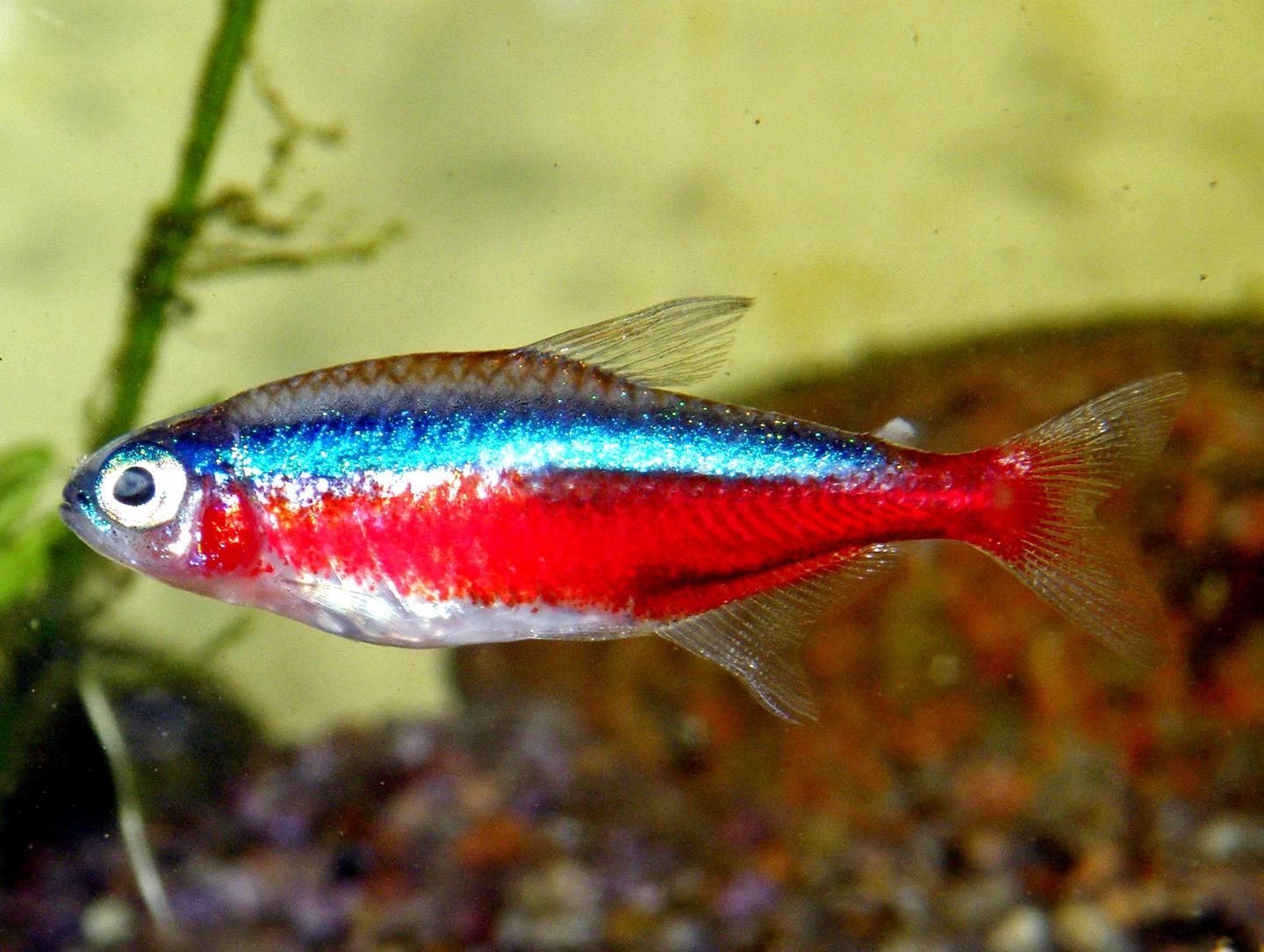
Cardinal tetras are small, social blackwater fish, but they need more than a small volume of water. Our conservative starting policy is a mature, filtered aquarium at least 60 cm long and about 60 litres, a group of 10 or more, a routine target of 24-27 °C, and water chosen from measured supplier and home values rather than a fixed UK tap-water recipe.
Maintain these water conditions for optimal health and vibrant colors
The Cardinal Tetra (Paracheirodon axelrodi) is a small freshwater, midwater tetra in the family Acestrorhamphidae. It comes from South America’s upper Orinoco and Negro River basins, including waters in Brazil, Colombia and Venezuela. FishBase records a maximum of 3 cm standard length, measured to the base of the tail. This calm shoaling fish suits a prepared keeper who can provide mature filtration, measured soft water, a proper social group and peaceful companions.
Plan the aquarium and every companion around that 3 cm adult length. Total length including the tail will be a little greater, and 3 cm is the recorded maximum rather than the size every fish reaches.
Start with a mature, filtered aquarium at least 60 cm long and about 60 litres. Keep at least 10 together at a routine 24–27°C, pH 5.5–7 and 1–8 dGH. These are the conservative planning values in our complete Cardinal Tetra care guide. We classify the fish as intermediate because transport and rapid water changes can expose problems quickly.
Eschmeyer’s Catalog of Fishes places the species in Acestrorhamphidae. Its familiar trade name remains Cardinal Tetra.
| Suits | Not suited to |
|---|---|
| Mature aquariums at least 60 cm long and about 60 litres | New, uncycled or unstable aquariums |
| Groups of 10 or more | Solitary fish, pairs or undersized groups |
| Peaceful communities with measured overlapping water needs | Predators or fish large enough to swallow them |
| Prepared keepers who test and maintain the water | Set-ups chosen only because the fish are small |
One purchase supplies a pack of 10 live Cardinal Tetras. Ten fish meet our minimum social-group policy, but the pack must still fit the aquarium’s swimming space, filtration capacity and existing population. Count every resident at its adult size before adding the group, and make sure all 10 cardinals will be able to reach food without persistent competition.
Plan for all 10 fish at the 3 cm adult standard length, whatever their size on arrival. Aquarium capacity should be planned around the adult group rather than the apparent space occupied during the first few days.
Sex is guaranteed only when the selected option explicitly states male or female. This 10 × Cardinal Tetras listing has no sex-guaranteed option.
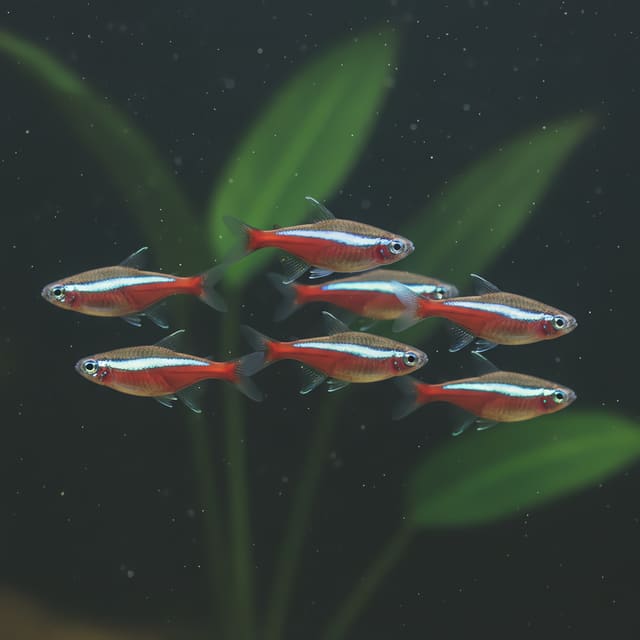
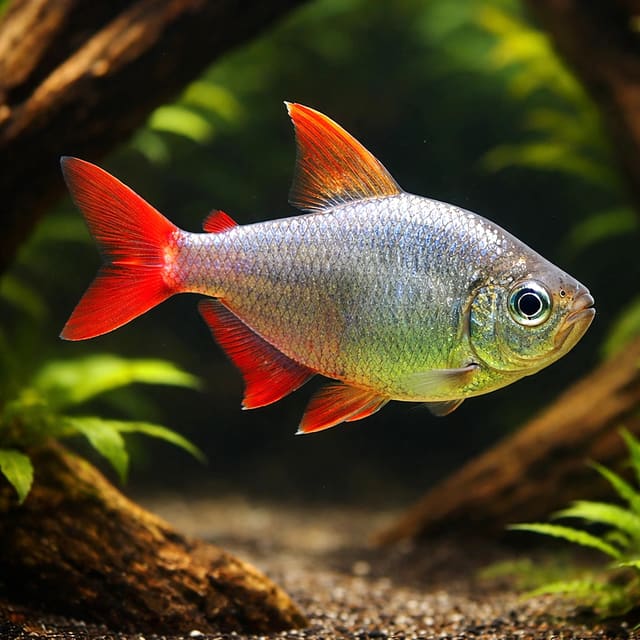
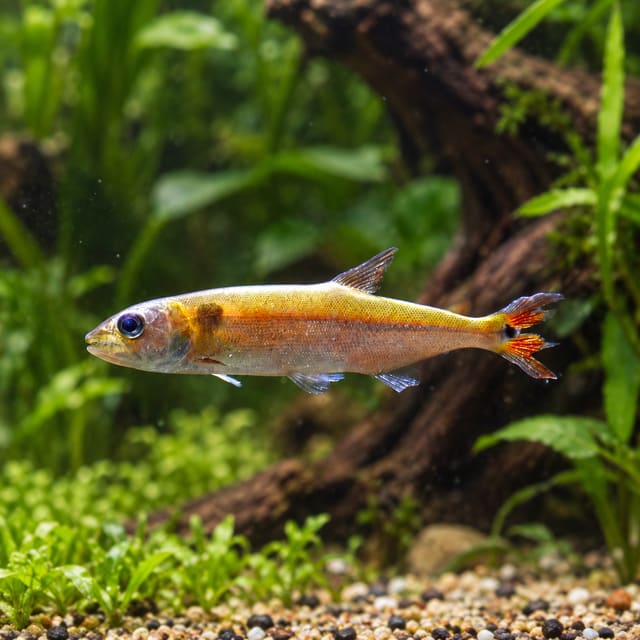
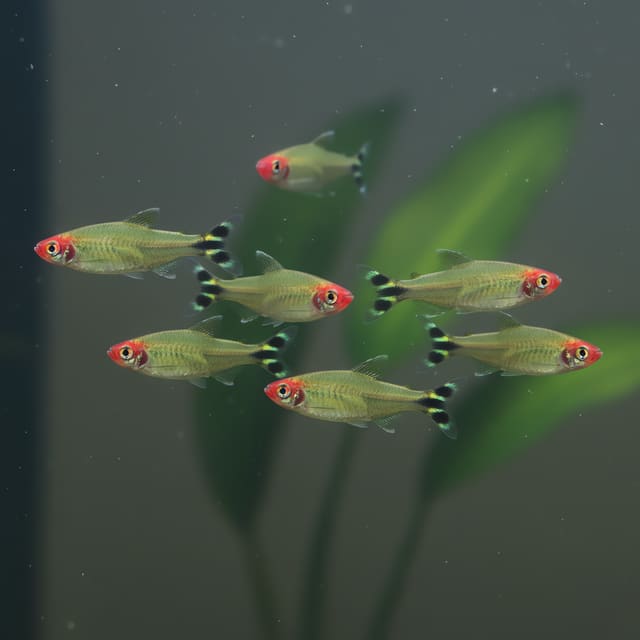
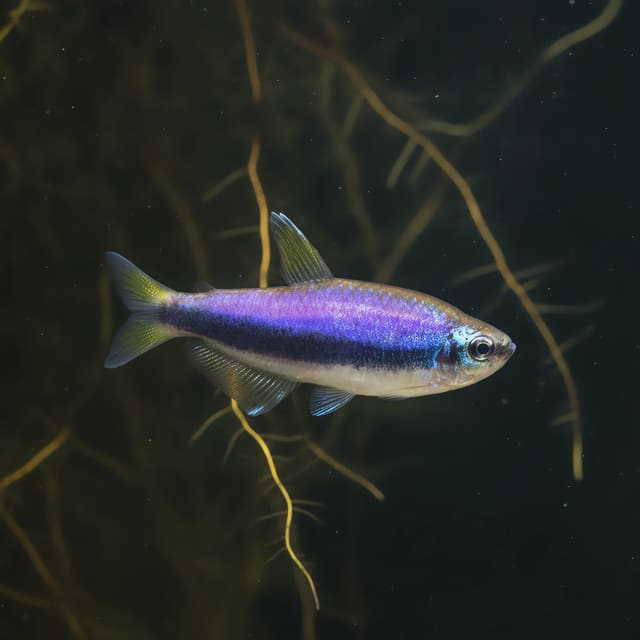
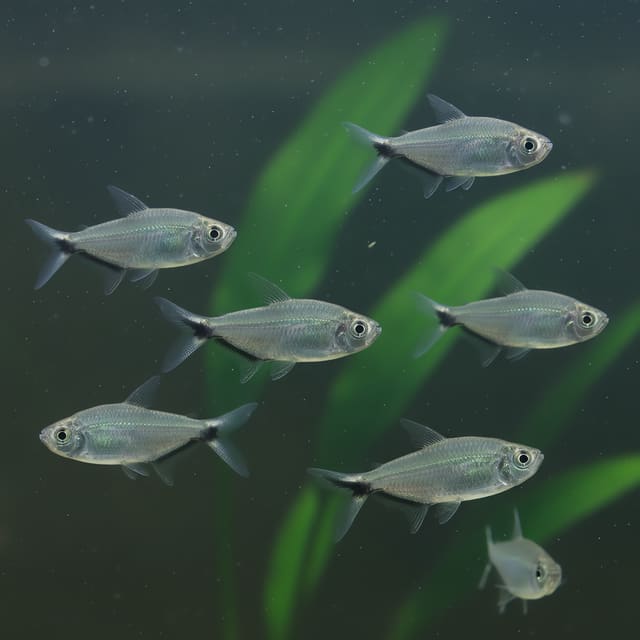
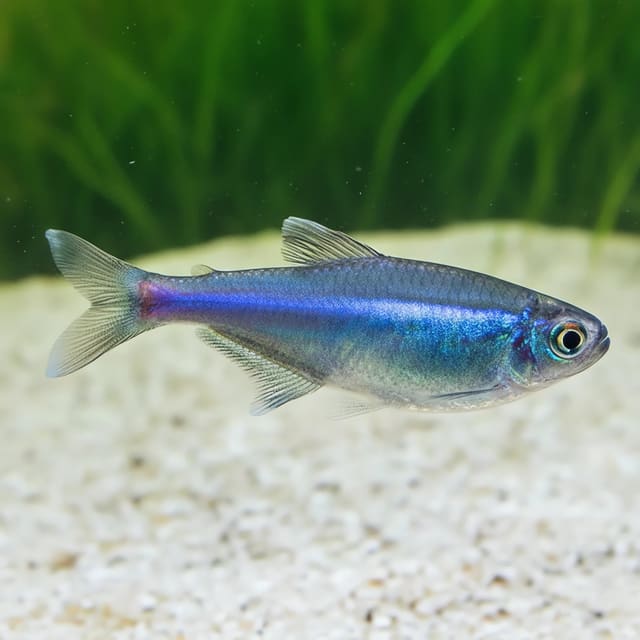
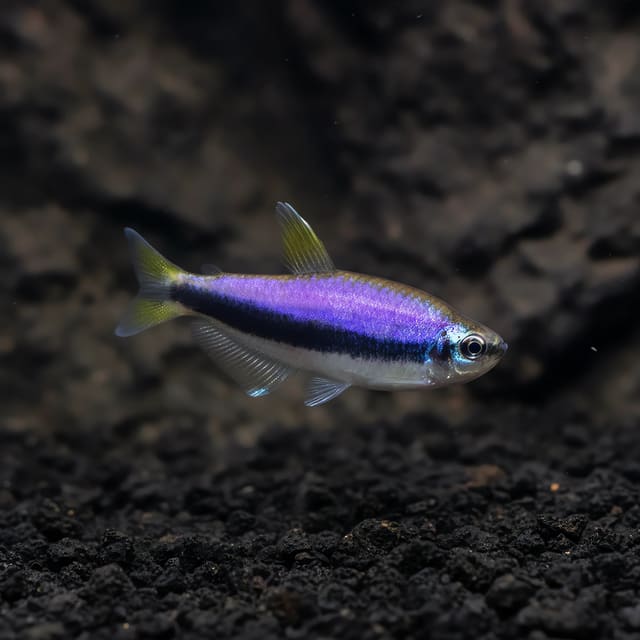
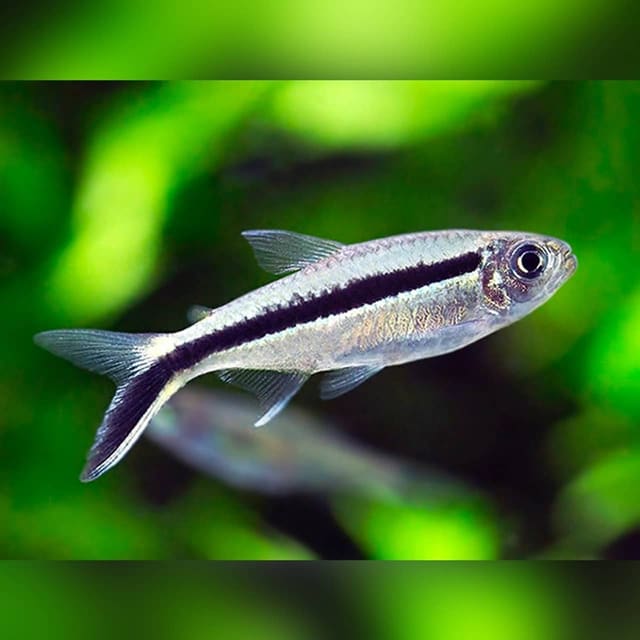
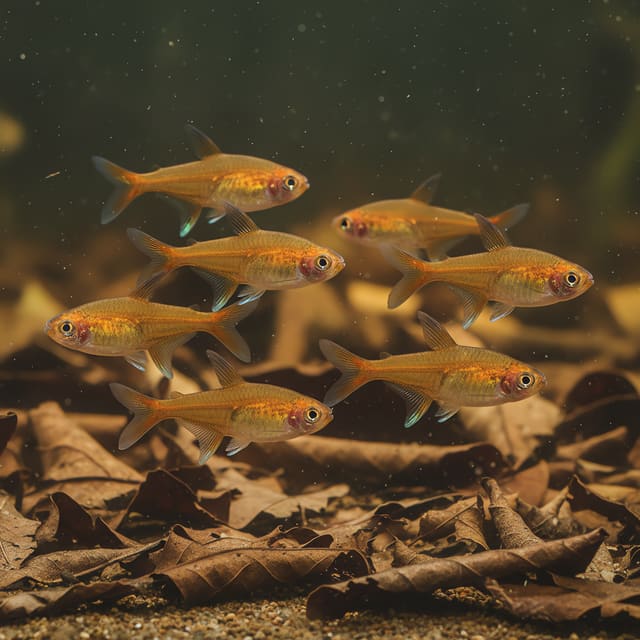
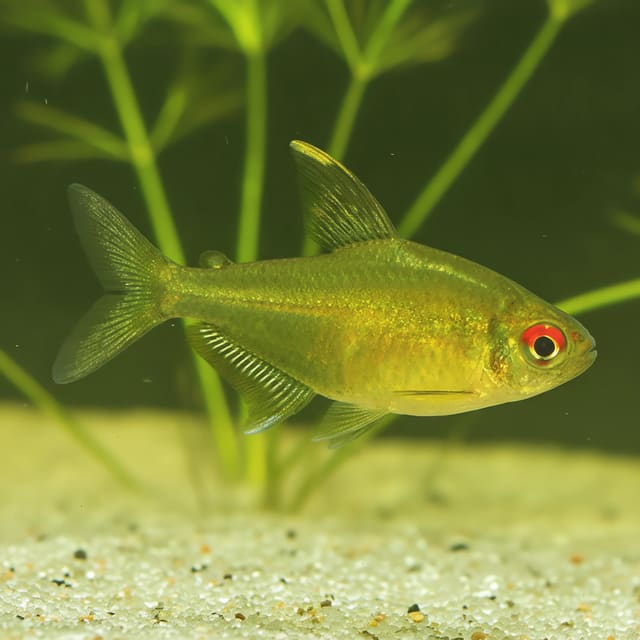
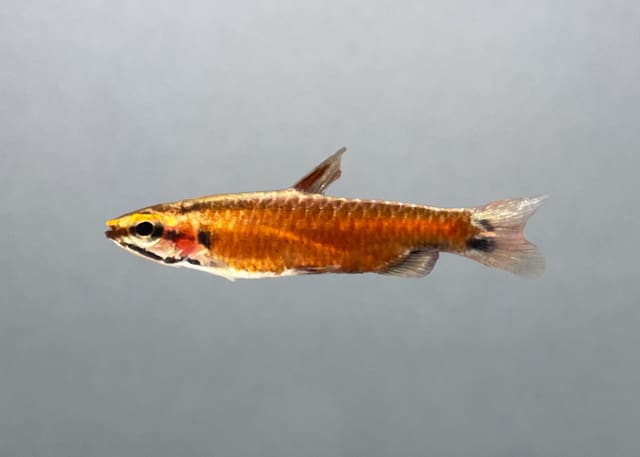
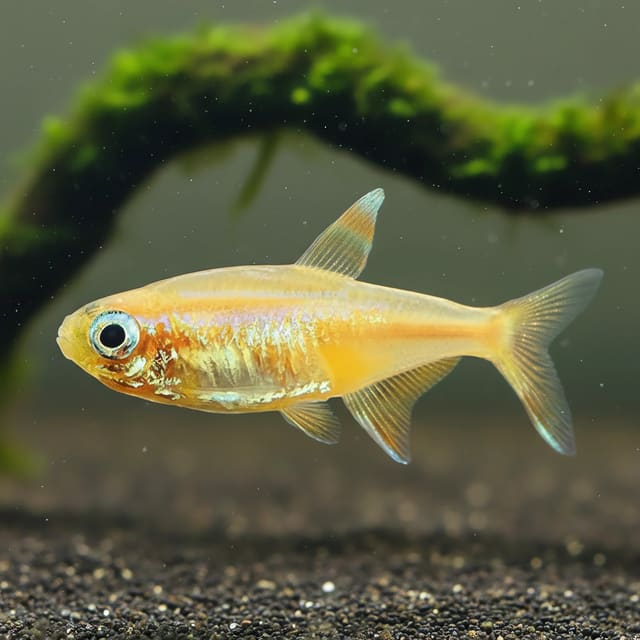
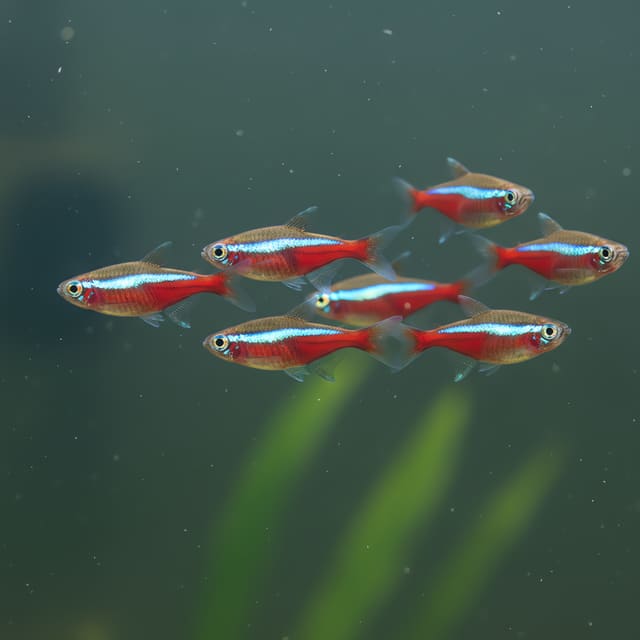
The gallery images are representative of this type of animal rather than photographs of the exact animal supplied, so colours can look slightly different from the live animal.
FishBase describes Cardinal Tetras as shoaling in the middle water layers, while OATA explains that tetras kept singly or in groups that are too small will often become stressed. A group of 10 provides an appropriate social starting point and lets the fish use open midwater space together. It does not increase the aquarium’s capacity, so a larger group or additional fish still require more room and sufficient biological filtration.
Expect the group’s spacing to change with feeding, cover and the movement of other fish. A settled shoal may spread around the aquarium and regroup when disturbed; constant bunching in one corner, persistent hiding or one fish remaining isolated deserves a water-quality and compatibility check.
Use a mature aquarium at least 60 cm long and about 60 litres as the starting point for 10 Cardinal Tetras. Length matters because these fish occupy the middle water layers and need a clear route in which the shoal can spread, turn and regroup. Nominal volume alone can hide a short footprint, a reduced water level or space displaced by bulky décor.
Seriously Fish recommends base dimensions of at least 60 × 30 cm and about 54 litres, while FishBase gives a minimum aquarium length of 60 cm. Our 60-litre starting policy combines that length with a small volume buffer. It is a starting screen, not a litres-per-fish formula: companions, a larger shoal and extensive décor all increase the space required.
A longer aquarium gives more flexibility when combining the cardinals with another social species. If the aquarium can support only one proper shoal, choose one species and keep a coherent group rather than dividing the space between several token groups.
For a new set-up, follow the sequence in our guide to prepare and mature a first aquarium before livestock arrives. Readiness is shown by stable conditions and water tests, not simply by the number of days the aquarium has contained water.
Keep Cardinal Tetras at 24–27°C, pH 5.5–7 and 1–8 dGH. This is Tropical Fish Co’s routine species-level house target: measure the aquarium, compare it with the fish’s holding water and make any necessary changes gradually. Stability within the target is safer than repeatedly chasing an exact midpoint.
FishBase lists a wild environmental range of 23–27°C, pH 4–6 and 5–12 dH. Seriously Fish gives aquarium figures of 23–29°C, pH 3.5–7.5 and 1–12 dGH, and adds that wild specimens do best in more acidic water towards the lower end of that hardness range. OATA’s tetra and pencilfish guidance gives broader values of 22–27°C, pH 6.5–8 and 4–12 dGH for captive-bred tetras generally. Our routine target stays within the wider Seriously Fish species profile, while FishBase’s wild pH and hardness records differ.
Most UK rooms will need a thermostatically controlled aquarium heater to hold 24–27°C throughout the year. Position and operate it according to its instructions, then confirm that the whole aquarium remains within range. A sudden temperature change, even within a broad tolerance range, can be more disruptive than a stable value.
Use our water chemistry guide to understand each measurement, then enter real test results in the water matcher to compare the aquarium with this target. If reverse-osmosis water is needed, measure and remineralise the final mixture rather than relying on a fixed tap-to-RO ratio.
Following OATA’s tetra guidance, keep ammonia and nitrite at zero and prevent nitrate from rising more than 20 mg/l above the normal tap-water level. Test at least weekly and test again whenever fish breathe unusually, lose colour, stop feeding or change their normal swimming pattern. A clear aquarium can still contain invisible nitrogen waste.
The RSPCA explains that a working biological filter provides a home for bacteria that convert toxic ammonia first to nitrite and then to the safer nitrate. The filter must be established before the pack enters the aquarium and maintained without destroying that bacterial population.
In a nominal 60-litre aquarium, 25% is 15 litres, although décor and the water line reduce the true water volume. Use the percentage as a practical starting calculation and keep the routine consistent enough to recognise change.
Additions increase waste and food input immediately, while the bacterial population needs time to respond. The pack already adds 10 fish at once, so add no other fish at the same time and increase the population slowly afterwards. If ammonia or nitrite appears, stop further additions, check filter operation, reduce avoidable waste and make suitable conditioned water changes while monitoring the fish closely.
Arrange plants, wood or other aquarium-safe structures around the sides and rear while preserving a clear horizontal route through the middle. Cardinal Tetras naturally shoal in midwater, so a completely open aquarium can lack security while an overfilled layout can take away the space the group needs to move together.
Seriously Fish describes heavily planted or natural-style arrangements with sand, driftwood roots, branches and dried leaf litter. Decomposing leaves can encourage microbial growth and release humic substances, but remove material if it begins to trap excessive waste or compromises water quality. Natural peat is unnecessary.
A gentle current suits smaller tetras. Watch the shoal after adjusting the filter: fish that are continually pushed into one area or forced to swim hard against the outlet need a gentler flow pattern. Redirect the outlet or use suitable baffling without eliminating circulation and surface movement.
Cardinal Tetras often show their red lower body and reflective blue stripe clearly against darker, shaded surroundings. Colour is also a health and behaviour cue, not a decorating target. If the group becomes unusually pale or remains hidden, check water quality, temperature, breathing, social pressure and lighting together rather than assuming the background alone is responsible.
Use a suitably small, nutritionally complete micro-granule or finely prepared flake as the staple, then add safe small frozen or cultured live foods for variety. Particle size matters: each fish should swallow its food without repeated spitting, and food should be distributed widely enough for less assertive members of the shoal to feed.
FishBase notes worms and small crustaceans in the wild diet. A study of 80 wild Cardinal Tetras from 14 Rio Negro sites found predominantly small animal prey, especially microcrustaceans and chironomid larvae. Those findings guide food type and size; a complete prepared staple provides a practical nutritional base in the aquarium.
OATA advises feeding tetras once a day with only what they consume within a few minutes. Start with a small portion, watch all 10 fish and adjust the next feed according to response and leftovers. Suitable variety named by the care references includes small daphnia, bloodworm, mosquito larvae, Moina and comparable foods that every fish can swallow safely.
Do not collect live food from an unknown outdoor water source. Frozen or cultured variety should be handled according to its instructions, and recurring leftovers should prompt a smaller portion rather than extra cleaning alone.
Finish aquascaping, establish the filter and confirm zero ammonia and zero nitrite before the pack travels. OATA’s tetra guidance asks for zero ammonia and zero nitrite before any fish are added. Record temperature, pH and hardness so you can compare real measurements instead of making a last-minute adjustment based on appearance. Leave enough biological and swimming capacity for all 10 fish.
Tropical Fish Co hand-bags live fish in pure oxygen, uses an insulated poly box and adds a heat pack when the weather calls for it. A licensed live-animal courier carries the parcel. Read the current delivery and Live Arrival Guarantee policy before ordering and make sure someone is present to receive the fish.
OATA advises increasing an aquarium’s population slowly because the beneficial bacteria must respond to the extra waste and feeding. This offer adds 10 fish as one social group, so postpone other additions and monitor the filter closely after introduction.
A brief regrouping response after disturbance is different from persistent distress. Fish that remain at the surface, sit on the bottom, swim erratically or fail to join the shoal need an immediate water and environment check.
Start with water tests whenever behaviour, colour, breathing, appetite or body condition changes. Check ammonia, nitrite, nitrate, pH and temperature, then inspect heater operation, filter flow, recent maintenance, food and the behaviour of companions. Treat a visible sign as a prompt to investigate, not as a diagnosis.
RSPCA fish-health guidance covers normal and concerning signs, and OATA’s tetra guidance lists changes in swimming, breathing, feeding, colour, body condition, fins and scales as reasons to look closer. Warning signs include persistent surface gasping, sitting on the bottom, erratic swimming, clamped or damaged fins, white spots, fluffy growths, wounds, swelling, weight loss and refusal to feed.
Do not apply a generic medicine, salt dose or temperature change solely from a visual symptom. Similar appearances can have different causes, and treatment choice must account for diagnosis, water chemistry and UK medicine requirements.
The MSD Veterinary Manual recommends at least 30 days of quarantine as general professional biosecurity guidance. A quarantine aquarium must itself be mature, heated and matched to the fish; an uncycled container creates a separate welfare risk.
Treat the group as a long-term responsibility. Never release fish, plants, aquarium water or pathogens outdoors. IUCN’s freshwater-fish information brief sets out the conservation context of wild Cardinal Tetra populations and the ornamental trade.
Choose peaceful animals with overlapping temperature, pH and hardness needs, enough room for every social group and mouths too small to swallow a 3 cm standard-length tetra. Avoid any fish large enough to eat Cardinal Tetras. Check the proposed companion at adult size because a juvenile predator can appear harmless before it grows.
Seriously Fish describes the species as generally peaceful and names similarly sized characids, gasteropelecids, lebiasinids, smaller callichthyid or loricariid catfishes and non-predatory small-to-medium-sized cichlids as potentially suitable categories. These are screening categories rather than universal pairings: each exact species still needs compatible water, temperament, social numbers and space.
| Potentially workable | Check before combining |
|---|---|
| Similarly sized peaceful characids | Space for both shoals and equal feeding access |
| Gasteropelecids or lebiasinids | Water overlap, secure layout and social-group needs |
| Smaller callichthyid or loricariid catfishes | Exact temperature, hardness, footprint and diet |
| Non-predatory small-to-medium cichlids | Adult mouth size, territorial behaviour and breeding aggression |
Avoid adult angelfish and other larger cichlids: a fish capable of swallowing a Cardinal Tetra is not made safe by sharing a broad geographical region. Treat territorial fish, persistent fin-nippers and fast feeders that stop the cardinals eating with caution.
Compatibility remains an observation task after the initial screening. A combination can meet the numerical water requirements yet fail because one species dominates food, guards a particular area or repeatedly scatters the shoal. Watch interactions at feeding time and when fish move between cover and open water.
Keep the pack as one group rather than splitting it between aquariums. Ten fish meet the store’s social minimum in one suitable aquarium; two groups of five do not provide the same social setting. If moving the whole group is necessary, prepare the receiving system to the same temperature and measured water target before transfer.
Adult Amano shrimp or larger Neocaridina may coexist in a suitably planned aquarium, but shrimplets and other small vulnerable invertebrates may be eaten. Dense planting can reduce exposure but cannot guarantee survival. Check the invertebrate’s mineral requirements against the soft water selected for the cardinals before combining them.
Introduce no companion merely to fill a swimming level or control waste. Every added animal creates its own space, diet, social and water-quality requirements. Where capacity is marginal, protecting the existing Cardinal Tetra group is the better decision.
FishBase records a maximum of 3 cm standard length, measured to the base of the tail. Use 3 cm as the adult planning figure; total length including the tail will be slightly greater.
Start with a mature, filtered aquarium at least 60 cm long and about 60 litres for a group of 10. Use a larger aquarium for more fish, additional social groups or bulky décor.
Keep at least 10 together. This pack supplies the store’s minimum social group, but the aquarium must still have enough swimming room, filtration capacity and feeding access for every fish.
We classify it as intermediate. It can suit a prepared newer keeper with a mature filter, reliable water tests and stable conditions, but it is a poor choice for a new or unstable aquarium.
Use a suitably small complete micro-granule or finely prepared flake as the staple, with safe small frozen or cultured live variety. Feed once daily and offer only what the group consumes within a few minutes.
Keep it at 24–27°C, pH 5.5–7 and 1–8 dGH under Tropical Fish Co’s routine aquarium target. Measure the aquarium and make changes gradually rather than chasing an exact midpoint.
This fish is generally peaceful. House it with calm companions and respond to persistent chasing, damaged fins or blocked feeding by separating the aggressor and reassessing the combination.
Potential categories include similarly sized characids, gasteropelecids, lebiasinids, smaller callichthyid or loricariid catfishes and non-predatory small-to-medium-sized cichlids. Each exact species still needs matching water, space and temperament.
Tropical Fish Co hand-bags the fish in pure oxygen, uses an insulated poly box and adds a heat pack when the weather calls for it. Transport is by a licensed live-animal courier. Be home to receive the parcel. Start filming every delivery while the parcel is still sealed and before opening it, showing the sealed parcel, the continuous opening and the fish still inside the bag. Float the bag for 20–30 minutes before releasing the fish, and never pour the bag water into the aquarium.
No reviews for this item yet. Bought one? Honest reviews only, good or bad.
What customers say about ordering from us
I have a small group of long finned mountain minnows. So was delighted to be able to order ten of this variety to increase the genetics in my tank . The ones I recieved are healthy but it’s to early to give a verdict on wether they are of a long finned type since they are small currently.
Gordon Walker · 23 Sept 2026
100% success travel and "installation". Pleased with quality of purchase. The Siamese fighter a bit "shy" so have not yet seen him at his best yet but looking good. Happy customer. GG
George E Garratt · 21 Sept 2026
Reviews of our shop, collected by Judge.me, an independent third-party review collector. Newest first.