Moderate
10 × Cardinal Tetras (Paracheirodon axelrodi)
24–27°C · pH 5.5–7 · 60L
£10.99

The Cardinal Tetra (Paracheirodon axelrodi) is a small freshwater tetra from the upper Orinoco and Negro River basins that reaches a recorded maximum of 3.5 cm standard length. It suits prepared keepers who can provide a mature aquarium, a group of at least 10 and a routine target of 24–27°C and pH 5.5–7. Sold as one captive-bred pack of six fish.
Adult size is the maximum length this species reaches at full maturity (scientific sources). The livestock you receive will be younger and smaller. Product-photo provenance and any image-specific limitations are stated on the listing.
Paracheirodon axelrodi
The Cardinal Tetra (Paracheirodon axelrodi) is a small freshwater tetra from the upper Orinoco and Negro River basins that reaches a recorded maximum of 3.5 cm standard length. It suits prepared keepers who can provide a mature aquarium, a group of at least 10 and a routine target of 24–27°C and pH 5.5–7. Sold as one captive-bred pack of six fish.
Adult size is the maximum length this species reaches at full maturity (scientific sources). The livestock you receive will be younger and smaller. Product-photo provenance and any image-specific limitations are stated on the listing.
Cardinal tetras are small, social blackwater fish, but they need more than a small volume of water. Our conservative starting policy is a mature, filtered aquarium at least 60 cm long and about 60 litres, a group of 10 or more, a routine target of 24-27 °C, and water chosen from measured supplier and home values rather than a fixed UK tap-water recipe.
Maintain these water conditions for optimal health and vibrant colors
The Cardinal Tetra (Paracheirodon axelrodi) is a small freshwater member of the Acestrorhamphidae family from South America’s upper Orinoco and Negro River basins. FishBase records a maximum of 3 cm standard length, measured to the base of the tail, and describes shoals occupying the middle water layers. It suits a prepared keeper with a mature, filtered aquarium, measured water and room for a proper social group; it is not a good choice for a newly filled or unstable aquarium.
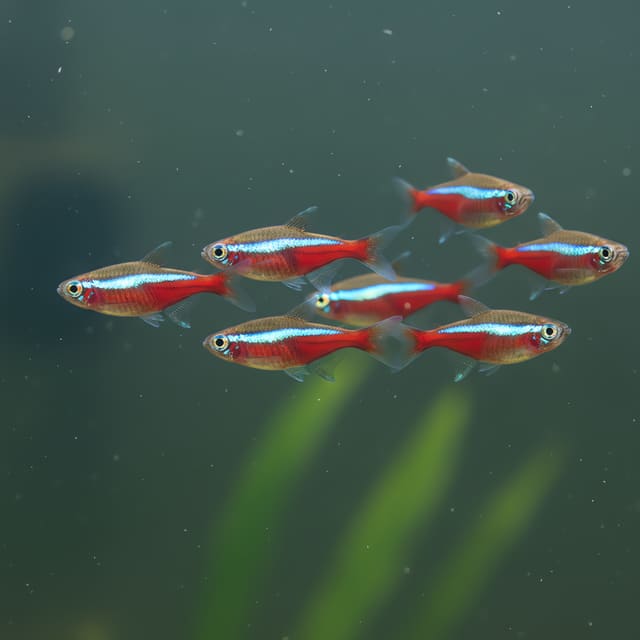
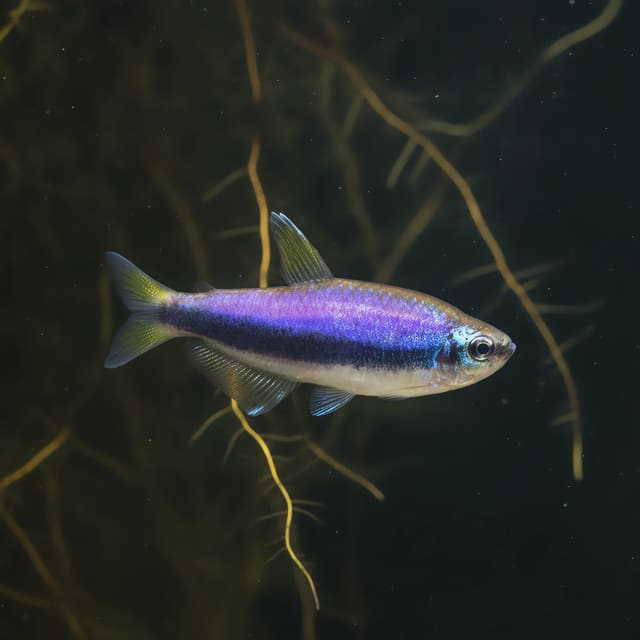
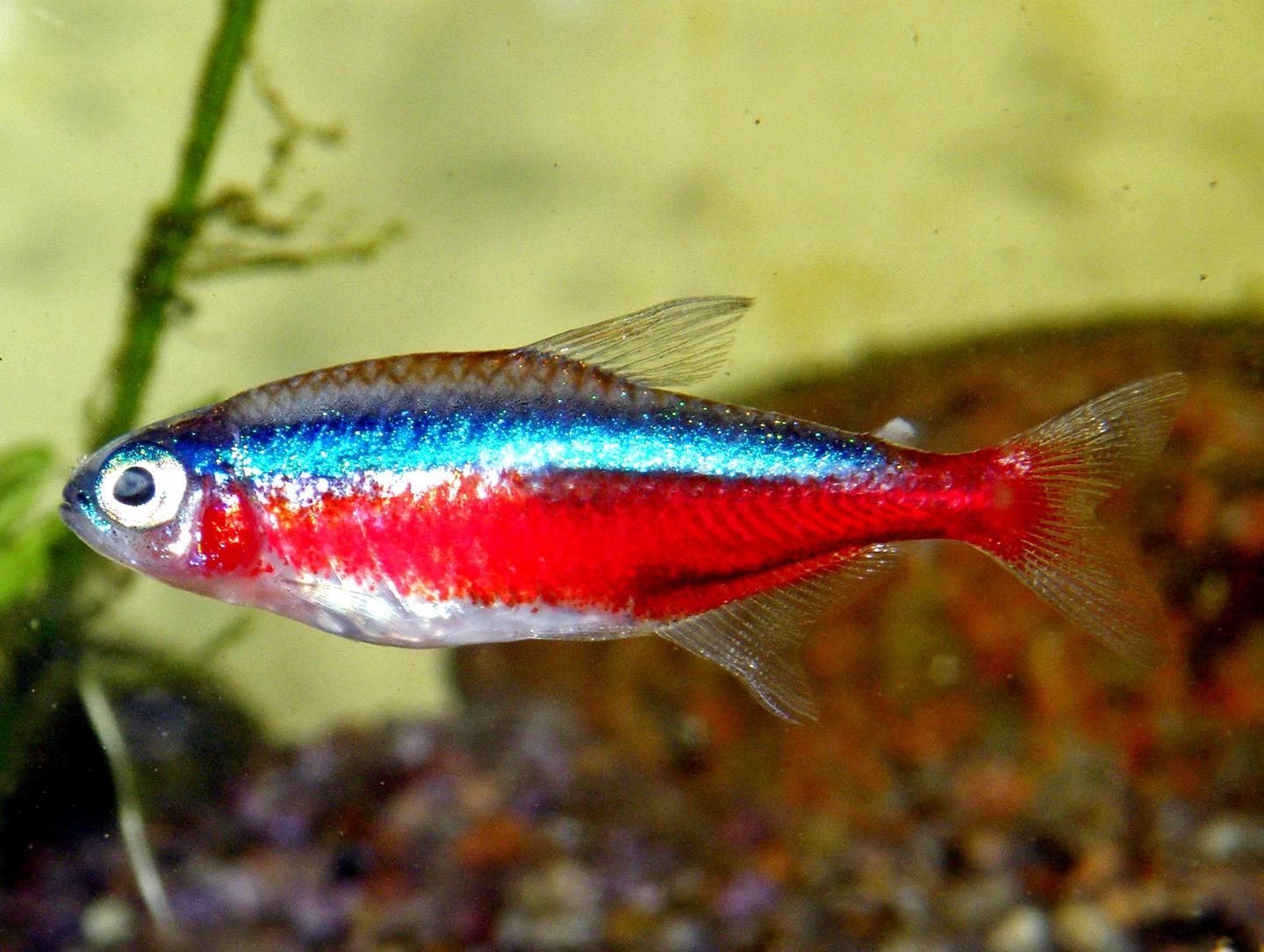
The accepted scientific name remains Paracheirodon axelrodi, with Eschmeyer’s Catalog of Fishes placing it in Acestrorhamphidae. Its familiar pattern combines a bright blue lateral stripe with extensive red along the lower body. The fish is peaceful and active in midwater, where the movement and colour of a coherent group become the main feature of the aquarium.
Start with a mature aquarium at least 60 cm long and about 60 litres. Our complete Cardinal Tetra Care Guide sets a conservative routine target of 24–27°C, pH 5.5–7 and 1–8 dGH, with at least 10 cardinals where the aquarium has the capacity. These are practical starting values for this species, followed by measured comparison and gradual adjustment rather than a fixed recipe for every water supply.
| Suits | Not suited to |
|---|---|
| A mature, filtered aquarium at least 60 cm long | A bowl, vase or short unstable aquarium |
| A completed group of at least 10 | Solitary keeping or a token pair |
| Peaceful companions with overlapping water needs | Fish large enough to eat small tetras |
| A keeper who tests water and adjusts gradually | A first-day setup judged ready by elapsed time alone |
The species is assessed as Least Concern, but that category does not reduce the keeper’s responsibility to provide stable long-term care. Never release aquarium fish, plants or aquarium water outdoors. Plan the full adult community before adding livestock, including the space, filtration and social needs of every group.
One purchase supplies one captive-bred pack of six cardinal tetras. Six fish are fewer than our conservative social minimum of 10, so use this pack as part of a plan that produces a completed group of at least 10 without exceeding the aquarium’s swimming-space or filtration capacity. It can contribute to a carefully assessed established group, or form part of a larger cardinal group planned before introduction.
The pack quantity describes the animals included in the purchase; it is not an adult stocking formula. A nominal 60-litre aquarium is our starting point for 10 cardinals, not permission to add unlimited companions. Check the aquarium’s usable 60 cm length after decor and equipment, count existing occupants, and allow for the adult size and social requirements of every companion.
Sex is guaranteed only when the selected option explicitly states male or female. This 6 × Cardinal Tetras listing has no sex-guaranteed option.
Body shape can vary with maturity, feeding and condition, so build a social group rather than relying on visual guesses about sex. The pack should be assessed as six unsexed fish for stocking purposes. Breeding is a separate specialist project and should not be used as the reason for placing an assumed pair in a community aquarium.
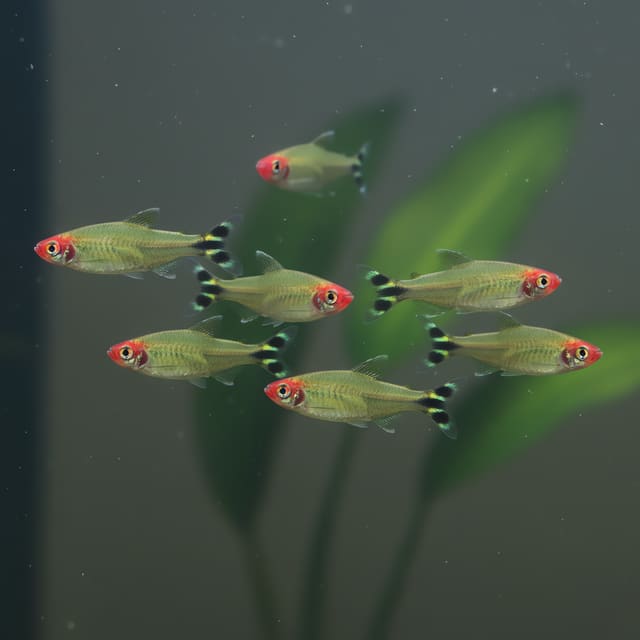
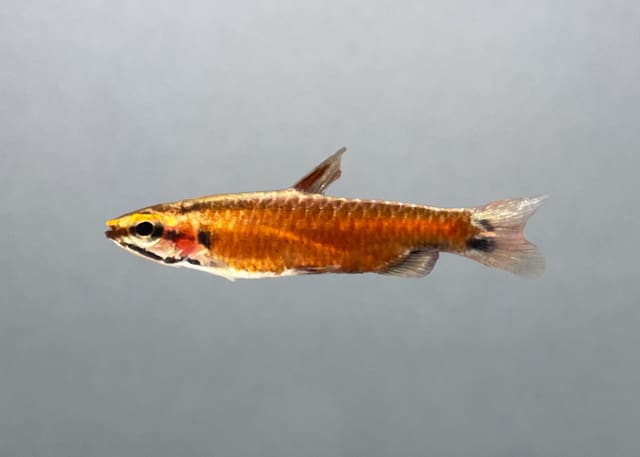
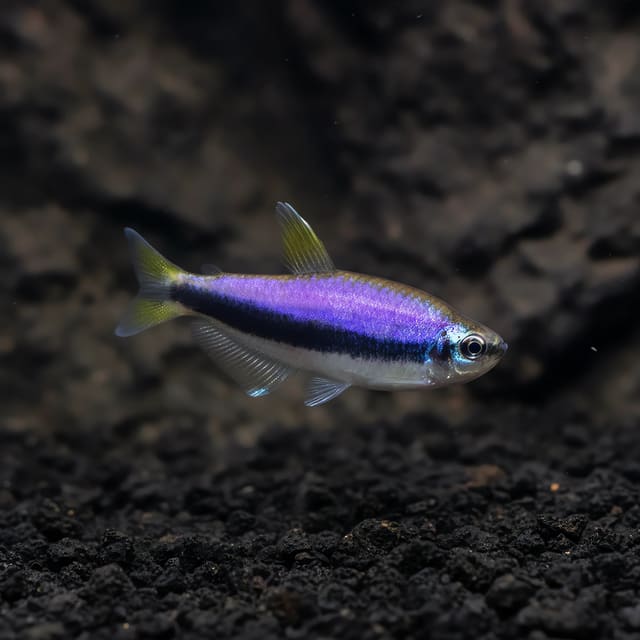
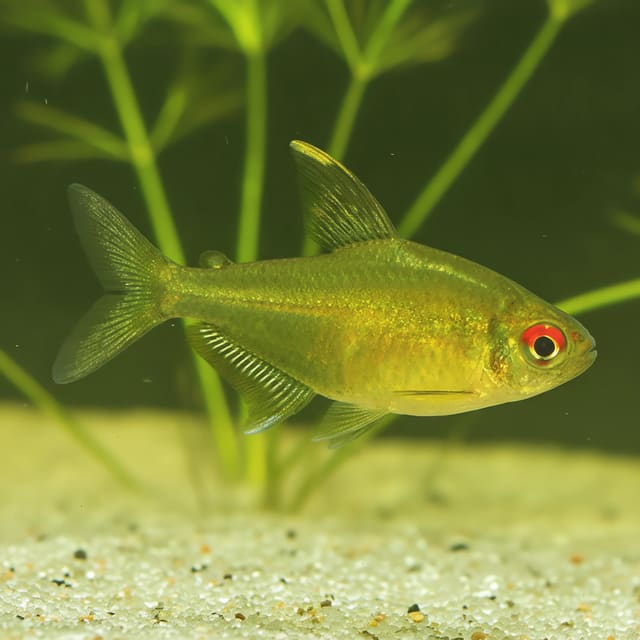
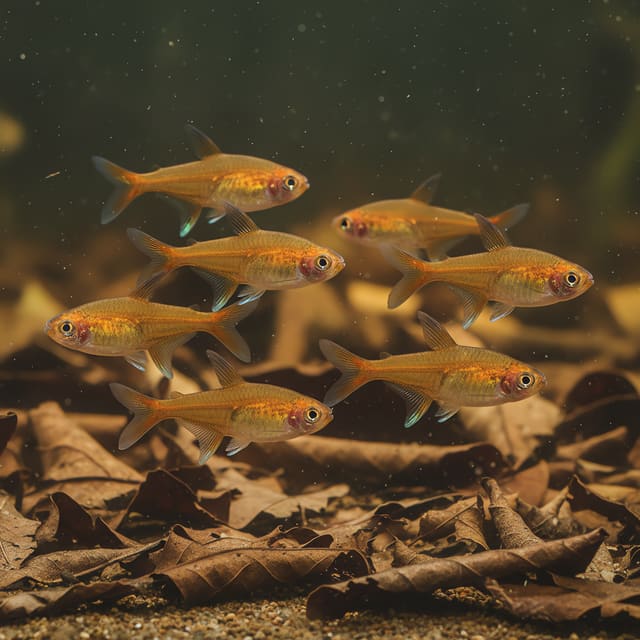
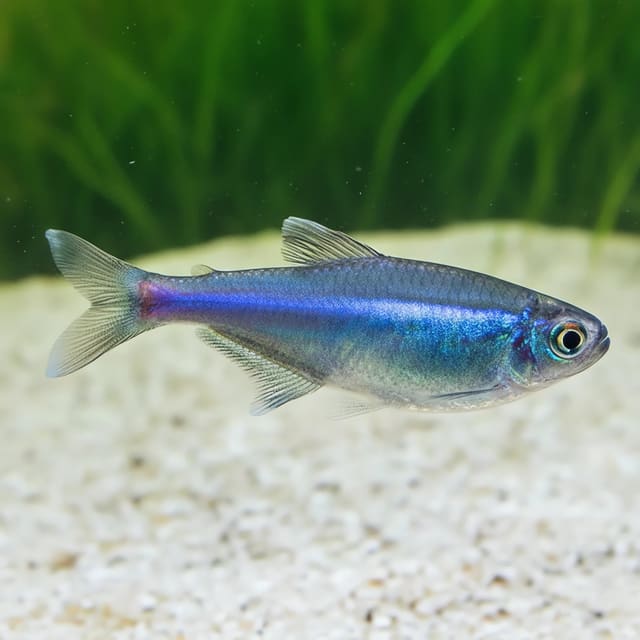
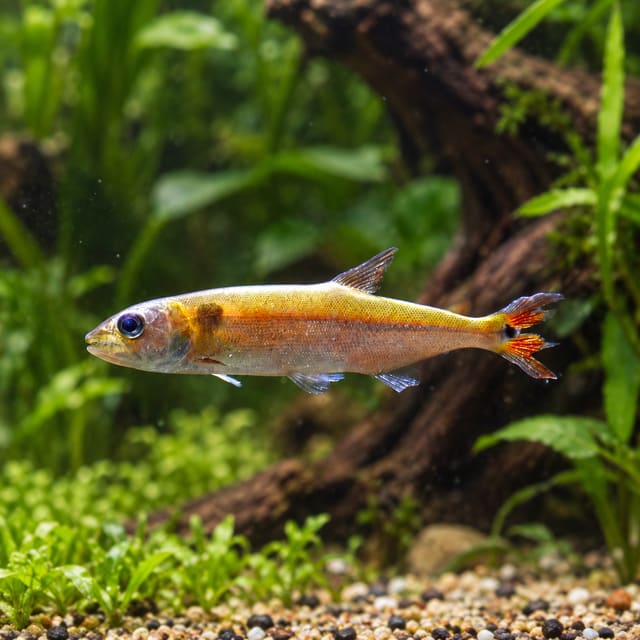
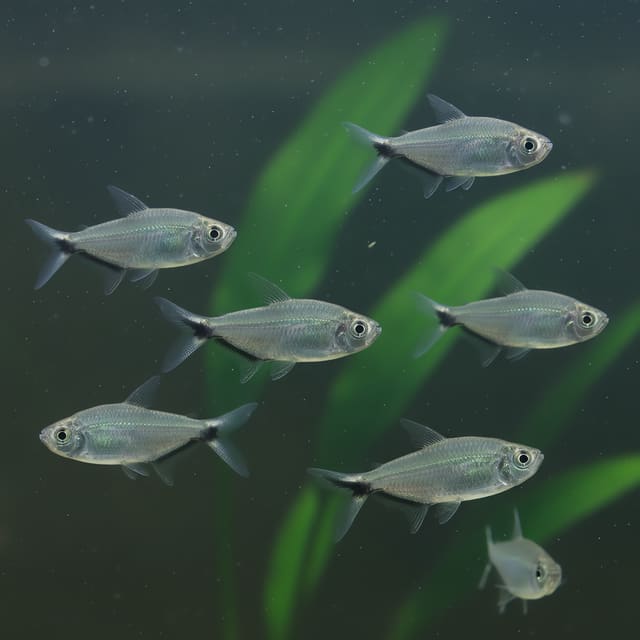
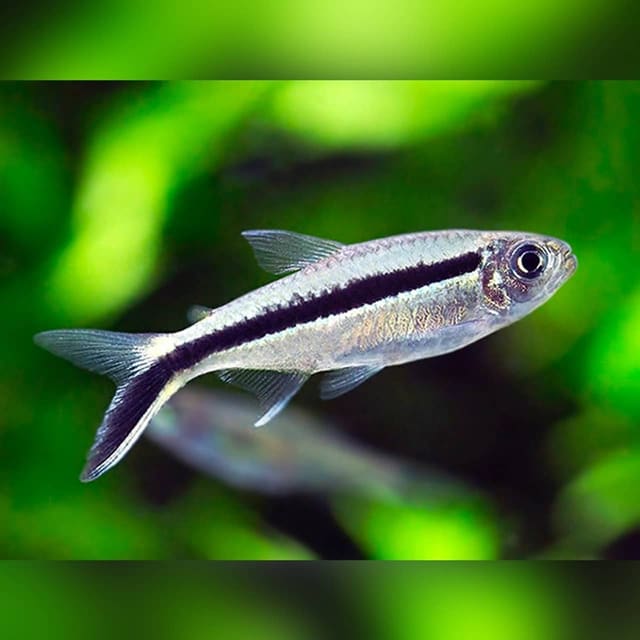
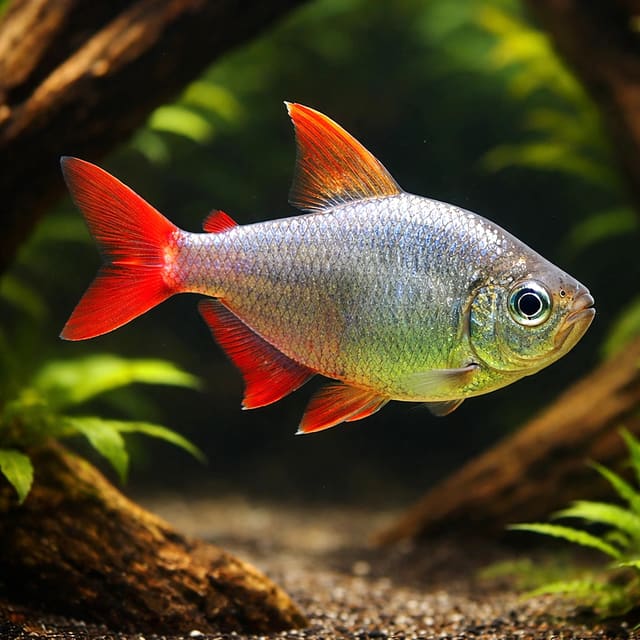
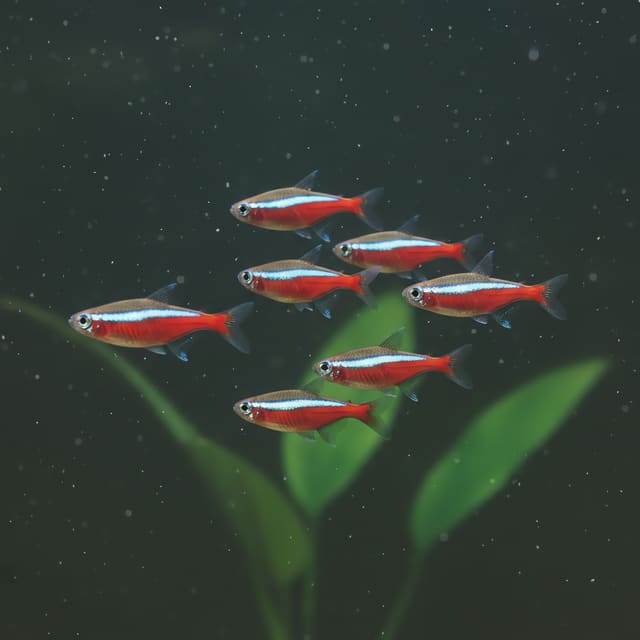
The gallery images are representative of this type of animal rather than photographs of the exact animal supplied, so colours can look slightly different from the live animal.
The gallery shows the red-and-blue pattern and group movement associated with cardinal tetras, but a picture cannot establish the sex, measurements or individual markings of the fish in the pack. Appearance also changes with lighting, background, transport and settling. Judge welfare through breathing, balance, swimming, feeding, fins and water tests rather than expecting every fish to match one frozen image.
Use at least 60 cm of aquarium length and about 60 litres as the starting plan for a group of 10 cardinal tetras. Add more room for a larger group or any companions. Litres alone do not describe swimming length, surface exchange, filter capacity or the space lost to wood, plants and equipment, so check the aquarium’s dimensions and usable open water as well as its nominal volume.
Seriously Fish recommends a base of at least 60 × 30 cm and about 54 litres. Tropical Fish Co uses the slightly more conservative planning figure of about 60 litres alongside the same 60 cm minimum length. A tall aquarium with a short base does not provide the same horizontal route as a longer tank with an open midwater lane.
Plan around a recorded adult maximum of 3 cm standard length. Standard length ends at the base of the tail, so the complete fish is somewhat longer, but do not convert it into an exact promised total length. Seriously Fish lists 35 mm standard length, a different planning reference. The care specification uses FishBase’s 3 cm maximum consistently across the listing.
| Check | Decision |
|---|---|
| 60 cm length and about 60 litres | Starting point for 10 cardinals before companions |
| More than 10 cardinals | Increase space and confirm feeding access and filtration |
| Other shoaling fish | Allow a complete group and swimming area for each species |
| Bottom-dwelling companions | Include their floor area, shelter and water requirements |
| Heavy decor | Keep a clear horizontal route through the middle water |
Do not place a young or small fish in a cramped aquarium on the assumption that an upgrade will happen later. The aquarium should meet the adult plan before the group arrives. This avoids repeated moves and ensures the mature biological filter, heater and layout are already working at the intended scale.
A larger aquarium can offer greater environmental stability, but volume does not compensate for poor maintenance or incompatible stocking. Before adding companions, test the water, check the filter’s established capacity and watch whether every cardinal can swim and feed without persistent crowding.
Keep cardinal tetras at 24–27°C, pH 5.5–7 and 1–8 dGH for routine aquarium planning. Use an independent thermometer and reliable liquid or calibrated tests to confirm the water itself; a heater dial, postcode or description such as “soft water” is not a measurement. Compare current holding water with the aquarium and make gradual, measured changes.
The references describe different contexts. FishBase records 23–27°C, pH 4–6 and 5–12 dGH for the species’ environment, while Seriously Fish gives aquarium ranges of 23–29°C, pH 3.5–7.5 and 1–12 dGH. Tropical Fish Co’s narrower routine target of 24–27°C, pH 5.5–7 and 1–8 dGH is a conservative house policy inside the broader species-level aquarium range. It is a starting screen, not a reason to force rapid corrections.
Test temperature, pH, GH and KH before moving the fish. GH describes dissolved minerals, while KH affects buffering and how readily pH may change. A low reading is not automatically a problem to correct with an unmeasured dose, and a pH number should never be chased independently of hardness and buffering. The water chemistry guide explains which values to test and why.
Most UK rooms need a thermostatically controlled aquarium heater to maintain 24–27°C steadily through the year. Position and operate it according to its instructions, then verify temperature away from the heater with an independent thermometer. Avoid direct sunlight, cold draughts and abrupt changes during maintenance.
If reverse-osmosis water is used, measure the final remineralised or mixed result. Fixed tap-to-RO ratios are unreliable because starting GH, KH and dissolved content vary. Prepare replacement water consistently, treat tap water with conditioner where used, and keep changes gradual enough to avoid sudden shifts in temperature or chemistry.
Use a well-established biological filter and confirm zero ammonia and zero nitrite before adding cardinal tetras. The RSPCA explains that a working biological filter supports bacteria that convert toxic ammonia through nitrite into safer nitrate. Clear water alone does not show that this cycle is established.
Prepare the aquarium by testing rather than waiting a fixed number of weeks. The first tropical tank guide sets out the maturation sequence before livestock arrives. Record ammonia, nitrite, nitrate, pH and temperature so a change can be recognised quickly instead of relying on memory.
OATA’s tetra sheet gives maintenance guidance for the group, not a species-specific optimum: ammonia and nitrite should remain at zero mg per litre, while nitrate should not exceed 20 mg per litre above the normal tap-water level. Test at least once per week and test promptly after unusual behaviour, a filter interruption, overfeeding or a substantial stocking change.
If filter media needs cleaning, do not run it under the tap. Rinse it lightly in aquarium water removed during the partial water change, which reduces the loss of established bacteria. Do not replace all established biological media at the same time unless the equipment manufacturer’s safety instructions require a specific action.
Stocking raises the amount of waste the filter must process. Add fish only when the aquarium has capacity, and continue testing as the bacterial population adjusts to increased feeding and waste. If ammonia or nitrite appears, stop treating the calendar as proof of maturity: test again, reduce avoidable waste, check filter operation and protect the livestock while the cause is addressed.
A planted aquarium still needs filtration and testing. Plants can use nitrogen compounds, but they do not turn an immature filter into a mature one or prevent every water-quality problem. Stable results, routine maintenance and direct observation work together.
Create a long, open route through the middle of the aquarium, with cover around the sides and rear. Cardinal tetras occur mainly in shoals in middle water, so they need room to spread, turn and regroup. Plants, aquarium-safe wood and shaded edges can provide security without filling every part of the swimming area.
A natural-style arrangement can use sand, driftwood roots, branches and dried leaf litter. Seriously Fish notes that decomposing leaves can encourage microbe colonies and release humic substances, while plants and wood create a more sheltered appearance. Use only aquarium-safe materials, remove anything that decays excessively or traps waste, and leave access for siphoning and inspection. Natural peat is unnecessary and its collection is environmentally damaging.
Keep the current gentle enough for small tetras to hold position without continuous effort, while maintaining circulation and surface movement. Watch the fish rather than judging flow only from a filter rating. A group compressed into one sheltered corner, repeatedly swept away from food or forced to swim continuously against the current needs a layout or flow adjustment.
| If you see | Do this |
|---|---|
| The group uses the full middle level | Keep the present balance of cover and open water |
| Fish avoid the brightest zone | Add shade or reduce harsh exposure, then check water and behaviour |
| Fish struggle in one current | Redirect or diffuse the flow while preserving circulation |
| Food disappears into dense decor | Feed over visible open water and remove recurring waste |
| Debris collects behind wood | Adjust circulation and siphon the dead spot during maintenance |
Use subdued or moderated lighting with a consistent day-and-night cycle. A controlled experiment discussed in the store care guide found colour fading under excessive illumination, but pale colour can also accompany transport, illness or water problems. Treat a colour change as a prompt to test and observe, not as proof that lighting is the only cause.
A dark background may make the red and blue pattern easier to see, but decor is not a treatment and colour intensity is not the sole measure of welfare. Breathing, balance, feeding, group position and intact fins give a fuller picture.
Feed a suitably small complete food as the staple, once a day, in an amount the group consumes within a few minutes. Spread particles across the shoal so every fish has access, and reduce the next portion if food repeatedly reaches the substrate or filter uneaten. Cardinal tetras have small mouths, so particle size is as important as the food name.
Wild feeding helps explain the emphasis on small animal prey. Walker’s study of 80 wild cardinal tetras across 14 Rio Negro basin sites found predominantly small invertebrate material, especially microcrustaceans and chironomid larvae. FishBase also records worms and small crustaceans, while Seriously Fish describes a broader natural menu that includes small invertebrates, crustacea, filamentous algae and fallen fruit.
In the aquarium, use a reputable fine complete flake or micro-granule that the fish can swallow cleanly. Add safe, suitably small live or frozen variety such as Daphnia or small bloodworm where appropriate. Variety complements the complete staple; a single frozen food is not a complete long-term diet.
Overfeeding creates waste that can raise ammonia and nitrite and increase nitrate. Do not use extra food as a shortcut to faster growth, and do not assume visible algae supplies a complete diet. Review the amount after adding fish, changing temperature or altering the filter because each can change feeding response or waste processing.
Body condition should remain steady without pinched bellies or progressive swelling. A single missed response is an observation; repeated refusal, weight loss, rapid breathing or isolation requires water-quality checks and closer health assessment. Avoid diagnosing a disease from appetite alone.
Prepare the mature aquarium and confirm its readings before the parcel arrives. The current delivery and Live Arrival Guarantee policy describes hand-bagging in pure oxygen, an insulated poly box and a heat pack when weather calls for it. Someone must be present to receive live fish, and the parcel must be opened and inspected on the day it arrives.
Keep the continuous unboxing video with your order number. The video should show the sealed parcel, the opening and the fish still inside the sealed bag before anything is disturbed.
Separately from that arrival sequence, check the receiving aquarium’s temperature, ammonia and nitrite before release. OATA advises zero ammonia and zero nitrite when fish are introduced, and warns that adding livestock too quickly can exceed the capacity of the established bacterial population. Do not solve a failed water test by releasing fish and hoping the filter catches up.
Transport can temporarily affect colour and shoal position, so use several welfare signs together. A fish that remains unable to balance, breathes with obvious effort, develops visible damage or fails to join the group needs prompt assessment. Keep a record of water results and observations so changes can be compared accurately.
Test ammonia, nitrite, nitrate, pH and temperature when behaviour or appearance changes. A settled cardinal tetra should maintain balance, breathe without obvious effort, hold its fins normally, move with the group and respond to suitable food. Persistent surface hanging, bottom sitting, erratic swimming, rapid or unusually slow gill movement, spots, fluffy growths, wounds, swelling, weight loss or isolation require investigation.
RSPCA fish-health guidance places water-quality checks at the start of the response because several problems can produce similar visible signs. Check the heater, filter flow, recent maintenance, new livestock, feeding and social pressure. Do not name a disease from colour loss, a bent posture or reduced appetite alone.
Quarantine new fish in a separate mature system with dedicated equipment. The MSD Veterinary Manual recommends at least 30 days in its professional aquarium-fish biosecurity guidance, with longer periods where circumstances require. A quarantine aquarium still needs stable temperature, established filtration, tests, shelter and daily observation.
Avoid blind treatment. Different diseases, injuries and water-quality failures can look alike, and an unsuitable medicine or dose can add further stress. For diagnosis and treatment planning, the OATA fish-vet directory provides a route to UK veterinary help.
Clean nets and equipment between systems and avoid moving water, filter media or decor from quarantine into the display without a biosecurity plan. Continue observing the rest of the group because one visible case may not be the only affected fish.
Plan for long-term care without attaching a fixed lifespan promise. Stable water, suitable food and social housing support welfare, but age at purchase, health history and husbandry vary. Daily observation and weekly records are more useful than expecting every fish to follow one age estimate.
Plan this pack as part of a healthy social display rather than an assumed breeding pair. Cardinal tetra breeding is possible but difficult, and a community aquarium is not a controlled spawning system. The absence of eggs does not indicate poor health, while a rounded body does not establish reproductive condition or sex.
Seriously Fish recommends a dedicated, very dimly lit breeding aquarium with fine-leaved plants, spawning mops or a protective mesh. Its breeding guidance uses soft, acidic water at pH 5.5–6.5, 1–5 dGH and around 26.5–29°C, with gentle sponge filtration. These are breeding-project values, not replacements for the routine display target of 24–27°C, pH 5.5–7 and 1–8 dGH.
FishBase reports that eggs hatch in 24–30 hours and fry become free-swimming after three to four days in captivity. Those timings describe reproduction under suitable conditions rather than a promise for a home attempt. Fry require their own safe environment, appropriately small food and stable water before any breeding project begins.
Do not create abrupt pH, hardness or temperature changes in a stocked display to trigger spawning. Keep written measurements, change one controlled factor at a time and stop if adult welfare deteriorates. A stable display group remains the appropriate objective when the separate breeding requirements cannot be met.
Avoid any fish large enough to eat cardinal tetras. OATA’s rule for smaller tetras is direct: they should not be kept with fish capable of eating them. Apply that assessment at the companion’s adult size rather than judging a juvenile that is temporarily similar in length.
Choose peaceful companions with overlapping temperature, pH and hardness requirements. Seriously Fish describes cardinal tetras as generally peaceful and identifies similarly sized characids, gasteropelecids, lebiasinids, smaller callichthyid or loricariid catfishes and non-predatory small-to-medium-sized cichlids as potentially suitable categories. Each exact species still needs its own water, adult-size, social and space assessment.
Use caution with adult angelfish, territorial fish and persistent fin-nippers. The store care guide does not treat adult angelfish as guaranteed companions because a larger fish can prey on a small tetra. Territorial pressure can also exclude cardinals from feeding or open water even when direct injury is not immediately visible.
Shrimp need a separate risk assessment. Adult Amano shrimp or larger Neocaridina may coexist in a suitably planned aquarium, but shrimplets and other small vulnerable shrimp can be eaten. Dense planting can reduce exposure but cannot guarantee survival. Their mineral requirements must also overlap with the water selected for the cardinals.
Regional origin or a generic “community fish” label is not enough. Two South American species can require different water, space or behaviour management. Likewise, two small fish are not automatically compatible if one needs harder water, a different temperature or a separate social group that the aquarium cannot hold.
For a mixed plan, contact us with the aquarium dimensions, measured water, mature stocking list and intended group sizes. The assessment should cover every species together rather than approving one pair of names in isolation.
Keep at least 10 cardinal tetras under our conservative care policy. FishBase gives a floor of five, Seriously Fish recommends at least eight to 10 and OATA says tetras should be kept in groups of at least five, with more being better. Tropical Fish Co uses 10 as the practical minimum for this species where total aquarium capacity allows.
This pack contains six fish, so it does not by itself meet that 10-fish plan. Six added to an established compatible group of four would produce 10; six added to an established group of six would produce 12. In either case, confirm the aquarium can support the completed number before combining fish. Arithmetic does not replace filtration, swimming-space or quarantine decisions.
Cardinals are generally peaceful rather than territorial display fish. Watch for persistent chasing, damaged fins, exclusion from food or one fish remaining apart from the group. These observations can indicate social pressure, but they can also accompany water problems or illness, so test the aquarium before changing stocking.
| Observation | Response |
|---|---|
| The group spreads through open midwater | Maintain the present cover, flow and companion balance |
| The shoal tightens briefly after disturbance | Observe whether normal movement returns |
| One fish is repeatedly excluded at feeding | Spread smaller particles and assess social pressure |
| The whole group hangs at the surface | Test water and check circulation immediately |
| Fins become damaged | Assess companions, decor, water and health together |
Do not divide the intended social number across different tetra species. Five cardinals and five unrelated tetras are not the same social plan as 10 cardinals, because each species forms its own group. If the aquarium cannot hold complete groups for two schooling species, choose one complete group and give it the available space.
They reach a recorded maximum of 3 cm standard length, measured to the base of the tail. Plan the aquarium around that adult figure.
Use a mature, filtered aquarium at least 60 cm long and about 60 litres for a completed group of 10, with more room for companions or a larger group.
Keep them in a group of at least 10 under Tropical Fish Co’s conservative care policy, provided the aquarium has enough filtration and swimming space.
They suit prepared keepers who understand cycling, testing and gradual water adjustment, but not a new or unstable aquarium. Tropical Fish Co classifies their care as intermediate.
Feed them a suitably small complete flake or micro-granule once daily, with safe small live or frozen variety such as Daphnia or small bloodworm.
Keep it at 24–27°C, pH 5.5–7 and 1–8 dGH under Tropical Fish Co’s conservative routine target, using measured water and gradual adjustments.
It is generally peaceful. Keep a proper group and watch for persistent chasing, damaged fins or feeding exclusion while also checking water quality.
Potential companions include similarly sized characids, gasteropelecids, lebiasinids, smaller callichthyid or loricariid catfishes and non-predatory small-to-medium cichlids after full water, space and temperament screening.
Start filming with the parcel still sealed before opening or floating the bag, and continue until the fish are visible inside the sealed bag. Inspect it the same day, then float the bag for 20–30 minutes before release.
No reviews for this item yet. Bought one? Honest reviews only, good or bad.
What customers say about ordering from us
I have a small group of long finned mountain minnows. So was delighted to be able to order ten of this variety to increase the genetics in my tank . The ones I recieved are healthy but it’s to early to give a verdict on wether they are of a long finned type since they are small currently.
Gordon Walker · 23 Sept 2026
100% success travel and "installation". Pleased with quality of purchase. The Siamese fighter a bit "shy" so have not yet seen him at his best yet but looking good. Happy customer. GG
George E Garratt · 21 Sept 2026
Reviews of our shop, collected by Judge.me, an independent third-party review collector. Newest first.