Moderate
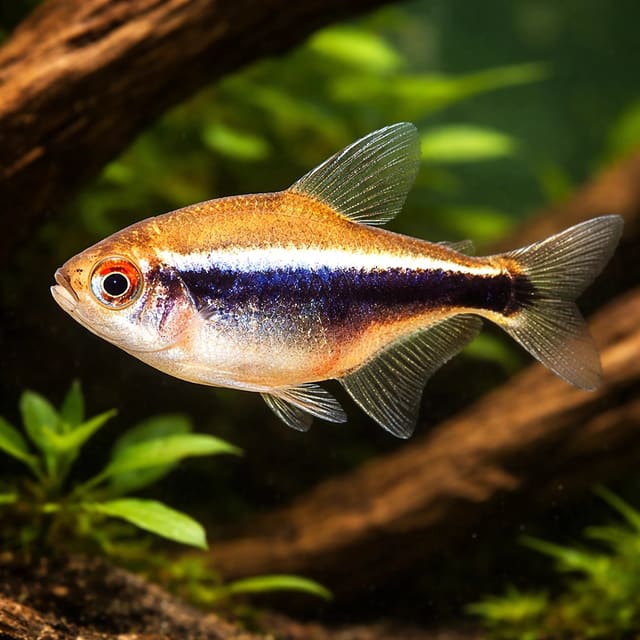
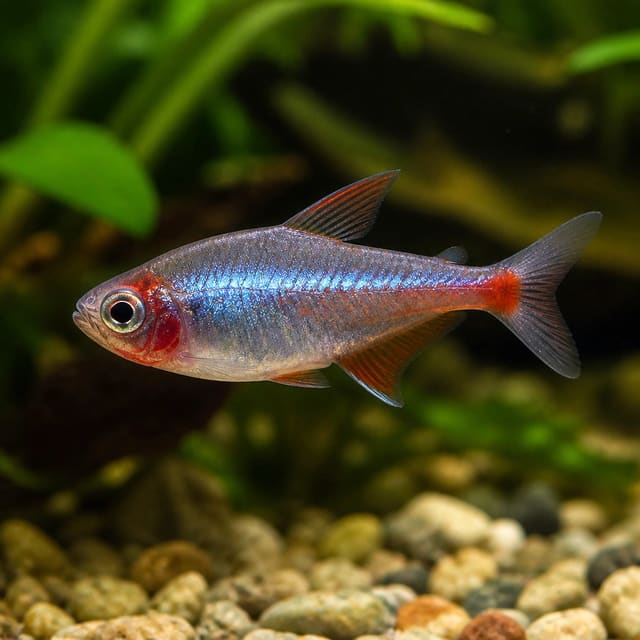
Neon Tetra (Paracheirodon innesi)
21–25°C · pH 5–7
£2.99

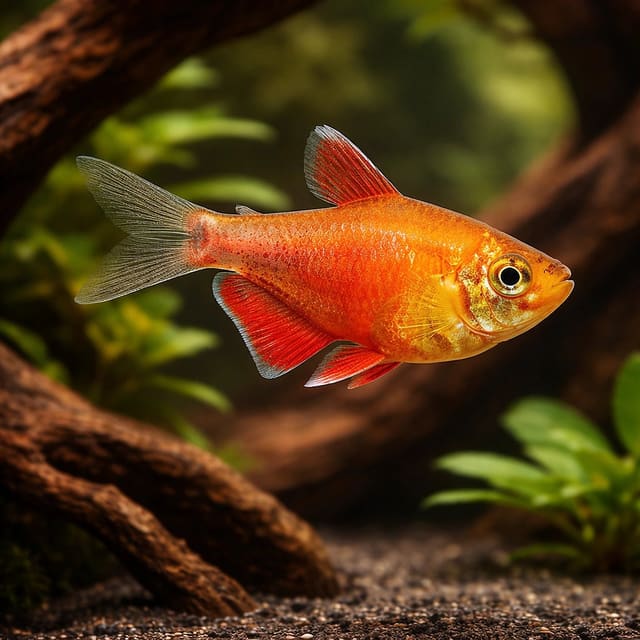
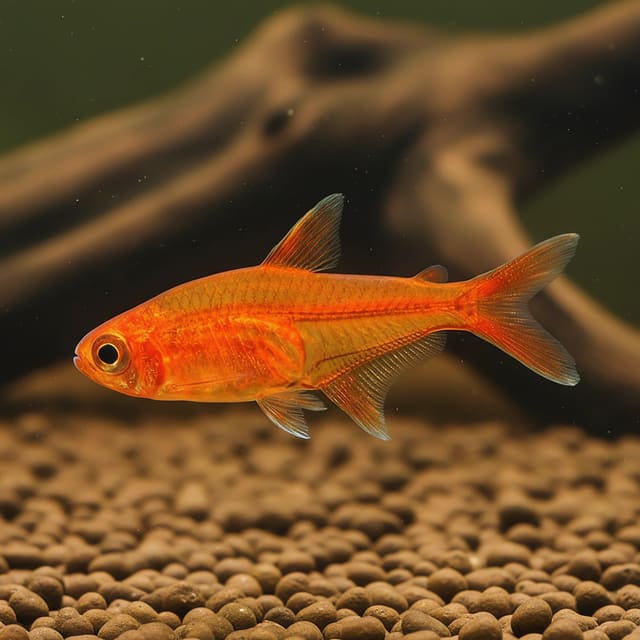
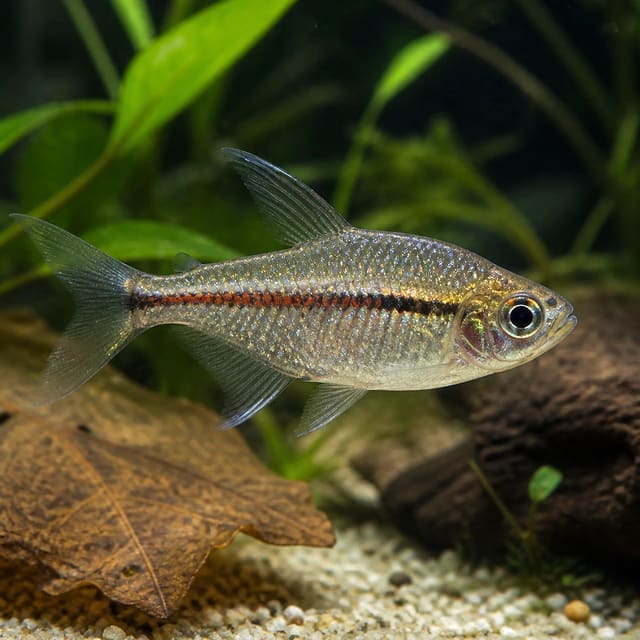
The Flame Tetra Diamond (Hyphessobrycon flammeus) is an American tetra from streams and coastal rivers in south-eastern Brazil that reaches a maximum recorded 2.6 cm standard length. Keep at least 8–10 in a mature, filtered aquarium with a base of at least 60 × 30 cm; Seriously Fish and OATA guidance overlap at 22–26°C and pH 6.5–7.5. Sold individually in 2.5 cm and over 3 cm dispatch sizes.
Adult size is the maximum length this species reaches at full maturity (scientific sources). The livestock you receive will be younger and smaller — pick a size above for the actual shipping size. Product-photo provenance and any image-specific limitations are stated on the listing.
Hyphessobrycon flammeus
Shoaling fish: kept in a group they feel safer, stay calmer and show their best colour.
Minimum of 2 per order.
The Flame Tetra Diamond (Hyphessobrycon flammeus) is an American tetra from streams and coastal rivers in south-eastern Brazil that reaches a maximum recorded 2.6 cm standard length. Keep at least 8–10 in a mature, filtered aquarium with a base of at least 60 × 30 cm; Seriously Fish and OATA guidance overlap at 22–26°C and pH 6.5–7.5. Sold individually in 2.5 cm and over 3 cm dispatch sizes.
Adult size is the maximum length this species reaches at full maturity (scientific sources). The livestock you receive will be younger and smaller — pick a size above for the actual shipping size. Product-photo provenance and any image-specific limitations are stated on the listing.
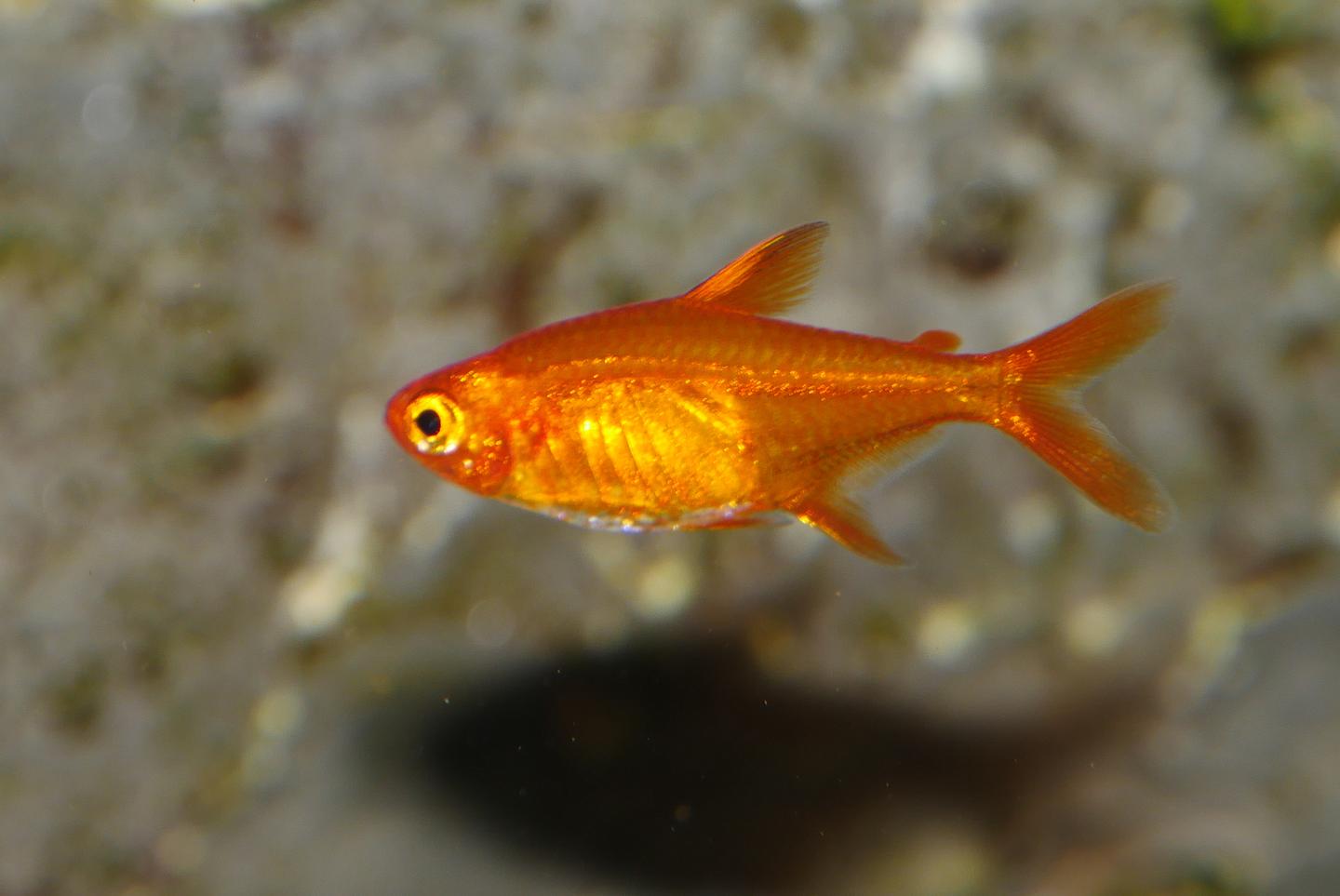
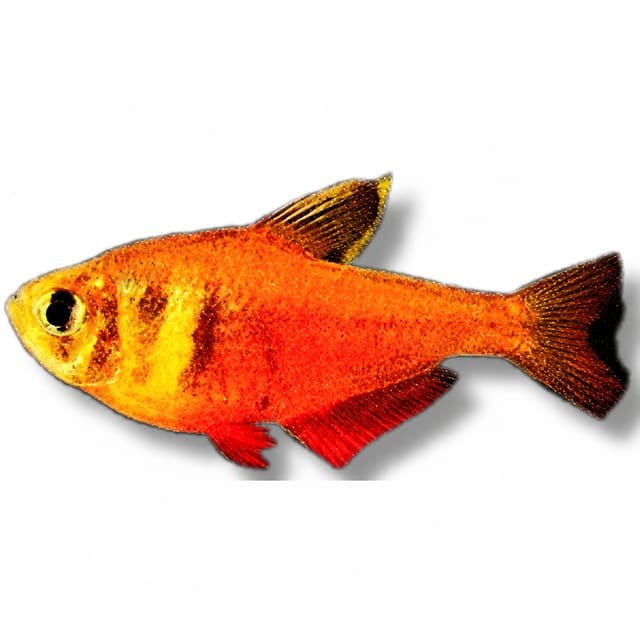
Ember tetras are very small Brazilian social fish, with a maximum recorded length of 2.0 cm excluding the tail. Keep them only in a fully cycled, stable aquarium. We recommend a group of at least 10 and about 45 litres with a 45 × 30 cm footprint rather than using a litres-per-fish formula.
Maintain these water conditions for optimal health and vibrant colors
The Flame Tetra Diamond (Hyphessobrycon flammeus) is a small American tetra from streams and coastal river systems in south-eastern Brazil. It reaches a maximum recorded standard length of 2.6 cm and suits a keeper prepared to maintain a proper group in a mature, filtered aquarium. The diamond name identifies an ornamental form of the flame tetra rather than a different wild species.
FishBase places the flame tetra in Acestrorhamphidae and records it around Rio de Janeiro river basins, the Rio Guandu basin, the middle Rio Paraíba do Sul basin and the upper Rio Tietê drainage in São Paulo. Its recorded habitats are shaded, slow-flowing streams with clear or dark-brown water, vegetation and, in some places, a sandy bottom, although the species is thought to be extinct in the wild. Small insects, worms and plant matter feature in its recorded wild diet.
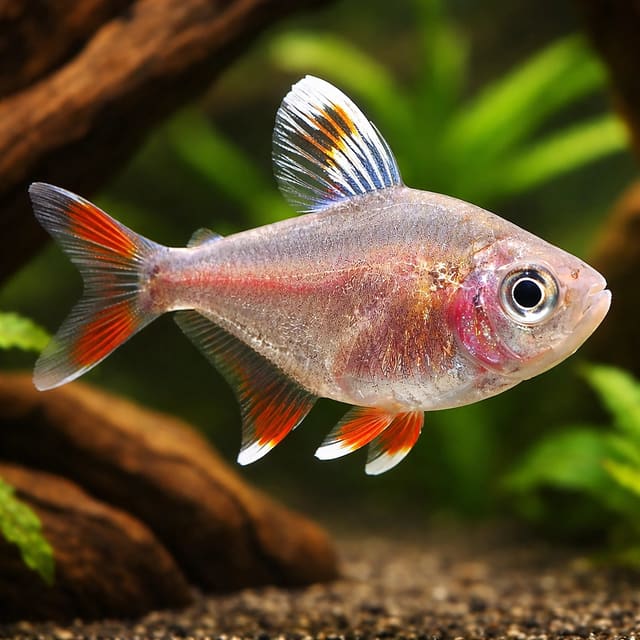
The flame tetra species has a bright reddish colour pattern and two vertically elongate dark shoulder spots. Seriously Fish describes diamond as one of the selectively bred ornamental forms and lists the underlying species as Hyphessobrycon flammeus. Its profile also describes the fish as very peaceful and best kept in a well-researched community.
Plan for social behaviour as carefully as water chemistry. This fish forms schools, while temporary dominance hierarchies give individuals room to display and interact. A solitary fish or undersized group misses that structure. A group of 8–10 in a planted aquarium with open swimming space is the practical starting point.
Use an aquarium with a base of at least 60 × 30 cm or an equivalent footprint, which Seriously Fish associates with about 54 litres. Keep a group of at least 8–10 together. For routine aquarium care, maintain 22–26°C, pH 6.5–7.5 and 4–12 dGH. These values are the overlap between the species profile and OATA's group guidance for tetras.
The fish is a strong candidate for a carefully planned peaceful community, but its small adult size matters. Choose similarly sized, peaceful companions whose water needs overlap. Do not combine it with a fish large enough to eat it. If you are comparing similar schooling fish rather than deciding tank mates, browse the current tetra collection.
| Suits | Not suited to |
|---|---|
| A group of 8–10 | Single-fish or pair-only keeping |
| A mature, filtered 60 × 30 cm aquarium or larger | An unfiltered aquarium or a smaller footprint |
| Peaceful companions of a similar size | Fish large enough to eat small tetras |
| Planted cover with open swimming room | A layout with no shelter or swimming lane |
| Stable water at 22–26°C and pH 6.5–7.5 | A community whose required water falls outside that range |
One purchase supplies one Flame Tetra Diamond. Each option on the live size selector names the dispatch size, such as 2.5 cm or > 3 cm. The size you select is the size supplied, not the adult size. Plan the aquarium, group and companions around the species' 2.6 cm maximum recorded standard length and its need for group swimming space.
Sex is guaranteed only when the selected option explicitly states male or female. This Flame Tetra Diamond listing has no sex-guaranteed option. Build the group by number and compatibility rather than trying to assign sex from colour, body shape, dispatch size or gallery appearance.
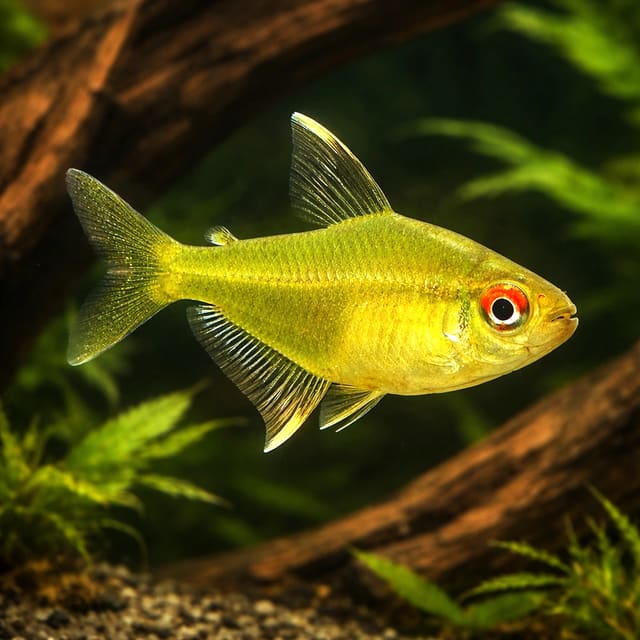
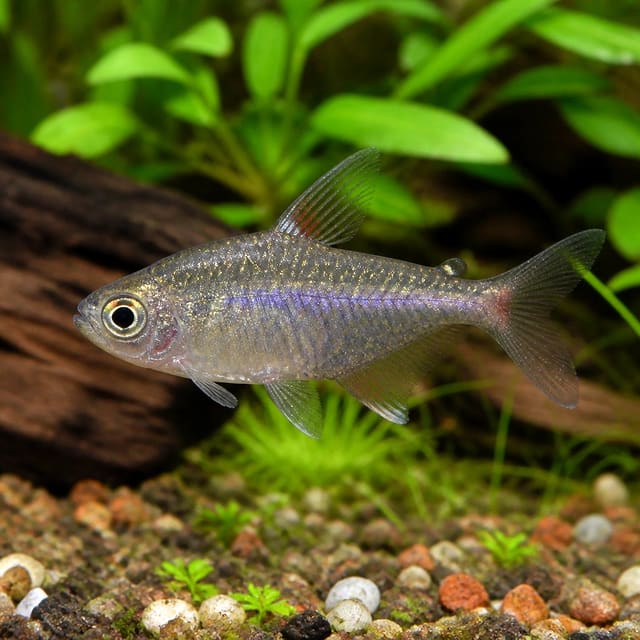
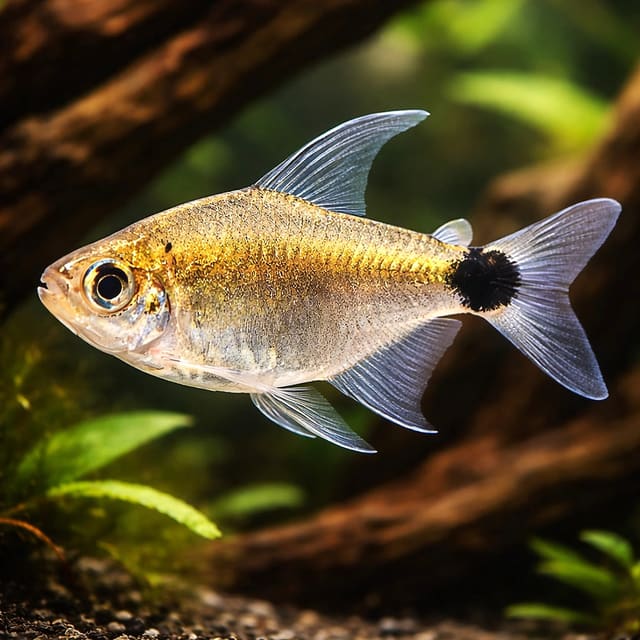
The gallery images are representative, based on reference photographs of this species, so colours can look slightly different from the live animal. Allow for natural variation in colour and markings between individual fish.
The selector identifies the size sent for each purchase; it does not change the requirement for stable water, a mature filter or an appropriately sized school.
Start with a base of at least 60 × 30 cm or an equivalent footprint. Seriously Fish describes this as the smallest aquarium base to consider and associates it with about 54 litres. The footprint creates a usable swimming lane for 8–10 fish while leaving room for planting, wood and shaded retreats around the edges.
Volume alone can be misleading. A tall aquarium may hold a similar number of litres while offering less horizontal swimming room, so check the base dimensions before relying on the volume label. Keep the 60 cm swimming length and 30 cm front-to-back depth as the minimum planning reference. A larger aquarium gives more scope for community companions, but every additional animal must still fit the filtration capacity and water requirements.
The aquarium must be mature before the group enters it. Follow our first tropical aquarium guide to prepare the filter and check water before livestock arrives. A mature biological filter processes fish waste through established beneficial bacteria; simply filling a new aquarium and bringing it to temperature does not perform that function.
For a species-only plan, begin with the minimum footprint, the complete tetra group and the required planted cover. For a community plan, choose the companions first, compare every adult requirement, and then increase aquarium size where the combined groups need more room.
Keep Flame Tetra Diamond at 22–26°C, pH 6.5–7.5 and 4–12 dGH. Seriously Fish gives the species an aquarium range of 20–26°C, pH 5.5–7.5 and 1–12 dGH. OATA's broad tetra guidance gives 22–27°C, pH 6.5–8.0 and 4–12 dGH, making the stated routine values a genuine overlap of both ranges.
A stable point within each range is more useful than moving repeatedly between its edges. Measure the aquarium before choosing fish, then compare the readings with the target range. Our water chemistry guide explains the role of the main tests, while the water-matching tool helps compare measured values with the care range.
Test at least weekly and whenever behaviour, breathing, colour or appetite changes. Check the replacement water as well as the aquarium if the tap supply varies. Sudden changes can affect the fish even when both the starting and finishing readings sit within a broad range.
Do not choose community animals from a shared temperature number alone. Compare temperature, pH, hardness, adult size, temperament and group requirements together. A companion that needs much harder water or a pH above 7.5 is not a match for this routine plan.
Use plants, a darker substrate and shaded areas while preserving an open swimming route. Seriously Fish notes that décor is not especially critical, but the flame tetra tends to show better colour in a well-furnished aquarium with live plants and a dark substrate. It adds that the species seems to do best under relatively dim lighting and that floating vegetation is appreciated.
A soft sandy substrate, wood roots and branches can create a natural-looking arrangement. Position solid décor around the rear and sides rather than building a barrier across the full swimming length. The result should give the school somewhere to retreat while allowing all 8–10 fish to move through the middle without repeatedly breaking formation around obstacles.
| Add | Preserve |
|---|---|
| Live plants around the edges | A clear midwater route |
| Wood roots or branches | Access for cleaning |
| Floating vegetation for shade | Open surface areas |
| A dark or soft sandy substrate | Unobstructed floor areas for waste removal |
Dried leaf litter may be used as part of a biotope-style layout. As it decomposes, it can support beneficial microbe colonies that may become a secondary food source for fry, while tannins help imitate natural conditions. Leaves may be left to break down or removed and replaced every few weeks. Monitor the aquarium as organic material changes.
Fit a properly established filter. Seriously Fish gives a turnover of four to five times the aquarium volume per hour and, for a roughly 54-litre aquarium, a filter rating of 215–270 litres per hour. Arrange the outlet so the tank remains filtered without removing every sheltered, slower-flowing area.
The RSPCA explains why biological filtration is essential: fish release toxic ammonia, and beneficial bacteria convert it first to nitrite and then to safer nitrate. Preserve that bacterial population through careful maintenance and rinse filter media lightly in removed aquarium water when cleaning is needed.
Feed a varied omnivorous diet once a day, giving only what the group can eat within a few minutes. OATA sets this portion and schedule for tetras. Watch the whole school during the meal and reduce the next portion if food reaches the substrate or remains trapped among plants.
Base the menu on its omnivorous diet. FishBase records small insects, worms and plants in the wild. Seriously Fish adds small invertebrates, crustaceans, filamentous algae and organic detritus, then recommends a varied aquarium menu rather than relying on one dried product alone.
Food size matters for a fish that reaches only 2.6 cm standard length. Crush or select prepared food so it can be swallowed readily, and use small live or frozen items. A large item that repeatedly falls uneaten does not become suitable simply because it is nutritionally appropriate.
Variety is more useful than increasing meal size. Rotate suitable prepared, live and frozen items while keeping the total daily amount controlled. Uneaten food decomposes and adds to the waste that the filter must process, increasing the risk of ammonia or nitrite appearing.
If one fish hangs back at feeding time, first observe whether it is being excluded, whether the food is too large and whether the water tests remain in range. Reduced feeding interest, weight change, unusual hiding or altered swimming can be early signs that the fish or aquarium needs attention.
Change 25% of the aquarium water at least once each week. Treat replacement tap water with a suitable conditioner before adding it, and use a siphon to remove solid waste from accessible areas of the substrate. Match the replacement water closely enough to prevent abrupt changes in temperature or chemistry.
Test ammonia and nitrite at least weekly and keep both at 0 mg/l. Check nitrate against the normal tap-water reading and keep the aquarium increase within 20 mg/l. Record the results if possible: a sequence of readings makes a developing change easier to recognise than a single isolated test.
Clean the filter media whenever the filter needs cleaning. Rinse filter media in water removed from the aquarium, never under the tap.
Increase observation when the aquarium population or feeding level changes. OATA warns that adding fish too quickly can leave the established bacteria unable to process the increased waste, leading to unhealthy ammonia or nitrite. Add community animals gradually and test after each stocking change.
Act on changes in swimming, breathing, colour, temperament, appearance, body condition or appetite. Test the water first and correct any husbandry problem shown by the results. White spots, fluffy growths, damaged fins or scales, rapid breathing, persistent isolation or refusal to eat require prompt, informed health guidance rather than speculative treatment.
Have the mature aquarium at 22–26°C, pH 6.5–7.5 and 4–12 dGH before the fish reaches you. Seriously Fish and OATA guidance overlap at these routine values. Test ammonia and nitrite and confirm both are 0 mg/l. The full Flame Tetra Diamond group, filtration capacity and intended community should already be planned rather than decided while the transport bag is waiting.
Our delivery and Live Arrival Guarantee policy explains the packing and receipt procedure. Your fish are hand-bagged in pure oxygen and packed in an insulated poly box, with a heat pack when the weather calls for it.
Once released, compare the fish's behaviour with the rest of the group rather than judging colour alone. Look for steady swimming, normal breathing, intact fins and scales, and participation at feeding time. Transport and a new social setting can change how tightly the fish group, so focus on whether every individual can move, rest and feed without persistent exclusion.
During the first week, test ammonia and nitrite whenever breathing, swimming or feeding changes, as well as during the normal weekly check. Keep feeding to one controlled meal per day that the group finishes within a few minutes. Remove leftovers rather than adding more food to tempt a hesitant fish.
Do not expand the community immediately after the group arrives. Let the filter and existing livestock settle under the new waste load, then use repeated zero ammonia and nitrite readings alongside normal behaviour and feeding as the basis for the next stocking decision.
Plan around a maximum recorded adult standard length of 2.6 cm. FishBase records that figure for male or unsexed Hyphessobrycon flammeus, while Seriously Fish lists 2.5 cm standard length.
Small adult size does not make solitary keeping appropriate. Seriously Fish recommends a group of at least 8–10 because the species forms temporary dominance hierarchies. FishBase likewise records relatively numerous schools in the wild, with competitive interactions among alpha males. A proper group gives these interactions more participants and produces more representative behaviour.
| Observe | Respond |
|---|---|
| Brief displays followed by normal schooling | Continue routine observation |
| One fish repeatedly denied food | Review group space and feeding access |
| Persistent hiding or isolation | Test water and inspect the fish |
| Damaged fins or scales | Identify the cause and seek prompt health guidance |
| Rapid breathing or surface hanging | Test ammonia, nitrite and temperature immediately |
Do not use red colour, body depth, fin shape or relative size to promise a fish's sex. Seriously Fish describes trends among adults, but the offer has no sex-guaranteed choice. Social planning should therefore work for the individuals received without relying on a chosen male-to-female ratio.
Assess body condition over time. A healthy pattern is stable participation in the school, access to food and no progressive loss of weight or colour. Compare each fish with its own recent behaviour, because a sudden change can be more informative than a superficial difference between naturally variable individuals.
Choose peaceful companions of a similar size whose temperature, pH and hardness requirements overlap with 22–26°C, pH 6.5–7.5 and 4–12 dGH. Seriously Fish describes the flame tetra as very peaceful and suggests similarly sized characids, gasteropelecids and lebiasinids, smaller callichthyid or loricariid catfishes, and non-predatory small-to-medium-sized cichlids.
These are categories to investigate, not automatic approvals. Check the exact species, adult size, social group, feeding behaviour and aquarium footprint before combining it with the tetras. OATA's practical rule is that tetras mix best with species of a similar size and temperament.
| Potential fit | Rule out |
|---|---|
| Similarly sized peaceful characids | A fish large enough to eat small tetras |
| Gasteropelecids or lebiasinids with matching care | Conflicting water requirements |
| Smaller callichthyid or loricariid catfishes | Insufficient floor space or group capacity |
| Non-predatory small-to-medium cichlids | Predatory or strongly dominating behaviour |
Compatibility always depends on the exact species, individual behaviour and aquarium arrangement. Make the assessment before purchase, then continue observing feeding access, swimming patterns and fin condition after introduction.
Use behaviour after introduction to confirm the planning decision. The Flame Tetra Diamond should be able to school, move through the open water and feed without remaining permanently hidden. Temporary group displays can be normal; repeated exclusion, damaged fins or inability to reach food needs action.
Do not use extra food to compensate for an unsuitable companion. Larger portions increase waste and can undermine water quality without giving an excluded fish reliable access. Adjust feeding placement within the established once-daily portion, or revise the community arrangement if one group consistently monopolises the meal.
Keep each social species in its own proper group. Adding one specimen from several different schooling species does not replace keeping 8–10 Flame Tetra Diamond together. Multiple groups also require more swimming room, filtration and waste capacity than the tetra minimum alone.
Review the whole aquarium when the fish grow or when new animals are proposed. A companion that appears similarly sized at dispatch may have a much larger adult size. Compare adult dimensions and temperament before introduction, then preserve the established water range and the open swimming space needed by the tetra school.
Flame Tetra Diamond reaches a maximum recorded 2.6 cm standard length. Plan for the complete group and its swimming space rather than treating its small adult size as a reason to use a cramped aquarium.
Use an aquarium with a base of at least 60 × 30 cm or an equivalent footprint, associated with about 54 litres. This is the smallest size Seriously Fish recommends considering for the species.
Keep a group of at least 8–10 together. Seriously Fish recommends this group because the species forms temporary dominance hierarchies, and tetras kept singly or in too small a group will often become stressed.
Plan a mature, filtered aquarium with a base of at least 60 × 30 cm, a group of at least 8–10, water tests at least once a week and a 25% water change at least once every week before the fish arrive.
Feed one small daily meal of quality fine flake or granules, varied with suitably small Daphnia, Moina, mosquito larvae or bloodworm. Give only what the group finishes within a few minutes.
Keep it at 22–26°C, pH 6.5–7.5 and 4–12 dGH; this is the overlap between the Seriously Fish species profile and OATA's tetra guidance.
Seriously Fish describes it as very peaceful. Temporary dominance displays can occur within the group, so keep at least 8–10 and investigate persistent chasing, exclusion or damaged fins.
Consider similarly sized characids, gasteropelecids, lebiasinids, smaller callichthyid or loricariid catfishes, and non-predatory small-to-medium-sized cichlids whose water needs match. Avoid combining it with fish large enough to eat it.
Film every delivery with a short continuous unboxing video that starts with the parcel still sealed. Your fish are hand-bagged in pure oxygen, packed in an insulated poly box with a heat pack when the weather calls for it, and carried by a licensed live-animal courier. Someone must be at the delivery address to receive the parcel, and you should float the bag for 20–30 minutes before releasing the fish.
No reviews for this item yet. Bought one? Honest reviews only, good or bad.
What customers say about ordering from us
I have a small group of long finned mountain minnows. So was delighted to be able to order ten of this variety to increase the genetics in my tank . The ones I recieved are healthy but it’s to early to give a verdict on wether they are of a long finned type since they are small currently.
Gordon Walker · 23 Sept 2026
100% success travel and "installation". Pleased with quality of purchase. The Siamese fighter a bit "shy" so have not yet seen him at his best yet but looking good. Happy customer. GG
George E Garratt · 21 Sept 2026
Reviews of our shop, collected by Judge.me, an independent third-party review collector. Newest first.