Easy
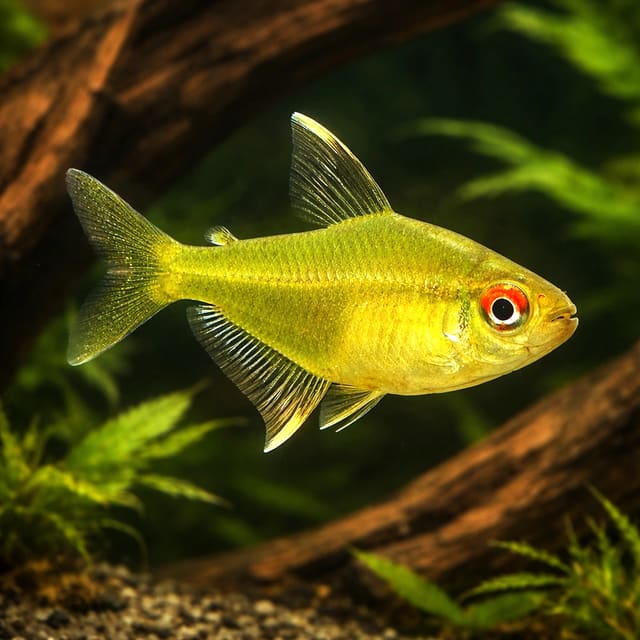
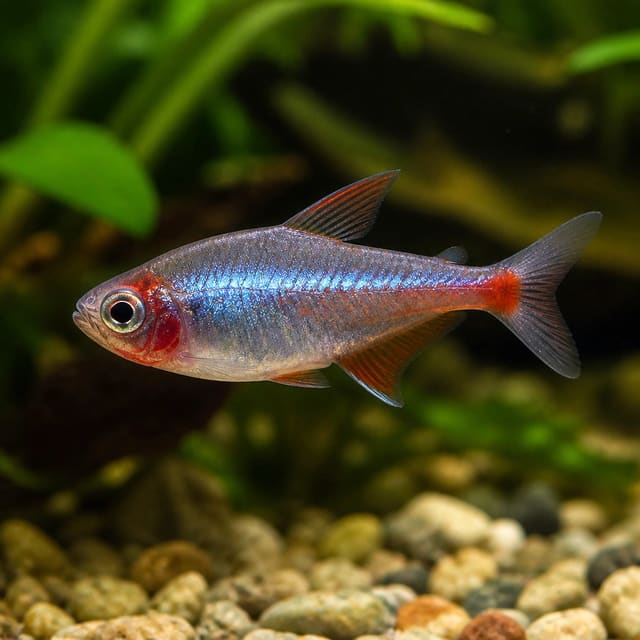
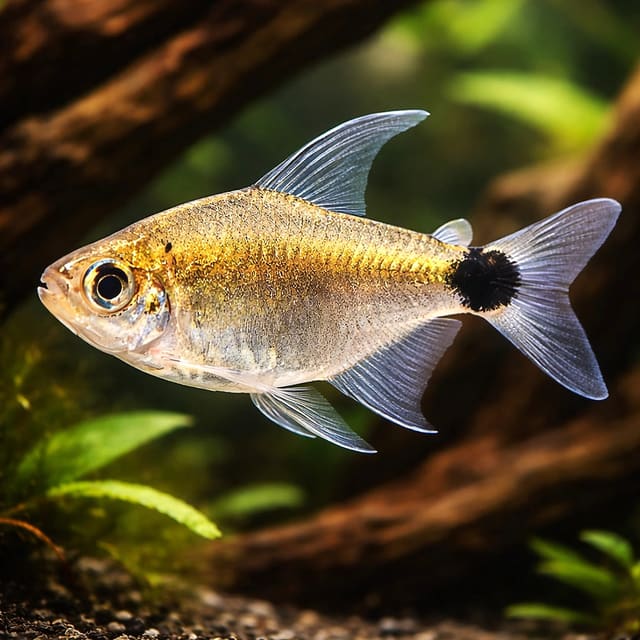
Yellow Phantom Tetra (Hyphessobrycon roseus)
20–28°C · pH 5–7 · 54L
£4.99

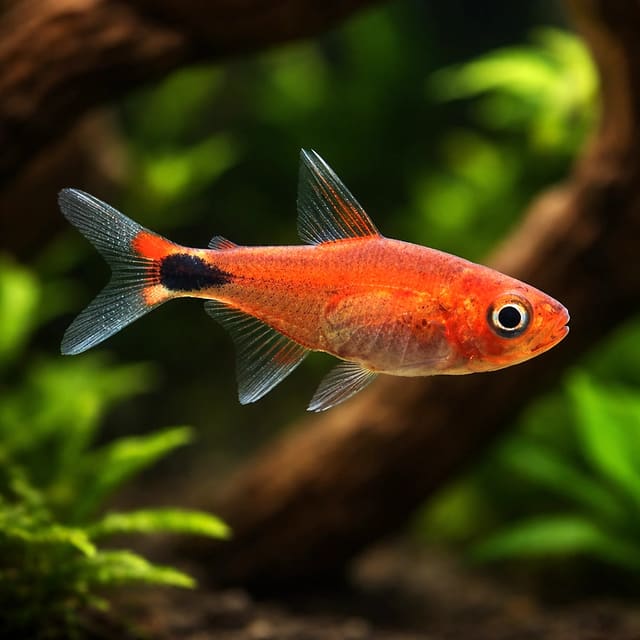
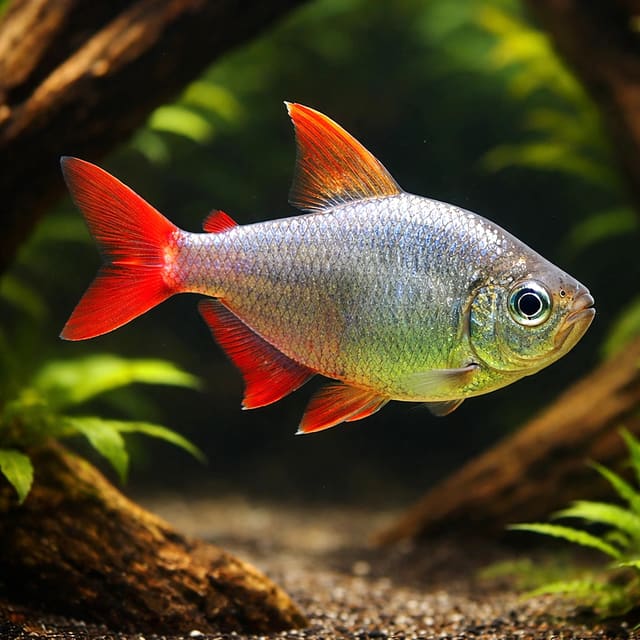
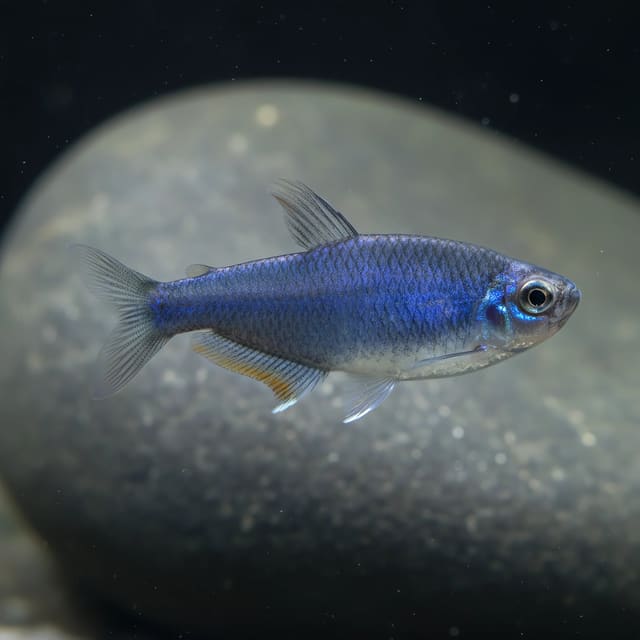
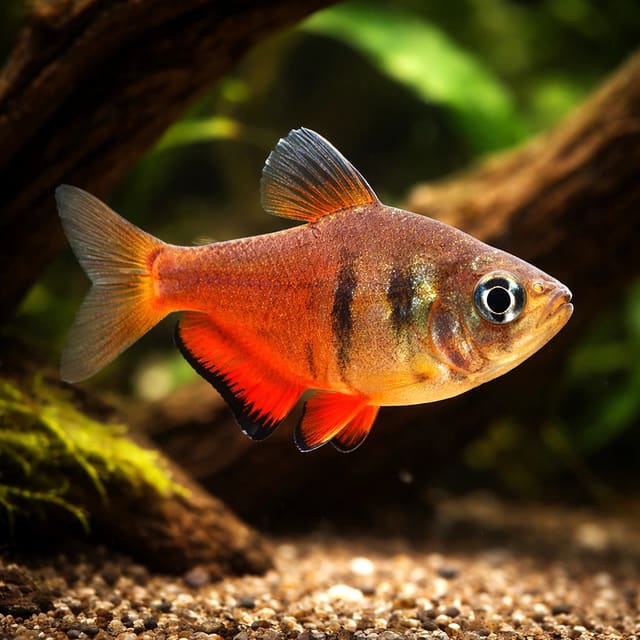
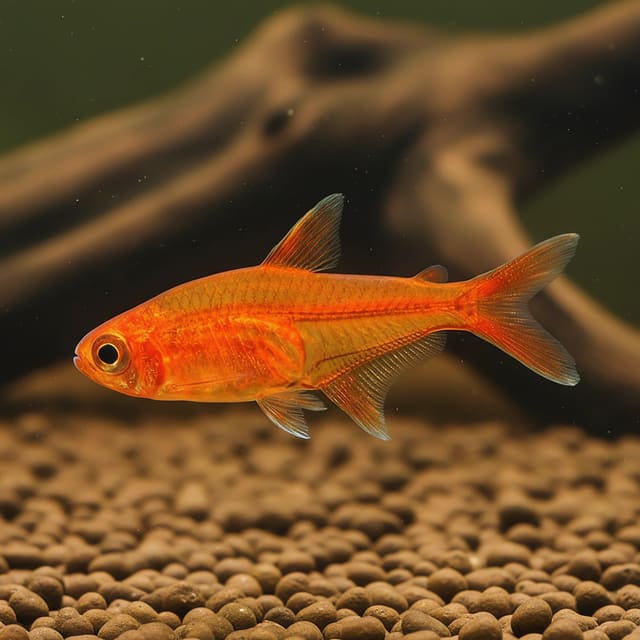
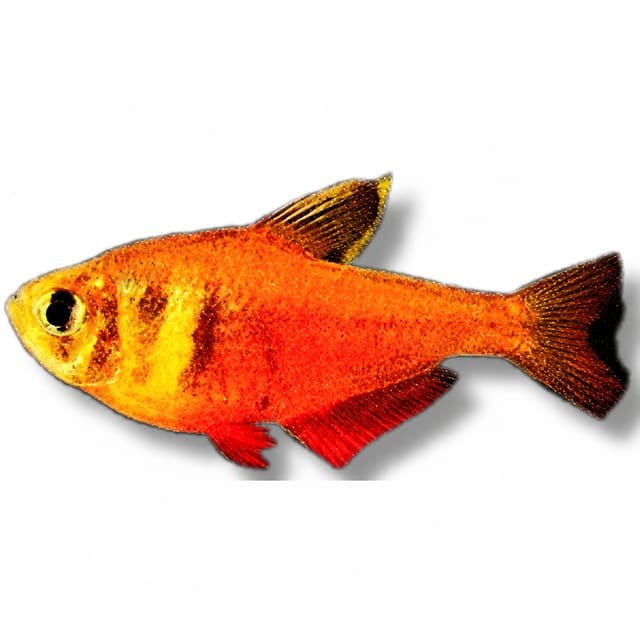
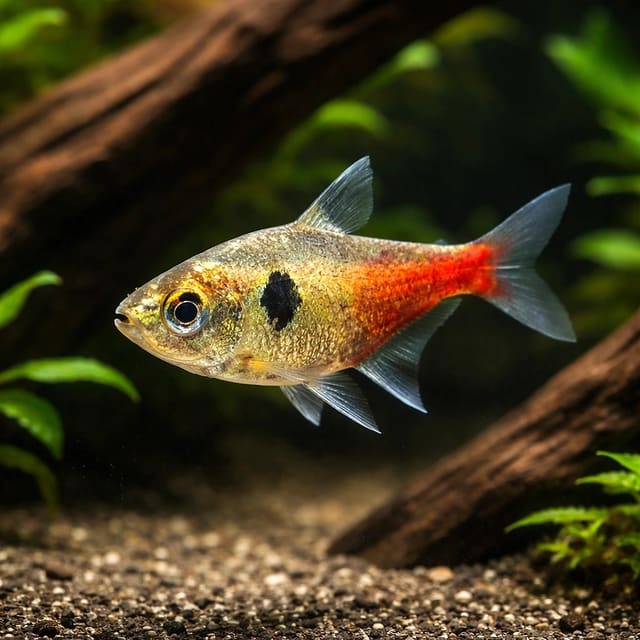
Orange Flame Tetra (Hyphessobrycon flammeus) is a small Brazilian shoaling fish for a mature planted aquarium. Plan for eight to ten or more in suitable space. One purchase supplies one live fish in the selected 2,5 cm or > 3 cm grade; sex is not guaranteed.
Adult size is the maximum length this species reaches at full maturity (scientific sources). The livestock you receive will be younger and smaller — pick a size above for the actual shipping size. Product-photo provenance and any image-specific limitations are stated on the listing.
Hyphessobrycon flammeus
Shoaling fish: kept in a group they feel safer, stay calmer and show their best colour.
Minimum of 2 per order.
Orange Flame Tetra (Hyphessobrycon flammeus) is a small Brazilian shoaling fish for a mature planted aquarium. Plan for eight to ten or more in suitable space. One purchase supplies one live fish in the selected 2,5 cm or > 3 cm grade; sex is not guaranteed.
Adult size is the maximum length this species reaches at full maturity (scientific sources). The livestock you receive will be younger and smaller — pick a size above for the actual shipping size. Product-photo provenance and any image-specific limitations are stated on the listing.
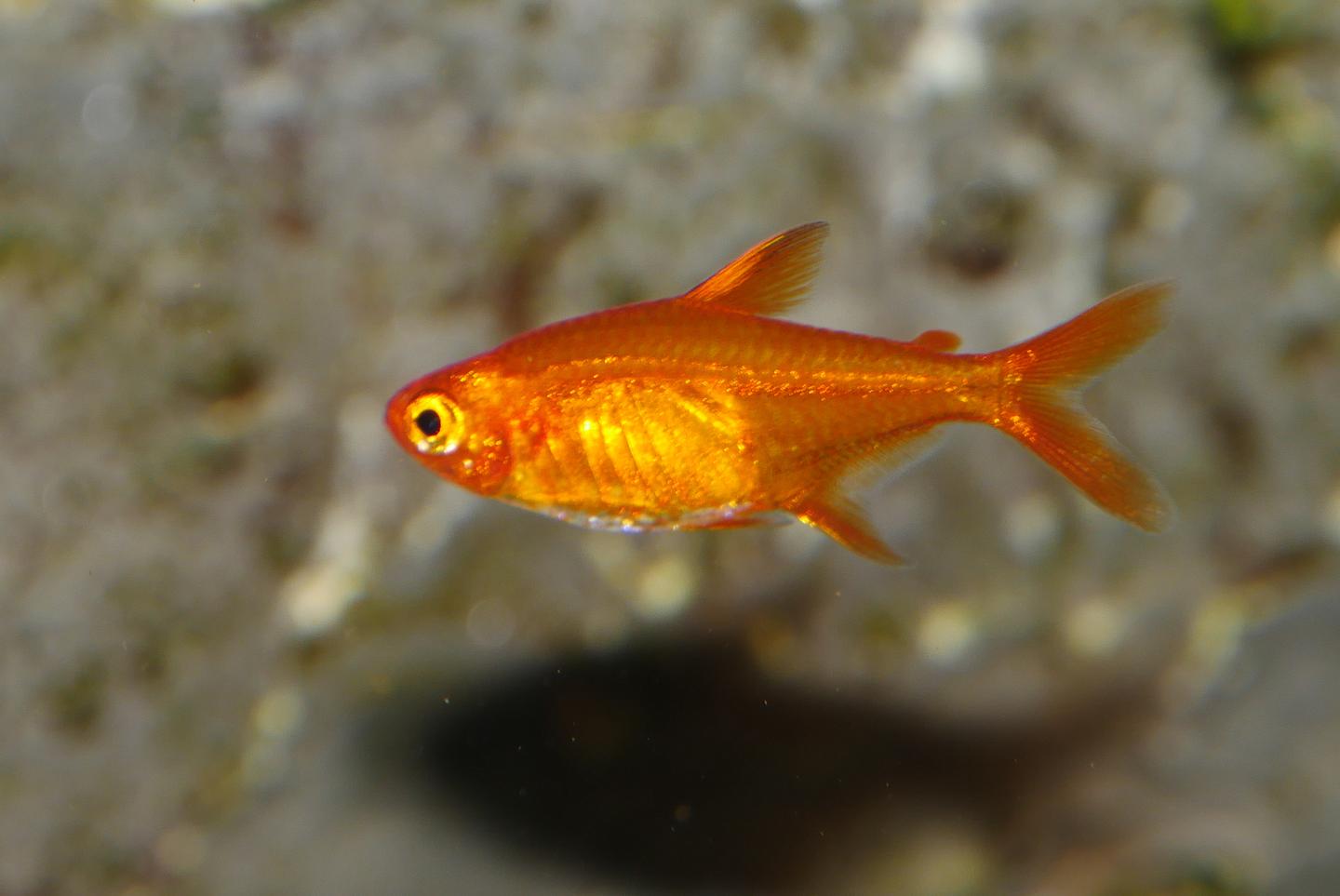
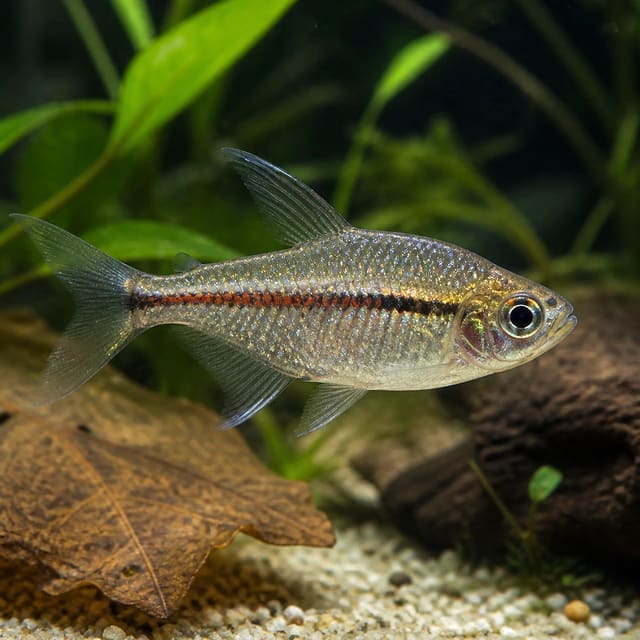
Ember tetras are very small Brazilian social fish, with a maximum recorded length of 2.0 cm excluding the tail. Keep them only in a fully cycled, stable aquarium. We recommend a group of at least 10 and about 45 litres with a 45 × 30 cm footprint rather than using a litres-per-fish formula.
Maintain these water conditions for optimal health and vibrant colors
The Orange Flame Tetra, Hyphessobrycon flammeus, is a small shoaling fish from south-eastern Brazil. Orange describes an ornamental trade form of the Flame Tetra; it is not an additional word in the scientific name. The species is also known as the Rio Tetra and Red Tetra. Its compact size and warm colours make a group attractive in a mature planted aquarium, where cover and subdued light help the fish settle.
Each purchase quantity supplies one live fish in your selected size grade. The two grades are labelled 2,5 cm and > 3 cm. These are commercial dispatch grades, not a promise of an exact individual measurement, age or maturity. The size you select is the size supplied, not the adult size. Sex is guaranteed only when the selected option explicitly states male or female. This Orange Flame Tetra listing has no sex-guaranteed option.
Plan for the group before choosing the cart quantity. Seriously Fish recommends at least eight to ten specimens for this species, and ten or more is a useful aim when space and filtration allow. FishBase also records aquarium keeping in groups of five or more, but the larger species recommendation gives these social fish more opportunity to distribute display and interact normally. One purchase is one fish, so choose enough quantities for the shoal your aquarium can support.
FishBase records a maximum of 2.6 cm standard length; the species care profile gives 2.5 cm standard length. Standard length excludes the tail fin. Keep those scientific measurements separate from the commercial grades above: the commercial grade does not state whether the tail is included, and there is no need to infer a larger adult maximum from a size option. A small species still needs horizontal swimming room, planted refuge and a stable filter.
The species aquarium profile recommends a base of at least 60 × 30 cm or equivalent, approximately 54 litres. Use that footprint as a starting point for a species-led group, then allow more room for a larger shoal or additional inhabitants. A tall narrow tank with the same capacity does not provide the same swimming length. Account for the adult needs of all occupants rather than deciding from this fish's size alone.
For routine aquarium care, Seriously Fish gives 20–26°C, pH 5.5–7.5 and hardness of 1–12 dGH. These species care values differ from broader wild environmental records and from general tetra advice. The useful task is to maintain stable, suitable water across the whole community, with zero ammonia and nitrite. Avoid frequent abrupt adjustments intended to achieve one supposedly perfect reading.
These tetras are social. A single bright fish in a community is a poor plan even when the aquarium otherwise looks peaceful. OATA warns that tetras kept singly or in too small a group will often become stressed. A suitable shoal lets fish seek company, choose space around plants and spread social attention. Increasing group size only helps when the tank can accommodate the extra animals without a decline in water quality.
Seriously Fish describes Flame Tetras as very peaceful. Its compatibility suggestions include similarly sized tetras, hatchetfishes and pencilfishes, smaller callichthyid or loricariid catfishes and non-predatory small to medium cichlids. Those are possible starting categories, not guarantees for every member. Match water requirements, adult size, feeding access and temperament. A companion large enough to swallow the tetra is unsuitable regardless of its usual reputation.
A well-researched first community can work for an attentive newer keeper. The aquarium must already be mature, the filter must support the complete stocking, and the keeper must be ready to test water and notice changes in appetite or breathing. If the tank is still cycling, postpone livestock. Colour and small size are enjoyable features, but neither substitutes for adequate space, suitable companions and dependable maintenance.
See the tetras collection collection to compare each species' mature size, social needs and water requirements before choosing another shoal.
Before the fish arrive, check the aquarium's dimensions, measured water values and existing occupants. Confirm the filter is working, prepare treated replacement water, and provide a clear swimming lane alongside planted or shaded retreat areas. Choose small food that every fish can take easily. Arrange to receive the parcel in person on the confirmed date and read the delivery policy so introduction and any claim evidence can be handled calmly.
For a first setup, the How to Set Up a Tropical Fish Tank: 10 Safe Steps guide explains the sequence from equipment to mature filtration before livestock is added.
Flame Tetras come from south-eastern Brazil. Documented distribution includes streams and coastal rivers in Rio de Janeiro State, the Guanabara Bay basin, middle Paraiba do Sul and Guandu systems, plus the upper Tiete drainage in Sao Paulo. They are associated with shallow, slow-flowing streams under forest shade, including both dark-brown and clear water over sand with vegetation.
The useful aquarium lesson is not that a home tank must copy one exact river. It is that the fish benefits from broken light, plant cover, calm refuge and open midwater space. A dark substrate and wood can make a planted layout feel secure, while an uncluttered central or front swimming lane lets the group move together.
A base of at least 60 × 30 cm is the species profile's minimum starting footprint. About 54 litres is its accompanying volume estimate, not a stocking formula. Plants, wood and substrate reduce usable volume, while other fish add waste and competition. A longer or larger aquarium offers more freedom to keep a worthwhile shoal and arrange separate retreat areas. Keep the middle or front open so the fish can swim together without squeezing through a continuous wall of décor.
The species tends to show better colour in a well-furnished aquarium with live plants and a dark substrate. Wood roots and branches can create shade above soft sand. Planting around the sides and rear leaves a swimming lane while giving individuals a choice of cover. Floating vegetation can soften bright light. Use décor that sits securely and leaves room for maintenance; a beautiful layout is only useful if water can circulate through it and waste can be removed.
Dried leaf litter is an optional feature of the natural-style layout described by Seriously Fish. As leaves break down they support microbial growth and release tannins. Keep an eye on decomposition and remove or replace leaves as appropriate rather than allowing unchecked waste to accumulate. Leaf litter complements filtration and water changes; it does not make testing unnecessary or establish a particular pH by itself.
Use a mature filter with enough biological capacity for the complete shoal. Gentle to moderate circulation is appropriate; the group should be able to hold position and cross the tank without being pinned to one end. A baffled outlet or spray bar can spread flow. Keep a secure lid because startled fish can jump.
Provide a predictable day-night cycle. There is no evidence-based need to prescribe one universal number of lighting hours for the fish because plant choice and nutrient management also control the schedule. If the shoal hides or loses colour under intense light, add cover and reduce glare rather than relying on colour-enhancing bulbs as a substitute for welfare.
The species aquarium profile gives 20–26°C, pH 5.5–7.5 and 1–12 dGH. Use these as species husbandry guidance, with a stable temperature and chemistry appropriate to your fish and companions. FishBase records 22–28°C, pH 5.8–7.8 and 5–25 dH as environmental values. Those wider records describe reported conditions; they are not an instruction to select an extreme for a home aquarium. OATA's 22–27°C, pH 6.5–8.0 and 4–12°dH are broad advice for tetras and pencilfish, not a separate optimum for this species.
The Aquarium Water Parameters: What to Test and Why guide explains the common readings, and the Water Parameter Matcher helps compare measured water with a candidate species. Start by testing your source water as well as the aquarium. General hardness describes dissolved minerals, while pH describes acidity and alkalinity; one number cannot substitute for the other. Knowing both helps you choose compatible animals and a repeatable water-change routine. If your supply falls well outside suitable conditions, ask for help with a sustainable preparation method before buying fish. Repeated sudden corrections are a poor substitute for an aquarium that can be maintained consistently.
Ammonia and nitrite should remain at zero mg/l. OATA's general tetra guidance places nitrate no more than 20 mg/l above the normal tap-water level. Read nitrate alongside the source-water result, stocking and maintenance history. A clear tank can still contain harmful dissolved waste. Equally, the presence of plants does not establish that the biological filter has matured sufficiently for a new shoal.
Test the source and replacement water before making a large change. Treat tap water for chlorine or chloramine, match temperature, and avoid abrupt swings in dissolved minerals. OATA advises nitrate should not rise more than 20 mg/l above the normal tap-water level. That guidance is more useful than assuming one nitrate value is ideal for every supply.
Flame Tetras form temporary dominance hierarchies, and males compete for female attention. Seriously Fish recommends at least eight to ten specimens, with interesting behaviour and better colour when the fish are maintained in numbers. Aim for ten or more where capacity allows, keeping the aquarium's footprint and complete stocking in view. A good group is an ongoing welfare requirement rather than a display accessory.
Expect some social display and changing positions around plants. Look at the pattern over time: a fish that briefly moves aside and returns to feed differs from one that stays trapped behind equipment and cannot eat. Watch the quieter individuals as well as the most colourful. If the group is persistently unsettled, review cover, companions, feeding access and water before assuming more fish alone will solve the problem.
OATA's general warning is clear: tetras kept singly or in too small groups will often become stressed. Provide enough conspecifics, but do not overload a small filter in an effort to increase numbers. Establish the aquarium's capacity first and introduce livestock with attention to biological filtration. A larger group in suitable space offers choice; a crowded group with rising waste does not.
Flame Tetras are omnivorous. Species evidence describes small invertebrates, crustaceans, filamentous algae and organic detritus in the natural diet. A good-quality fine flake or small granule is a practical aquarium staple, accompanied by suitable small live or frozen foods. The species profile names bloodworm, mosquito larvae, Daphnia and Moina. Choose food the fish can swallow without struggling; a large item taken by one fish is not proof that the whole shoal is feeding.
OATA's broad tetra guidance recommends feeding once daily, offering only what is eaten within a few minutes. Treat that as general portion guidance and observe your own fish. Break large flakes appropriately and distribute small portions so quieter individuals have access. Offer variety in measured amounts rather than adding an unlimited second meal because the shoal remains interested in food.
Uneaten food breaks down and contributes to waste. Remove excess where practicable, reduce the next portion and check whether another inhabitant is monopolising the feeding area. A persistent loss of appetite is a reason to test water and examine behaviour, not to keep adding more food. Routine observation connects feeding, body condition and filtration: a change in any one of them can affect the others.
OATA recommends a weekly partial water change of about 25% as broad tetra guidance, together with regular testing at least weekly. Use your results and stocking to judge whether the aquarium needs additional attention. Condition replacement tap water to remove chlorine or chloramine, and match temperature appropriately. Siphon visible solid waste without dismantling every planted refuge at each change.
Check filter flow and intakes for blockages. When biological media needs cleaning, rinse it lightly in water removed from the aquarium. OATA warns not to run filter media under the tap because chlorine or chloramine may kill the beneficial bacterial population. Avoid replacing all biological media at once during routine maintenance. A filter's job is more than making water look clean: its established bacteria help convert toxic ammonia through nitrite into nitrate.
RSPCA's general aquarium guidance explains why a well-established, maintained filter is essential. Fish release ammonia, and both ammonia and the intermediate nitrite are toxic. The filter's bacteria need time to develop and must be preserved when stocking or cleaning changes. Add fish carefully rather than assuming a newly running filter already has capacity for a complete community.
A simple log helps connect results with events. Note water changes, any filter work, new livestock and feeding changes alongside the test readings. The purpose is to recognise trends and respond before the fish show severe distress. Check temperature, equipment flow, breathing, appetite and group position daily. Regular observation is often more informative than one isolated number taken after a problem becomes obvious.
Prepare a mature aquarium before dispatch, with zero ammonia and nitrite, stable temperature, adequate space and a working filter. Have conditioner, test kits and a clean container ready. Keep the layout settled while the fish travel. Someone must be present to receive live fish; they cannot be left unattended. Tropical Fish Co confirms the delivery date and tracking by email, using a licensed live-animal courier.
The delivery policy describes fish hand-bagged in pure oxygen and packed in an insulated poly box, with a heat pack when weather calls for it. The confirmed delivery day is Thursday or Friday under the supplied policy. Check the date for your order and be ready to inspect the parcel the same day. The delivery and Live Arrival Guarantee policy sets out the current arrangements.
For a Live Arrival Guarantee claim, a continuous unboxing video is required: show the still-sealed parcel with its outer box visible, open it in one take and show the fish still inside their sealed bags before disturbing them. The guarantee requires someone at the address to receive the parcel and same-day opening and inspection. Contact Tropical Fish Co the same day with your order number and the video. Prepare to record before opening so the required sequence is available if an arrival problem is found.
Follow the supplied introduction guidance. The store policy advises floating the bag for 20–30 minutes and acclimatising slowly. Avoid pouring transport water into the aquarium. Keep the process calm, soften the lights and observe the fish after release. Do not treat feeding immediately as more urgent than stable water, oxygen and a safe introduction. Ask for advice if the arrival water and aquarium conditions differ substantially.
A settled healthy shoal should show steady breathing, responsive feeding, intact fins and coordinated movement with normal individual variation. Warning signs include isolation, persistent hiding, clamped or damaged fins, rapid gill movement, flashing, white spots, loss of balance, unusual swelling, wasting or several fish refusing food.
Test ammonia, nitrite, nitrate, pH and temperature before assuming disease. Water stress, transport, bullying and poor feeding access can imitate infection. Correct an identified environmental problem gradually. Avoid mixing medicines or using a broad treatment merely because one symptom sounds familiar.
A separate observation or quarantine aquarium can protect an established community, but it must itself be cycled, heated and appropriately filtered. Match water and observe appetite, respiration, waste and external condition. If fish deteriorate, several animals are affected, or diagnosis is uncertain, seek an aquatic veterinarian or experienced aquatic professional. Product copy cannot diagnose a live animal.
Orange is an ornamental form name. Natural colour and pattern vary with individual fish, maturity, condition and surroundings, and neither the dispatch grade nor the name promises an identical shade. The species profile describes males as tending to be slightly smaller, less deep-bodied and more intensely coloured than females. These are biological tendencies, not a sex-selection service for this offer. Sex is not guaranteed by these size choices.
Observe colour alongside breathing, feeding, fins and social position. A newly introduced group needs time to settle, but a sustained change in several signs calls for a water and husbandry review. Enjoy the colour as part of a healthy shoal rather than using it as a measurement of sex, age or readiness to breed. Neither the grade label nor a brighter individual establishes a particular breeding outcome.
Seriously Fish describes Hyphessobrycon flammeus as very peaceful and suitable for a well-researched community. The qualification matters: research the adult size, water conditions and behaviour of every prospective companion. A small shoal needs access to food and refuge even when larger neighbours are not deliberately aggressive. Plan the complete aquarium rather than adding one appealing fish at a time.
The species profile suggests similarly sized characids, gasteropelecids and lebiasinids, smaller callichthyid or loricariid catfishes and non-predatory small to medium cichlids. In familiar aquarium terms these include other suitably matched tetras, hatchetfishes, pencilfishes and smaller members of the named catfish families. Those categories offer a starting point; they do not make every species or individual an automatic match.
Check water overlap first. A fish requiring a substantially different temperature or hardness is a poor companion even if both are described as peaceful. Then compare adult size and predatory potential. OATA cautions against placing small tetras with fish large enough to eat them. Size at purchase can be misleading if a juvenile companion later grows much larger.
Feeding speed matters alongside temperament. Watch whether the tetras can take their own measured portion without faster fish clearing it first. If you need to keep adding food to reach the shoal, reassess the combination instead of accepting rising waste. Bottom-dwelling companions still contribute to bioload and require their own appropriate food and substrate; a different swimming level does not remove those needs.
Male Flame Tetras compete for attention within temporary hierarchies. A spacious aquarium, a suitable shoal and broken sightlines give fish places to move away and return. Some display belongs to normal social behaviour. Persistent pursuit, torn fins, a fish held in a corner or repeated exclusion from food is a different pattern and requires action.
OATA's broader tetra advice distinguishes peaceful small species from more boisterous exceptions. Do not apply a warning about a different large tetra to every Flame Tetra, and do not assume this species' peaceful reputation means an inappropriate community will work. Observe the actual fish, including quieter individuals, after introduction and during feeding.
If pressure persists, check water quality, group size, usable swimming space and cover, then identify which fish is driving the problem. Retain a practical way to separate incompatible animals into suitable filtered conditions. Rearranging décor can improve refuge, but it cannot make a predator unable to swallow a small tetra or resolve incompatible water needs.
Several different tiny groups can look like variety while failing to provide proper company for any species. Flame Tetras need their own conspecific group; other tetras are companions rather than substitutes for it. A well-sized shoal in an aquarium that supports it is a stronger starting point than a collection of single colour accents.
Review total adult stocking before increasing numbers. Larger groups are beneficial only when the footprint, filtration and water quality remain adequate. Give plants and wood enough space to form refuge without dividing the swimming lane into unusable fragments. After changes, watch feeding access, breathing and social position rather than relying on the aquarium's appearance alone.
FishBase records Hyphessobrycon flammeus at 2.6 cm standard length, excluding the tail; Seriously Fish gives 2.5 cm standard length. Commercial dispatch grades are separate from these species measurements.
Seriously Fish recommends a minimum base of 60 × 30 cm or equivalent, about 54 litres. A larger shoal or mixed community needs more room; usable swimming space and the complete adult stocking matter as well as litres.
Plan for at least eight to ten, following the species profile, and preferably ten or more when the aquarium can support them. FishBase mentions five or more, but the larger species-specific recommendation gives more scope for normal social behaviour.
They can suit a careful newer keeper with a mature, filtered aquarium, suitable water and space for a proper shoal. Test water, feed measured portions and observe the fish daily; a small body does not remove those responsibilities.
Offer a good-quality small flake or granule with varied, appropriately sized live or frozen foods such as Daphnia, Moina or bloodworm. OATA's general tetra guidance is a small portion once daily, only as much as the fish eat within a few minutes.
The species aquarium profile gives 20–26°C, pH 5.5–7.5 and 1–12 dGH. Keep conditions stable and suitable for the whole community. Wider environmental records are context, rather than reasons to push aquarium water towards an extreme.
Seriously Fish describes the species as very peaceful. Males form temporary dominance hierarchies and compete for attention, so some display is normal. Persistent chasing, damaged fins or a fish unable to feed calls for a review of space, group size and companions.
The species profile suggests similarly sized characids, hatchetfishes and pencilfishes, smaller callichthyid or loricariid catfishes, and non-predatory small to medium cichlids. Each choice still needs compatible water, adult size and temperament; avoid fish large enough to eat the tetras.
Tropical Fish Co hand-bags fish in pure oxygen and uses an insulated poly box, with a heat pack when weather calls for it, and a licensed live-animal courier. Be present on the confirmed delivery date. For a Live Arrival Guarantee claim, continuous video must show the sealed parcel, its opening and the fish still in their sealed bags; inspect and contact the team the same day with your order number.
FishBase: Hyphessobrycon flammeus supports identity, distribution and recorded standard length. Seriously Fish: Hyphessobrycon flammeus supplies species aquarium guidance for water, footprint, diet and social behaviour. OATA: tetras and pencilfish care gives broader group advice on feeding, testing and maintenance. RSPCA: aquarium environment explains general filtration and water-quality principles.
No reviews for this item yet. Bought one? Honest reviews only, good or bad.
What customers say about ordering from us
I have a small group of long finned mountain minnows. So was delighted to be able to order ten of this variety to increase the genetics in my tank . The ones I recieved are healthy but it’s to early to give a verdict on wether they are of a long finned type since they are small currently.
Gordon Walker · 23 Sept 2026
100% success travel and "installation". Pleased with quality of purchase. The Siamese fighter a bit "shy" so have not yet seen him at his best yet but looking good. Happy customer. GG
George E Garratt · 21 Sept 2026
Reviews of our shop, collected by Judge.me, an independent third-party review collector. Newest first.