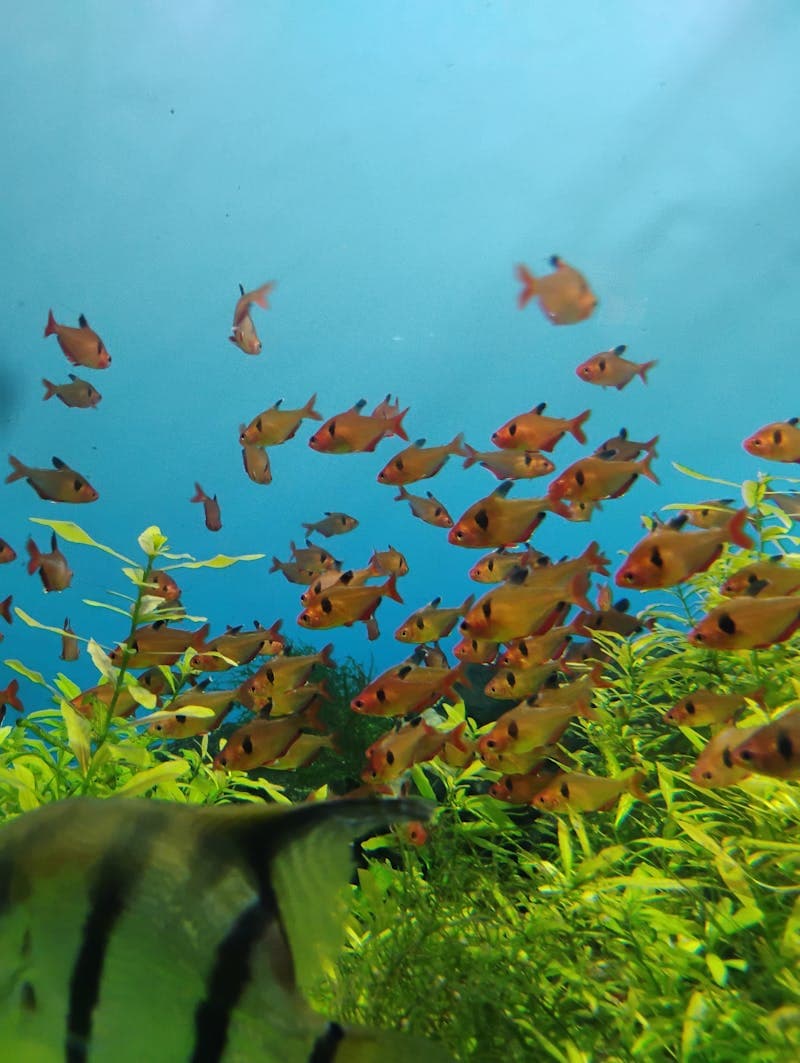
By Hannah Nielsen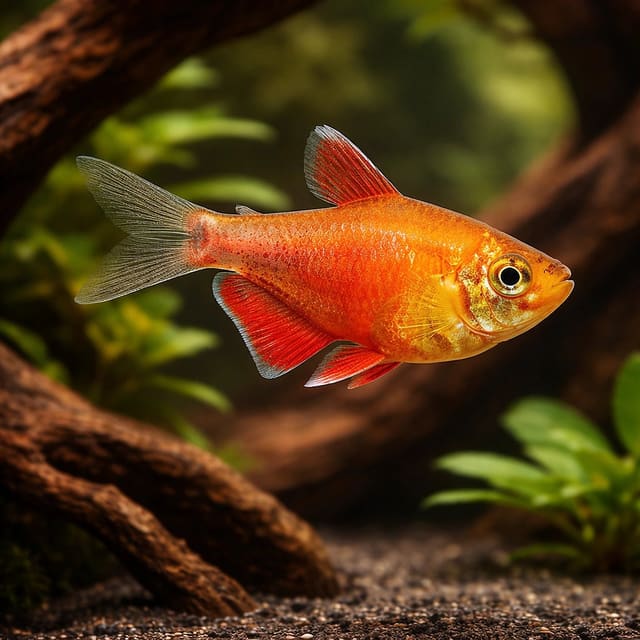
Orange Flame Tetra (Hyphessobrycon flammeus)
20–26°C · pH 5.5–7.5 · 54L
£4.99
Tetras · Buying Guide
Flame tetra care for UK tanks — the red-orange Von Rio schooler that tolerates cooler water, the group size it needs, plus live stock to buy.
11 products in stock today
Live prices and stock. Every fish covered by our Live Arrival Guarantee.
20–26°C · pH 5.5–7.5 · 54L
22–26°C · pH 6.5–7.5 · 54L
22–26°C · pH 6.5–7.5 · 54L

21–25°C · pH 5–7
22–25°C · pH 6–7.4

23–27°C · pH 5.5–7 · 60L
17–27°C · pH 6.5–8
22–26°C · pH 6.4–7.4 · 41L
17–27°C · pH 6.5–8
The shaded band shows the range flame tetra is comfortable in. Match it to your tap water before you buy.
Our trained assistant knows this flame tetra page inside out. Ask it anything — water parameters, tank mates, how many to buy — or have it read the guide aloud while you set up your tank.
You've fallen for that warm red-orange glow — and now every guide either lumps the flame tetra in with neon-tetra advice, or skips the one detail that actually makes it special. Here it is: the flame tetra, sold as often as the Von Rio tetra, is a subtropical fish. It comes from the cooler coastal streams around Rio de Janeiro, and it's happy from 20 °C upward [2]. That makes it one of the very few tetras genuinely suited to a lightly-heated — or in a warm room, barely-heated — UK tank.
I'm Hannah. I write the schooling-fish guides here and I've spent more hours than I'd admit photographing tetra shoals, which means I've watched exactly how Hyphessobrycon flammeus behaves when the group size is right and when it isn't. This guide is the honest version: what the flame tetra actually is, why its cooler-water tolerance matters for British keepers, the group size that keeps it calm and red, and the tank mates that genuinely work. It's the answer I'd give a customer who emails asking "I want a red tetra but my room runs cool — what should I get?"
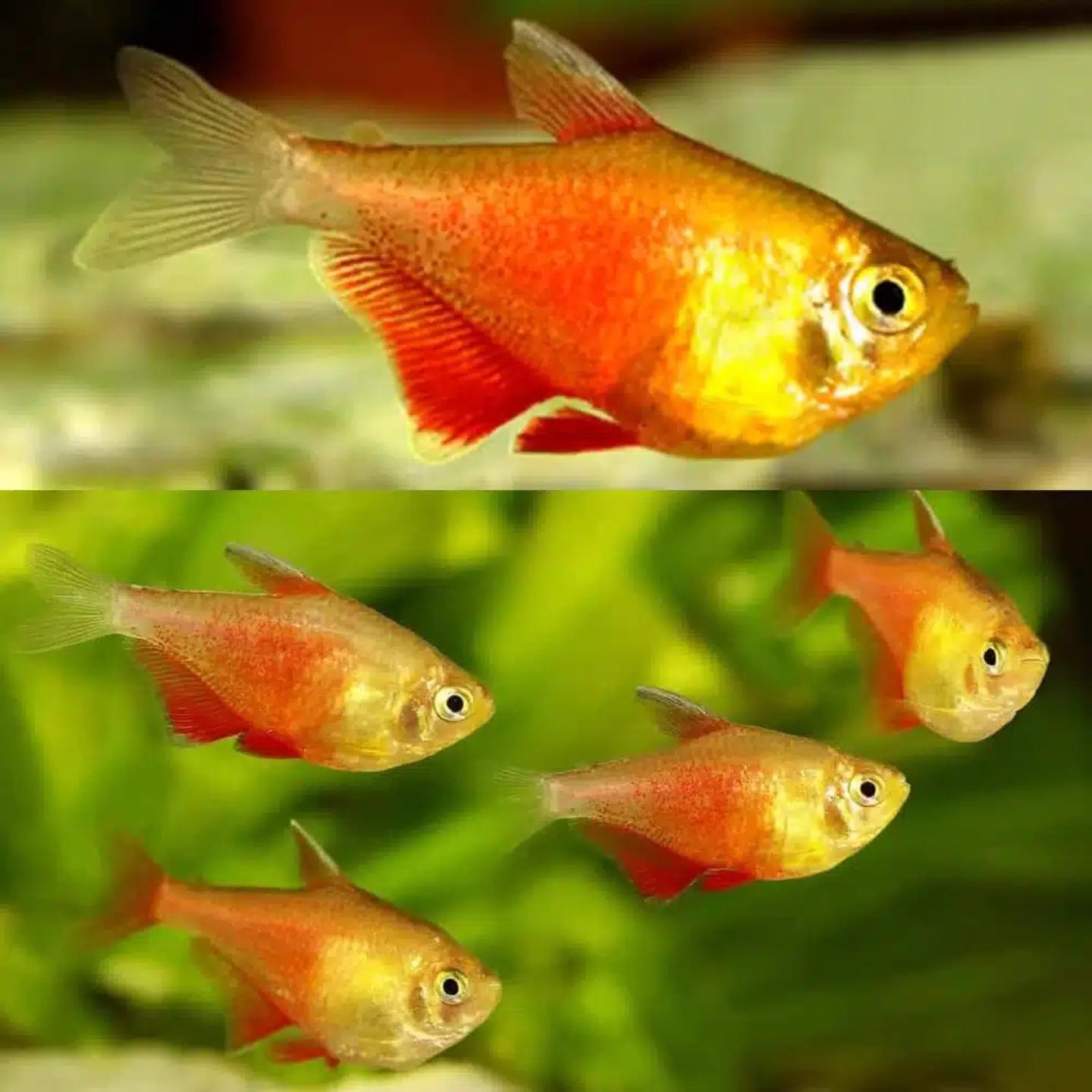
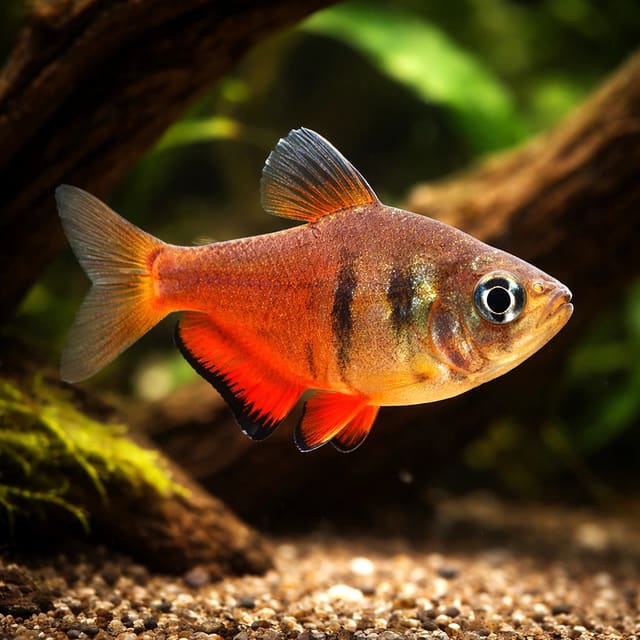
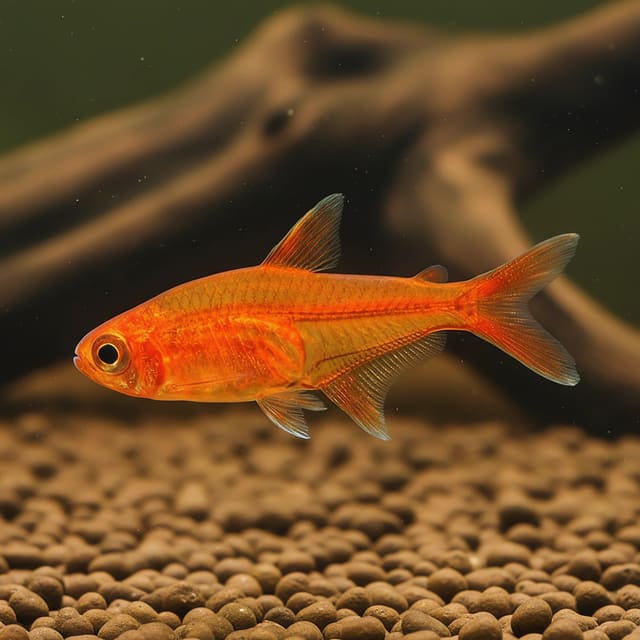
A flame tetra (Hyphessobrycon flammeus) in one of our holding tanks — this is the warmer "orange" strain. Note the brassy shoulder and the red flush deepening toward the tail; that red intensifies once a fish settles into a planted tank with a dark substrate. Photo: Tropical Fish Co.
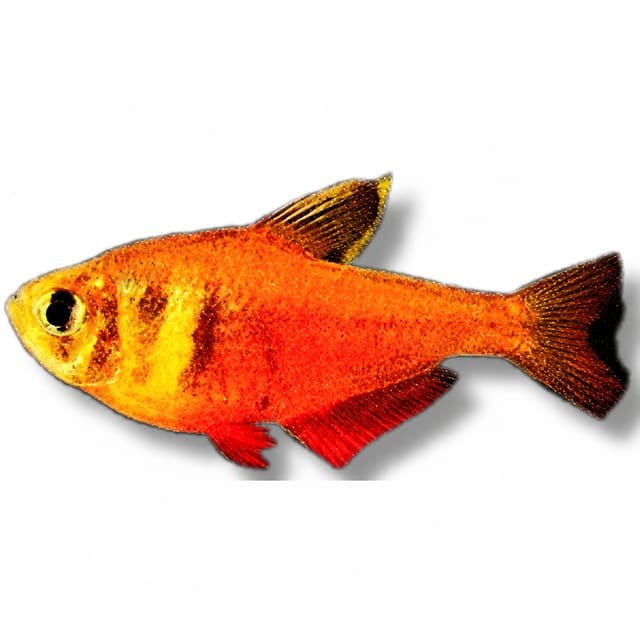
The flame tetra carries a small pile of trade names, which is half the confusion around it. You'll see it sold as flame tetra, Von Rio tetra, Rio tetra or fire tetra, and occasionally as colour strains labelled "orange" or "diamond". They're all the same species — Hyphessobrycon flammeus, described by the American ichthyologist George S. Myers back in 1924 [3]. The "Von Rio" name simply nods to its home around Rio de Janeiro.
The honest question most buyers have is "which red tetra is right for my tank?" — so here's where the flame tetra sits against the two most popular nano schoolers and one feistier red. The columns that matter most are temperature tolerance, hardiness and temperament.
| Attribute | Flame Tetra | Ember Tetra | Cardinal Tetra | Serpae Tetra |
|---|---|---|---|---|
| Scientific name | H. flammeus | H. amandae | C. axelrodi | H. eques |
| Adult size | 4 cm | 2 cm | 5 cm | 4 cm |
| Colour | Warm red-orange | Glowing orange | Red + electric blue | Deep blood-red |
| Temperature | 20–28 °C (cooler OK) | 24–28 °C | 23–27 °C | 22–27 °C |
| Hardness tolerance | 5–25 dGH (hard OK) | 2–10 dGH | 1–8 dGH (soft) | 5–20 dGH |
| Temperament | Peaceful | Peaceful, shy | Peaceful | Semi-aggressive (fin-nipper) |
| Minimum tank | 60 L | 30 L | 60 L | 60 L |
| Minimum group | 8 (10–12 ideal) | 10 | 10 | 8 (12 ideal) |
| UK hard water OK? | ✓ Yes | ✓ Yes | ✗ Prefers soft | ✓ Yes |
| Lifespan | 4–5 years | 3 years | 5–8 years | 5 years |
If your room runs cool or your water is hard, the flame tetra is the standout — it's the only one of these that genuinely shrugs off cooler, harder water. Go ember for a true nano tank, cardinal for maximum colour in soft water, and skip the serpae if your community has any long-finned or delicate fish.
This is the section that earns the page, so let me be precise.
Group size is the lever for both colour and behaviour. Flame tetras are peaceful fish, but the males maintain a low-level pecking order, sparring and displaying to settle rank [2]. In a group of eight or more they spend that energy on each other — flaring, chasing, showing off — and your other fish get left alone. In a group of six they run short of rivals and the displays can spill toward calmer tank mates. Eight is the practical floor; ten to twelve is the sweet spot, and a tighter shoal colours up noticeably deeper red.
Stocking guide by tank size:
With flame tetras, add your shoal together rather than three at a time. A half-sized group of four or five, even temporarily, is exactly the situation where the males' displays turn outward — and any existing tank mates become the target while you wait for the rest. Buy the full group of eight to twelve and acclimate it in one go for a calm, settled school from day one.
There's no upper limit that causes problems — with flame tetras, bigger is always calmer and always redder.
Flame tetras are peaceful, active mid-water fish that want calm company sharing their warm, hard-water-tolerant profile. The best companions either school alongside them or work a different layer of the tank entirely [2].
Avoid large or boisterous fish, and steer clear of fin-nippers such as serpae tetras that could harass a calmer flame-tetra shoal. Want the broader shortlist? Our tetra hub lists every schooling tetra in stock, and the planted-tank fish hub widens it to the full peaceful-community range.
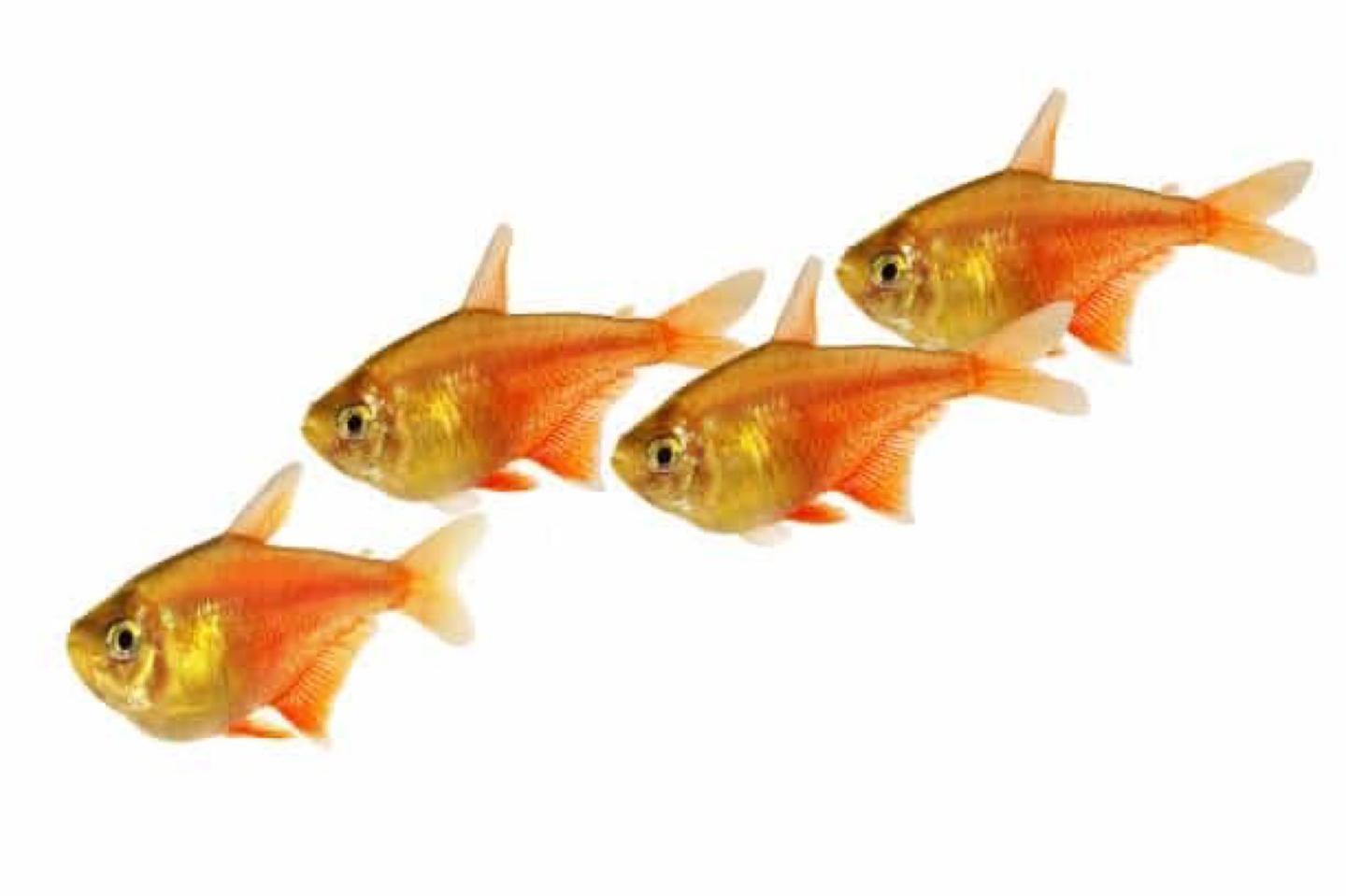
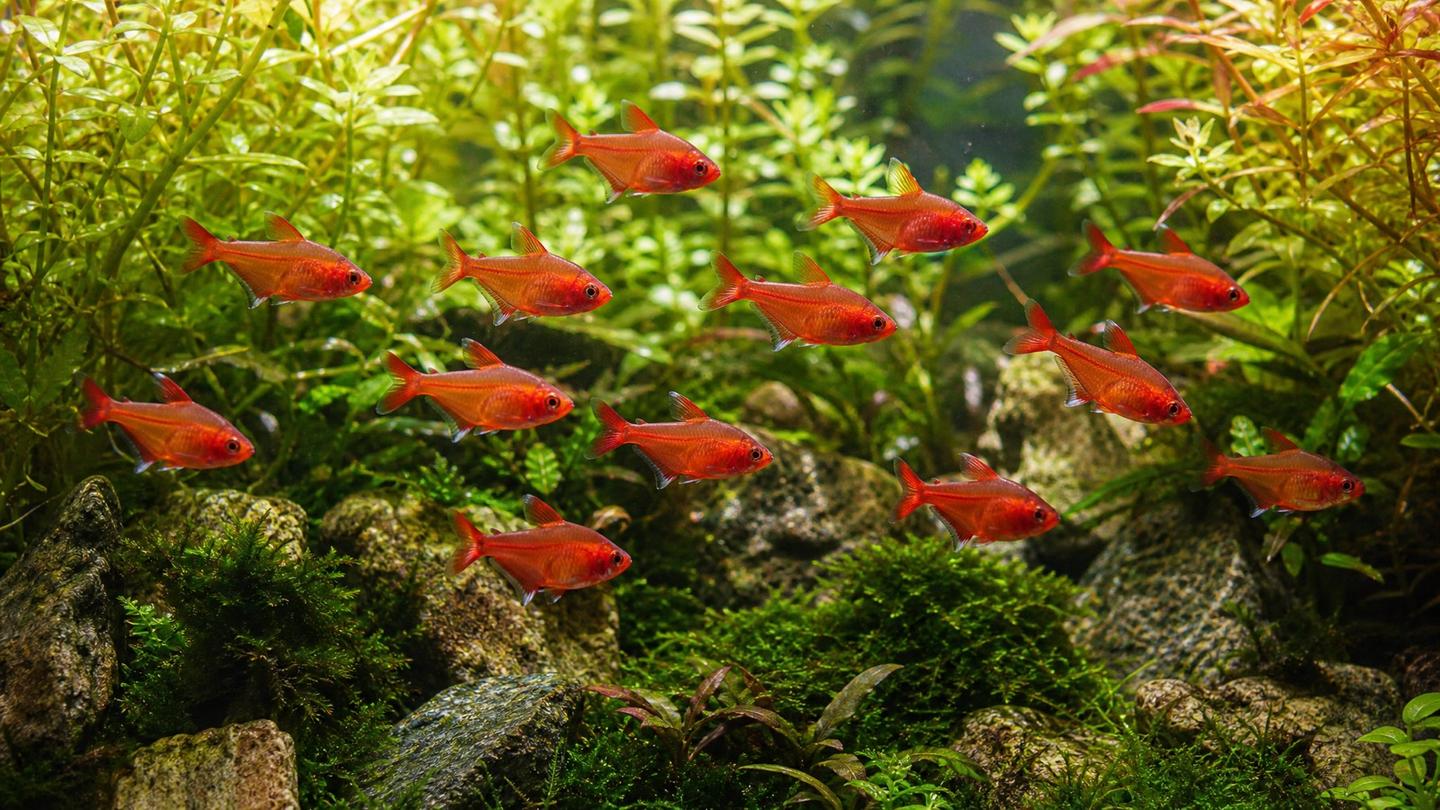
A flame tetra at colour over a planted background. That warm red flush is what you're paying for — and it deepens with a dark substrate, gentle light and a proper shoal. Faded, washed-out fish are usually telling you the group is too small, the tank too bright, or the water needs attention. Photo: Tropical Fish Co.
The calmer mid-water schoolers below are natural same-layer companions once your flame tetra group is properly sized — peaceful reds and a classic neon that share the flame tetra's easy temperament.
Flame tetras are hardy shippers — their wide tolerance for temperature and hardness means they handle the small shifts of a bag-to-tank move better than a sensitive cardinal would. A roughly 30-minute drip is the sweet spot: enough to equalise gently, not so long that the fish sit in cooling, fouling bag water.
Most of our delivery advice tells you to mind the temperature drop in transit. With flame tetras it's less of a worry — they're a subtropical species comfortable from 20 °C, so a tank running on the cool side suits them rather than stressing them. If your home runs cold and you've been put off tropicals, the flame tetra is the fish that changes the maths: a stable low-20s tank is plenty.
Every live order ships with our live-arrival guarantee: if any fish are DOA, photograph the unopened bag within two hours of delivery and we'll refund or replace.
Comparing schools before you commit? The Ember tetra care guide covers the smaller nano-tank red-orange schooler for tanks too small for a full flame-tetra group, and the cardinal tetra guide is the soft-water alternative if you want maximum colour and can provide softer water.
For the deeper husbandry detail, the ember tetra care guide and the neon tetra care guide both cover peaceful schooling partners that share a flame-tetra community, and the cardinal tetra care guide explains the water chemistry that separates the soft-water reds from the hardy flame.
Shopping by type? Our tetra hub has every schooling tetra in stock this week, and the planted-tank fish hub is the full peaceful-community live-stock list.
Visual route into the rest of our UK live-fish range.
Material factual claims cite the sources below; store policy and cautious inference are labelled in the article. Sources are grouped by type so you can judge their weight at a glance.
George S. Myers' 1924 original species description, digitised in the Biodiversity Heritage Library — the primary source for the Rio de Janeiro type locality and the species' tangled rosy-tetra naming history.
Source for max size (2.6 cm SL), temperature 22–28 °C, pH 5.8–7.8, hardness 5–25 dH, the Rio de Janeiro coastal-river distribution, and the IUCN 'Endangered — thought to be extinct in the wild' assessment.
Independent cross-check on the 20–26 °C range (suiting unheated/subtropical tanks), the 8–10 minimum shoal recommendation, temporary male dominance hierarchies, and the note that the species is now bred commercially after wild collection ceased.
UK hobbyist authority on subtropical tetras — the flame/Von Rio tetra is among the species that thrive at lower, less-heated temperatures than the tropical default of 25–26 °C.
Hobbyist video walkthrough of flame/Von Rio tetra colour, group behaviour and planted-tank setup — referenced in the colour-fading and delivery sections.
UK tap-water reference — the south-east supplies hard water (250–320 mg/L CaCO₃), comfortably inside the flame tetra's 5–25 dGH tolerance.
Fishkeeping moves fast and we want every guide spot-on. If you think something here is wrong, out of date, or could be clearer, tell us — our team reads every message and updates the page.
Suggest an editEvidence-checked Ember tetra care for UK tanks: adult size, group needs, tank footprint, temperature, feeding, tank mates and current availability.
Keep cardinal tetras thriving in UK water: check tank size, group size, tank mates, temperature and cardinal vs neon differences before you buy.
Neon tetra care for UK aquariums: check 60 cm tank length, group size, heater, water, tank mates, feeding and mature-tank needs before buying.
Planted-Tank Photographer & Writer · 10+ years in the hobby
Hannah is a Cambridge-based aquarium photographer and writer whose planted-tank work has appeared in Practical Fishkeeping and the ADA Aqua Journal digital edition. She writes Tropical Fish Co's deep species guides on schooling tetras and planted-tank communities — always accompanied by her own photography, never stock imagery.