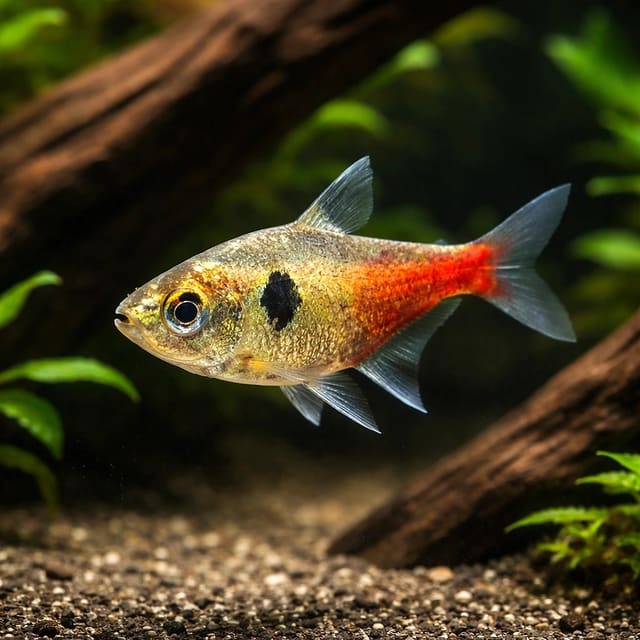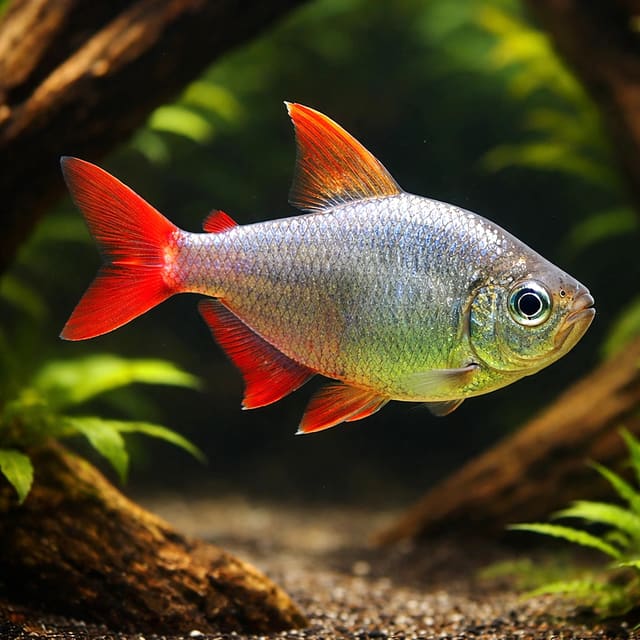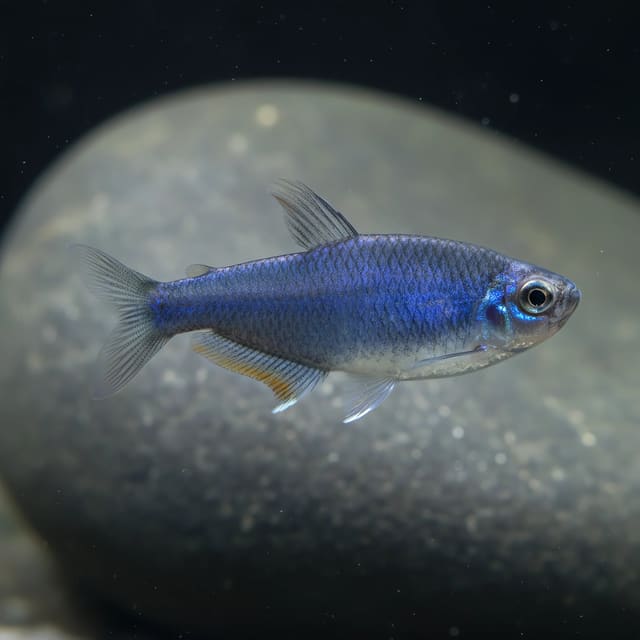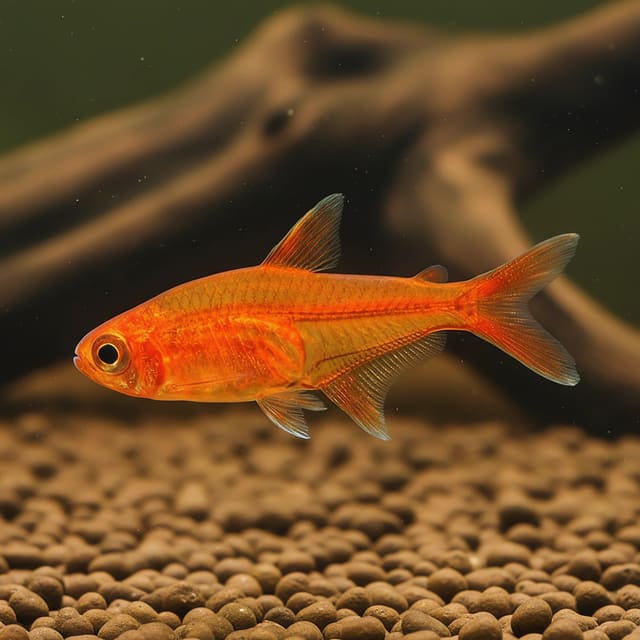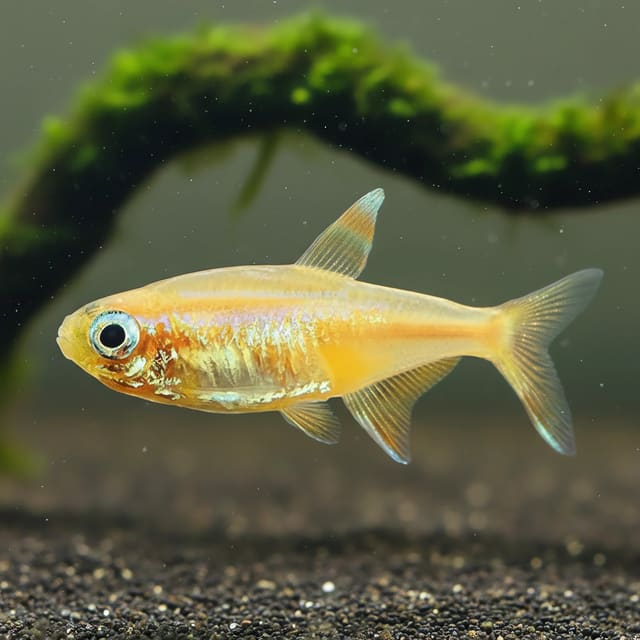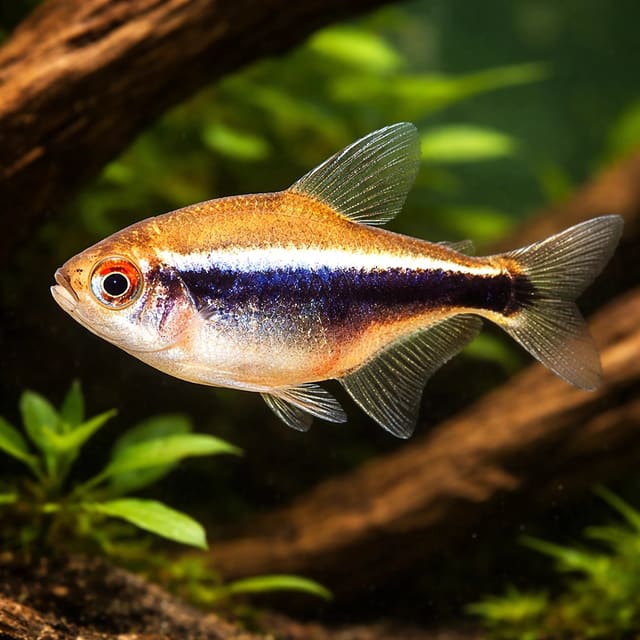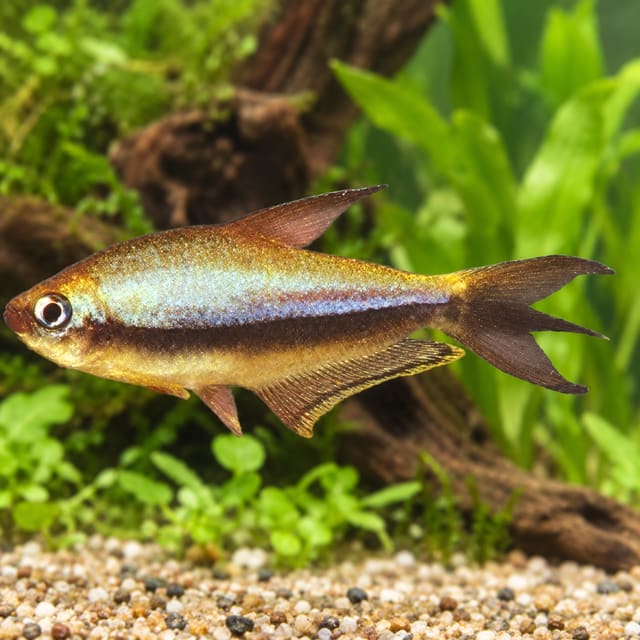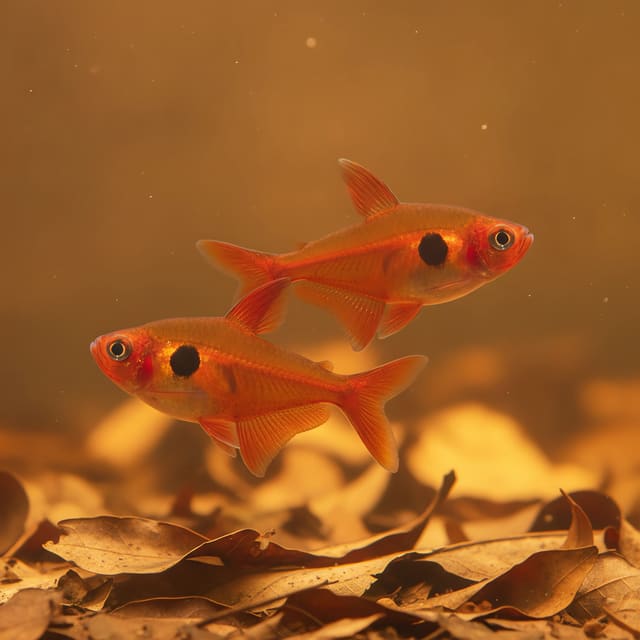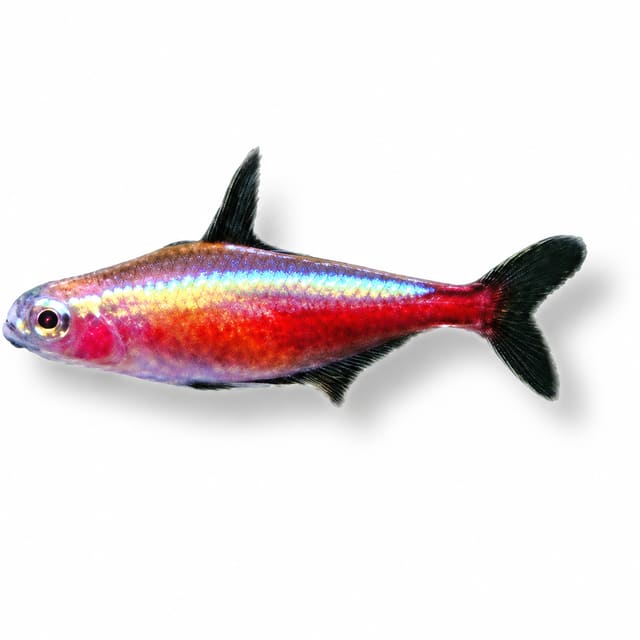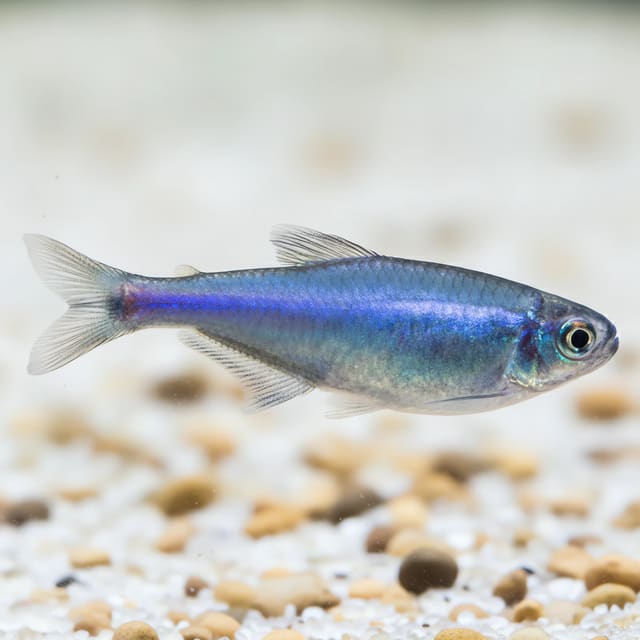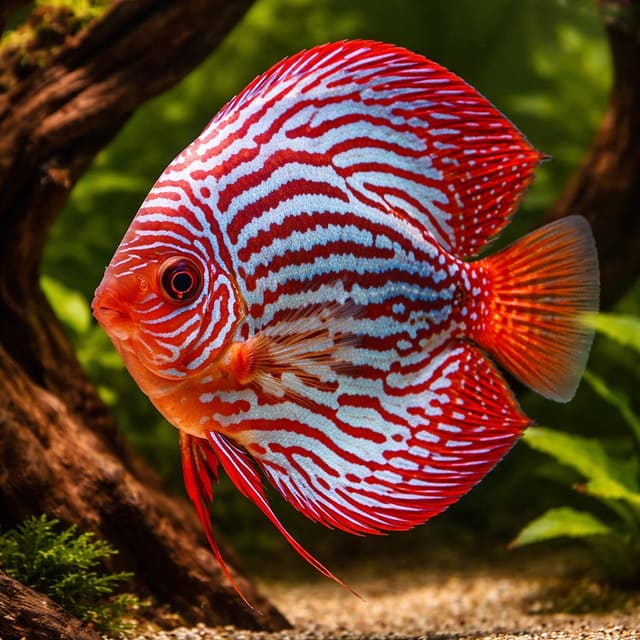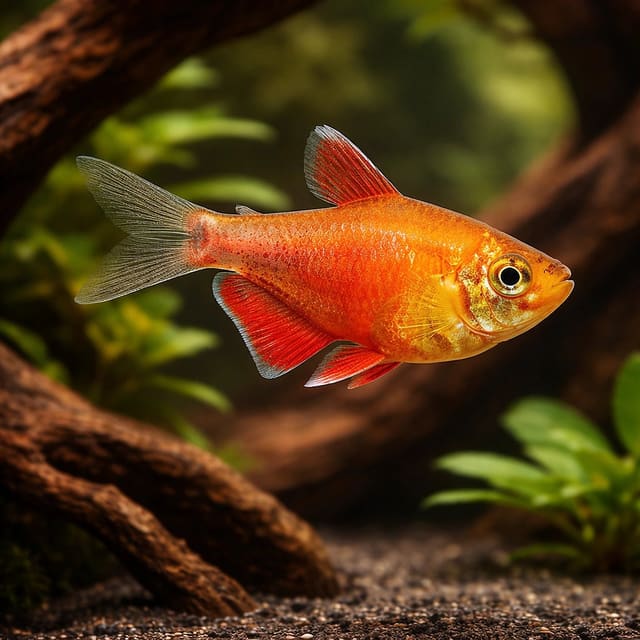
Orange Flame Tetra (Hyphessobrycon flammeus)
20–26°C · pH 5.5–7.5 · 54L
£4.99

Ruby tetra (Axelrodia riesei) is a small, peaceful shoaling fish best planned for a mature, dimly lit soft-water aquarium with a 60 × 30 cm base.
Adult size is the maximum length this species reaches at full maturity (scientific sources). The livestock you receive will be younger and smaller. Product-photo provenance and any image-specific limitations are stated on the listing.
Axelrodia riesei
Shoaling fish: kept in a group they feel safer, stay calmer and show their best colour.
Minimum of 2 per order.
Ruby tetra (Axelrodia riesei) is a small, peaceful shoaling fish best planned for a mature, dimly lit soft-water aquarium with a 60 × 30 cm base.
Adult size is the maximum length this species reaches at full maturity (scientific sources). The livestock you receive will be younger and smaller. Product-photo provenance and any image-specific limitations are stated on the listing.
Maintain these water conditions for optimal health and vibrant colors
Ruby Tetra (Axelrodia riesei) is a small, peaceful shoaling fish from Colombia's upper Meta basin. It suits a mature, dimly lit soft-water aquarium with a 60 × 30 cm base and a group of at least 8–10. Colour varies between individuals and may fade in captivity. One purchase supplies one unsexed fish; choose the quantity needed for the group.
Axelrodia riesei belongs to the characin family, the same broad group that includes many of the best tetras for community tank setups. In the hobby, Ruby Tetras are prized as miniature South American tetras UK aquarists can use in soft-water displays where subtle colour, schooling behaviour, and natural planting matter more than sheer size. They are often compared with ember tetras, neon tetras, and other nano characins, but their smaller adult size and warm ruby tone give them a distinct niche in planted aquariums.
Ruby Tetras habitat is found in South America, with records centred on Colombia and the Meta River drainage. In the wild, these fish inhabit slow-moving tributaries, marginal pools, and shaded stretches where leaf litter, submerged roots, and overhanging vegetation soften the light. Water in these areas is typically warm, very soft, and acidic, which is why Ruby Tetras water parameters matter so much in captivity.
Their natural environment helps answer a common question: how to care for Ruby Tetras properly? Start by thinking small, dark, calm, and plant-rich. These fish are adapted to low mineral content, low to moderate flow, and plenty of visual cover. Ruby Tetras water flow preference is gentle, not turbulent, so they do best in aquariums that mimic a quiet stream edge rather than a fast river channel.
In nature they feed on tiny invertebrates, micro-crustaceans, and suspended organic matter. That explains why the Ruby Tetras diet should focus on very small foods rather than large flakes. Their small mouth size also means they are best kept with similarly delicate tank mates. For aquarists comparing Ruby Tetras or danio, the main difference is habitat style: danios usually prefer cooler, harder, and more active water, while Ruby Tetras thrive in warmer, softer, quieter tanks.
Mimicking the natural habitat of Axelrodia riesei improves colour, feeding confidence, and shoaling behaviour. A dark substrate, clumps of fine-leaved plants, floating cover, and low to moderate current usually bring out far better ruby tones than a bright, sparsely decorated tank.
Although Ruby Tetras are small, a 60 × 30 cm base (about 54 litres) is recommended for long-term care. A mature, well-structured tank gives the shoal room and steadier water conditions. Smaller aquaria may be used for breeding, but they are not the long-term display baseline.
Tank size should reflect the social group as well as body size. Ruby Tetras are shoaling fish; the species profile recommends at least 8–10. Give the group cover and open space, and choose purchase quantity accordingly because one order unit is one fish.
For routine aquarium care, the species profile gives 20–28°C, pH 4.0–6.5 and 1–5 dGH. Stable soft, acidic water and a mature filter matter more than chasing one precise point within those ranges.
Use a gentle filter that keeps the water clean without blasting the shoal around the tank. A small sponge filter or a well-baffled internal filter is ideal for a Ruby Tetras planted tank setup. If you are creating a Ruby Tetras neon tank setup with other tiny characins, aim for clean but calm circulation. Too much current can suppress natural midwater hovering behaviour.
Use dark sand or fine gravel, driftwood and dense planting around the back and sides. Floating plants can soften bright light while leaving swimming room.
Do not introduce Ruby Tetras to a biologically immature aquarium. Test water quality and establish stable filtration before adding the shoal.
The Ruby Tetras diet is omnivorous, but scale matters. These fish need very small foods they can actually swallow. In the wild they pick at microfauna and tiny suspended prey, so in the aquarium the Ruby Tetras feeding guide should centre on crushed micro flake, fine granules, powdered foods, baby brine shrimp, cyclops, and frozen daphnia broken to size.
Offer a quality micro pellet or very finely crushed food that every fish can swallow. Feed small portions and check that each fish can reach the food; large or fast tank mates may outcompete them.
Supplement their staple diet with frozen cyclops, baby brine shrimp, finely sieved daphnia, and occasional microworms. These foods improve body condition and help fish show stronger colour. A good Ruby Tetras care guide always includes variety, because colour and vitality fade when fish are kept on one dry food alone.
Small live or frozen foods can help condition a group for breeding. Adjust portions to avoid leftover food and preserve water quality.
| Time | Food | Amount |
|---|---|---|
| Morning | Micro granules or crushed flake | Only what the shoal eats in 30-60 seconds |
| Evening | Baby brine shrimp, cyclops, or fine frozen food | Small pinch or thawed portion with no leftovers |
Have appropriately sized foods ready before the fish arrive. Their small mouths make particle size a practical part of the setup.
Overfeeding causes ammonia spikes and poor water quality very quickly in nano tanks. Ruby Tetras are tiny, so leftovers that look insignificant to you can still foul the water enough to stress the whole shoal.
One more point: treating tropical fish with salt is not a routine care method for this species. Salt can be stressful in soft-water characin setups and should not be used casually. If health issues appear, diagnose the cause first and avoid broad, unnecessary treatments.
Ruby Tetras are small, slim-bodied fish. Seriously Fish gives an aquarium profile length of about 2 cm standard length; FishBase separately reports a maximum of 2.1 cm standard length and a 4 cm total-length record. Those are different measurement scopes. Red colour varies and can fade in captivity, so a particular shade is not guaranteed.
Ruby Tetras male vs female differences are subtle. Males are usually slimmer and may show slightly stronger colour when mature and conditioned. Females tend to be a little fuller-bodied, especially when carrying eggs. In a settled shoal, males often display to one another with brief posture changes and brighter tones.
Ruby Tetras are peaceful but are not ideal for a general community tank because of their tiny size and specialist water needs. A species-focused aquarium is the safest baseline. If adding companions, choose only diminutive, non-aggressive fish that share their water conditions and will not outcompete them.
Choose other small, peaceful fish that use similar warm, soft water and will not outcompete Ruby Tetras at feeding time.
Avoid large or boisterous tetras, barbs, cichlids and fish big enough to prey on Ruby Tetras. Hard-water livebearers are also a poor default match.
Build the aquarium around a proper Ruby Tetra shoal first. A tank with at least a 60 × 30 cm base and dense cover gives a useful starting point. Consider any other fish or invertebrate only after checking water needs, feeding competition and predation risk.
For possible companions, consider only very small, gentle characids or small peaceful callichthyid or loricariid catfishes in a sufficiently spacious tank. Check each species' water and feeding needs separately.
Always quarantine new arrivals for 2-4 weeks before adding them to a nano community. Tiny fish can be stressed by even mild disease outbreaks, and prevention is much easier than treating a planted display full of delicate species.
Ruby Tetras can reproduce in soft, slightly acidic water among fine-leaved plants. A mature, structured aquarium may produce small numbers of fry without intervention. A separate breeding setup needs careful planning, but this unsexed retail offer is not a breeding pair.
A smaller separate tank may be used for breeding, with gentle filtration, dim light and fine-leaved plants or similar spawning cover. Keep the water soft and slightly acidic. This does not change the larger long-term display recommendation.
Ruby Tetras behaviour during courtship is subtle. Males intensify in colour and pursue females through plants in short bursts. Females ready to spawn appear slightly fuller. The Ruby Tetras male vs female distinction is easiest to see at this stage.
In a separate breeding setup, adults may be moved once spawning is complete so eggs and fry can develop undisturbed. Provide very small first foods appropriate to the fry.
The biggest problems are infertile eggs, fungal losses, and fry starvation due to oversized first foods. Because Ruby Axelrodia Riesei South American Tetras are so small, their fry are correspondingly tiny. If you are asking whether Ruby Tetras for beginners applies to breeding, the honest answer is that everyday care is manageable for attentive aquarists, but breeding is better suited to hobbyists already comfortable with soft-water egg layers.
For breeding, prioritise a mature tank, soft acidic water and fine-leaved plants. Avoid changing water chemistry abruptly.
When comparing Ruby Tetras with other small fish, focus on water conditions, group size and feeding competition. This species is best planned around a calm soft-water shoal.
Stable water and a mature aquarium support this small species. Watch for fading colour, clamped fins, unusual surface behaviour, hiding or loss of appetite, then test water and seek suitable fish-health advice.
Use a separate hospital or quarantine tank whenever possible. Raise aeration, test water immediately, and correct any quality issues before adding medication. Avoid strong medications unless you are certain of the diagnosis. Tiny characins can be sensitive to overdosing. If invertebrates share the aquarium, treatment choices become even more limited.
NEVER use copper-based medications with invertebrates in the aquarium. Copper is lethal to shrimp and many snails, and mixed-species planted setups can be badly affected by the wrong treatment choice.
Ruby Tetras behaviour is gentle, social, and most attractive when they are kept in a proper group. They are true shoaling fish, spending much of their time in the middle region of the tank, weaving in and out of plant cover. A confident shoal creates a shimmering cloud effect rather than a tight panic school.
As Ruby Tetras schooling fish, they should never be kept singly or in tiny groups. Their Ruby Tetras shoal size affects everything from colour to feeding confidence. In a secure planted tank they explore openly; in a bare or noisy aquarium they can become withdrawn. This is one reason they are often recommended as community tank fish UK for thoughtful aquascapers rather than for random mixed tanks.
Keep the group in a calm, well-structured soft-water aquarium. Their peaceful nature does not make them a general beginner community fish; they are best planned as a specialist shoal.
Before ordering, check the current live-fish delivery terms and prepare the aquarium for a proper shoal. Small fish need calm handling and correctly sized food after arrival.
Check the current delivery and arrival guidance before ordering, and be available to receive live fish. Follow the store's acclimation instructions for the fish you receive.
Order your Ruby Tetras today with confidence if your aquarium is mature, planted, and designed for tiny soft-water shoaling fish.
No reviews for this item yet. Bought one? Honest reviews only, good or bad.
What customers say about ordering from us
I have a small group of long finned mountain minnows. So was delighted to be able to order ten of this variety to increase the genetics in my tank . The ones I recieved are healthy but it’s to early to give a verdict on wether they are of a long finned type since they are small currently.
Gordon Walker · 23 Sept 2026
100% success travel and "installation". Pleased with quality of purchase. The Siamese fighter a bit "shy" so have not yet seen him at his best yet but looking good. Happy customer. GG
George E Garratt · 21 Sept 2026
Reviews of our shop, collected by Judge.me, an independent third-party review collector. Newest first.