Moderate
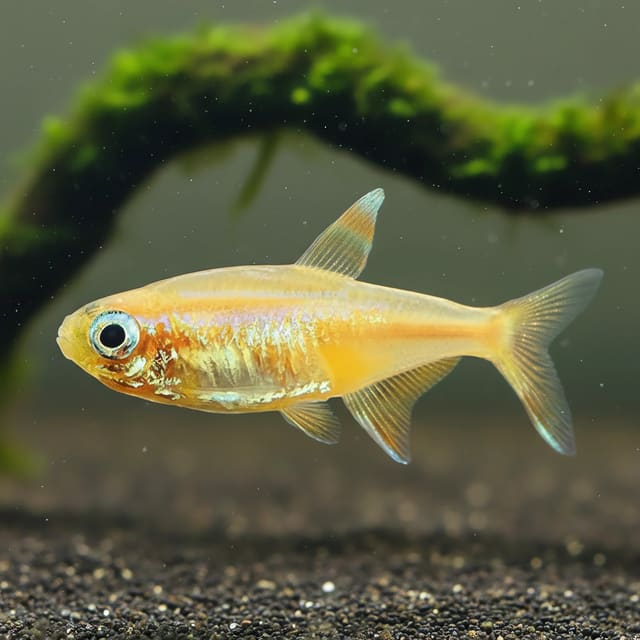
Neon Tetra (Paracheirodon innesi)
21–25°C · pH 5–7
£1.89
The Penguin Tetra (Thayeria boehlkei) is a peaceful schooling tetra from the upper Amazon basin in Peru and the Araguaia River in Brazil that reaches 6 cm. It suits mature community aquariums with at least six fish; the overlap of FishBase and Seriously Fish ranges with OATA’s tetra guidance is 22–27°C, pH 6.5–8.0 and 5–12 dGH. Sold individually in sizes labelled 1–2 cm, 2–3 cm, 3–3.5 cm, 3.8–4.5 cm and XXL.
Adult size is the maximum length this species reaches at full maturity (scientific sources). The livestock you receive will be younger and smaller — pick a size above for the actual shipping size. Product-photo provenance and any image-specific limitations are stated on the listing.
Thayeria boehlkei
Shoaling fish: kept in a group they feel safer, stay calmer and show their best colour.
Minimum of 2 per order.
The Penguin Tetra (Thayeria boehlkei) is a peaceful schooling tetra from the upper Amazon basin in Peru and the Araguaia River in Brazil that reaches 6 cm. It suits mature community aquariums with at least six fish; the overlap of FishBase and Seriously Fish ranges with OATA’s tetra guidance is 22–27°C, pH 6.5–8.0 and 5–12 dGH. Sold individually in sizes labelled 1–2 cm, 2–3 cm, 3–3.5 cm, 3.8–4.5 cm and XXL.
Adult size is the maximum length this species reaches at full maturity (scientific sources). The livestock you receive will be younger and smaller — pick a size above for the actual shipping size. Product-photo provenance and any image-specific limitations are stated on the listing.
Maintain these water conditions for optimal health and vibrant colors
The Penguin Tetra is the familiar aquarium name for Thayeria boehlkei, a peaceful freshwater member of the tetra family Characidae. It is also called the blackline penguinfish and occurs in South America, including the upper Amazon basin in Peru and the Araguaia River in Brazil. FishBase records a maximum reported adult length of 6 cm total length. It suits keepers who can provide a mature, filtered community aquarium, maintain a group of at least six and avoid very boisterous, much larger or predatory companions.
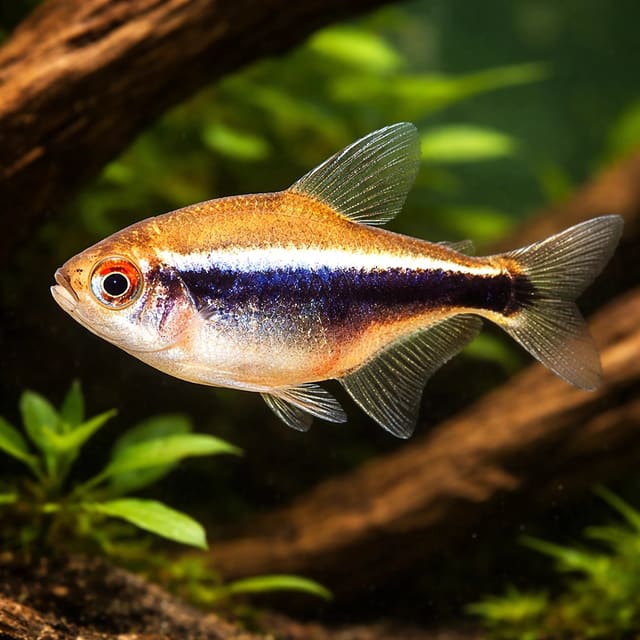
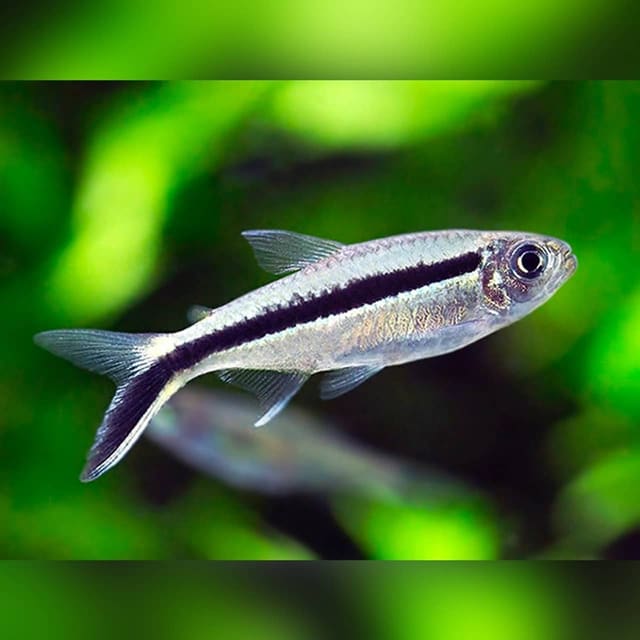
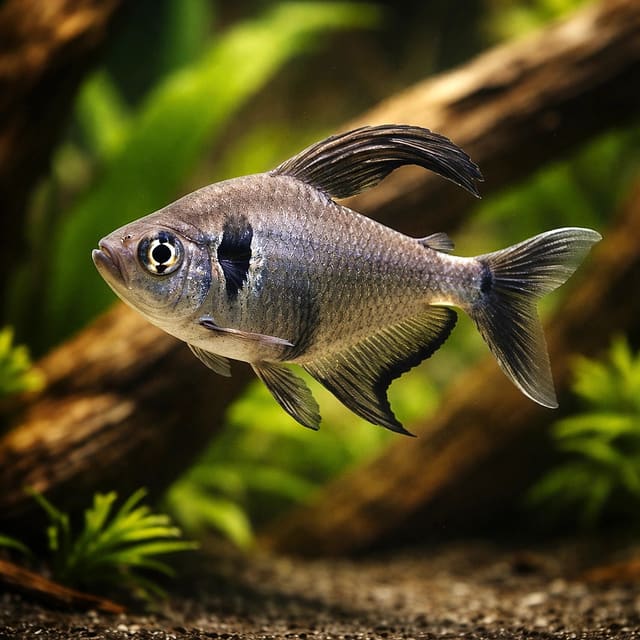
The defining marking is a thick black stripe that extends along the body from the gill-cover area into the lower lobe of the forked tail, distinguishing it from other members of Thayeria.
FishBase separately records a standard-length figure of 3.6 cm. Standard length stops at the base of the tail, while the 6 cm adult figure includes the tail. Use the 6 cm total-length record when allowing physical clearance rather than treating any dispatch size as the final size.
In nature, this fish feeds on worms, small insects and crustaceans. That micropredatory biology explains why small live and frozen foods are useful alongside a suitable dried aquarium food.
One purchase supplies one animal of the selected size. Use the live size selector to choose between the labels 1–2 cm, 2–3 cm, 3–3.5 cm, 3.8–4.5 cm and XXL. The size you select is the size supplied, not the adult size.
Whichever label you choose, plan the same adult accommodation and own-species group. A smaller dispatch fish does not justify a smaller permanent aquarium, while a larger size does not change the species’ need for companions of its own kind. Compare new fish with the mouths, adult sizes and feeding behaviour of established residents before deciding where they will live.
Sex is guaranteed only when the selected option explicitly states male or female. This Penguin Tetra listing has no sex-guaranteed option.
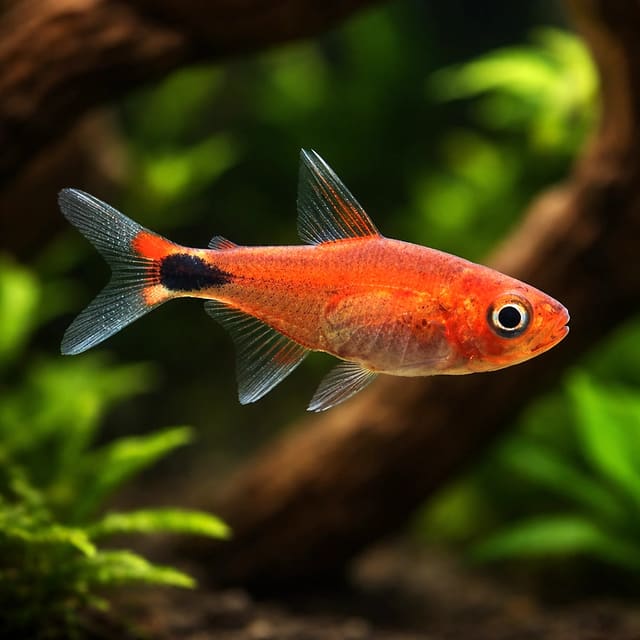
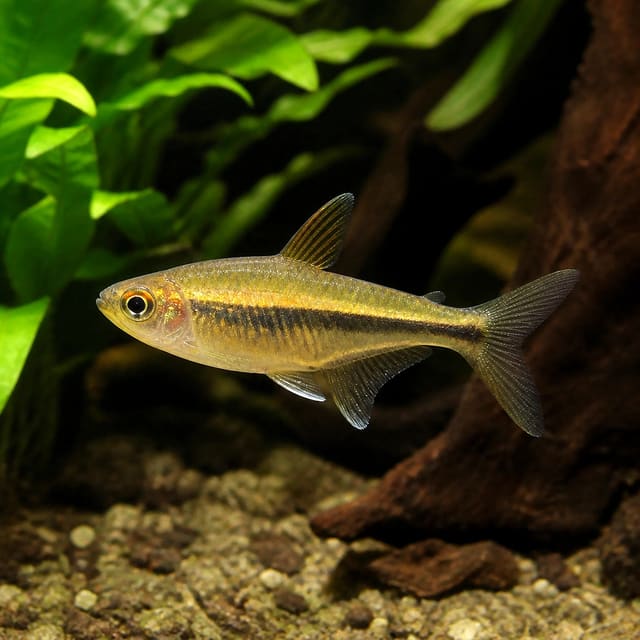
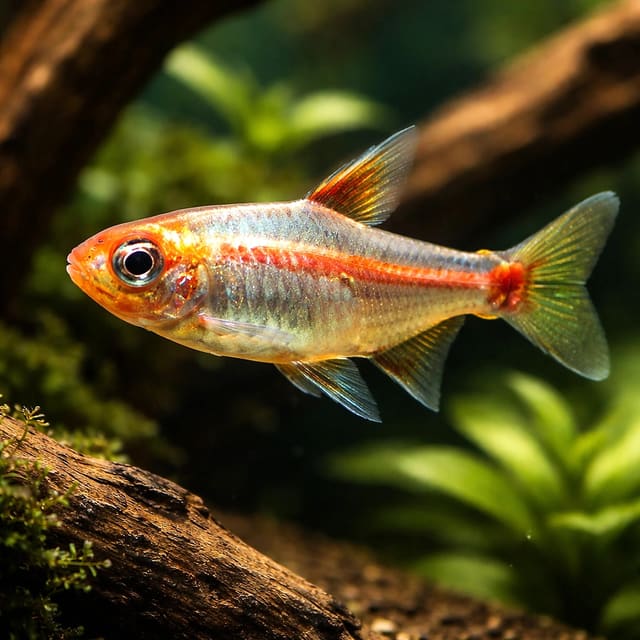
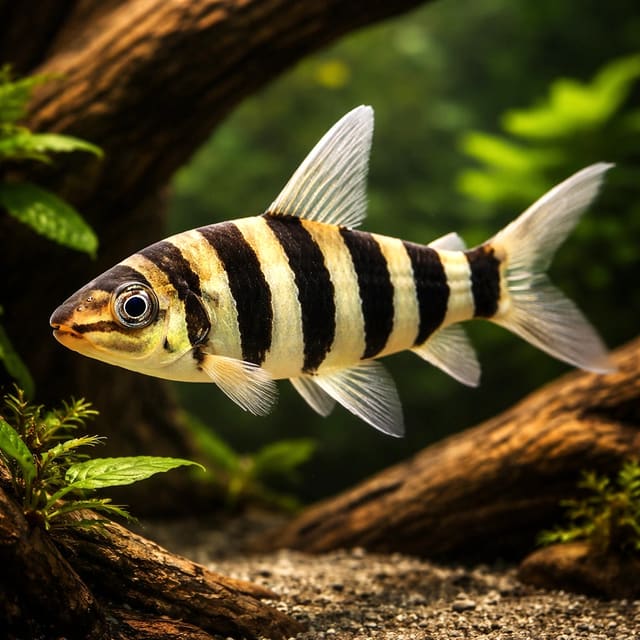
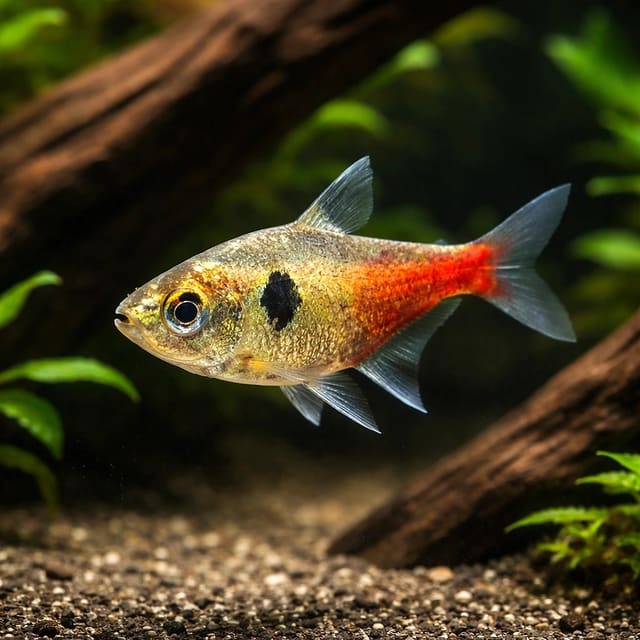
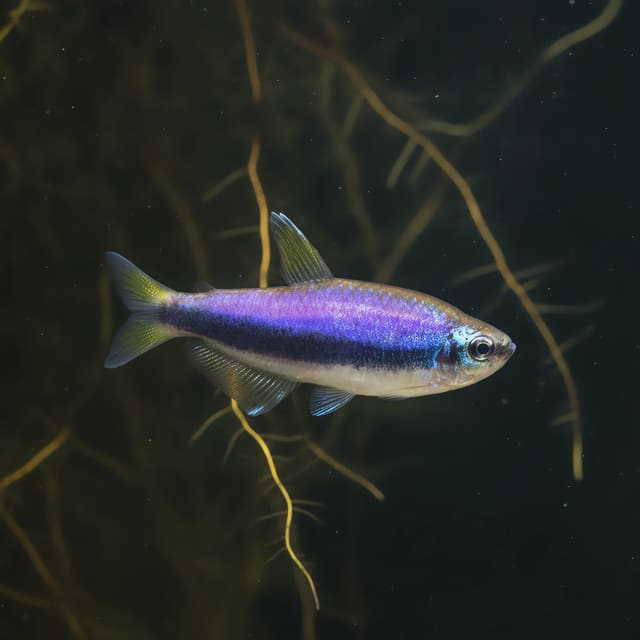
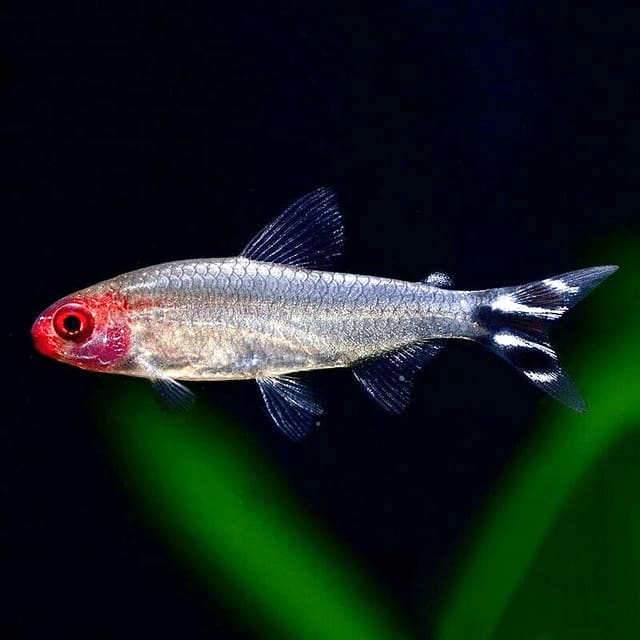
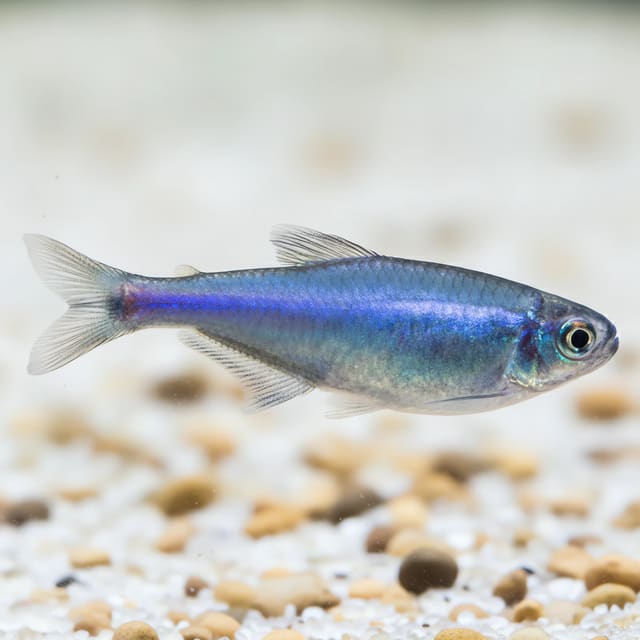
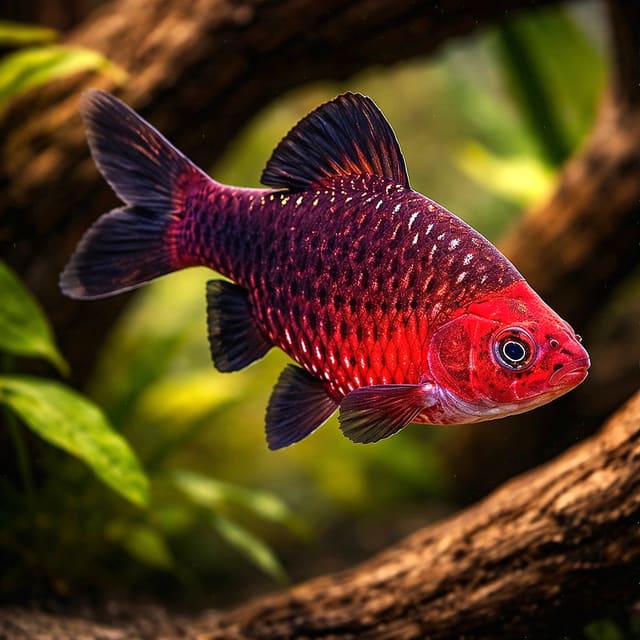
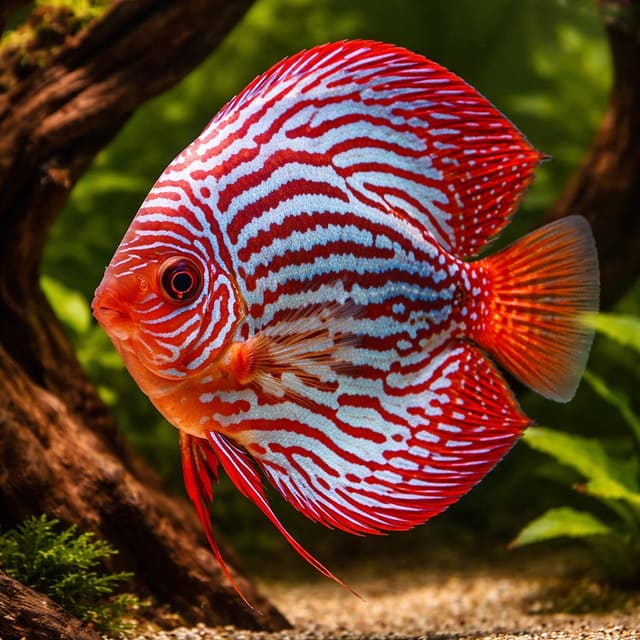
The gallery images are representative, based on reference photographs of this species, so colours can look slightly different from the live animal.
You can compare this fish with the wider tetras collection. Before ordering, read the current delivery and Live Arrival Guarantee policy for the receiving, acclimatisation and claim procedures.
The Seriously Fish species profile recommends a base of 60 × 38 cm and a volume of approximately 68 litres for a small group. Higher numbers are better housed in a larger aquarium. Floor area, usable swimming length, planting and the existing livestock all matter alongside the nominal volume.
| Suits | Not suited to |
|---|---|
| Mature, filtered aquariums with a 60 × 38 cm base and about 68 litres for a small group | Permanent aquariums that cannot provide the recommended base and swimming route |
| Groups of at least six, preferably ten or more where space permits | Solitary keeping or an undersized own-species group |
| Calm community fish of compatible adult size, water needs and feeding pace | Very boisterous, much larger or predatory fish |
| Planted layouts with shade, cover and open swimming space | Layouts that fill the swimming route with dense décor |
| Planning point | Instruction |
|---|---|
| Adult allowance | Plan for up to 6 cm total length. |
| Own-species group | Keep at least 6; preferably 10 or more. |
| Small-group aquarium | Use a 60 × 38 cm base and about 68 litres. |
| Routine temperature | Maintain 22–27°C. |
| Routine pH | Keep within 6.5–8.0. |
| Routine hardness | Keep within 5–12 dGH. |
The routine water values are the overlap of the FishBase and Seriously Fish ranges with OATA’s tetra group guidance. Choose a stable point within that overlap that also suits every companion. The aquarium should be mature, filtered, planted or otherwise furnished with cover, and arranged with open water for group swimming.
A 68-litre aquarium with the recommended base can suit a small group when its swimming route remains open and the filter can process the total livestock load. The same nominal volume becomes a weaker choice if bulky décor shortens the route, established residents occupy most of the open water or a larger school is planned. In that situation, choose a larger aquarium instead of trying to make every requirement fit the minimum footprint.
Work from the intended adult community backwards. First reserve room for at least six Penguin Tetras, then count the adult size and behaviour of every existing or proposed companion. Check that all fish share one stable temperature, pH and hardness range. Finally, confirm that planting provides shade without removing the horizontal space needed for coordinated swimming.
Set up and mature the aquarium before introducing Penguin Tetras. The RSPCA explains why a working biological filter is essential: fish release toxic ammonia, beneficial bacteria convert it to nitrite, and another stage of bacteria converts nitrite to the safer nitrate. A newly installed filter is not mature simply because the water looks clear.
Use our first tropical aquarium guide to plan the filter, substrate and maturation process before livestock arrives. Confirm with tests that ammonia and nitrite are both zero before adding fish. Add livestock progressively, because increased fish numbers and feeding create extra waste that the bacterial population must process.
For an aquarium of about 68 litres, the species profile uses a turnover of four to five times the aquarium volume per hour. That gives a worked filter target of roughly 270–340 litres per hour. Treat the manufacturer’s flow rating as a starting point: filter media, pipework and blockages can reduce flow during use.
Penguin Tetras need swimming room as well as filtration. Position the outlet to provide circulation without turning the open area into a forceful current that prevents this small schooling fish from holding position and feeding comfortably.
Test again after fish numbers or feeding increase, because the filter must process the extra waste rather than merely circulate the same volume of water. Zero ammonia and zero nitrite are the required readings. If either appears, do not add more livestock; review the recent stocking change, feeding quantity, filter flow and condition of the biological media.
Separate flow from biological maturity when diagnosing a problem. Strong water movement does not show that enough beneficial bacteria are present, while a mature filter with a blockage may no longer circulate the aquarium effectively. Check both the test results and the physical output. This two-part check prevents a clear-looking tank or a visibly moving surface from being mistaken for complete filtration performance.
Maintain routine aquarium conditions of 22–27°C, pH 6.5–8.0 and 5–12 dGH. These values are the overlap of FishBase’s environmental range, the Seriously Fish species profile and OATA’s guidance for tetras and pencilfish. Select a stable point that suits the whole aquarium rather than trying to use every part of each range.
For context, FishBase gives 22–28°C, pH 6.0–8.0 and 5–19 dGH, while Seriously Fish gives 22–28°C, pH 5.5–8.0 and 0–20 dGH. OATA narrows its recommendation to 22–27°C, pH 6.5–8.0 and 4–12 dGH. A heater must be able to hold the selected temperature through normal changes in room temperature.
For an aquarium of about 68 litres in a room around 20°C, the species profile gives a planning reference of roughly 75–100 W for the heater. This is a planning example, not a guarantee for every room or aquarium. Check the heater’s own rating against the aquarium volume and the difference between room and water temperature.
OATA sets the water-quality routine at ammonia zero mg/l, nitrite zero mg/l, and nitrate no more than 20 mg/l above the normal tap-water level. It also recommends carbonate hardness of 3–10 dKH.
Our water chemistry guide explains what the main tests measure. Enter your measured values into the water matcher when comparing the aquarium with the stated ranges.
Record the chosen temperature together with pH, hardness, ammonia, nitrite and nitrate before introduction. Repeat the same tests at least weekly and compare like with like. A single result shows the condition at that moment; a sequence shows whether waste is accumulating, temperature is drifting or the aquarium remains steady between water changes.
Use the normal tap-water nitrate reading when applying the limit. For example, if the tap water measures 10 mg/l nitrate, the aquarium should not exceed 30 mg/l under the OATA guidance. If the tap water measures 20 mg/l, the corresponding ceiling is 40 mg/l. This calculation does not replace the zero targets for ammonia and nitrite.
When a value begins moving away from its usual level, look for the practical cause before adding fish. Recent stocking, heavier feeding, missed maintenance, reduced filter flow or a heater problem each calls for a different response. Stable readings within the shared range are more useful than repeatedly adjusting water towards a different point inside that same range.
A heavily planted aquarium suits this peaceful tetra, but dense planting should not fill every part of the tank. Arrange plants, roots or branches around the edges and rear while retaining an uninterrupted swimming route. The 60 × 38 cm base recommendation is useful because it provides horizontal room for a small group to move together.
A dark substrate and floating plants can create the shaded conditions this fish prefers. Twisted roots, branches, smooth rocks and stones add structure below. Position each item securely and keep hard décor away from the main swimming path so fish can change direction without being channelled through narrow gaps.
| Area | Practical purpose |
|---|---|
| Rear and sides | Plants and wood provide visual shelter. |
| Surface margins | Floating plants create areas of shade. |
| Central route | Open water allows coordinated group movement. |
| Substrate | Sand or gravel supports the layout and routine cleaning. |
A river-style display may use sand, driftwood and dried leaves. Beech, oak and Ketapang almond leaves are named options in the species profile, and wood or leaves may tint the water like weak tea. Keep botanical material aquarium-safe and incorporate it into the maintenance routine rather than allowing trapped solid waste to accumulate unnoticed.
Artificial plants and suitable ornaments can provide shelter where live plants are not used. The decision is functional: create shade and refuge while preserving swimming room, filter circulation and access for cleaning. A visually full aquarium can still be unsuitable if the group has no clear route through it.
Look along the length of the aquarium and identify one continuous open route rather than several short pockets divided by wood or plants. Check that the filter outlet moves water through the furnished areas and that a siphon can reach places where debris is likely to settle. If a branch blocks most of the 38 cm front-to-back space or floating cover shades the entire surface, reposition it before introduction.
Review the arrangement again as plants grow. New growth can improve shelter while gradually narrowing the central route or reducing circulation around wood and leaves. Trim or reposition plants when the group loses open swimming room, and remove accumulated debris during the weekly water change without stripping away all cover.
In nature, Thayeria boehlkei feeds on worms, small insects, crustaceans and other small invertebrates. In the aquarium it accepts dried flakes and granules, while small live or frozen foods such as Daphnia, bloodworm and Artemia add useful variety. Choose pieces small enough for the fish to take promptly.
Feed once a day and offer only what the group can consume within a few minutes. Start with a modest amount distributed across the swimming area. Watch whether every fish gains access, then stop when feeding activity falls rather than adding another unmeasured pinch.
Uneaten food breaks down and adds toxic waste to the aquarium, so feeding is part of water-quality control. More variety does not mean more total food. Rotate suitable dried, live and frozen items within the same controlled daily portion.
Use the fish’s natural diet to guide food type, while using the aquarium routine to control quantity. Small worms and crustacean-based foods fit its feeding biology; appropriately sized flakes and granules make a practical staple. Monitor body condition over time rather than trying to change it through occasional heavy feeding.
Carry out a partial water change of 25% at least once every week. In an aquarium holding about 68 litres before displacement by décor and substrate, 25% is approximately 17 litres. Measure the actual water removed rather than assuming the nominal aquarium volume is its working volume.
Use a siphon to remove solid waste from accessible parts of the substrate. Treat replacement tap water with a suitable conditioner before it enters the aquarium so chlorine or chloramine does not harm the fish or the beneficial bacteria. Bring the replacement water into an appropriate condition for the aquarium rather than causing an abrupt change.
Do not rinse established biological media under the tap. Chlorine or chloramine may kill part of the bacterial population responsible for processing ammonia and nitrite. Clean only as much as necessary to restore flow, rather than making every piece of media look unused.
Test at least weekly even when the fish appear normal. Clear water can still contain ammonia or nitrite, while gradual nitrate accumulation may not be obvious from appearance. A written sequence of readings helps reveal a change in filter performance, stocking pressure or feeding before it becomes a repeated problem.
The first measured water change can establish a practical reference for later weeks. If décor, substrate and the normal fill level leave less than 68 litres of water in the aquarium, one quarter of the working volume will be less than 17 litres. Mark the measured amount on the maintenance container so subsequent changes remain consistent.
Check the result after refilling rather than ending the routine when the last bucket is poured. Confirm normal filter output, heater operation and a stable temperature, then observe whether the group resumes ordinary swimming. If disturbed debris remains trapped behind décor, adjust the next siphoning route instead of increasing cleaning in every area at once.
Before introduction, confirm that the aquarium is mature, filtered and within 22–27°C, pH 6.5–8.0 and 5–12 dGH. Test ammonia and nitrite and proceed only when both read zero. Check that the intended own-species group and all established residents fit the aquarium’s usable space.
Increase livestock numbers slowly so the filter’s beneficial bacterial population can adjust to the extra waste and feeding. This matters even when the aquarium has been running for some time: each increase in biological load changes what the filter must process.
| Checkpoint | What to check |
|---|---|
| Before introduction | Temperature, pH, hardness, ammonia, nitrite, space and companion screening. |
| First observations | Swimming position, group cohesion, breathing, colour and access to shelter. |
| First feeds | Appetite, food size, feeding access and leftovers. |
| Weekly checkpoint | Full water test, 25% water change, filter flow and physical condition. |
| First month | Stable readings, steady feeding response and no persistent exclusion by companions. |
Normal individuals vary slightly, so look for a change from the fish’s recent pattern. Warning signs include hanging at the surface, sitting on the bottom, erratic swimming, unusually fast or slow gill movement, darker or paler colour, increased hiding, reduced feeding, weight change, white spots, fluffy growths, damaged fins, missing scales, ulcers or bumps.
If a health change appears, test the water first and check temperature and equipment operation. Correct husbandry problems promptly without guessing at a disease treatment. If the fish remains affected after those checks, contact us for further guidance.
Keep at least six Penguin Tetras together, with ten or more preferred where aquarium size and filtration allow. This is a schooling species that fares better with its own kind. Fish kept alone or in too small a group will often become stressed, while a sufficient group lets social interactions remain focused within the school.
Fin-nipping is sometimes attributed to this species, but the species profile says it does not usually manifest when the fish are kept in sufficient numbers because they concentrate on interactions among themselves. Group size is therefore part of compatibility, not an optional visual extra.
A 60 × 38 cm base and about 68 litres is suitable for a small group. Prefer higher numbers in a larger aquarium. When planning ten or more, assess the proposed tank’s swimming length, existing residents, filter capacity and feeding access rather than assuming the small-group volume automatically fits every larger school.
One purchase supplies one fish, so select the required quantity deliberately. The fish should not be purchased as a solitary feature animal. A coherent group, open swimming route and shaded cover work together to support the behaviour expected from this tetra.
Penguin Tetras are peaceful, but they do not compete well with very boisterous or much larger tank mates. Avoid fish large enough to eat them. Avoid very boisterous or much larger fish because they may prevent these tetras from feeding or schooling normally.
Potential companions named in the species profile include other small tetras, pencilfish, Corydoras, suitable Loricariids, smaller rasboras, some barbs, anabantoids and selected small cichlids. These examples are conditional rather than universal: each exact species must share the intended temperature and water chemistry and remain suitable at adult size.
| Question | Passing condition |
|---|---|
| Could it eat this tetra? | No; compare adult mouth and body size, not dispatch size. |
| Will it dominate the aquarium? | No; temperament and activity should allow calm schooling. |
| Can both use the same water? | Yes; their temperature, pH and hardness ranges must overlap. |
| Will both feed properly? | Yes; Penguin Tetras must reach appropriately sized food. |
Take particular care with barbs and cichlids because behaviour differs between species. A small label alone does not establish a match. Check adult behaviour, territorial needs and feeding pace before combining them.
After introduction, watch whether the group swims openly, feeds together and uses cover normally. Persistent hiding, damaged fins, frantic movement or repeated loss of food indicates that the combination or layout needs reassessment. Honest uncertainty remains until the exact companion species, adult size, group number and aquarium conditions have been compared.
Start with predation risk: any fish capable of eating a Penguin Tetra fails the screen regardless of shared water values. Next compare adult temperament and activity, because a much larger or boisterous fish may prevent calm schooling even when it is not predatory. Then confirm overlapping temperature, pH and hardness. Finish by checking whether all residents can reach suitable food without one species controlling each feed.
Apply this process to each named species rather than approving an aquarium through a broad label such as tetra, barb, catfish or cichlid. Two species from the same broad group can differ in adult size, territorial behaviour and feeding pace. If any part of the comparison remains unclear, leave that combination out of the plan until the exact requirements can be assessed.
Observation after introduction tests how the planned match works in the furnished aquarium. Open group movement and shared feeding access support the choice. Repeated chasing, exclusion from cover, damaged fins or one fish missing several feeds requires action: reassess the companion, group size and layout instead of waiting for the pattern to become routine.
FishBase records an adult maximum of 6 cm total length for the Penguin Tetra. Plan permanent accommodation around that adult figure rather than the fish’s dispatch size.
Use a mature, filtered aquarium with a base of at least 60 × 38 cm and about 68 litres for a small group. Provide shaded cover and an open swimming route, and choose a larger aquarium for higher numbers.
Keep at least six Penguin Tetras together, preferably ten or more where aquarium size and filtration allow. Seriously Fish recommends this number, while OATA also warns that tetras kept singly or in groups that are too small will often become stressed.
The Penguin Tetra suits a keeper who can mature and test the aquarium, maintain a group of at least six, complete weekly maintenance and screen every companion. It should not be treated as a solitary fish or added to an unprepared aquarium.
Offer appropriately sized flakes or granules plus small live or frozen foods such as Daphnia, bloodworm and Artemia. Feed once daily, giving only what the group consumes within a few minutes so leftovers do not add waste.
Keep Penguin Tetras at 22–27°C and pH 6.5–8.0, with hardness at 5–12 dGH. These routine values are the overlap of FishBase and Seriously Fish ranges with OATA’s tetra guidance.
It is peaceful, although fin-nipping is sometimes attributed to the species. Seriously Fish says this behaviour does not usually appear when at least six are kept together because their interactions remain within the group.
Potential companions include compatible small tetras, pencilfish, Corydoras, suitable Loricariids, smaller rasboras, some barbs, anabantoids and selected small cichlids. Avoid fish large enough to eat it and very boisterous or much larger species, and screen every exact species for adult size, water needs and feeding pace.
Someone must be present to receive the parcel. Film every delivery continuously from the sealed parcel as it is opened, showing the Penguin Tetra still inside the sealed bag; float the bag for 20–30 minutes before releasing the fish, and never pour the bag water into the aquarium.
No reviews for this item yet. Bought one? Honest reviews only, good or bad.
What customers say about ordering from us
Easy website plenty of info on fish your buying great to pick a time slot
TRACEY DURRANT · 7 Oct 2026
Got some lovely fish thank you
Kevin Mackie · 7 Oct 2026
Reviews of our shop, collected by Judge.me, an independent third-party review collector. Newest first.