Easy
10 × Royal Tetras (Inpaichthys kerri)
24–27°C · pH 6.5–7 · 68L
£19.99

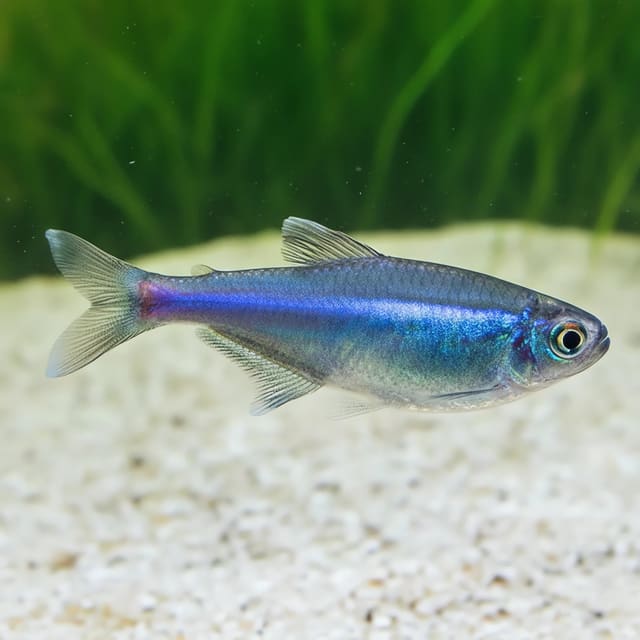
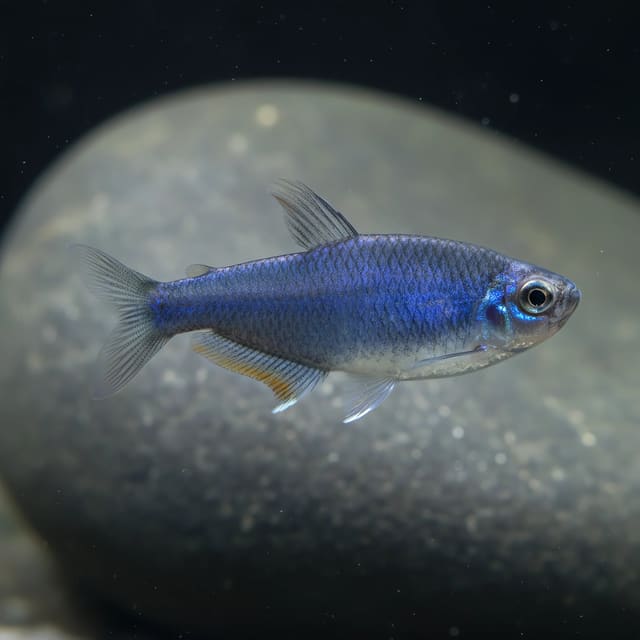
Six Blue Emperor Tetras (Inpaichthys kerri) per purchase. Keep the group in a mature, well-filtered aquarium with subdued cover, open swimming room and peaceful companions. No sex selection is included.
Adult size is the maximum length this species reaches at full maturity (scientific sources). The livestock you receive will be younger and smaller. Product-photo provenance and any image-specific limitations are stated on the listing.
Inpaichthys kerri
Six Blue Emperor Tetras (Inpaichthys kerri) per purchase. Keep the group in a mature, well-filtered aquarium with subdued cover, open swimming room and peaceful companions. No sex selection is included.
Adult size is the maximum length this species reaches at full maturity (scientific sources). The livestock you receive will be younger and smaller. Product-photo provenance and any image-specific limitations are stated on the listing.
Maintain these water conditions for optimal health and vibrant colors
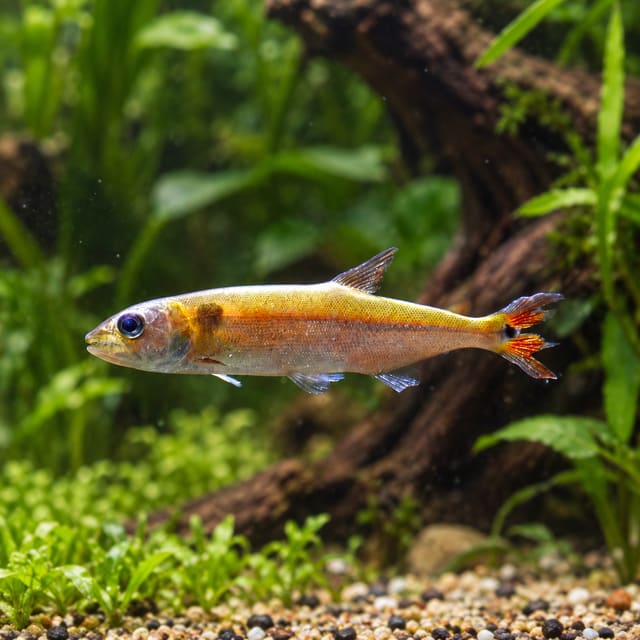
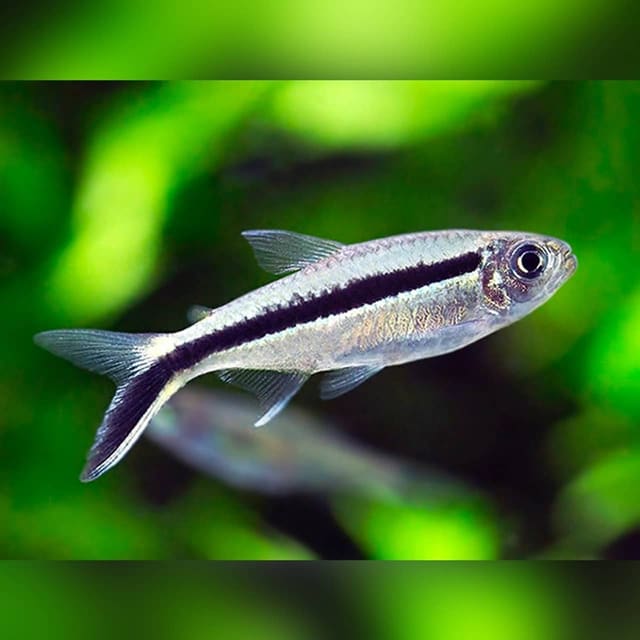
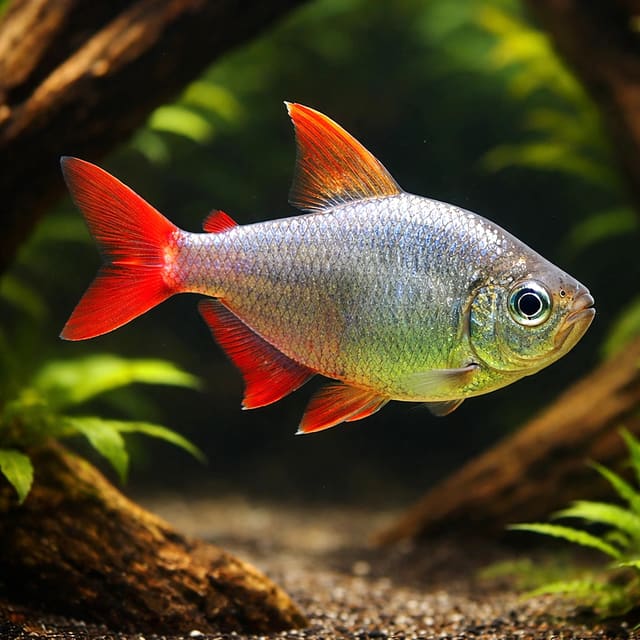
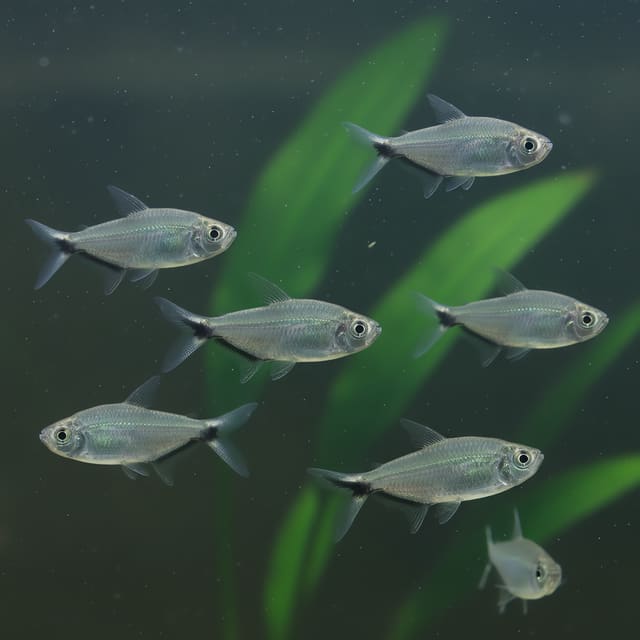
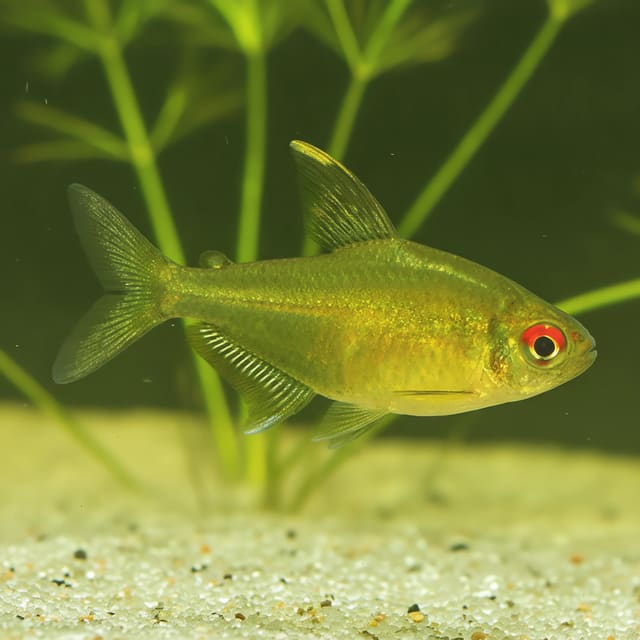
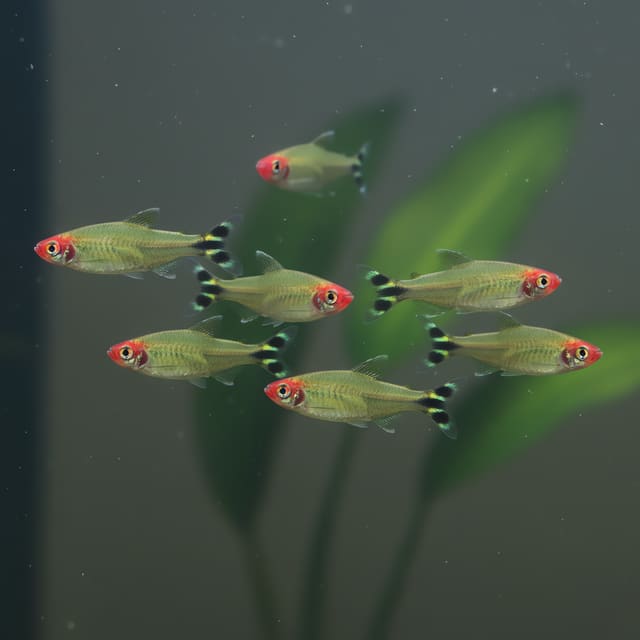
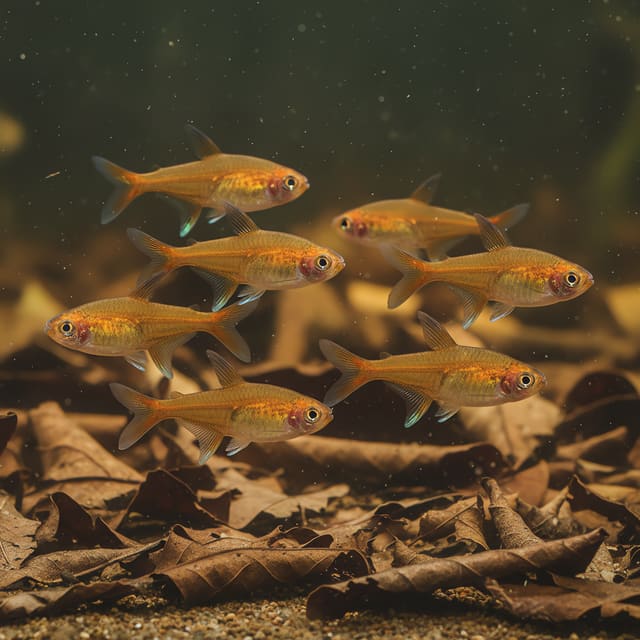
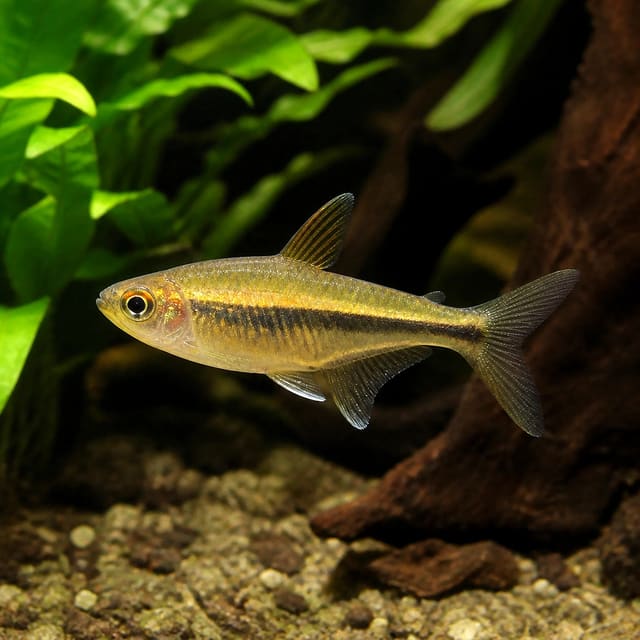
One purchase supplies six Blue Emperor Tetras, Inpaichthys kerri. This is a practical starting group for a fish that fares better with its own kind than alone. The six-fish offer is the important distinction here: the gallery contains a view of one fish, while the product is sold as a group of six. Colour and markings vary between live individuals, and the photograph cannot tell you the appearance of each animal you will receive.
Blue Emperor Tetra is also called Royal Tetra or Regal Tetra in aquarium references. Its scientific name is useful when comparing care information because the name Emperor Tetra is also used for a different fish, Nematobrycon palmeri. Check that a guide is discussing Inpaichthys kerri before applying its advice. This species is recorded from the Aripuanã River in Brazil's upper Madeira basin; that describes the species' wild range, not the origin of the fish sold here. FishBase identifies the species and its distribution, while Seriously Fish documents the aquarium names and care.
The current measured size of the six fish has not been verified. If size affects compatibility, please ask us for a current size check before ordering. Seriously Fish gives 35 mm standard length as a species-level adult reference. Standard length excludes the tail fin, so it is not directly interchangeable with a casual nose-to-tail measurement. Allow for a settled group and a suitable aquarium rather than choosing a tank by the length of one newly arrived fish.
These are small, generally peaceful fish, but the size of an individual is a poor guide to the space six need. For a small group, the Inpaichthys kerri profile describes a base around 60 × 38 cm and a volume of roughly 68 litres. The footprint leaves room to swim while cover gives the fish somewhere to retreat. A tank merely labelled 60 cm may have a much narrower base or insufficient usable volume. Consider its actual dimensions, filtration, existing livestock and swimming space before adding the whole group.
Prepare a mature, maintained aquarium with a functioning biological filter and zero measured ammonia and nitrite. Match the group's routine water needs to your measured water rather than relying on the broad label “tropical”. Species-level guidance is 24–27°C, pH 5.5–7.0 and 1–12 dGH; the species profile cautions against alkaline conditions. A steady aquarium within an appropriate range is preferable to chasing a number with abrupt changes. If this is your first aquarium, our first tropical tank guide explains the groundwork before live fish arrive.
Sex is guaranteed only when the selected option explicitly states male or female. This 6 × Blue Emperor Tetras listing has no sex-guaranteed option. Colour, body shape and fin details in a photograph do not make a sex guarantee for this pack. Plan for six individuals of the named species without relying on a particular sex ratio or a breeding outcome. If you already keep Blue Emperor Tetras, assess the whole existing group and available space; buying six more is a substantial stocking change even though each animal is small.
These figures guide planning; they do not replace measurements in your own aquarium. In particular, the tank recommendation describes a small group in a suitable layout, not a licence to add six fish to an already crowded tank. The water range is species guidance from a specialist profile, whereas general tetra care sheets cover a wider mix of animals. Use the narrower, relevant advice for this species when the two differ.
A Blue Emperor Tetra may look tiny beside an empty aquarium, yet keeping six changes the space calculation. The fish need room to move past one another, places to break line of sight, and a clear stretch for swimming. Seriously Fish describes approximately 60 × 38 cm of base area and about 68 litres for a small group. The base dimensions matter because two aquariums of the same length can have very different widths and usable space. Use this as a species-specific starting point, then allow more room if the aquarium already houses other fish or if you intend to maintain a larger group.
Think in terms of the aquarium the fish will inhabit after settling, rather than the size of a newly supplied fish. The species-level adult reference is 35 mm standard length. Six fish at this scale still produce waste and compete for open routes and feeding space. An aquarium crowded with ornaments can lose the very swimming area its litres suggest. Equally, a bare layout can leave a peaceful group exposed. Aim for a balance of open middle water and dependable shelter at the edges and rear.
If you are deciding between two tanks, compare footprint, working volume after décor, filter performance and the temperament of current residents. A larger stable aquarium generally makes it easier to maintain consistent water conditions, but size alone does not compensate for an immature filter. Before purchase, look at the fish already present and ask whether all of them can use the space without being chased, displaced at food or forced into the same small refuge. This is especially relevant when adding six at once to an established community.
For routine aquarium care, the species profile gives 24–27°C, pH 5.5–7.0 and 1–12 dGH. It also warns that Inpaichthys kerri does poorly in alkaline conditions. Test the aquarium rather than assuming tap water or a heater setting is already suitable. Record temperature and pH over time, and find out the hardness of the water you actually use for changes. Our water chemistry guide explains the measurements and how they relate to an established aquarium.
Published numbers have different purposes. FishBase includes a wider pH range in environmental records for the species; that is not a reason to set a community aquarium to the upper end as a routine target. The OATA tetra-and-pencilfish sheet also covers many species, so its broader group values should not override the narrower species profile here. If your readings sit outside the stated routine range, assess the whole system before making a purchase. Do not make abrupt chemical adjustments simply to hit one value on the day fish arrive.
Temperature is only one part of stability. A well-functioning biological filter converts fish waste through the nitrogen cycle, but ammonia and nitrite are toxic stages and should measure zero before you add this group. Water that looks clear is not proof that these values are safe. Test the aquarium while it is running, including after any significant change in stocking or feeding. The water matcher can help compare your measurements with the stated guidance, while your test results and the condition of the fish remain the practical checks.
Keep replacement water conditioned and close enough to the aquarium's conditions to avoid a sudden swing. The goal is a stable environment for six fish and their companions, not a perfect figure obtained through repeated large corrections. If you have unexplained pH movement, rising nitrogen readings or inconsistent temperature, resolve that before adding livestock. This is a more useful decision than trying to adapt the fish quickly to a tank whose conditions are still changing.
Fish release waste continually. The RSPCA explains that a functioning biological filter supports bacteria which process ammonia into nitrite and then nitrate. That process is why a newly filled tank, even one with a strong pump, is not automatically ready for fish. Establish and maintain the filter, then confirm ammonia and nitrite are zero with appropriate tests. OATA's guidance for tetras and pencilfish likewise asks keepers to check water quality before introduction and to increase stocking gradually as the bacterial population adjusts.
A six-fish purchase is a meaningful addition to the aquarium's waste load. If there are already fish in the tank, feed carefully and monitor water after the new group arrives. If this would be the aquarium's first livestock, follow a mature-tank plan and check that the filter can support them. Stocking too quickly can bring an ammonia or nitrite rise even in a tank that appeared settled before the addition. The response is to check the water and husbandry promptly, rather than assuming a fish's colour or position alone reveals the cause.
Regular filter maintenance should protect the bacteria that make the system work. When media needs rinsing, OATA advises using water removed from the aquarium during a partial water change rather than chlorinated tap water. Avoid cleaning every part of the filter so aggressively that it loses its biological function. Check for blocked flow, but do not confuse a strong current with good water quality: a maintained filter and measured results matter more than a powerful jet aimed across the fish's preferred swimming area.
A useful layout gives this group both cover and open water. The species profile describes subdued lighting and a choice of arrangements: roots, wood and leaf litter in one style, or a well-maintained planted aquarium in another. Plants can be an attractive and practical source of shelter, but they are not the only acceptable arrangement and are not a claim about what appears in the gallery photograph. Place cover so a fish can move out of another's view without turning the whole tank into a dense obstacle course.
Look at the aquarium from the fish's perspective. A long clear route through the middle helps the group move normally. Cover along the rear and sides creates several retreats instead of one contested corner. If you use wood, roots or leaves, use aquarium-appropriate materials and maintain them before decaying debris can foul the water. If you choose plants, keep them healthy and trim them before they block swimming room or filter flow. A combination of shade and clear routes also makes it easier to observe all six animals and notice a fish that is persistently hiding or excluded.
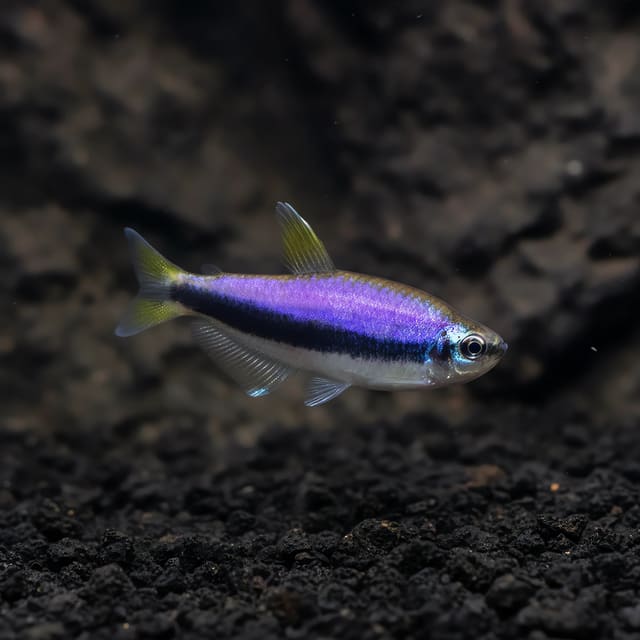
The species' blue-violet sheen can appear different with individual fish, lighting and viewing angle. A darker, calm setting may make the fish easier to watch without demanding a brightly lit bare display. Avoid choosing lighting solely to force a particular colour in a photograph; the priority is a comfortable environment. Observe whether the fish use the open space and retreat naturally, and adjust the arrangement if one animal is continually pursued or has nowhere to settle. Layout is part of group care, not merely decoration.
Seriously Fish describes Inpaichthys kerri accepting prepared foods and benefiting from regular small live or frozen items such as brine shrimp and Daphnia. Choose food that each fish can take easily. A mix of suitable prepared and small live or frozen foods is more useful than relying on one food because the animals are inexpensive or small. Watch the whole group at feeding time: a fish repeatedly pushed away from food needs attention to its condition and the social arrangement.
Offer sensible portions and remove or avoid persistent uneaten food. OATA's general tetra guidance links overfeeding with waste accumulating in the aquarium. Uneaten food breaks down and adds to the filter's work, so a generous-looking feed can make water conditions worse without benefiting the fish. Adjust the amount to what the group actually consumes, considering other residents in the tank. If larger or faster fish take everything first, food choice alone will not solve the compatibility problem; reconsider how and where each species feeds.
Do not rely on colour as a complete feeding or health gauge. Individuals vary naturally, and a new group may behave differently while settling. What matters is a pattern: all six find food, maintain normal body condition and move without being continuously displaced. A varied diet supports good condition, but it cannot substitute for stable water and peaceful companions. If appetite drops or one fish is repeatedly isolated, test the water and inspect the group dynamics before adding more food or changing the whole feeding routine.
Routine care is easier when it is regular and measurable. OATA's tetra-and-pencilfish guidance recommends testing at least weekly and changing roughly 25% of the water each week. Use those figures as broad group-level maintenance guidance, then respond to actual test results and the needs of the aquarium. Check ammonia and nitrite, observe temperature and keep an eye on any change in the fish's swimming, feeding or breathing. A stable trend over several weeks tells you more than a single isolated reading.
Condition replacement tap water to remove chlorine or chloramine before it enters the aquarium. During a partial change, siphon debris from accessible areas without stripping every surface of the tank at once. Check the filter for reduced flow or blockage. If media needs a gentle rinse, use some of the removed aquarium water. This preserves more of the bacterial population than washing the media under the tap. Return the system to normal flow and check that the heater and other equipment are operating as expected.
Care for the group as a whole, but learn the usual behaviour of each fish. Normal variation in colour and activity is expected; sustained changes deserve a closer look. OATA lists unusual swimming, hiding, breathing changes, damaged fins, spots and reduced interest in food among signs to investigate. Begin with measured water quality and recent changes in stocking, feeding and equipment. The point of a routine is to spot a problem early enough to investigate it, not to treat every momentary movement as an illness.
Have the aquarium ready before delivery rather than using the arrival day to establish filtration or adjust its chemistry. Confirm the tank is mature, ammonia and nitrite measure zero, temperature is appropriate and the cover layout leaves both refuges and swimming room. Make a plan for the whole six-fish addition, especially if other fish already live there. OATA advises increasing stocking gradually where possible because the biological filter must adjust to the added waste and feeding. After introduction, monitor the water and the behaviour of existing residents as well as the new group.
Tropical Fish Co's current delivery and Live Arrival Guarantee policy explains live-animal packing, attendance and the steps to take if something is wrong on arrival. Arrange for someone to receive the parcel; live fish should not be left unattended. The policy asks for same-day inspection and a continuous video beginning with the still-sealed parcel if you need to make a claim. Film the opening and the fish while still in the sealed bag before disturbing the contents. Those are claim-evidence conditions, separate from the care the animals need once unpacked.
For introduction, follow the store's current guidance to float the sealed bag for about 20–30 minutes to reduce a temperature difference before releasing the fish. Do not pour transport water into the aquarium. Move calmly, avoid a sudden chase around a brightly lit tank and allow the group to find cover. Observe them over the first hours and days rather than judging suitability from a single minute after release. If they are continually harassed, unable to feed or showing signs of distress, check the water and tank mates promptly. The store policy has the current full delivery and claim terms.
Fish care figures are most helpful when you know what each one describes. Seriously Fish reports 35 mm standard length as an adult species reference, which helps plan long-term space. It does not give the current measured length of any of the six fish supplied; ask us for a current size check if needed.
Water figures also have different scopes. FishBase records environmental data for Inpaichthys kerri, including a broader pH interval. Seriously Fish provides aquarium husbandry guidance of 24–27°C, pH 5.5–7.0 and 1–12 dGH and specifically cautions against alkaline conditions. OATA's general sheet spans many tetras and pencilfish. When planning this aquarium, use the species-specific routine guidance rather than stretching it to fit every number in a general or wild-environment record. Keep changes gentle and measure the water you intend to use.
A minimum figure should also be read with its dimensions and conditions. “60 cm” alone says little about the width, working volume or existing stocking of a tank. The species profile's approximate 60 × 38 cm base and 68-litre example describe space for a small group, not a universal capacity for every community combination. If you are uncertain, err on the side of more usable space and fewer competing demands. This way of reading the figures prevents a short quick-facts card from becoming a misleading promise.
Blue Emperor Tetras are group fish. Seriously Fish notes that they do best together and that a group of about half a dozen usually confines displays and minor aggression largely to their own kind. This pack provides six in one purchase, which makes it a sensible starting group. It does not, however, remove the need to consider the aquarium's size, mature filtration and existing livestock. Six is a group recommendation, not permission to put them into an unsuitable tank.
Despite the name, this fish should not be judged by a stereotype of aggressive “Emperor Tetras”. The species is generally peaceful, though individuals may show rivalry or occasional fin nipping, especially when kept in insufficient numbers. Watch how the group behaves after settling. Brief displays between members of the same species are different from one fish continually being driven from food or shelter. If chasing persists, examine group size, layout and space rather than assuming that any small tetra will simply behave well in any arrangement.
Do not use a photograph to plan the group by sex. This offer has no male or female selection. Different individuals may show different colour intensity, and a guide's description of sexual differences cannot establish which six will arrive. Arrange shelter and swimming room for a mixed group of unknown sex, and enjoy the behaviour that develops under suitable conditions rather than expecting a chosen display ratio.
Seriously Fish describes this species as peaceful but liable to be outcompeted by much larger or boisterous tank mates. Comparable size, calm temperament and compatible water requirements are the first filters for any proposed companion. The species profile names small tetras, pencil fish, hatchet fish and peaceful bottom dwellers such as Corydoras and Otocinclus among possible community kinds; it also mentions some smaller gouramis, rasboras and peaceful barbs. These are examples to assess, not blanket approvals for every species or every individual aquarium.
Check the exact companion's adult size, preferred water and behaviour before combining it with six Blue Emperor Tetras. A fish that is small in the shop may grow large enough to intimidate or eat them. A peaceful-looking community fish may still be too fast at feeding time, too territorial in the available space or mismatched to the softer, slightly acidic routine conditions recommended here. Bottom dwellers also need their own space and care; they are not automatically compatible merely because they occupy another level.
It is helpful to ask whether the group can feed and retreat without being pushed around. Watch the aquarium after introduction, including during feeding and quieter periods. If one species monopolises the food or repeatedly drives the tetras into cover, the paper compatibility list has failed in practice. Avoid using related-product suggestions as tank-mate advice: a separate fish offered by a shop is a shopping option, not proof that it belongs in the same aquarium.
If one answer is uncertain, resolve it before adding six live fish. A mature and peaceful community can make Blue Emperor Tetras engaging to watch; a crowded or boisterous one can leave them hidden and stressed. The best community choice is therefore a decision about the actual aquarium, not a universal species pairing. The same checks apply if these fish are being added to an existing group of Inpaichthys kerri.
Watch the completed community over time. New fish may explore cautiously after transport, but persistent refusal of food, repeated chasing or unusual breathing should prompt water testing and a review of compatibility. Make changes based on the observed cause. Adding more fish, altering the water abruptly or feeding much more can compound a problem if filtration or available space is already the limiting factor.
Seriously Fish lists 35 mm standard length for adult Inpaichthys kerri. Standard length excludes the tail fin; it is a species reference, not a promise that every fish supplied in this six-fish pack has reached that size.
For a small group, the species profile suggests a base around 60 × 38 cm and roughly 68 litres. Check the actual footprint, mature filtration, free swimming room and any existing livestock; length alone does not establish capacity.
Keep them as a group. Six is a sensible starting number for this species, provided the aquarium has suitable space and water quality. They are less likely to settle well if kept singly or in too small a group.
They can suit a keeper who has a mature filtered aquarium, tests water and can maintain the species' routine conditions. A newly filled tank or alkaline water outside the recommended range is a poor starting point, whatever the keeper's experience.
They accept appropriately sized prepared foods and benefit from varied small live or frozen foods such as brine shrimp and Daphnia. Feed manageable portions and check that all six can reach food.
Species-level aquarium guidance is 24–27°C and pH 5.5–7.0, with hardness 1–12 dGH. Keep conditions stable; the species profile cautions against alkaline conditions.
They are generally peaceful, but fin nipping or rivalry can occur, particularly in too small a group. Keeping about six together and providing space and cover helps, while continued chasing calls for a closer look at the whole aquarium.
Consider calm, similarly sized fish with matching water needs. The species profile mentions kinds such as small tetras, pencil fish and peaceful bottom dwellers, but each exact species and aquarium needs its own compatibility check; avoid much larger or boisterous fish.
Tropical Fish Co packs live fish for a licensed live-animal courier. Someone must receive the parcel and inspect it the same day. The Live Arrival Guarantee is conditional on the current delivery policy, including a continuous video starting with the sealed parcel if you need to claim; it is not an unconditional arrival promise.
For identification, names and wild distribution, see FishBase's Inpaichthys kerri record. For species-specific aquarium size, water, food and behaviour, consult Seriously Fish's Blue Emperor Tetra profile. The OATA tetra-and-pencilfish care sheet informs the general introduction and maintenance advice, and the RSPCA aquarium environment guidance explains biological filtration. For routine water values, follow the narrower species recommendations above.
No reviews for this item yet. Bought one? Honest reviews only, good or bad.
What customers say about ordering from us
I have a small group of long finned mountain minnows. So was delighted to be able to order ten of this variety to increase the genetics in my tank . The ones I recieved are healthy but it’s to early to give a verdict on wether they are of a long finned type since they are small currently.
Gordon Walker · 23 Sept 2026
100% success travel and "installation". Pleased with quality of purchase. The Siamese fighter a bit "shy" so have not yet seen him at his best yet but looking good. Happy customer. GG
George E Garratt · 21 Sept 2026
Reviews of our shop, collected by Judge.me, an independent third-party review collector. Newest first.