Moderate
10 × Cardinal Tetras (Paracheirodon axelrodi)
24–27°C · pH 5.5–7 · 60L
£10.99

The Cardinal Tetra (Paracheirodon axelrodi) is a freshwater fish in the Acestrorhamphidae family from the upper Orinoco and Negro River basins, reaching 3 cm maximum standard length. It suits a prepared keeper with a mature aquarium; Tropical Fish Co’s species care guide sets a group of 10 or more and a routine target of 24–27°C, pH 5.5–7.0 and 1–8 dGH. Sold as one captive-bred pack of 50 live fish.
Adult size is the maximum length this species reaches at full maturity (scientific sources). The livestock you receive will be younger and smaller. Product-photo provenance and any image-specific limitations are stated on the listing.
Paracheirodon axelrodi
The Cardinal Tetra (Paracheirodon axelrodi) is a freshwater fish in the Acestrorhamphidae family from the upper Orinoco and Negro River basins, reaching 3 cm maximum standard length. It suits a prepared keeper with a mature aquarium; Tropical Fish Co’s species care guide sets a group of 10 or more and a routine target of 24–27°C, pH 5.5–7.0 and 1–8 dGH. Sold as one captive-bred pack of 50 live fish.
Adult size is the maximum length this species reaches at full maturity (scientific sources). The livestock you receive will be younger and smaller. Product-photo provenance and any image-specific limitations are stated on the listing.
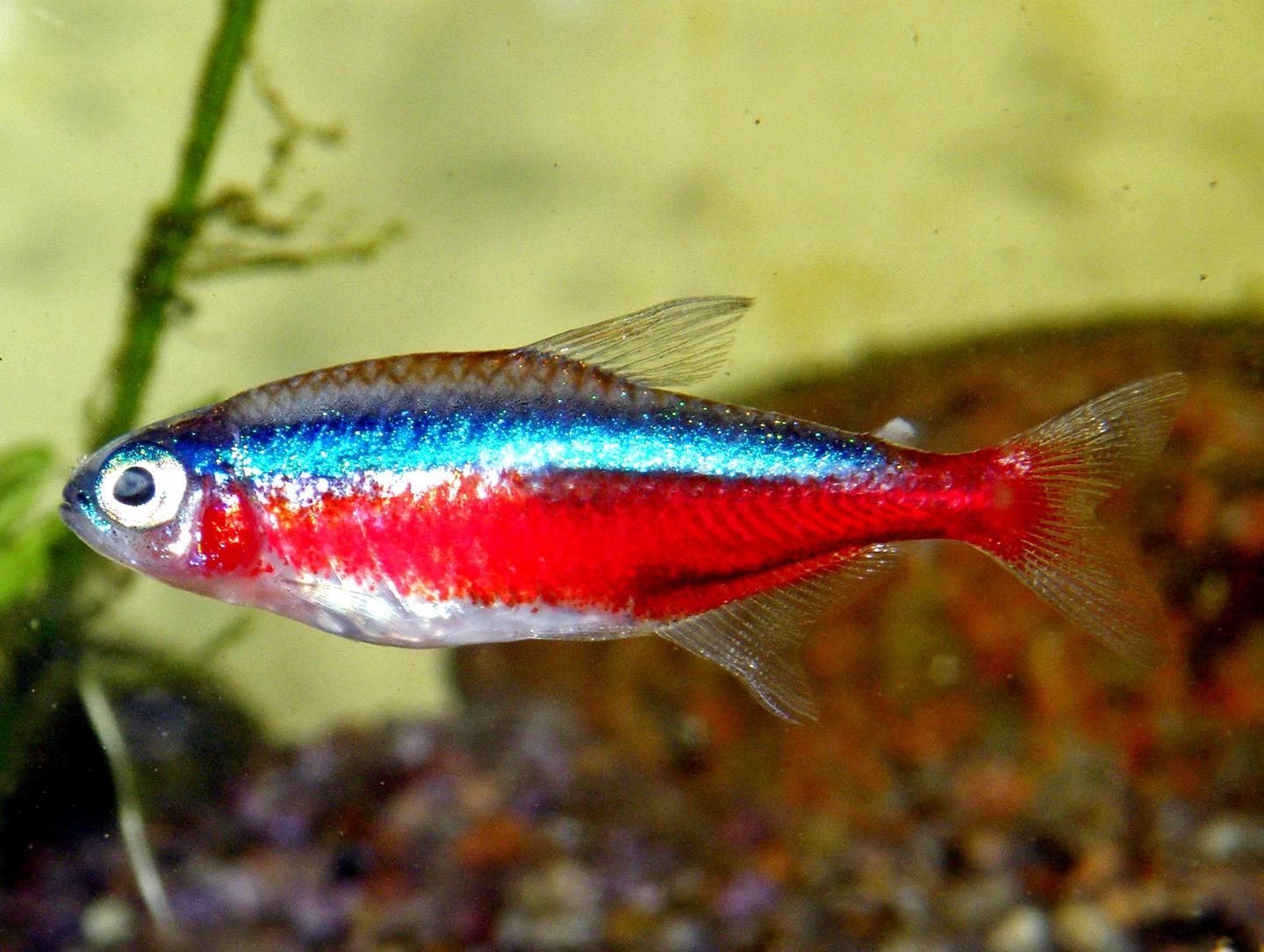
Cardinal tetras are small, social blackwater fish, but they need more than a small volume of water. Our conservative starting policy is a mature, filtered aquarium at least 60 cm long and about 60 litres, a group of 10 or more, a routine target of 24-27 °C, and water chosen from measured supplier and home values rather than a fixed UK tap-water recipe.
Maintain these water conditions for optimal health and vibrant colors
The Cardinal Tetra, Paracheirodon axelrodi, is a peaceful freshwater fish in the Acestrorhamphidae family from the upper Orinoco and Negro River basins of South America. FishBase records a maximum of 3.0 cm standard length and describes shoals occupying the middle water layers. This 50-fish pack suits a prepared keeper who can provide mature filtration, measured warm water, a long swimming route and enough biological capacity for the entire group.
FishBase identifies the Cardinal Tetra as Paracheirodon axelrodi, places it in Acestrorhamphidae and records its wild range in the upper Orinoco and Negro River basins. It occurs mainly in shoals in the middle water layers and feeds on small animal prey. Eschmeyer’s Catalog of Fishes also places the species in Acestrorhamphidae and treats Hyphessobrycon cardinalis as a synonym, not a separate Cardinal Tetra.
One purchase includes a captive-bred pack of 50 Cardinal Tetras rather than a single fish. Assess the aquarium for all 50 animals before ordering; the pack quantity does not by itself establish that any particular aquarium has enough swimming room, oxygen exchange or filter capacity.
Sex is guaranteed only when the selected option explicitly states male or female. This 50 × Cardinal Tetras listing has no sex-guaranteed option.
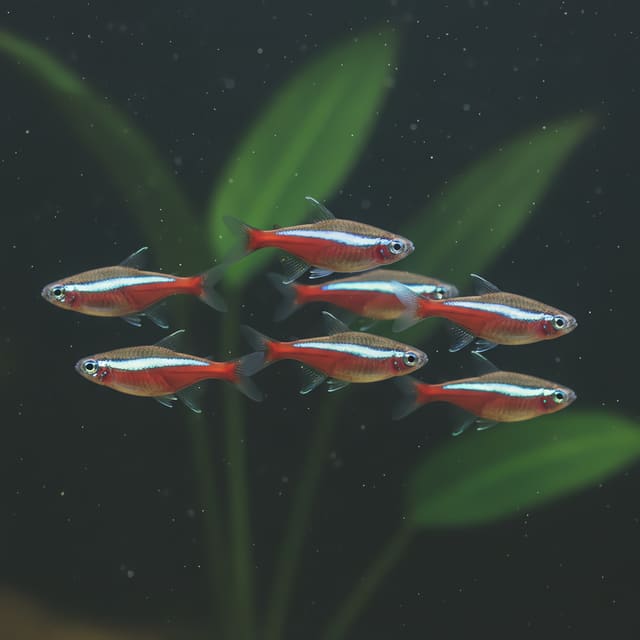
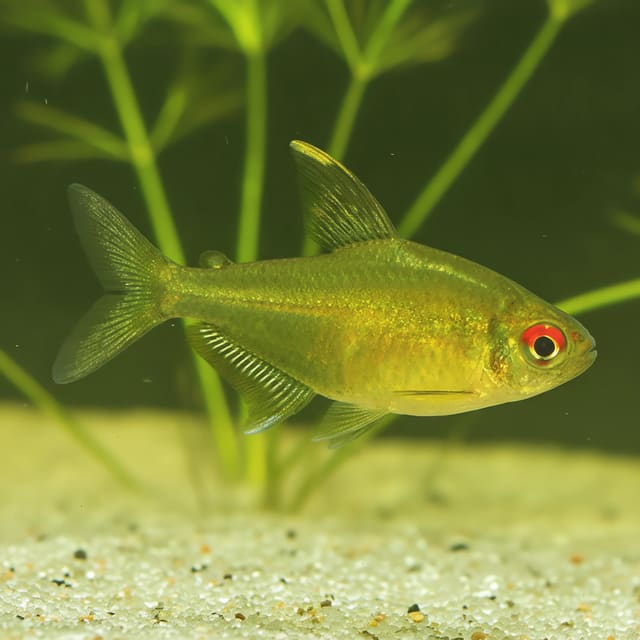
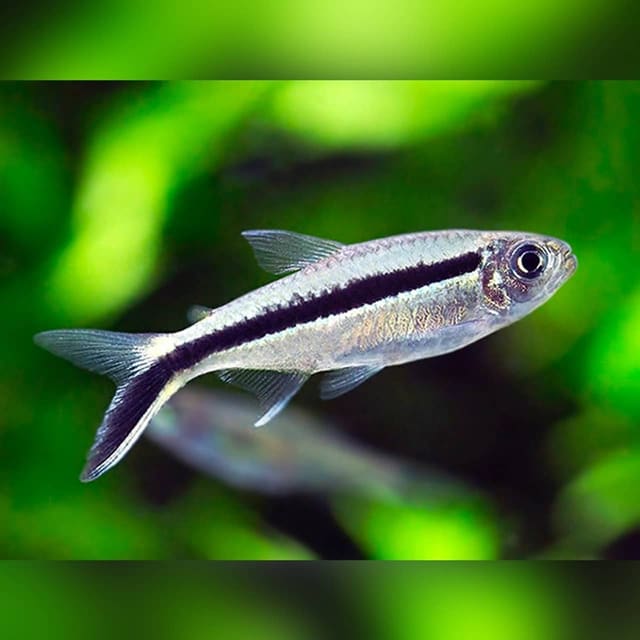
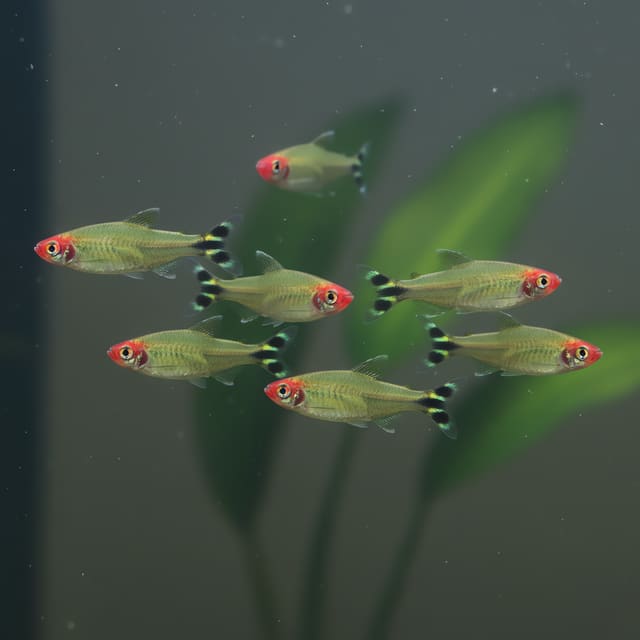
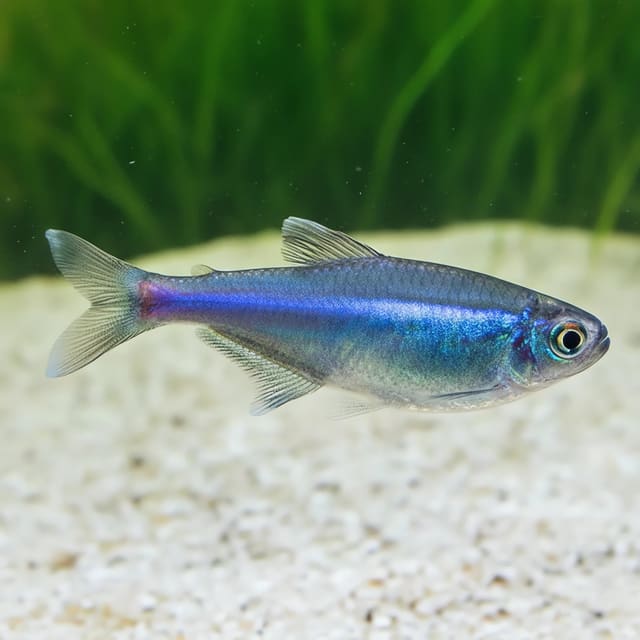
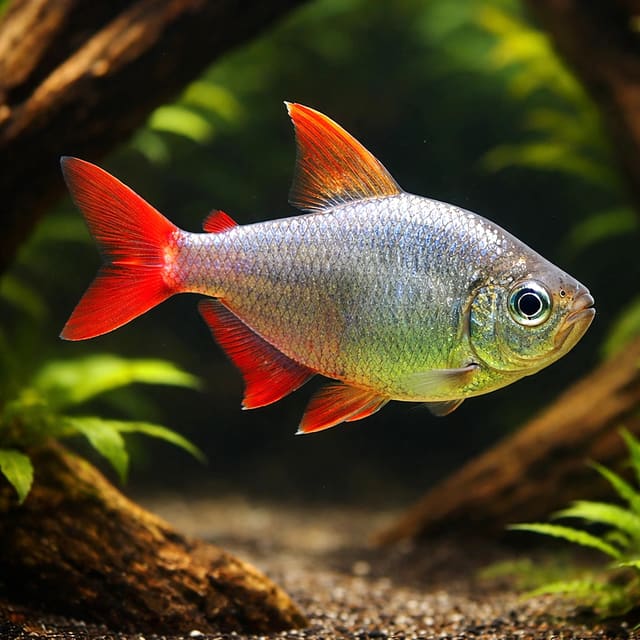
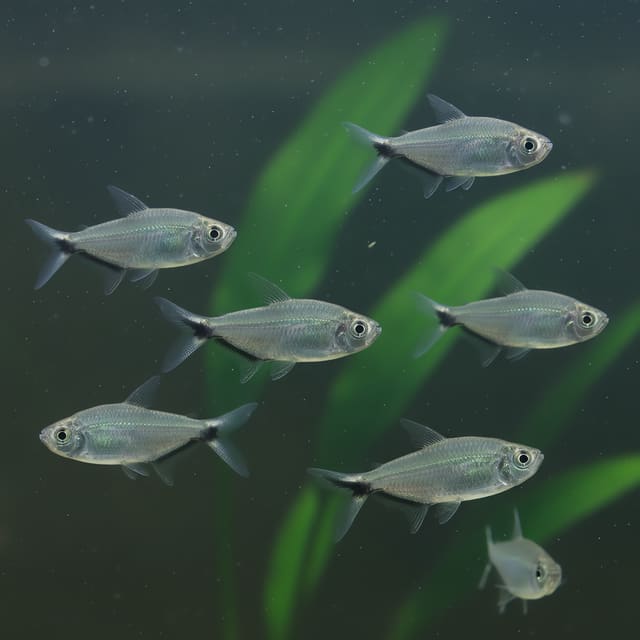
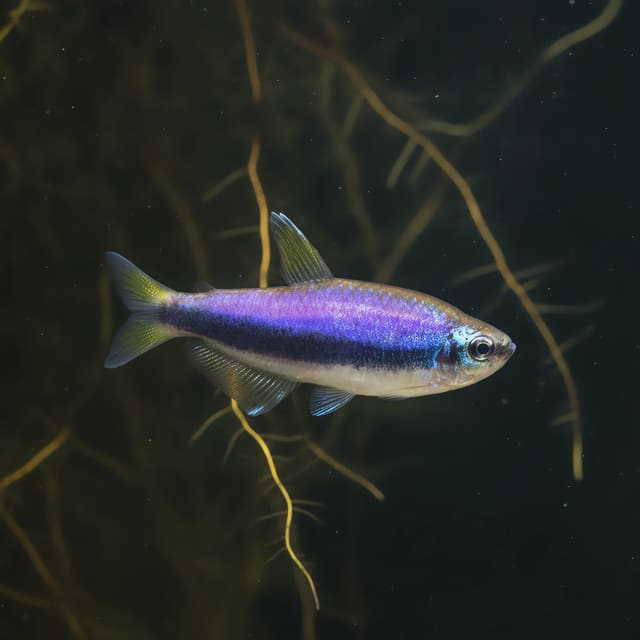
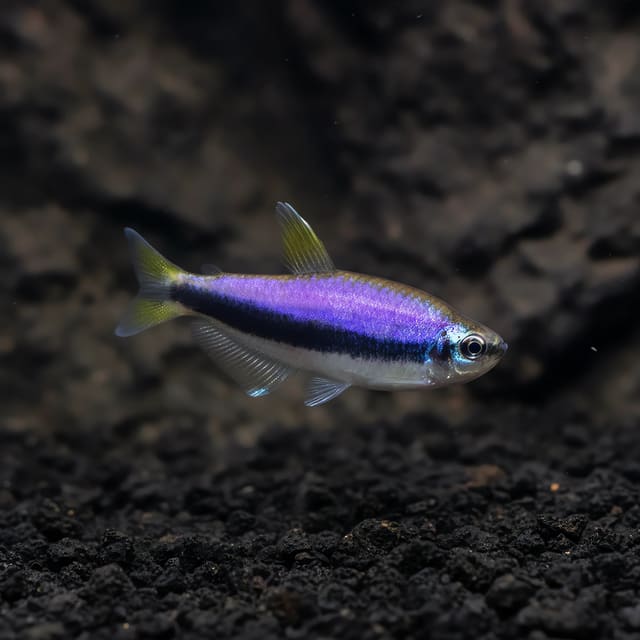
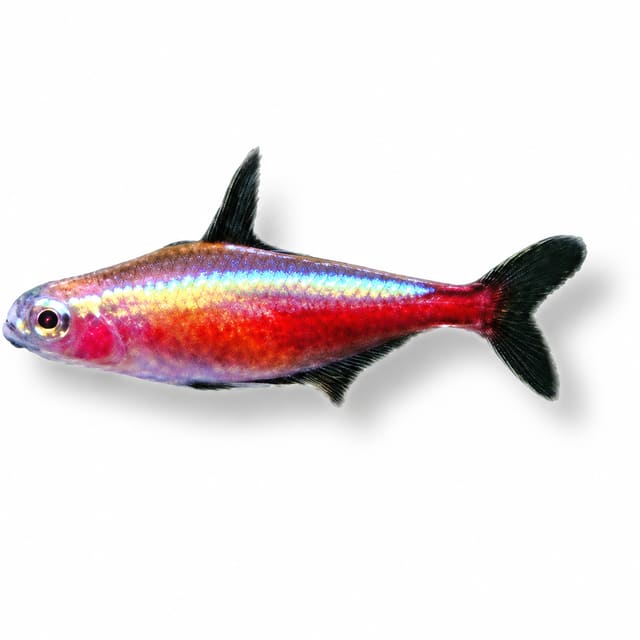
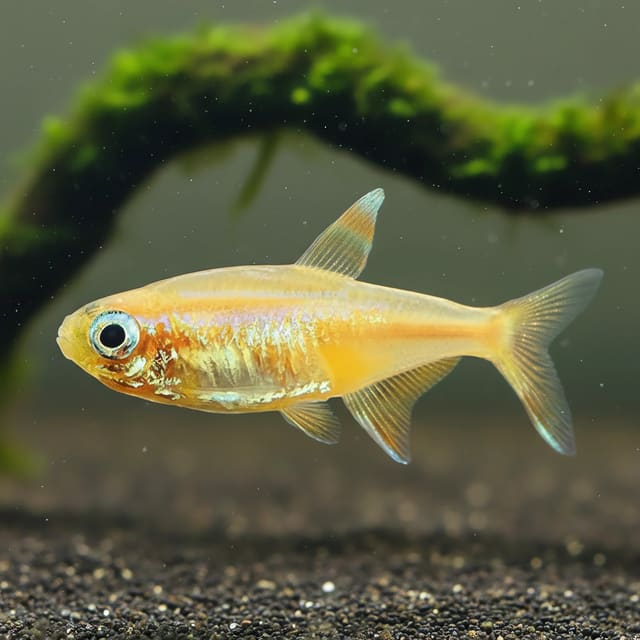
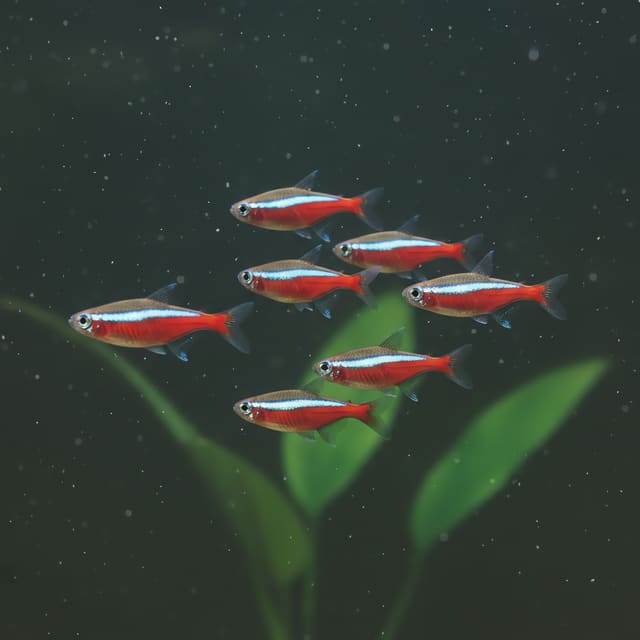
The gallery images are representative of this type of animal rather than photographs of the exact animal supplied, so colours can look slightly different from the live animal.
| Suits | Not suited to |
|---|---|
| A mature, filtered aquarium with measured warm water | A new or unstable aquarium |
| A plan with long midwater swimming room for all 50 fish | A tank assessed only against the ten-fish starting screen |
| A keeper prepared to test water and maintain stable conditions | A setup without a working biological filter |
| Peaceful companions too small to swallow them | Fish large enough to eat small tetras |
The title identifies this pack as captive-bred, so care should be based on the measured water occupied by these fish and the receiving aquarium rather than assumptions about a wild collection locality. The species has a global Least Concern assessment, while the IUCN conservation brief provides wider context on cardinal populations and the ornamental trade. That population category does not describe the origin or condition of an individual retail group.
Our complete Cardinal Tetra care guide explains the store’s conservative planning policy in more detail.
FishBase records a maximum of 3.0 cm standard length for the Cardinal Tetra. Standard length ends at the base of the tail, so the complete fish is slightly longer. Seriously Fish profiles the species at 35 mm standard length and recommends an aquarium base of at least 60 × 30 cm, approximately 54 litres. These are planning references rather than a promise that every fish will reach one identical measurement.
Our conservative starting screen for ten cardinals is a mature, filtered aquarium at least 60 cm long and about 60 litres. This pack contains 50 fish, so 60 litres must not be treated as a recommendation for the whole pack. The final aquarium needs substantially more usable swimming room and biological capacity, with additional allowance for every companion, plant, ornament and piece of equipment.
| Decision | Starting point |
|---|---|
| Adult-size reference | 3.0 cm maximum recorded standard length |
| Sold unit | One pack of 50 fish |
| Routine temperature | 24–27°C |
| Routine pH | 5.5–7.0 |
| Routine hardness | 1–8 dGH |
| Base screen for ten | At least 60 cm long and about 60 litres |
We classify Cardinal Tetra care as intermediate. A prepared keeper can manage the species, but a new or unstable aquarium is a poor match because transport and abrupt water changes can expose problems quickly. The essential preparation is a mature biological filter, repeated zero-ammonia and zero-nitrite tests, stable temperature and a stocking plan based on the full group.
Before committing to 50 fish, write down the aquarium’s usable length, measured volume, existing livestock and filter performance. If the plan begins with the 60-litre screen and simply multiplies a litres-per-fish figure, reconsider it: aquarium shape, oxygen exchange, feeding access and companion needs do not scale through one simple calculation.
A group of 50 creates a very different stocking decision from the ten-fish starting screen. Give the shoal a long, unobstructed midwater route where the fish can spread, turn and tighten together. Planting and wood can frame that route, but dense decoration should not reduce the central swimming area to a narrow corridor.
Nominal volume is only the first check. Substrate, decor and an air gap reduce the water actually held, while every established occupant adds waste, oxygen demand and feeding competition. A long aquarium generally gives these midwater fish more useful movement than a tall aquarium with the same stated volume.
Aquarium capacity should not be increased abruptly merely to reach the pack quantity. Beneficial bacteria respond to waste and feeding load, not to the number of days printed on a calendar. If the aquarium is still being prepared, follow the staged sequence in our first tropical aquarium guide and confirm maturity through testing before livestock arrives.
For a worked decision, imagine an aquarium that meets the 60 cm and 60-litre starting screen but already contains another social species. It may suit a small Cardinal Tetra group under the store policy, yet it is not automatically suitable for this pack of 50. The correct response is to increase aquarium capacity or choose a smaller sold unit elsewhere, not to squeeze the pack into the original plan.
Leave access around the filter, heater and substrate for maintenance. A layout that looks spacious on the first day can become difficult to clean once plants grow, so preserve siphoning routes and open water from the outset.
Use 24–27°C, pH 5.5–7.0 and 1–8 dGH as our routine aquarium target. These figures are a conservative house policy within published species ranges, not sharp danger lines. Stability and a close match between the fish’s holding water and the receiving aquarium matter more than aiming for a single ideal decimal.
FishBase records 23–27°C, pH 4.0–6.0 and 5–12 dGH for the species’ environment. Seriously Fish gives aquarium guidance of 23–29°C, pH 3.5–7.5 and 1–12 dGH. OATA’s tetra and pencilfish sheet gives 22–27°C, pH 6.5–8.0 and 4–12 dGH for the broader group; use the Cardinal-specific routine above rather than treating that broad band as an optimum.
Most UK rooms need a thermostatically controlled aquarium heater to hold 24–27°C throughout the year. Position it where water circulation distributes heat, avoid direct sun and cold draughts, and investigate an unexpected temperature change before feeding or adding livestock.
A postcode, county or phrase such as “soft tap water” is not a measurement. Our water chemistry guide explains how pH, GH and KH affect planning, while the water matcher helps compare measured aquarium values with this routine target.
If reverse-osmosis water is needed, prepare and measure the final mix rather than following a fixed tap-to-RO ratio. Starting mineral content varies, and a recipe that produces suitable hardness in one home can produce a different result elsewhere. Avoid rapid pH, hardness or temperature changes in an occupied display.
RSPCA aquarium guidance explains that fish release toxic ammonia and that a working biological filter supports bacteria which convert ammonia to nitrite and then nitrate. Cardinal Tetras therefore need a well-established filter that is maintained without destroying its bacterial population.
Arrange the aquarium with plants, wood or other aquarium-safe structures around the sides and rear, then preserve a clear horizontal route through the middle. This gives the shoal cover when unsettled and open water for coordinated movement. A sandy or gravel substrate can be used, provided it can be cleaned and does not compromise water chemistry.
| Check | Action |
|---|---|
| Fish hold one position constantly | Reduce or redirect excessive current |
| Debris settles throughout the tank | Improve circulation without creating a jet |
| Fish avoid the brightest zone | Add shade and moderate the lighting |
| Small fish approach an intake | Fit an appropriate intake guard |
| Surface movement is weak | Adjust the outlet to improve gas exchange |
Seriously Fish describes heavily planted or natural-style arrangements with sand, wood and subdued light. Dried aquarium-safe leaf litter can add cover and support microbial growth as it decomposes, but it should be introduced deliberately and monitored rather than allowed to accumulate without maintenance. Natural peat is unnecessary.
Use a consistent day-and-night cycle and provide shaded areas instead of continuous glare. If colour fades or the group hides, test water and temperature while reviewing the lighting; colour change can have several causes and should not be treated as a diagnosis.
Do not assume a planted aquarium is biologically mature. Plants may consume some nitrogen compounds, but repeated water tests still decide whether the filter can process the aquarium’s waste. Check that every part of the 50-fish shoal can use the swimming lane without being forced against the glass, filter outlet or decor.
A quiet-looking group is not necessarily comfortable if all fish are compressed into one sheltered corner. Observe where they settle at different times of day and alter flow, shade or cover one factor at a time so the response remains clear.
Cardinal Tetras have small mouths and need food particles they can swallow readily. A wild diet study of 80 Cardinal Tetras found predominantly small animal material, especially microcrustaceans and chironomid larvae.
In the aquarium, use a suitably small, complete food as the staple. Finely prepared flake or an appropriately sized micro-granule can provide the routine base, with safe small frozen or cultured live foods such as daphnia or small bloodworm used for variety. A wild preference for tiny prey does not make one frozen food a complete diet.
With 50 fish, distribution matters as much as total quantity. A single pinch dropped into one corner can disappear quickly while fish at the far end receive nothing. Divide the same planned portion between several points or move it across the water surface, then watch whether every part of the group participates.
Particle size is suitable when fish take and swallow it without repeated spitting. If food repeatedly reaches the substrate untouched, reduce the portion or use a more accessible size rather than adding another meal. Review feeding whenever faster companions join the aquarium because competition can change without any alteration to the Cardinal Tetra group itself.
Overfeeding leaves organic waste for the filter to process and can raise ammonia or nitrite when biological capacity is exceeded. A sudden loss of appetite, especially alongside rapid breathing, isolation or poor balance, calls for immediate water and temperature tests rather than a larger or richer meal.
Do not collect live food from an unknown outdoor water body. Use foods intended for aquarium animals, store them as directed and keep frozen food frozen until the portion is prepared.
OATA recommends a 25% partial water change at least once a week for tetras and pencilfish, together with weekly water testing. Treat that as the routine starting point, then respond to measured nitrate, waste accumulation and the aquarium’s actual stocking load. A shoal of 50 makes consistent maintenance especially important.
Never rinse biological filter media under the tap. Chlorine or chloramine may damage the bacterial population. Instead, swish or lightly rinse media in aquarium water removed during the water change, and clean only enough to restore flow. Avoid replacing all mature media at once.
If ammonia or nitrite is detected, stop adding livestock and investigate promptly. Check for an interrupted filter, blocked flow, dead animals, excessive food or a recent increase in stocking. Reduce feeding while the cause is addressed, but do not treat reduced feeding as a substitute for correcting filtration and water quality.
Nitrate should be judged against the incoming tap-water result as well as the aquarium reading. OATA’s benchmark is no more than 20 mg per litre above the normal tap-water level. Testing both prevents a high source-water reading from being mistaken for waste produced entirely inside the aquarium.
Large, irregular interventions often create more change than smaller, dependable maintenance. Keep the weekly schedule even when the water looks clear because toxic nitrogen compounds are invisible. Clean glass or bright fish colour cannot replace test results.
After maintenance, watch the group for altered breathing, loss of balance, persistent hiding or a sudden move towards the surface. Recheck temperature and water chemistry if behaviour changes, and confirm that the filter and heater restarted correctly.
Finish the aquarium plan before the fish travel. Test temperature, ammonia, nitrite, nitrate, pH and hardness, confirm that the filter and heater are operating, and clear an open swimming route. Someone must be present to receive live fish so the parcel is not left unattended.
Follow the store’s delivery and Live Arrival Guarantee policy for the reporting requirements.
OATA advises checking that aquarium water quality is suitable before fish are introduced, including zero ammonia and zero nitrite. Complete those checks before the delivery rather than trying to correct an immature aquarium while the fish wait.
During the first hours, watch whether the fish maintain balance, breathe without obvious effort and begin to gather in midwater. Temporary close grouping after movement can be expected from a shoaling fish, but persistent surface gasping, uncontrolled swimming or inability to remain upright needs immediate attention.
| Time | Check |
|---|---|
| Arrival day | Breathing, balance, visible injuries and filter operation |
| Next morning | Temperature, ammonia, nitrite and group distribution |
| First meals | Food access across all 50 fish |
| End of week | Body condition, colour, swimming and water-test trend |
Avoid adding more livestock during this settling period. The filter and keeper both need time to show how the aquarium responds to the increased biological load. If ammonia or nitrite appears, prioritise water quality and filtration rather than waiting for the next scheduled weekly check.
A settled Cardinal Tetra should maintain balance, move with or near the group, hold its fins normally and respond to appropriately sized food. Individual behaviour varies, so learn the group’s normal pattern and act on persistent changes rather than diagnosing from one sign.
RSPCA fish-health guidance highlights changes in swimming, colour, temperament, breathing, appearance, condition and feeding as reasons for closer assessment. Surface hanging, bottom sitting, erratic movement, rapid or slow gill action, white spots, fluffy growths, damaged fins, weight change and lost appetite all deserve prompt attention.
Do not choose medicine from appearance alone. Similar signs can follow water-quality failure, injury, parasites, infection, lighting stress or social pressure. If tests and immediate environmental checks do not explain a persistent change, contact us for health guidance and use the OATA fish-vet directory to find qualified veterinary help before treating.
The MSD Veterinary Manual’s aquarium-fish guidance recommends at least 30 days of quarantine as a professional biosecurity reference, with longer periods where circumstances require. Quarantine needs its own mature filtration, suitable heat and dedicated equipment; an uncycled container can create a greater immediate welfare problem.
Plan for long-term care without attaching a fixed lifespan to the fish. Age on arrival, health, origin and husbandry differ, while a wild population’s life cycle is not an aquarium longevity estimate. Continue routine maintenance and capacity planning for the group rather than treating it as a short-term display.
Never release aquarium fish, plants or water into an outdoor pond, drain or natural watercourse. If circumstances change, arrange responsible permanent care or rehoming while the aquarium remains stable.
Cardinal Tetras are generally peaceful, but that does not make every peaceful community fish compatible. Screen each proposed companion by adult size, mouth size, temperament, water needs, social needs and feeding behaviour. The decision must also account for the space already occupied by this 50-fish shoal.
OATA advises that small tetra species should not be kept with fish large enough to eat them and that tetras mix best with animals of similar size and temperament. Seriously Fish describes similarly sized characins and selected peaceful bottom fish as potentially suitable categories. These categories remain starting points because exact temperature, pH, hardness and behaviour vary by species.
Adult angelfish and other predators require particular caution because a companion that ignores small tetras while young may become capable of eating them after growth. Territorial fish and persistent fin-nippers can also make the open midwater zone unusable even when their water ranges overlap.
Shrimp compatibility cannot be guaranteed. Larger adult shrimp may coexist in a carefully planned aquarium, but small shrimp and shrimplets can be eaten. Dense plants provide cover without making vulnerable shrimp safe, and their mineral requirements must still overlap with the water chosen for the cardinals.
For a mixed aquarium, calculate capacity from the combined adult population rather than treating the tetra shoal as decorative background. If another species needs its own group, territory or bottom area, that requirement remains in full. For a stocking and compatibility assessment, ask us with the aquarium dimensions, measured water values and complete livestock list.
Cardinal Tetras naturally use the middle water layers in shoals. A group of 50 can spread through a calm aquarium and tighten together when disturbed, but shoaling does not mean the fish must remain in one rigid formation. Judge the group by balance, breathing, feeding and use of space rather than expecting a continuous display pattern.
| What you see | What to review |
|---|---|
| Whole group stays behind decor | Lighting, current, disturbance and nearby tank mates |
| Fish crowd at the surface | Oxygen exchange, temperature and water quality |
| One section misses food | Distribution and competition from faster fish |
| Group avoids one territory | Aggression or a predation threat |
| Individuals remain isolated | Health, social pressure and water conditions |
Other schooling fish do not replace the Cardinal Tetra group. Five cardinals beside five fish of another species still leave each species with its own social requirements. This pack already provides a large same-species shoal, so the main decision is whether adding another social group improves the aquarium or merely consumes swimming room and filter capacity.
Bottom-dwelling companions may reduce direct competition for midwater space, but they still add waste, oxygen demand and feeding needs. Check their exact temperature range and substrate requirements rather than assuming every small catfish suits 24–27°C and soft water.
Introduce companions only after the aquarium remains stable under its existing load. Observe feeding points and territories closely after each change. If cardinals stop entering part of the aquarium, lose access to food or remain compressed in cover, separate the incompatible animal rather than waiting for the shoal to adapt to continuing pressure.
A well-researched community is built from overlapping requirements, not from a universal tank-mate list. Adult size, water chemistry and temperament can all change the result, and individual behaviour adds uncertainty even when the planning checks are passed.
FishBase records a maximum of 3.0 cm standard length for Cardinal Tetras. Standard length ends at the base of the tail, so the complete fish is slightly longer.
Tropical Fish Co’s species care guide uses a mature, filtered aquarium at least 60 cm long and about 60 litres as the starting screen for ten Cardinal Tetras. This pack contains 50 fish and needs substantially greater swimming room and biological capacity.
Tropical Fish Co’s species care guide sets a group of at least 10 Cardinal Tetras where capacity allows. This pack forms a group of 50, so prepare filtration, oxygen exchange, feeding access and swimming room for the entire shoal.
Cardinal Tetras have an intermediate store care rating and suit a prepared keeper who understands aquarium maturation, water testing and gradual changes. They are a poor choice for a new or unstable aquarium.
Feed Cardinal Tetras a suitably small complete flake or micro-granule once daily, with safe small frozen or cultured live foods for variety. Spread a portion the shoal can finish within a few minutes across several feeding points.
Tropical Fish Co’s species care guide sets a routine target of 24–27°C, pH 5.5–7.0 and 1–8 dGH for this fish. Compare measured holding and aquarium water, make changes gradually, and keep ammonia and nitrite at zero.
It is generally peaceful. Avoid territorial or persistent fin-nipping companions, and investigate aggression, hiding or feeding exclusion if the shoal stops using part of the aquarium.
This fish may live with similarly sized peaceful characins, gasteropelecids, lebiasinids, smaller callichthyid or loricariid catfishes and non-predatory small-to-medium cichlids after exact-species screening. Avoid fish large enough to eat it, and match temperature, pH, hardness, social space and feeding behaviour.
Someone must be present to receive the parcel. Film every delivery continuously from the sealed parcel as it is opened, showing the fish still in the sealed bag; then float the bag for 20–30 minutes and never pour the bag water into the aquarium.
No reviews for this item yet. Bought one? Honest reviews only, good or bad.
What customers say about ordering from us
I have a small group of long finned mountain minnows. So was delighted to be able to order ten of this variety to increase the genetics in my tank . The ones I recieved are healthy but it’s to early to give a verdict on wether they are of a long finned type since they are small currently.
Gordon Walker · 23 Sept 2026
100% success travel and "installation". Pleased with quality of purchase. The Siamese fighter a bit "shy" so have not yet seen him at his best yet but looking good. Happy customer. GG
George E Garratt · 21 Sept 2026
Reviews of our shop, collected by Judge.me, an independent third-party review collector. Newest first.