−14%
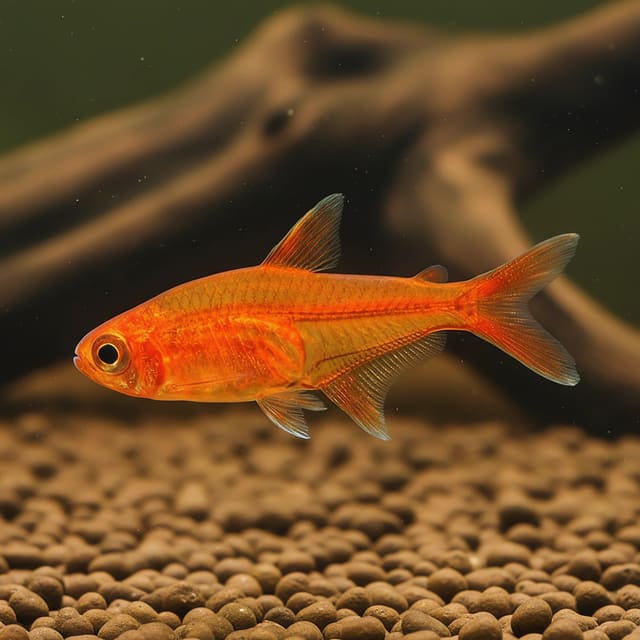
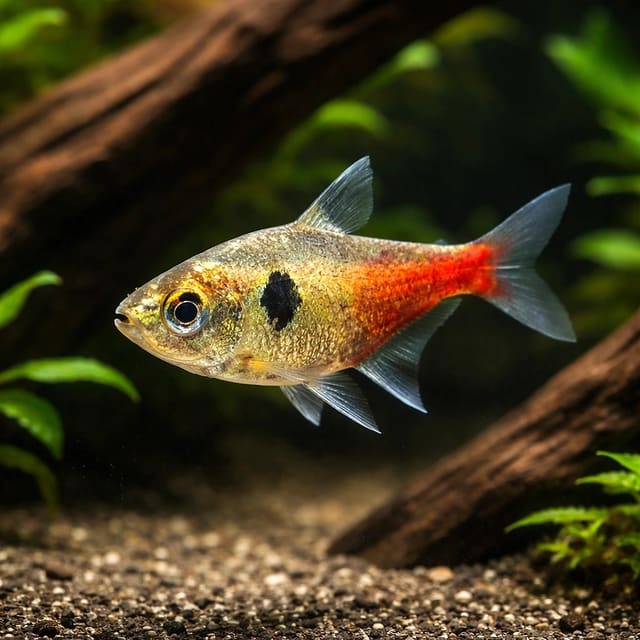
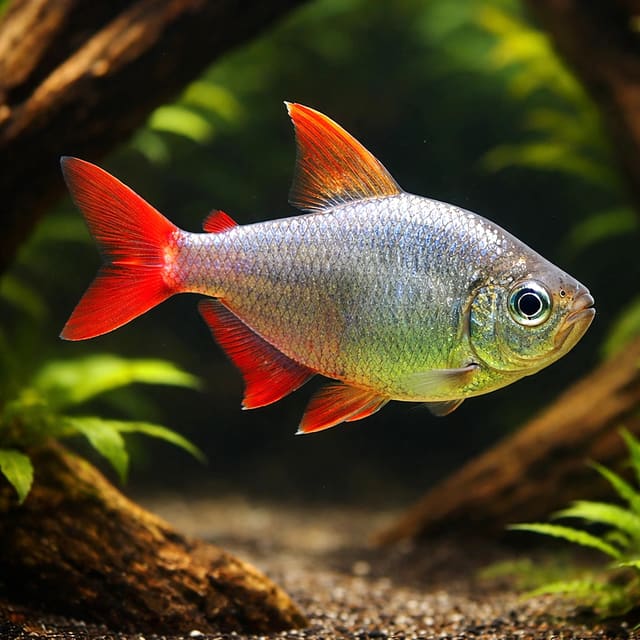
Red-Blue Colombian Tetra (Hyphessobrycon columbianus)
20–28°C · pH 5–7.5 · 81L
£2.57£2.99

A striking, graceful South American species for peaceful community aquariums. Beginner suitable with moderate care. Order now with UK delivery.
Adult size is the maximum length this species reaches at full maturity (scientific sources). The livestock you receive will be younger and smaller — pick a size above for the actual shipping size. Product-photo provenance and any image-specific limitations are stated on the listing.
Chilodus punctatus
Shoaling fish: kept in a group they feel safer, stay calmer and show their best colour.
Confirm your email, then we’ll send an availability message for this exact item if it returns within 180 days.
This request is only for this product—no newsletter or other promotions. A mail-provider retry may very rarely duplicate the same availability message. Unconfirmed addresses are removed after 48 hours. See our privacy policy.
A striking, graceful South American species for peaceful community aquariums. Beginner suitable with moderate care. Order now with UK delivery.
Adult size is the maximum length this species reaches at full maturity (scientific sources). The livestock you receive will be younger and smaller — pick a size above for the actual shipping size. Product-photo provenance and any image-specific limitations are stated on the listing.
Maintain these water conditions for optimal health and vibrant colors
The Spotted Headstander (Chilodus punctatus), also sold as the Pearl Headstander, is one of the most distinctive species in the freshwater tropical fish UK hobby because it rarely swims level. Instead, this unusual South American fish glides at a head-down angle of roughly 45 degrees while browsing wood, leaves, and plant surfaces for algae and biofilm. Native to the Amazon and Orinoco basins, it pairs calm community behaviour with an eye-catching grazing style that stands out in any mature aquarium. Adults reach around 9 cm, can live for about 5 years, and do best in groups in a soft, slightly acidic to neutral setup. It suits aquarists who already understand stable water quality, planted layouts, and the value of a fully cycled tank.
If you are searching for aquarium fish for sale online UK, freshwater fish for sale UK, or a peaceful oddball for a South American display, this species deserves a close look. It is not a true tetra, but it fits beautifully alongside many of the fish people research as the best tetras for a community tank, especially in a shaded planted tank setup with driftwood and leaf litter. Our photos show the angled posture, silver-brown body, and fine spotting that make this such a rewarding fish to keep. For aquarists building a calm, natural-looking community, the Spotted Headstander offers movement, character, and constant grazing behaviour without the aggression seen in many larger tropical fish.
Chilodus punctatus is commonly called the Spotted Headstander or Pearl Headstander. Although aquarists often discover it while browsing South American tetras, it belongs to a separate family of headstanders known for their angled swimming posture and grazing habits. In the trade it has a loyal following among fishkeepers who want something peaceful, unusual, and highly natural in behaviour rather than simply bright in colour.
The natural home of the Spotted Headstander is the warm, slow-moving river systems of northern South America. The species ranges across the Amazon and Orinoco basins, including shaded tributaries, flooded forest margins, and calm backwaters where submerged branches, fallen leaves, and soft sediment create ideal feeding surfaces. Its habitat is defined by cover, dappled light, and abundant natural grazing.
In the wild, these fish spend much of the day browsing aufwuchs, algae films, tiny invertebrates, and decomposing plant matter, which is why they thrive in mature aquariums with established wood and plant surfaces. Their natural waters are usually soft to moderately soft, often slightly acidic, and warm year-round. That is why a water temperature range of 23-28°C and a broad but sensible pH of 5.5-7.5 work so well in captivity.
Because this is a true tropical river fish, it is not a pond fish and is not suitable for outdoor UK ponds. The Spotted Headstander needs stable indoor warmth, clean filtration, and a settled environment. When you buy this species in the UK, you are choosing a fish for a properly heated tropical aquarium, not a coldwater setup.
For hobbyists comparing where to buy a Spotted Headstander for sale in the UK, the price, or the best place to order one online, the most important point is provenance and condition. Healthy fish should arrive alert, hold their angled posture, and begin grazing soon after settling. Careful delivery matters, because this species can be stressed by rough transport.
Mimicking the natural habitat of Chilodus punctatus improves both health and behaviour. Use driftwood, leaf litter, rooted plants, and shaded zones. In mature tanks, headstanders spend hours grazing surfaces exactly as they would in flooded forest margins.
The key to long-term success is understanding that this is a group-living grazer, not a single oddball to drop into an empty display. A good tank setup focuses on stability, cover, and mature surfaces. While the listed minimum is 120 litres, that is a practical floor for a small group; a 150-180 litre aquarium gives much better swimming room, more stable water chemistry, and more space to create shaded feeding zones.
The minimum tank size is 120 litres, but that assumes careful stocking. Because the Spotted Headstander is a schooling fish that should be kept in groups of at least six, a larger footprint matters more than sheer height. Think of it as a midwater-to-surface grazer that appreciates horizontal browsing territory. It is not suitable for a 60 litre tank, which is too small for its adult size and proper shoal behaviour.
The best results come from keeping water parameters stable rather than chasing extremes. Aim for 23-28°C, with 24-26°C ideal for everyday care. pH can range from 5.5 to 7.5, though many fish show stronger colour and calmer behaviour around 6.2-6.8. Hardness should stay between 2 and 12 dGH. A reliable thermostatic heater plus a separate thermometer are essential for this warm-water South American community.
Spotted Headstanders depend on high water quality and do poorly in unstable, under-filtered aquariums, so a mature filter is not optional. Use a well-sized external or internal filter that provides gentle to moderate flow. You want good oxygenation and biological capacity, but not a blasting current that strips the fish of quiet grazing zones. They prefer calm margins with enough turnover to keep waste low.
For a peaceful South American layout, pair the fish with dense planting and natural decor. A dark sand substrate shows off their markings and encourages relaxed behaviour, and fine sand traps less surface debris than coarse gravel, making it easier for the fish to browse naturally. Add driftwood branches, rounded stones, and broad-leaved plants. Where tank size allows, peaceful companions such as the Dwarf Pencilfish, Neon Blue Tetra, Penguin Tetra, and Red-Blue Columbian Tetra all help create a lively but balanced display.
A planted tank is one of the best ways to keep this species confidently. Use Amazon swords, Cryptocoryne, Java fern, Anubias, floating plants, and wood with biofilm growth, which makes it an excellent choice for a planted aquarium. Keep lighting moderate rather than harsh: 6-8 hours of subdued to medium light works well, especially with floating plants to create shade. Harsh lighting tends to make these fish hide.
Cycle the aquarium for 4-6 weeks before adding Spotted Headstanders. In brand-new tanks with sterile decor they often struggle, because there is little natural grazing and water chemistry can swing quickly.
The Spotted Headstander is an omnivore, but not in the way of a fish that simply accepts any flake. In nature it browses algae films, aufwuchs, tiny worms, insect larvae, and soft vegetable matter from submerged surfaces. In the aquarium, its food plan should therefore combine prepared foods with natural-style grazing opportunities. A mature tank with wood, stones, and plant leaves gives the fish something to pick at between meals.
A good feeding routine starts with a quality omnivore flake, micro pellet, or soft granule as the staple. Supplement this with spirulina-based foods, blanched courgette, tiny amounts of shelled peas, and frozen foods such as daphnia, cyclops, and bloodworm once or twice a week. They are partial natural grazers rather than a dedicated algae eater, so they still need complete nutrition rather than living on tank algae alone.
Use a varied omnivore staple with plant content. Fine sinking or slow-sinking foods work well because the fish often feed while angled. As with most South American community fish, the practical answer for a healthy diet is always variety, not one single food.
Frozen daphnia, brine shrimp, cyclops, and finely chopped bloodworm help maintain condition, and vegetable-based wafers are useful too. In well-established tanks the fish continue to browse biofilm naturally, but they should never be bought as a substitute for proper tank maintenance.
Before breeding attempts, increase live or frozen foods and add more vegetable matter to support body condition and egg production. Avoid housing Spotted Headstanders with predatory species such as large eels that may outcompete or harass them at feeding time.
Feed small amounts twice daily, offering only what the group can finish in 1-2 minutes while remembering they keep grazing between meals. Slight underfeeding is safer than overfeeding, because this species is sensitive to deteriorating water quality. Although it is peaceful, it is not a hands-off beginner fish: it needs mature conditions and thoughtful feeding.
| Time | Food | Amount |
|---|---|---|
| Morning | Quality omnivore flake or soft micro pellet with plant content | Small pinch for 1-2 minutes |
| Evening | Spirulina food, daphnia, or vegetable-based sinking food | Small portion, fully eaten |
Overfeeding causes ammonia spikes, cloudy water, and stress-related disease. Spotted Headstanders are active grazers, so owners sometimes assume they are hungry all day. In reality they do best with small measured meals plus natural browsing surfaces.
The Spotted Headstander reaches about 9 cm in good conditions, though many shop specimens are sold smaller. The body is elongated and slightly raised along the back, with a small mouth adapted for browsing surfaces. Its most famous feature is its posture: the fish naturally holds itself at a downward angle, which makes even a still aquarium look more dynamic.
Base colour is usually silver, beige, or soft olive-brown with rows of darker spots and a horizontal dark stripe running from the snout through the eye toward the tail. In subdued lighting over dark substrate the pattern becomes much richer, which is why mature, settled fish look far more striking than freshly imported specimens that can appear washed out after transport.
Appearance is closely tied to behaviour, because a relaxed fish shows cleaner spotting, stronger contrast, and more confident grazing. Sexing is difficult: females often appear slightly fuller-bodied when mature and carrying eggs, but the difference is subtle. There are no widely established aquarium colour morphs. Typical lifespan is around 5 years, and good care supports both stronger colour and better overall health.
Spotted Headstanders are generally peaceful and make excellent residents for a calm South American community, but they are not ideal for every mixed tank. The right tank mates are best chosen by temperament, feeding style, and space. These fish are social, somewhat shy when first introduced, and happiest in a proper group: a single specimen often hides, while a shoal browses confidently in the open. Keep a shoal of six or more.
Good companions are peaceful, similarly sized fish that appreciate warm, soft water and do not bully slower grazers, such as pencilfish, peaceful barbs, medium tetras, and gentle gouramis in larger tanks. For example, the Dwarf Pencilfish works well as a tranquil upper-level group, while the Albino Cherry Barb can add movement in suitably sized planted aquariums. Midwater schooling options such as the Penguin Tetra and the Red-Blue Columbian Tetra also complement them when stocking is conservative.
A well-structured community works best when companions do not outcompete the headstanders at feeding time. A peaceful Cobalt Dwarf Gourami may suit a larger, well-planted tank, but avoid aggressive gourami individuals. This is a genuine peaceful community fish, but it still needs room and cover, and a 10 or 20 gallon tank is far too small for a proper group.
Avoid boisterous cichlids, fin nippers, and highly territorial species. Most cichlids are a poor match unless very mild and the aquarium is spacious. Adult shrimp may be ignored in dense planting, but shrimplets are at risk if the fish are hungry; snails are usually safe.
| Species | Compatible? | Notes |
|---|---|---|
| Dwarf Pencilfish | ✅ Yes | Peaceful upper-level fish for soft, warm planted setups. |
| Neon Blue Tetra | ✅ Yes | Good schooling companion in larger community tanks. |
| Indian Dwarf / Malabar Pygmy Puffer | ❌ Avoid | Nippy, territorial, and unsuitable for peaceful grazers. |
Quarantine new arrivals for 2-4 weeks before adding them to a community tank. Spotted Headstanders can be shy at first, and introducing disease or aggressive new fish into their settled group often leads to stress and feeding problems.
Breeding the Spotted Headstander is considered difficult in home aquaria and is not a beginner project. Healthy adults may condition well in a mature setup, but confirmed spawning reports are far less common than with many tetras. Treat success as an advanced challenge rather than an expectation.
Start with a separate soft-water breeding tank of around 60-90 litres using mature sponge filtration, dim lighting, fine-leaved plants, and very clean conditions. Condition a group on live and frozen foods. As with many South American egg scatterers, soft acidic water, subdued light, and abundant microfoods are the standard starting point.
Sex differences are subtle, so easy sexing does not apply; the main clue is body fullness in mature females. Spawning may be triggered by large cool water changes followed by stable warmth and heavy feeding. If eggs are laid, the adults should be removed because they may eat them.
Use dim light, because the eggs of many similar South American fish can be light sensitive, and gentle aeration helps prevent fungus. Once fry hatch and become free-swimming, offer infusoria, rotifers, or a commercial liquid fry food before moving to newly hatched brine shrimp. Keep the water pristine with tiny daily changes.
Experienced breeders often improve results by conditioning a small group rather than a single pair, then moving the fullest females and most active males into a very dim spawning tank with fine-leaved plants and exceptionally clean soft water below about 50 µS conductivity.
Many aquarists discover this fish while searching for tetras for sale UK or planning a South American community. The key difference is behaviour, not just colour. If you want a fish that schools tightly in open water, a tetra may suit you better. If you want a peaceful grazer with an unusual head-down posture and subtle patterning, the Spotted Headstander is the more distinctive choice.
| Feature | Spotted Headstander | Neon Blue Tetra |
|---|---|---|
| Max Size | 9 cm | 4-5 cm |
| Care Level | Moderate | Easy to moderate |
| Temperature | 23-28°C | 23-27°C |
| Best For | Natural South American oddball communities | Colourful schooling displays |
| Feature | Spotted Headstander | Penguin Tetra |
|---|---|---|
| Swimming Style | Head-down grazer | Active midwater shoaler |
| Group Behaviour | Loose social group | Tighter schooling |
| Plant Compatibility | Excellent in mature planted tanks | Excellent |
| Best For | Behaviour-focused aquascapes | Classic community tanks |
Choose the Spotted Headstander if you value behaviour, subtle beauty, and a more natural display. Choose a tetra if your priority is bright colour, tighter shoaling, or a smaller tank footprint. For comparison shopping, species like the Neon Blue Tetra, Penguin Tetra, and Red-Blue Columbian Tetra all offer a different style of movement and colour, while the Spotted Headstander remains the better choice for aquarists who want a true conversation fish in a mature planted community.
The Spotted Headstander has a generally good health record when water quality is stable, but it reacts badly to stress, poor transport, and immature aquariums. A healthy fish holds its characteristic angled posture, grazes surfaces regularly, shows clear eyes, and keeps a full but not bloated body. If a fish isolates itself, clamps its fins, loses balance, or stops browsing, investigate immediately.
The most common diseases in captivity are the same ones seen in many imported tropical fish: ich (white spot), bacterial infections after stress, wasting from internal parasites, and secondary fungal issues after injury. Because this species often arrives lean from transport, its feeding response during the first week is a major health indicator.
Prevention is straightforward: stable temperature, low nitrate, a varied diet, and a proper quarantine period. Overcrowding and poor compatibility drive disease, so give the fish space and a settled group. It is not the easiest choice for beginners who want a very small tank, but it is manageable for careful hobbyists with a mature setup. Nippy tank mates are a particular risk, because they can stress headstanders into hiding and starvation.
Never medicate the display tank casually. Diagnose first, quarantine if possible, and remember that copper-based treatments are dangerous in mixed systems containing shrimp or snails. Always increase aeration during treatment.
Behaviour is the main reason people fall in love with this species. It is peaceful, observant, and constantly interesting without being hyperactive. In a settled aquarium the group spends much of the day browsing wood, leaves, and plant stems at an angle, then moving together through shaded midwater areas.
The Spotted Headstander is best described as a schooling fish, though the grouping is often looser than a classic tetra shoal. Keep at least six to reduce shyness and improve confidence; in too small a group they become nervous and hide more often. In a mature aquascape they show natural grazing, occasional gentle chasing within the group, and a clear preference for dimmer areas during bright periods.
This is a genuine peaceful community fish when the aquarium is calm and well structured. To encourage natural behaviour, provide driftwood, broad leaves, floating cover, and a regular feeding schedule. A sparse tank under bright light tends to suppress confidence and colour.
Whether you are looking for the best place to buy tropical fish online UK, tropical fish for sale, live fish for sale UK, or to buy aquarium fish online UK, the practical question is the same: will the fish arrive healthy, correctly identified, and ready to settle? With Spotted Headstanders that matters even more than with tougher beginner fish, because this species can arrive washed out or shy if it is handled poorly.
Our approach is tailored to this fish. Each group is observed for posture, grazing response, and social behaviour before sale. We do not simply look for fish that are alive; we look for fish that are feeding, holding the classic angled stance, and behaving like settled Chilodus punctatus. The species benefits from calm holding systems with wood and cover, so we condition them to support natural browsing before dispatch.
For transport, fish are packed in insulated boxes with appropriate bagging volume, oxygen, and seasonal heat protection where needed, and tracked delivery reduces time in transit. On arrival, we recommend slow acclimation to temperature and chemistry, followed by dim lighting for the first few hours. Every order is backed by our Live Arrival Guarantee, and we provide practical after-sales support including acclimation advice, group-size guidance, and realistic stocking recommendations.
So if you want something rarer and more behaviour-driven than the usual community fish, the Spotted Headstander is a brilliant alternative. Order yours today with confidence and build a calm, mature South American aquarium with real character.
To complete a peaceful South American-style aquarium, consider a few carefully matched community favourites. The Dwarf Pencilfish adds elegant top-level movement, while the Neon Blue Tetra brings colour to the midwater zone. If you want a contrasting shoaler, the Penguin Tetra is an excellent partner in larger planted tanks, and for a bolder display look at the Red-Blue Columbian Tetra.
No reviews for this item yet. Bought one? Honest reviews only, good or bad.
What customers say about ordering from us
I have a small group of long finned mountain minnows. So was delighted to be able to order ten of this variety to increase the genetics in my tank . The ones I recieved are healthy but it’s to early to give a verdict on wether they are of a long finned type since they are small currently.
Gordon Walker · 23 Sept 2026
100% success travel and "installation". Pleased with quality of purchase. The Siamese fighter a bit "shy" so have not yet seen him at his best yet but looking good. Happy customer. GG
George E Garratt · 21 Sept 2026
Reviews of our shop, collected by Judge.me, an independent third-party review collector. Newest first.