Moderate
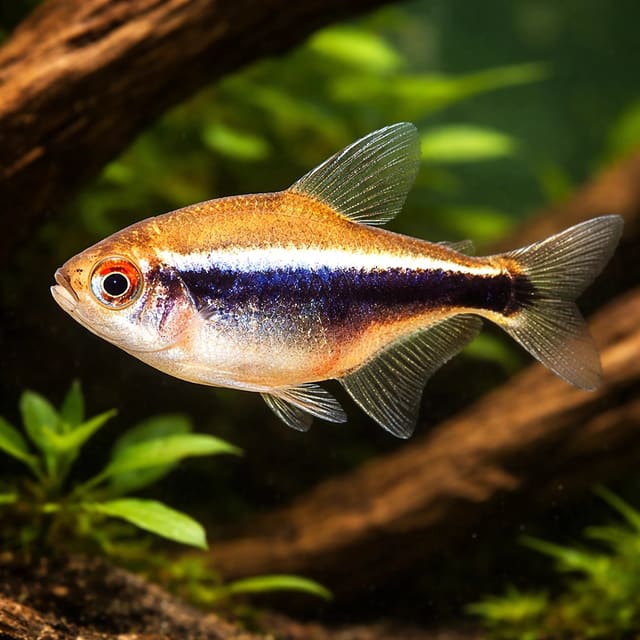
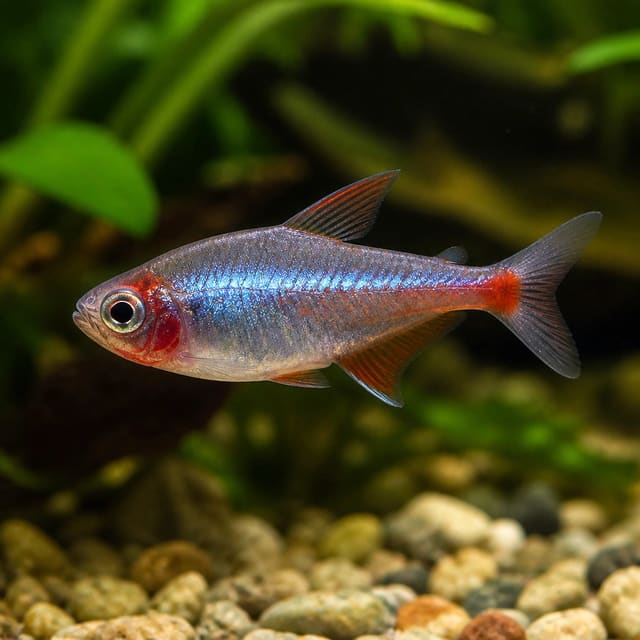
Neon Tetra (Paracheirodon innesi)
21–25°C · pH 5–7
£1.89
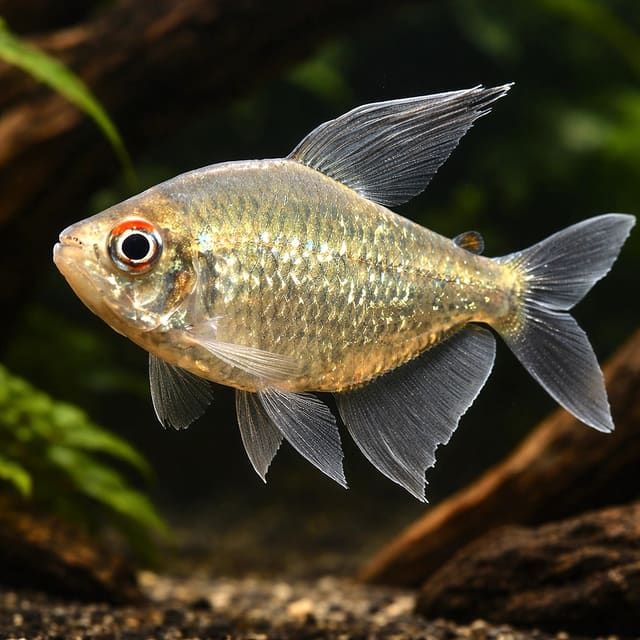
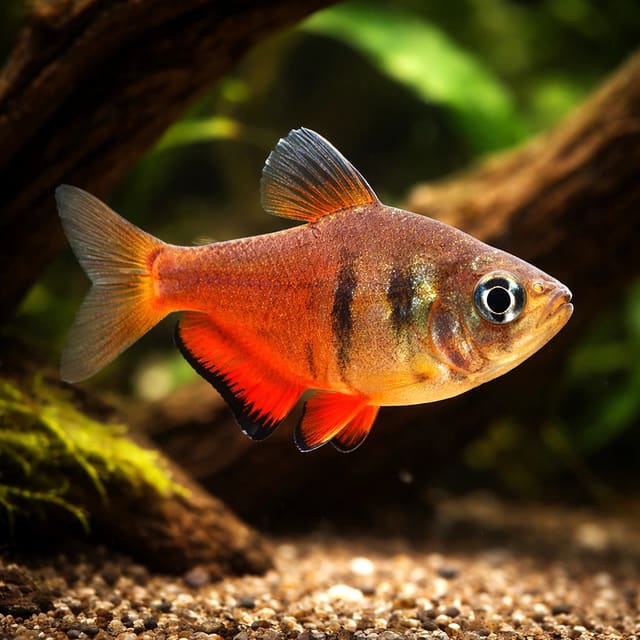
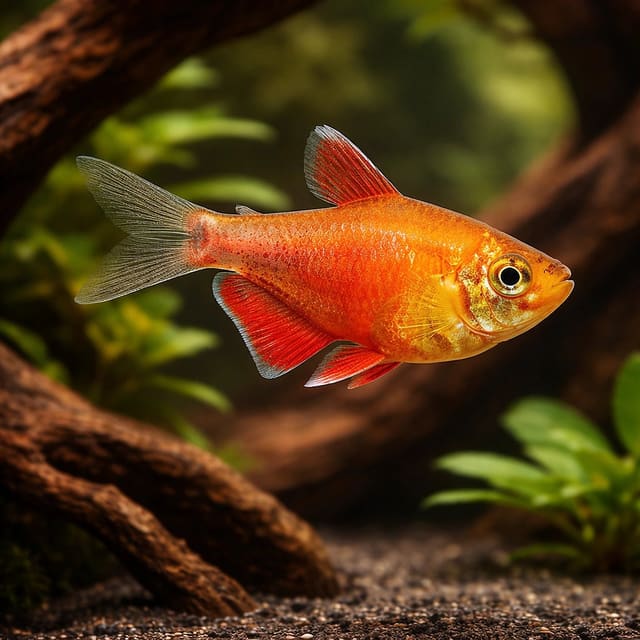
The Gold Columbiana (Hyphessobrycon columbianus) is a freshwater tetra from a genus found in tropical and subtropical South America and reaches 6 cm. It suits a mature, filtered aquarium of at least 120 litres; keep six or more at 24–27°C and pH 6.5–7.5, within OATA's group guidance for tetras. Sold individually as one live fish per purchase.
Adult size is the maximum length this species reaches at full maturity (scientific sources). The livestock you receive will be younger and smaller. Product-photo provenance and any image-specific limitations are stated on the listing.
Hyphessobrycon columbianus
Shoaling fish: kept in a group they feel safer, stay calmer and show their best colour.
The Gold Columbiana (Hyphessobrycon columbianus) is a freshwater tetra from a genus found in tropical and subtropical South America and reaches 6 cm. It suits a mature, filtered aquarium of at least 120 litres; keep six or more at 24–27°C and pH 6.5–7.5, within OATA's group guidance for tetras. Sold individually as one live fish per purchase.
Adult size is the maximum length this species reaches at full maturity (scientific sources). The livestock you receive will be younger and smaller. Product-photo provenance and any image-specific limitations are stated on the listing.
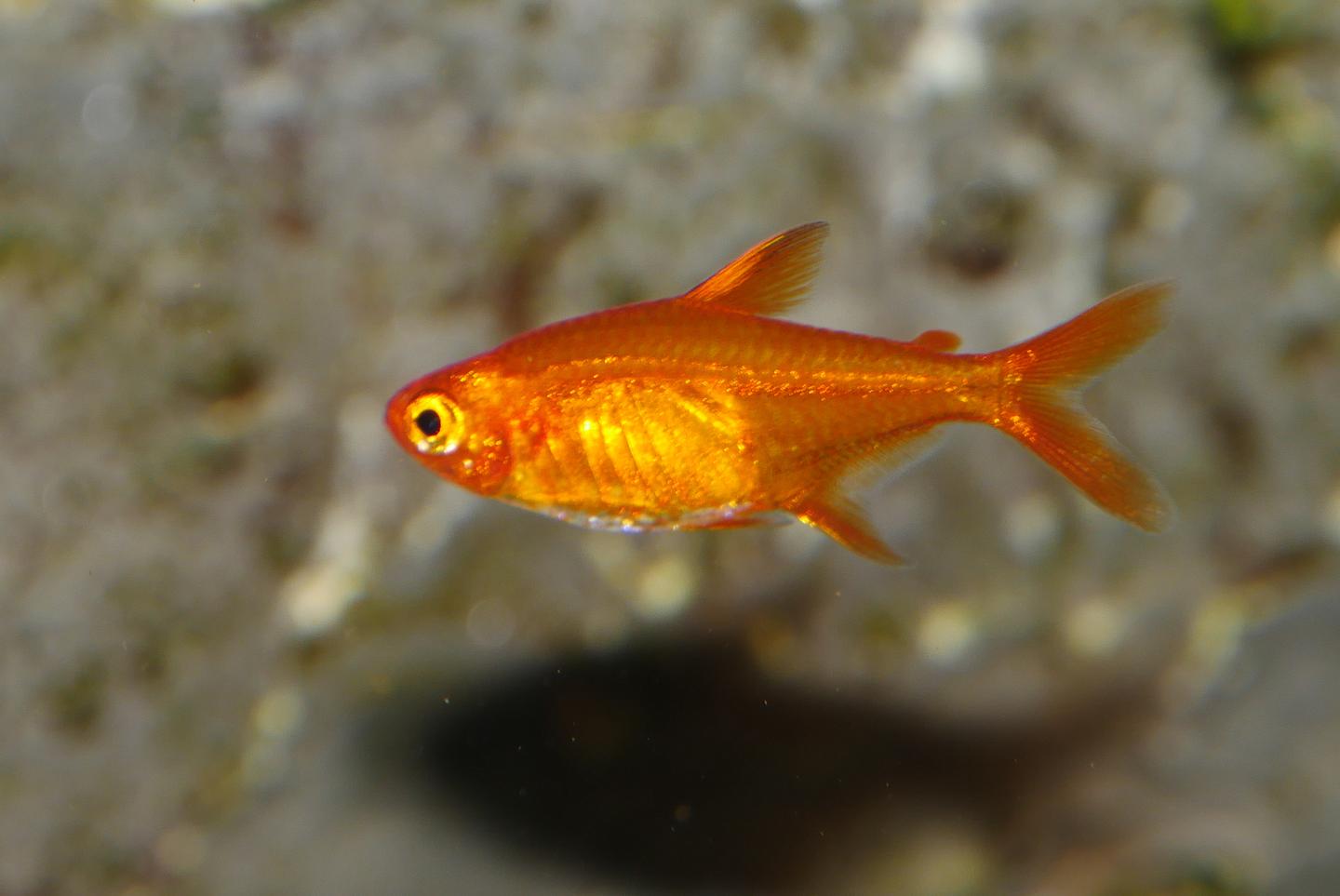
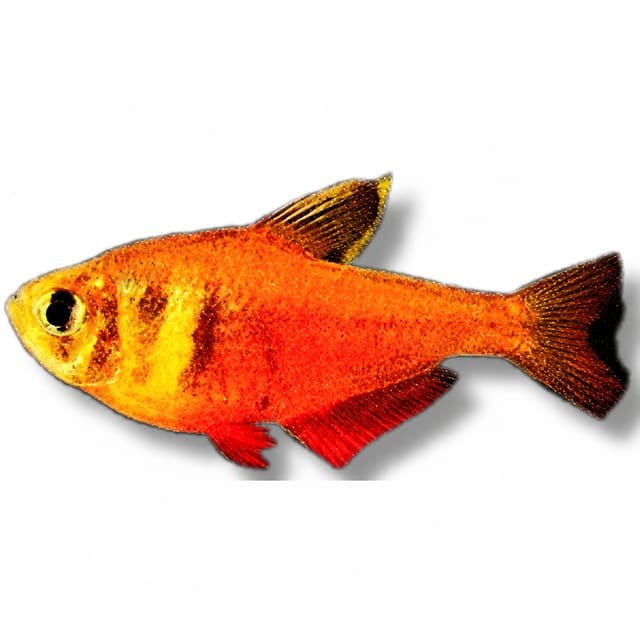
Ember tetras are very small Brazilian social fish, with a maximum recorded length of 2.0 cm excluding the tail. Keep them only in a fully cycled, stable aquarium. We recommend a group of at least 10 and about 45 litres with a 45 × 30 cm footprint rather than using a litres-per-fish formula.
Maintain these water conditions for optimal health and vibrant colors
The Gold Columbiana (Hyphessobrycon columbianus) is a freshwater tetra that reaches 6 cm and suits keepers who can provide a mature, filtered aquarium, a proper shoal and consistent weekly maintenance. Wikipedia places the Moenkhausia genus in tropical and subtropical South America and identifies its members as freshwater ray-finned fishes among the American characins. Use that range as background for the genus rather than as a claim about where an individual aquarium fish was collected.
Plan for a group of six or more in an aquarium of at least 120 litres. This is an active mid-water fish, so useful capacity means more than a volume printed on the tank: the aquarium also needs open swimming room, cover, a working biological filter and enough space for every mature companion. Keeping a shoaling tetra alone or in too small a group may cause stress.
Keep the routine water at 24–27°C, pH 6.5–7.5 and 5–12°dH. OATA's freshwater tetra guidance gives 22–27°C, pH 6.5–8.0 and 4–12°dH for the group; the routine here stays within those limits. Ammonia and nitrite must remain at zero mg per litre, while nitrate should not rise more than 20 mg per litre above the normal tap-water level.
| Suits | Not suited to |
|---|---|
| A mature, filtered aquarium of at least 120 litres | An unfiltered or biologically immature aquarium |
| A planned shoal of six or more | Solitary keeping or an undersized shoal |
| Fish of similar size and temperament | Very small fish or slow long-finned fish |
| A keeper able to test water and change it weekly | A setup without a regular maintenance routine |
Its easy store care assessment reflects straightforward feeding and routine tetra husbandry, but it still depends on mature filtration, correct water values and restrained stocking. If those foundations are already in place, this can be a practical shoaling choice. You can also browse the tetras collection when comparing fish with similar social and aquarium requirements.
One purchase supplies one Gold Columbiana. The dispatch grade associated with this fish is 3 cm, while the planning size for a fully grown fish is 6 cm. Dispatch size describes the fish when supplied; it is not the adult size. Allow for the adult length, the intended shoal and the mature sizes of all other inhabitants before deciding whether the aquarium has enough swimming room.
Use 6 cm consistently when calculating stocking and space. Wikipedia notes that the Moenkhausia genus includes species approaching 12 cm, but that genus-wide ceiling is not the planning size for this fish. A group of six adults at 6 cm represents 36 cm of combined fish length before any companions are counted, although a simple length total cannot account for behaviour, body depth, filtration capacity or the swimming space required by an active shoal. The 120-litre minimum remains the direct planning rule.
Sex is guaranteed only when the selected option explicitly states male or female. This Gold Columbiana listing has no sex-guaranteed option.
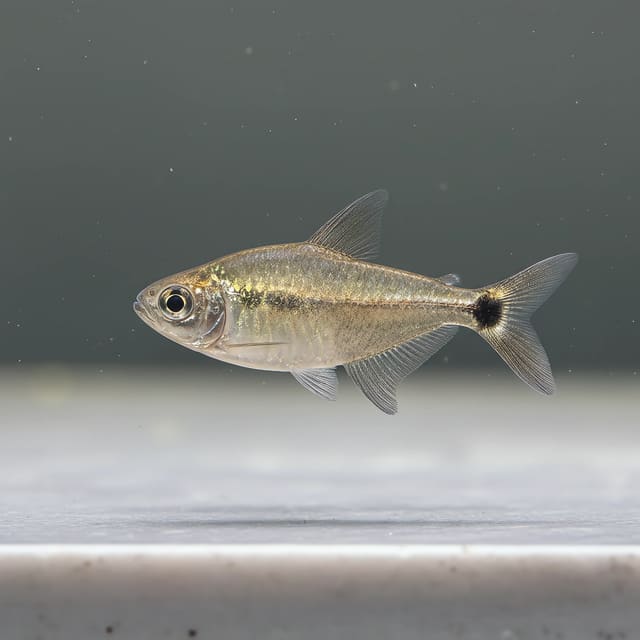
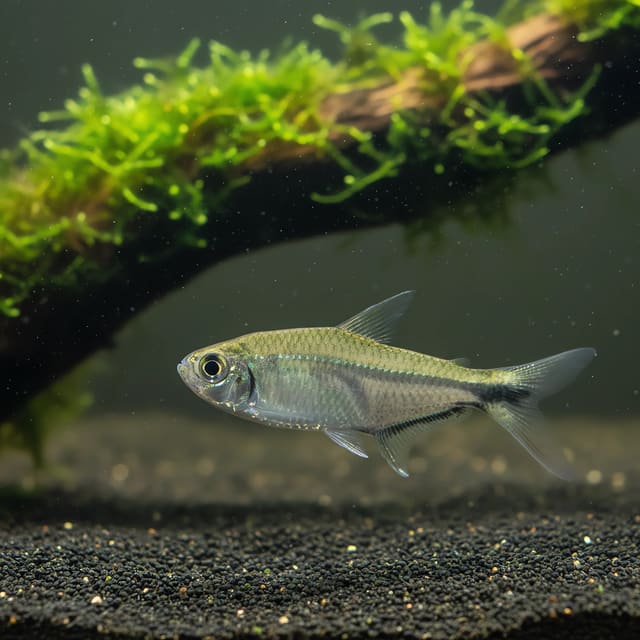
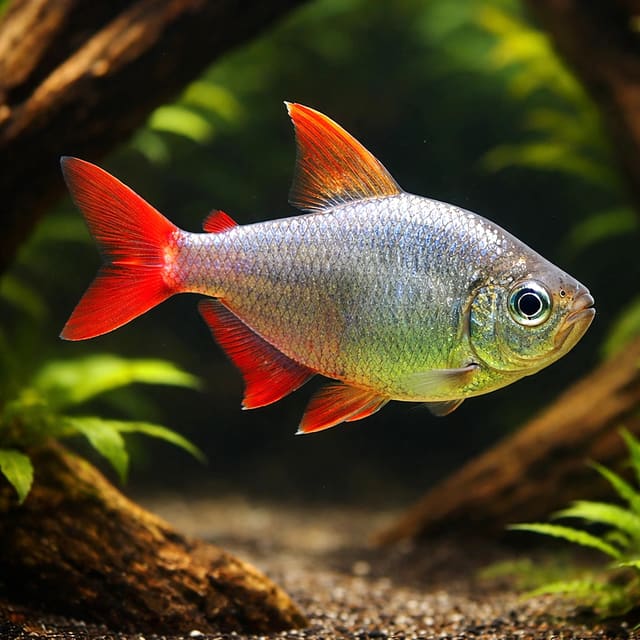
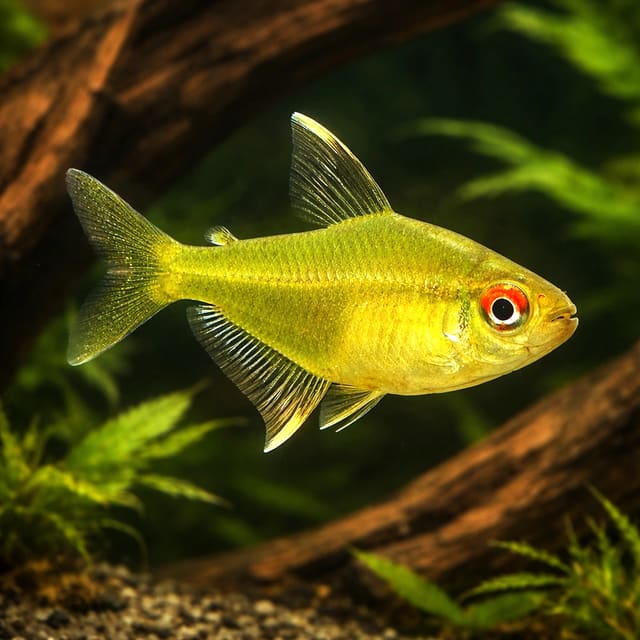
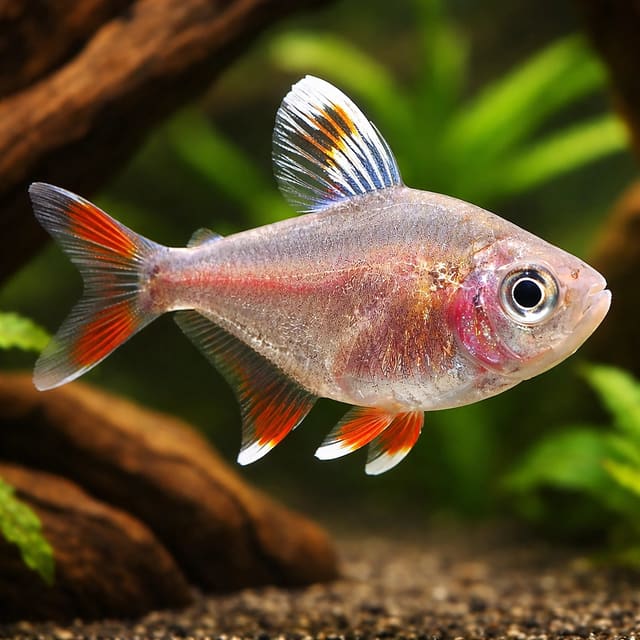
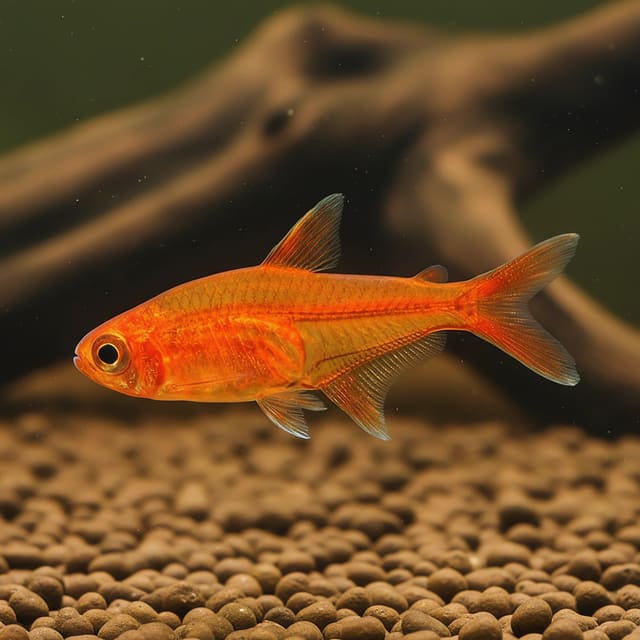
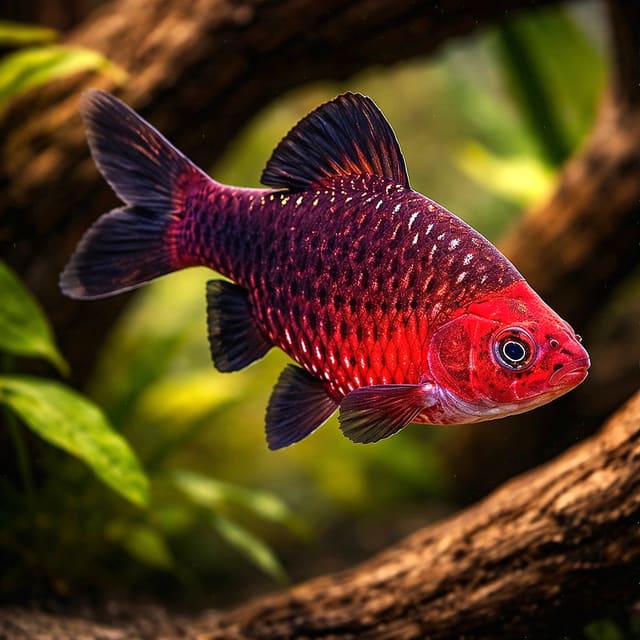
The gallery images are representative of this type of animal rather than photographs of the exact animal supplied, so colours can look slightly different from the live animal.
A sensible worked example starts with the shoal rather than one fish. If the aquarium already contains other fish, calculate their adult requirements first, then add the intended group of Gold Columbiana to the plan. Do not use unused litres alone as permission to add them: the filter must be mature, ammonia and nitrite must be zero, and existing inhabitants must pass the compatibility screen.
Use an aquarium of at least 120 litres for a group of six or more Gold Columbiana. Start with the full adult plan: six fish reaching 6 cm, open mid-water swimming space, shelter and the mature sizes of every companion. A larger aquarium can make temperature and water quality more stable, but extra volume still needs effective filtration and weekly maintenance.
Keep part of the middle area open so the shoal can move without constantly navigating dense decoration. Add aquarium gravel or sand on the base, then use live plants to provide cover. Where live plants are not used, plastic plants and suitable aquarium ornaments can supply shelter. Arrange cover around the open swimming area rather than filling every part of the tank.
For example, a nominal 120-litre aquarium may contain less water after substrate and decoration are added. That does not automatically make it unsuitable, but it makes restraint important: preserve swimming room, avoid crowding the hardscape and add livestock slowly. The aquarium should accommodate the shoal without forcing the fish into a narrow corridor between ornaments.
Prepare the setup before the fish arrives. Our first tropical aquarium guide explains how to establish and mature the aquarium before livestock is introduced. Maturation applies to the biological filter and aquarium system, not to a bucket of standing water.
Keep Gold Columbiana at 24–27°C, pH 6.5–7.5 and 5–12°dH. Test the aquarium rather than relying only on heater settings or past results. Temperature can be checked whenever the aquarium is observed, while ammonia, nitrite and nitrate should be tested at least weekly and whenever fish show an unusual change.
Ammonia and nitrite must both read zero mg per litre. Nitrate should not exceed 20 mg per litre above the normal tap-water level. These waste values are immediate welfare checks: ammonia and nitrite are toxic, and a rising result can show that the biological filter is not processing the aquarium's waste load effectively.
| Test result | Action |
|---|---|
| Temperature below 24°C or above 27°C | Check the heater, thermometer and recent changes before making a gradual correction. |
| pH outside 6.5–7.5 | Recheck the result and compare it with the replacement water before changing the aquarium. |
| Hardness outside 5–12°dH | Check the source water and avoid sudden alterations. |
| Any ammonia or nitrite | Pause further stocking, test again and address water quality immediately. |
| Nitrate rising beyond the stated limit | Review water changes, feeding and stocking pressure. |
Use the same test method consistently so a change in the result reflects the aquarium rather than a switch between kits. Record the date and result when possible. A short sequence of weekly readings is more useful than one isolated test because it shows whether the system is stable or drifting.
Read our aquarium water chemistry guide for the role of each measurement, then use the water matcher to compare your measured values with the range above. Make adjustments gradually and retest; do not chase a number with repeated abrupt changes.
Run a well-established, maintained filter at all times. The RSPCA explains that biological filtration supports beneficial bacteria which convert toxic ammonia into nitrite and then into the safer waste product nitrate. A filter is therefore part of the aquarium's life-support system, not simply a device for making the water look clear.
Confirm zero ammonia and zero nitrite before adding the Gold Columbiana. A clear aquarium can still contain harmful dissolved waste, so appearance cannot replace testing. When more fish and food enter the system, the bacterial population needs time to adjust to the larger waste load. Add livestock slowly rather than making several large additions close together.
Chlorine or chloramine in tap water may kill part of the bacterial population living in the media. Cleaning it in removed aquarium water reduces that risk and avoids stripping away more bacteria than necessary. The aim is to clear material that obstructs flow while preserving the biological community.
If a test shows ammonia or nitrite after new fish are added, stop adding livestock and review feeding, filtration and maintenance. An increasing population placed into an immature or overloaded system can cause new tank syndrome, with waste building faster than the filter bacteria can process it.
Change 25% of the aquarium water at least once every week. Use a siphon to remove solid waste from accessible areas of gravel while preserving the cover and swimming layout.
Treat replacement tap water with a suitable conditioner before adding it to the aquarium so harmful chlorine or chloramine is removed. Bring the replacement water towards the aquarium's established conditions and avoid abrupt changes. Test the aquarium at least weekly for ammonia, nitrite and nitrate, and include pH, hardness and temperature often enough to identify drift.
A 25% change in a true 120-litre water volume is 30 litres. If substrate and decoration reduce the actual water volume, measure from the aquarium's working capacity rather than assuming the full nominal figure. Consistency matters more than making a large corrective change after maintenance has been missed.
Link observations to test results. If fish breathe faster and ammonia or nitrite is detectable, water quality needs immediate attention. If uneaten food repeatedly appears during siphoning, reduce the portion at the next feed rather than relying on maintenance to remove excess food after it has begun to break down.
Feed Gold Columbiana once a day with only the amount the shoal can eat within a few minutes. Use a good-quality flake or appropriately sized granule as the regular aquarium food. Small live or frozen foods such as daphnia, small bloodworm or tubifex can add variety.
Match particle size to the fish at its present dispatch size while keeping the adult shoal in mind. A 3 cm fish needs food it can take readily; large pieces that remain untouched do not become suitable simply because the label names tetras. Crush flakes or choose small granules where necessary, then watch whether every fish reaches food during the short feeding period.
| What you see | What to do |
|---|---|
| Food is eaten within a few minutes | Keep the next portion similar and continue observing the whole shoal. |
| Food reaches the substrate uneaten | Reduce the next portion and remove accessible remains. |
| One fish consistently misses food | Check its position, behaviour and condition, then distribute the next small portion across the shoal. |
| Interest in food suddenly drops | Test water quality and check for other changes in breathing, colour or swimming. |
Overfeeding can allow uneaten food to break down and release waste into the water. That increases the demand on the biological filter and can contribute to rising ammonia, nitrite or nitrate. Feeding more is not a safe way to compensate for competition; compatibility and stocking pressure must be corrected at their source.
Variety means alternating suitable foods without turning each feed into a large mixture. Keep the once-daily limit and the few-minutes portion rule when offering live or frozen items. Observe body condition over time rather than responding to one eager feeding display with a larger routine portion.
Be present to receive the parcel so live fish are not left unattended. Follow the Tropical Fish Co delivery and Live Arrival Guarantee policy, and prepare the mature aquarium before the parcel arrives. The aquarium should already be within 24–27°C and pH 6.5–7.5, with zero ammonia and zero nitrite.
Film every delivery continuously from the sealed parcel through opening to the fish in the sealed bag. Keep the order number with the video. The policy requires someone to have been at the delivery address, the parcel to be opened and inspected that day, and the continuous video to begin while the parcel is still sealed.
After release, observe swimming, posture, breathing and use of cover without adding more livestock. Continue the normal small once-daily feeding routine and avoid increasing the portion simply because a new shoal has arrived. Test ammonia and nitrite because the filter's bacterial population must adjust whenever fish and feeding are added.
Check the shoal every day for changes in swimming, breathing, colour, temperament, appearance, body condition and feeding. Daily observation is most useful when you know the fish's ordinary behaviour, so spend a brief moment watching before feeding or carrying out maintenance.
| Change | First action |
|---|---|
| Hanging at the surface, sitting on the bottom or erratic swimming | Test temperature, ammonia, nitrite and nitrate immediately. |
| Gill covers moving faster or slower than normal | Check water quality and filter operation. |
| Darker or paler colour than normal | Look for water changes, stress and altered social behaviour. |
| More aggression or hiding than normal | Recheck shoal size, cover, space and tank-mate behaviour. |
| White spots, fluffy growths, damaged fins or missing scales | Record the appearance clearly and contact us for health guidance. |
| Reduced appetite or changing body condition | Test the water and observe whether the fish can reach food. |
Water testing comes first because even small amounts of ammonia or nitrite can stress tetras. Confirm the filter is running, check for blockages and review recent events such as new livestock, heavier feeding or missed maintenance. Do not add another fish while a health or water-quality change is being investigated.
Keep notes on when the change began, the measured water values and which fish are affected. A clear sequence distinguishes a one-off observation from a developing pattern. Avoid guessing at a treatment from appearance alone; use the measured conditions and the complete set of symptoms when seeking health guidance.
Match Gold Columbiana only with fish of similar size and temperament that share its water requirements. The practical overlap must include 24–27°C, pH 6.5–7.5 and 5–12°dH, as well as enough room for the complete Gold Columbiana shoal and every companion at adult size.
Avoid very small fish and slow long-finned fish. The concern is not resolved by adding more space alone: very small fish may be vulnerable around larger fish, while slow long-finned fish may be exposed to fin nipping from active tetras. Do not treat a companion as suitable merely because both fish are peaceful.
The honest rule for unnamed species is conditional: similar size and temperament may work after the complete screen passes, but there is no universal tank-mate list. If a proposed fish is much smaller, notably timid, slow moving or long finned, choose a different combination. If its care range does not overlap all three water values, it is not a suitable match for this aquarium plan.
Also compare feeding access. During the daily few-minute feed, every fish should be able to reach appropriately sized food. Persistent exclusion signals that the community arrangement needs attention; increasing the amount of food can leave waste without solving the underlying competition.
Start the plan with six or more Gold Columbiana and add livestock slowly. A shoal is a welfare requirement within this aquarium plan, but adding too many fish to the biological filter at once can allow ammonia or nitrite to rise. Balance both decisions by maturing the filter first, testing the aquarium and leaving time for the system to respond before any later addition.
| Question | Pass condition |
|---|---|
| Is the aquarium large enough? | At least 120 litres with useful open swimming room after decoration. |
| Is the shoal complete? | Six or more Gold Columbiana are included in the plan. |
| Is filtration ready? | The filter is established and ammonia and nitrite are zero mg per litre. |
| Do tank mates fit? | They are similar in size and temperament, share the water range and are not very small or slow long-finned fish. |
| Can feeding remain controlled? | All fish can eat an appropriate portion within a few minutes once daily. |
For an established aquarium, test before the new fish arrives and again during the first week. Watch for reduced flow, uneaten food and any change in breathing or swimming. If ammonia or nitrite appears, pause further stocking and address the waste load, filter and maintenance routine.
For a new community, do not fill every planned place immediately. The beneficial bacteria established during maturation need to increase as fish waste and feeding increase. Slow stocking gives the filter time to respond and gives you a clear view of how each addition affects behaviour, feeding and water quality.
Compatibility remains an aquarium-level decision. Send us the tank dimensions, measured water values, existing inhabitants and intended adult group sizes if you need help screening a specific combination.
It reaches 6 cm as an adult. Plan the aquarium around that adult length rather than the 3 cm dispatch grade.
Use an aquarium of at least 120 litres with a mature filter, open mid-water swimming room and cover for a group of six or more.
Keep six or more together. OATA's broad group guidance for tetras says these shoaling fish should be kept in groups of at least five and that more is better; keep six or more for this fish.
It has an easy store care assessment and suits a beginner who can provide a mature filtered aquarium and keep six or more. OATA's broad group guidance for tetras recommends weekly water testing and a 25% partial water change at least once a week.
OATA's broad group guidance for tetras recommends a good-quality flake or suitably sized granule once daily, giving only what the fish eat within a few minutes. Small live or frozen daphnia, small bloodworm or tubifex can provide variety.
Keep it at 24–27°C and pH 6.5–7.5, with hardness of 5–12°dH. These routine values sit within OATA's broad group-level tetra guidance, not a species-specific optimum.
It is peaceful, but OATA's broad group guidance warns that larger or more boisterous tetras may nip slow long-finned fish. Keep the shoal at six or more and provide open swimming room.
Choose fish of similar size and temperament that share 24–27°C, pH 6.5–7.5 and 5–12°dH. OATA's broad group guidance says tetras mix best with fish of similar size and temperament; avoid very small fish and slow long-finned fish.
It is hand-bagged in pure oxygen and placed in an insulated poly box, with a heat pack when the weather calls for it. Be present to receive the parcel, start a continuous video while it is still sealed, open and inspect it that day, then float the bag for 20–30 minutes before releasing the fish.
No reviews for this item yet. Bought one? Honest reviews only, good or bad.
What customers say about ordering from us
Easy website plenty of info on fish your buying great to pick a time slot
TRACEY DURRANT · 7 Oct 2026
Got some lovely fish thank you
Kevin Mackie · 7 Oct 2026
Reviews of our shop, collected by Judge.me, an independent third-party review collector. Newest first.