Moderate
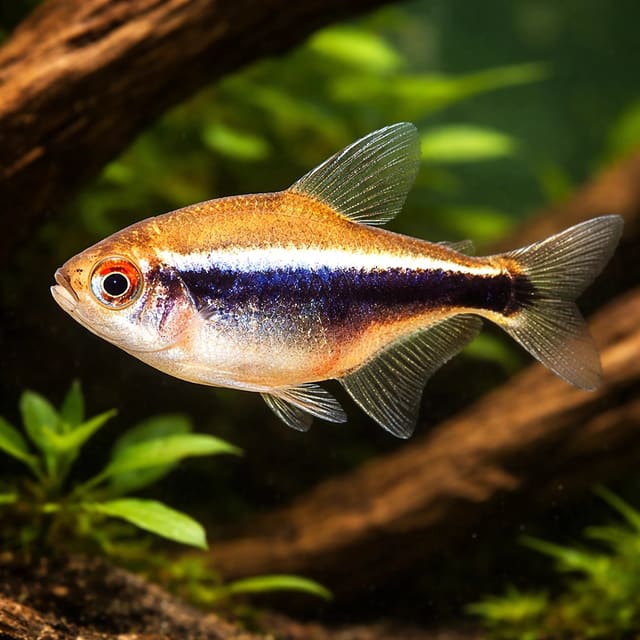
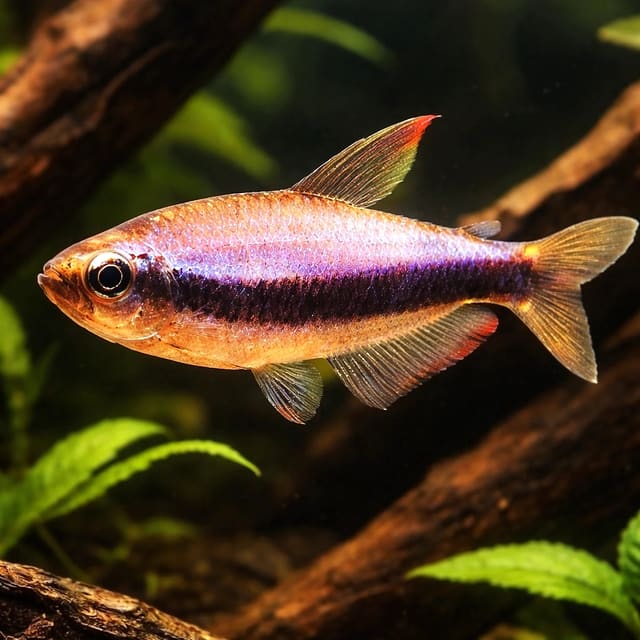
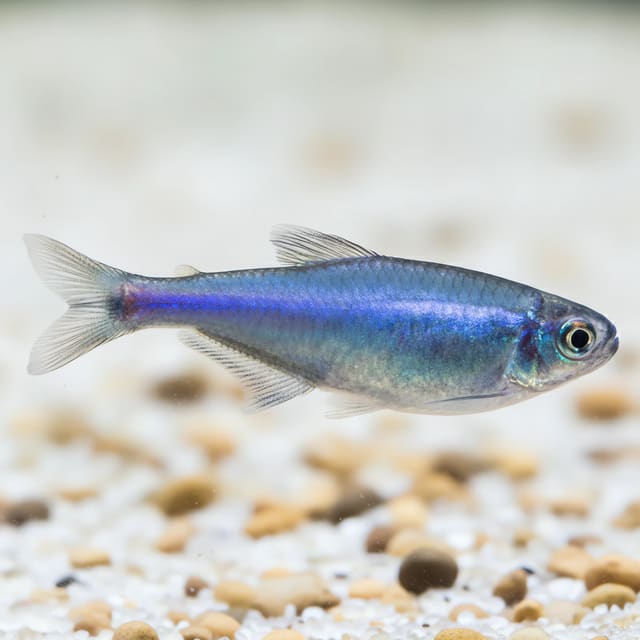
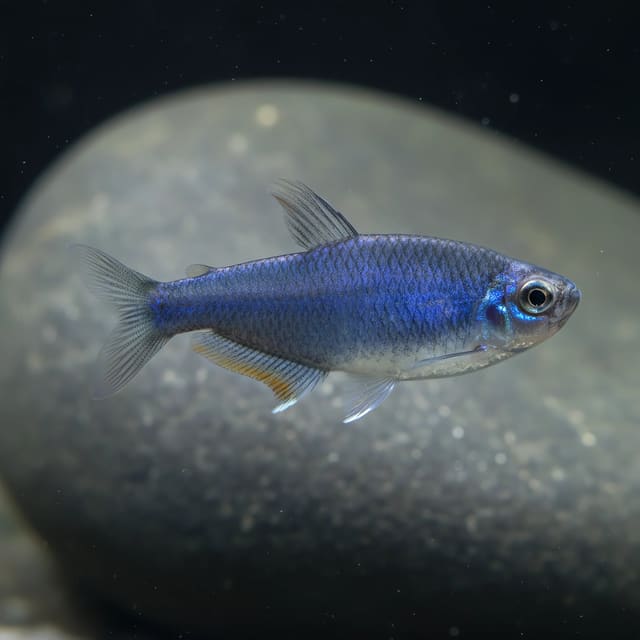
Neon Tetra (Paracheirodon innesi)
21–25°C · pH 5–7
£2.99

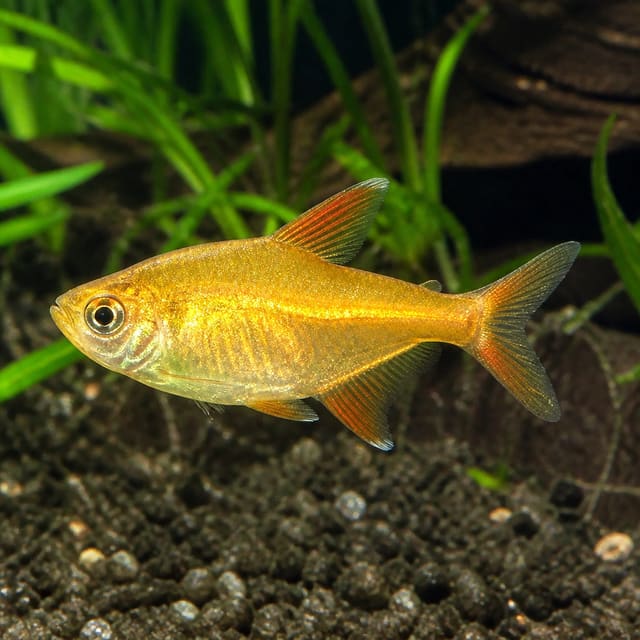
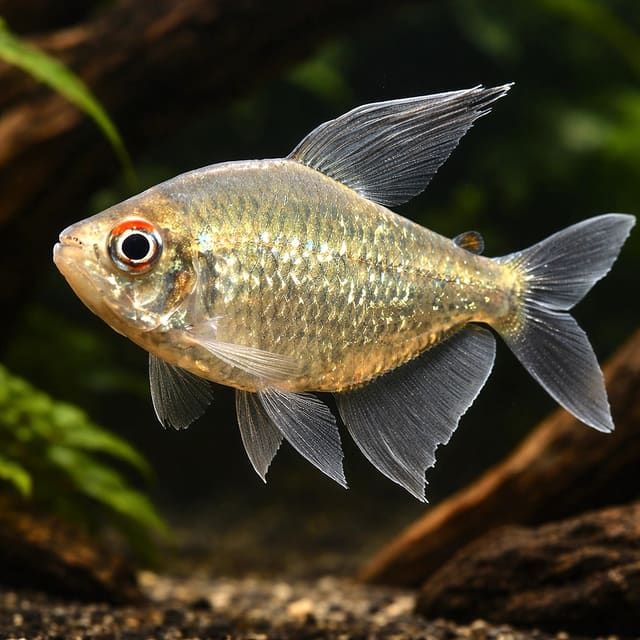
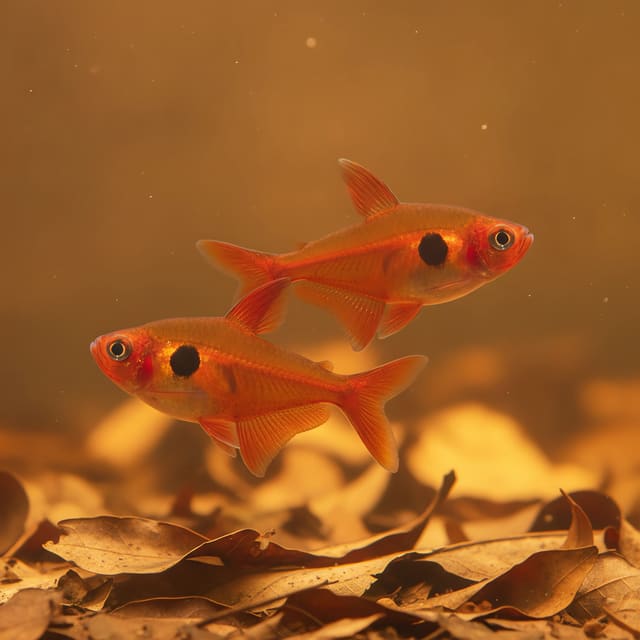
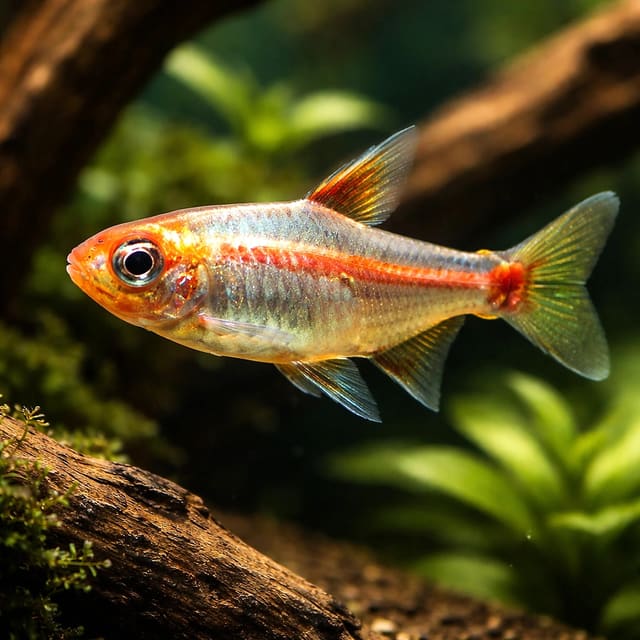
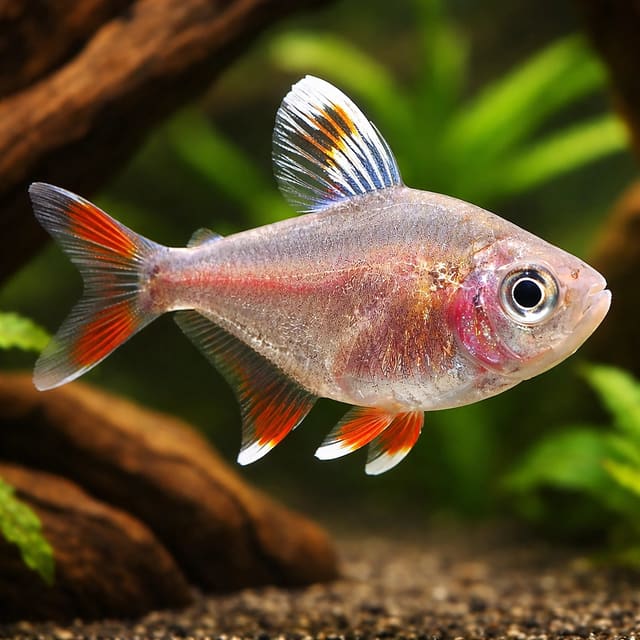
The Red Eye Tetra (Moenkhausia sanctaefilomenae) is an active South American freshwater tetra reaching up to 7 cm standard length. One purchase supplies one animal in the size selected; plan for at least 103 litres, a group of at least 6–8, 22–26°C water and active, similarly sized companions.
Adult size is the maximum length this species reaches at full maturity (scientific sources). The livestock you receive will be younger and smaller — pick a size above for the actual shipping size. Product-photo provenance and any image-specific limitations are stated on the listing.
Moenkhausia sanctaefilomenae
Shoaling fish: kept in a group they feel safer, stay calmer and show their best colour.
Minimum of 2 per order.
The Red Eye Tetra (Moenkhausia sanctaefilomenae) is an active South American freshwater tetra reaching up to 7 cm standard length. One purchase supplies one animal in the size selected; plan for at least 103 litres, a group of at least 6–8, 22–26°C water and active, similarly sized companions.
Adult size is the maximum length this species reaches at full maturity (scientific sources). The livestock you receive will be younger and smaller — pick a size above for the actual shipping size. Product-photo provenance and any image-specific limitations are stated on the listing.
Maintain these water conditions for optimal health and vibrant colors
The Red Eye Tetra is a robust, active freshwater fish for a keeper who wants visible group movement rather than a quiet or delicate community. It suits a newcomer who is ready to provide the full adult aquarium, maintain a mature biological filter and keep a proper shoal. Its energy is an important part of the choice: active companions can share the aquarium successfully, while sedate fish may find the group intimidating.
FishBase records a maximum of 7 cm standard length and places this South American tetra in the family Acestrorhamphidae. FishBase now lists it as Bario sanctaefilomenae. Its recorded distribution covers the Paranaíba, São Francisco, upper Paraná, Paraguay and Uruguay river basins, and it is a freshwater, benthopelagic fish.
That 7 cm maximum matters more to aquarium planning than the smaller dispatch grade. This is not a nano-tank choice. Seriously Fish recommends an aquarium of at least 90 × 38 × 30 cm, approximately 103 litres, because the fish is particularly active and deserves sufficient room at adult size. It also recommends keeping at least 6–8 together.
| Suits | Not suited to |
|---|---|
| Newcomers prepared to maintain a mature biological filter | Nano aquariums |
| Active communities with similarly sized companions | Communities centred on sedate fish |
| Groups of at least 6–8 in at least 90 × 38 × 30 cm, about 103 litres | Solitary keeping or aquariums below the stated minimum |
Choose this fish when those four requirements fit together. A tank can match the water range yet still be unsuitable if it lacks swimming room, while a large aquarium still needs the correct social group and compatible activity levels. You can compare other identities and adult requirements in our current tetras collection.
One purchase quantity supplies one Red Eye Tetra from the option chosen in the live size selector. The size choices are 1.5–2 cm, 2–2.4 cm, 2.5 cm and 3–3.5 cm. Read the selector before ordering, then enter the number of individual fish needed for the planned group.
The size you select is the size supplied, not the adult size. A 3–3.5 cm option therefore remains a fish that must be housed around the recorded maximum of 7 cm standard length. The smaller grade does not justify a smaller permanent aquarium, and a dispatch measurement does not indicate sex, life stage or origin.
For a worked example, a keeper starting a new group of eight would enter a purchase quantity of eight after selecting the preferred size option. Each unit remains one animal; the grade describes the size of each selected fish rather than a pack. If adding to an existing group, count the whole eventual shoal and confirm that the aquarium can carry the increased adult bioload before choosing the additional quantity.
Sex is guaranteed only when the selected option explicitly states male or female. This Red Eye Tetra listing has no sex-guaranteed option.
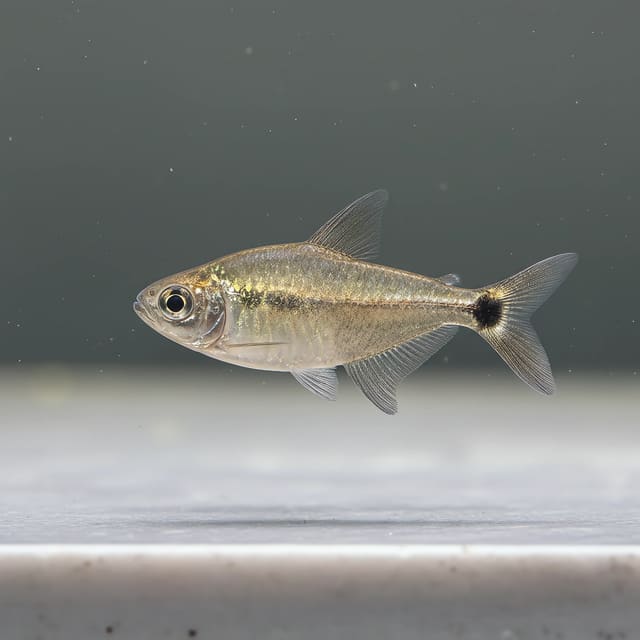
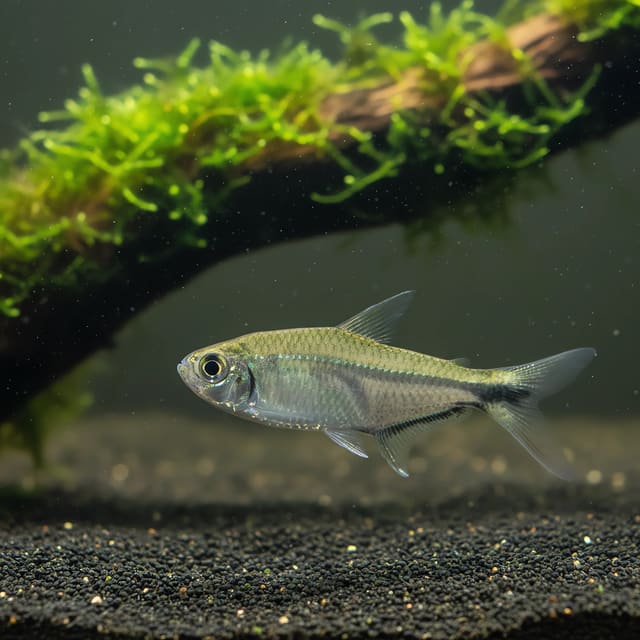
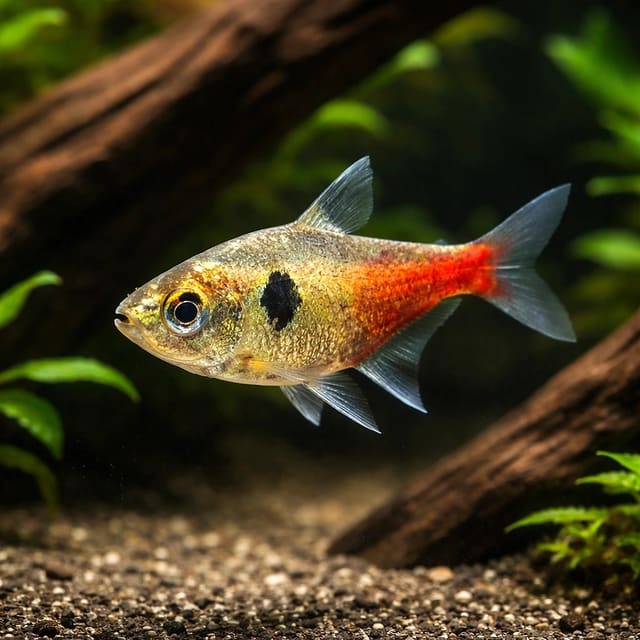
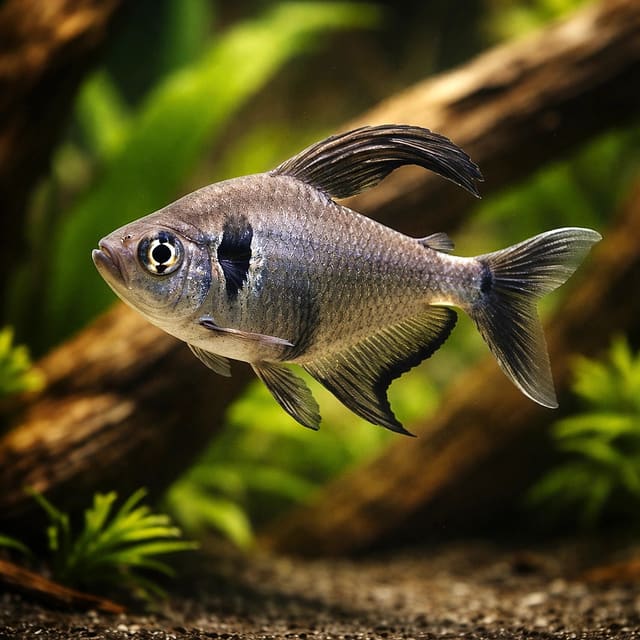
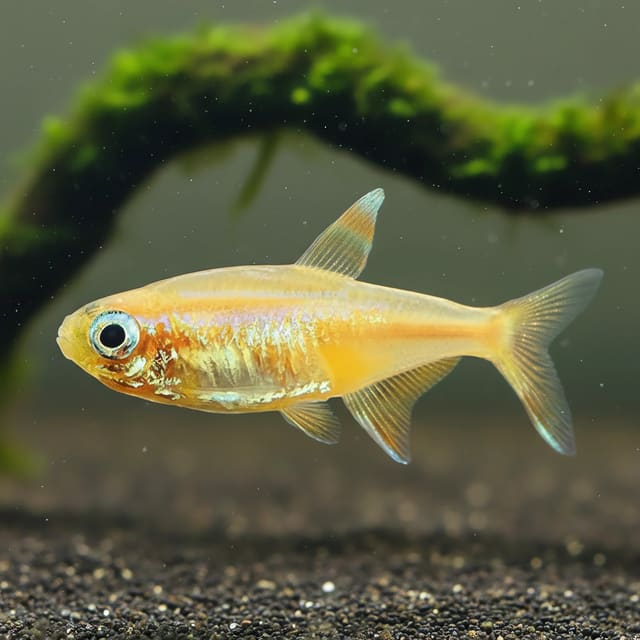
The gallery images are representative, based on reference photographs of this species, so colours can look slightly different from the live animal.
Prepare the aquarium around the adult fish before placing an order. Confirm the 90 × 38 × 30 cm minimum footprint, mature filtration, group plan and compatibility screen first. Dispatch arrangements and guarantee terms can change independently of care requirements, so read the current delivery and Live Arrival Guarantee policy when planning receipt.
Start with an aquarium of at least 90 × 38 × 30 cm, approximately 103 litres. The footprint and volume work together: the fish reaches up to 7 cm standard length, is particularly active and must share the space with at least 6–8 of its own kind. Do not reduce the permanent aquarium because a selected fish arrives below its adult measurement.
A nominal volume on its own is not the complete test. Confirm that the aquarium meets all three stated dimensions as well as the approximate volume. The 90 cm length and 38 cm width provide the base area around which the recommendation was made, while the group needs usable swimming room rather than a tank crowded throughout with hardscape.
For example, a 103-litre aquarium that already carries a substantial fish population is not automatically ready for another group simply because it meets the minimum volume. Conversely, an empty 103-litre aquarium still needs a mature filter and suitable water before livestock enters. The minimum describes the starting space for this active tetra, not permission to fill every remaining litre.
When measuring a proposed home, treat any aquarium below one of the stated dimensions as a different layout that needs individual assessment. A tall tank with less base area does not recreate the recommended footprint merely by holding a similar volume. Planning this way prevents a dispatch-size fish from being placed in temporary accommodation that becomes restrictive as it grows.
Maintain 22–26°C, pH 6.0–8.0 and 3–20 dGH for routine aquarium care. These are aquarium ranges for this species, so choose a stable point within them that also suits every other animal in the community. Avoid changing pH or hardness simply to chase the middle of a range when the aquarium is already stable and compatible.
Before choosing the fish, measure the aquarium rather than relying on a general description such as soft, hard or neutral. Our water chemistry guide explains the values to test, while the water matcher lets you compare those measurements with the stated range.
OATA’s tetra and pencilfish sheet gives broad group guidance of zero ammonia, zero nitrite and nitrate no more than 20 mg per litre above the normal tap-water level. These waste readings are separate from pH and hardness: matching 22–26°C and pH 6.0–8.0 does not make an aquarium ready when ammonia or nitrite is detectable.
| Reading | Action point |
|---|---|
| Temperature | Hold within 22–26°C |
| pH | Keep within 6.0–8.0 |
| General hardness | Keep within 3–20 dGH |
| Ammonia | Zero mg per litre |
| Nitrite | Zero mg per litre |
| Nitrate | No more than 20 mg per litre above tap water |
If ammonia or nitrite is above zero, postpone introduction and address biological filtration first. If temperature, pH or hardness falls outside the routine range, resolve the mismatch before adding fish rather than making a sudden correction after they enter the aquarium.
A well-set-up biological filter is essential. The RSPCA explains that fish release toxic ammonia; beneficial filter bacteria convert it first to toxic nitrite and then to safer nitrate. The filter must therefore be mature before introduction and remain running and maintained as the group grows.
At approximately 103 litres, use a turnover of four to five times the aquarium volume each hour. That calculation produces a filter flow rating of about 410–515 litres per hour:
Treat the manufacturer’s rating as a selection aid and then check how the aquarium operates once media and décor are in place. Arrange the outlet so filtration works throughout the tank without forcing the whole group to struggle continuously against the flow. Keep the intake clear and check the unit for blockages during routine maintenance.
For heating a tank of about 103 litres, Seriously Fish gives approximately 75–125 W to hold 22–26°C when the room is around 20°C. That wattage example depends on the stated room temperature, so monitor the aquarium with a thermometer instead of assuming heater wattage alone guarantees the result.
Set up the aquarium, establish biological filtration and confirm zero ammonia and zero nitrite before adding fish. Our first tropical aquarium guide covers the preparation and maturation sequence. Once fish are introduced, increase the population slowly because beneficial bacteria need to respond whenever stocking and feeding increase.
This approach links equipment to the actual group: the filter supports the adult bioload, the heater maintains the measured range and regular testing confirms that both are achieving the intended conditions.
Avoid a very brightly lit, sparsely decorated aquarium. This adaptable fish does well in a well-maintained setup, but a bare, harshly lit environment does not match the recommended presentation. Dense planting can provide visual cover, provided the group still has sufficient room to swim.
One practical layout places plants, wood and roots around selected areas rather than filling every part of the aquarium. OATA recommends gravel or sand, cover and swimming space for tetras. A planted design can meet those needs by combining sheltered edges with a usable route through the aquarium.
| Layout | Key decisions |
|---|---|
| Planted aquarium | Use dense planting for cover while preserving swimming space. |
| River-style display | Use river sand, driftwood branches, twisted roots and dried leaves. |
For a river-style display, dried beech or oak leaves may be used to create a weak tea colour. Remove old leaves and replace them every few weeks so they do not rot and foul the water. Common beech wood may be used only when it is thoroughly dried and stripped of bark.
Aquatic plants are not a feature of the natural waters described by Seriously Fish, so planting is an aquarium-care choice rather than a requirement to copy the wild habitat. The important result is a maintained environment with cover, usable swimming room and no accumulating decaying material.
Review the layout from the fish’s point of use. If décor reduces the recommended footprint to a narrow pocket, remove or reposition it. If the aquarium remains exposed and sparse, add cover without blocking filter intakes or preventing maintenance. Every item should support shelter, water quality or swimming structure.
Keep at least 6–8 Red Eye Tetras together. The fish fares better in the presence of its own kind, and keeping this minimum shoal helps contain routine squabbling within the group. A solitary fish or undersized group is not the right social plan.
This tetra has a reputation for fin nipping, but Seriously Fish says the behaviour can usually be rectified by maintaining a small shoal of at least 6–8. Group size is therefore part of compatibility care, not merely a visual preference. The aquarium must provide enough room and filtration for the whole shoal rather than squeezing the minimum number into an overstocked setup.
More fish are not an automatic solution when the aquarium is already at its safe capacity. In that situation, correct the space or stocking plan rather than increasing the shoal beyond what the filter and tank can support. The minimum group and minimum aquarium must be satisfied together.
Watch how the whole group uses the tank. Normal group interaction should not leave one fish persistently isolated, damaged or unable to feed. Changes such as increased aggression, unusual hiding, erratic swimming or reduced feeding are prompts to test the water and review the setup rather than treating social behaviour in isolation.
Use a good-quality flake or granule as the regular prepared food. Add small live or frozen foods such as daphnia, bloodworm and brine shrimp as part of a varied rotation. Include vegetable matter as well; spinach leaves or a good-quality algae-based flake are supported options.
Feed once a day and offer only what the group can eat within a few minutes. This gives the fish time to take the meal without leaving food to break down in the aquarium. Eager feeding is not a reason to keep adding more: uneaten food contributes waste and can undermine the zero-ammonia and zero-nitrite targets.
| Food role | Supported choices |
|---|---|
| Prepared staple | Quality flake or granules |
| Live or frozen variety | Daphnia, small bloodworm or brine shrimp |
| Vegetable component | Spinach leaves or algae-based flake |
Choose pieces the fish can take cleanly and spread the portion so the group can feed rather than allowing the boldest individuals to monopolise one spot. Observe until the few-minute feeding period ends, then remove obvious leftovers where practical. The next meal should be adjusted down if food remains.
Look for clear interest in food and make sure every individual has an opportunity to eat. Reduced intake, lack of interest or a visible change in body condition can be an early warning alongside altered swimming, breathing or colour. Test the water promptly when feeding behaviour changes.
Variety means rotating supported food types, not serving a large mixture at every meal. A measured prepared meal on one day and a suitably small live or frozen addition within the regular rotation keeps the plan straightforward. Continue to limit the total portion to what is eaten within a few minutes.
Carry out a partial water change of 25% at least once every week. Use a siphon to remove solid waste from the substrate, and treat replacement tap water with conditioner to remove chlorine or chloramine before it enters the aquarium.
Test the water at least weekly. Ammonia and nitrite should remain at zero mg per litre, while nitrate should not rise more than 20 mg per litre above the normal tap-water level. Record the results so a gradual change is visible before it becomes a larger problem.
Check the filter for blockages. When the media needs cleaning, rinse it lightly in aquarium water removed during the partial water change. Do not rinse established media under the tap, because chlorine or chloramine may kill beneficial bacteria and reduce the filter’s ability to process waste.
Begin with water testing because ammonia and nitrite are toxic and a filtration problem can affect the whole group. Correct maintenance failures rather than adding medication blindly. Disease treatment depends on the observed problem and the other livestock in the aquarium.
If the changes persist or the animal’s condition causes concern, test and record the water values and contact us for health guidance. Include temperature, pH, ammonia, nitrite, nitrate, recent maintenance and the behaviour observed so the next decision is based on concrete aquarium conditions.
Use a separate aquarium when the aim is to raise substantial numbers of fry. Seriously Fish describes an aquarium around 18 × 12 × 12 inches for this purpose, with very dim lighting and clumps of fine-leaved plants such as Java moss or spawning mops where eggs can be deposited.
A mesh base is an alternative. Choose a grade large enough for eggs to fall through but small enough to keep them beyond the adults’ reach. Filtration can be provided by a small air-powered sponge filter bubbling very gently.
| Breeding condition | Stated range |
|---|---|
| Temperature | About 26.5–29°C |
| pH | 6.0–7.0 |
| General hardness | 1–10 dGH |
| Lighting | Very dim |
These are breeding-tank conditions, not the routine community range. Keep the main aquarium at 22–26°C, pH 6.0–8.0 and 3–20 dGH unless a separate breeding project is being prepared. Do not raise the whole community to the warmer breeding temperature.
Sexing can remain difficult until fish are in breeding condition. A female may appear rounder-bodied at that point, but appearance should not be treated as a guaranteed sex determination. Build a breeding plan only after arranging a separate setup and deciding how the eggs and fry will be protected.
The breeding aquarium still needs stable water and appropriate filtration. Very gentle sponge filtration controls movement around eggs while providing a place for biological filtration. Prepare and mature that tank before moving breeding fish rather than assembling it after spawning behaviour begins.
Build the community around active fish of a similar size and temperament. The Red Eye Tetra is described as a robust general-community choice that adds considerable movement. That energy can intimidate sedate species, so the safest starting point is a community whose members feed and move at a comparable pace.
Conditional examples include similarly sized tetras, rainbowfish, larger rasboras, barbs and most danionins. Corydoras catfish, doradids, small loricariids and botiine loaches are also named as possible bottom-dwelling companions. Non-aggressive medium-sized cichlids may share a suitable setup, with the tetra group acting as dither fish.
| Companion type | Decision |
|---|---|
| Active, similarly sized fish | Consider when water, space and temperament match |
| Compatible bottom dwellers | Consider after checking adult size and total bioload |
| Sedate anabantoids | Avoid where the tetra group may intimidate them |
| Sedate dwarf cichlids | Avoid where boisterous activity may intimidate them |
| Timid or long-finned fish | Use caution and monitor fin attention |
Do not interpret a named example as a universal match. Every companion still needs overlapping 22–26°C temperature, pH 6.0–8.0 and 3–20 dGH requirements, enough adult space and a stocking level the filter can carry. Compare adult measurements rather than shop sizes.
Maintain at least 6–8 Red Eye Tetras because an undersized shoal can worsen fin-focused behaviour. The group requirement does not remove the need to observe individuals, but it gives routine squabbling a better chance of remaining within the shoal rather than being directed towards slower companions.
Check a proposed community in a fixed order: water range, adult size, activity level, social requirement, swimming space and total biological load. A match should pass every stage. Sharing a temperature range alone is not enough when one fish is timid, slow-feeding or likely to be intimidated by an active shoal.
Compatibility remains conditional because individual behaviour, aquarium layout and stocking pressure can alter the result. For animals outside the named examples, including invertebrates, treat the pairing as undecided until adult size, feeding behaviour and temperament have been assessed together. Do not assume a match merely because both animals are described as peaceful.
During the first weeks after a compatible addition, watch for persistent chasing, isolation, damaged fins, hiding, missed meals or altered breathing. Test the water if behaviour changes. If one species is repeatedly prevented from feeding or using normal aquarium space, separate the animals and revise the stocking plan.
For a stocking and compatibility assessment, ask us once you have the aquarium dimensions, measured water values, filter details, current livestock and planned group sizes. Those details make it possible to assess the whole community rather than judging two names in isolation.
It is an active South American freshwater tetra recorded at up to 7 cm standard length. Plan for a shoal and a full-sized community aquarium rather than a nano setup.
One purchase quantity supplies one animal from the selected size option. Enter the number of individual fish required for the complete group.
The size choices are 1.5–2 cm, 2–2.4 cm, 2.5 cm and 3–3.5 cm. These measurements are dispatch sizes rather than adult lengths.
Use an aquarium of at least 90 × 38 × 30 cm, approximately 103 litres, with mature filtration, cover and usable swimming room.
No. Keep at least 6–8 together, subject to the aquarium having enough adult space and filtration capacity for the whole shoal.
Maintain 22–26°C, pH 6.0–8.0 and 3–20 dGH. Ammonia and nitrite should be zero, with nitrate no more than 20 mg per litre above tap water.
Feed quality flake or granules with regular small live or frozen foods and vegetable matter. Offer only what the group eats within a few minutes once daily.
Prepare a mature, filtered aquarium first, confirm zero ammonia and nitrite, match the stated water range and increase livestock numbers slowly so biological filtration can adjust.
Choose active, similarly sized companions sharing 22–26°C, pH 6.0–8.0 and 3–20 dGH. Avoid sedate fish that may be intimidated and monitor for persistent fin attention.
No reviews for this item yet. Bought one? Honest reviews only, good or bad.
What customers say about ordering from us
I have a small group of long finned mountain minnows. So was delighted to be able to order ten of this variety to increase the genetics in my tank . The ones I recieved are healthy but it’s to early to give a verdict on wether they are of a long finned type since they are small currently.
Gordon Walker · 23 Sept 2026
100% success travel and "installation". Pleased with quality of purchase. The Siamese fighter a bit "shy" so have not yet seen him at his best yet but looking good. Happy customer. GG
George E Garratt · 21 Sept 2026
Reviews of our shop, collected by Judge.me, an independent third-party review collector. Newest first.