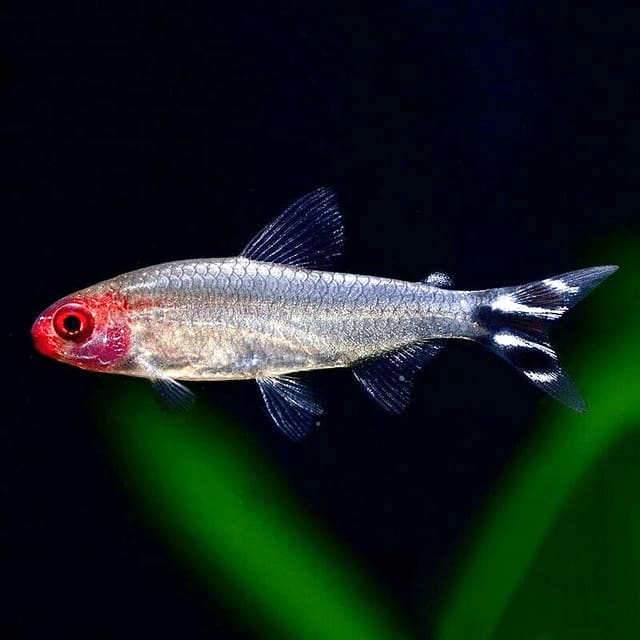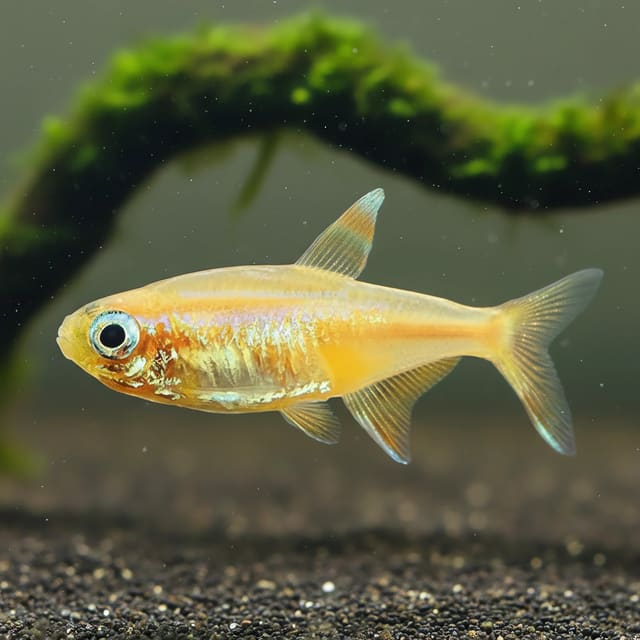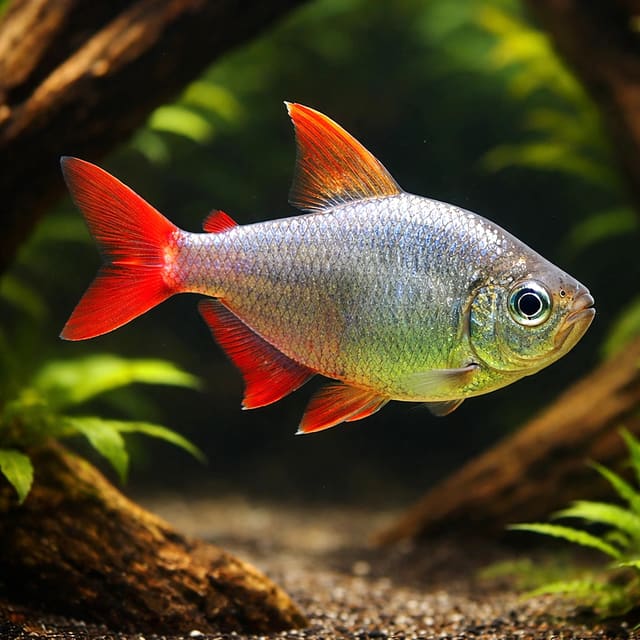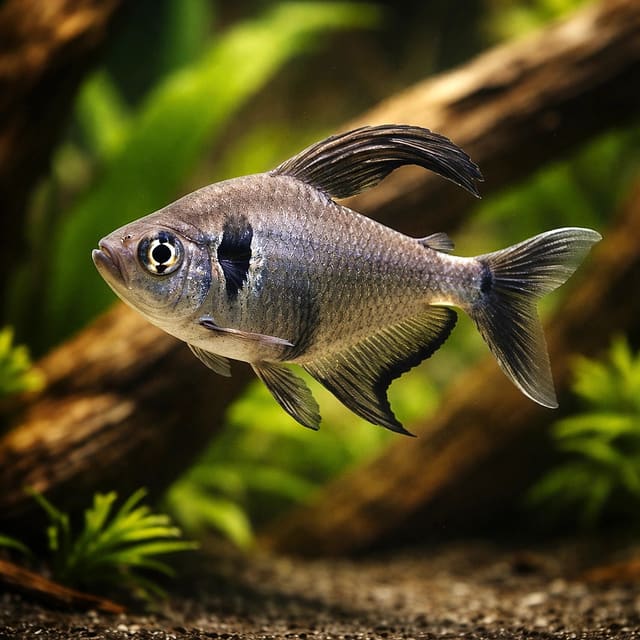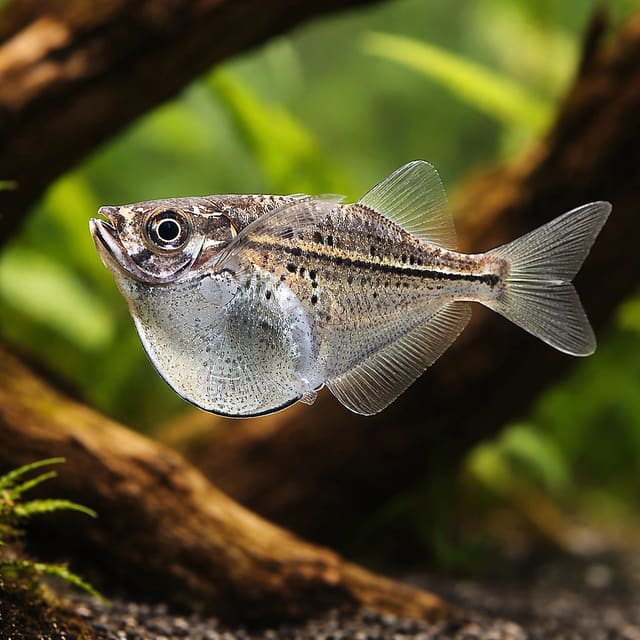
Blackwing hatchetfish (Carnegiella marthae)
23–27°C · pH 5.5–6.5 · 54L
£5.99

One Diamond Tetra (Makunaima pittieri, formerly Moenkhausia pittieri) per quantity in the selected grade. A peaceful social fish for a mature, spacious aquarium with plants, cover and open swimming room.
Adult size is the maximum length this species reaches at full maturity (scientific sources). The livestock you receive will be younger and smaller — pick a size above for the actual shipping size. Product-photo provenance and any image-specific limitations are stated on the listing.
Makunaima pittieri
Shoaling fish: kept in a group they feel safer, stay calmer and show their best colour.
Minimum of 2 per order.
One Diamond Tetra (Makunaima pittieri, formerly Moenkhausia pittieri) per quantity in the selected grade. A peaceful social fish for a mature, spacious aquarium with plants, cover and open swimming room.
Adult size is the maximum length this species reaches at full maturity (scientific sources). The livestock you receive will be younger and smaller — pick a size above for the actual shipping size. Product-photo provenance and any image-specific limitations are stated on the listing.
Maintain these water conditions for optimal health and vibrant colors
Diamond Tetras develop a metallic sparkle across the flanks that flashes silver, violet and green when settled in a suitable aquarium. The current scientific name is Makunaima pittieri; the familiar supplier and aquarium name Moenkhausia pittieri refers to the same species. These South American fish come from Venezuela and are peaceful, active shoalers. Plan for adults around 5–6 cm in standard length, excluding the tail, and a lifespan of up to 6 years in stable conditions. Warm, clean water, a proper group, varied food and open swimming space help them develop their mature colour and finnage. Individual appearance varies with age, sex and condition; a size grade does not promise a particular sex or a bonded pair. Each selected quantity is one fish, not a ten-pack. Choose among the listed 1.5–2 cm, 2.5–3 cm and XL grades, checking the selector for current availability and price. XL is a supplier grade, not an exact centimetre measurement.
Makunaima pittieri is the Diamond Tetra previously classified as Moenkhausia pittieri. The current FishBase species record uses the updated name and family Acestrorhamphidae. The change of genus does not describe a different retail fish, colour strain or guaranteed lineage.
Diamond Tetras are native to Venezuela, especially waters linked to the Lake Valencia basin. Their natural range helps explain much of modern diamond tetras care guide advice: these fish come from warm freshwater habitats with vegetation, subdued light, and plenty of cover. In the wild, the diamond tetras habitat includes slow-moving margins, plant-rich areas, and places where roots, leaf litter and overhanging growth soften the light.
Because they evolved in a calm, structured environment, they respond very well to a thoughtfully designed aquarium. This is why diamond tetras in planted tank layouts are so successful. Dense planting at the sides and back, open swimming space through the middle, and darker substrate all help them feel secure and show their best colour. Fish kept in bare, brightly lit tanks often look washed out compared with specimens housed in more natural surroundings.
In nature they feed opportunistically on tiny invertebrates, insect matter, algae films and small organic particles. That mixed feeding style is the reason a varied diamond tetras diet works best in captivity. They are not plant eaters in the way some larger characins can be, so healthy fish in a balanced setup generally leave robust aquarium plants alone.
Diamond Tetras stand apart from smaller neon-style species through their deep-bodied shape and reflective scale pattern. Compare adult size, temperament and water needs when choosing other peaceful shoalers; similar common names do not make different tetras interchangeable.
Mimicking the natural habitat of Diamond Tetras with dark substrate, floating shade, wood, and live plants usually improves colour, reduces skittish behaviour, and encourages tighter shoaling. Fish that feel secure display more sparkle and more natural social behaviour.
Getting the diamond tetras tank setup right is the difference between keeping this species alive and seeing it truly thrive. The key points are swimming room, stable water, a mature filter, and enough décor to create shelter without blocking the middle of the tank.
The recommended diamond tetras minimum tank size is 120 litres for a proper group. While some care sheets mention smaller tanks, a realistic diamond tetras tank size should account for adult activity level and social needs. If you are wondering how many diamond tetras in a tank, start with 8-10 fish in 120 litres and scale up from there. A larger shoal spreads confidence through the group and reduces occasional fin-nipping within the species.
For a display community, 150-180 litres gives much better results. It allows room for diamond tetras with other fish, especially bottom dwellers and similarly peaceful midwater species. This species is not huge, but adult fish are chunkier than neon tetras and need more horizontal swimming space.
Reliable diamond tetras water parameters are more important than chasing extremes. Aim for a diamond tetras temperature of 24-28°C, with an ideal diamond tetras water temperature around 25-26°C for long-term maintenance. The preferred diamond tetras pH level is 6.0-7.0, and diamond tetras water hardness should sit between 5 and 12 dGH. These are the diamond tetras ideal conditions for colour, appetite and steady growth.
Diamond tetras filtration needs are moderate rather than extreme. They appreciate clean, oxygen-rich water, but they do not enjoy being blasted by harsh current. A mature internal or external filter that turns the tank over around 4-6 times per hour is usually ideal. Direct the outflow along the surface or against hardscape to soften the flow path. This keeps waste under control without forcing the shoal to fight the current all day.
Regular maintenance matters. Weekly partial water changes of 25-30% help maintain stable chemistry and support diamond tetras health. If you are building a full diamond tetras aquarium setup, pair efficient filtration with a reliable heater and thermometer so the diamond tetras water temperature does not swing overnight.
Fine dark gravel or sand works very well. A darker base increases contrast and helps the fish appear brighter. For planting, choose hardy species such as Java fern, Cryptocoryne, Vallisneria and floating plants for shade. Diamond Tetras look especially impressive in a mature planted aquarium with open central swimming lanes.
For compatible community additions, fishkeepers often build displays around peaceful shoalers like X-Ray Tetras - Pristella Maxillaris, bright accents such as Yellow Neon Tetras - Paracheirodon, or reflective species including Golden Tetras - Hemigrammus Rodwayi and Glass Bloodfin Tetras - Prionobrama. These combinations suit an aquarium tetra UK style community focused on peaceful midwater movement.
Confirm the aquarium is fully cycled, with stable filtration and zero ammonia and nitrite, before adding Diamond Tetras. They are much more forgiving in a stable, mature aquarium than in a newly filled tank with fluctuating ammonia or nitrite.
A balanced diamond tetras feeding guide should reflect their omnivorous nature. In the wild they pick at tiny insects, crustaceans, plant fragments and biofilm. In the aquarium, the best diamond tetras diet combines a quality micro pellet or flake with regular frozen or live foods. This variety supports colour, finnage, growth and breeding condition.
Use a good tropical flake or small granule as the daily staple. Choose foods sized for midwater feeders so they can eat comfortably before the food sinks. Feed only what the shoal clears in 30-60 seconds, once or twice daily.
For stronger colour and condition, add frozen daphnia, cyclops, bloodworm and brine shrimp 2-4 times each week. These are especially useful when conditioning adults for diamond tetra breeding or improving the appearance of mature males. If you keep several freshwater tetra UK species together, a varied feeding plan helps reduce competition and brings out natural feeding behaviour.
Live foods can be offered occasionally when conditioning adults for spawning. Watch feeding response and body condition rather than assuming colour alone proves that a fish is ready to breed.
| Time | Food | Amount |
|---|---|---|
| Morning | Quality flake or micro pellet | Small pinch, eaten within 1 minute |
| Evening | Frozen daphnia, brine shrimp or bloodworm | Very small portion, no leftovers |
Feeding condition matters when assessing fish. A steady appetite, even body shape and access to correctly sized food are more useful than selecting purely by a low advertised price. Check the current price for your chosen size grade in the selector.
Diamond Tetras are a distinct species, not a neon-tetra colour variant. Choose food sized for the fish and watch the whole shoal eat, especially when several tetra species share the aquarium.
Overfeeding causes ammonia spikes, cloudy water and bloating. Diamond Tetras are eager feeders, so it is easy to add too much. Small, frequent meals are safer than one large dump of food.
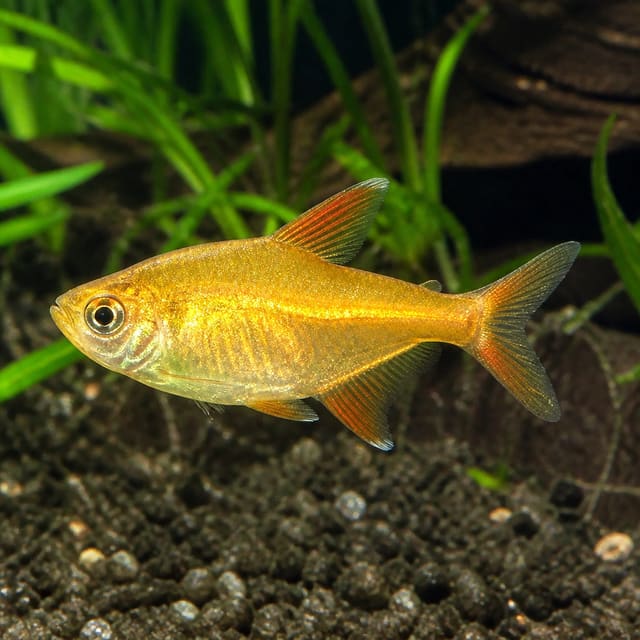
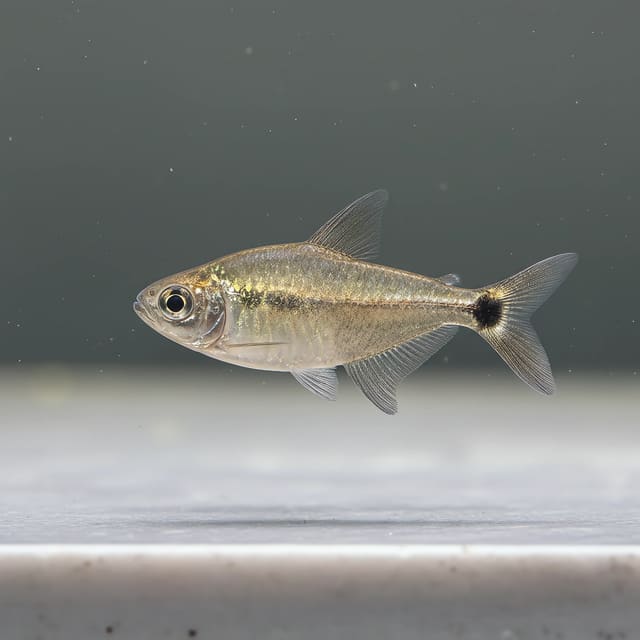
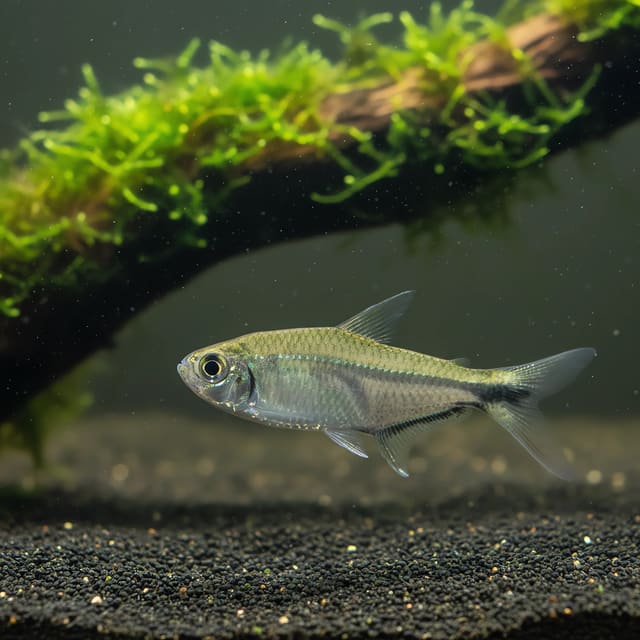
The classic appeal of Diamond Tetras is in the scales. Mature fish develop a reflective, faceted look that throws light like polished metal. Body colour usually appears silver-grey with warm bronze or lilac tones, and the fins of mature males can show a violet sheen. In a settled shoal, this species easily outshines many common tetras sold as a simple diamond neon tetra substitute.
Typical adult Diamond Tetra size is 5–6 cm in standard length, excluding the tail, with a deep, laterally compressed body rather than the slim form seen in some smaller species. If you have asked how big do glowing tetras get, Diamond Tetras are noticeably larger and more substantial than glowlight or neon-type fish. Their shape is not truly a torpedo shaped tetra; instead, they have a fuller body that gives them stronger visual presence in the aquarium.
Diamond tetra male vs female differences become clearer with age. Males are usually larger, brighter and more extended in the dorsal, anal and pelvic fins. A diamond tetra female tends to be rounder through the belly, especially when carrying eggs, and her fins are shorter and clearer. The same point is often phrased as diamond tetras male vs female, and it is one of the most useful distinctions for breeding groups.
You may also see names like blue diamond tetra, diamond head neon tetra, or comparisons with black panther tetra and long finned serpae tetra. In practice, true Diamond Tetras are recognised by their glittering body scales and mature finnage rather than by a separate fancy strain. The reflective finish develops with maturity, stable water, suitable cover and varied feeding; an individual fish need not match every gallery image.
One of the most common questions is whether diamond tetra aggressive behaviour is a problem. In most well-kept groups, no. If you are asking are diamond tetras aggressive, the honest answer is that they are generally peaceful, but understocked groups can become pushy or mildly nippy. Good group size is the fix. Keep them in a proper shoal and most sparring stays within the group.
That makes them excellent diamond tetra tank mates candidates for medium peaceful community aquariums. The best diamond tetras tank mates are species that enjoy similar temperatures, are not tiny enough to be intimidated, and are not aggressive fin-biters. Their calm but active nature is why many aquarists rate them as the best tetra for community tank displays once the aquarium is above nano size.
Good diamond tetras compatible fish include Corydoras, peaceful rasboras, gouramis, and other medium tetras. Suitable linked options include X-Ray Tetras for a hardy mixed shoal, Yellow Neon Tetras for colour contrast in larger planted tanks, and Glass Bloodfin Tetras if you want another active but peaceful characin. Some aquarists also compare them with lemon tetra, congo tetra and buenos aires tetra, though Buenos Aires Tetras are often too boisterous for the same style of aquascape.
Questions such as diamond tetra with angelfish come up often. This pairing can work in larger, calm aquariums if the angelfish are not aggressive and the Diamond Tetras are adult sized. Very small tetras with large angelfish are a poor mix, but robust adult Diamond Tetras are safer than tiny neon-type species.
Avoid large predatory characins and rough species. Fish such as Vampire Tetra - Hydrolycus Scomberoides, Gar Characins - Ctenolucius Hujeta, Piaractus Brachypomus - Red-Bellied Pacu - and Red-Bellied Pacu - Piaractus Brachypomus are not suitable community companions. They differ too much in size, feeding style or temperament. Likewise, avoid known fin nippers if your male Diamond Tetras have developed long fins.
People also compare them with species like diamond tetras vs neon tetra, diamond tetras vs cardinal tetra, diamond tetras or ember tetra, and diamond tetras vs rummy nose tetra. In a mixed community, Diamond Tetras are usually the sturdier, slightly larger option and suit tanks with similarly sized fish better than ultra-small nano communities.
| Species | Compatible? | Notes |
|---|---|---|
| X-Ray Tetras | ✅ Yes | Peaceful, similar size and water needs |
| Yellow Neon Tetras | ⚠️ Caution | Works in larger tanks; smaller fish may be shy beside adult Diamonds |
| Large aggressive cichlids | ❌ Avoid | Stress, predation and fin damage risk |
If you are planning diamond tetras and guppies, it can work in warm, peaceful tanks, but long-finned fancy guppies may attract curiosity from active tetras. For invertebrates, adult snails are usually fine, while very small shrimp shrimplets may be eaten if they fit in the mouth.
Always quarantine new arrivals for 2-4 weeks before adding them to a community tank. This protects your Diamond Tetras from parasites and prevents one new fish from destabilising an established shoal.
Diamond tetras breeding is very achievable for prepared aquarists, though not quite as simple as breeding livebearers. Most keepers rate diamond tetra breeding as moderate. The key is selecting a healthy pair or group, feeding well, and protecting the eggs from hungry adults.
Use a separate breeding tank of around 40-60 litres with soft, slightly acidic water and subdued lighting. Fine-leaved plants or spawning mops give the fish somewhere to scatter eggs. The best results usually come from conditioned adults fed frozen and live foods for 1-2 weeks beforehand. Diamond Tetras can be bred as a selected mature pair or a suitably managed group. The fish offered here are not sold as a sexed or bonded breeding pair.
The easiest way to judge readiness is by studying diamond tetra male vs female differences. Males become brighter and more active, while a ripe diamond tetra female looks fuller through the abdomen. Spawning often happens early in the day, with eggs scattered among plants. Like many characins, the adults will eat eggs if given the chance.
Remove the parents after spawning. The eggs are light sensitive, so keep the tank dim. Diamond Tetra eggs need clean water, low light, and no adult fish left in the tank. Eggs usually hatch in about 24-36 hours depending on temperature.
New fry need infusoria or liquid fry food first, then newly hatched brine shrimp as they grow. Gentle filtration and immaculate water are essential. Growth is steady rather than fast. Juveniles may look plain at first, and the famous glitter develops with age, diet and maturity.
Juveniles may initially look plain. Maintain stable conditions and suitably small foods while they grow; the glittering adult appearance develops with age and condition.
Condition males and females separately for a week on rich foods, then introduce them to the breeding tank in the evening. Many breeders find this improves morning spawning response and increases the number of fertile eggs.
Choosing between tetra species depends on tank size, visual style and how bold you want the shoal to be. A best tetra species comparison should look beyond colour alone and consider adult size, behaviour and community suitability.
| Feature | Diamond Tetras | Neon Tetra |
|---|---|---|
| Max Size | 6 cm standard length (excluding tail) | 4 cm |
| Care Level | Moderate | Easy to moderate |
| Temperature | 24-28°C | 22-26°C |
| Price | Check the selected size option | Varies by pack size |
| Best For | Larger peaceful planted communities | Smaller community aquariums |
In the common debate of diamond tetras vs neon tetra, Diamond Tetras win if you want a larger, more mature-looking shoal fish with metallic sparkle and stronger presence. Neon tetras suit smaller tanks, but they do not have the same finnage or adult body depth.
| Feature | Diamond Tetras | Rummy Nose Tetra |
|---|---|---|
| Schooling Style | Loose to moderate shoal | Tighter schooling |
| Visual Appeal | Reflective scales and finnage | Red face and striped tail |
| Best For | Mixed community displays | Large coordinated schools |
| Comparison | More body sparkle | More group synchrony |
| Price | Check the selected size option | Varies by stock |
When comparing diamond tetras vs cardinal tetra, Cardinals offer stronger red-blue contrast, while Diamond Tetras offer more texture and adult finnage. In the question of diamond tetras or ember tetra, Embers suit nano-style aquascapes, while Diamonds suit medium community tanks. If your priority is a peaceful but visible shoal in a planted display, Diamond Tetras are often the better long-term choice.
They also compare favourably with species such as gold tetra, redeye tetra and even some fish marketed under confusing names like diamond head neon tetra. If you want a classic South American look with more substance than tiny nano tetras, Diamond Tetras are a smart pick.
Strong diamond tetras health starts with clean water, a proper shoal, and a varied diet. Healthy fish are alert, feed eagerly, hold fins open, and show even body shape without pinched bellies. Mature males should display good finnage and reflective scales, while females should look smooth and full-bodied rather than bloated or hollow.
The most common diamond tetras diseases seen in home aquariums are the usual freshwater issues: ich, bacterial fin damage, fungal growth on injuries, and stress-related wasting after transport or poor acclimation. Because Diamond Tetras are active shoalers, stress from small group size or incompatible tank mates can weaken immunity over time.
At the first sign of trouble, test water quality. Ammonia and nitrite should be zero, and nitrate should be kept low with regular maintenance. Isolate affected fish if needed. Mild issues often improve quickly once water quality is corrected. More serious infections may need targeted medication, but always follow dosing instructions carefully and consider whether sensitive tank mates are present.
Prevention is better than cure. Keep the shoal large enough, avoid sudden temperature swings, and maintain the correct diamond tetras water parameters. Stable warmth within the proper diamond tetras temperature range is especially important after transport. Observe feeding and body condition, and quarantine new arrivals before adding them to an established community.
Never use medications casually in a display tank without confirming the diagnosis. Some treatments can damage filter bacteria, and copper-based medications are lethal to shrimp and other invertebrates.
Diamond tetras behaviour is one of their strongest selling points. They are active, visible and social without being chaotic. In a settled shoal, they spend most of the day in the middle level of the aquarium, moving in loose formation and flashing as they turn under the light. A proper diamond tetras school looks especially impressive in a planted tank with dark background and open swimming lanes.
If you are wondering how many diamond tetras in a tank, more is usually better within reason. Groups of 8-10 or more show calmer social structure than groups of 4-5. Too few fish can lead to timid behaviour or occasional chasing. In a suitable group, they are among the best examples of diamond tetras with other fish in a peaceful community.
They are not difficult fish, but I would call them better for aquarists who can provide a mature aquarium rather than a brand-new setup. That said, they still rank well as diamond tetras for beginners if the tank is fully cycled and large enough. Their natural confidence, sparkle and social movement make them a rewarding species to watch every day.
Choose this species when you can provide a mature, spacious aquarium with plants, cover and open swimming lanes. Prepare the whole social group rather than buying one fish as a solitary decoration.
Each selected quantity is one Diamond Tetra in the chosen size grade. The listed grades are 1.5–2 cm, 2.5–3 cm and XL; check the selector for current availability and price. The grade does not guarantee a sex, exact age, final colour or breeding readiness.
Have appropriate food, mature filtration and a quarantine plan ready before ordering. Individual colour and finnage develop with maturity and condition, so assess feeding, breathing and body shape as well as appearance.
Use this guide to plan acclimation, group size and compatible tank mates. Compare the exact needs of each species before completing a community, and check the current checkout delivery options for your order.
Build a more interesting South American-style community by pairing Diamond Tetras with carefully chosen companions. X-Ray Tetras add a hardy, transparent contrast in the midwater zone. Yellow Neon Tetras bring a brighter nano-style accent in larger planted layouts. Golden Tetras offer another reflective tetra look, while Glass Bloodfin Tetras add movement and clarity. If you are browsing wider tropical fish UK freshwater collections, you can also compare larger characins and community species to plan your final stocking carefully.
No reviews for this item yet. Bought one? Honest reviews only, good or bad.
What customers say about ordering from us
I have a small group of long finned mountain minnows. So was delighted to be able to order ten of this variety to increase the genetics in my tank . The ones I recieved are healthy but it’s to early to give a verdict on wether they are of a long finned type since they are small currently.
Gordon Walker · 23 Sept 2026
100% success travel and "installation". Pleased with quality of purchase. The Siamese fighter a bit "shy" so have not yet seen him at his best yet but looking good. Happy customer. GG
George E Garratt · 21 Sept 2026
Reviews of our shop, collected by Judge.me, an independent third-party review collector. Newest first.