Moderate
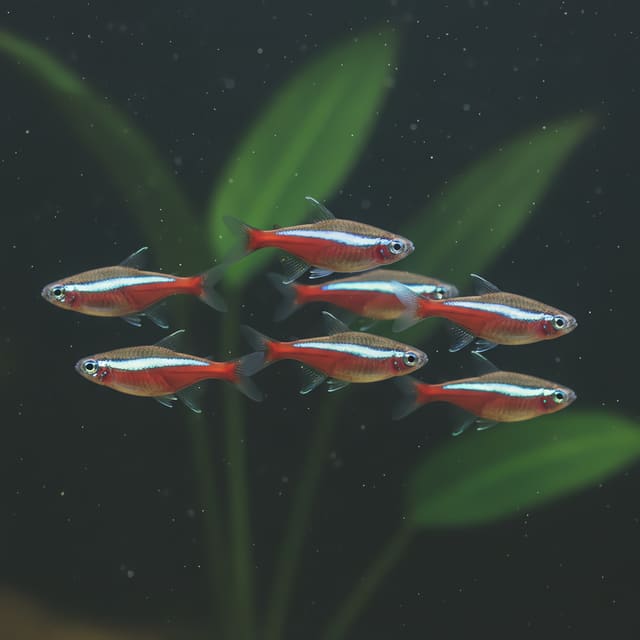
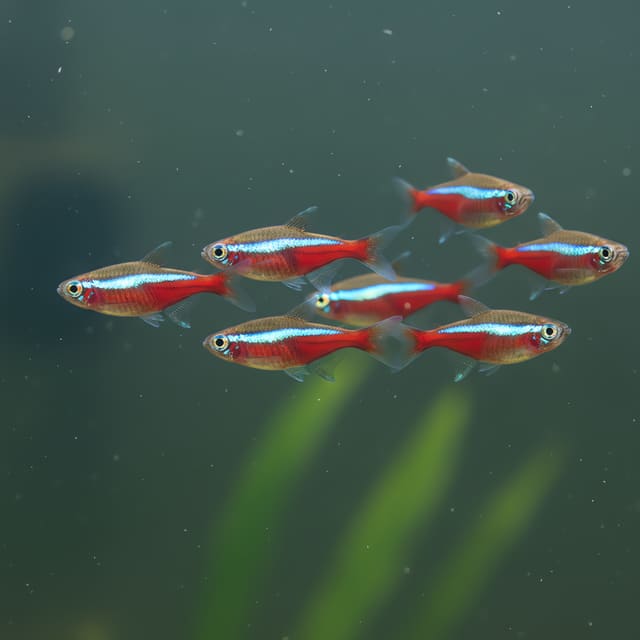
50 × Cardinal Tetras (Paracheirodon axelrodi) – Captive Bred
24–27°C · pH 5.5–7 · 60L
£40.99

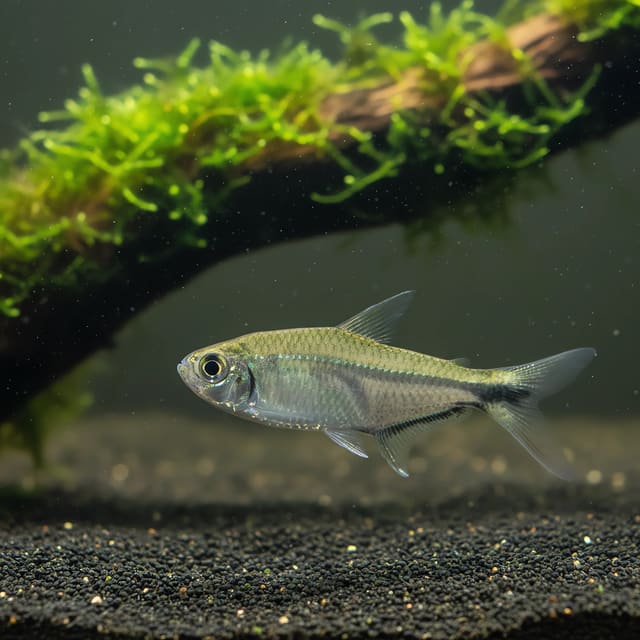
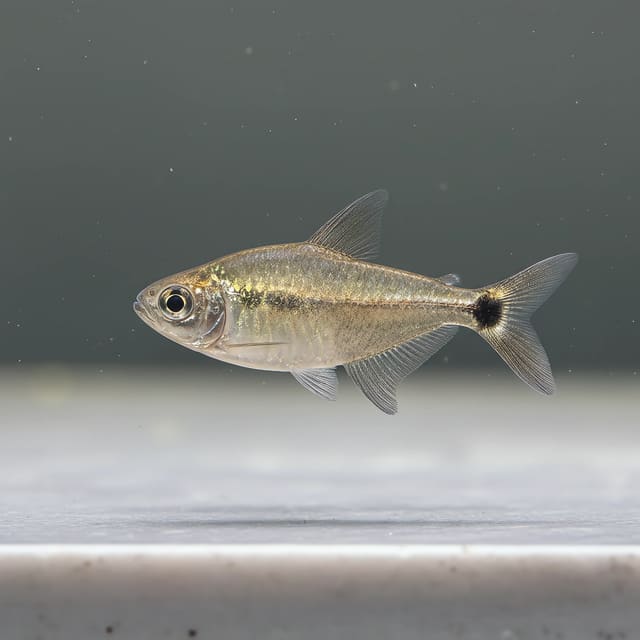
The Blackline Tail Tetra (Moenkhausia costae) is a freshwater tetra from South America’s São Francisco and Itapicuru rivers that reaches 7 cm standard length. It suits keepers with a mature, filtered aquarium of at least 80 litres; OATA’s tetra guidance says keep at least five at 22–27°C and pH 6.5–8.0. Sold as a pack of six live fish.
Adult size is the maximum length this species reaches at full maturity (scientific sources). The livestock you receive will be younger and smaller. Product-photo provenance and any image-specific limitations are stated on the listing.
Moenkhausia costae
The Blackline Tail Tetra (Moenkhausia costae) is a freshwater tetra from South America’s São Francisco and Itapicuru rivers that reaches 7 cm standard length. It suits keepers with a mature, filtered aquarium of at least 80 litres; OATA’s tetra guidance says keep at least five at 22–27°C and pH 6.5–8.0. Sold as a pack of six live fish.
Adult size is the maximum length this species reaches at full maturity (scientific sources). The livestock you receive will be younger and smaller. Product-photo provenance and any image-specific limitations are stated on the listing.
Maintain these water conditions for optimal health and vibrant colors
The Blackline Tail Tetra (Moenkhausia costae) is a freshwater, benthopelagic tetra from South America’s São Francisco and Itapicuru rivers. FishBase records a maximum length of 7 cm standard length, so plan its aquarium, shoal and companions around a 7 cm adult fish. This tetra suits a keeper who can provide a mature, filtered aquarium, maintain stable water quality and keep the fish with companions chosen for compatible adult size and temperament.
The genus Moenkhausia contains freshwater ray-finned fishes in the family Acestrorhamphidae. A Wikipedia overview of the genus places these American characins across tropical and subtropical South America. For this species, the more precise geographical guide is the São Francisco and Itapicuru river distribution recorded by FishBase.
Keep the aquarium at 22–27°C, pH 6.5–8.0 and general hardness of 4–12°dH. Carbonate hardness should be 3–10°dKH. The OATA tetra and pencilfish sheet sets these planning values; they are not a species-specific optimum. Test ammonia and nitrite at zero, and keep nitrate from exceeding 20 mg per litre above the normal level in the tap water used for the aquarium.
OATA advises keeping tetras in groups of at least five, with more being better, because single fish and undersized groups often become stressed. This pack of six meets that group threshold. As the species exceeds 5 cm when adult, use OATA’s larger-tetra aquarium recommendation of at least 80 litres rather than planning around its size when young.
One purchase supplies a pack of six Blackline Tail Tetras. Keep the six together as their intended shoal rather than dividing them between aquariums. The 7 cm figure is the recorded adult size used for long-term planning; it should guide aquarium volume, filtration capacity and companion screening.
Sex is guaranteed only when the selected option explicitly states male or female. This 6 × Blackline Tail Tetras listing has no sex-guaranteed option.
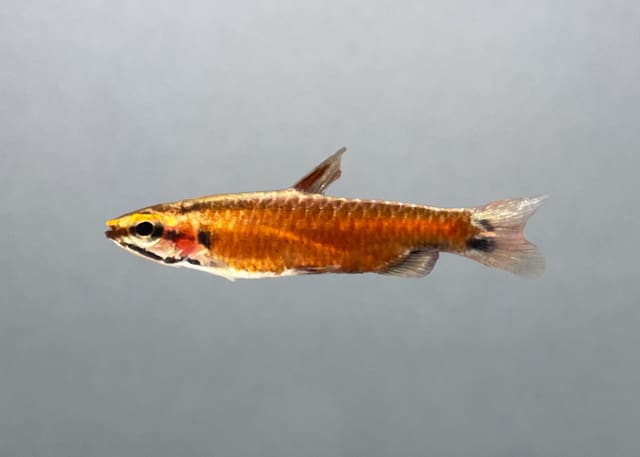
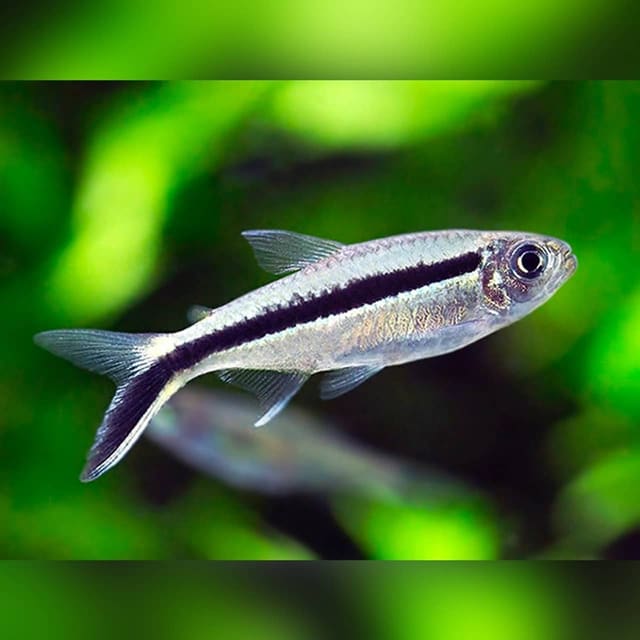
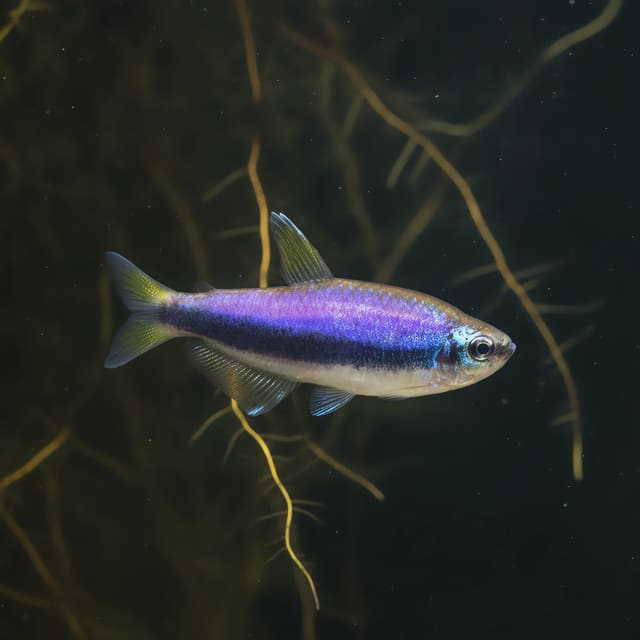
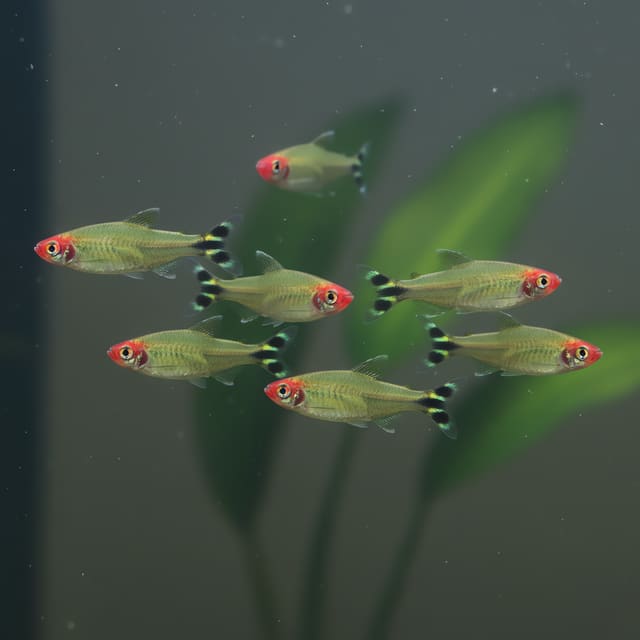
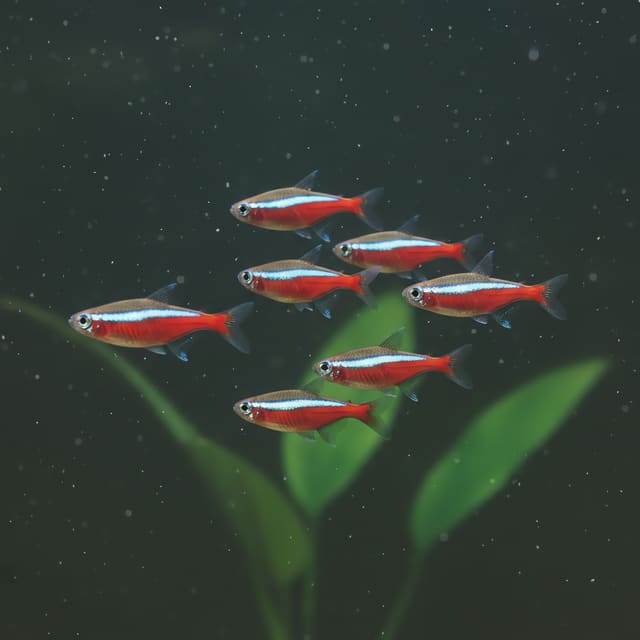
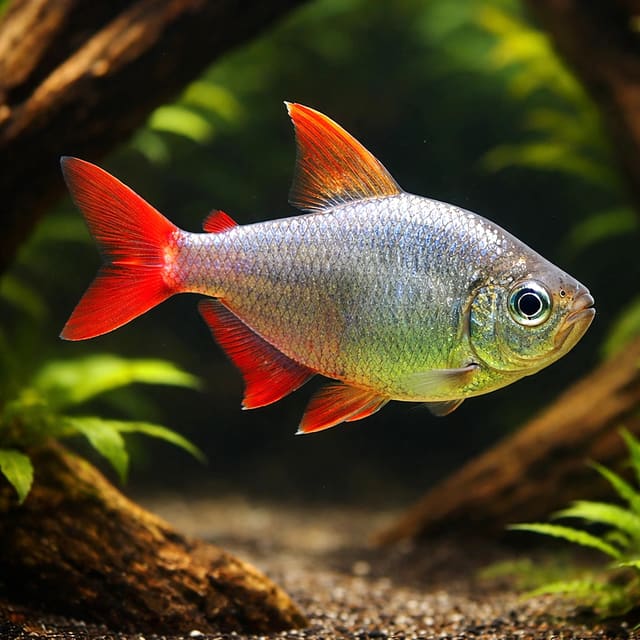
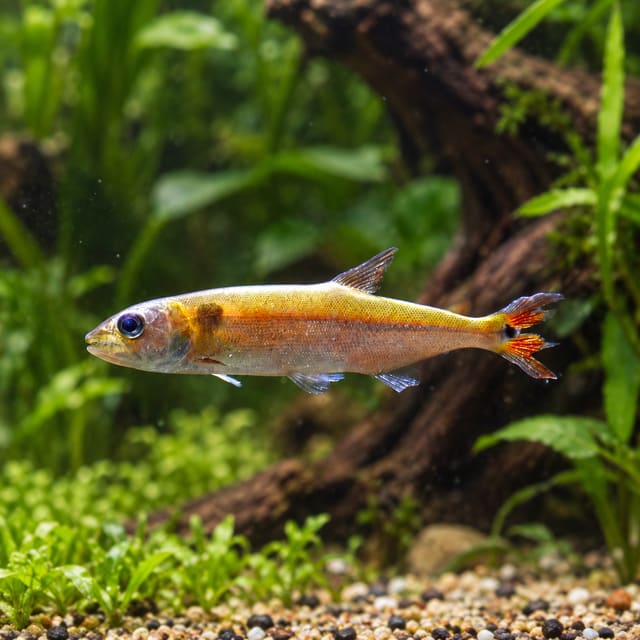
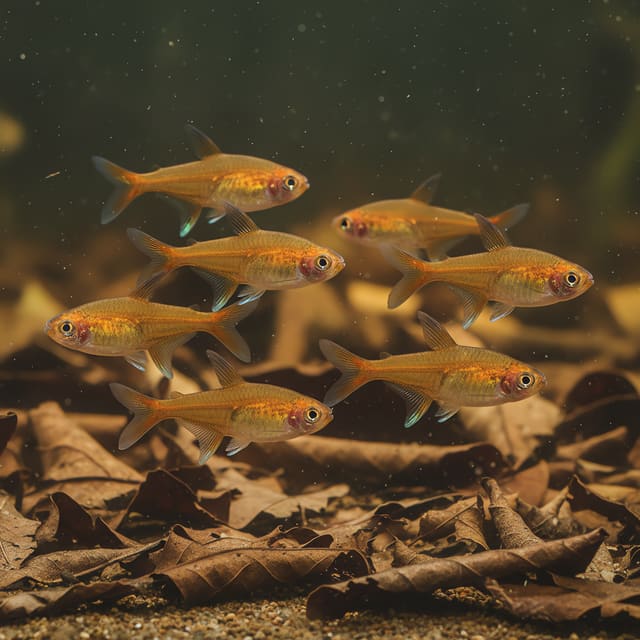
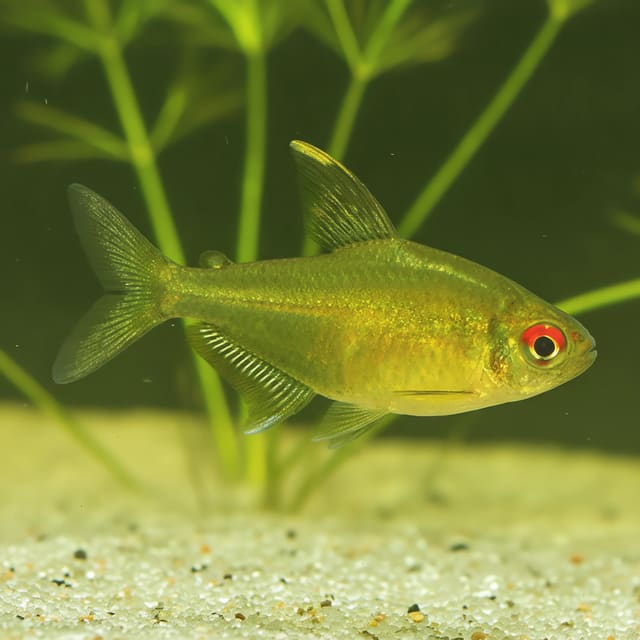
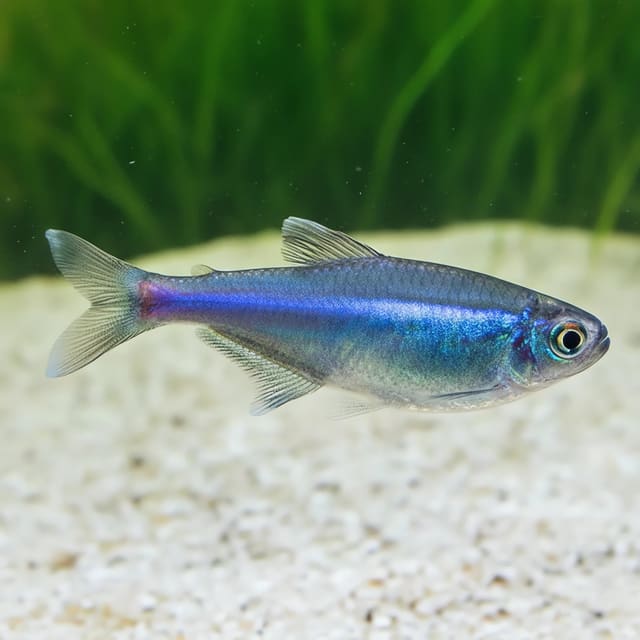
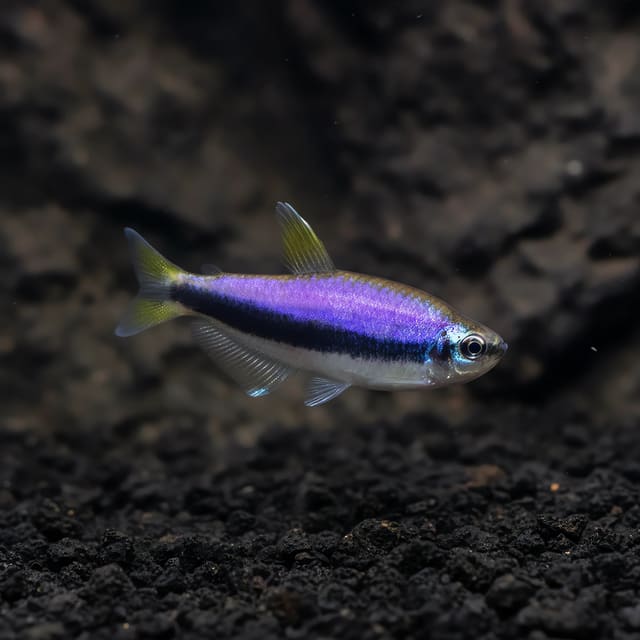
The gallery images are representative of this type of animal rather than photographs of the exact animal supplied, so colours can look slightly different from the live animal.
OATA describes most tetras as undemanding and easy to keep, while also noting that exceptions occur. This species is therefore best approached as an easy-care tetra for a keeper who is ready to maintain a mature filter, test the aquarium every week, feed restrained portions and assess companions rather than relying on a universal community-fish label.
| Suits | Not suited to |
|---|---|
| A mature, filtered freshwater aquarium | An unfiltered or newly stocked aquarium with unstable waste readings |
| A shoal of at least five tetras | Keeping one tetra alone or in too small a group |
| At least 80 litres for this 7 cm species | Aquariums planned only around the fish’s size on arrival |
| 22–27°C, pH 6.5–8.0 and 4–12°dH | Water outside the stated planning ranges |
| Fish of a similar adult size and temperament | Timid or long-finned fish |
Prepare for the whole pack before purchase. Check that the aquarium can hold six additional fish without crowding, that ammonia and nitrite are zero, and that the temperature and chemistry already sit within the intended ranges. This avoids using the arrival day to make rushed changes to filtration, layout or water chemistry.
Use an aquarium of at least 80 litres for the six-fish shoal. OATA recommends at least 80 litres for larger tetra species over 5 cm, and FishBase records this species at 7 cm standard length. Treat 80 litres as the starting volume for planning, not a reason to fill every remaining part of the aquarium with more fish.
A larger aquarium gives more water volume over which changes in temperature and water quality can be buffered. Volume alone does not decide whether the aquarium is suitable: the existing fish, biological filtration, swimming space, shelter and expected adult sizes all contribute to the stocking decision. Count the six new tetras as a single planned addition, but remember that each fish adds waste and uses space.
Arrange cover without turning the whole aquarium into a barrier course. A useful layout gives the fish somewhere to move away from activity while retaining open water for the shoal. When adding plants or ornaments, check that six adult fish can move through the central swimming area together.
Review the complete stocking plan rather than assigning all 80 litres to this pack in isolation. Existing fish may use the same swimming zone, produce additional waste or change the social environment. Compare every resident at adult size, then decide whether the aquarium still provides clear swimming room and sufficient filtration capacity.
Do not use a smaller aquarium on the basis that the fish have not yet reached 7 cm. The care decision is made from adult size because the same aquarium must continue to work as the shoal grows. If the layout becomes crowded after hardscape and plants are added, choose a larger aquarium or simplify the layout before introducing the fish.
Keep the aquarium at 22–27°C and pH 6.5–8.0. Maintain general hardness at 4–12°dH and carbonate hardness at 3–10°dKH. These OATA tetra values should be established before the fish enter the aquarium, rather than reached through major changes after introduction.
Ammonia and nitrite should both read zero mg per litre. Nitrate should not exceed 20 mg per litre above the normal level in the tap water used for water changes. That wording matters when interpreting a test: if the tap water contains 10 mg per litre nitrate, the stated ceiling for the aquarium is 30 mg per litre. If the tap water reads 20 mg per litre, the corresponding ceiling is 40 mg per litre.
Use the same units when comparing a test result with the target. A reading of 24°C, pH 7.2 and 8°dH lies within the stated ranges. A reading of 28°C, pH 8.2 or 14°dH falls outside at least one target, so pause the introduction and assess the aquarium rather than treating one acceptable value as proof that all the water conditions are suitable.
Our water chemistry guide explains what the principal aquarium tests measure. Once the readings have been taken, use the water matcher to compare the measured aquarium water with the temperature, pH and hardness guidance above.
Check all parts of the range rather than choosing only temperature and pH. Hardness affects whether the aquarium fits the stated plan, while ammonia, nitrite and nitrate show whether waste is being processed safely. A heater reading cannot replace chemical tests, and clear-looking water cannot show that ammonia or nitrite is zero.
Use a well set up and maintained biological filter. The RSPCA explains that fish release toxic ammonia; beneficial bacteria in a working filter convert it first to nitrite, which is also toxic, and then to the safer nitrate form. This biological process is why a running filter and zero ammonia and nitrite readings are essential before six fish are added.
Aquarium maturity is demonstrated through filtration and water tests, not simply by the presence of water or by how long the aquarium has been standing. Follow our first tropical aquarium guide to prepare the system, then confirm the waste readings before making a stocking decision.
OATA warns that adding too many fish too quickly can cause new tank syndrome. This happens when there are not enough nitrifying bacteria to process the increased waste, allowing ammonia and nitrite to rise to levels that may make fish ill or kill them. A pack of six is one purchase, but it is still six waste-producing animals entering the biological system.
Do not solve a marginal stocking plan by relying on later maintenance. Water changes help control waste, but they do not remove the need for an established filter with enough biological capacity. Likewise, a large aquarium remains unsuitable if its filter is absent, blocked or unable to keep ammonia and nitrite at zero.
If a post-introduction test shows ammonia or nitrite above zero, treat that as an immediate water-quality problem. Recheck the result, carry out the normal supported maintenance actions and stop further stocking while the aquarium is brought back to zero readings.
Feed a good-quality flake or granule once a day, offering only what the fish can eat within a few minutes. OATA gives this feeding pattern for tetras and pencilfish and describes them as omnivorous. Observe the whole shoal during feeding so that the portion is judged by what all six fish consume, not only by the quickest individual.
Add variety with small live or frozen foods such as daphnia, small bloodworm or tubifex. These are supplementary choices within the OATA feeding guidance; they do not justify increasing the total daily portion. Choose pieces the fish can take readily and stop adding food once the few-minute feeding period has passed.
| What you see | What to do |
|---|---|
| Food remains after a few minutes | Reduce the next portion and remove avoidable uneaten food during maintenance. |
| Only the fastest fish feed | Distribute a modest portion so more of the shoal can reach it. |
| Interest in food falls | Check behaviour, breathing, appearance and water quality. |
| Ammonia, nitrite or nitrate rises | Review portion size, uneaten food and filter performance before continuing normally. |
Overfeeding does more than waste food. Uneaten material breaks down and releases waste into the water, adding work for the filter and increasing the risk of poor readings. A larger meal is not a substitute for consistent daily feeding, and repeatedly adding more because one fish still approaches the surface can overload the aquarium.
Keep the schedule simple enough to repeat. Feed once daily, watch for a few minutes, and note whether all six fish show their normal interest. Changes in feeding response can be an early sign that water quality, health or social conditions need attention.
Do not add an extra feeding rule based on appearance alone. Body condition should be considered alongside appetite and waste readings. A fish that stops feeding while breathing unusually or swimming erratically needs a water-quality and health check rather than a larger portion.
Carry out a 25% partial water change at least once every week. Use a siphon to remove solid waste from the gravel while water is withdrawn.
Treat replacement tap water with a suitable conditioner before adding it to the aquarium so harmful chlorine or chloramine is removed. Prepare replacement water as part of the same routine rather than pouring tap water directly into the established system.
If the filter needs cleaning, do not run it under the tap. Rinse it lightly in aquarium water removed during the partial water change. This reduces the number of beneficial bacteria lost from the filter media and avoids exposing that established bacterial population to chlorine or chloramine.
Filter cleaning should restore flow without turning the media into something visually new. The useful bacterial population is part of the aquarium’s waste-processing system, so running the filter media under the tap works against the reason the filter was matured.
Use the weekly result to decide whether the routine is keeping pace with six fish and the aquarium’s other residents. Ammonia or nitrite above zero, nitrate rising beyond the stated limit, accumulating solid waste or repeated filter blockages all indicate that the aquarium needs attention before any further stocking.
Keep records short but consistent: date, temperature, pH, ammonia, nitrite, nitrate and the completed water change are enough to reveal a trend. A series of results is more useful than relying on water clarity or memory. If behaviour changes between scheduled tests, test again rather than waiting for the next weekly date.
Prepare the aquarium before the parcel arrives: filtration should be running, ammonia and nitrite should be zero, and temperature, pH and hardness should already fit the stated ranges. Keep someone at the address to receive the fish because a live-fish parcel must not be left unattended.
Follow the Tropical Fish Co delivery and Live Arrival Guarantee policy in this order:
The fish is hand-bagged in pure oxygen and placed in an insulated poly box, with a heat pack when the weather calls for it. A licensed live-animal courier carries the parcel. These packing measures do not replace the need to be present, film from the sealed parcel onward and prepare the aquarium in advance.
For a Live Arrival Guarantee claim, send the order number and continuous unboxing video the same day. The recording should show the sealed parcel, its opening and the fish still inside the sealed bag. Make filming the normal first step for every delivery rather than waiting to see whether a problem is apparent.
After acclimatisation, observe all six fish rather than checking only the most visible individual. OATA advises checking that new fish have clear, bright eyes, undamaged fins, intact scales and no ulcerations or bumps. Compare their swimming, breathing, colour and feeding response over the settling period.
Increase the aquarium population slowly after this introduction. The filter’s beneficial bacteria must respond whenever fish numbers and feeding rise. Do not combine the arrival of this six-fish pack with further livestock additions if that would make it difficult to judge the aquarium’s response or identify the cause of a changing waste reading.
Learn the normal appearance and movement of the shoal, then act when something changes. Healthy fish should have clear, bright eyes, undamaged fins, intact scales and no ulcerations or bumps. Observe all six from more than one angle, because a fish staying behind cover may otherwise be missed.
| If you see | Do this |
|---|---|
| Hanging at the surface, sitting on the bottom or erratic swimming | Test the water and check filter flow immediately. |
| Gill covers moving faster or slower than normal | Check ammonia, nitrite, temperature and the operation of the filter. |
| Colour becoming darker or paler | Compare the whole shoal and review recent water or social changes. |
| More aggression or hiding than normal | Reassess group conditions, cover and companion temperament. |
| White spots, fluffy growths, missing fins or lost scales | Record what is visible and test the water before seeking further guidance. |
| Reduced feeding or a loss of interest in food | Check body condition, breathing, behaviour and water quality rather than adding more food. |
Water testing is the first practical check because ammonia and nitrite are toxic, nitrate can rise with waste, and filter problems can affect several fish at once. Confirm the readings in units that match the care ranges and write them down with the time and observed signs.
Do not treat a change in one fish as permission to ignore the others. Compare whether the sign affects one individual or the whole shoal, then inspect the filter, water and social environment. This distinction gives useful context without attempting a diagnosis from appearance alone.
If you are concerned about a health change, test the water and contact us with the readings and a clear description of the fish’s swimming, breathing, colour, appearance and feeding. Do not wait for the weekly testing day when a fish is already showing an unusual sign.
House all six Blackline Tail Tetras together. OATA advises keeping tetras in groups of at least five, with more being better, and notes that fish kept singly or in groups that are too small often become stressed. This pack therefore forms a suitable starting shoal without turning six into a claimed species-specific minimum.
Group planning and aquarium stocking are separate decisions. Six meets the stated social threshold, but the aquarium must still have at least 80 litres, mature filtration, open swimming space and enough biological capacity for every resident. A socially appropriate shoal can still be a poor stocking choice if the aquarium is already crowded or waste readings are unstable.
Do not split the pack to make two undersized groups. If another aquarium is being considered, each aquarium needs its own suitable shoal, mature filter, water conditions and space. Moving individual fish between unsuitable groups does not solve the underlying social or stocking problem.
When other fish already occupy the aquarium, list them by adult size and temperament before adding the pack. Then check the aquarium volume, layout and recent test results. Send us the tank volume, dimensions, existing livestock and water readings if you would like a stocking and compatibility assessment.
Add no further livestock until the established filter has responded to the increased fish and feeding load. Continue the weekly waste tests and use actual readings, not a fixed calendar period, to judge whether the system remains stable.
Choose fish of a similar adult size and temperament. OATA says tetras and pencilfish mix best with species that match them on those two points, while also warning that the group contains exceptions to the usual peaceful reputation. Treat compatibility as a decision about the proposed animals and aquarium, not as a universal list of community fish.
Avoid timid or long-finned fish. OATA warns that larger or more boisterous tetra species should not be kept with timid or long-finned fish because they may nip fins. At 7 cm, the Blackline Tail Tetra belongs in the sheet’s larger, over-5-cm planning category, so use that precaution for this shoal.
A similar length alone is not enough. A proposed fish can match 7 cm while differing in temperament or water requirements. Equally, matching pH does not make a timid, long-finned fish suitable. All three checks should pass before the companion enters the stocking plan.
Assess invertebrates individually. The tetra guidance names fish of similar size and temperament but does not establish a universal relationship with shrimp, snails or other invertebrates. Use the adult dimensions, behaviour and water requirements of the particular invertebrate when making that separate decision.
After introduction, observe swimming, hiding, colour, aggression, fin condition and access to food. If a companion causes repeated hiding, increased aggression or fin damage, reassess the pairing rather than assuming the shoal will simply settle around it. Water quality should be tested at the same time because stress signs and waste problems can occur together.
| Suitable screening result | Reject or reassess |
|---|---|
| Similar adult size and temperament | Timid or long-finned fish |
| Overlapping water requirements | Any value requiring one animal to live outside its range |
| Aquarium has space for the whole shoal | Crowded swimming space or unstable waste readings |
| Normal feeding and swimming after introduction | Persistent hiding, aggression or fin damage |
FishBase records a maximum of 7 cm standard length. Use 7 cm as the adult planning size for aquarium volume, layout and companion screening.
Use an aquarium of at least 80 litres. OATA recommends that volume for larger tetra species over 5 cm; it is not a species-specific optimum. Provide filtration, cover and open swimming space for the whole shoal.
OATA’s tetra guidance says keep at least five, with more being better. Tetras kept singly or in groups that are too small often become stressed.
OATA describes most tetras as undemanding and easy to keep, while noting exceptions. They suit a beginner who can mature the filter, provide at least 80 litres and maintain zero ammonia and nitrite.
Feed a good-quality flake or granule once a day, giving only what they can finish within a few minutes. OATA also recommends variety from small live or frozen foods such as daphnia, small bloodworm or tubifex.
OATA’s tetra guidance gives 22–27°C, pH 6.5–8.0 and general hardness of 4–12°dH. Keep carbonate hardness at 3–10°dKH, with ammonia and nitrite at zero.
OATA describes tetras as generally peaceful but notes exceptions and warns that larger tetras may nip. Because this fish reaches 7 cm, avoid timid or long-finned fish and monitor aggression, hiding and fin condition.
Choose fish of a similar adult size and temperament with overlapping water requirements, while avoiding timid or long-finned fish. Assess shrimp, snails and other invertebrates individually rather than assuming universal compatibility.
Start filming the sealed parcel before opening or floating the bag, then record one continuous take through opening until the fish can be seen inside the sealed bag. The Tropical Fish Co policy says the fish is hand-bagged in pure oxygen, packed in an insulated poly box with a heat pack when weather calls for it and carried by a licensed live-animal courier. Be present to receive it, inspect it the same day, float the bag for 20–30 minutes before releasing, and send the order number and video the same day for any Live Arrival Guarantee claim.
No reviews for this item yet. Bought one? Honest reviews only, good or bad.
What customers say about ordering from us
I have a small group of long finned mountain minnows. So was delighted to be able to order ten of this variety to increase the genetics in my tank . The ones I recieved are healthy but it’s to early to give a verdict on wether they are of a long finned type since they are small currently.
Gordon Walker · 23 Sept 2026
100% success travel and "installation". Pleased with quality of purchase. The Siamese fighter a bit "shy" so have not yet seen him at his best yet but looking good. Happy customer. GG
George E Garratt · 21 Sept 2026
Reviews of our shop, collected by Judge.me, an independent third-party review collector. Newest first.