Moderate
Neon Tetra (Paracheirodon innesi)
21–25°C · pH 5–7
£1.89
The Blackline Penguin Tetra (Thayeria boehlkei) is a South American tetra from the upper Amazon River basin in Peru and the Araguaia River in Brazil that reaches 3.6 cm. It suits a keeper with a mature, calm community who can keep at least six, preferably 10 or more, at 22–27°C and pH 6.5–8.0; those routine values are the overlap of FishBase, Seriously Fish and OATA guidance. Sold individually as one live fish.
Adult size is the maximum length this species reaches at full maturity (scientific sources). The livestock you receive will be younger and smaller. Product-photo provenance and any image-specific limitations are stated on the listing.
Thayeria boehlkei
Shoaling fish: kept in a group they feel safer, stay calmer and show their best colour.
The Blackline Penguin Tetra (Thayeria boehlkei) is a South American tetra from the upper Amazon River basin in Peru and the Araguaia River in Brazil that reaches 3.6 cm. It suits a keeper with a mature, calm community who can keep at least six, preferably 10 or more, at 22–27°C and pH 6.5–8.0; those routine values are the overlap of FishBase, Seriously Fish and OATA guidance. Sold individually as one live fish.
Adult size is the maximum length this species reaches at full maturity (scientific sources). The livestock you receive will be younger and smaller. Product-photo provenance and any image-specific limitations are stated on the listing.
Maintain these water conditions for optimal health and vibrant colors
The Blackline Penguin Tetra (Thayeria boehlkei) is a small freshwater, pelagic South American tetra. FishBase records it from the upper Amazon River basin in Peru and the Araguaia River in Brazil, with an adult size of 3.6 cm standard length. It suits a keeper who can provide a mature, filtered aquarium, a calm community and a proper shoal rather than treating it as a single decorative fish.
Keep at least six together, with 10 or more preferred. The species is naturally schooling, and Seriously Fish reports that it fares much better in the company of its own kind. In a sufficient group, the fin-nipping sometimes attributed to this tetra does not usually appear, because the fish concentrate their squabbling among themselves.
Use a base of at least 60 × 38 cm and about 68 litres for a small group. The Seriously Fish profile recommends a bigger aquarium when keeping higher numbers. This is an important distinction: the fish is physically small, but its group and swimming-space requirements still need a full aquarium plan.
Keep the routine water range at 22–27°C, pH 6.5–8.0 and 5–12 dGH. These values form the overlap of the FishBase and Seriously Fish ranges with OATA’s tetra guidance. Match the aquarium to that full set of values rather than choosing companions by temperature alone.
| Suits | Not suited to |
|---|---|
| A group of at least six, preferably 10 or more | Being kept alone or in too small a group |
| A planted or well-maintained peaceful community | Very boisterous or much larger tankmates |
| A 60 × 38 cm base and about 68 litres for a small group | An aquarium without a mature, maintained filter |
| Open swimming room combined with planted cover | Fish large enough to eat a small tetra |
One purchase supplies one live Blackline Penguin Tetra. The dispatch grade used for this fish is 3–4 cm, while the permanent aquarium should be planned around the recorded adult standard length of 3.6 cm, the required shoal and the space the whole group needs. A dispatch grade describes the fish prepared for fulfilment; it is not a smaller long-term aquarium category.
A new group should contain at least six fish, and 10 or more is preferred. Because each purchase supplies one fish, a planned group of six requires six purchase units. If you are increasing an established shoal, count the fish already present and ensure the final group and total aquarium population remain suitable for the tank’s base area, volume and biological filter.
Sex is guaranteed only when the selected option explicitly states male or female. This Blackline Penguin Tetra listing has no sex-guaranteed option.
Adult females are rounder in the belly and a little less intensely coloured than males; this option does not guarantee either sex. Do not use a photograph, colour intensity or body shape to assume the sex of the fish you will receive.
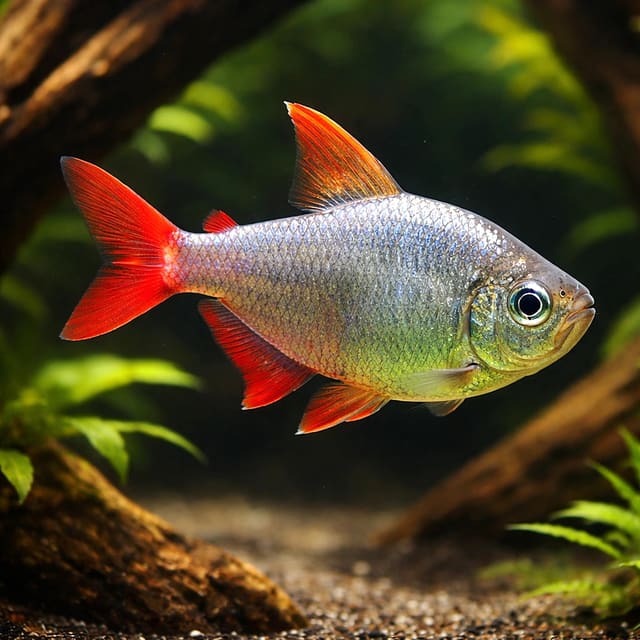
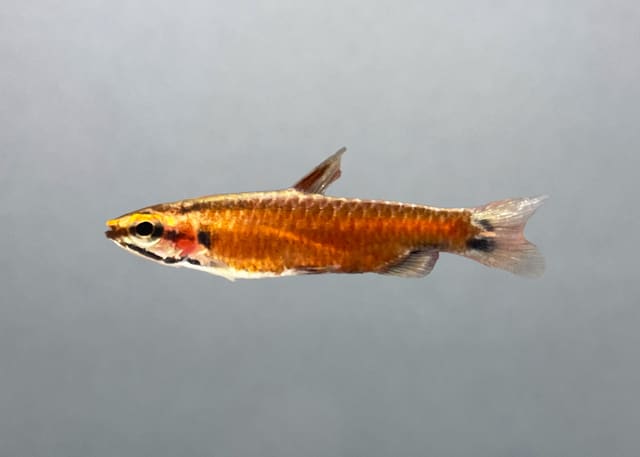
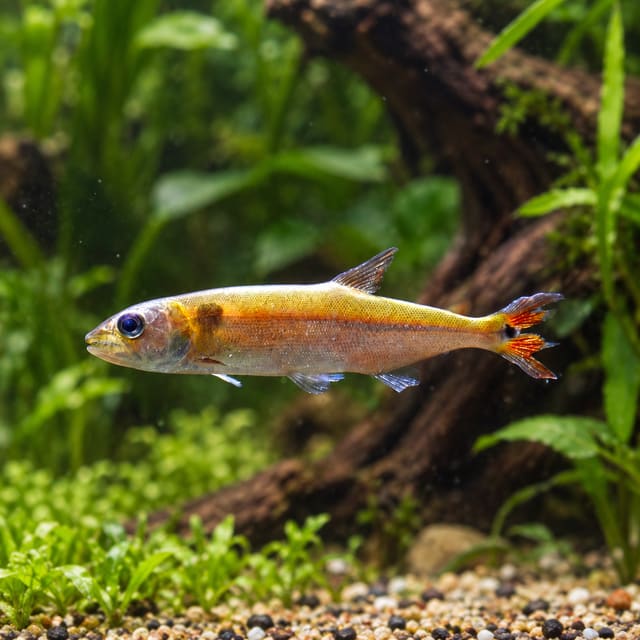
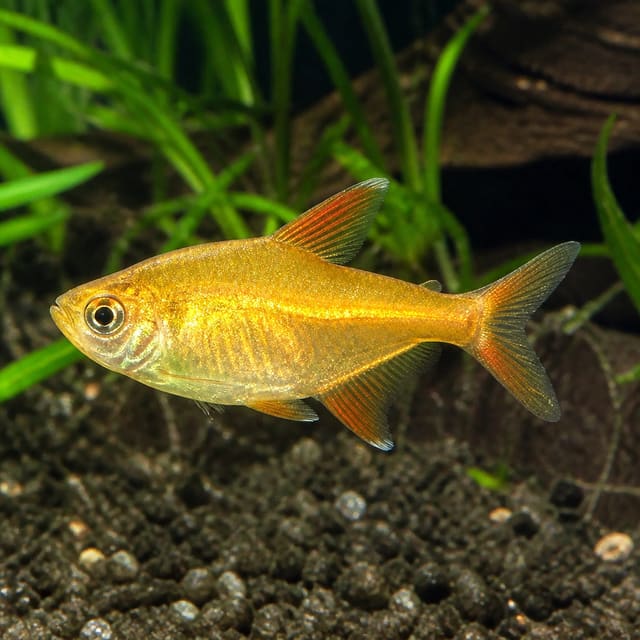
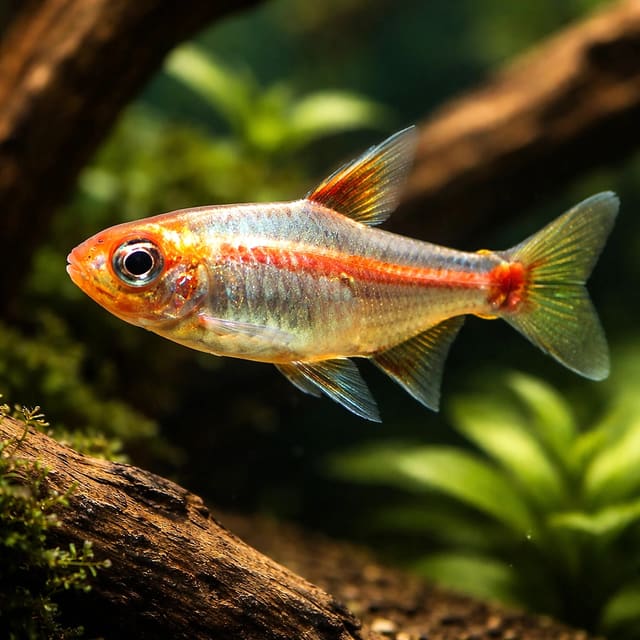
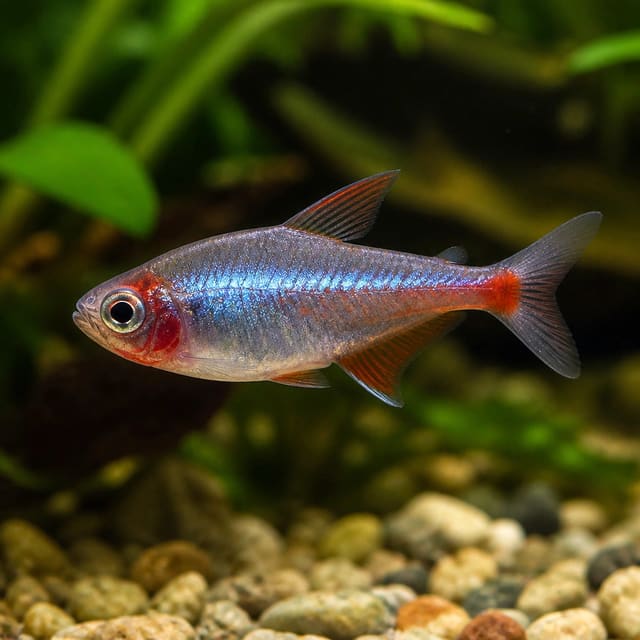
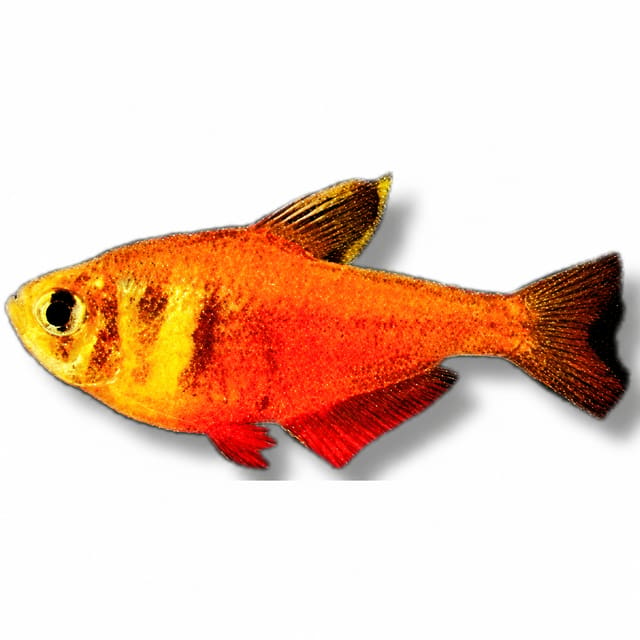
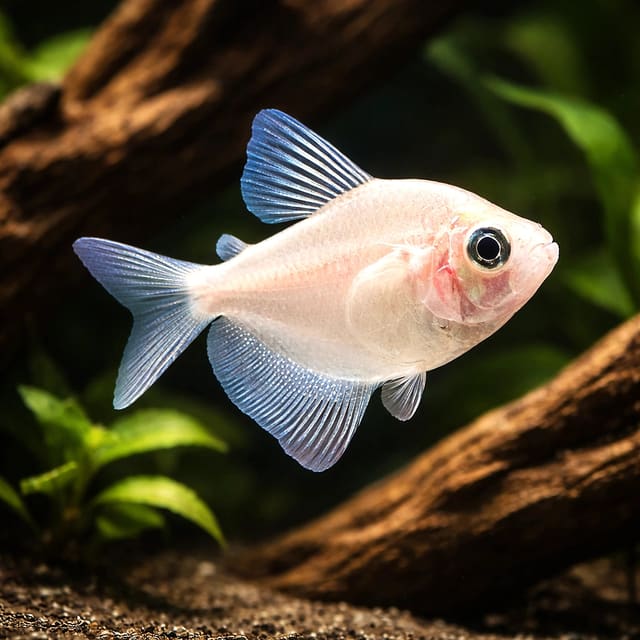
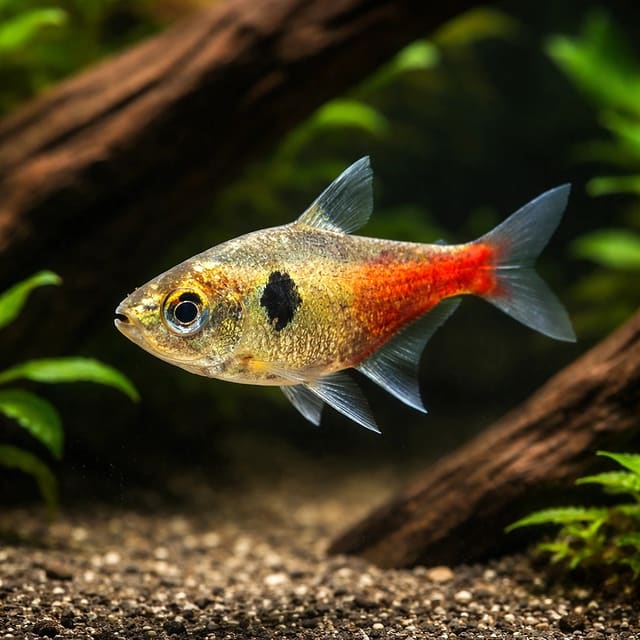
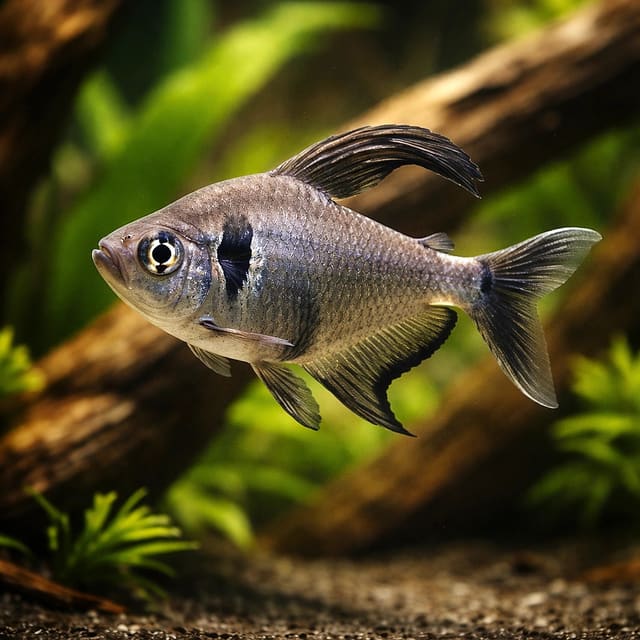
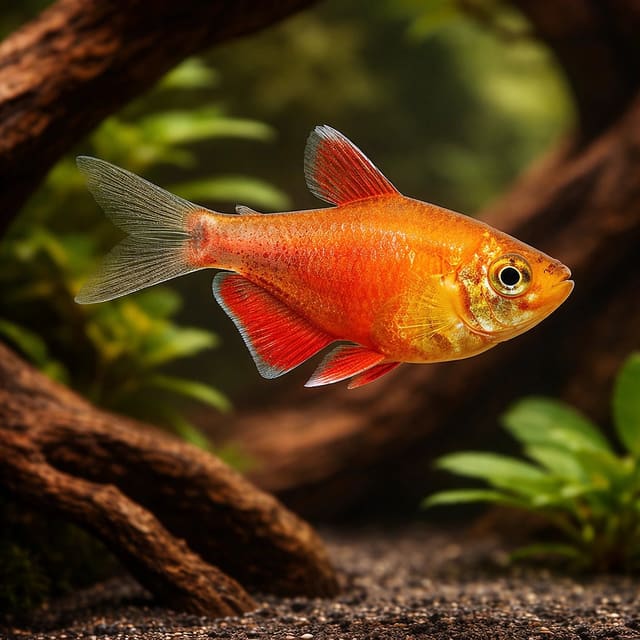
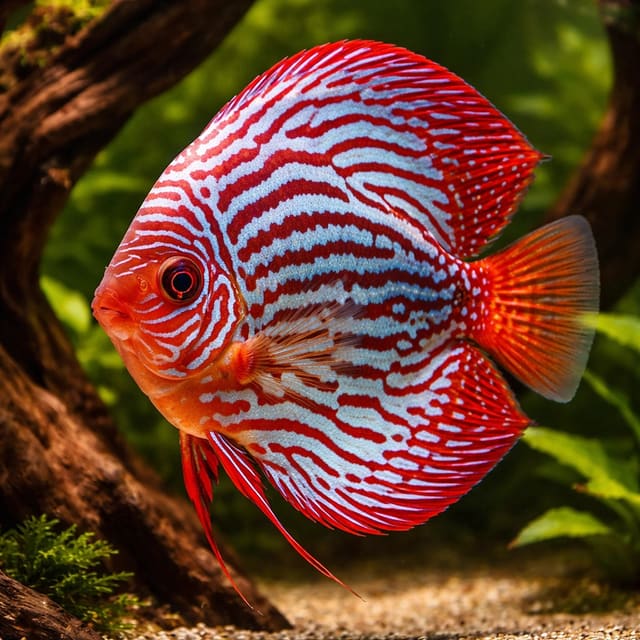
The gallery images are representative of this type of animal rather than photographs of the exact animal supplied, so colours can look slightly different from the live animal.
The characteristic identification feature is the thick black stripe. Seriously Fish distinguishes this species from related Thayeria by a stripe that extends from the lower tail lobe along the body to the gill flap. Use that pattern as an identity feature, while allowing for natural differences in posture, colour intensity and appearance between individual fish.
Plan around an adult size of 3.6 cm standard length, a group of at least six and a base of at least 60 × 38 cm. Seriously Fish pairs that footprint with a 60 × 38 × 30 cm aquarium of about 68 litres for a small group and advises a bigger aquarium for higher numbers.
Use that 3.6 cm standard length in every stocking calculation for the shoal.
| Planning point | Action |
|---|---|
| Adult size | Use 3.6 cm standard length in permanent stocking calculations. |
| Small-group aquarium | Provide a 60 × 38 cm base and about 68 litres. |
| Group size | Keep at least six, preferably 10 or more. |
| Higher numbers | Increase aquarium size rather than crowding more fish into the small-group footprint. |
Volume alone does not describe the useful swimming area. A tall aquarium with a short base can hold a similar number of litres while offering less horizontal room than the stated 60 × 38 cm footprint. Check both dimensions before treating an aquarium as suitable.
Account for all residents, not only this shoal. Plants, wood and rocks create valuable shelter, but dense decoration also occupies usable space. Arrange cover around open swimming room so the shoal can move together without being channelled through narrow gaps.
A small body size is not a reason to begin in a smaller temporary aquarium. The biological filter, stable water, group size and swimming footprint are immediate needs. Starting with the permanent layout also avoids moving the shoal simply because the first aquarium was planned around the dispatch grade.
Keep the aquarium at 22–27°C, pH 6.5–8.0 and 5–12 dGH. This routine range is the overlap of FishBase’s species range of 22–28°C, pH 6.0–8.0 and 5–19 dGH, Seriously Fish’s 22–28°C, pH 5.5–8.0 and 0–20 dGH, and OATA’s group guidance for tetras of 22–27°C, pH 6.5–8.0 and 4–12 dGH.
Keep ammonia at 0 mg/l and nitrite at 0 mg/l. OATA also advises keeping nitrate no more than 20 mg/l above the normal level in the tap water used for the aquarium. These waste values are not optional extras: ammonia and nitrite are toxic, while rising nitrate helps show when the maintenance routine or stocking load needs attention.
Test the aquarium rather than relying on how clear the water looks. Clear water can still contain dissolved waste. Record temperature, pH, general hardness, ammonia, nitrite and nitrate, then use the complete result when deciding whether the aquarium fits this tetra. Our water chemistry guide explains what the measurements mean, while the water matcher helps compare measured values with this routine range.
| Test result | Decision |
|---|---|
| 22–27°C | Temperature sits within the routine range. |
| pH 6.5–8.0 | Acidity or alkalinity sits within the routine range. |
| 5–12 dGH | General hardness sits within the routine range. |
| Any ammonia or nitrite | Pause livestock additions and restore safe biological filtration. |
| Nitrate rising beyond the guidance | Review water changes, feeding and total stocking load. |
Test replacement water as well as aquarium water when its chemistry is relevant to a change. Treat tap water with a suitable conditioner before it enters the aquarium so chlorine or chloramine does not harm the fish or the biological filter.
Build a planted aquarium with shelter at the edges and clear room for the shoal to move. Seriously Fish describes this tetra as a strong choice for a heavily planted or well-maintained community aquarium and recommends twisted roots, branches, smooth rocks and stones as suitable additions.
A dark substrate is preferred, while floating plants can create shaded areas. River sand, driftwood and dried leaves can also be used for a jungle-style South American layout. Common beech wood is safe to use once it has been thoroughly dried and stripped of bark. Suitable dried leaves include beech, oak and Ketapang almond leaves.
| Layout element | Purpose |
|---|---|
| Live plants | Provide cover within a community layout. |
| Floating plants | Create the shaded conditions preferred by the fish. |
| Dark substrate | Gives the dark base that suits this tetra best. |
| Roots and branches | Add structure and sheltered areas. |
| Open water | Preserves room for the group to swim together. |
Do not let decorative density remove the value of the stated aquarium footprint. Keep roots, stones and plant growth from dividing the 60 × 38 cm base into cramped pockets. A useful layout has cover the fish can approach and leave, plus an unobstructed route through the aquarium.
OATA recommends gravel or sand, ideally with live plants. When live plants are not used, add plastic plants and suitable ornaments to provide shelter. The same guidance calls for swimming space and a gentle current for smaller tetras, so avoid arranging the outlet and decoration in a way that turns the entire aquarium into a forceful flow channel.
Dried leaves and wood may stain the water to the colour of weak tea. That appearance can be part of the chosen layout, but it does not replace testing. Continue measuring the water values and maintaining the filter regardless of the aquarium’s colour or decorative style.
Run a mature biological filter continuously. The RSPCA explains that fish release toxic ammonia, which a working biological filter converts first to nitrite and then to the safer nitrate. The aquarium is not ready simply because it contains water; the filter must hold the beneficial bacteria needed to process the waste produced by the whole community.
For an aquarium of about 68 litres, Seriously Fish recommends turnover of four to five times the aquarium volume each hour and suggests looking for a filter rated around 270–340 litres per hour. Combine that capacity with the gentle-current requirement by positioning the outlet so filtration reaches the tank without forcing the fish to spend all their time resisting strong flow.
If the filter media needs cleaning, do not rinse it under the tap. Lightly rinse it in aquarium water removed during the partial water change. This reduces the loss of beneficial bacteria and avoids exposing the media to chlorine or chloramine.
| What you notice | What to do |
|---|---|
| Reduced filter flow | Check the intake, outlet and media for blockages. |
| Ammonia or nitrite above zero | Stop adding livestock and address biological filtration and waste. |
| Uneaten food accumulating | Reduce the next portion and review the feeding routine. |
| Nitrate rising quickly | Review water changes, feeding and the total fish population. |
Clean the media only by rinsing it lightly in removed aquarium water, never under the tap. Preserve the bacterial population while restoring flow, and keep the filter running as the core waste-processing system for the aquarium.
Use appropriately small dried flakes or granules as the practical staple, supported by regular small live or frozen foods. FishBase records worms, small insects and crustaceans in the natural diet, while Seriously Fish describes the species as a micropredator that takes insects, worms, crustaceans and other small invertebrates.
Suitable live or frozen additions include Daphnia, small bloodworm and Artemia. Seriously Fish also lists freeze-dried bloodworm and freeze-dried Artemia. Rotate these foods through the routine rather than relying on one item, and ensure every piece is small enough for this 3.6 cm tetra to take readily.
Feed once a day and offer only what the fish can eat within a few minutes, as OATA advises for tetras. A small fish does not need a constant stream of food, and excess food breaks down into waste that can raise the load on the biological filter.
| Feeding observation | Next action |
|---|---|
| Food is eaten within a few minutes | Keep the portion at roughly that level. |
| Food remains after the feeding period | Reduce the next portion and check for accumulated waste. |
| Some fish repeatedly miss food | Spread an appropriately measured portion so the shoal can reach it. |
| Interest in food falls | Test the water and check for other changes in appearance or behaviour. |
Watch the entire group during feeding. A fast response from a few fish does not show that every member has eaten, while continuing to add food until the slowest fish responds can lead to overfeeding. Use a measured portion, distribute it where the shoal can reach it and observe whether individuals are consistently excluded.
Choose a quality flake or granule as the staple and offer small live or frozen foods such as Daphnia, bloodworm and Artemia regularly. Variety improves the range of suitable foods offered, but the feeding schedule remains one controlled meal each day rather than separate full portions of dried, live and frozen food.
Prepare and mature the permanent aquarium before the fish arrives. Ammonia and nitrite must both test at 0 mg/l, the filter must be established, and temperature, pH and hardness should sit inside the routine range. If this is your first aquarium, follow our first tropical tank guide before adding livestock.
Plan the complete shoal and community load in advance. OATA advises increasing the number of fish only slowly, because the beneficial bacteria in the filter need to increase every time more fish are added and feeding increases. Do not combine the arrival of this shoal with several unrelated stocking changes that make it difficult to judge the filter’s response.
These steps follow the current Tropical Fish Co delivery and Live Arrival Guarantee policy. The fish is hand-bagged in pure oxygen inside an insulated poly box, with a heat pack added when the weather calls for it.
Film every delivery from the sealed parcel onward. If anything has gone wrong, contact us the same day with the order number and continuous unboxing video showing the sealed parcel, the opening and the fish still in its bag. Open and inspect the parcel on the day it arrives.
Observe swimming, breathing and group behaviour, then continue the established testing and maintenance routine. Do not respond to a concern by adding food or treatment before checking water quality. Ammonia, nitrite, temperature and filter flow are the first practical checks because each can affect the whole shoal at the same time.
Check the fish every day for changes in swimming, breathing, colour, body condition, feeding and social behaviour. Healthy fish should have clear, bright eyes, undamaged fins, intact scales and no ulcers or bumps. Use the normal appearance and behaviour of the group as the baseline, then act when an individual or the whole shoal changes.
| What you see | First action |
|---|---|
| Hanging at the surface, sitting on the bottom or erratic swimming | Test temperature, ammonia, nitrite, nitrate and filter flow. |
| Gill covers moving faster or slower than normal | Test the water promptly and check filtration. |
| Darker or paler colour than normal | Check water values, companions and whether the group is large enough. |
| More aggression or hiding than normal | Review shoal size, companion behaviour, cover and swimming space. |
| White spots, fluffy growths, damaged fins or missing scales | Record the change and check water quality before choosing the next step. |
| Reduced feeding or changing body condition | Compare individuals during the measured daily meal and test the water. |
A problem affecting several fish at the same time makes an aquarium-wide check especially important. Confirm that ammonia and nitrite remain at 0 mg/l, temperature remains at 22–27°C and the filter is flowing normally. Review recent additions, feeding and maintenance without making several changes at once.
For a single fish, observe whether it can move with the group and reach food. The species is schooling, so isolation, a group below six or pressure from very boisterous or much larger tankmates can complicate the picture. Correct an evident husbandry problem while keeping the aquarium stable.
Do not select a disease treatment solely from one visible sign. Similar changes can have different causes, and water-quality problems must be addressed rather than hidden. If the fish continues to decline or shows a physical lesion, contact us for further guidance and report the test results, recent changes and the behaviour you have observed.
Keep at least six Blackline Penguin Tetras together, with 10 or more preferred. Seriously Fish gives six as the minimum and recommends the larger group because this is a schooling species that fares much better with its own kind. Start with at least six rather than five, and build towards 10 or more in a bigger aquarium.
A group is not merely a visual preference. OATA warns that tetras kept singly or in groups that are too small often become stressed. Seriously Fish also reports that the fin-nipping behaviour sometimes attributed to this species does not usually appear when sufficient numbers are kept, because the fish tend to concentrate their squabbling among themselves.
| Situation | Decision |
|---|---|
| One fish or fewer than six | Increase the group to at least six within a suitable stocking plan. |
| Six fish | Treat this as the minimum shoal, not the preferred endpoint. |
| 10 or more | Use a bigger aquarium than the small-group 68-litre plan. |
| Nipping appears | Check group size, space and companion temperament rather than assuming the species is uniformly aggressive. |
Do not add fish merely to reach a number if the aquarium cannot carry the resulting biological load. The group must fit alongside every other resident while maintaining the required footprint, filtration, water values and swimming space. A larger shoal needs a larger aquarium, not a reduction in maintenance standards.
Observe the group as a whole and as individuals. Minor interaction within a shoal can occur, but repeated exclusion from food, persistent hiding or damaged fins calls for a review of group size, layout and companions. Keep planted cover available without dividing the swimming area into cramped territories.
Choose peaceful companions that fit the same water range and will not overwhelm this small schooling tetra. Seriously Fish describes the Blackline Penguin Tetra as peaceful but says it does not compete well with very boisterous or much larger tankmates.
Seriously Fish names Hemigrammus and Hyphessobrycon tetras, pencilfish, Apistogramma and other small cichlids, Corydoras and loricariids for South American communities. It also lists smaller rasboras, smaller barbs, anabantoids and West African dwarf cichlids such as Pelvicachromis for more general community aquaria.
Those names begin the assessment rather than completing it. Check the exact species for adult size, temperament, water values, group needs and feeding competition. A companion that belongs to a named group may still be unsuitable if its individual requirements do not overlap with 22–27°C, pH 6.5–8.0 and 5–12 dGH.
| Screening question | Required answer |
|---|---|
| Could it eat a 3.6 cm tetra? | No. |
| Is it very boisterous or much larger? | No. |
| Do its routine water values overlap? | Yes. |
| Can the aquarium hold every required group? | Yes, without crowding. |
| Can this shoal reach food? | Yes, without being outcompeted. |
Treat other fish and all invertebrates as case-by-case choices. Before adding any fish or invertebrate outside the named community groups, check its adult size, temperament, water values and group needs against this shoal, the 60 × 38 cm footprint and the filter.
The recorded adult size is 3.6 cm standard length. Plan the aquarium around that figure; FishBase and Seriously Fish both record 3.6 cm standard length for this species.
A 60 × 38 × 30 cm aquarium of about 68 litres suits a small group. Seriously Fish says higher numbers should have a bigger aquarium.
Keep at least six, with 10 or more preferred. Seriously Fish describes it as a schooling species that fares much better with its own kind.
It can suit a beginner who has already matured a filtered aquarium, keeps at least six fish and tests the water at least once a week; OATA describes most tetras as undemanding and easy to keep. Ammonia and nitrite must remain at 0 mg/l.
Feed small dried flakes or granules with regular small live or frozen foods such as Daphnia, bloodworm and Artemia. Offer only what the group can eat within a few minutes once a day.
Keep it at 22–27°C, pH 6.5–8.0 and 5–12 dGH. These routine values are the overlap of FishBase and Seriously Fish species ranges with OATA tetra guidance.
It is peaceful, although fin-nipping may occur. Seriously Fish reports that this behaviour does not usually appear in a sufficient group, so keep at least six and avoid very boisterous or much larger tankmates.
After matching water, size and temperament, consider Hemigrammus or Hyphessobrycon tetras, pencilfish, Apistogramma, other small cichlids, Corydoras, loricariids, smaller rasboras or barbs, anabantoids and Pelvicachromis. Avoid fish large enough to eat it.
Tropical Fish Co hand-bags the fish in pure oxygen inside an insulated poly box, adding a heat pack when the weather calls for it. Receive the parcel in person, film from the sealed parcel onward, float the bag for 20–30 minutes, then release the fish without pouring the bag water into the aquarium.
No reviews for this item yet. Bought one? Honest reviews only, good or bad.
What customers say about ordering from us
Easy website plenty of info on fish your buying great to pick a time slot
TRACEY DURRANT · 7 Oct 2026
Got some lovely fish thank you
Kevin Mackie · 7 Oct 2026
Reviews of our shop, collected by Judge.me, an independent third-party review collector. Newest first.