Moderate
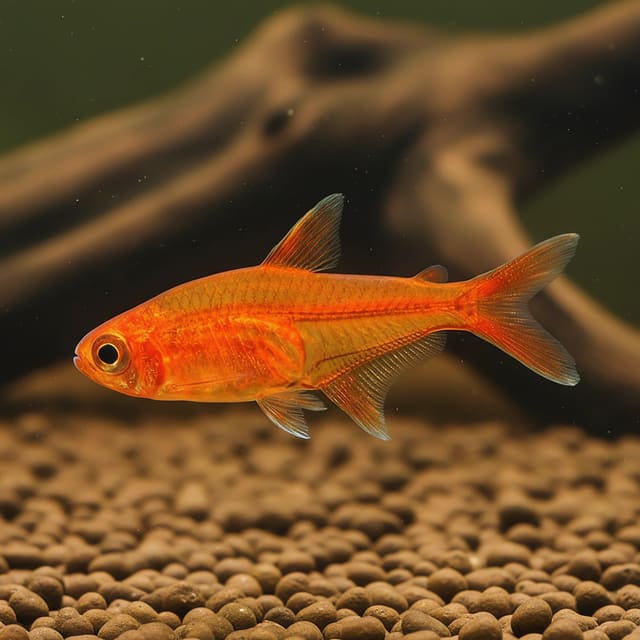
Neon Tetra (Paracheirodon innesi)
21–25°C · pH 5–7
£2.99

The Black Widow Tetra (Gymnocorymbus ternetzi) is an American tetra from the Paraguay and Guaporé river basins to Argentina that reaches 7.5 cm. It suits prepared beginners; keep at least 5, using the FishBase, Seriously Fish and OATA overlap of 22–26°C and pH 6.5–7.0 in an aquarium of about 68 litres with a 75 × 30 cm base. Sold individually in dispatch sizes from 1–1.5 cm to XL (5–6 cm).
Adult size is the maximum length this species reaches at full maturity (scientific sources). The livestock you receive will be younger and smaller — pick a size above for the actual shipping size. Product-photo provenance and any image-specific limitations are stated on the listing.
Gymnocorymbus ternetzi
Shoaling fish: kept in a group they feel safer, stay calmer and show their best colour.
Minimum of 2 per order.
The Black Widow Tetra (Gymnocorymbus ternetzi) is an American tetra from the Paraguay and Guaporé river basins to Argentina that reaches 7.5 cm. It suits prepared beginners; keep at least 5, using the FishBase, Seriously Fish and OATA overlap of 22–26°C and pH 6.5–7.0 in an aquarium of about 68 litres with a 75 × 30 cm base. Sold individually in dispatch sizes from 1–1.5 cm to XL (5–6 cm).
Adult size is the maximum length this species reaches at full maturity (scientific sources). The livestock you receive will be younger and smaller — pick a size above for the actual shipping size. Product-photo provenance and any image-specific limitations are stated on the listing.
Maintain these water conditions for optimal health and vibrant colors
The Black Widow Tetra (Gymnocorymbus ternetzi) is a freshwater American tetra in the family Acestrorhamphidae. It occurs in South America from the Paraguay and Guaporé river basins to Argentina. FishBase records a maximum adult length of 7.5 cm standard length and places adults in the middle and upper water layers. This lively shoaling fish suits a prepared beginner who can provide a mature filtered aquarium, the full social group and compatible companions.
Keep at least 5 together and plan around an aquarium base of 75 × 30 cm with approximately 68 litres. Seriously Fish recommends that footprint for a group, along with open swimming space and quieter planted areas. The adult group, rather than one small dispatch fish, determines whether the aquarium is large enough.
Keep the water at 22–26°C, pH 6.5–7.0 and 5–12 dGH. These routine values are the overlap between FishBase, Seriously Fish and OATA’s tetra and pencilfish ranges; OATA covers the wider group rather than a species-specific optimum. Maintain zero ammonia and zero nitrite, and keep nitrate from exceeding 20 mg per litre above the normal tap-water level.
The species is generally peaceful and lively, but it has a fin-nipping reputation. Seriously Fish says that keeping at least 12 can usually rectify this behaviour because squabbling is generally contained within the group. Treat 5 as the social floor and the larger number as a specific management option, subject to aquarium capacity.
| Suits | Not suited to |
|---|---|
| A mature aquarium with a 75 × 30 cm base | A tank without a well-maintained biological filter |
| A plan for at least 5 of its own kind | Keeping one fish or an undersized group |
| Open midwater space with quieter planted areas | A layout that removes the active swimming area |
| A screened lively community | A plan requiring guaranteed nip-free behaviour |
| A prepared beginner following a weekly routine | Water outside the stated temperature and chemistry ranges |
One purchase supplies one Black Widow Tetra in the size chosen on the live size selector. The labels are 1-1.5 cm, 1,5 - 2 cm, 2,5 - 3 cm, 3 - 4 cm, 4 - 5 cm and XL (5 - 6cm). These measurements describe dispatch grades, so use the selector label to understand the approximate size sent.
The size you select is the size supplied, not the adult size. Plan the aquarium, filtration and social group around the recorded adult length of 7.5 cm. A smaller dispatch grade does not reduce the long-term footprint or group requirement, and a larger grade does not indicate sex, life stage or origin.
Sex is guaranteed only when the selected option explicitly states male or female. This Black Widow Tetra listing has no sex-guaranteed option.
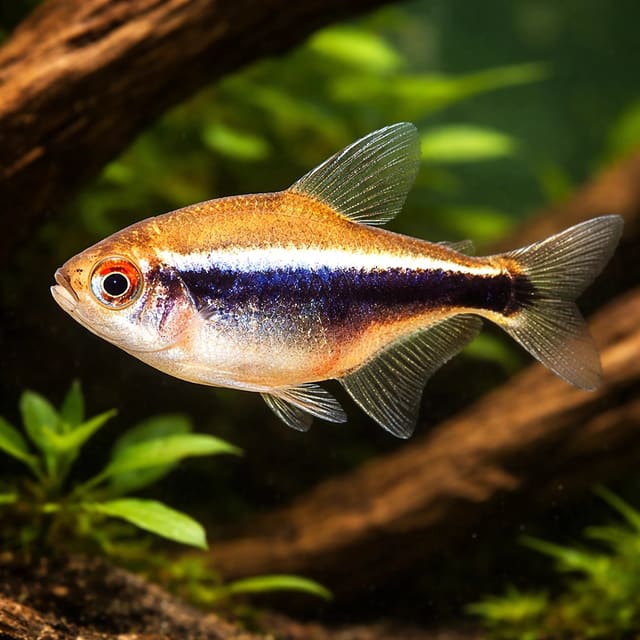
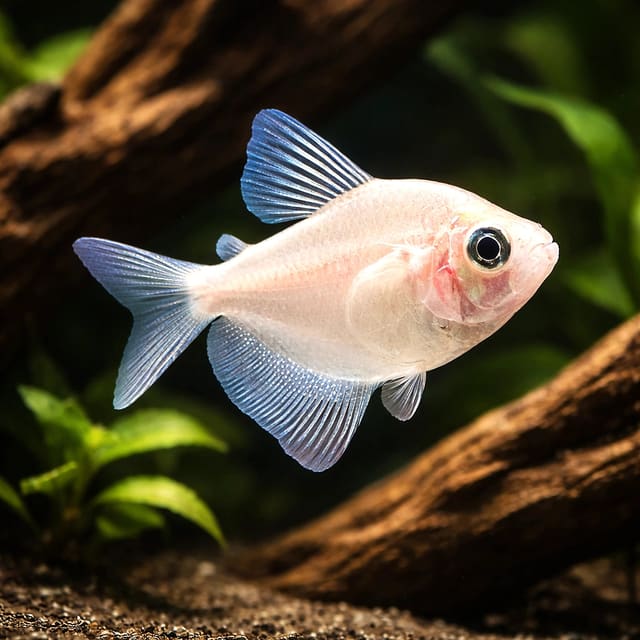
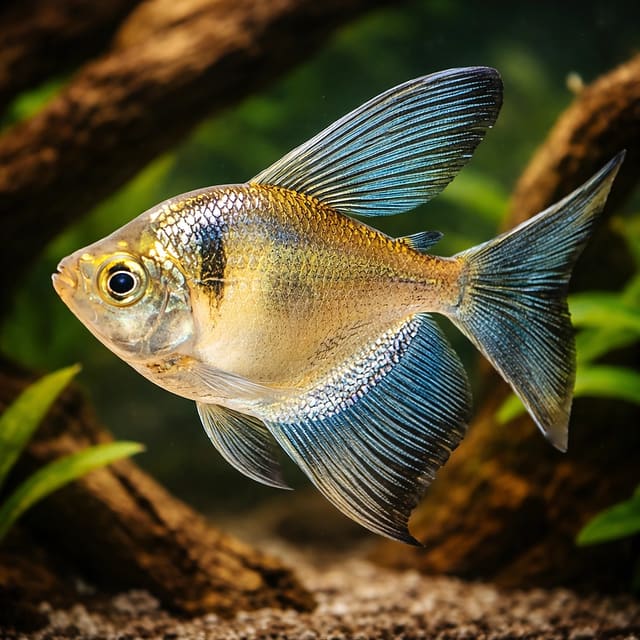
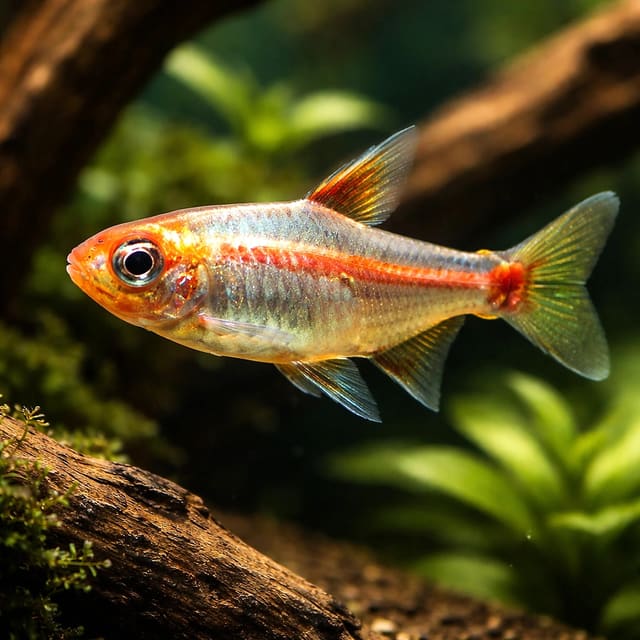
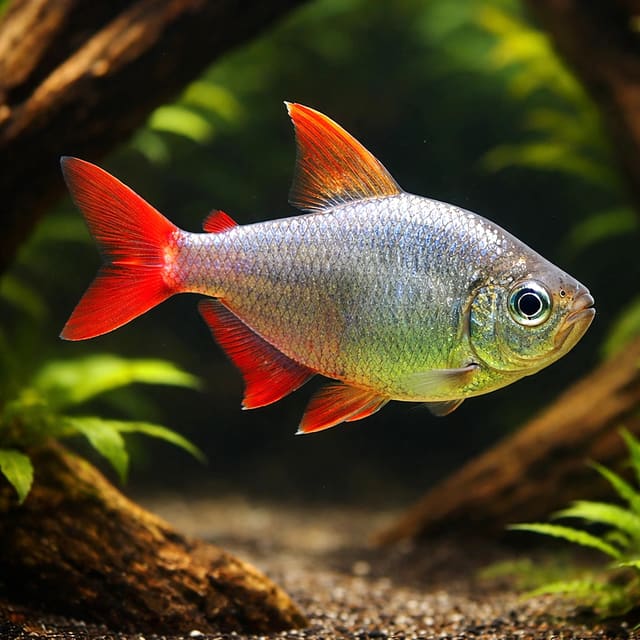
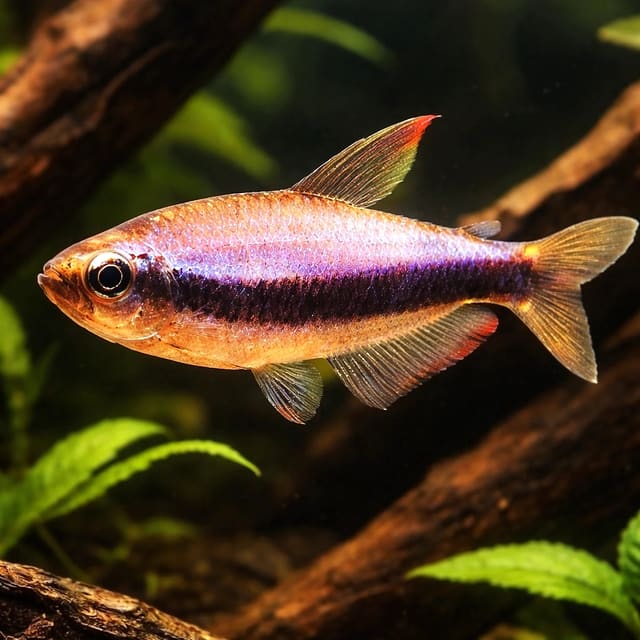
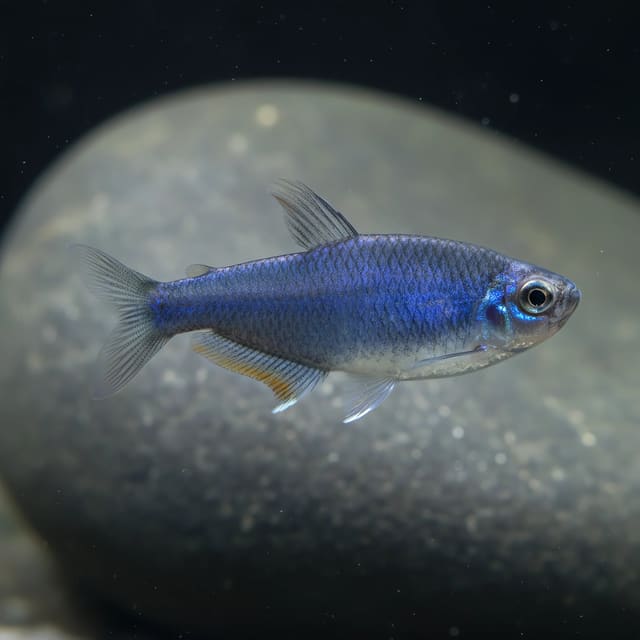
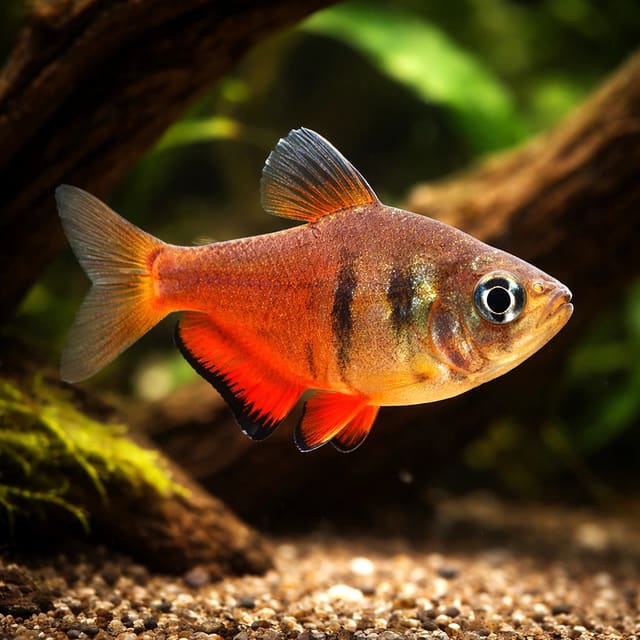
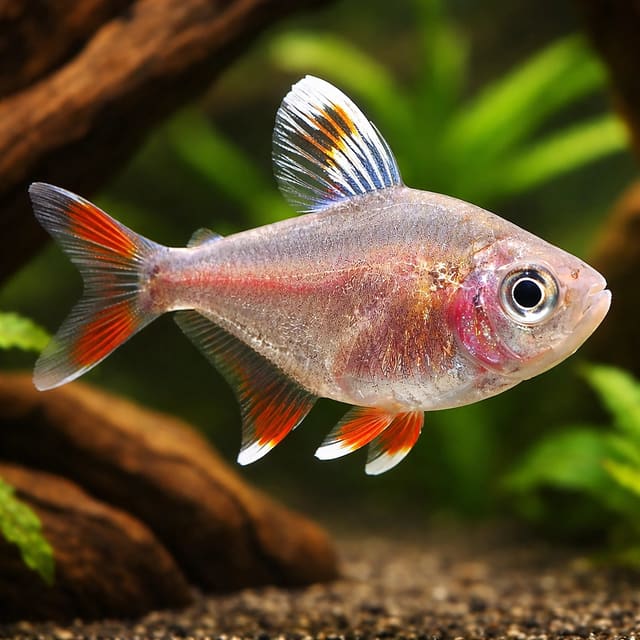
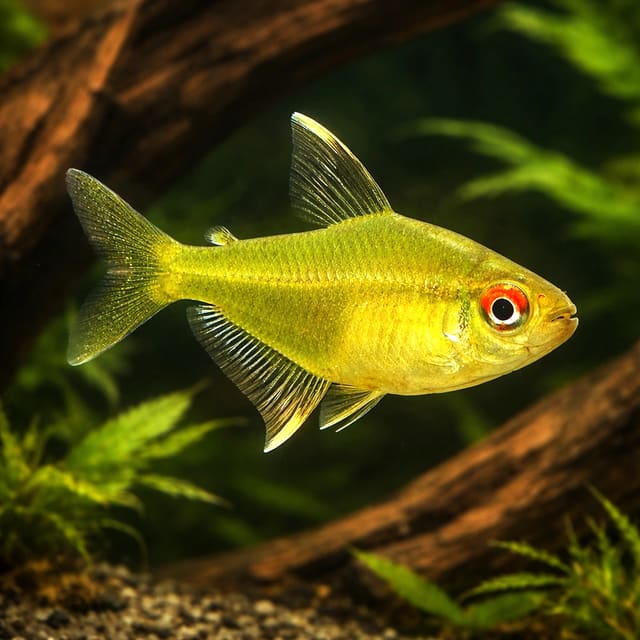
Some gallery images have been digitally enhanced to improve image quality. They show the listed type of animal rather than guaranteeing the exact markings of the individual supplied, so natural colour and pattern can vary.
Choose by the needs of the completed group, not by which dispatch grade looks easiest to place temporarily. Before adding any fish, confirm that the mature filter can process the group’s waste and that the existing community leaves enough open middle and upper water for active swimming.
Use an aquarium with a base of at least 75 × 30 cm and approximately 68 litres for a group. Seriously Fish describes this active species as fairly unfussy about décor, but it benefits from plenty of open swimming room together with quieter areas. A tank can hold enough litres while still being a poor shape, so confirm its actual base dimensions rather than relying on a model name.
For an aquarium of about 68 litres, Seriously Fish describes a turnover of four to five times the aquarium volume per hour. That corresponds to roughly 270–340 litres per hour before real-world losses caused by filter media, pipework and maintenance condition. Use the figure as a filter-rating guide, then confirm that circulation remains effective throughout the aquarium.
A heater of roughly 50 W is suggested for this aquarium size when the room is around 20°C. Check the actual aquarium temperature rather than treating heater wattage as a thermostat setting. A different room temperature, aquarium shape or cover can change the heating requirement.
Prepare and mature the biological filter before the fish arrive. Our first tropical aquarium guide explains the preparation sequence. The aquarium is ready for livestock only when testing shows that ammonia and nitrite remain at zero and the filter can support the planned increase in waste.
Keep the aquarium at 22–26°C, pH 6.5–7.0 and 5–12 dGH. This range sits inside every water range used for the care plan, making it a practical routine target without pushing beyond the species figures. Measure the aquarium rather than repeatedly adding products to chase a number that has not been tested.
| Measurement | Action |
|---|---|
| Temperature | Hold between 22°C and 26°C |
| pH | Hold between 6.5 and 7.0 |
| General hardness | Hold between 5 and 12 dGH |
| Ammonia | Keep at zero mg per litre |
| Nitrite | Keep at zero mg per litre |
| Nitrate | Do not exceed 20 mg per litre above normal tap-water levels |
Test at least weekly and record enough results to recognise the aquarium’s normal pattern. If ammonia or nitrite appears, stop treating the tank as stable: check the filter, recent stocking, feeding and maintenance before adding more livestock. Nitrate must be interpreted against the normal tap-water reading because OATA applies the 20 mg-per-litre limit above that baseline.
The aquarium water chemistry guide explains what each reading means. Use the water matcher to compare measured values with the stated range, while retaining the tighter 6.5–7.0 pH target used here.
The RSPCA explains why a working biological filter is essential: fish release toxic ammonia, bacteria convert it to toxic nitrite and then to safer nitrate. Clear-looking water does not replace those tests. Keep the filter running and maintained so its bacterial population continues processing waste between water changes.
Use a good-quality flake or granule as the regular aquarium food. In nature, FishBase records Black Widow Tetras eating worms, small crustaceans and insects, while Seriously Fish describes the species as an unfussy omnivore. Add suitably small live or frozen foods such as daphnia and bloodworm for variety; OATA also names tubifex among suitable small foods for tetras.
Feed once a day and offer only what the fish can eat within a few minutes. That schedule comes from OATA’s guidance for tetras and pencilfish. Watch the whole group during the meal so that feeding remains an observation of access and condition rather than simply a measured amount dropped into the aquarium.
| Decision | Instruction |
|---|---|
| Main food | Choose quality flake or granules sized for every fish to swallow |
| Variety | Rotate small daphnia, bloodworm or tubifex in live or frozen form |
| Stopping point | Stop when the group has eaten the portion within a few minutes |
| After feeding | Check for uneaten food and changes in appetite |
Do not answer unequal feeding access by adding excessive food. Uneaten material breaks down and releases waste, which increases the load on the biological filter. Instead, watch whether one fish repeatedly misses food, approaches without eating or has become thinner or fuller than its companions.
A reduction in food intake is one of OATA’s warning signs. If appetite changes, test the water and compare swimming, breathing, colour and group behaviour with the fish’s normal pattern. Continue using foods that match the recorded omnivorous diet rather than depending on leftovers from other aquarium inhabitants.
At least once every week, change 25% of the aquarium water. Use the same routine to inspect the aquarium, remove settled waste and compare the latest test results with the established pattern.
If the filter needs cleaning, do not run it under the tap. Rinse it lightly in the aquarium water removed during the partial change. This reduces the loss of the beneficial bacterial population established in the media. Clean only when required for flow or blockage management rather than dismantling a functioning filter without reason.
Good maintenance protects the readings used elsewhere in the care plan. A missed water change, excess feeding or blocked filter can alter several conditions together, so respond to a change by checking the whole routine rather than concentrating on one number.
Read the current delivery and Live Arrival Guarantee policy before the parcel is due. Someone must be at the address to receive live fish, and the parcel must be opened and inspected on the same day it arrives.
If there is a live-arrival concern, contact us the same day with the order number and continuous unboxing video. The video must begin with the parcel sealed, show it being opened and show the fish in the sealed bag before release.
Before adding the fish, OATA advises confirming that ammonia and nitrite are zero. Add livestock only at a rate the mature filter can support, while retaining the social plan of at least 5 Black Widow Tetras. Increasing fish numbers and feeding increases the bacterial capacity required from the filter; adding too much waste too quickly can lead to unhealthy ammonia and nitrite.
After release, observe swimming, breathing, colour, feeding and interaction with the group. Establish what is normal for these fish during the first week so later changes are easier to recognise. Avoid interpreting one behaviour alone; compare it with the water tests and the condition of the rest of the aquarium.
Check the fish every day for changes in swimming, colour, breathing, appearance, body condition, temperament and feeding. OATA identifies these as useful early indicators because each aquarium and fish develops a normal pattern that can be compared over time.
| If you see | Do this |
|---|---|
| Hanging at the surface, sitting on the bottom or erratic swimming | Test water and confirm temperature and filter movement |
| Faster or slower gill-cover movement | Check water quality and compare breathing across the group |
| Darker or paler colour | Review water, behaviour, appetite and recent changes |
| More aggression or hiding | Check group structure, fin condition and companion behaviour |
| White spots, fluffy growths or lost fins or scales | Record the visible signs and protect affected fish from further damage |
| Weight gain, weight loss or reduced food intake | Observe the next meal closely and test the aquarium |
Healthy fish should have clear, bright eyes, undamaged fins, intact scales and no ulcerations or bumps. These checks work best when combined with regular testing, because ammonia, nitrite, temperature and filter performance can affect several fish together.
Do not choose a treatment from a single general sign. Begin with measured water values, equipment checks, recent maintenance and a comparison of affected and unaffected fish. Keep notes or clear side-on images so changes in body condition or fin damage can be followed accurately.
If you remain concerned about health after testing the water, contact us with the aquarium dimensions, group size, companions, temperature, ammonia, nitrite, nitrate and a short description of when the change began. Prompt, specific observations are more useful than waiting for several signs to become severe.
Plan for an adult length of 7.5 cm standard length. This is the FishBase maximum used throughout the care plan, stocking decisions and search fields. Standard length excludes the tail, so use the figure as a serious space reference rather than treating it as the full visual extent of the fish.
Seriously Fish uses 6 cm standard length in its aquarium profile. Keep 7.5 cm as the planning figure rather than averaging the two values or substituting a smaller dispatch grade. The difference does not change the recommendation for an aquarium base of 75 × 30 cm and approximately 68 litres for the group.
Juveniles can show more intense black colour, and Seriously Fish notes that this colour fades as the fish grows. Adult fish can therefore provide a softer contrast than younger animals without becoming a different species. Evaluate sudden colour change alongside breathing, appetite, water quality and behaviour rather than using shade alone.
The familiar Black Skirt Tetra and Black Tetra names also refer to Gymnocorymbus ternetzi. Keep the scientific name attached to the care plan when comparing aquarium advice, because common names can vary between shops and regions.
Keep at least 5 Black Widow Tetras together. FishBase uses 5 or more for aquarium keeping, and OATA says tetras should be kept in groups of at least five because single fish or groups that are too small often become stressed. More can be beneficial, but the aquarium must have the footprint, filtration and water quality to support the larger group.
Fin nipping needs a more specific response. Seriously Fish says this behaviour can usually be rectified by keeping a small shoal of at least 12 specimens; with this number, squabbling is generally contained within the group. This is permission to use a larger group as a management approach, not an instruction to place 12 fish in an aquarium that cannot support them.
| Observation | Decision |
|---|---|
| Brief interaction with no damage | Continue observing the group and feeding access |
| Repeated attention towards fins | Check the group number and whether the aquarium can support at least 12 |
| Squabbling stays within a large group | Inspect fins and confirm every fish still feeds normally |
| One fish is persistently isolated or damaged | Protect it from further injury and reassess the group |
| The aquarium is already at capacity | Do not add fish solely to change behaviour |
Adults naturally use the middle and upper water layers, so judge space where the group actually swims. A community can have unused substrate while its midwater zone is crowded. Include all active groups when assessing the 75 × 30 cm footprint, filter capacity and feeding competition.
Temperament is best assessed as a combination of group size, visible fin condition, access to food and the response of companion fish. The label “generally peaceful” remains useful, but it does not erase the documented fin-nipping reputation.
Choose companions that share the water range, have compatible temperaments and leave enough adult space for every social group. OATA’s broad rule is that tetras and pencilfish mix best with fish of similar size and temperament. Seriously Fish names several potential companions for Black Widow Tetras, but each combination still depends on the complete aquarium.
| Potential fit | Screening point |
|---|---|
| Most livebearers | Confirm shared temperature, pH, hardness and sufficient midwater space |
| Danios, rasboras and other tetras | Allow for the adult group size and activity of every species |
| Peaceful bottom dwellers such as Corydoras | Meet their own group, substrate and water requirements |
| Smaller Loricariids | Confirm adult space, diet and water overlap |
| Robust dwarf cichlids such as kribensis | Provide the cichlid’s required space and assess interactions |
| Angelfish | Plan the aquarium around the larger fish and monitor the complete group |
Use caution with slow or long-finned fish because this tetra has a fin-nipping reputation. A larger Black Widow group can usually contain its squabbling more effectively, but that does not make every long-finned companion dependable. Inspect fins and feeding access after any introduction.
Do not turn a named companion into a universal pairing. Two fish can share a temperature range while competing for the same swimming zone, and a tank large enough for one group may not have enough room for two. Check adult dimensions, social numbers, filter capacity and temperament together.
Keep only combinations in which all animals fit the same measured water, the aquarium supports every adult group and no resident is being persistently targeted or excluded from food. Individual and group behaviour can vary, so continued observation remains part of the compatibility decision.
FishBase records a maximum adult length of 7.5 cm standard length. Plan the aquarium around 7.5 cm even when the selected dispatch fish is smaller.
Seriously Fish recommends a 75 × 30 cm base and approximately 68 litres for a group. Preserve open swimming room as well as quieter planted areas.
Keep at least 5, as FishBase and OATA advise. Seriously Fish says at least 12 can usually rectify fin nipping by containing squabbling within the group.
Yes, it can suit a prepared beginner. Seriously Fish calls it one of the best choices for newcomers, but it still needs a mature filter, a proper group and weekly maintenance.
Feed quality flake or granules, with small daphnia, bloodworm or tubifex for variety. OATA’s tetra guidance says to feed once daily, giving only what is eaten within a few minutes.
Keep it at 22–26°C, pH 6.5–7.0 and 5–12 dGH. These are the overlapping FishBase, Seriously Fish and OATA ranges.
It is generally peaceful and lively but has a fin-nipping reputation. Seriously Fish says a group of at least 12 can usually contain squabbling within the group.
Screen most livebearers, danios, rasboras, other tetras, Corydoras, smaller Loricariids, robust dwarf cichlids and angelfish for shared water, adult space and temperament. No named pairing is automatic.
Start filming the sealed parcel before opening it or floating the bag. Have someone receive it, film the continuous opening and fish in the sealed bag, then float the bag for 20–30 minutes before release; fish are hand-bagged in pure oxygen inside an insulated box, with a heat pack when weather calls for it.
No reviews for this item yet. Bought one? Honest reviews only, good or bad.
What customers say about ordering from us
I have a small group of long finned mountain minnows. So was delighted to be able to order ten of this variety to increase the genetics in my tank . The ones I recieved are healthy but it’s to early to give a verdict on wether they are of a long finned type since they are small currently.
Gordon Walker · 23 Sept 2026
100% success travel and "installation". Pleased with quality of purchase. The Siamese fighter a bit "shy" so have not yet seen him at his best yet but looking good. Happy customer. GG
George E Garratt · 21 Sept 2026
Reviews of our shop, collected by Judge.me, an independent third-party review collector. Newest first.