Moderate
Neon Tetra (Paracheirodon innesi)
21–25°C · pH 5–7
£2.99

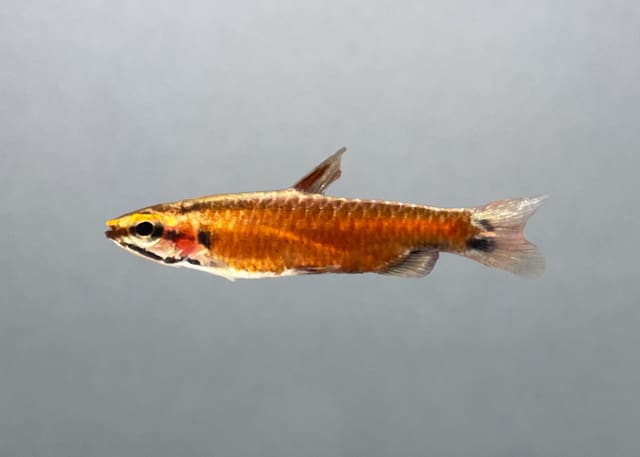
The Purple Pencilfish (Nannostomus rubrocaudatus) is a freshwater pencilfish from Peru that reaches a recorded maximum of 2.6 cm standard length. It suits keepers able to maintain an ideally 10+ group in a mature, heavily planted aquarium at 24–28°C, pH 4.0–7.0 and 1–5 dGH; use around 81 litres with a base of at least 90 × 30 cm or equivalent where sexes are mixed. Sold individually.
Adult size is the maximum length this species reaches at full maturity (scientific sources). The livestock you receive will be younger and smaller. Product-photo provenance and any image-specific limitations are stated on the listing.
Nannostomus rubrocaudatus
Shoaling fish: kept in a group they feel safer, stay calmer and show their best colour.
The Purple Pencilfish (Nannostomus rubrocaudatus) is a freshwater pencilfish from Peru that reaches a recorded maximum of 2.6 cm standard length. It suits keepers able to maintain an ideally 10+ group in a mature, heavily planted aquarium at 24–28°C, pH 4.0–7.0 and 1–5 dGH; use around 81 litres with a base of at least 90 × 30 cm or equivalent where sexes are mixed. Sold individually.
Adult size is the maximum length this species reaches at full maturity (scientific sources). The livestock you receive will be younger and smaller. Product-photo provenance and any image-specific limitations are stated on the listing.
Maintain these water conditions for optimal health and vibrant colors
Purple Pencilfish is Nannostomus rubrocaudatus, a freshwater member of the pencilfish family Lebiasinidae. FishBase records it from Peru and gives a maximum of 2.6 cm standard length. It suits a keeper prepared to maintain a mature, heavily planted aquarium, feed tiny foods and manage the territorial behaviour of rival males within a substantial group.
This is a small, timid fish with more demanding social behaviour than its body size suggests. It is peaceful towards suitable species, yet rival males may defend space and spar during the day. A bright, open nano aquarium gives a subordinate fish few ways to leave another male’s view. The stronger plan is a mature, heavily planted aquarium with gentle filtration, dark visual cover and several broken sightlines.
| Suits | Not suited to |
|---|---|
| Keepers able to maintain an ideally 10+ group | Keeping one fish or a very small group |
| Mature, heavily planted aquariums with gentle filtration | Immature or bright, exposed nano aquariums |
| Stable water at 24–28°C, pH 4.0–7.0 and 1–5 dGH | Water outside the species aquarium ranges |
| Diminutive, non-aggressive companions after screening | Fish large enough to eat it or aggressive and boisterous companions |
The trade label Peru Red II also accompanies this animal. Pencilfish is the more precise family-level description, although you can browse the wider tetras collection when comparing other small shoaling fish. Compare adult behaviour, water and group needs rather than choosing by colour or retail category alone.
One purchase supplies one Purple Pencilfish. Plan the permanent aquarium around the recorded adult measurement, group behaviour and space needed between rival males.
Sex is guaranteed only when the selected option explicitly states male or female. This Purple Pencilfish listing has no sex-guaranteed option.
Build the aquarium as though the eventual group may contain more than one male. Adult males can be less stocky and more colourful than females, with modified anal-fin rays, but colour and body shape are not a purchasing guarantee. Ordering two fish does not create a selected pair, and a larger order does not create a chosen sex ratio.
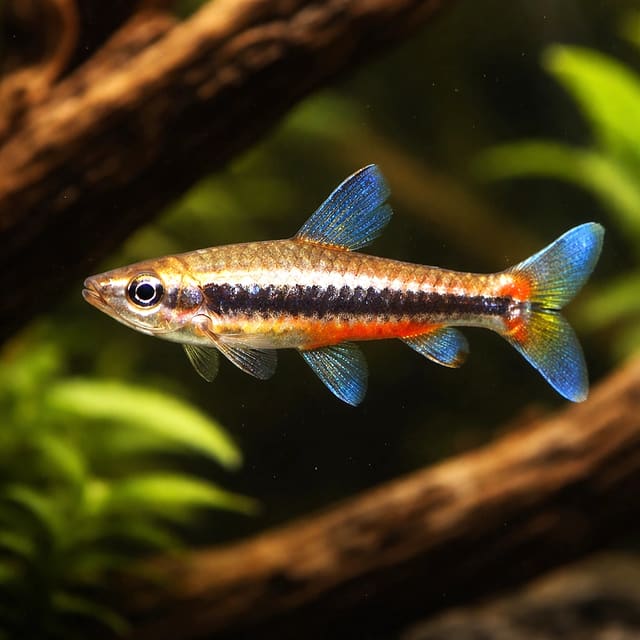
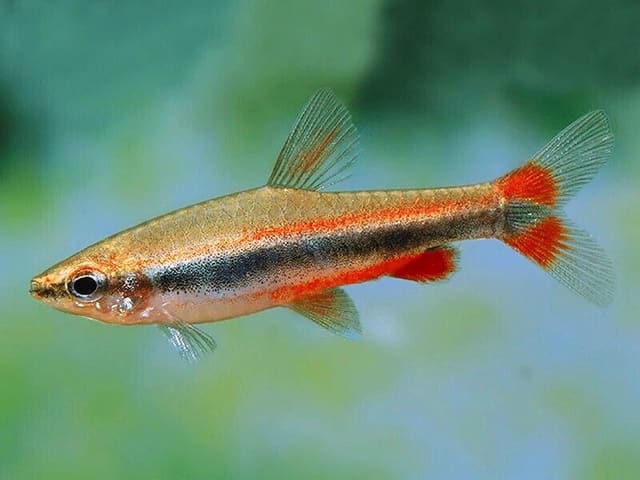
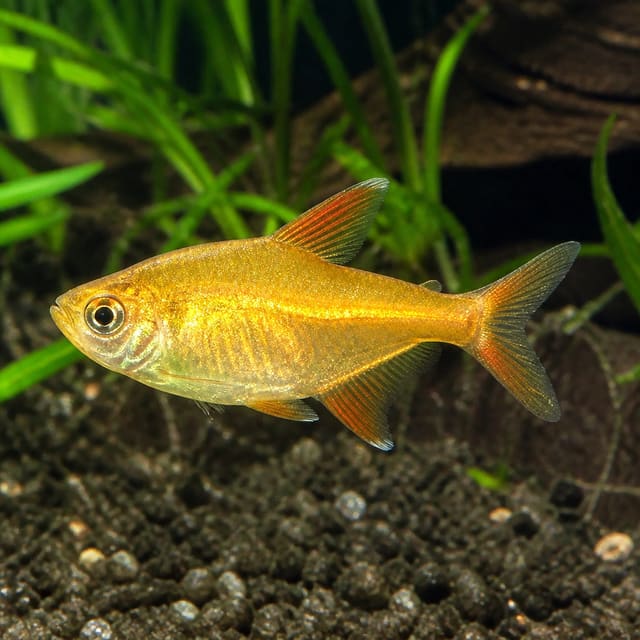
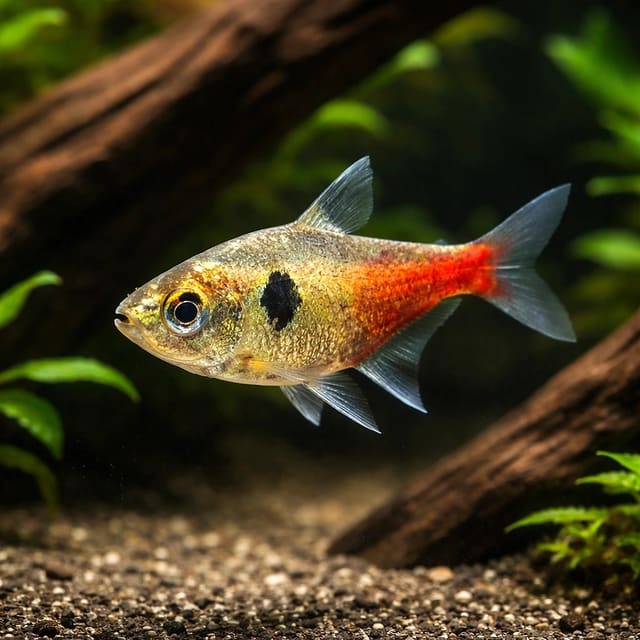
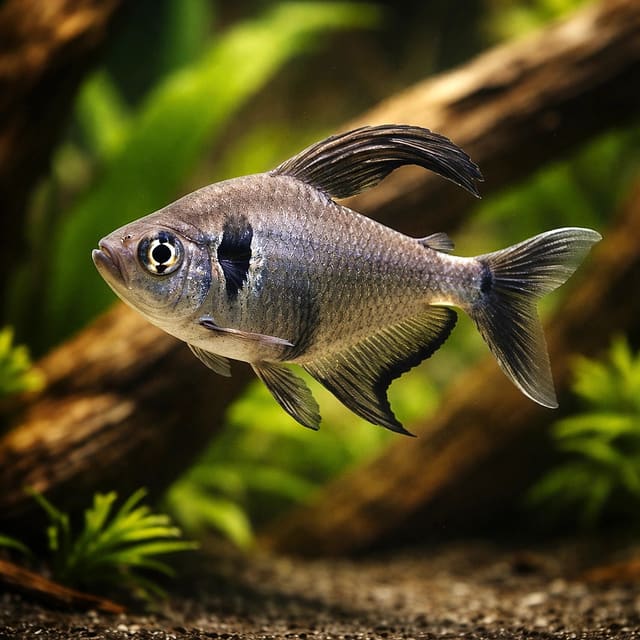
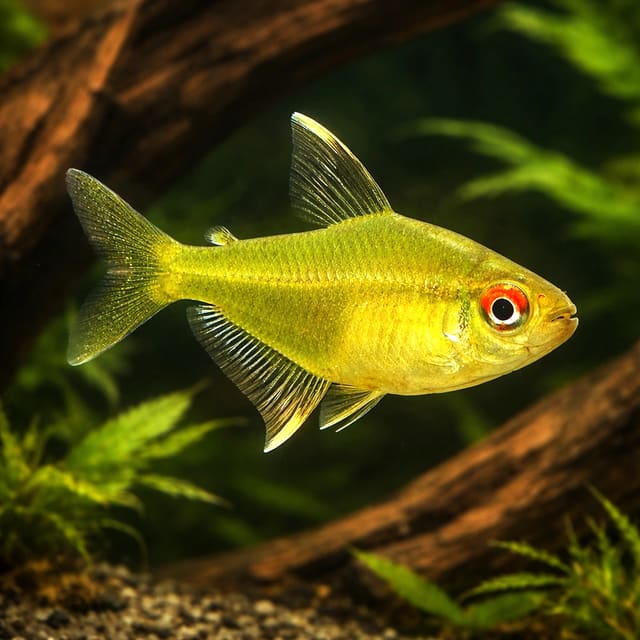
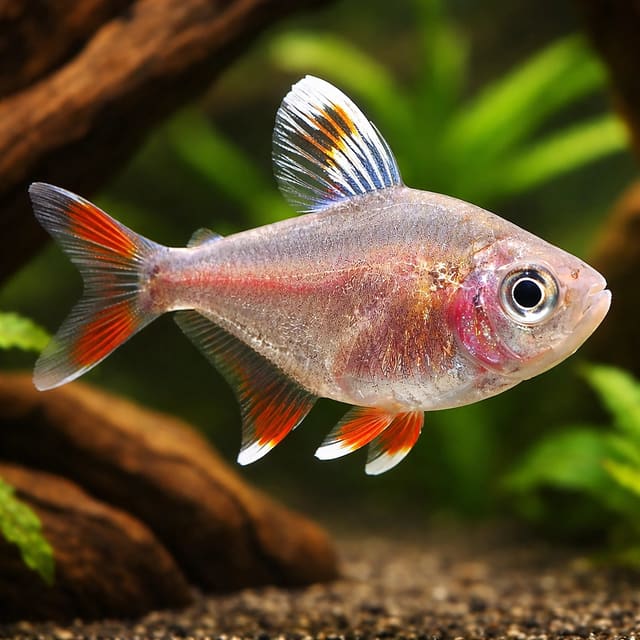
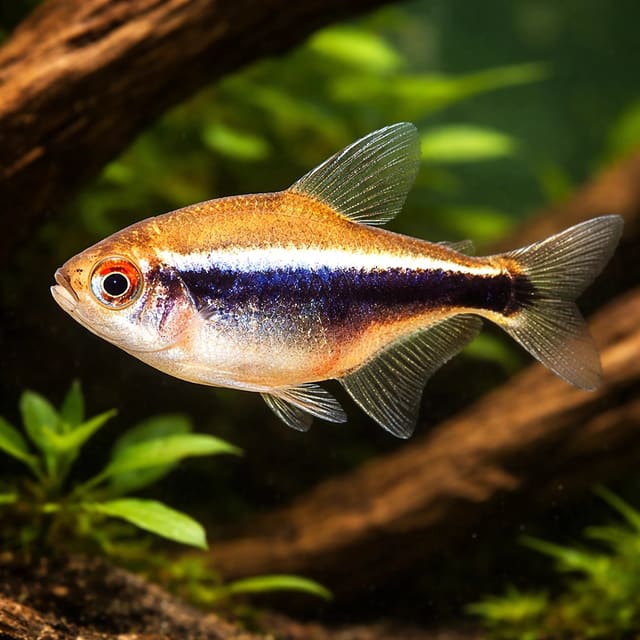
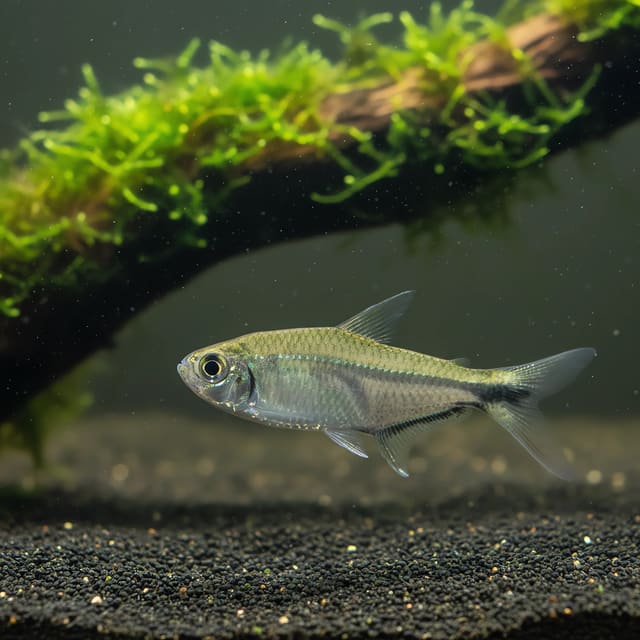
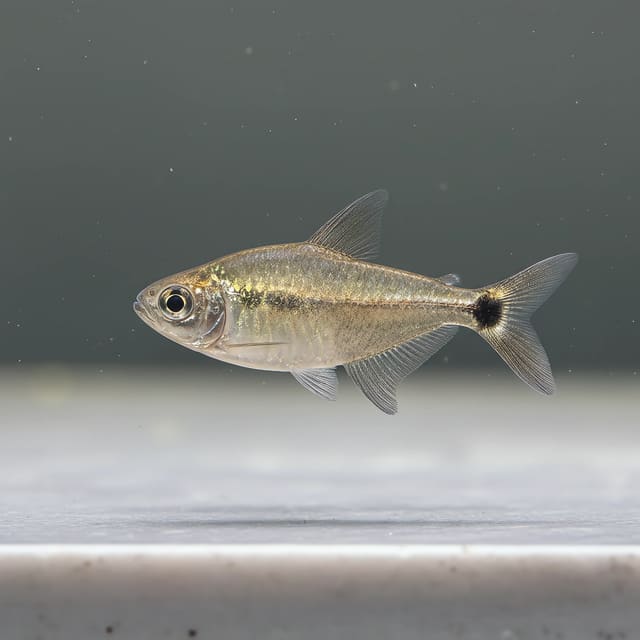
The gallery images are representative, based on reference photographs of this species, so colours can look slightly different from the live animal.
The Seriously Fish species account uses a planning length of 30 mm standard length and gives 24–28°C, pH 4.0–7.0 and 1–5 dGH for aquarium care. For a mixed-sex group, it calls for base dimensions of at least 90 × 30 cm or equivalent, corresponding to approximately 81 litres. That footprint matters because males can be particularly aggressive towards one another.
| Measure | Decision value |
|---|---|
| FishBase adult-size record | Maximum 2.6 cm standard length |
| Seriously Fish planning reference | 30 mm standard length |
| Mixed-sex group base | At least 90 × 30 cm or equivalent |
| Corresponding volume | Approximately 81 litres |
| Temperature | 24–28°C |
| pH | 4.0–7.0 |
| General hardness | 1–5 dGH |
| Group plan | Ideally 10 or more |
These numbers work together. An aquarium can hold approximately 81 litres yet have an unsuitable tall, narrow footprint. Water can sit inside the pH range yet remain unsuitable if temperature or hardness falls outside the corresponding range. A suitably sized tank also needs to be biologically mature, gently filtered and arranged with enough cover to interrupt pursuit.
A long planted footprint is more valuable than an open display built around the fish’s tiny body length. Rival males may spar regularly, and confined quarters can turn repeated displays into serious injury. For a group that may contain both sexes, start with at least a 90 × 30 cm base or equivalent and approximately 81 litres. Plan for 10 or more fish where the completed aquarium can support the group.
Use heavy planting to split the aquarium into several visual areas. Dark substrate can reduce the exposed feel of the setting, while floating plants soften the upper level. Driftwood branches create further divisions. Dried leaf litter may encourage microbial colonies as it decomposes; those microorganisms can become a secondary food source for fry, while released tannins and other compounds are thought to be beneficial.
| Area | Purpose |
|---|---|
| Planted refuge | Gives subordinate individuals a place outside a rival’s direct view |
| Broken middle | Uses stems or branches to interrupt long chases |
| Accessible feeding area | Lets the group take tiny food without losing every route back to cover |
Avoid a single wall of decoration that leaves one dominant open zone in front. Instead, create repeated transitions between cover and visible water. A chased fish should be able to pass behind planting or wood rather than crossing the full aquarium in view. Keep refuges accessible enough that you can still observe body condition and feeding.
Watch the group after the layout settles. Brief side-on displays and short chases can form part of normal territorial behaviour. Repeated pursuit across the whole footprint, fin damage or an individual remaining hidden indicates that the arrangement is not dispersing attention effectively. Add or reposition visual barriers while preserving the required footprint and gentle flow. More plants cannot turn an undersized base into suitable social space.
Stand at the front and look through the aquarium from end to end. If you can see one uninterrupted corridor across the entire 90 cm length, add a plant group or branch that interrupts that view while leaving a feeding route open. Then look from each end panel. A useful arrangement creates several partly screened areas rather than one cave with a single entrance. Check that water still moves around every refuge and that no fish would need to enter a dead end to escape pursuit.
Maintain 24–28°C, pH 4.0–7.0 and general hardness of 1–5 dGH. The species requires stable conditions, so judge the aquarium by the combination of temperature, acidity and hardness rather than selecting one attractive number. Establish a repeatable pattern before the fish enters the aquarium.
Measure the aquarium itself and the water used for maintenance. The water chemistry guide explains what the main values represent, while the water matcher helps compare your measured aquarium with the stated range. Record the actual results rather than relying on a regional description such as soft water.
| Example reading | Decision |
|---|---|
| 25°C, pH 6.5, 3 dGH | All three readings sit inside the stated range |
| 28°C, pH 7.0, 5 dGH | All three are at the upper boundary; stability remains essential |
| 23°C, pH 6.5, 3 dGH | Temperature is below the aquarium range, so establish 24–28°C first |
| 26°C, pH 7.2, 4 dGH | pH is above the stated range even though temperature and hardness fit |
| 26°C, pH 6.0, 8 dGH | Hardness is above the stated range and needs resolving before introduction |
Do not average an unsuitable result against two suitable ones. A reading of 8 dGH does not become acceptable because pH and temperature are in range. Likewise, a suitable test result on one day is only useful when the aquarium can hold similar conditions through feeding, maintenance and normal equipment operation.
Check the range again whenever behaviour changes or filtration is disturbed. Rapid breathing, unusual surface use, sitting low in the aquarium or reduced feeding all justify an immediate water test. Use the measured result to guide the next action rather than interpreting colour alone.
Take one set of readings before routine maintenance and another after the replacement water has mixed through the aquarium. For example, a tank at 25°C, pH 6.4 and 3 dGH should not be judged only by the pre-change result; confirm that the completed change still leaves every value within 24–28°C, pH 4.0–7.0 and 1–5 dGH. Repeat the comparison until the maintenance method produces a dependable pattern. If one value crosses a boundary after each change, resolve the replacement-water plan before adding the fish.
Never add this fish to an immature aquarium. A working biological filter is essential because fish release toxic ammonia. The RSPCA explains that filter bacteria convert ammonia to nitrite and then to the safer nitrate. Ammonia and nitrite are both toxic, so the aquarium must be fully prepared before livestock enters it.
Use the first tropical tank guide to plan the aquarium and mature its filtration before the group arrives. Maturity is not the same as filling a tank and switching equipment on. Confirm with tests that ammonia and nitrite are both 0 mg/L and that the heater and filter can hold steady conditions.
An air-powered sponge-style filter should be adequate in most cases because it combines biological filtration with gentle movement. At approximately 81 litres, the species guidance uses a turnover of four to five times the aquarium volume per hour and suggests looking for a filter rated around 325–405 litres per hour. Arrange the outlet so the planted middle-to-upper area remains usable rather than dominated by forceful flow.
For an aquarium of this size, the same guidance suggests roughly 100–125 W of heating to maintain 24–28°C when the surrounding room is around 20°C. Treat that wattage as a planning reference tied to those conditions. Confirm that the completed setup actually holds the required temperature throughout its normal daily cycle.
Increase the aquarium’s livestock load carefully. Beneficial bacterial populations must respond when fish numbers and feeding increase, so do not combine an immature filter with a sudden unplanned rise in waste.
Observe the aquarium with the planting in its finished position rather than testing an empty tank. Confirm that the filter moves the surface and reaches the screened areas without forcing the entire upper level into one hard current. Check the thermometer at more than one point in the normal daily cycle. Finish by testing ammonia and nitrite again at 0 mg/L. A filter rating, heater wattage or elapsed number of days cannot replace those direct checks.
In nature, this fish is a micropredator that takes tiny invertebrates and other zooplankton. In the aquarium it accepts dried food of a suitable size, but it should also receive daily small live or frozen fare. Suitable examples in the species guidance include Artemia nauplii, Moina and grindal worm.
OATA’s tetras and pencilfish guidance is group-level: offer only what the fish can eat within a few minutes, once a day. It recommends a good-quality flake or granule and also mentions small live or frozen items such as daphnia, small bloodworm and tubifex. For this tiny species, select only pieces that fit the mouth.
| Food decision | Use |
|---|---|
| Fine dried food | Choose a quality product in particles small enough to swallow |
| Artemia nauplii | Offer as appropriately sized live or frozen fare |
| Moina | Add small prey variety to the daily feeding plan |
| Grindal worm | Use pieces that the fish can take cleanly |
| Daphnia | Select only the smaller items for this mouth size |
Judge the portion by feeding response and remaining food, not by the apparent emptiness of the aquarium. Uneaten food breaks down and releases waste, so stop after a few minutes and reduce the next portion when food remains. Adding more food does not help a timid individual if the pieces are too large or dominant fish take them first.
Place a small amount where the group can see it and watch for actual swallowing. If several fish strike repeatedly without taking a particle, use a finer size at the next feed rather than increasing the portion. If one individual hangs behind cover while the others eat, present part of the same measured ration nearer that refuge. End the feed after a few minutes, remove obvious remains and note which food size produced the cleanest response across the whole group.
Carry out a partial water change of 25% at least once every week. Test the water at least weekly and keep ammonia at 0 mg/L and nitrite at 0 mg/L. Nitrate should not rise more than 20 mg/L above the normal level in the tap water used for the aquarium.
If the tap-water nitrate result is 10 mg/L, a rise of 20 mg/L places the upper group-guidance boundary at 30 mg/L. If the tap result is 25 mg/L, the corresponding boundary is 45 mg/L. Test both waters rather than treating one fixed nitrate number as suitable for every household.
| Weekly task | Action |
|---|---|
| Water change | Replace 25% at least once every week and siphon accessible solid waste |
| Tap-water treatment | Use conditioner to remove chlorine or chloramine before replacement water enters the aquarium |
| Ammonia test | Maintain 0 mg/L |
| Nitrite test | Maintain 0 mg/L |
| Nitrate comparison | Keep the aquarium no more than 20 mg/L above the normal tap-water level |
| Filter inspection | Check for blockages and reduced flow |
When filter media needs cleaning, rinse it lightly in aquarium water removed during the partial water change. Do not clean it under the tap, because chlorine or chloramine may kill part of the beneficial bacterial population. Avoid replacing all established biological media during routine maintenance.
Connect test results with behaviour. Any measurable ammonia or nitrite needs prompt attention, especially when fish breathe differently, stop feeding or change swimming position. Pause further livestock additions while the biological filter and water quality are brought back to the required condition.
Keep planting useful as cover while leaving enough access to inspect the group and remove waste. Maintenance should preserve the broken sightlines that control male conflict rather than clearing every dense refuge at once. After work is complete, confirm that filtration is running, surface movement has resumed and the fish can return to sheltered areas.
Write down the tap-water nitrate result beside the aquarium result each week. A tap baseline of 10 mg/L makes 30 mg/L the stated upper comparison boundary, while a baseline of 25 mg/L makes it 45 mg/L. After the water change, check that the filter has restarted normally and that the group resumes controlled swimming. If ammonia or nitrite is above 0 mg/L, stop treating the routine as complete: investigate filtration and waste before adding any more livestock.
Complete the aquarium before choosing an arrival date. Confirm mature filtration, 0 mg/L ammonia, 0 mg/L nitrite, stable 24–28°C, pH 4.0–7.0 and 1–5 dGH. The final planting and wood should already create several broken sightlines, allowing the fish to settle without an immediate major redesign.
Read the shop’s delivery and Live Arrival Guarantee policy before the parcel arrives.
Keep the aquarium calm and observe breathing, swimming and body condition as the fish begins using the planted middle-to-upper area.
| Checkpoint | What to confirm |
|---|---|
| Before arrival | The aquarium is mature, filtered and inside every stated water range |
| First observation | Breathing is steady, fins and scales are intact, and swimming is controlled |
| First feeds | Each fish takes particles small enough to swallow |
| First week | No individual is persistently excluded, hiding more than normal or losing condition |
| Weekly review | Ammonia and nitrite remain 0 mg/L and routine maintenance is completed |
| First month | The group uses several areas without continual pursuit across the aquarium |
Healthy fish should have clear, bright eyes, undamaged fins, intact scales and an appropriate swimming response. Watch for hanging at the surface, sitting on the bottom, erratic swimming, darker or paler colour, increased hiding, altered aggression, unusual gill movement, white spots, fluffy growths, loss of scales, weight change or reduced feeding.
If any of these changes appears, test water quality first and contact us for health guidance. Record the measured temperature, pH, hardness, ammonia, nitrite and nitrate together with the observed change. That combination is more useful than colour alone, because a small timid fish may become paler after disturbance without showing the same pattern as a fish that is breathing rapidly or refusing food.
Add further livestock only after the aquarium remains stable under its existing feeding and waste load. Slow, planned stocking gives beneficial filter bacteria time to respond as waste and feeding increase.
During the first week, note whether every fish joins the group, reaches food and returns to cover without continual pursuit. At the first weekly review, compare those observations with ammonia and nitrite at 0 mg/L and with the recorded temperature, pH and hardness. By the first month, the key decision is whether the aquarium works under its normal feeding and maintenance routine. Delay any further stocking if one fish remains excluded, several fish miss food or the water readings do not remain stable.
Purple Pencilfish is peaceful towards suitable neighbours but is not an automatic community choice. Its tiny size and timid nature make adult body size, aggression, feeding pressure and water overlap decisive. A calm label on its own is not enough; compare how the proposed companion behaves when mature and at feeding time.
| Screen | Decision rule |
|---|---|
| Predation | Avoid any fish large enough to eat this small pencilfish |
| Temperament | Avoid aggressive or boisterous companions; favour diminutive, non-aggressive fish |
| Water | Require overlap with 24–28°C, pH 4.0–7.0 and 1–5 dGH |
| Feeding | Avoid forceful feeders that prevent a timid pencilfish taking tiny food |
| Space | Provide the complete adult group and territory needs of every species |
| Aquarium level | Protect the planted middle-to-upper region used by the pencilfish |
Diminutive, non-aggressive characids may work when their water, adult group and feeding behaviour match. Smaller callichthyid or loricariid catfishes can also be considered under the same screen. These are categories for assessment, not universal pairings.
Apistogramma and other dwarf cichlids may share a suitable plan because the pencilfish tends to inhabit the middle-to-upper region and does not actively predate their fry. The completed aquarium still has to meet the cichlid’s own adult territory, water and social requirements as well as the pencilfish group’s footprint.
Avoid fish large enough to swallow it and avoid aggressive, boisterous or forceful-feeding neighbours. Similar size is useful, but similar size does not resolve conflicting temperature, hardness or temperament.
For a stocking and compatibility assessment, contact us with the aquarium dimensions, measured water, established livestock and proposed group numbers. Named combinations beyond the supported categories depend on those details and on the adult behaviour of every species involved.
This pencilfish is gregarious, but it shoals rather than forming a permanently tight school. Settled fish may spread through planted areas while maintaining contact with the group. Rival males can hold territories and spar during daylight, so the group needs both social choice and room to leave a confrontation.
Aim for 10 or more fish in a spacious aquarium. Group size spreads interaction, but it does not replace the need for at least a 90 × 30 cm base or equivalent when sexes are mixed. Because the purchase does not provide a chosen sex ratio, arrange every group as though several rival males may develop.
| What you see | What to do |
|---|---|
| Brief display followed by separation | Continue observing while preserving several broken sightlines |
| Repeated pursuit across the full tank | Reassess footprint and interrupt the long line of sight with planting or wood |
| One fish remains hidden | Check whether it can leave cover, join the group and reach food |
| Fin damage or serious injury | Act immediately on the space and aggression problem rather than treating it as routine display |
| Several fish miss food | Reassess the companion mix, particle size and access to the feeding area |
Do not keep one or two fish merely to avoid male rivalry. The animal is gregarious, and too small a social group creates a different welfare problem. Start with the complete aquarium plan: adequate footprint, mature filtration, dense cover, suitable water and enough feeding access for the intended group.
FishBase records a maximum adult size of 2.6 cm standard length for Nannostomus rubrocaudatus.
Use a mature, heavily planted aquarium with gentle filtration; for a mixed-sex group, plan around 81 litres with a base of at least 90 × 30 cm or equivalent.
Keep an ideally 10 or more in a spacious aquarium with dense cover and broken sightlines because rival males may spar.
It suits a prepared keeper who can mature the filter, maintain 24–28°C, pH 4.0–7.0 and 1–5 dGH, feed tiny foods and manage a substantial planted group.
Offer suitably small dried food plus daily small live or frozen fare such as Artemia nauplii, Moina or grindal worm; limit each daily portion to what is eaten within a few minutes.
Keep it at 24–28°C and pH 4.0–7.0 with general hardness of 1–5 dGH; these are the Seriously Fish species aquarium ranges.
It is peaceful towards suitable other species, but rival males may spar, chase and become particularly aggressive towards one another in confined quarters.
Consider diminutive, non-aggressive characids and smaller callichthyid or loricariid catfishes after matching water, adult group size, space and feeding access; avoid fish large enough to eat it and aggressive or boisterous companions.
Tropical Fish Co hand-bags live fish in pure oxygen and uses an insulated poly box, with a heat pack when the weather calls for it. Be present to receive the parcel, film every delivery continuously from the sealed parcel as it is opened with the fish still inside the sealed bag, float the bag for 20–30 minutes, and never pour the bag water into the aquarium.
No reviews for this item yet. Bought one? Honest reviews only, good or bad.
What customers say about ordering from us
I have a small group of long finned mountain minnows. So was delighted to be able to order ten of this variety to increase the genetics in my tank . The ones I recieved are healthy but it’s to early to give a verdict on wether they are of a long finned type since they are small currently.
Gordon Walker · 23 Sept 2026
100% success travel and "installation". Pleased with quality of purchase. The Siamese fighter a bit "shy" so have not yet seen him at his best yet but looking good. Happy customer. GG
George E Garratt · 21 Sept 2026
Reviews of our shop, collected by Judge.me, an independent third-party review collector. Newest first.