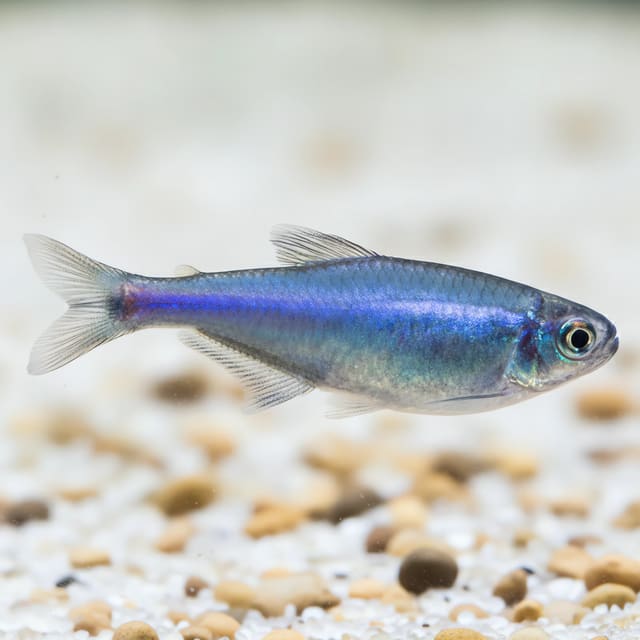
Expert
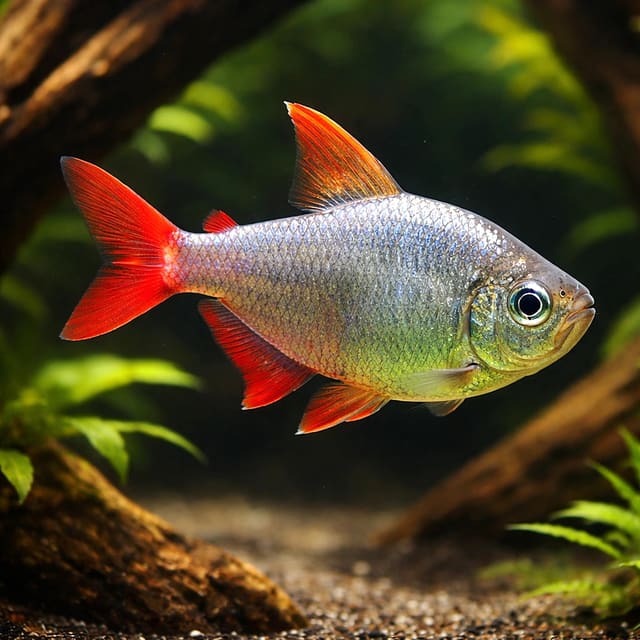
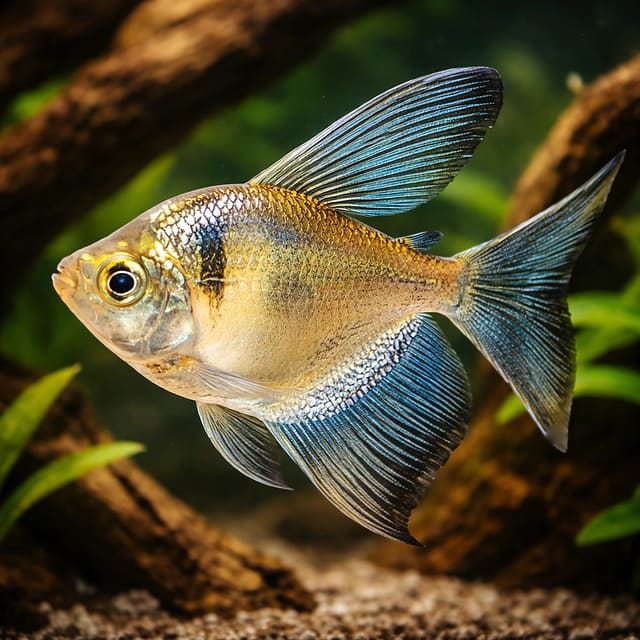
Silver Cachorro, Freshwater Barracuda (Acestrorhynchus falcatus)
22–28°C · pH 6–7.5 · 2025L
£135.99
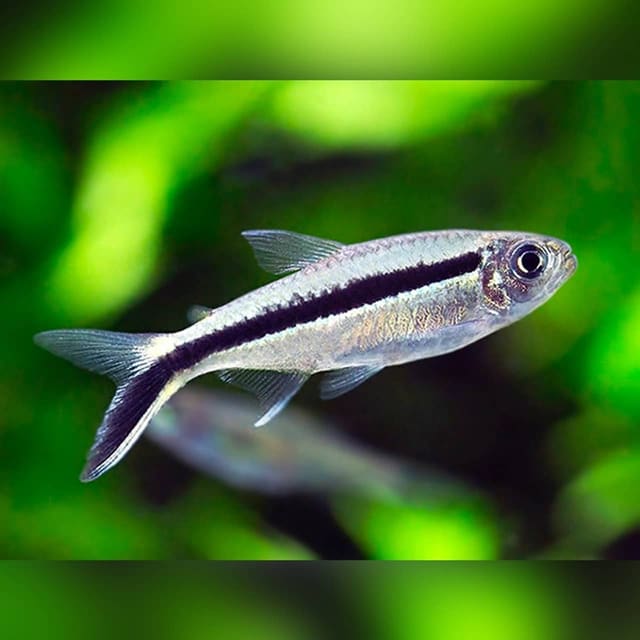
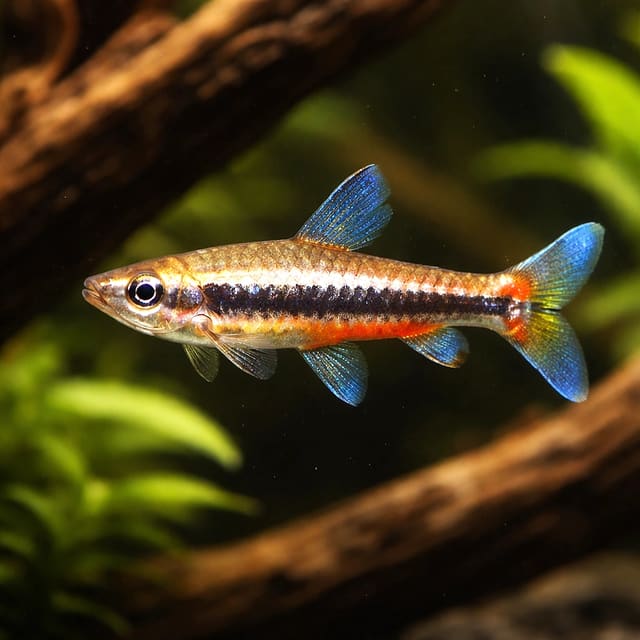
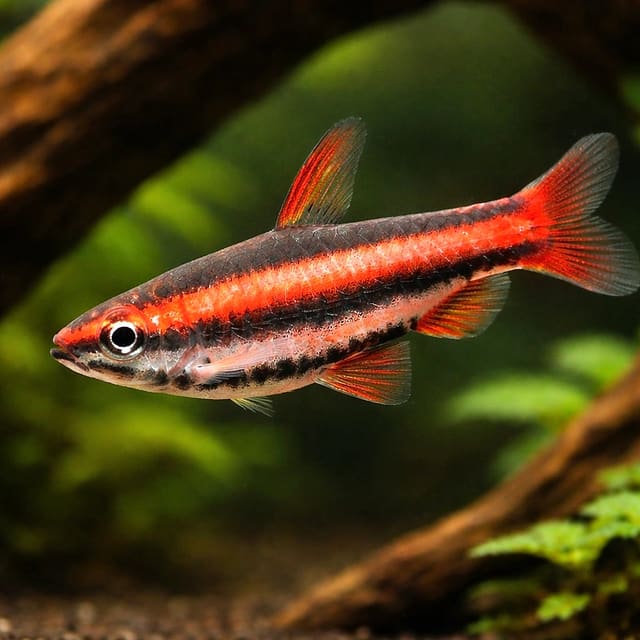
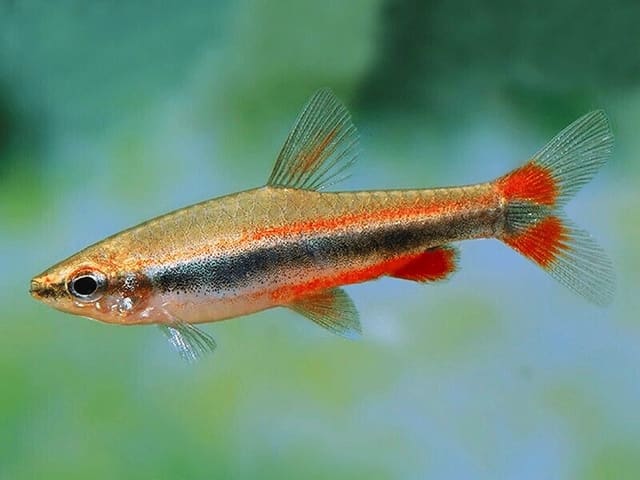
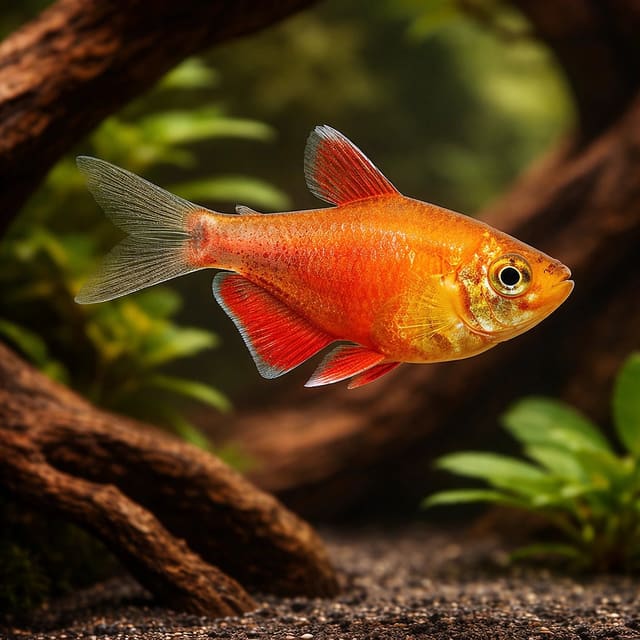
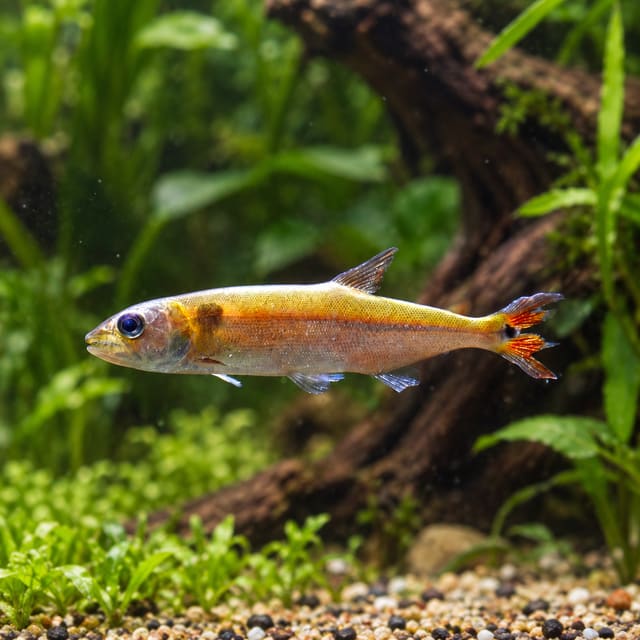
Red Pencilfish (Nannostomus sp.) is a small, social pencilfish for a settled, filtered aquarium. Keep at least five under broad OATA pencilfish guidance, choose peaceful similar-sized companions and offer small foods conservatively.
Nannostomus sp.
Shoaling fish: kept in a group they feel safer, stay calmer and show their best colour.
Red Pencilfish (Nannostomus sp.) is a small, social pencilfish for a settled, filtered aquarium. Keep at least five under broad OATA pencilfish guidance, choose peaceful similar-sized companions and offer small foods conservatively.
Maintain these water conditions for optimal health and vibrant colors
Red Pencilfish is the trade name used here for a slender member of the pencilfish genus Nannostomus. The approved scientific label for this listing is Nannostomus sp. The abbreviation means that the genus is known but a species epithet is not being claimed. The exact species has not been identified, so the care advice here follows the genus Nannostomus and its care group. That boundary matters: it lets you plan a sensible aquarium without pretending that a broad pencilfish fact proves the biology of one named species.
One purchase supplies one live fish. Pencilfish are social, so a single purchase is not a complete group; plan the total group and aquarium before ordering. OATA advises keeping tetras and pencilfish in groups of at least five, with more often giving a more settled social display. This page therefore suits a keeper who can provide companions of the same kind, a fully functioning filter, stable water and calm tank mates. It is less suitable as an isolated ornament or an impulsive addition to a new aquarium.
| Suits | Think carefully if |
|---|---|
| You can keep a group of at least five and observe them together | You intend to keep one fish alone |
| Your aquarium is filtered, established and tested | The aquarium has only just been filled or the filter is not mature |
| Companions are peaceful and too large to regard the pencilfish as food | Large predators or boisterous fin-nippers already dominate the tank |
| You are comfortable using broad group guidance while the exact species remains open | You need a precisely identified species for a biotope or breeding project |
The starting point for water is OATA's broad advice for tetras and pencilfish: 22–27°C, pH 6.5–8.0 and 4–12°dGH. These are group-level aquarium figures rather than a species-specific optimum. Stability, zero measurable ammonia and zero measurable nitrite matter more than chasing daily adjustments within that band. A useful first decision is to compare your tested tap and aquarium water with the range, then keep the fish in conditions that remain consistent.
The shape and colour that make pencilfish attractive also make them easy to underestimate. Their small size does not remove the need for swimming room, cover, careful feeding and a properly cycled filter. A planted layout with sheltered areas and open lanes gives the group choices: fish can withdraw when uneasy, then regroup in view when comfortable. A gentle current is the safer group-level starting point than forceful flow.
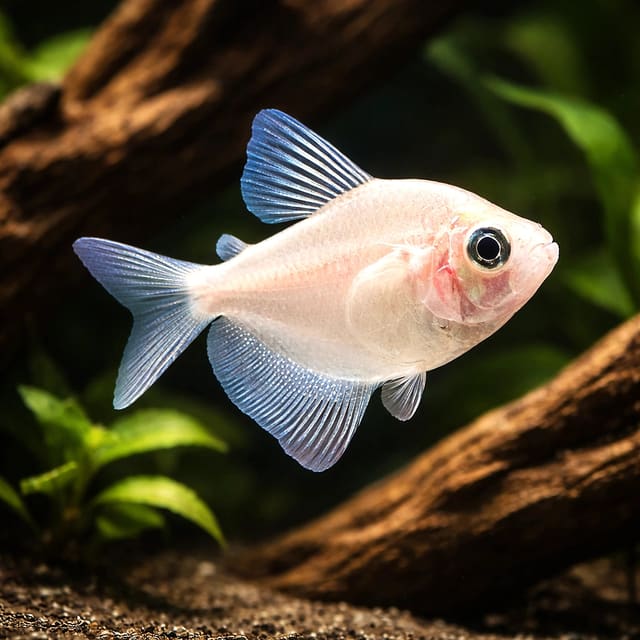
Gallery images have been digitally enhanced to improve image quality. Natural colour, pattern, size and maturity can vary between live animals.
Sex is guaranteed only when the selected option explicitly states male or female. This Red Pencilfish listing has no sex-guaranteed option.
WoRMS recognises Nannostomus as an accepted genus in the family Lebiasinidae. A general pencilfish overview explains that the common name is now used across the genus. Neither point authorises a species name for this particular fish, so this guide keeps species-specific adult size, breeding details and narrow habitat claims out. If exact taxonomic certainty is central to your project, choose a listing supported to species level instead. For keepers comfortable with an attractive genus-level pencilfish, the practical care framework below gives a conservative route.
You can also browse the rare and collector fish collection when comparing unusual offers. That link is for shopping context only; another unusual fish is not automatically a suitable tank mate.
The most useful numerical framework comes from the OATA guide for tetras and pencilfish. It gives 22–27°C, pH 6.5–8.0, general hardness of 4–12°dH and carbonate hardness of 3–10°dKH. OATA presents those figures for the care group, so run them as a broad planning range, not as proof of a narrow optimum for this unidentified species. Test the aquarium rather than estimating from appearance, and avoid repeated chemical corrections when the water is already stable within a suitable part of the range.
Ammonia and nitrite should both read zero. OATA advises keeping nitrate no more than 20 mg per litre above the normal tap-water level. That wording recognises that incoming water differs between homes. Measure the tap supply and aquarium with the same reliable kit, keep notes, and respond to a trend before the fish show distress. The water-chemistry guide explains what common readings mean, while the water matcher helps compare measured conditions with stated guidance.
OATA recommends at least 45 litres for a small shoal of a smaller tetra or pencilfish, and 80 litres for larger fish of 5 cm or more. Because the exact adult size of this Red Pencilfish has not been established, treat 45 litres as broad group planning guidance rather than a guaranteed final minimum. A larger footprint gives more swimming length, more room for plants and cover, and greater dilution of small husbandry mistakes. Choose the aquarium for the whole planned group and its companions, not for one newly arrived fish.
Tank shape matters as well as nominal volume. A long front-to-back swimming route is more useful than a tall, narrow column. Leave open mid-water lanes, then use live plants or suitable artificial cover to create separate sheltered areas. Gravel or sand can both work under the group guidance. Arrange ornaments so no sharp edge meets a narrow passage, and keep enough open space for the group to move without squeezing between hard objects.
A new aquarium needs time for beneficial filter bacteria to establish before livestock is added. The first tropical tank guide gives a practical preparation route. Confirm zero ammonia and zero nitrite before adding this group, and increase the biological load gradually. Adding many fish to a newly matured filter at once can exceed the bacterial population's ability to process waste, leading to new tank syndrome.
Temperature should be measured with a thermometer rather than assumed from the heater dial. Put the heater where water movement distributes warmth, while avoiding an excessive current through the swimming area. Check the reading at a consistent time and investigate a sustained change. A stable 24°C within the broad range is preferable to an aquarium repeatedly adjusted between the two ends of the range.
The RSPCA's aquarium guidance explains why filtration is essential: fish release ammonia, beneficial bacteria convert it to nitrite and then to the safer nitrate. Both ammonia and nitrite are toxic, which is why a clear-looking aquarium can still be unsafe. Keep the filter running continuously, maintain good water movement and never regard a visual glance as a substitute for a water test.
OATA strongly recommends a partial water change of 25% at least weekly for this care group. Use a siphon to remove settled waste, treat replacement tap water for chlorine or chloramine before it enters the aquarium, and bring it close to the tank's temperature. Regular modest maintenance is safer than allowing waste to build and then making a dramatic correction.
Check the filter for reduced flow and blockages during the weekly routine. When filter material needs cleaning, rinse it lightly in water removed from the aquarium, not under the tap. Chlorine or chloramine can damage the bacteria that make the filter effective. Do not replace all established filter material together; preserve the working biological community while removing enough debris to restore flow.
| Check | Useful response |
|---|---|
| Ammonia or nitrite above zero | Pause new additions, check the filter and seek prompt aquarium advice while protecting water quality |
| Nitrate climbing from its normal level | Review feeding, stocking and the consistency of partial water changes |
| Flow noticeably reduced | Inspect the intake and filter material for blockage; clean gently in removed tank water |
| Temperature drifting | Verify with a second thermometer and check heater placement and operation |
Healthy fish should show clear eyes, intact scales and fins, regular breathing, interest in food and swimming appropriate to the group. Learn what the Red Pencilfish group looks like at rest, during feeding and when people approach. A change from that familiar pattern is often more useful than a generic checklist.
OATA highlights hanging at the surface, sitting on the bottom, erratic swimming, faster or slower gill movement, unusual hiding, a marked change in aggression, darker or paler colour, white spots, fluffy growths, damaged fins or scales, loss of body condition and reduced feeding as signs worth investigating. Those signs can have many causes; start by testing the water and checking equipment. Avoid guessing a disease and adding medicine to the display before the environment has been assessed.
Observe every member during feeding so a shy fish is not missed. A group can look active while one individual loses condition at the back. Check that no companion blocks the pencilfish from food and that larger fish are not stalking them. Record the date and water values when behaviour changes; a simple log helps reveal whether the issue followed maintenance, a new addition or an equipment fault.
Pencilfish can be stressed by poor water quality even when the numerical change appears small. Match replacement water carefully, add livestock in stages and avoid rearranging every part of the aquarium at once. If a necessary adjustment is substantial, make it through controlled steps while monitoring the fish and filter. The aim is predictable husbandry: consistent heat, clean water, steady filtration, restrained feeding and a group with enough space to behave normally.
OATA describes tetras and pencilfish as omnivorous and recommends a good-quality flake or granule as the everyday base. Small live or frozen foods such as daphnia, small bloodworm or tubifex can add variety. Match particle size to the fish's mouth and watch whether food stays accessible in the water long enough for the full group to feed. Large pellets that sink beyond them or a forceful surface rush from bigger companions can leave the pencilfish underfed.
Feed only what the group finishes within a few minutes, once a day under the OATA group guidance. Start with a conservative portion and observe all fish. Remove conspicuous leftovers rather than adding more in the hope that shy fish will find them later. Uneaten food breaks down, increases waste and adds pressure to the filter.
Enthusiastic feeding is useful to observe, but begging does not prove that another meal is needed. Compare appetite with body condition and water quality. A sudden refusal from one fish, especially alongside hiding, colour change or altered breathing, deserves a water test and closer observation. A whole group refusing food points even more strongly towards checking temperature, ammonia, nitrite and equipment first.
Do not claim a specialist species diet from the red trade name alone. The exact species remains open, so the safe customer advice stays with the supplied pencilfish-group material. This avoids importing a feeding rule from a different Nannostomus species whose habitat or natural diet may not match this fish.
Begin with the number of Red Pencilfish you intend to keep, then add every established companion at its expected adult size. The filter, swimming room and maintenance routine must support the combined load. OATA's minimum group of five is a social starting point, not permission to squeeze five fish into the smallest possible container. A larger aquarium is easier to keep stable and gives timid individuals more ways to move away from disturbance.
Look at where existing fish feed and swim. Pencilfish need access to appropriately small food without competing against much larger, faster animals. They also need open water in which the group can hold together. If every calm area is already occupied, adding another group may create stress even when the litre figure looks adequate on paper.
This check is especially useful when a small fish appears to fit physically. Space must cover social behaviour, water stability and the waste produced by the entire community, not merely body length. If the aquarium cannot meet one of these points yet, improve the setup before adding the group.
OATA advises increasing fish numbers gradually because the bacterial population in the filter must respond to extra waste and feeding. Even an established aquarium can be overloaded by a sudden large addition. Plan the social group carefully with the retailer, introduce it without further simultaneous stocking, then monitor ammonia, nitrite and feeding closely as the aquarium adjusts.
After introduction, compare each fish rather than judging only the shoal. Check that all have clear eyes, intact fins and scales, normal breathing and a share of the food. A quieter fish may remain at the edge during the first observations, but continued hiding, colour change or refusal to eat needs attention. Test the water first, confirm that companions are not excluding it, and ask for guidance when a health concern persists.
Labels such as soft, medium or hard can be helpful shorthand, but the actual test result makes the decision clearer. Record temperature, pH, general hardness, ammonia, nitrite and the relationship between tap-water and aquarium nitrate. Repeat the measurements on a normal maintenance schedule so a trend is visible before it becomes an emergency.
Consistency also makes later troubleshooting easier. When feeding, maintenance and test timing are broadly regular, a new result stands out. This kind of routine is more valuable than chasing a perfect number on one day and allowing basic observations to lapse on the next.
Have the aquarium heated, filtered and tested before the delivery date. The current delivery and Live Arrival Guarantee policy explains the packing, licensed live-animal courier service and claim steps. Someone must be at the address to receive the parcel, and the parcel should be opened and inspected on the day it arrives.
Keep the first hours quiet enough to observe breathing, balance and swimming. Avoid a feeding rush from larger residents as soon as the new fish enters. Continue to watch the existing group as well as the arrival, because compatibility is shown by access to space and food rather than by the absence of an immediate chase.
OATA says tetras and pencilfish mix best with species of a similar size and temperament. For this Red Pencilfish, choose peaceful companions that will not swallow a slender fish, monopolise food or keep the group pinned in cover. A fish that is peaceful in another setting may still be unsuitable if it is much larger, very fast at meals or adapted to quite different water.
Keep the pencilfish social need separate from general community stocking. At least five of their own kind is the broad group minimum; unrelated small fish do not replace that group. More pencilfish can give a more natural display when aquarium volume, filtration and total stocking allow it.
| Situation | Decision |
|---|---|
| Peaceful fish of similar size using compatible water | Potentially suitable after adult size, feeding behaviour and total stocking are checked |
| A fish large enough to eat a pencilfish | Avoid |
| Boisterous or known fin-nipping companions | Use caution and favour a calmer community |
| One pencilfish added to an otherwise unrelated community | Plan a proper pencilfish group instead |
Compatibility includes whether every pencilfish can reach food, occupy open water and rest without persistent disturbance. Watch the group at different times of day. Repeated hiding, pale or dark colour, erratic swimming and reduced feeding can all indicate that the social or environmental arrangement needs attention even when no torn fin is visible.
Use plants and ornaments to provide refuge, but retain open lanes where the group can remain together. When adding new community fish, increase stocking gradually so the filter can adapt. Test water after additions and be ready to separate a fish if predation, relentless pursuit or food exclusion appears.
The related-product field on the page contains shopping alternatives only. It must not be read as a list of tank mates; compatibility always depends on adult size, temperament, water and the actual aquarium.
Use the accepted genus name Nannostomus sp. and plan conservatively from pencilfish-group care. Do not assign a species-specific adult size, breeding method or narrow habitat claim. The practical starting points are a social group, stable filtered water, gentle flow, cover and peaceful companions.
OATA recommends at least 45 litres for a small shoal of a smaller tetra or pencilfish, while larger fish of 5 cm or more start at 80 litres. For Nannostomus sp., treat 45 litres as broad group planning guidance and choose more space when the group or community needs it.
Keep at least five under OATA's group guidance, and consider more when the aquarium volume, filtration and total stocking allow it. One purchase supplies one fish, so plan the complete social group rather than expecting unrelated community fish to meet that need.
It can suit a careful newer keeper who can run a mature filter, test water and maintain a proper group, but the unresolved species identity calls for an intermediate level of judgement. Stability and observation matter more than trying to fine-tune a narrow species value.
OATA's tetra-and-pencilfish guidance recommends good-quality flake or granules, with small live or frozen foods such as daphnia, small bloodworm or tubifex for variety. Feed once daily and only what the group consumes within a few minutes, removing obvious leftovers.
OATA's broad group guidance gives 22–27°C, pH 6.5–8.0 and 4–12°dGH for tetras and pencilfish. Keep ammonia and nitrite at zero, monitor nitrate against the tap-water baseline and prioritise steady conditions over frequent chemical adjustment.
Pencilfish are generally described as peaceful, although the care group has exceptions and this listing is not resolved to species. Choose calm, similar-sized companions, provide a proper Red Pencilfish group, and watch for chasing, food exclusion, hiding or fin damage.
Consider peaceful species of a similar size and temperament that share compatible water. Avoid any fish large enough to eat Nannostomus sp., and be cautious with boisterous or fin-nipping animals. Confirm suitability from adult size and behaviour, not from juvenile appearance.
Tropical Fish Co hand-packs live fish and uses a tracked, licensed live-animal courier under its current policy. Be present to receive the parcel. For a Live Arrival Guarantee claim, start a continuous unboxing video with the parcel sealed, show the fish still bagged and contact the store the same day.
WoRMS: Nannostomus genus record supports the accepted genus and family. The pencilfish genus overview provides general context on the common name.
OATA's tetra and pencilfish care sheet supplies the aquarium guidance, while the RSPCA fish-environment page explains biological filtration. Tropical Fish Co's delivery policy is the authority for packing, arrival and claim steps.
No reviews for this item yet. Bought one? Honest reviews only, good or bad.
What customers say about ordering from us
Easy website plenty of info on fish your buying great to pick a time slot
TRACEY DURRANT · 7 Oct 2026
Got some lovely fish thank you
Kevin Mackie · 7 Oct 2026
Reviews of our shop, collected by Judge.me, an independent third-party review collector. Newest first.