Moderate
Neon Tetra (Paracheirodon innesi)
21–25°C · pH 5–7
£2.99

The Gold Widow Tetra (Gymnocorymbus ternetzi) is an American tetra from the Paraguay and Guaporé River basins to Argentina that reaches 7.5 cm. It suits a prepared beginner community aquarium; plan at least 12 to reduce fin nipping and keep them at 22–26°C and pH 6.5–7.0, the overlap of Seriously Fish and OATA guidance. Sold individually in dispatch sizes from 1.5–2 cm to over 3 cm.
Adult size is the maximum length this species reaches at full maturity (scientific sources). The livestock you receive will be younger and smaller — pick a size above for the actual shipping size. Product-photo provenance and any image-specific limitations are stated on the listing.
Gymnocorymbus ternetzi
Minimum of 2 per order.
The Gold Widow Tetra (Gymnocorymbus ternetzi) is an American tetra from the Paraguay and Guaporé River basins to Argentina that reaches 7.5 cm. It suits a prepared beginner community aquarium; plan at least 12 to reduce fin nipping and keep them at 22–26°C and pH 6.5–7.0, the overlap of Seriously Fish and OATA guidance. Sold individually in dispatch sizes from 1.5–2 cm to over 3 cm.
Adult size is the maximum length this species reaches at full maturity (scientific sources). The livestock you receive will be younger and smaller — pick a size above for the actual shipping size. Product-photo provenance and any image-specific limitations are stated on the listing.
Maintain these water conditions for optimal health and vibrant colors
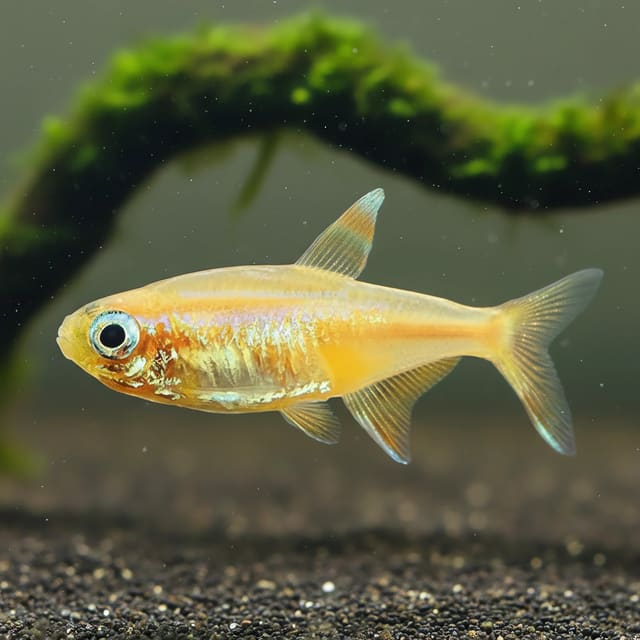
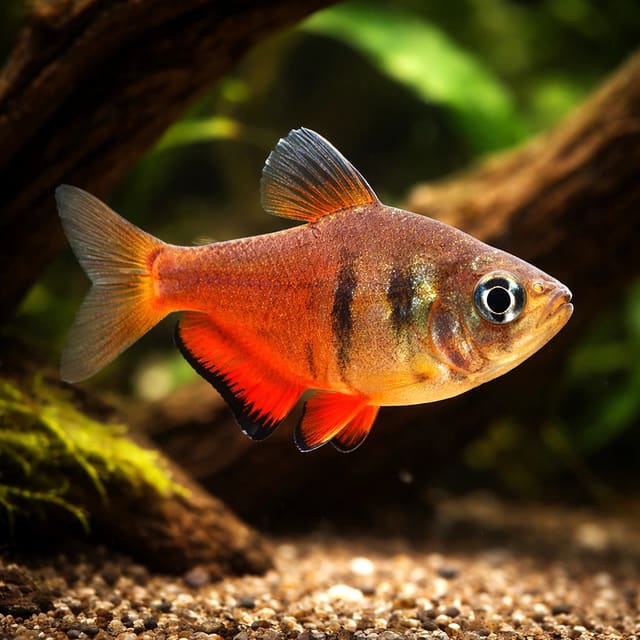
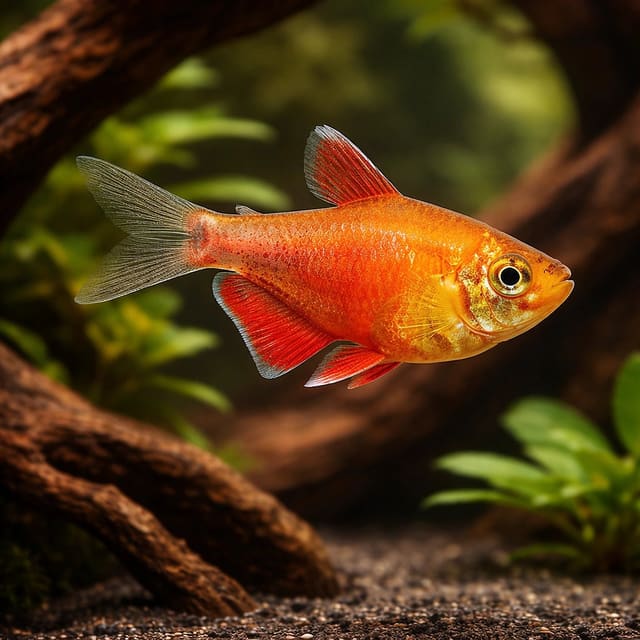
The Gold Widow Tetra (Gymnocorymbus ternetzi) is a pale golden aquarium form of an American tetra in the family Acestrorhamphidae. FishBase places the species from the Paraguay and Guaporé River basins south to Argentina and records a maximum of 7.5 cm standard length. It suits a prepared beginner who wants a lively, generally peaceful shoaling fish and can provide enough horizontal swimming room for a properly sized group.
The golden form is also known as the Albino Black Widow Tetra, while the darker form of the species is widely called the Black Widow, Black Skirt or Black Tetra. Seriously Fish describes the golden variety as a selectively bred leucistic form. It retains the deep body, active movement and social behaviour associated with the species rather than representing a separate species.
Keep the aquarium at 22–26°C, pH 6.5–7.0 and 5–12 dGH. These figures are the overlap between the Seriously Fish species profile and OATA’s tetra guidance; OATA gives group guidance, while the species profile sets the tighter aquarium bounds. Plan at least 12 fish when fin-nipping risk matters, because Seriously Fish says that this number can usually redirect squabbling into the shoal.
| Suits | Not suited to |
|---|---|
| Prepared beginners with a mature, filtered aquarium | New or unfiltered aquaria |
| A group planned around a 75 × 30 cm base | Solitary keeping or a very small group |
| Generally peaceful fish of a similar size and temperament | Plans centred on slow, long-finned fish without a 12-fish shoal |
| Open swimming space with planted or decorated cover | A layout filled edge to edge with obstacles |
Adults occupy the middle and upper water layers, so this is a visible fish rather than a species that spends most of its time hidden near the substrate. Browse our current tetra collection when comparing it with other shoaling fish, but choose companions only after matching adult size, temperament, water needs and available space.
One purchase supplies one Gold Widow Tetra in the size selected on the live page. The size choices are labelled “1,5 - 2 cm”, “2,5 - 3 cm” and “> 3 cm”. Those labels describe the fish’s dispatch length and help you plan acclimatisation, feeding access and the initial stocking step; they do not change the species’ recorded adult maximum.
The size you select is the size supplied, not the adult size. Plan the permanent aquarium around a potential 7.5 cm adult, the full shoal and any existing tank inhabitants. A small dispatch fish is not a reason to begin with a smaller temporary aquarium, because the group still needs stable water, a mature biological filter and useful swimming length from the start.
Sex is guaranteed only when the selected option explicitly states male or female. This Gold Widow Tetra listing has no sex-guaranteed option. Males and females can differ in build and fin shape, but neither the dispatch size nor a gallery image identifies the sex of the animal supplied.
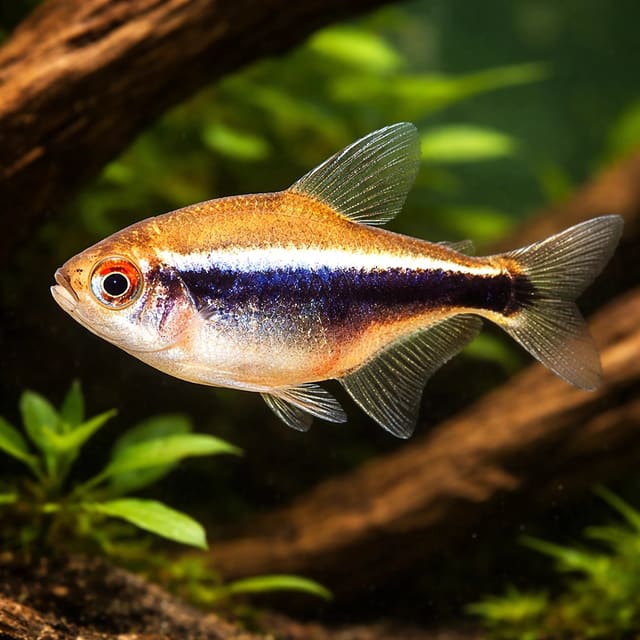
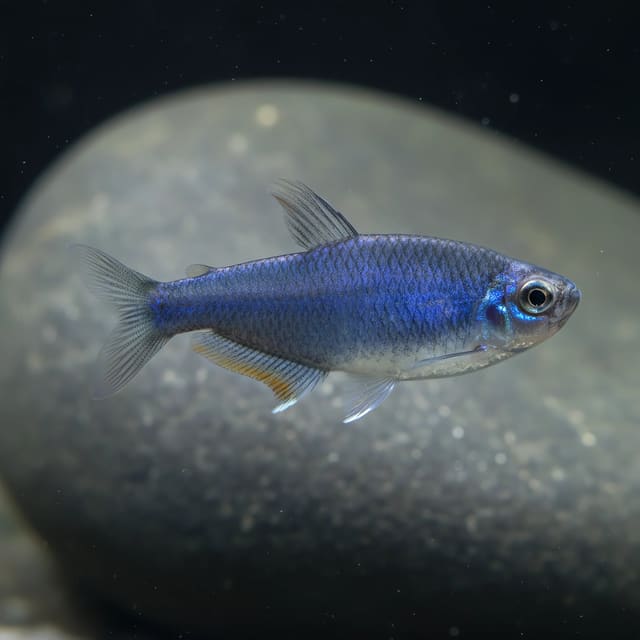
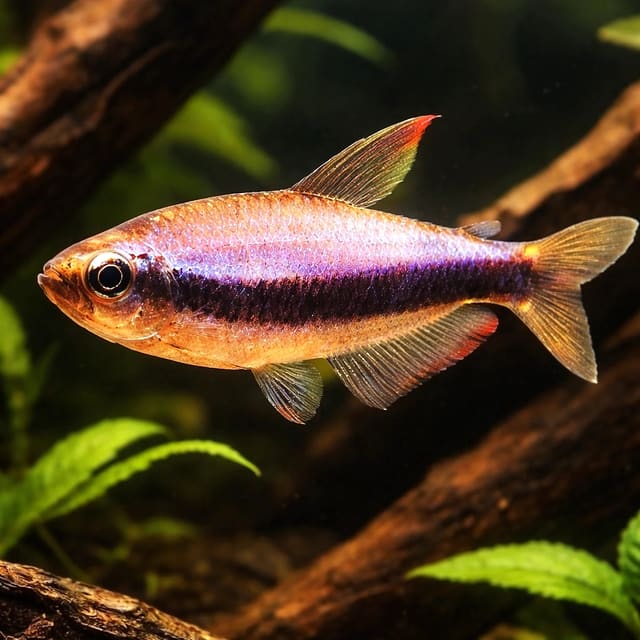
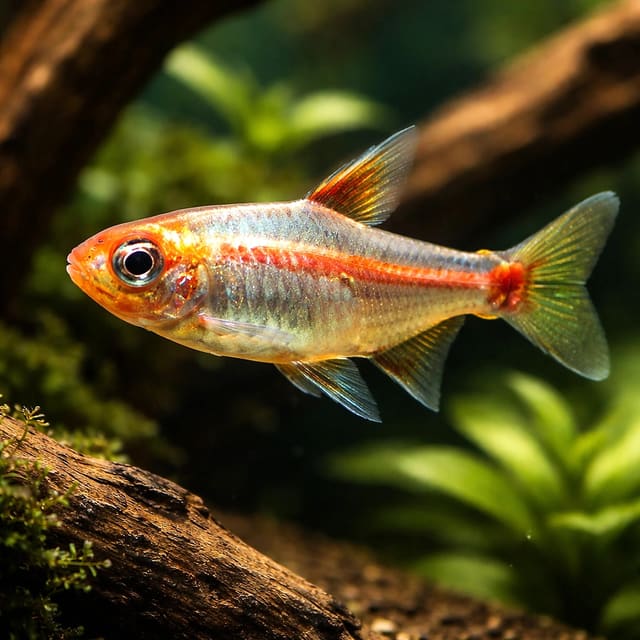
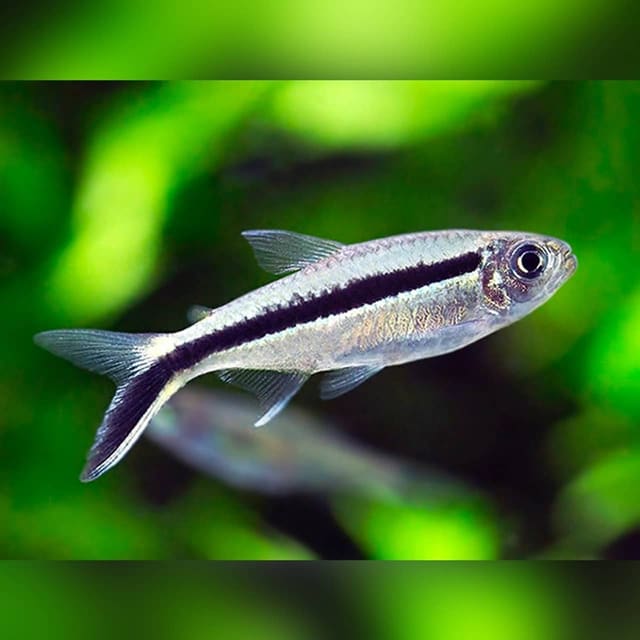
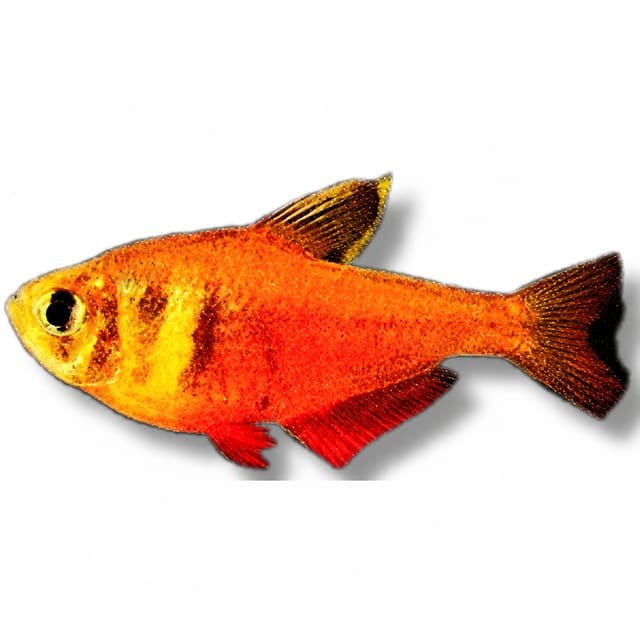
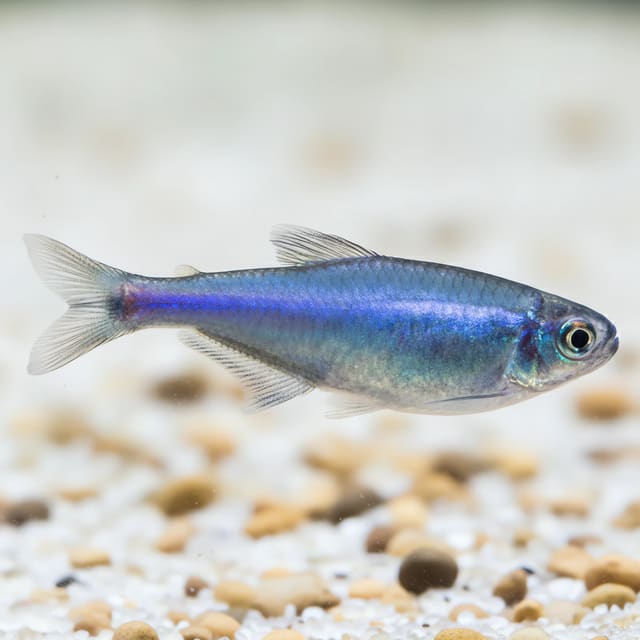
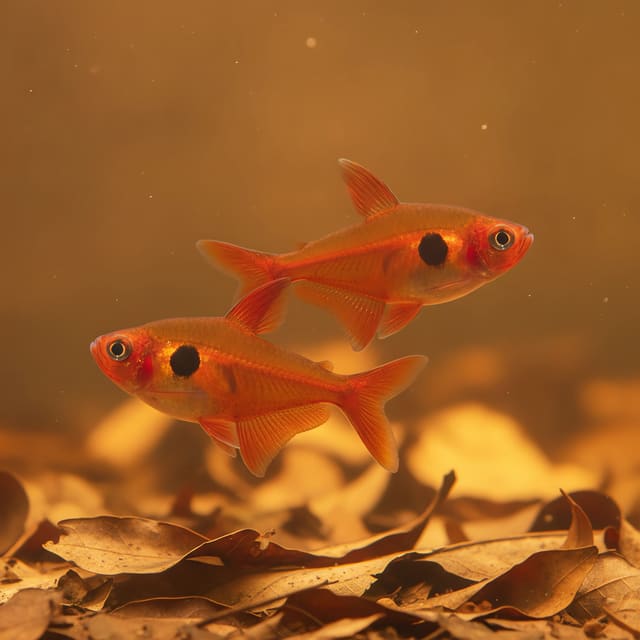
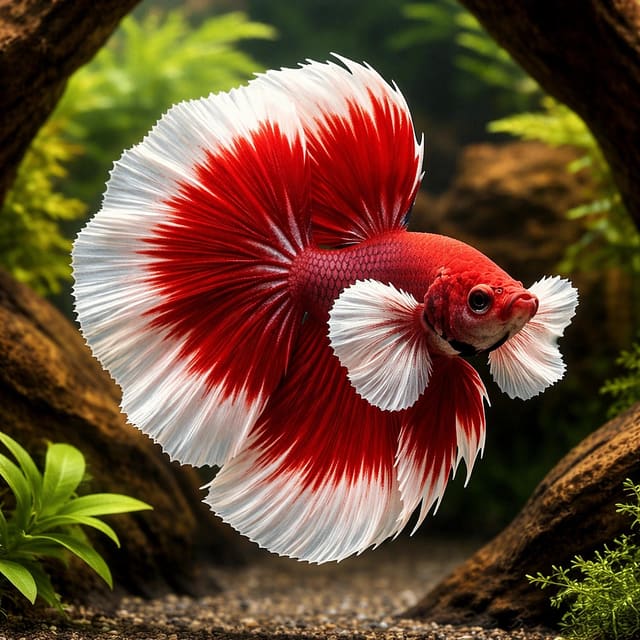
Some gallery images have been digitally enhanced to improve image quality. They show the listed type of animal rather than guaranteeing the exact markings of the individual supplied, so natural colour and pattern can vary. Use the gallery to understand the pale, deep-bodied trade form and its prominent fins rather than to predict the markings, tone or sex of one individual.
Use a 75 × 30 cm aquarium base and about 68 litres as the practical starting point for a group. Seriously Fish gives those dimensions and approximate volume for this species, while FishBase lists 60 cm as the minimum aquarium length. The longer 75 cm plan provides the clearer decision for an active shoal, particularly when the aquarium will also contain compatible community fish.
FishBase records a maximum of 7.5 cm standard length. Seriously Fish gives 6 cm standard length, so plan around the larger 7.5 cm figure rather than assuming every adult will stop at the smaller reference size. Standard length excludes the tail; it is still the planning figure used consistently across this page.
An aquarium’s litre figure is only one part of the decision. A tall aquarium can hold the same water volume as a longer one while giving less horizontal travel, which is why the stated 75 × 30 cm base matters. If companions already occupy the middle water, include their movement and feeding space in the stocking assessment rather than treating unused bottom space as an equivalent substitute.
Keep Gold Widow Tetras at 22–26°C, pH 6.5–7.0 and 5–12 dGH. This is the shared working range formed by the Seriously Fish profile and OATA’s tetra figures: Seriously Fish gives 20–26°C, pH 6.0–7.0 and 5–20 dGH, while OATA gives 22–27°C, pH 6.5–8.0 and 4–12 dGH. FishBase also records the species in freshwater at 20–26°C, pH 6.0–8.0 and 5–19 dH.
Aim for a stable point within the range instead of moving the aquarium around to use every permitted value. For example, an aquarium holding 24°C, pH 6.8 and 8 dGH sits within all three figures. A reading of pH 7.5 fits the wider FishBase environment range but falls outside the 6.0–7.0 aquarium range from Seriously Fish; use the narrower aquarium range for routine care.
Use our water chemistry guide to understand what each test measures, then enter the actual readings into the water matcher when comparing an established aquarium with the target range. Record repeated readings rather than relying on one test, because the purpose is to recognise a change early and protect a stable environment.
Treat replacement tap water before it enters the aquarium. OATA instructs keepers to use a tap-water conditioner that removes harmful chlorine or chloramine. Match the replacement water sensibly to the aquarium conditions so a routine water change does not create an abrupt temperature or chemistry shift.
Use a mature, well-maintained biological filter from the beginning. The RSPCA explains that aquarium fish release toxic ammonia; filter bacteria convert it first to nitrite, which is also toxic, and then to the safer nitrate. A filter therefore does more than clear visible debris: it supports the bacteria responsible for processing dissolved waste.
For an aquarium of about 68 litres, Seriously Fish suggests a turnover of four to five times the aquarium volume per hour and a filter rated around 270–340 litres per hour. Use that as a practical equipment guide for the baseline setup, while also ensuring the layout leaves the group useful swimming room and does not turn the entire aquarium into an unsuitable high-flow channel.
Our first tropical aquarium guide explains how to prepare and mature the setup before livestock arrives. Do not use clear-looking water as a substitute for testing: ammonia and nitrite can be dangerous without making the aquarium look cloudy or dirty.
OATA warns that stocking too quickly can cause new tank syndrome when the bacterial population cannot process the increased waste. If either ammonia or nitrite rises above zero after fish are added, pause further stocking, test the water and correct the water-quality problem rather than adding another group to the same biological load.
Arrange the aquarium around two needs: an open middle-water route for active swimming and quieter covered areas where fish can move out of the main flow. Seriously Fish describes this species as fairly unfussy about décor but specifically recommends plenty of open swimming space together with quieter areas. Dense planting and floating vegetation can dim the entering light and help the fish show their colour.
Place taller plants or suitable ornaments around the sides and back rather than creating a solid barrier through the centre. OATA recommends gravel or sand and ideally live plants; plastic plants and suitable ornaments can provide shelter when live planting is not used. Every decorative choice should leave the shoal able to turn and move through the middle and upper water layers.
Check that wood, rocks, pots and model caves are stable and do not remove the horizontal space on which the 75 × 30 cm plan depends. Décor should create structure, not divide a modest aquarium into narrow compartments that prevent the group from moving together.
Watch how the fish use the finished layout. Persistent crowding in one small area, unusual hiding or repeated difficulty reaching food calls for a review of water quality, group dynamics and the arrangement of cover. Change one practical factor at a time so you can see whether the adjustment improves normal movement.
Use a good-quality flake or suitably sized granule as the regular aquarium food, with small live or frozen foods such as Daphnia and bloodworm added for variety. Seriously Fish describes Gymnocorymbus ternetzi as omnivorous and recommends flakes, granules and regular small live or frozen foods. FishBase records wild adults eating worms, small crustaceans and insects, which supports including appropriately sized invertebrate foods in the rotation.
Feed once a day and offer only what the group can eat within a few minutes. That schedule and portion limit follow OATA’s tetra guidance. Remove the idea that an eager response means the fish need an unrestricted second meal: uneaten food breaks down, adds waste and increases the load on the biological filter.
| What you observe | What to do |
|---|---|
| Food is eaten within a few minutes | Keep the portion consistent and continue varying suitable foods |
| Food remains after the group loses interest | Reduce the next portion and remove accessible leftovers |
| One area receives all the food | Distribute the same controlled portion across the shoal’s swimming area |
| A fish repeatedly ignores food | Check water quality and look for other changes in behaviour or condition |
Match food size to the mouths of the dispatch fish without turning the selected size into a life-stage assumption. Flake can be broken into manageable pieces, and granules should be small enough to take cleanly. Continue to control the total amount by the few-minutes rule.
Use feeding time as a daily observation point. OATA advises watching for reduced intake, changes in body condition, altered colour, unusual breathing and abnormal swimming. A fish that stops competing for food may be showing the first visible sign of a water-quality, health or social problem, so test the aquarium before trying to solve the issue by adding more food.
Carry out a 25% partial water change at least once every week. Change 25% of the aquarium water at least once every week. Use a siphon to remove solid waste from the substrate where needed, and treat replacement water with conditioner before adding it to the aquarium.
Test ammonia and nitrite at least once a week and keep both at 0 mg/l. Check nitrate against the limit of no more than 20 mg/l above the normal tap-water level, then record temperature, pH and hardness often enough to identify movement away from 22–26°C, pH 6.5–7.0 and 5–12 dGH.
Do not replace mature media simply because it looks discoloured. Its useful bacterial population is part of the aquarium’s waste-processing system. Clean only as needed to restore function, and avoid combining unnecessary media disruption with rapid stocking or increased feeding.
Review the result after maintenance rather than assuming the task is complete when new water has been added. Confirm normal filter flow, stable temperature and ordinary swimming and breathing. If a test result is outside the target, resolve that value before adding livestock.
The weekly routine protects more than water clarity. Small amounts of ammonia can stress tetras, while excess food and accumulated waste place additional demand on the filter. Consistent testing, controlled feeding and partial water changes work together; none of the three replaces the others.
Confirm ammonia and nitrite are both 0 mg/l before adding the Gold Widow Tetra, then increase the aquarium population gradually. OATA explains that the beneficial bacterial population must expand whenever fish and feeding are added. A large, sudden increase can leave too few bacteria to process the new waste load.
Watch for hanging at the surface, sitting on the bottom, erratic swimming, unusual hiding, a darker or paler appearance, faster or slower gill movement, white spots, fluffy growths, damaged fins, missing scales, ulcers, bumps or a change in body condition. These are practical prompts to investigate rather than diagnoses.
If behaviour, breathing, appearance or feeding changes, test the water first and compare it with the normal readings for that aquarium. Correct any ammonia, nitrite, temperature or chemistry problem promptly. Contact us for further health guidance when the change continues or the fish’s condition concerns you.
For the rest of the first month, continue the same weekly testing and 25% water-change routine instead of relaxing maintenance because the first few days appeared normal. Delay further additions if the filter flow changes, waste accumulates, feeding leaves leftovers or test results move away from the established baseline.
Receive the parcel in person and start filming before it is opened. The Tropical Fish Co delivery and Live Arrival Guarantee policy requires a continuous unboxing video for every delivery, beginning with the parcel still sealed and the outer box visible.
Keep the order number and continuous video. If a Live Arrival Guarantee claim is needed, send them through the policy route on the same day. The video must show the sequence from the sealed parcel through opening to the fish still inside its sealed bag.
Separate arrival handling from aquarium readiness. The destination aquarium should already be mature, filtered and tested before the parcel is received. Floating the bag does not correct ammonia, nitrite, an unsuitable pH or an aquarium that lacks enough space for the planned group.
Gold Widow Tetras are generally peaceful and lively, but they have a reputation for fin nipping. Seriously Fish says this behaviour can usually be rectified by keeping a shoal of at least 12, because squabbling is then generally contained within the group. Use 12 as the practical social target when planning a community rather than relying only on the FishBase baseline of five or more.
A group smaller than 12 is not automatically aggressive, and a 12-fish shoal is not a promise that every individual interaction will be harmless. The useful decision is to provide enough conspecifics, suitable swimming space and compatible companions while watching where repeated attention is directed.
Do not describe the species as completely non-aggressive. Its value in a community comes from being generally peaceful when its social needs are planned properly, not from an absence of all chasing or squabbling. Equally, do not treat ordinary shoal interaction as a reason to isolate one tetra, because OATA warns that tetras kept singly or in groups that are too small often become stressed.
Group number must be considered alongside aquarium capacity. A shoal of 12 plus companions can require more room and filtration capacity than the baseline group setup, especially when other active fish share the middle water. Protect the social plan without overcrowding the aquarium.
Choose companions of a similar size and temperament, then confirm that their water and space requirements also fit the aquarium. OATA gives similar size and temperament as the general tetra screening rule. Seriously Fish identifies this species as one of the better tetras for a general community, but every proposed mix still depends on the particular aquarium and the full stocking plan.
These are candidate kinds, not universal matches. Check the adult size and behaviour of the exact companion, provide enough footprint for the 12-fish tetra shoal and avoid crowding several active groups into the same swimming layer. A shared common label such as “tetra” or “livebearer” does not replace an assessment of the particular fish.
Use caution with slow or long-finned companions because this tetra may nip fins. Seriously Fish links the practical remedy to a shoal of at least 12, so do not rely on extra plants or a larger aquarium as a substitute for the social group. Monitor fins and repeated pursuit after introduction.
Treat shrimp, snails and other invertebrates as an individual stocking decision. Their compatibility remains uncertain until the exact animal, its size and the aquarium layout have been assessed. Do not infer safety merely because the tetra is described as generally peaceful; FishBase records wild feeding on worms, small crustaceans and insects.
Contact us with the aquarium dimensions, measured water values, existing inhabitants and planned tetra number when you want a stocking assessment. That information allows a useful decision about shared water, swimming space and temperament without turning a named companion into a blanket promise.
It reaches a recorded maximum of 7.5 cm standard length according to FishBase, so use 7.5 cm as the adult planning figure throughout the aquarium.
Plan a base of at least 75 × 30 cm and about 68 litres for a group, following the species profile from Seriously Fish; include additional capacity for companions and a 12-fish shoal.
Plan at least 12 to reduce fin-nipping risk, as Seriously Fish says this usually keeps squabbling within the shoal; FishBase gives five or more as the baseline group.
Yes. Seriously Fish identifies it as one of the better newcomer choices, provided the aquarium is mature and filtered, water is tested and the full shoal has enough swimming space.
Feed a quality flake or suitably sized granule once daily in an amount eaten within a few minutes, with regular small live or frozen Daphnia and bloodworm for variety.
Keep it at 22–26°C, pH 6.5–7.0 and 5–12 dGH; these values are the overlap of the Seriously Fish species profile and OATA’s tetra guidance.
It is generally peaceful and lively but may nip fins; keeping at least 12 can usually redirect squabbling into the shoal, while slow or long-finned companions need caution.
Candidate fish include most livebearers, danios, rasboras, other tetras, Corydoras, smaller Loricariids, robust dwarf cichlids and angelfish after screening; assess invertebrates individually rather than assuming a match.
Tropical Fish Co’s policy uses oxygen-filled bags, an insulated box and a licensed live-animal courier; receive it in person, film from the sealed parcel and float the bag for 20–30 minutes before release.
No reviews for this item yet. Bought one? Honest reviews only, good or bad.
What customers say about ordering from us
I have a small group of long finned mountain minnows. So was delighted to be able to order ten of this variety to increase the genetics in my tank . The ones I recieved are healthy but it’s to early to give a verdict on wether they are of a long finned type since they are small currently.
Gordon Walker · 23 Sept 2026
100% success travel and "installation". Pleased with quality of purchase. The Siamese fighter a bit "shy" so have not yet seen him at his best yet but looking good. Happy customer. GG
George E Garratt · 21 Sept 2026
Reviews of our shop, collected by Judge.me, an independent third-party review collector. Newest first.