Moderate
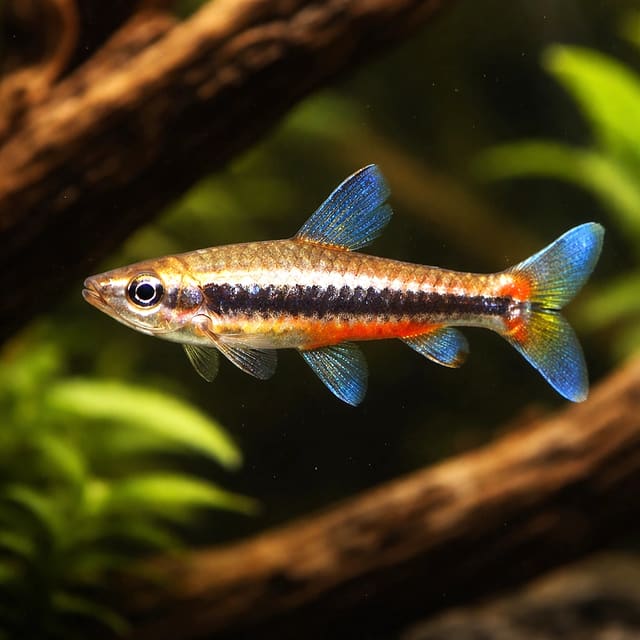
Neon Tetra (Paracheirodon innesi)
21–25°C · pH 5–7
£2.99

The Buenos Aires Tetra (Psalidodon anisitsi) is a South American freshwater tetra from the Paraná and Uruguay River basins that reaches 13.2 cm total length. It suits keepers able to maintain at least five; OATA’s tetra guidance gives 22–27°C, pH 6.5–8.0 and 4–12°dH, and says to avoid timid or long-finned fish. Sold individually in 3.5–4 cm and 4.5–5.5 cm dispatch sizes.
Adult size is the maximum length this species reaches at full maturity (scientific sources). The livestock you receive will be younger and smaller — pick a size above for the actual shipping size. Product-photo provenance and any image-specific limitations are stated on the listing.
Psalidodon anisitsi
Shoaling fish: kept in a group they feel safer, stay calmer and show their best colour.
Minimum of 2 per order.
The Buenos Aires Tetra (Psalidodon anisitsi) is a South American freshwater tetra from the Paraná and Uruguay River basins that reaches 13.2 cm total length. It suits keepers able to maintain at least five; OATA’s tetra guidance gives 22–27°C, pH 6.5–8.0 and 4–12°dH, and says to avoid timid or long-finned fish. Sold individually in 3.5–4 cm and 4.5–5.5 cm dispatch sizes.
Adult size is the maximum length this species reaches at full maturity (scientific sources). The livestock you receive will be younger and smaller — pick a size above for the actual shipping size. Product-photo provenance and any image-specific limitations are stated on the listing.
Maintain these water conditions for optimal health and vibrant colors
The Buenos Aires Tetra (Psalidodon anisitsi) is a freshwater ray-finned fish from South America. FishBase places it in Acestrorhamphidae among the American tetras and records it from the Paraná and Uruguay River basins. It reaches a recorded maximum of 13.2 cm total length. Wikipedia identifies the Buenos Aires Tetra as a South American freshwater member of the same family.
This fish suits a keeper who can maintain a shoal of at least five, provide a mature filtered aquarium and avoid timid or long-finned companions. It is a larger, boisterous tetra rather than a choice for a community built around quiet fish or trailing fins.
The 13.2 cm figure is a maximum record, not a promise that every individual will reach exactly that length. It is still the safer figure around which to plan swimming room, filtration capacity and companion size. Do not treat the dispatch size as a permanent adult size.
| Size label | What it means |
|---|---|
| 3.5–4 cm | One fish within this dispatch-size band per purchase |
| 4.5–5.5 cm | One fish within this larger dispatch-size band per purchase |
The size you select is the size supplied, not the adult size. Both choices refer to the same species, and the live size selector is where you choose the required dispatch size. Increasing the purchase quantity increases the number of individual fish; it does not turn one unit into a pair or a ready-made shoal.
Sex is guaranteed only when the selected option explicitly states male or female. This Buenos Aires Tetra listing has no sex-guaranteed option.
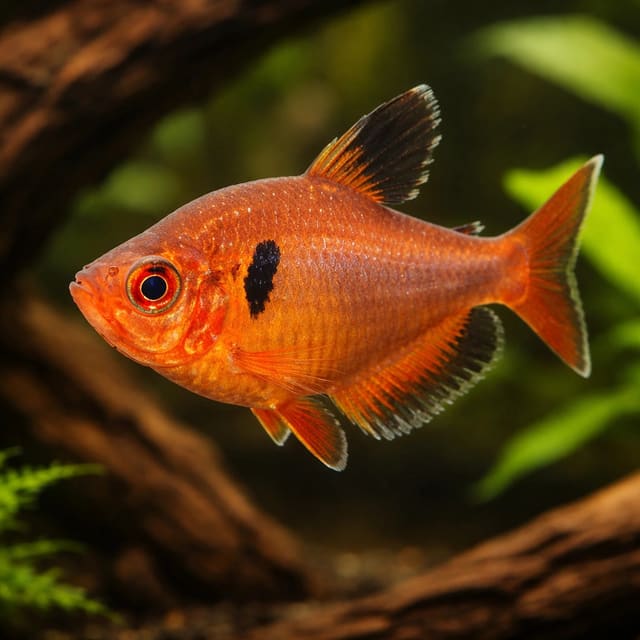
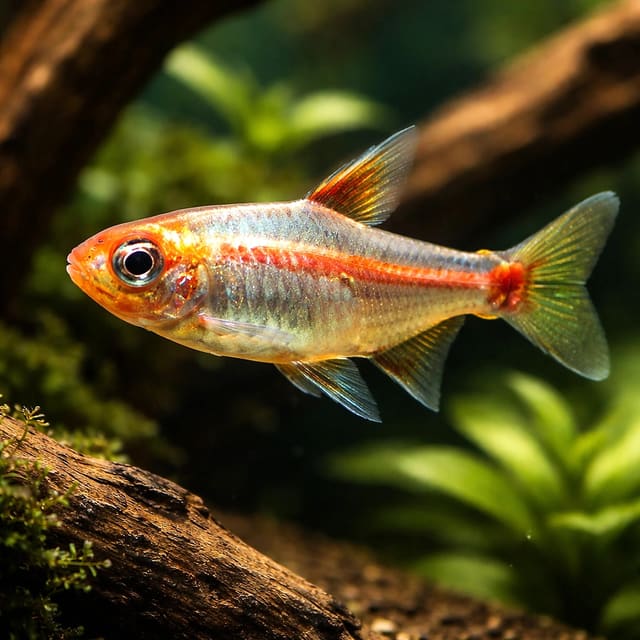
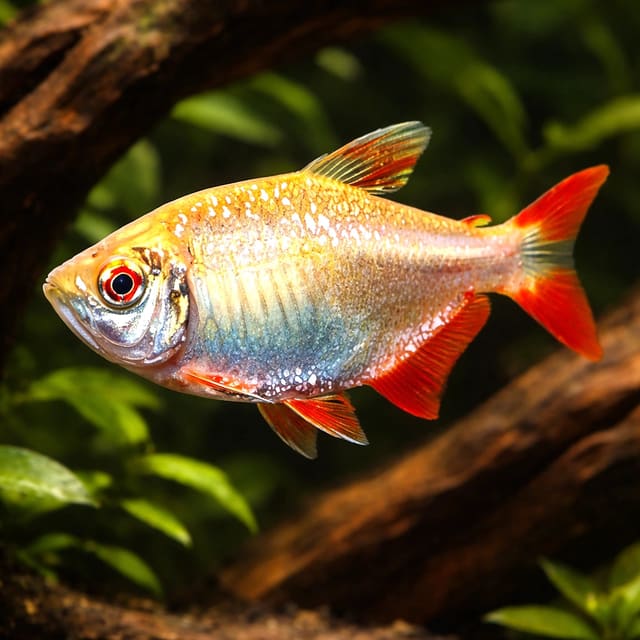
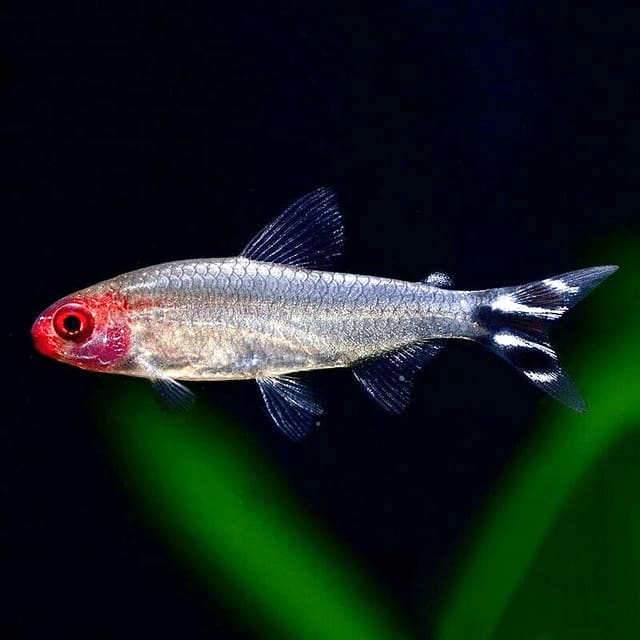
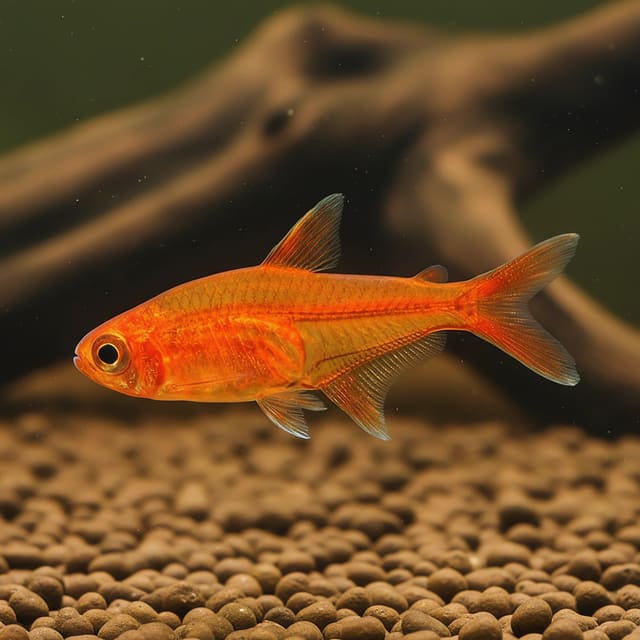
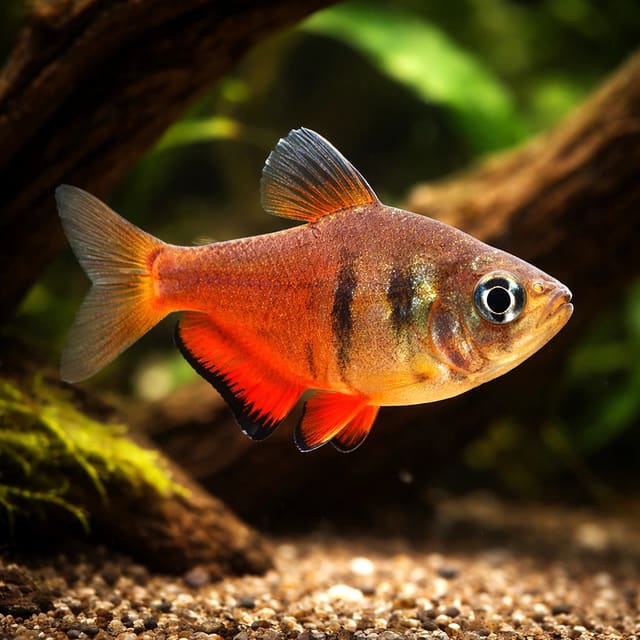
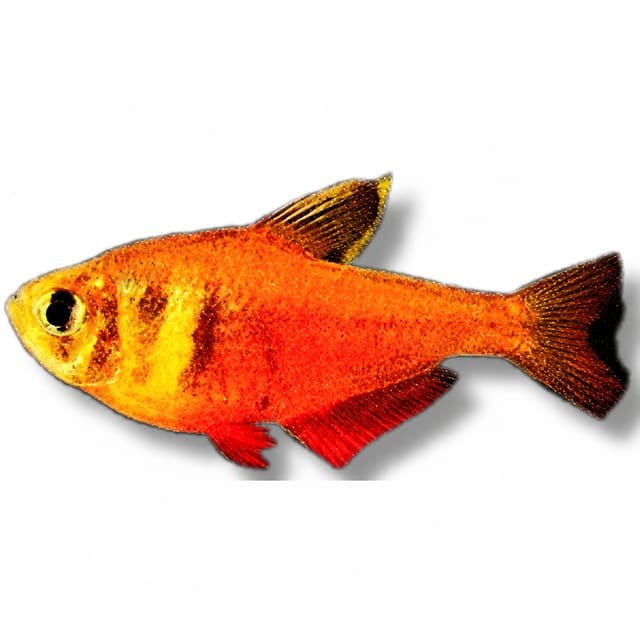
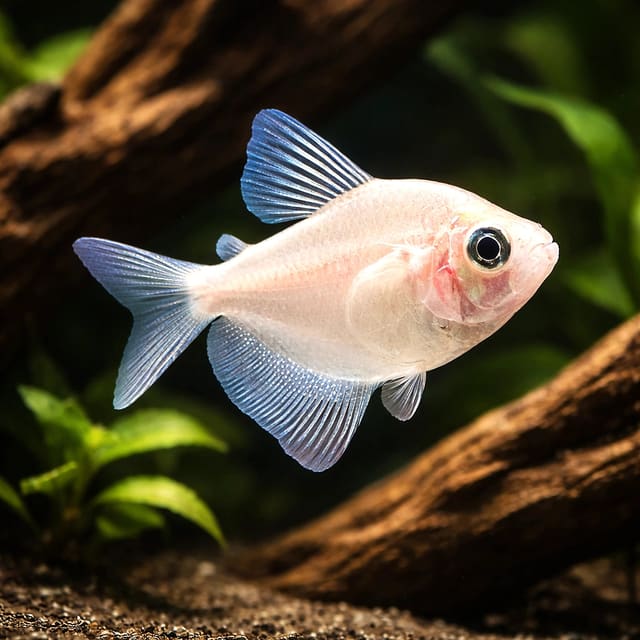
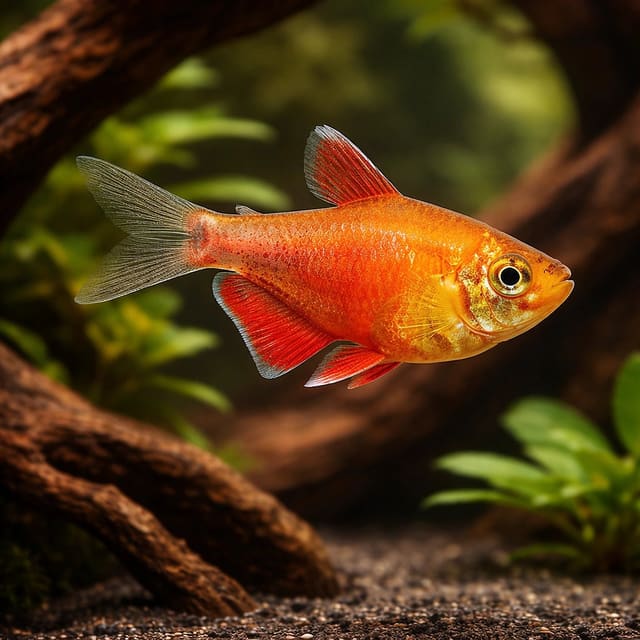
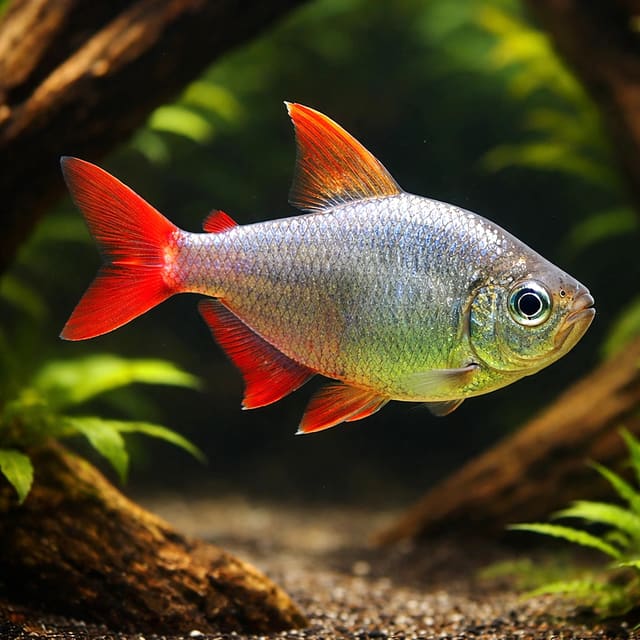
The gallery images are representative, based on reference photographs of this species, so colours can look slightly different from the live animal.
Prepare the aquarium and planned group before choosing a quantity. For packing, dispatch arrangements and guarantee conditions, read the current delivery and Live Arrival Guarantee policy.
OATA’s tetra and pencilfish guidance gives 22–27°C, pH 6.5–8.0, general hardness of 4–12°dH and carbonate hardness of 3–10°dKH for the group. It also requires zero ammonia, zero nitrite and nitrate no more than 20 mg per litre above the normal tap-water level. Use these as group guidance rather than a species-specific optimum, and choose one stable point that also suits every intended companion.
OATA recommends at least 80 litres for larger tetra species measuring more than 5 cm. Because FishBase records this fish at up to 13.2 cm total length, the larger-tetra figure is the appropriate starting point. Treat 80 litres as a planning floor for a small shoal, not an automatic capacity for unlimited companions. Aquarium shape, usable swimming room, filter capacity and the eventual size of every fish still determine whether a proposed community is sensible.
Tetras are shoaling fish. Keep at least five, with more being better when the aquarium and filter can carry the extra adult load. A single fish or an undersized group will often become stressed. Plan the social group and the biological load together rather than choosing the fish count from litres alone.
| Decision | Planning value |
|---|---|
| Recorded maximum length | Up to 13.2 cm total length |
| Starting aquarium volume | At least 80 litres under larger-tetra guidance |
| Social group | At least five; more is better where capacity allows |
| Temperature | 22–27°C |
| pH | 6.5–8.0 |
| General hardness | 4–12°dH |
| Ammonia and nitrite | Zero mg per litre |
| Suits | Not suited to |
|---|---|
| A mature filtered aquarium starting at 80 litres for a small shoal | An aquarium that cannot accommodate at least five |
| Keepers able to maintain 22–27°C and pH 6.5–8.0 | Communities built around timid fish |
| Communities screened for similar size and temperament | Communities containing long-finned fish |
| A layout with shelter and open swimming room | A stocking plan based only on the dispatch size |
An 80-litre aquarium with a mature filter may be a starting point for the required shoal, but it is not automatically suitable for a heavily stocked mixed community. A larger aquarium normally gives more swimming room and makes temperature and water quality easier to keep stable. Leave open water for movement while providing shelter around the edges, then reserve filter capacity for the complete adult community.
This tetra suits a keeper who can maintain a shoal, test the water every week and screen companions for temperament and fin shape. Choose another aquarium plan if the intended community depends on timid fish or long, trailing fins.
Keep the aquarium between 22 and 27°C, with pH between 6.5 and 8.0. General hardness should remain within 4–12°dH, while carbonate hardness should be 3–10°dKH. These are ranges within which to choose a stable operating point, not a sequence of values through which the aquarium should move.
Start by testing the tap water and the established aquarium. Use the water chemistry guide to understand what pH, general hardness, carbonate hardness, ammonia, nitrite and nitrate measure. The water matcher can then help compare measured aquarium values with the working ranges used here.
| Test result | Required response |
|---|---|
| Ammonia above zero | Pause further stocking and address water quality immediately |
| Nitrite above zero | Pause further stocking and check biological filtration |
| Nitrate rising rapidly | Review feeding, stocking and the water-change routine |
| Temperature moving outside 22–27°C | Restore stability gradually and check the equipment or room conditions |
| pH or hardness within range and stable | Avoid unnecessary adjustments |
Ammonia and nitrite must be zero because both are toxic. Nitrate should not exceed 20 mg per litre above the level already present in normal tap water. Measure the tap-water baseline rather than treating 20 mg per litre as a universal final reading. For example, if the tap water measures 10 mg per litre nitrate, the stated ceiling is 30 mg per litre in the aquarium; if the tap water measures 25 mg per litre, the corresponding ceiling is 45 mg per litre.
Stability matters because every intended companion must live at the same temperature and in the same chemistry. Compare requirements before combining species, then maintain one suitable point rather than pushing the aquarium towards opposite ends of the range for different fish. Record readings taken at the same stage of the weekly routine so changes are easier to recognise.
Do not alter several values at once in response to a single unusual test. Repeat the measurement correctly, check temperature and filtration, and compare it with the normal pattern for that aquarium. A measured response protects the fish from abrupt changes while addressing the value that actually needs attention.
A working biological filter is essential. The RSPCA explains that fish release toxic ammonia and that beneficial bacteria in a well-set-up filter convert it first to toxic nitrite and then to safer nitrate. A mature aquarium is therefore one in which the filter is processing waste reliably, not simply one that has contained water for a particular number of days.
Prepare and mature the aquarium before livestock is introduced. If this is your first setup, follow the first tropical aquarium guide, then confirm with tests that ammonia and nitrite are both zero. Do not use clear-looking water as a substitute for those readings; dissolved toxic waste can be present without making the aquarium visibly dirty.
Overstocking or increasing the population too quickly can leave too few nitrifying bacteria to process the extra waste. This can produce unhealthy ammonia and nitrite levels associated with new tank syndrome. The correct preventive action is to plan the intended group before purchase, mature enough filtration for that load and keep testing as the aquarium population changes.
Filter capacity is not a reason to ignore swimming room. A powerful unit cannot turn an undersized aquarium into suitable accommodation, just as a large aquarium cannot remain healthy without effective biological filtration. Volume, open space, shelter, adult stock and waste processing must work together.
Before adding the shoal, confirm that the filter is operating normally, temperature is within 22–27°C and both ammonia and nitrite read zero. If any of those checks fails, correct the aquarium first. This protects the fish and avoids placing extra waste into a system that is already struggling.
Start with an aquarium of at least 80 litres for the small shoal and assess how much of that volume remains usable after substrate, ornaments and equipment are installed. The recorded maximum of up to 13.2 cm total length makes adult planning essential. A dispatch-size fish still needs accommodation designed for later growth and for the movement of the entire group.
Use aquarium gravel or sand as the substrate. Provide shelter with live plants where appropriate, or use plastic plants and suitable ornaments such as plant pots or model caves. These features give fish places to move out of view, but they should not consume all of the swimming area. Arrange cover around open water rather than filling every part of the aquarium with solid decoration.
| Layout feature | Decision to make |
|---|---|
| Open water | Keep a clear area large enough for the shoal to move together |
| Plants or ornaments | Use them to provide shelter without blocking the central space |
| Substrate | Choose aquarium gravel or sand and keep it accessible for cleaning |
| Filter equipment | Place it where normal operation does not remove all calm shelter |
| Total stocking | Reserve room for every fish at its later size |
A nominal 80-litre volume is only a starting point. Two aquariums with the same stated volume can provide different amounts of practical swimming room once their shapes and decoration are considered. Choose the layout that gives the group both an open route and places of refuge. More volume also tends to make temperature and water quality more stable.
Assess the aquarium after decorating it. Look from end to end and identify whether the fish can move through the main water area without meeting a solid barrier at every turn. Then check that shelter is spread across more than one point, so access is not limited to a single ornament.
Plan all companions before deciding that spare-looking water is genuinely spare capacity. Fish sharing a similar swimming area compete for the same room even when the filter can process their waste. Bottom, middle and upper positions can help organise a community, but they do not cancel the need to assess adult size, temperament and total biological load.
Keep Buenos Aires Tetras in a group of at least five. More is better when the aquarium has enough volume, swimming room and established filtration for the extra adult load. Tetras kept singly or in groups that are too small will often become stressed, so one fish should not be treated as a complete long-term social plan.
Work backwards from the adult community. First account for the tetra shoal, then add every established or intended companion to the calculation. Compare their expected sizes, water ranges, temperaments and swimming needs. Finally, decide whether the filter and water-change routine can keep ammonia and nitrite at zero after feeding increases.
Purchase quantity and social requirement are separate decisions. Each purchase represents one fish of the selected size, while the welfare plan calls for at least five in the aquarium. The required quantity therefore depends on how many compatible Buenos Aires Tetras already live in suitable accommodation, not on whether an image happens to show one or two animals.
Observe the group after any stocking change. Changes in aggression, hiding, swimming position, breathing, colour, body condition or feeding interest can indicate that the fish are under pressure. Check water quality first, then reassess space, group number and the temperament of companions.
Do not use a larger group as a guaranteed cure for every behavioural problem. More fish also mean more waste and less space per individual. The better decision is the largest sensible shoal that the mature aquarium can support while maintaining stable water and suitable separation from timid or long-finned fish.
FishBase records worms, crustaceans, insects and plants in the wild diet. For aquarium feeding, OATA’s tetra guidance treats the group as omnivorous. Use a good-quality flake or granule as the main aquarium food and add variety with small live or frozen items such as daphnia, small bloodworm or tubifex. Choose pieces that the fish can take readily rather than offering food that is too large for the individuals in the selected dispatch size.
Feed once a day and offer only what the shoal can consume within a few minutes. This instruction controls both nutrition and water quality: uneaten food breaks down and releases waste into the aquarium. A large portion is not a substitute for watching whether every fish has had access.
Rotate suitable food types rather than making every portion richer or larger. Flake or granules provide a consistent base, while small live or frozen foods add variety. The instruction remains one controlled daily feed, not separate full meals for every food type.
| What you observe | What to do next |
|---|---|
| Food remains after a few minutes | Reduce the next portion and remove accessible leftovers |
| Only the quickest fish feed | Distribute a modest portion so more of the shoal can reach it |
| Interest in food falls | Test water and check for other changes in behaviour or appearance |
| Waste readings rise | Review portion size, stocking and filtration before adding more food |
Avoid repeatedly adding food to test a fish that has lost interest. Reduced feeding can be an early health or water-quality warning. Look for changes in breathing, colour, swimming, hiding and body condition, then test ammonia, nitrite, nitrate and temperature.
Keep feeding consistent enough that changes are meaningful. If the same measured amount is normally eaten readily but suddenly remains, that contrast provides a useful signal. Record the food offered alongside test results when investigating a change.
Complete the aquarium preparation before the fish are introduced. The tank should be large enough for the planned shoal, contain a functioning filter, provide open swimming room and shelter, and hold water within 22–27°C, pH 6.5–8.0 and the stated hardness ranges. Test ammonia and nitrite immediately before stocking; both must be zero.
Increase the aquarium population slowly. Beneficial bacteria need to increase as more fish are added and feeding rises. If stocking grows more quickly than the filter can respond, ammonia and nitrite may reach unhealthy levels. A planned shoal does not remove the need to consider the filter’s current load.
| Checkpoint | What to examine |
|---|---|
| Water | Ammonia and nitrite remain zero; nitrate follows the expected pattern |
| Swimming | No new surface hanging, bottom sitting or erratic movement |
| Breathing | No clear increase or decrease in gill-cover movement |
| Feeding | The daily portion is eaten within a few minutes |
| Social response | No rising aggression, unusual isolation or increased hiding |
During the first month, continue the same weekly tests and 25% partial water changes carried out at least once a week. Compare each result with earlier readings. If ammonia or nitrite appears, pause any further stocking and address water quality rather than assuming the filter will catch up without intervention.
Healthy fish should have clear, bright eyes, undamaged fins, intact scales and no ulcerations or bumps. Use those visible checks alongside swimming, breathing, temperament, body condition and feeding. A fish can look outwardly intact while water quality is changing, which is why observation and testing belong together.
Do not judge success from the first feeding alone. The useful measure is whether water remains stable and the shoal maintains normal movement, feeding and condition through repeated checks. Keep a short record of tests, maintenance and notable changes so a developing pattern is easier to act upon.
Carry out a 25% partial water change at least once a week. A siphon can remove solid waste from accessible areas of gravel or sand while the water is withdrawn. Treat replacement tap water with conditioner to remove harmful chlorine or chloramine before it enters the aquarium.
Test the water at least weekly. Ammonia and nitrite must remain zero, and nitrate must stay no more than 20 mg per litre above the normal tap-water level. Take the readings as part of a consistent routine so a change can be compared with the aquarium’s usual pattern.
The weekly water change, substrate cleaning and filter check perform different jobs. Replacing water controls dissolved waste; siphoning removes solid debris; the filter processes ammonia and nitrite. Do not replace one task with another or strip the filter so thoroughly that its bacterial population is lost.
| Change seen | First action |
|---|---|
| Surface hanging, bottom sitting or erratic swimming | Test water quality and temperature |
| Faster or slower gill movement | Check water and compare the whole group |
| Darker or paler colour | Look for simultaneous behavioural or water changes |
| More aggression or hiding | Reassess companions, space and group conditions |
| White spots, fluffy growths or lost fins or scales | Test water and seek health guidance |
| Reduced food intake or body condition | Review feeding access and check for other signs |
If you are concerned about a health change, test the water and contact us with the results, the aquarium temperature, recent maintenance and the signs observed. Do not choose a treatment from one symptom alone; first establish whether water quality or a husbandry change is contributing.
Keep the maintenance routine proportionate and consistent. Overfeeding, rapid stocking or a blocked filter can increase waste between weekly changes, so correct the cause as well as restoring the water. Stable results and unchanged behaviour are stronger indicators than a tank that merely looks clear.
Buenos Aires Tetras are among the larger or more boisterous tetras covered by OATA’s guidance. Avoid keeping them with timid or long-finned fish because they may nip fins. This is the decisive exclusion rule: a companion should not be chosen simply because both animals are commonly placed in community aquariums.
Tetras mix best with species of a similar size and temperament. Treat that as a screening rule rather than a universal tank-mate list. Compatibility remains conditional on adult size, behaviour, shared water requirements, aquarium volume, swimming room, group number and the total load on the filter.
| Companion profile | Decision |
|---|---|
| Timid fish | Avoid because this boisterous tetra may place it under pressure |
| Long-finned fish | Avoid because fins may be nipped |
| Similar size and temperament | Consider only after checking water, space and total stocking |
| Different water requirements | Do not combine unless one stable range suits both |
| Unknown adult size or temperament | Establish those details before making the stocking decision |
Begin with the water overlap. Both species must be comfortable at one stable temperature between 22 and 27°C and within the stated chemistry. Next compare adult size and temperament. Then calculate whether the aquarium provides enough swimming space and whether the mature filter can handle both groups at their later size.
Use the current tetra collection to compare identities and care requirements, not to assume that every tetra belongs in the same community. Family or trade-group similarity does not cancel differences in size or behaviour.
For a stocking and compatibility assessment, contact us with the aquarium volume, current fish, measured temperature, pH and hardness, and the number of Buenos Aires Tetras planned. Include adult sizes rather than dispatch sizes wherever possible. That information allows the proposed community to be assessed as one system.
If the aquarium already contains timid or long-finned fish, choose a different stocking plan. Extra food, decoration or a larger shoal should not be used to override the supported avoidance rule.
Compatibility must be monitored after the initial decision because fish can vary in behaviour. Watch for increased aggression, unusual hiding, loss of feeding interest, changes in body condition, damaged fins, altered swimming or a fish remaining away from the group. These signs require action even when the community appeared suitable on paper.
| If you see this | Do this |
|---|---|
| A timid fish hides more than normal | Reassess the combination and remove the incompatibility rather than adding more pressure |
| Long fins become damaged | Separate the incompatible combination into suitable filtered accommodation |
| Aggression rises after new fish are added | Pause stocking and review group number, space and temperament |
| Several fish change behaviour together | Test ammonia, nitrite, nitrate and temperature first |
| One fish loses access to food | Review feeding distribution and whether it is being intimidated |
Water-quality trouble can resemble a compatibility problem because it may change swimming, breathing, colour, temperament and feeding. Test first whenever several animals show a change at the same time. Ammonia or nitrite above zero requires immediate attention to water quality and filtration, regardless of how the fish interact.
When damage or persistent intimidation centres on a timid or long-finned companion, follow the avoidance rule and end that combination. Do not wait for repeated fin loss or declining body condition. Any alternative accommodation must itself be mature, filtered and suitable for the fish moved into it.
A shoal of at least five supports the tetra’s social requirement, but group number is only one part of compatibility. Adding fish to a crowded aquarium can increase waste and competition. Increase the shoal only where the aquarium can carry the additional adults while keeping water stable.
Review the community again as fish grow. A combination formed around small dispatch sizes may use much more space later, and FishBase’s maximum record reaches up to 13.2 cm total length. Preserve open swimming room and reassess total stocking before every addition.
The most reliable community plan is conservative: a proper shoal, companions of similar size and temperament, shared water values, adequate volume and a mature filter. Where one of those conditions changes, repeat the screen rather than relying on the aquarium’s earlier history.
The Buenos Aires Tetra reaches a FishBase-recorded maximum of 13.2 cm total length. Plan the aquarium around that adult figure rather than its 3.5–5.5 cm dispatch size.
Start with at least 80 litres for a small shoal. OATA gives this minimum for larger tetra species over 5 cm; provide a mature filter, shelter and open swimming room, then allow additional capacity for every companion.
Keep at least five. OATA’s tetra guidance says these shoaling fish will often become stressed when kept singly or in groups that are too small, and more is better where aquarium space and filtration allow.
It suits a prepared keeper who can maintain at least five in a mature filtered aquarium, test the water weekly and avoid timid or long-finned companions. Its adult size and boisterous behaviour require planning.
FishBase records worms, crustaceans, insects and plants in its wild diet. OATA recommends good-quality flake or granules once a day, limited to what the fish eat within a few minutes, with small daphnia, bloodworm or tubifex for variety.
OATA’s tetra guidance gives 22–27°C, pH 6.5–8.0, general hardness of 4–12°dH and carbonate hardness of 3–10°dKH. Keep ammonia and nitrite at zero and choose a stable point within those group ranges.
This fish is one of the larger or more boisterous tetras covered by OATA’s guidance and may nip fins. Avoid timid or long-finned fish, and act if you see persistent hiding, damaged fins or loss of feeding access.
Consider fish of a similar size and temperament only after checking shared water requirements, adult stocking, swimming room and filtration. Avoid timid or long-finned fish; no named companion is an automatic match.
Someone must be present to receive the parcel. Film every delivery continuously from the sealed parcel as it is opened, keeping the fish in the sealed bag in view; float the bag for 20–30 minutes before releasing the fish, and never pour the bag water into the aquarium.
No reviews for this item yet. Bought one? Honest reviews only, good or bad.
What customers say about ordering from us
I have a small group of long finned mountain minnows. So was delighted to be able to order ten of this variety to increase the genetics in my tank . The ones I recieved are healthy but it’s to early to give a verdict on wether they are of a long finned type since they are small currently.
Gordon Walker · 23 Sept 2026
100% success travel and "installation". Pleased with quality of purchase. The Siamese fighter a bit "shy" so have not yet seen him at his best yet but looking good. Happy customer. GG
George E Garratt · 21 Sept 2026
Reviews of our shop, collected by Judge.me, an independent third-party review collector. Newest first.