Moderate
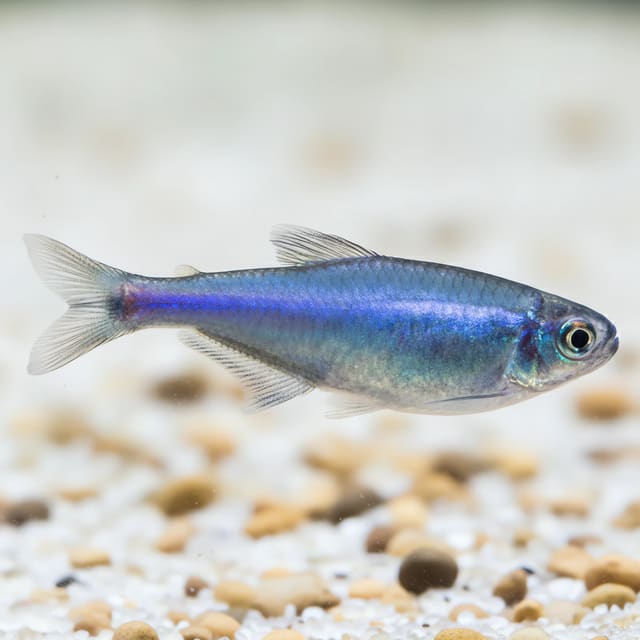
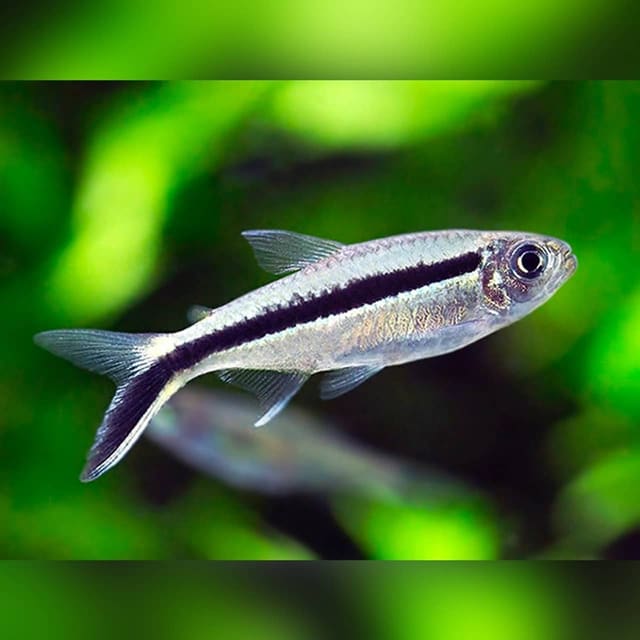
Neon Tetra (Paracheirodon innesi)
21–25°C · pH 5–7
£2.99

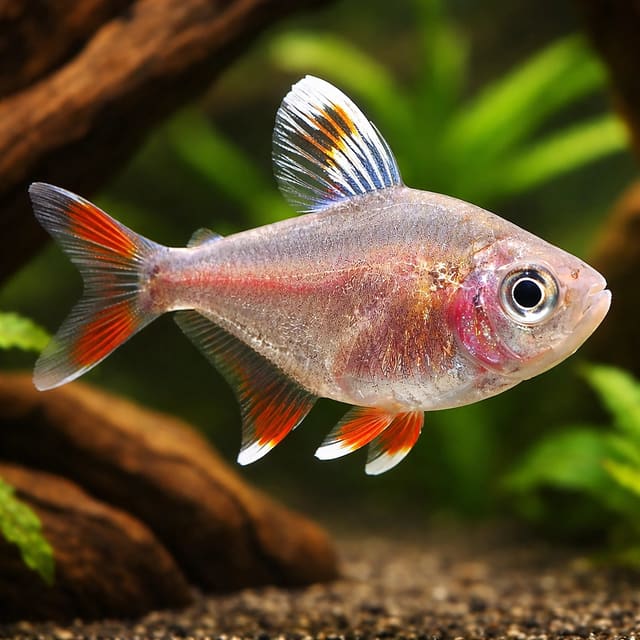
Rummy Nose Tetra (Petitella rhodostoma) is a peaceful, active shoaling tetra reaching up to 5 cm. One purchase supplies one fish in the size selected; keep 10 or preferably more in a mature aquarium at least 90 cm long, at 24–27°C.
Adult size is the maximum length this species reaches at full maturity (scientific sources). The livestock you receive will be younger and smaller — pick a size above for the actual shipping size. Product-photo provenance and any image-specific limitations are stated on the listing.
Petitella rhodostoma
Shoaling fish: kept in a group they feel safer, stay calmer and show their best colour.
Minimum of 2 per order.
Rummy Nose Tetra (Petitella rhodostoma) is a peaceful, active shoaling tetra reaching up to 5 cm. One purchase supplies one fish in the size selected; keep 10 or preferably more in a mature aquarium at least 90 cm long, at 24–27°C.
Adult size is the maximum length this species reaches at full maturity (scientific sources). The livestock you receive will be younger and smaller — pick a size above for the actual shipping size. Product-photo provenance and any image-specific limitations are stated on the listing.
Maintain these water conditions for optimal health and vibrant colors
Rummy Nose Tetra is the familiar trade name for Petitella rhodostoma, a small freshwater tetra from South America. FishBase places it in Acestrorhamphidae and records it from the lower Amazon and Orinoco river basins. Older aquarium literature may use Hemigrammus rhodostomus, but both names may therefore appear when you research this fish.
This is a peaceful, active shoaling fish rather than a solitary centrepiece. Its close group movement is most effective when the aquarium gives the shoal a clear route to travel. The species suits a keeper prepared to provide a long, mature aquarium, stable warm water and a group of at least 10. Browse the wider tetras collection if you are comparing different shoaling fish before deciding.
| Selector label | What it means |
|---|---|
| 2–2.5 cm | A fish dispatched within this stated size band |
| 3–3.5 cm | A fish dispatched within this stated size band |
| 3.5–4 cm | A fish dispatched within this stated size band |
| XL | A non-numeric dispatch grade; use the live selector when choosing |
One purchase quantity supplies one animal of the selected option. The size you select is the size supplied, not the adult size. Use the live size selector for the choices shown when ordering, then plan every option around the same adult needs described below.
Sex is guaranteed only when the selected option explicitly states male or female. This Rummy Nose Tetra listing has no sex-guaranteed option.
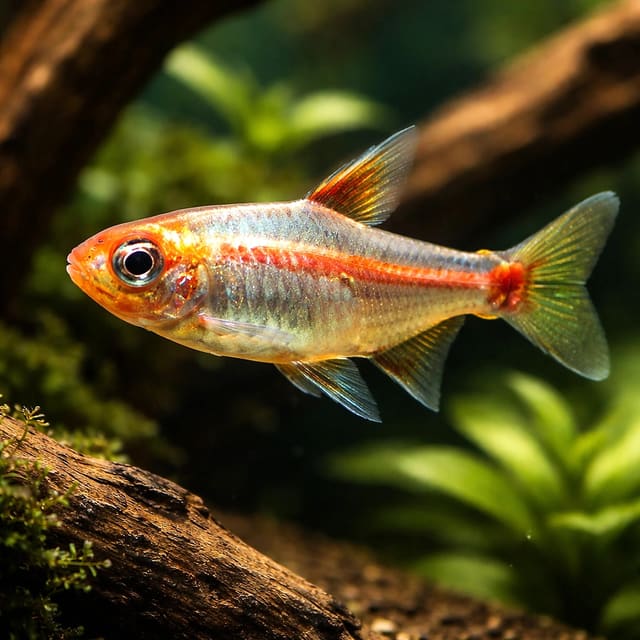
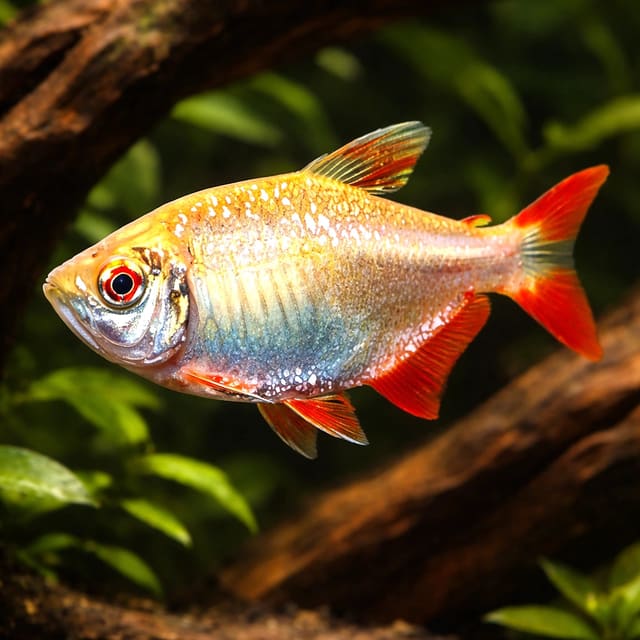
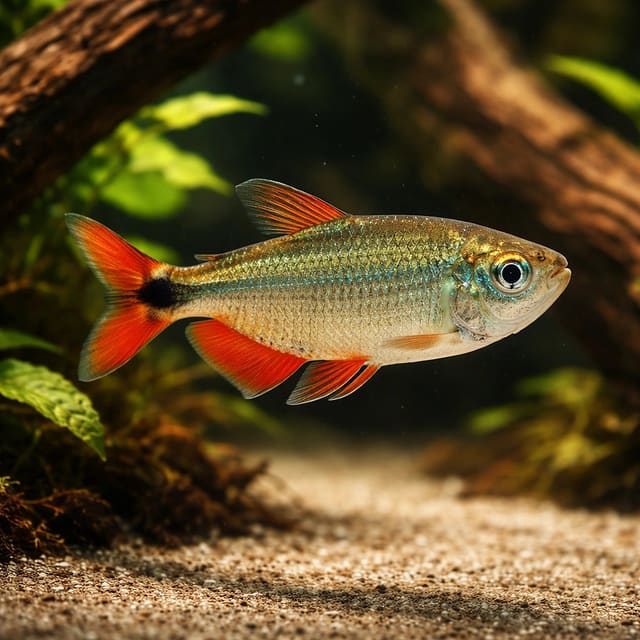
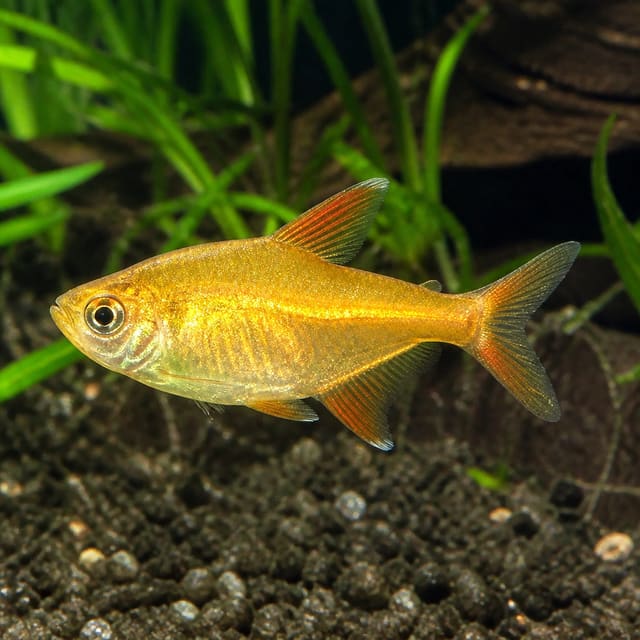
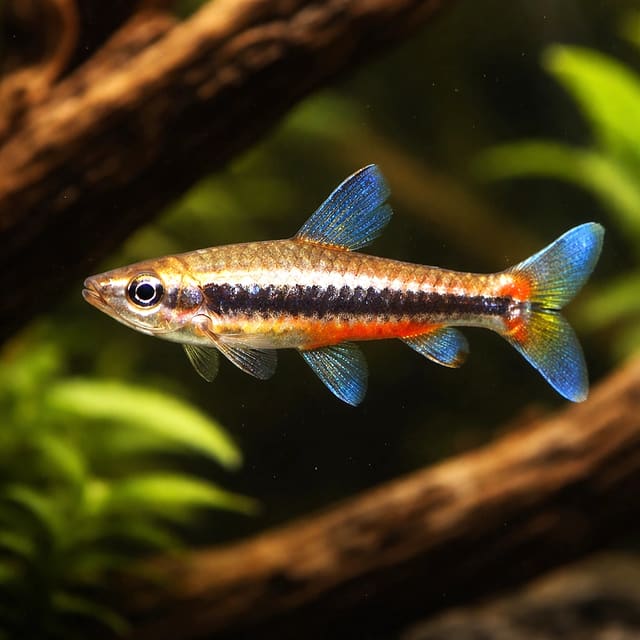
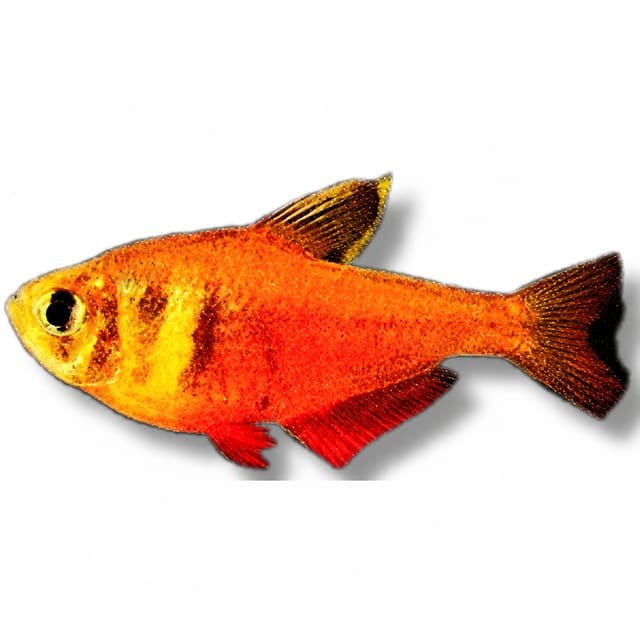
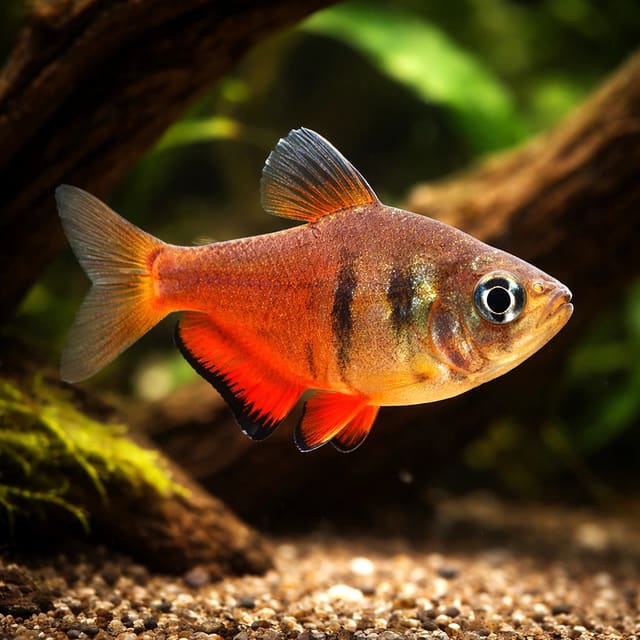
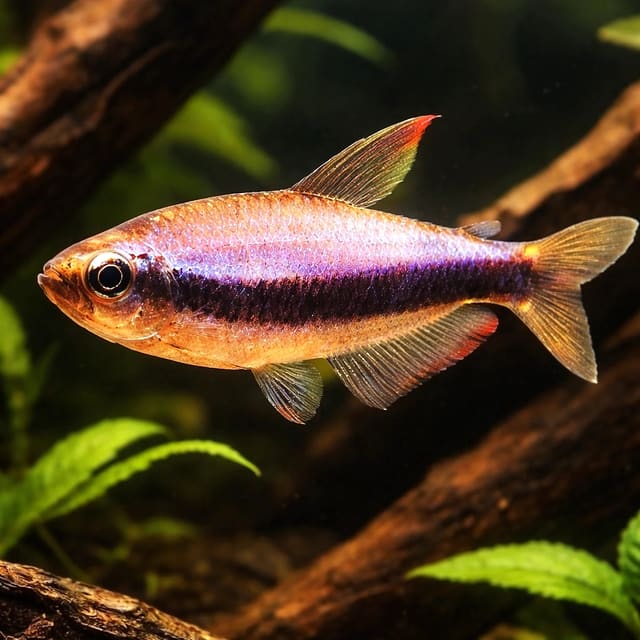
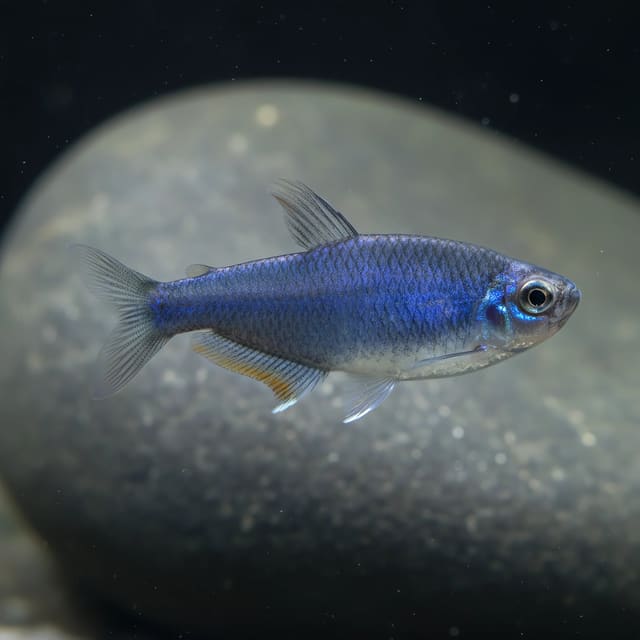
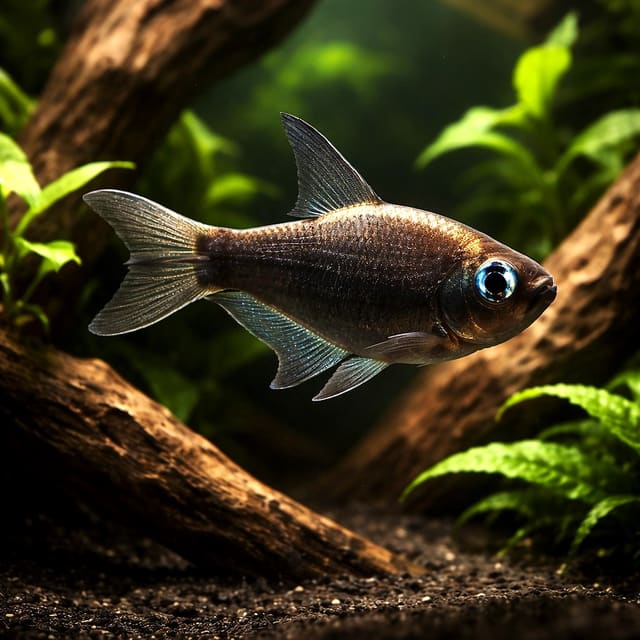
Some gallery images are representative, based on reference photographs of this species, and none shows the exact animal supplied, so colours can look slightly different from the live animal.
Before selecting an arrival date, read our current delivery and Live Arrival Guarantee policy for the applicable schedule, receiving steps and claim process.
Seriously Fish gives 50 mm standard length for this species, while FishBase records a maximum of 5 cm total length for male or unsexed fish. Use 5 cm as the practical upper planning reference rather than treating a dispatch measurement as the finished size.
Small body size does not make this a static nano fish. Its active swimming behaviour calls for an aquarium at least 90 cm long, and it should be kept in a group of 10 or preferably more. Aquarium length, open swimming space and the needs of the whole shoal are therefore more useful decisions than choosing a tank from the length of one juvenile.
| Decision | Working value |
|---|---|
| Adult-size reference | Up to 5 cm |
| Aquarium length | At least 90 cm |
| Group | 10 or preferably more |
| Temperature | 24–27°C |
| pH | 5.5–7.0 |
| General hardness | 2–15 dGH |
The 24–27°C, pH 5.5–7.0 and 2–15 dGH ranges are routine aquarium guidance for this fish. Measure the aquarium before purchase rather than trying to alter every value at once. Stability within the working ranges is the goal, and alkaline conditions may cause the fish's colour to fade.
| Suits | Not suited to |
|---|---|
| A mature aquarium at least 90 cm long | A shorter aquarium without the required swimming length |
| A group of at least 10 fish | Solitary keeping or a token group |
| Peaceful companions with matching water needs | Fish large enough to eat it or companions that overwhelm it at feeding time |
A well-planted layout can work, as can a simpler arrangement based on sand, wood, roots and dried leaves. Both approaches must preserve the long swimming route that the group needs. The decisive fit is therefore a mature 90 cm or longer aquarium with compatible water, adequate filtration and room for at least 10 fish—not merely an aquarium that can physically contain one small tetra.
Plan the group and aquarium together. This fish should be maintained in a shoal numbering at least 10, with more preferred, and it is known for swimming in a comparatively close formation. A solitary fish or token group does not meet that instruction, even if the water values are otherwise suitable.
Begin by measuring the usable aquarium length. A nominally large aquarium with a short footprint is not equivalent to a tank at least 90 cm long because this species needs distance for active swimming. Wood, roots, plants and ornaments also reduce the open route, so assess the finished layout rather than the empty glass box.
For example, selecting a 2–2.5 cm fish does not reduce the 90 cm length or group requirement. Ten fish from that dispatch band remain a plan for ten adults of up to 5 cm. The smaller measurement describes the fish at dispatch; it is not permission to use a shorter aquarium or postpone the group indefinitely.
If a 90 cm aquarium is already crowded with active residents, adding 10 more fish may create competition even though each tetra is small. In that case, reduce the existing stocking plan or choose a different aquarium rather than squeezing the shoal into the remaining space. If the aquarium is long enough but decoration fills the centre, move tall planting and bulky wood towards the rear or ends to recover a clear route.
More than 10 can produce a stronger group display, but only when filtration, swimming room and the total community can support the extra waste and activity. “More is preferred” is not an instruction to exceed the aquarium's safe capacity.
Target 24–27°C, pH 5.5–7.0 and 2–15 dGH for routine aquarium care. Test the aquarium and tap water first, write down the results, then decide whether the fish fits. Our water chemistry guide explains what the common readings mean, while the water matcher helps compare measured values with this range.
| Reading | Decision |
|---|---|
| 24–27°C | Keep the aquarium within this temperature band |
| pH 5.5–7.0 | Choose water from acidic to neutral |
| 2–15 dGH | Confirm the general hardness falls within the working range |
One matching number cannot compensate for two mismatches. Water at 25°C still needs a suitable pH and hardness, and a pH of 6.8 does not resolve a temperature outside 24–27°C. Check potential companions against the same three values so the aquarium can be run to one coherent plan.
Do not chase an exact midpoint through repeated abrupt adjustments. A reading of pH 6.8 already sits within 5.5–7.0; changing it merely to reach a preferred-looking number adds instability without improving the match. The same reasoning applies to temperature and hardness when they are already inside their stated ranges.
Alkaline conditions may cause the fish's colour to fade. Treat fading as a prompt to measure pH alongside ammonia, nitrite, nitrate and temperature rather than diagnosing the cause by appearance alone. Colour can vary, and water tests give you values on which you can act.
If your water falls outside the ranges, decide on a controlled water-management method before the fish is introduced. Any replacement water then needs to follow the same plan at every water change. A one-off correction followed by unsuitable tap water each week creates repeated movement in chemistry.
Record baseline readings before adding the group, then compare future tests with that baseline. This makes a trend visible: a small repeated movement in pH or a rising waste reading is easier to address early than after behaviour and feeding have changed.
A functioning biological filter is essential. The RSPCA explains that fish release toxic ammonia; beneficial filter bacteria convert it to nitrite, which is also toxic, and then to the safer nitrate. A filter must therefore be established and maintained, not simply switched on when fish arrive.
OATA's tetra and pencilfish advice gives broad group guidance: ammonia and nitrite should each be 0 mg per litre, nitrate should not exceed 20 mg per litre above the normal tap-water level, and the water should be tested at least weekly. Use those waste limits alongside the 24–27°C, pH 5.5–7.0 and 2–15 dGH values for this fish.
Adding a group of 10 represents a meaningful rise in waste production. A filter that supports a lightly stocked aquarium today may need time to accommodate that increase. Stocking too quickly can produce new tank syndrome when the bacterial population cannot process the added waste.
Check the filter for blockages and maintain its water flow. When filter media needs cleaning, do not run it under the tap. Rinse it lightly in aquarium water removed during a water change.
Filtration and water testing answer different questions. The filter processes waste, while tests show whether that process is keeping pace. Use both: clear-looking water alone does not show whether ammonia or nitrite is present.
Choose between two supported layout styles: a natural-looking arrangement based on river sand, wood, roots and dried leaves, or a more standard planted aquarium. The fish can do well in either, provided the finished design includes shelter and a long open route for the shoal.
Beech can be used as wood only when thoroughly dried and stripped of bark. Suitable dried beech or oak leaves may be used for leaf litter. Aquarium-safe peat in a small net bag within the filter is another described way to help create blackwater conditions, but any water adjustment still needs measurement against pH 5.5–7.0 and 2–15 dGH.
A well-planted aquarium is a valid alternative even though aquatic plants are not a feature of the species' natural waters. Place taller or denser planting where it creates cover without dividing the tank into narrow passages. Keep a broad front or central corridor open so the group can travel together.
If live plants are not used, suitable artificial plants and aquarium ornaments can provide shelter. Whatever materials you choose must leave the minimum 90 cm tank length useful to the fish. A 90 cm aquarium whose entire front is blocked by wood is not functioning like a 90 cm swimming route.
Smaller tetras benefit from a gentle current, but they should still have places where swimming is comfortable. Watch the group after introduction: if every fish is repeatedly confined to one low-flow corner, review the direction of the outlet and the placement of decoration. Do not reduce filtration simply to reduce current; redirect the flow while preserving biological filtration.
Rummy Nose Tetra is omnivorous and accepts a wide range of aquarium foods, but its small mouth determines the useful particle size. Build the routine around a quality flake or small granule, then add suitably small live or frozen foods for variety.
| Food role | Suitable choice |
|---|---|
| Regular prepared food | Quality flake or correspondingly small granules |
| Variety | Small live or frozen foods |
| Named examples | Daphnia, small bloodworm or tubifex |
| Schedule | Once daily |
| Portion limit | Only what is eaten within a few minutes |
Offer a measured amount and watch the entire shoal, not only the quickest fish. The species is peaceful and may not compete well with very boisterous or much larger companions. If food disappears before the group can feed, the first correction is to review the community and food distribution rather than continually increasing the total amount.
Small particles should be easy for the fish to take. Break an unsuitable large flake into smaller pieces or choose a smaller granule instead of expecting the fish to manage food that does not match its mouth. Remove or reduce any item that repeatedly reaches the substrate uneaten.
A varied mixture of dried and small live or frozen foods supports the best colour development. Variety does not mean adding several full portions in one day. Rotate suitable foods across the routine while keeping the total daily amount within what the group finishes in a few minutes.
Uneaten food breaks down and adds toxic waste to the water. If leftovers remain after a meal, remove what you can, reduce the next portion and include ammonia, nitrite and nitrate in the next test. When body condition falls or interest in food changes, compare the observation with water readings and competition at feeding time before altering the whole diet.
Prepare the aquarium before the fish arrive. Confirm a temperature of 24–27°C, pH 5.5–7.0 and hardness of 2–15 dGH, with ammonia and nitrite each at 0 mg per litre. The filter should already be mature and running normally, and the planned group needs a tank at least 90 cm long.
Increase the aquarium's population slowly because beneficial filter bacteria need to respond whenever fish numbers and feeding rise. A group of 10 small fish still represents additional waste. If other fish were added recently, allow the aquarium to stabilise and confirm the waste readings before making the next increase.
| What you see | What to do |
|---|---|
| Steady group swimming and feeding | Keep the planned routine and continue testing |
| Hanging at the surface or erratic swimming | Test water promptly and inspect filter operation |
| Sitting on the bottom or hiding more | Check water readings and pressure from tank mates |
| Reduced food intake | Check water, portion size and competition |
| Faster or slower gill movement | Test water promptly and seek guidance if it continues |
Keep observations specific. “The fish look different” is less useful than recording that several fish remained at the surface after feeding or that one fish was excluded from the group. Pair each change with measured water values and the time it occurred.
Do not judge compatibility only by the absence of immediate chasing. Peaceful fish may still lose access to food beside larger or more forceful residents. Watch feeding and use of the swimming lane throughout the settling period.
At least once every week, carry out a partial water change of 25%. Test the water at least weekly as well, with ammonia and nitrite held at 0 mg per litre and nitrate kept no more than 20 mg per litre above the normal tap-water level. Treat replacement tap water with conditioner to remove harmful chlorine or chloramine before it enters the aquarium.
Watch for hanging at the surface, sitting on the bottom, erratic swimming, darker or paler colour, increased hiding, altered breathing, white spots, fluffy growths, fin or scale loss, bumps, ulceration, changes in body condition or reduced feeding. These signs are prompts for investigation, not a diagnosis by themselves.
If behaviour or appearance changes, test the water first and inspect the filter. A non-zero ammonia or nitrite result requires immediate attention to water quality and the recent stocking or feeding load. If the readings are within plan, review aggression, food competition and any recent environmental change.
The red head may become less vivid in alkaline conditions, but colour alone should not be treated as a water test. Check pH and the waste readings before deciding what has changed. Avoid rapid chemistry adjustments made only from visual appearance.
If you are concerned about an ongoing health change, record the readings and observations, then contact us for further guidance. Do not add a treatment simply because several conditions can produce a similar sign.
This is a very peaceful tetra that may lose out beside very boisterous or much larger fish. Avoid any fish large enough to eat it. For every other candidate, screen adult size, temperament, feeding behaviour, water needs and use of swimming space before relying on a common “community fish” label.
| Question | Required answer |
|---|---|
| Could the adult eat a 5 cm tetra? | No |
| Will it dominate food or the swimming lane? | No sustained pressure on the shoal |
| Can it share 24–27°C, pH 5.5–7.0 and 2–15 dGH? | Yes |
| Can the aquarium hold all adults and at least 10 tetras? | Yes |
Seriously Fish names other Hemigrammus and Hyphessobrycon tetras, pencilfish, Apistogramma dwarf cichlids, Corydoras and small loricariids as possible South American companions. Smaller rasboras, barbs, anabantoids and West African dwarf cichlids such as Pelvicachromis are also described for broader communities. These are candidates for screening, not universal promises: each species and aquarium must still pass the four questions above.
Adult size matters more than the size seen at purchase. A young companion that cannot swallow the tetra today may become unsafe as it grows. Compare the planning size of every resident, not just the measurements shown by juvenile fish.
Temperament includes access to food. A fish need not attack the shoal to be a poor match; repeatedly taking every bite first can leave peaceful tetras underfed. Watch a complete meal and confirm that the whole group feeds without being displaced.
Space is also shared. Bottom-oriented companions still add waste and may need their own floor area, while midwater fish may occupy the same route as the shoal. Count all residents against the mature filter and finished layout before deciding that different swimming levels solve capacity.
Compatibility fails when different residents require conflicting care, even if they behave peacefully. Build one written plan covering 24–27°C, pH 5.5–7.0, hardness of 2–15 dGH, ammonia and nitrite at 0 mg per litre, and nitrate no more than 20 mg per litre above the tap-water baseline. Every species in the aquarium must fit that plan.
For example, a candidate that suits 25°C and pH 6.8 passes two water checks, but it must also tolerate the measured hardness and remain too small to eat the tetra. It must then pass the behaviour, food and space checks. Compatibility is the result of all those decisions, not one matching value.
The same rule applies when adding more tetras. A larger shoal can strengthen the group display, but extra fish increase waste and use more of the swimming lane. More than 10 is preferable only within the capacity of the aquarium and filter.
Observe the community at feeding time and during normal swimming. If the shoal is repeatedly pushed away from food, confined to a corner or hiding more than usual, reassess the dominant residents and layout. Pair those observations with water tests so a behavioural concern is not confused with a chemistry problem.
When comparing two possible companions, choose the one that matches the water plan, remains safe at adult size and feeds without overwhelming this peaceful tetra. If neither passes every screen, keep the shoal with fewer companion species rather than forcing a mixed community.
Petitella rhodostoma is a peaceful freshwater shoaling tetra from the lower Amazon and Orinoco river basins, reaching up to 5 cm.
One purchase supplies one animal of the selected size option, so set the purchase quantity to the number of fish required for the planned group.
The dispatch grades are 2–2.5 cm, 3–3.5 cm, 3.5–4 cm and XL; use the live size selector for the choices shown when ordering.
Use a mature aquarium at least 90 cm long, with an open swimming route, an established filter and enough capacity for the full community.
Keep a group of at least 10 fish, with more preferred only when the aquarium, swimming space and filter can support the additional load.
Keep it at 24–27°C, pH 5.5–7.0 and 2–15 dGH, with ammonia and nitrite at 0 mg per litre.
Feed quality flake or small granules with suitably small live or frozen foods, once daily and only in an amount eaten within a few minutes.
Before introduction, confirm 24–27°C, pH 5.5–7.0, 2–15 dGH and 0 mg per litre ammonia and nitrite, then increase the aquarium population slowly so the mature filter can respond.
Choose peaceful fish that cannot eat or outcompete it, share 24–27°C, pH 5.5–7.0 and 2–15 dGH, and leave enough room for a shoal of at least 10.
No reviews for this item yet. Bought one? Honest reviews only, good or bad.
What customers say about ordering from us
I have a small group of long finned mountain minnows. So was delighted to be able to order ten of this variety to increase the genetics in my tank . The ones I recieved are healthy but it’s to early to give a verdict on wether they are of a long finned type since they are small currently.
Gordon Walker · 23 Sept 2026
100% success travel and "installation". Pleased with quality of purchase. The Siamese fighter a bit "shy" so have not yet seen him at his best yet but looking good. Happy customer. GG
George E Garratt · 21 Sept 2026
Reviews of our shop, collected by Judge.me, an independent third-party review collector. Newest first.