By James Okafor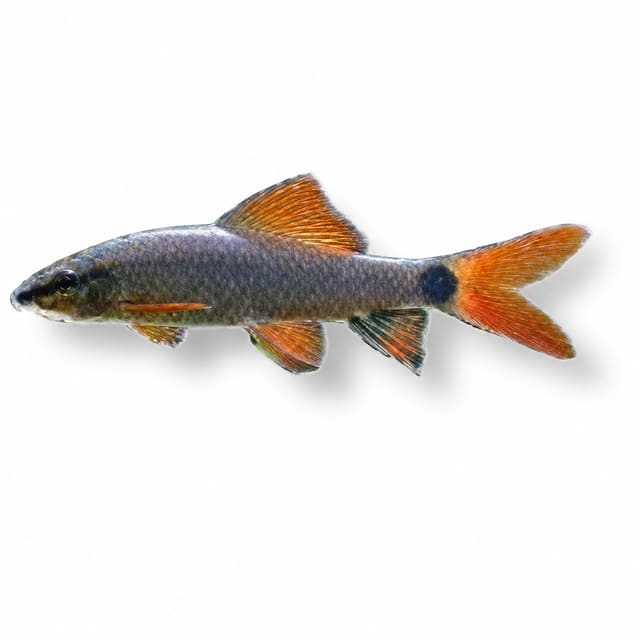
Moderate
Rainbow Shark (Epalzeorhynchos frenatum)
24–26°C · pH 6.5–8 · 243L
£5.99
Loaches & Oddballs · Buying Guide
The rainbow shark isn't a shark — it's a territorial cyprinid that bullies its own kind. Honest UK care, tank size, real tank mates. See ours in stock.
8 products in stock today
Live prices and stock. Every fish covered by our Live Arrival Guarantee.
24–26°C · pH 6.5–8 · 243L
24–26°C · pH 6.5–8 · 243L
23–27°C · pH 6.8–7.5 · 54L
16–25°C · pH 6–8
20–25°C · pH 6.8–7.5
23–28°C · pH 6–7.5 · 150L
24–27°C · pH 5.5–7
17–27°C · pH 6.5–8
The shaded band shows the range rainbow shark is comfortable in. Match it to your tap water before you buy.
Our trained assistant knows this rainbow shark page inside out. Ask it anything — water parameters, tank mates, how many to buy — or have it read the guide aloud while you set up your tank.
You've seen a flash of black and red dart across a shop tank and thought I want that one. Most rainbow shark guides will tell you it eats algae and leave it there. What they skip is the part that actually matters: this fish becomes territorial as it grows, it will not tolerate its own kind, and the tank it's sold for is usually far too small for the adult it turns into.
I'm James, the site's aquascaping and hardscape specialist. I spend my days laying out wood, rock and sand so fish behave the way their owners hoped — and the rainbow shark is the species where layout does the most work. Get the hardscape and the tank-mate list right and it's a stunning, long-lived centrepiece. Get them wrong and you've built a one-fish tank by accident, because it drove everything else into the corners.
This is the guide we'd give a customer who asks "is the rainbow shark good for my community tank?" — the honest version, where we tell you about the aggression before you buy, not after. UK hobbyist press has been warning about these freshwater "sharks" outgrowing and outfighting their tanks for years [4]; we'd rather you heard it here first.
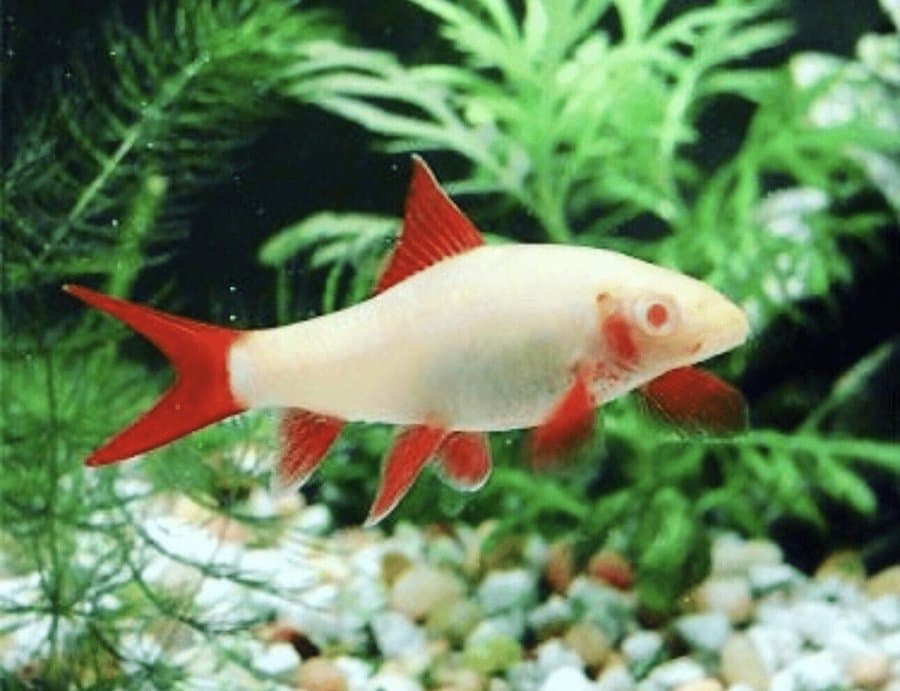
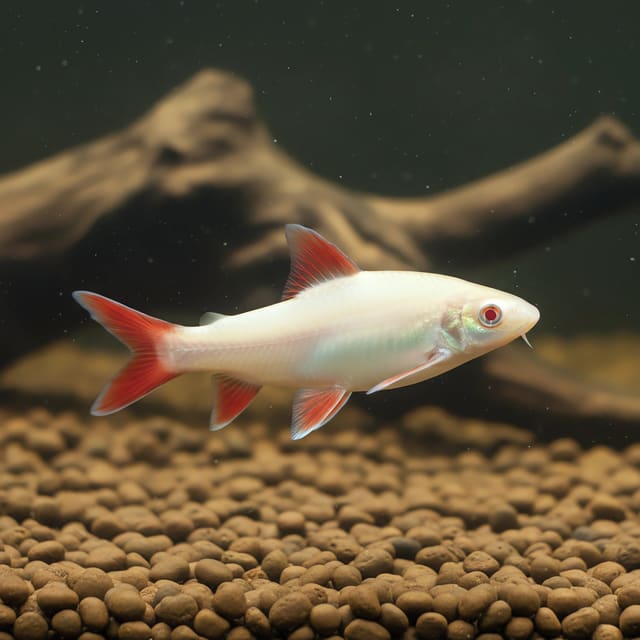
One of the rainbow shark's colour forms — the pale, red-finned variant. The same species (Epalzeorhynchos frenatum) also comes in the classic dark-bodied form. Both reach ~15 cm and both must be kept one per tank. Photo: Tropical Fish Co.
The word "shark" gets stuck on several unrelated cyprinids, and buyers mix them up constantly. Here's the honest comparison — note that the top three all share the same fatal flaw: they fight each other and anything that looks like them.
| Species | Body & fins | Adult size | Temperament | One per tank? |
|---|---|---|---|---|
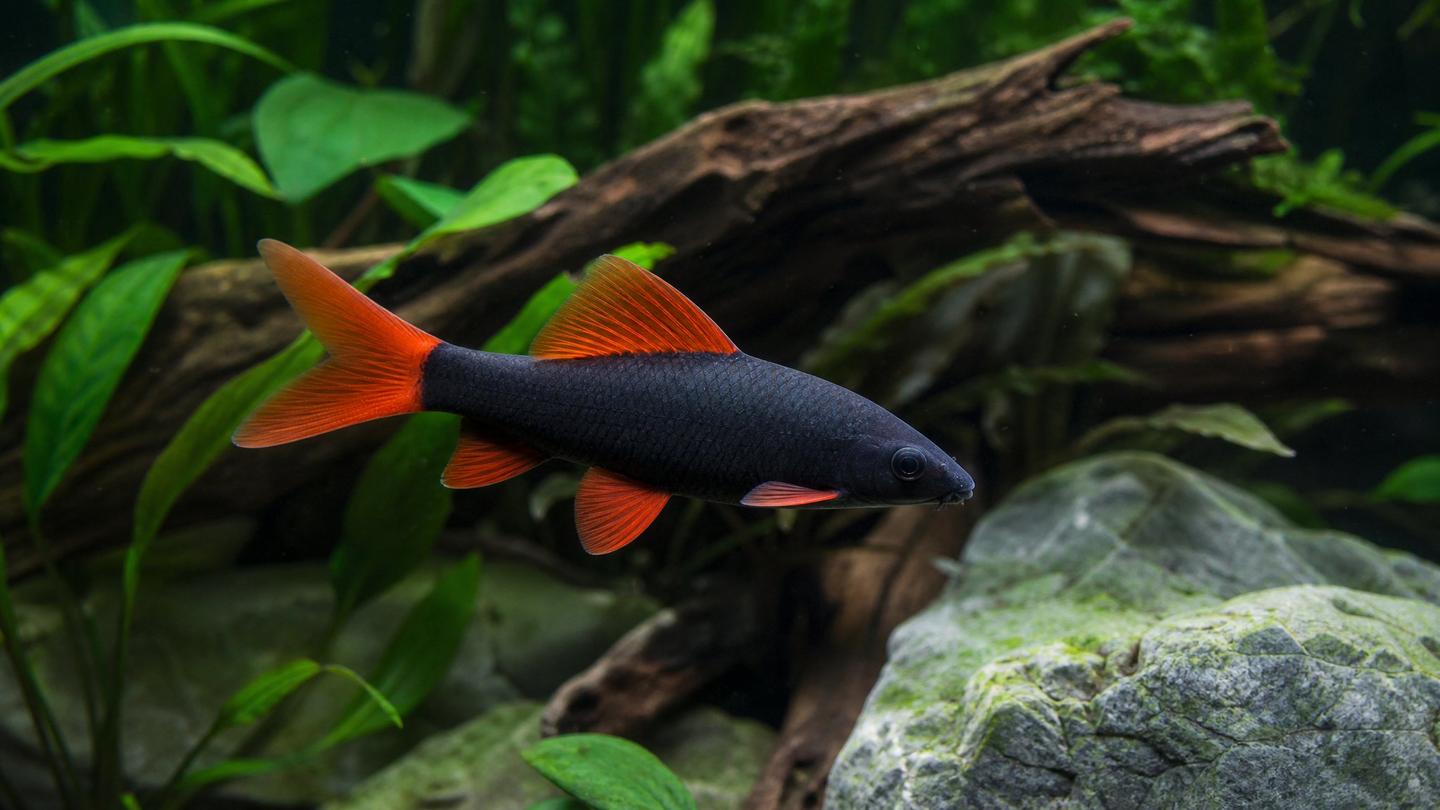
| Rainbow shark (E. frenatum) | Black body, all-red fins | ~15 cm | Semi-aggressive, bottom-territorial | Yes — always |
| Red-tail shark (E. bicolor) | Black body, single red tail | ~15 cm | Aggressive, more so than rainbow | Yes — always |
| Albino rainbow shark (E. frenatum) | Pink-white body, red fins | ~15 cm | Same as rainbow shark | Yes — always |
| Siamese algae eater (Crossocheilus) | Slim, black lateral stripe | ~14 cm | Peaceful, shoaling | No — keep in groups |
| Otocinclus (Otocinclus sp.) | Tiny, suckermouth | ~4 cm | Peaceful, shy | No — keep 6+ |
If you actually want a hard-working, peaceful algae crew, the bottom two rows are your fish — see the otocinclus care guide and the Siamese algae eater guide. The rainbow shark is a characterful centrepiece that happens to graze algae — not an algae-control solution.
This is the section every other guide buries. Read it before you buy.
Rainbow sharks are intolerant of their own kind and of any similar red-finned fish. Seriously Fish recommends keeping them singly because each adult demands a territory at least a metre across [3]. Two in a normal aquarium will fight until the weaker fish is stressed, fin-shredded and usually dead. There is no "pair" and no "they'll sort out a pecking order" — the only safe number is one.
The aggression isn't constant from day one, and it's the part of rainbow shark care that catches people out. A young rainbow shark is shy and hides among plants and wood. The turn comes as it matures — somewhere around 8–10 cm it starts claiming the floor and chasing intruders [3]. The fish it picks on are predictable: other bottom-dwellers (corydoras, loaches), similar-shaped species (other sharks, Siamese algae eaters, flying foxes, Garra), and slow long-finned fish that can't get away.
Two things keep this in check, and both are about the tank, not the fish:
The commonest rainbow shark story we hear: someone adds a tiny, shy juvenile to a peaceful community, it's lovely for six months, then it grows, turns on the corydoras and the gourami, and the tank becomes unliveable. Nothing went wrong with the fish — it did exactly what the species does. The mistake was the tank size and the tank mates, decided before the fish was bought.
The trick to choosing rainbow shark tank mates is simple: fill the top and middle of the water column with fast, robust fish, and leave the floor to the shark. Seriously Fish's own recommendation is "robust, active, schooling cyprinids" for the upper levels [3], and keeper experience backs the same upper-water approach [6]. Avoid adding anything that competes for the substrate.
Good neighbours — fast, upper/mid-water, robust:
Avoid — anything that shares the floor or looks like a rival:
For the wider stocking picture, the pleco care guide explains why even a "bottom" algae fish like a bristlenose needs its own caves and careful introduction near a rainbow shark, and the water chemistry guide covers the stable 24–27 °C, pH 6.0–8.0 conditions all these fish share. If you came here wanting an algae crew rather than a centrepiece, the otocinclus care guide is the gentle, genuinely peaceful alternative.
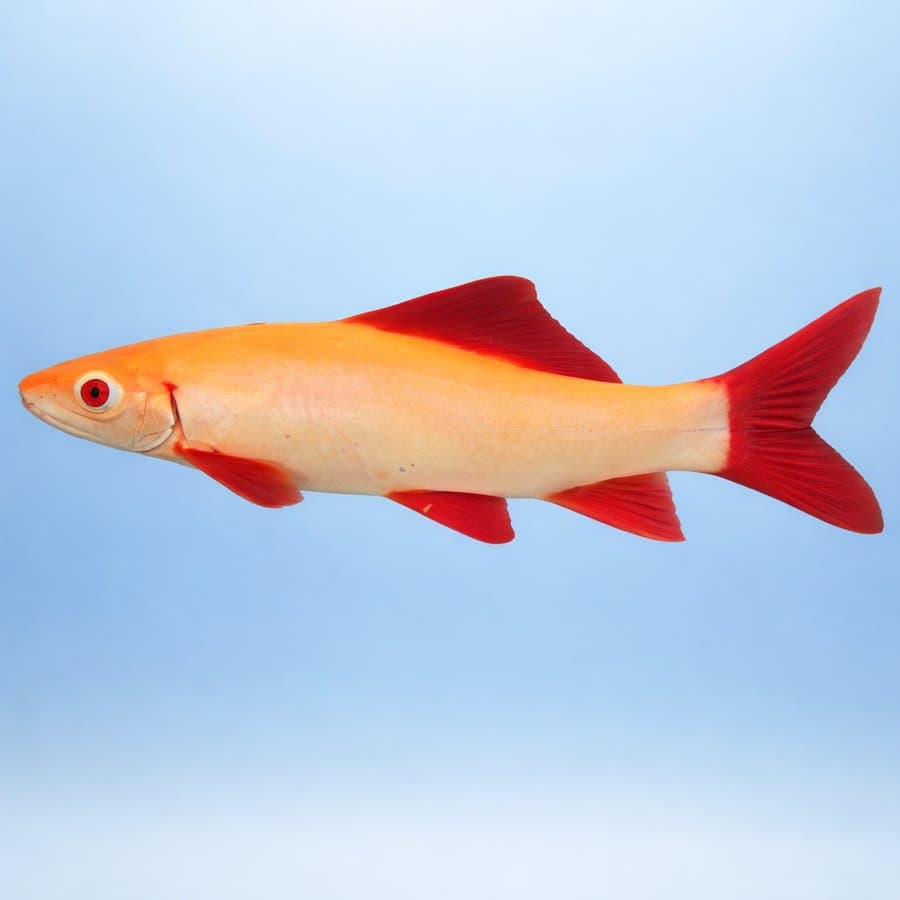
The albino form, sold as the red-finned shark — the same species as the dark rainbow shark, with light-sensitive eyes that appreciate shaded caves. Identical 15 cm size, identical one-per-tank rule. Image: Tropical Fish Co.
Rainbow sharks are hardy shippers, but the bigger worry is the destination, not the journey: a new shark dropped into an established tank with no claimed territory can be stressed by existing residents, or start a turf war the moment it recovers. Our protocol is tuned for that.
Live arrival guarantee: photograph unopened bags within two hours of delivery and we'll replace or refund at our cost.
If you came here for an algae-control fish rather than a centrepiece, read the otocinclus care guide and the pleco care guide — those are the fish that actually clean tanks peacefully, where the rainbow shark only grazes opportunistically.
Comparing the "shark"-named cyprinids? The Siamese algae eater guide covers the peaceful, shoaling alternative people mix up with the rainbow shark, and the hillstream loach guide is the other oddball bottom-grazer in UK trade — with completely different temperament and flow needs.
Shopping the full range? The loaches & oddballs hub has the rainbow sharks and their oddball cousins currently in stock, and the tropical fish for sale hub is the place to build the rest of a balanced community around your single shark.
The references, care chart and FAQ render automatically below from the page's frontmatter — every claim above is tied to a source in that list.
Visual route into the rest of our UK live-fish range.
Material factual claims cite the sources below; store policy and cautious inference are labelled in the article. Sources are grouped by type so you can judge their weight at a glance.
Taxonomic and ecological reference for the genus Epalzeorhynchos — cited on the Labeo → Epalzeorhynchos reclassification and wild substrate behaviour.
Source for maximum size (15 cm TL), temperature, pH, native Mekong/Chao Phraya distribution and the 120 cm minimum aquarium length.
Independent species reference — cited on increasing territoriality with age, the one-metre territory rule, keeping singly, and tank mates to avoid.
UK hobbyist perspective on the rainbow/ruby shark and why these 'sharks' outgrow and outfight the tanks they're sold for.
Aquarium-keeper video covering rainbow shark temperament, tank setup and compatible upper-water tank mates.
UK authority source — context on how the rainbow sharks in UK trade are farm-bred imports, not wild-caught.
Fishkeeping moves fast and we want every guide spot-on. If you think something here is wrong, out of date, or could be clearer, tell us — our team reads every message and updates the page.
Suggest an editPleco fish guide for UK keepers: compare types, adult sizes, diets, tank planning, water and buying checks before choosing a suckermouth catfish.
Learn which freshwater aquarium water parameters to test, how to read ammonia, nitrite, nitrate, pH, GH and KH, and when a result needs action.
Otocinclus catfish care for UK tanks: compare tank size, 22–25°C water, group planning, grazing foods, algae limits, tank mates and buying checks.
Aquascaper & Planted-Tank Lead · 8+ years in the hobby
James is a Manchester-based aquascaper who competed in the 2023 UK Aquatic Plant Society Aquascaping Challenge (top 15 finalist). He writes the planted-tank and aquascape buying guides on Tropical Fish Co — every layout recommendation has been built, grown out, and photographed in his own tanks before it goes live on the site.