Easy
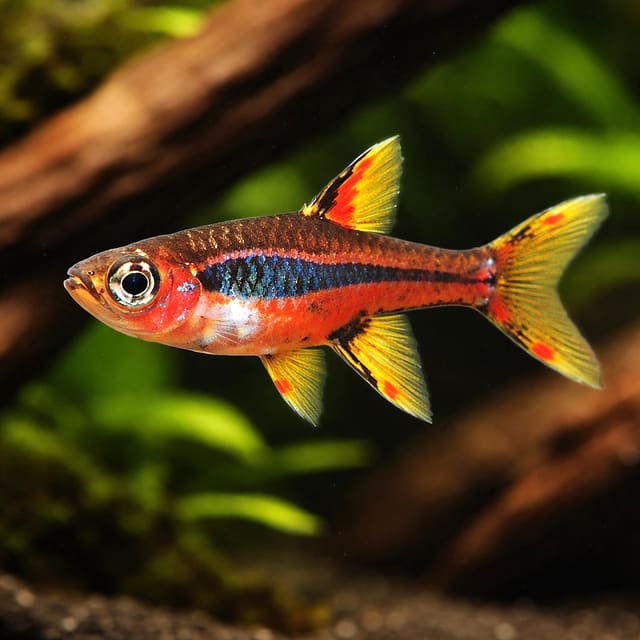
Harlequin (Rasbora heteromorpha)
21–28°C · pH 5–7.5 · 54L
£2.99

Pearl Danio is an active, peaceful shoaling fish for a long, tightly covered planted aquarium. Keep a proper group with open swimming space and calmer planted edges. Sold individually with two size choices.
Brachydanio albolineatus
Shoaling fish: kept in a group they feel safer, stay calmer and show their best colour.
Minimum of 2 per order.
Pearl Danio is an active, peaceful shoaling fish for a long, tightly covered planted aquarium. Keep a proper group with open swimming space and calmer planted edges. Sold individually with two size choices.
Maintain these water conditions for optimal health and vibrant colors
Pearl Danios bring a changing shimmer and a great deal of movement to a planted aquarium. Their appeal is the whole shoal: fish passing through open water, turning together and briefly catching the light before slipping back beside the plants. They suit someone who enjoys an active display and can provide a long, covered aquarium with room for a proper group. A few small fish in a cramped space will not give the same behaviour or make the same satisfying display.
This listing is for Pearl Danio (Brachydanio albolineatus). You will also find the species described as Danio albolineatus in FishBase, which treats the name used here as a synonym. Seriously Fish uses Brachydanio albolineata for its profile and includes Danio albolineatus among the former names. These naming differences explain why useful care information can appear under a different heading.
One purchase quantity supplies one live fish of the selected size. There are two size choices: 3–4 cm and over 4 cm. Check the selector for the choice you want when ordering. The size you select is the size supplied, not the adult size. Choose an aquarium and stocking plan that will continue to work as the fish grow, rather than judging the space from the smaller fish you bring home.
Sex is guaranteed only when the selected option explicitly states male or female. This Pearl Danio listing has no sex-guaranteed option. When planning a shoal, think about the number of fish and the space they need, rather than expecting a particular male-to-female balance from an order.
In the wild, these danios occur in parts of Southeast Asia, including Myanmar, Laos and Sumatra, with records from several major river systems. Clear streams and their quieter margins help explain the combination of clean, moving water and shelter that works well in an aquarium. Plants and wood can frame the swimming area, while a clear route across the tank gives the fish room to use it. A layout can feel lush without filling every part of the water column.
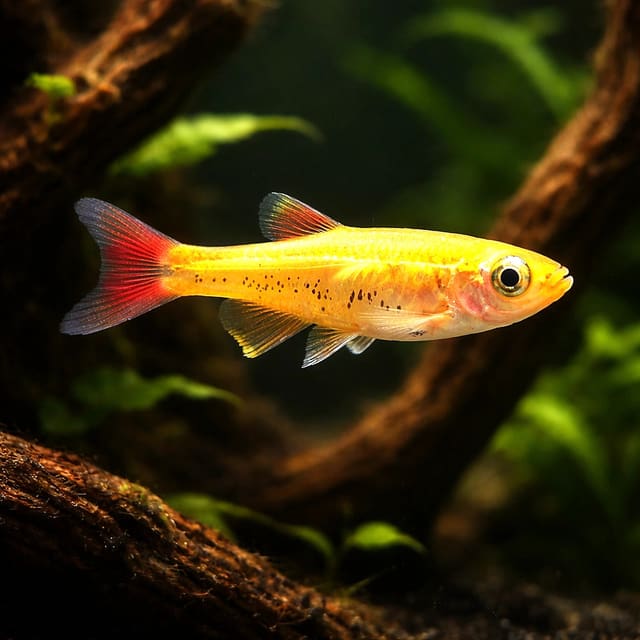
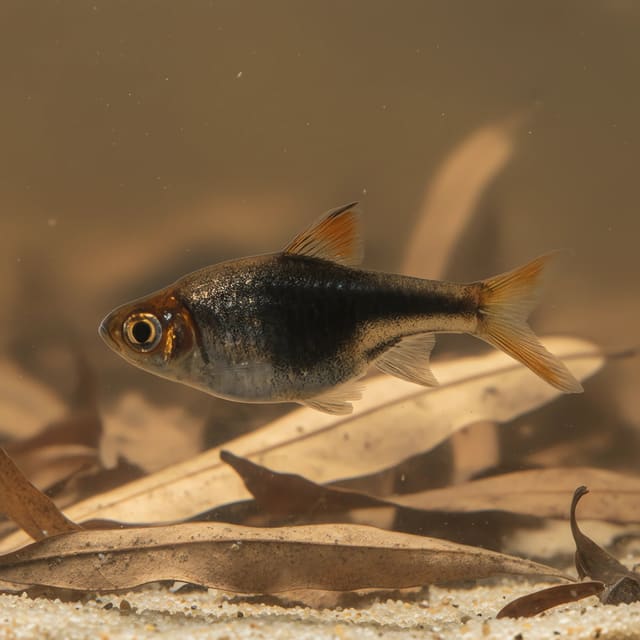
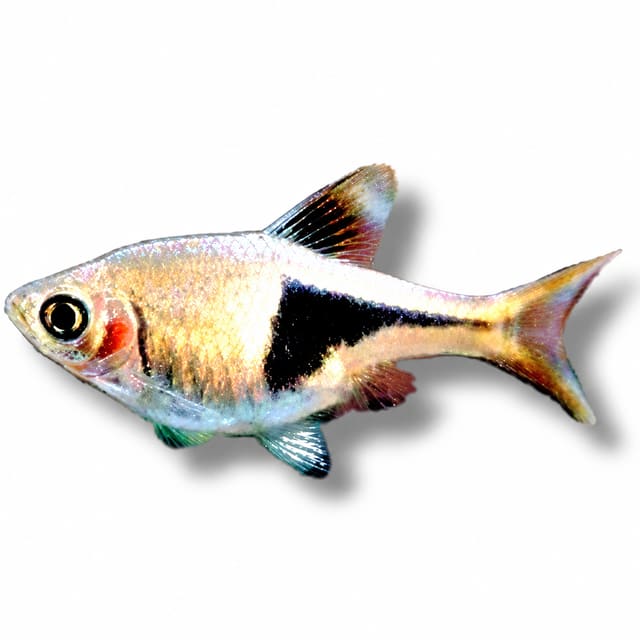
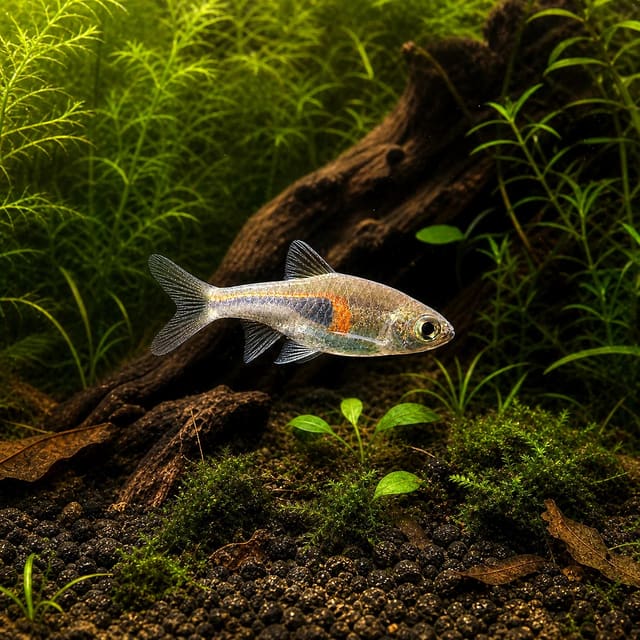
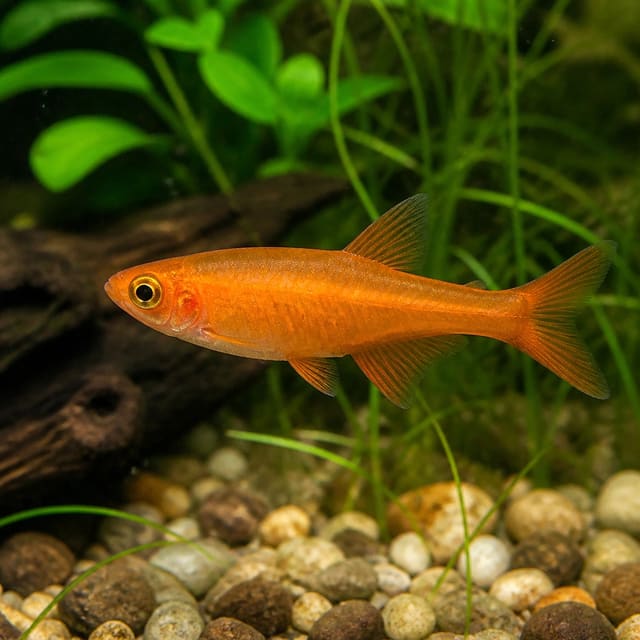
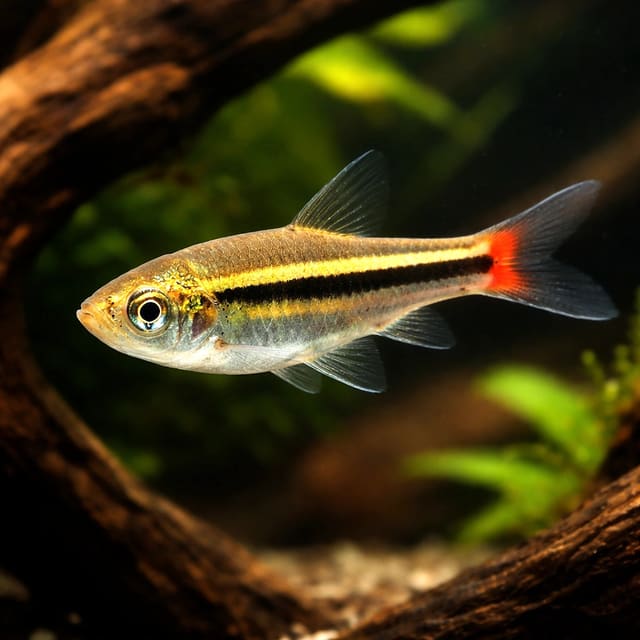
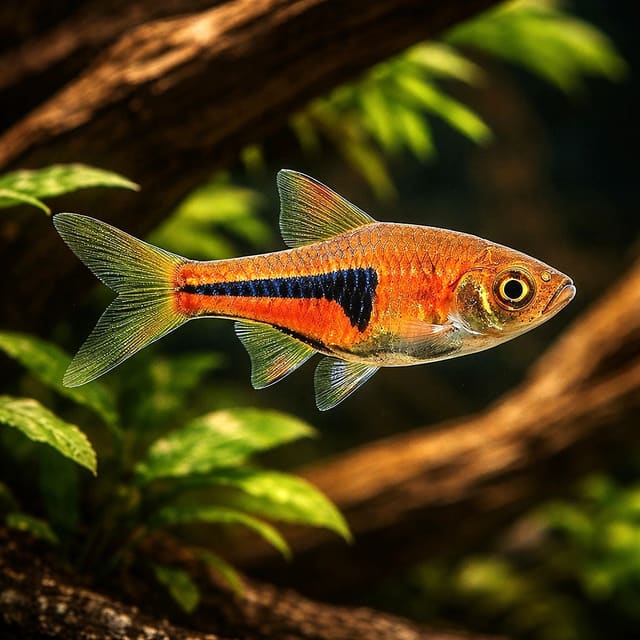
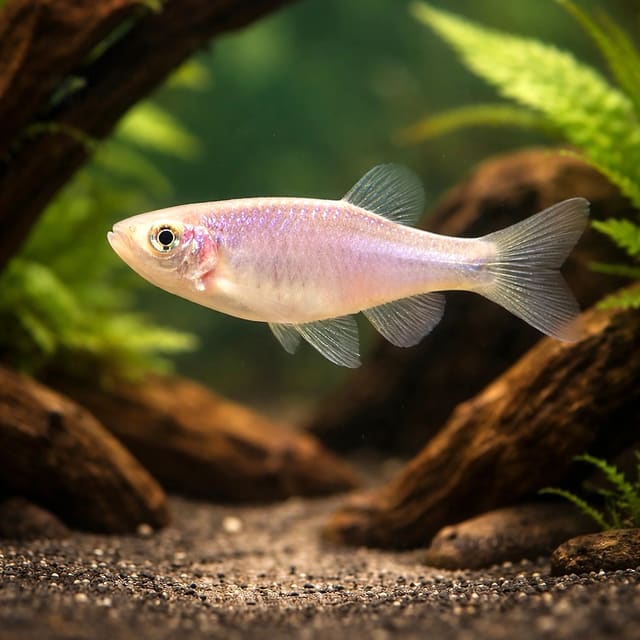
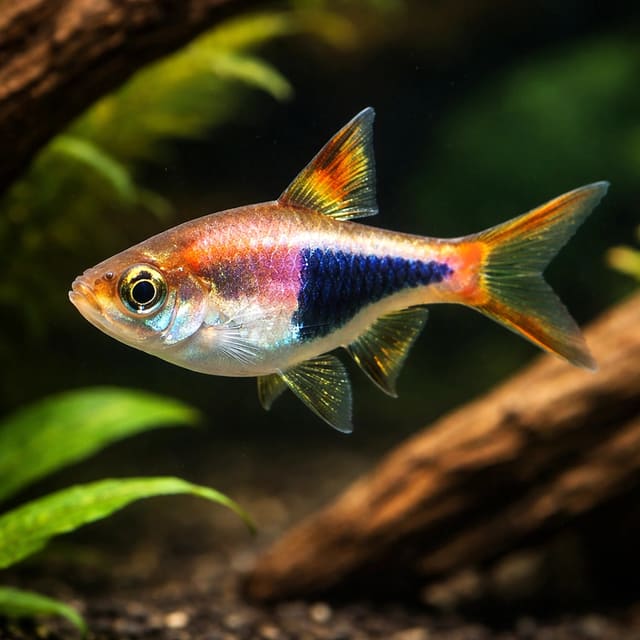
Expect individual variation in colour and intensity. The familiar pearly blue and pink reflections change with the angle of the fish and the light; a fish turning away may look much less colourful than the same animal seen side-on. Condition, surroundings and social behaviour also affect how a display looks. A dark substrate and planted background make it easier to appreciate the fish without relying on very bright lighting.
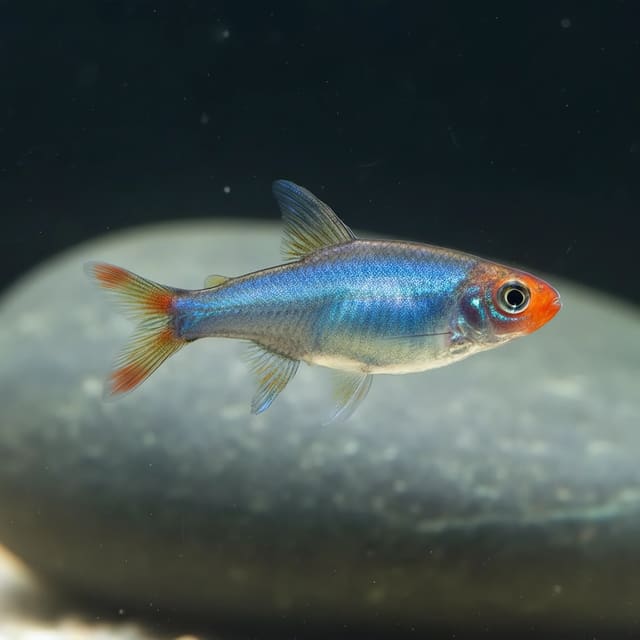
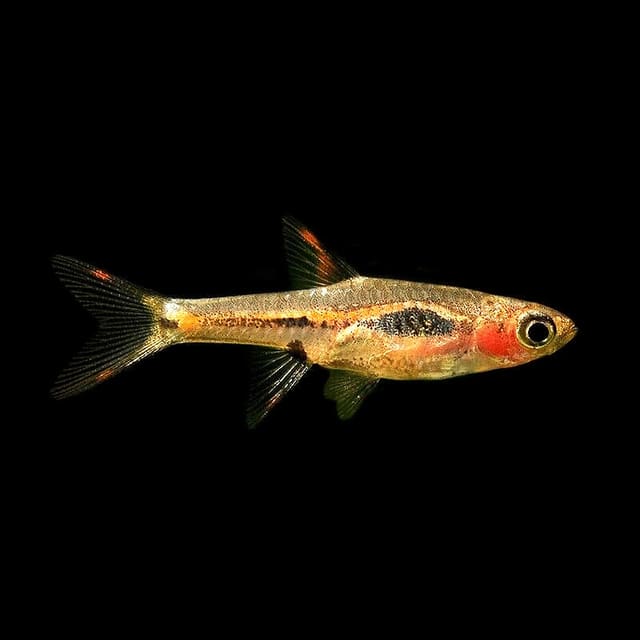
The gallery images are representative of this type of animal rather than photographs of the exact animal supplied, so colours can look slightly different from the live animal.
The species profile from Seriously Fish recommends a group of at least 8–10 and a minimum aquarium base of 90 × 30 cm. Use that swimming footprint as the starting point. A tall tank with the same advertised volume may offer a much shorter route for an active shoal, and large ornaments can reduce the useful space within an otherwise suitable aquarium. Plan the group and its open water first, then arrange shelter around them.
A community can work very well when its other inhabitants are comfortable with this pace of activity and share suitable water conditions. Peaceful does not mean unobtrusive: a danio shoal is constantly present in the upper and open areas, and quieter fish need room to retreat and feed. This is a good choice for an aquarium planned around lively movement, but the needs of existing residents should come first.
If you are comparing different danios for that role, the Rosy Danio is another named species to read about before choosing your shoal. Compare its own care and adult-space requirements rather than assuming similar common names make the fish interchangeable. The wider rasboras and danios collection is useful when deciding which species best fits the aquarium you can provide.
Two different kinds of length appear in the references. Seriously Fish gives 55 mm standard length, equivalent to 5.5 cm measured without the tail fin. FishBase reports a maximum recorded length of 9.6 cm total length for male/unsexed specimens; total length includes the tail. These figures have different measurement and record scopes, so neither should be read as a promise that every aquarium fish stops growing at the smaller figure.
For practical planning, allow room for a fully grown active shoal. Do not try to turn a length measurement into a fish-per-litre calculation. Fish use space differently, and the shape of the tank, the layout, the other residents and the filtration all affect the result. A long swimming area remains useful even when the fish have plenty of water around them.
| Planning point | What it means for your aquarium |
|---|---|
| Species aquarium footprint | At least 90 × 30 cm at the base, following Seriously Fish. |
| Social group | Plan at least 8–10 fish, with space for the complete group. |
| Standard-length reference | 55 mm SL, or 5.5 cm excluding the tail. |
| Recorded total length | 9.6 cm TL, male/unsexed, in FishBase. |
| Shape and furnishings | Keep a clear route through the tank, with planted shelter beside it. |
The approximate volume displayed alongside a tank footprint is not a substitute for checking the actual dimensions. Water depth, substrate, wood and rocks change how much water an aquarium holds. When discussing a setup, give its length and width as well as its stated capacity, and describe the current fish. That gives a much clearer picture than a volume alone.
Plants along the sides and back can provide a reassuring boundary while leaving the front and centre open. Wood and smooth, stable rocks give the planting structure and provide sheltered edges. Attached plants such as Java fern, Bolbitis and Anubias are suggested in the species profile and can be used where planting into the substrate is inconvenient. Check that the arrangement remains secure when you reach into the tank for maintenance.
Do not interpret a stream-style aquarium as a requirement for a fierce current. Seriously Fish specifically advises against torrent-like conditions: small danionins use calmer areas and margins too. Position the filter outlet so water circulates through the aquarium, but leave places where the fish can rest without continually swimming against it. Watch where the shoal spends its time after changes to the outlet or décor.
A dark substrate can help show the subtle reflective colours, but its practical role matters as well. Choose an aquarium-safe material that you can keep clean around the plants and wood. Leave access for removing waste from the places where it gathers. A beautiful arrangement that cannot be maintained becomes less useful once the fish are living in it.
A very closely fitting lid is essential. These fish can jump and can pass through surprisingly small openings. Check the edges around cables, filter pipes and feeding openings before adding the fish. A cover that fits well across most of the tank can still leave an escape route at a rear corner. Make that inspection again after moving equipment, since a previously closed gap can reappear.
During feeding and cleaning, open only the area you need and keep your attention on the fish. Prepare tools and replacement water before lifting the cover so you do not have to leave the aquarium open while looking for something. Put the lid back into its normal position when the job is finished, rather than leaving it propped up until later.
Seriously Fish gives aquarium guidance of 16–25°C, pH 6.0–8.0 and hardness 1–20 dGH for this species. Treat those as a supported keeping range, rather than an instruction to move your aquarium repeatedly between the limits. The most useful starting point is to measure the water you have, check that the other residents suit it, and maintain consistent conditions through a reliable routine.
FishBase separately records environmental values of 20–25°C, pH 6.0–8.0 and hardness 5–19 dH. Those describe the species in its environmental record; they are not a narrower aquarium optimum. The practical aquarium advice above comes from the species husbandry profile. Keeping those uses separate avoids choosing a heater setting simply because a number appears on a natural-history page.
A heater may or may not be needed to hold an appropriate temperature in your room. The important question is what the aquarium actually does overnight, during cold weather and on warmer days. Use a thermometer and check the water, not just the room thermostat. An unheated aquarium still requires stable conditions, a mature filter and ordinary maintenance; it is not a simpler substitute for a properly prepared tank.
Use the water chemistry guide to understand what your tests measure. General hardness and pH describe different aspects of the water, so a pH result alone cannot tell you whether all of its chemistry is suitable. Bring your actual results when asking for stocking advice. Saying that water is clear or has stood for a few days does not establish that it is ready for fish.
A biological filter provides a home for the bacteria that process fish waste. As the RSPCA explains, fish release toxic ammonia; the biological process converts it to nitrite, also toxic, and then to the less harmful nitrate. That process needs a functioning, established filter. Clear water can still contain ammonia or nitrite, so testing is part of preparing an aquarium rather than something reserved for visible problems.
OATA's general danio guidance calls for ammonia and nitrite at zero mg/l. Do not add fish to a tank with a known problem and hope the new arrivals will help it settle. If you are setting up your first aquarium, work through the first tropical tank guide before arranging livestock. The aquarium should be ready to support the fish when they arrive.
Adding fish increases the waste the filter must handle. A social species needs an appropriate group, but that does not mean a new aquarium should receive several shoals and all its other residents at once. Plan the introduction with the tank's existing biological capacity in mind. Feed carefully, monitor the water and leave further stocking decisions until the aquarium is coping well with its present inhabitants.
The water matcher can help compare measured conditions with stated care guidance. Use it as one part of the decision alongside tank dimensions, behaviour and group size. Matching chemistry cannot make up for a short swimming area, a poorly secured cover or companions that keep one another from feeding.
As broad advice for danios, OATA recommends a partial water change of 25% at least once a week and water testing at least weekly. Its nitrate guidance is no more than 20 mg/l above the normal tap-water level. Test the source water as well as the aquarium if you need to understand that comparison. The fish population, feeding and plant growth all influence how quickly conditions change.
Prepare replacement water with a suitable conditioner to deal with chlorine or chloramine, and avoid abrupt temperature changes during the water change. Remove settled waste where you can reach it without uprooting every plant. This is a good opportunity to check the filter flow, the security of the lid and any spaces hidden behind wood. Small routine checks are easier than discovering several maintenance problems together.
Check filter media for blockages, but preserve its biological function. OATA advises gently rinsing media in aquarium water removed during a water change, rather than washing it under the tap. Follow the equipment's maintenance instructions as well. A filter can look tidy outside while water is bypassing dirty media inside, so watch whether its normal flow has changed.
Keep a short note of test results, maintenance and new additions. A record makes trends easier to recognise and helps distinguish a one-off reading from a developing problem. It also makes advice more useful if you need help: recent results, the timing of a filter clean and the introduction of new fish can explain much more than a photograph of clear water.
Wild Pearl Danios feed chiefly on insects and their larvae, including food that reaches the water from above. In an aquarium, Seriously Fish describes them as largely unfussy feeders that accept a quality dried staple with regular small live or frozen foods. Daphnia, Artemia and bloodworm provide useful variety. Choose food that the fish can take comfortably rather than expecting them to break up pieces intended for larger species.
Feeding is also the best time to see whether the whole shoal is doing well. Watch more than the first fish that reaches the food. A confident few can draw your attention while a smaller or quieter fish hangs back. Spread the food where several members can reach it and check that each takes an interest. The aim is a fed group, not simply an empty surface after an enthusiastic rush.
OATA's broad danio advice is to feed once daily, offering only what can be eaten within a few minutes. Use that as a portion guide and observe the fish rather than measuring generosity by how much food you put in. Food that drifts behind wood or remains on the substrate still adds waste even if you can no longer see it from the front.
Variety should remain manageable. A quality staple and suitable small frozen or live foods are more useful than many different foods offered without checking consumption. Follow the storage and preparation instructions for the food you use. If a new food is ignored, remove the leftovers and review its size and presentation before adding another large serving.
A settled shoal gives you a useful baseline for normal behaviour. Notice its usual swimming routes, willingness to feed and use of planted cover. Individual fish will differ, but a marked change deserves attention. Fish that begin hiding persistently, lose interest in food or breathe differently should prompt a check of the aquarium and water quality.
OATA highlights changes in swimming, colour, temperament, breathing, appearance, body condition and feeding as warning signs worth watching. Look for the combination of signs rather than diagnosing a disease from colour alone. A pale fish newly introduced to the aquarium is a different situation from a previously settled fish that becomes pale while refusing food and breathing rapidly.
If something seems wrong, test the water and contact an experienced aquatic retailer or fish vet with the results and a clear description of the change. Do not start a treatment solely because a photograph resembles something found online. Knowing when the problem began, whether one fish or several are affected and what recently changed in the aquarium helps direct the next step.
Seriously Fish describes mature females as generally fuller in the belly and somewhat larger, with males often showing stronger colour when in breeding condition. Those are observations of mature fish, not a reliable way to assign the sex of every young fish from a single photograph. Enjoy the social display without treating a bright individual or a rounded belly as proof of a particular outcome.
Pearl Danios scatter eggs and do not provide parental care. Adults may eat eggs, so occasional spawning in a community aquarium does not mean fry will survive. If breeding becomes your aim, plan a separate project with appropriate egg protection, filtration and first foods before trying to increase the number of young. The daily care of the adult shoal remains the starting point.
The species is described as very peaceful by Seriously Fish, but a successful community depends on more than aggression. Compare adult size, temperature, chemistry, activity and feeding access for every species. A fish can be harmless in one sense yet make a timid neighbour reluctant to leave cover. The best companions are comfortable sharing the aquarium's pace as well as its water.
The species reference discusses small cyprinids, tetras, livebearers, rainbowfishes, anabantoids, catfishes and loaches as possible community groups. Each contains fish with different needs. Read the exact species profile before making a choice, especially where a fish has a different temperature preference, grows substantially larger or needs a particular social group of its own.
| Situation | Decision to make |
|---|---|
| Peaceful fish with overlapping water needs | Check adult size, feeding access and the space needed by each group. |
| Very timid residents | Consider whether constant danio movement would prevent them settling. |
| Larger or predatory fish | Avoid any combination in which the danios could be swallowed or persistently threatened. |
| Several active shoals | Allow enough open water for all groups; do not fill the same swimming area several times. |
OATA specifically warns that the constant swimming of danios can stress more timid species. Plant cover is helpful, but it should not become a place where a companion must remain all day to avoid the shoal. A fish that only feeds when the danios are distracted is showing you that the arrangement needs attention, even if there are no torn fins.
Bottom-dwelling companions use a different part of the aquarium, but that does not remove their need for floor space, shelter and food. Check that food intended for them actually reaches them. Likewise, a community of similar-sized fish can still be too crowded when every species needs a group. Work from the needs of the complete community rather than adding one representative of each fish you like.
For an existing tank, write down its residents before choosing anything else. Include their adult sizes and group needs, not just their present appearance. Then consider what will change after the danios are added: feeding competition, use of the open water and the total waste load. This makes it easier to decide whether the shoal fits comfortably or whether the aquarium is already complete.
Seriously Fish gives 55 mm standard length, or 5.5 cm excluding the tail. FishBase records 9.6 cm total length for male/unsexed specimens. Total length includes the tail, so these are differently scoped measurements. Plan the aquarium for a fully grown, active shoal.
Use the Seriously Fish recommendation of a minimum base measuring 90 × 30 cm. Keep an open swimming route with planted cover around it. Tank shape and the space occupied by the complete community matter alongside its advertised volume.
Seriously Fish recommends at least 8–10 together. Plan room for that group before buying, with a mature filter able to support it. A proper shoal gives these social fish company and a more natural display.
They can suit a prepared keeper who can provide a mature, tested aquarium, an appropriate shoal, enough swimming length and a secure cover. Learn the testing and maintenance routine before adding them; suitability depends on the setup and care you can provide.
Use a quality dried staple suited to small fish, supplemented with small live or frozen foods such as Daphnia, Artemia and bloodworm. OATA's general danio advice is a once-daily portion eaten within a few minutes. Watch that every fish feeds.
Seriously Fish gives species aquarium guidance of 16–25°C, pH 6.0–8.0 and 1–20 dGH. Maintain stable conditions that also suit the other residents. These are keeping ranges rather than a reason to chase the limits with repeated adjustments.
The species reference describes them as peaceful. OATA cautions that active danios can stress timid fish through constant movement, so watch the behaviour and feeding access of the whole community.
Potential companions include suitably sized peaceful cyprinids, tetras, livebearers, rainbowfishes, anabantoids, catfishes and loaches, after checking each species. Water needs, adult size, activity and sufficient space must fit; none of these groups is a universal compatibility guarantee.
Tropical Fish Co hand-bags fish with oxygen and uses insulated packaging and a licensed live-animal courier, with heat packs when needed. Be present to receive the parcel and inspect it the same day. For a Live Arrival Guarantee claim, provide your order number and a continuous video showing the sealed parcel being opened and the fish still inside the sealed bag; contact the team the same day.
Read the delivery and Live Arrival Guarantee policy before ordering so you can arrange to be present on the confirmed day. The policy explains packing, tracking, the confirmed Thursday or Friday delivery date and how to contact the team. Have the aquarium ready before opening the parcel, and follow the acclimatisation guidance on the delivery policy page carefully.
For further species reading, FishBase's Pearl Danio record covers identity, distribution and recorded total length. The Seriously Fish Pearl Danio profile discusses aquarium layout, social behaviour, diet and standard length. Its naming treatment differs from FishBase, as explained in the overview.
OATA's danio and white cloud mountain minnow care sheet provides general group guidance on testing, maintenance and feeding. The RSPCA aquarium environment guidance explains why a working biological filter is central to fish welfare.
No reviews for this item yet. Bought one? Honest reviews only, good or bad.
What customers say about ordering from us
I have a small group of long finned mountain minnows. So was delighted to be able to order ten of this variety to increase the genetics in my tank . The ones I recieved are healthy but it’s to early to give a verdict on wether they are of a long finned type since they are small currently.
Gordon Walker · 23 Sept 2026
100% success travel and "installation". Pleased with quality of purchase. The Siamese fighter a bit "shy" so have not yet seen him at his best yet but looking good. Happy customer. GG
George E Garratt · 21 Sept 2026
Reviews of our shop, collected by Judge.me, an independent third-party review collector. Newest first.