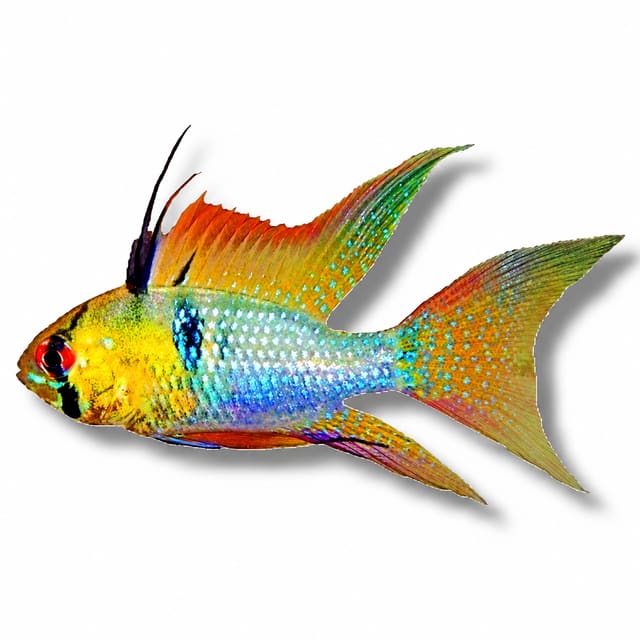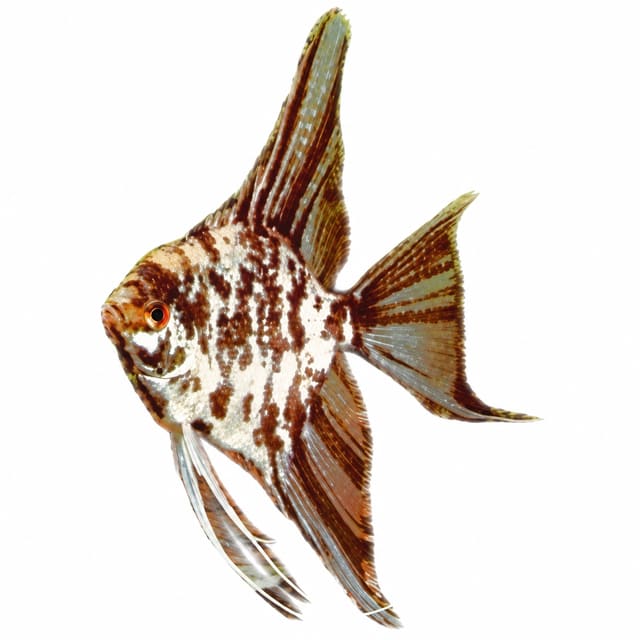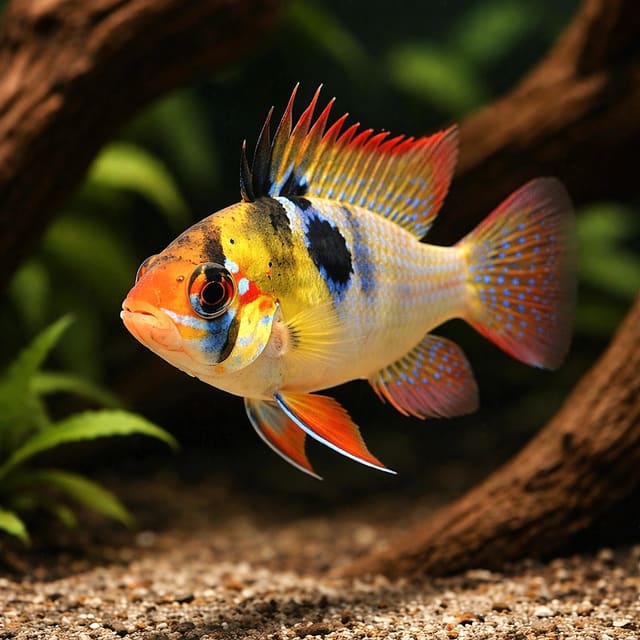
Asia Form Ram Cichlid (Mikrogeophagus ramirezi)
27–30°C · pH 4–7 · 54L
£5.99

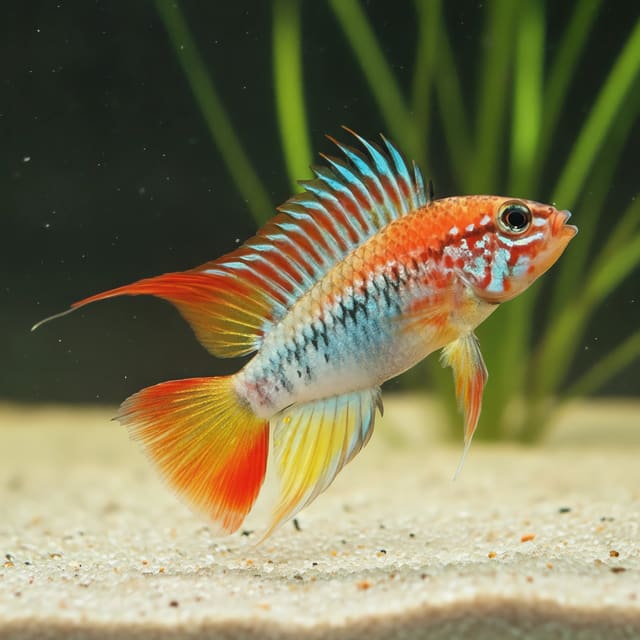
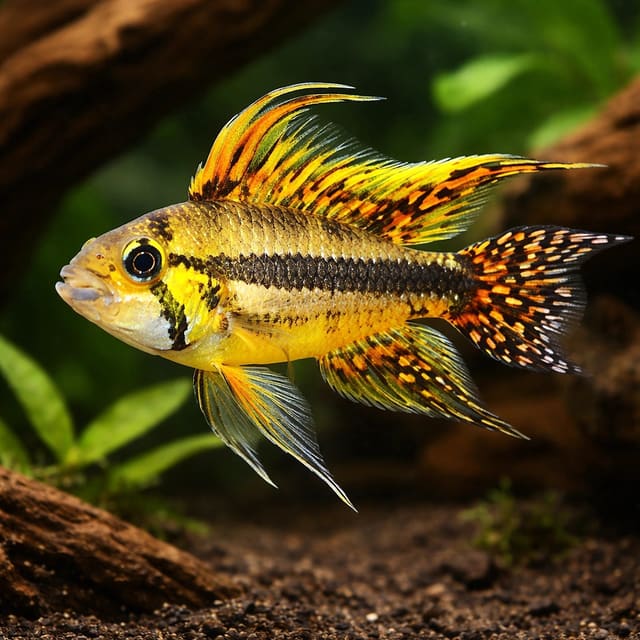
The Super Red Agassiz’s Dwarf Cichlid (Apistogramma agassizii) is a South American cichlid from the Amazon River basin that reaches 4.4 cm standard length. It suits established, structured aquariums; keep it at 26–27°C, the overlap of FishBase, Seriously Fish and OATA, with pH 6.0–7.0 and 4–10 dGH, while FishBase advises several females per male. Sold individually in sizes from 3–4 cm to 4–5 cm.
Adult size is the maximum length this species reaches at full maturity (scientific sources). The livestock you receive will be younger and smaller — pick a size above for the actual shipping size. Product-photo provenance and any image-specific limitations are stated on the listing.
Apistogramma agassizii
Save when buying multiple fish. Each quantity is one fish; sex and pair formation are not guaranteed unless the selected variant explicitly states them.
The Super Red Agassiz’s Dwarf Cichlid (Apistogramma agassizii) is a South American cichlid from the Amazon River basin that reaches 4.4 cm standard length. It suits established, structured aquariums; keep it at 26–27°C, the overlap of FishBase, Seriously Fish and OATA, with pH 6.0–7.0 and 4–10 dGH, while FishBase advises several females per male. Sold individually in sizes from 3–4 cm to 4–5 cm.
Adult size is the maximum length this species reaches at full maturity (scientific sources). The livestock you receive will be younger and smaller — pick a size above for the actual shipping size. Product-photo provenance and any image-specific limitations are stated on the listing.
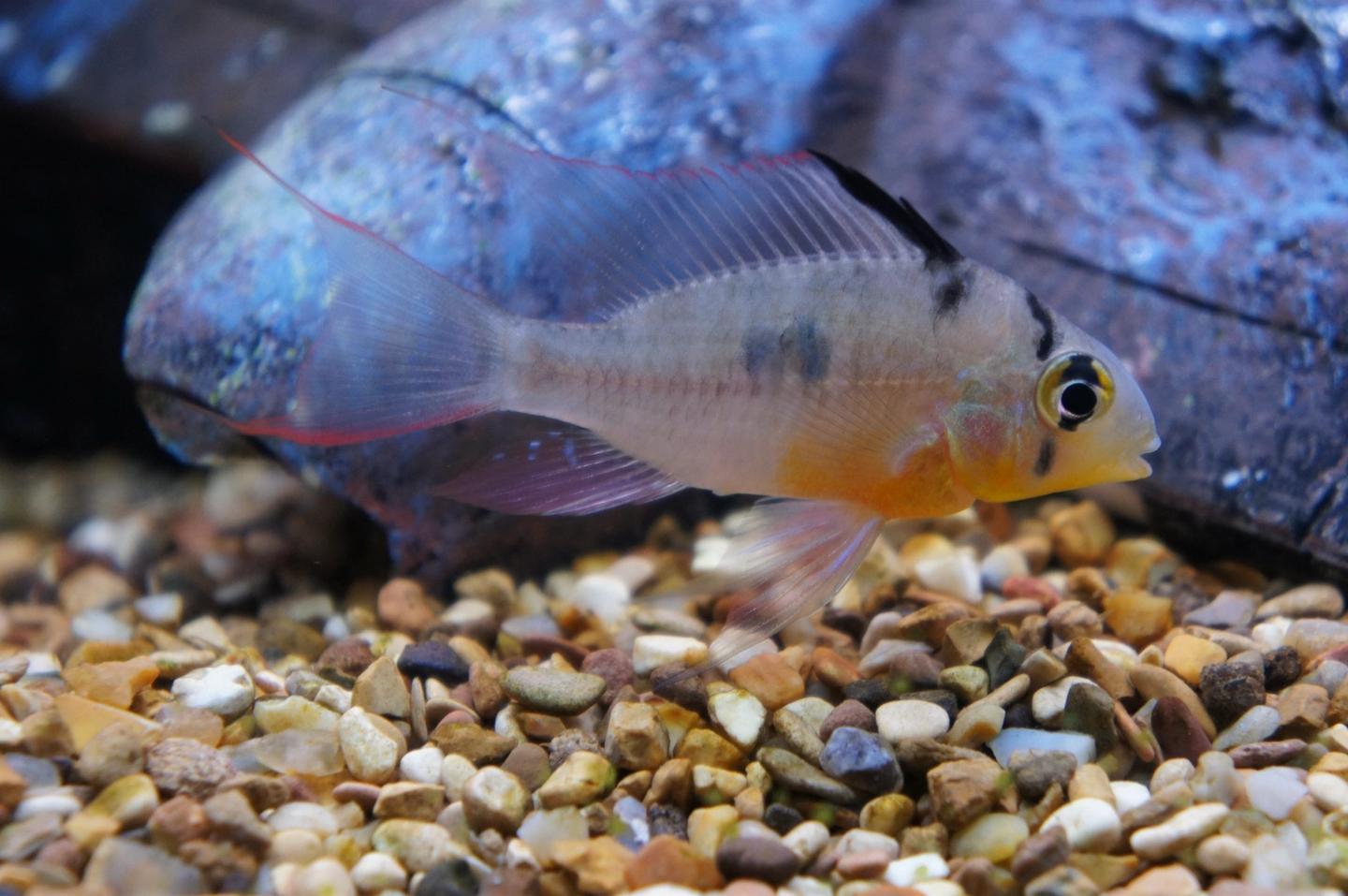
Cichlids are a family of roughly 1,800 accepted species, not one care type. Before buying, identify the exact species and source, then compare adult measurement, usable tank dimensions, social system, territory, tested water, diet and an exit plan. No family-wide minimum tank, water range or tank-mate list is safe.
Maintain these water conditions for optimal health and vibrant colors
The Super Red Agassiz’s Dwarf Cichlid (Apistogramma agassizii) is a freshwater member of the cichlid family from South America. FishBase places the species in the Amazon River basin, along the Amazon–Solimões system from Peru through Brazil to the Capim River basin, and records a maximum of 4.4 cm standard length. It suits a keeper who can provide warm, soft, acidic water in an established, filtered aquarium with caves, shade and clearly separated territories.
In nature, adults inhabit clearwater, blackwater and whitewater environments and occupy a benthopelagic position close to the lower part of the water column. In an aquarium, that makes the base area and its structure more useful planning measures than open water alone. Sand, roots, branches, leaf litter and caves create feeding areas, shelter and visual barriers without filling every part of the floor.
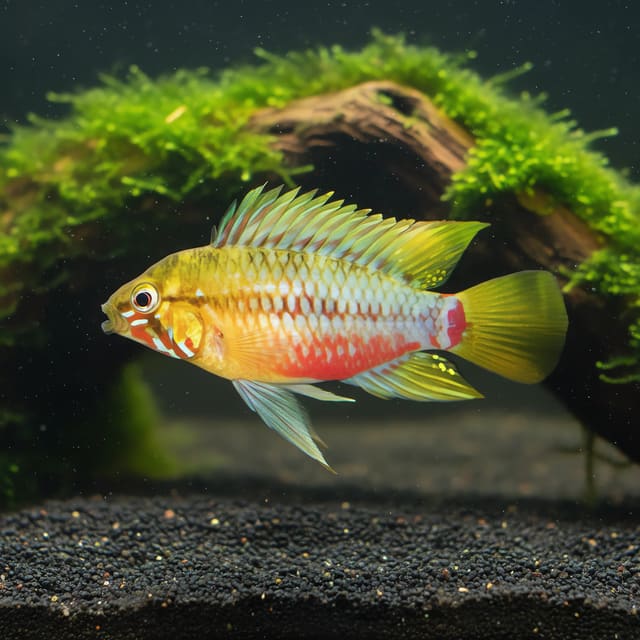
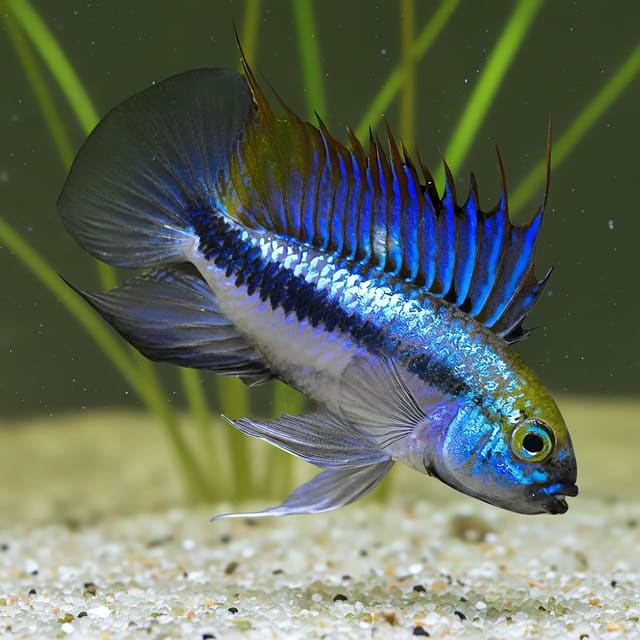
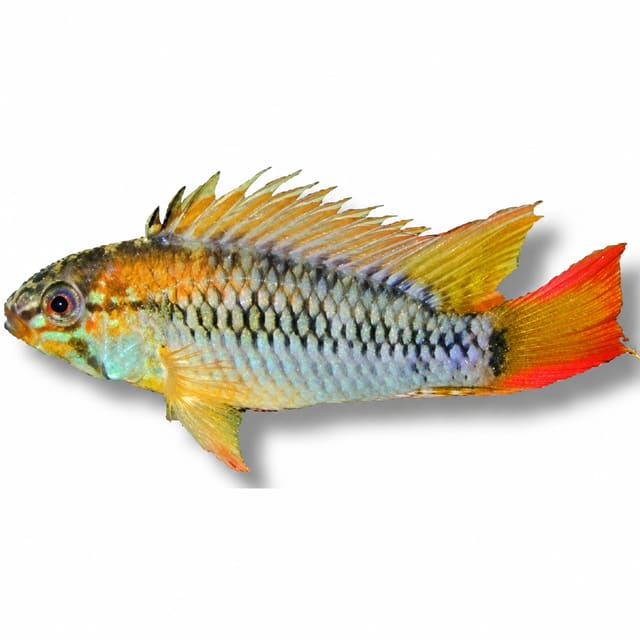
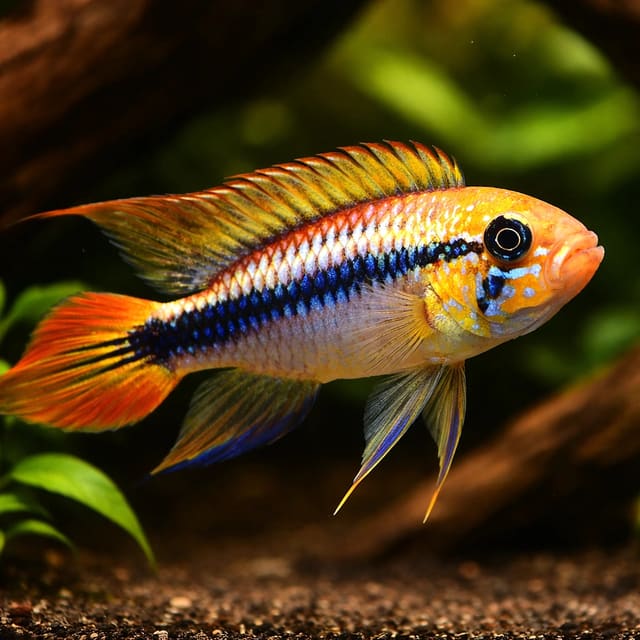
“Super Red” identifies the ornamental colour form within A. agassizii, rather than a separate species. Numerous ornamental forms of this species have been selectively bred for the aquarium trade, but the colour-form name must not be used to infer the sex or origin of an individual fish.
Plan this fish around three connected needs: a footprint of at least 60 × 30 cm for a pair, routine water within the ranges below, and enough cover for fish to move out of one another’s sight. Territorial behaviour can become more pronounced during breeding, so a visually attractive aquarium must also function as a set of usable shelters and escape routes.
You can also browse our South American cichlid collection when comparing aquarium footprints, water requirements and social plans.
One purchase supplies one live fish in the size selected. Use the live size selector to choose either 3–4 cm or 4–5 cm. These labels describe the fish’s dispatch size rather than a promise about sex, social role or final measurement. The size you select is the size supplied, not the adult size.
Sex is guaranteed only when the selected option explicitly states male or female. This Super Red Agassiz’s Dwarf Cichlid listing has no sex-guaranteed option.
Do not use the number of fish ordered as a shortcut to a pair or a planned male-to-female group. FishBase advises several females for one male, but that arrangement depends on knowing the sexes and providing enough space for separate territories. If the aim is a social or breeding group, establish the sex of each fish before relying on a ratio and use larger quarters than the single-pair footprint.
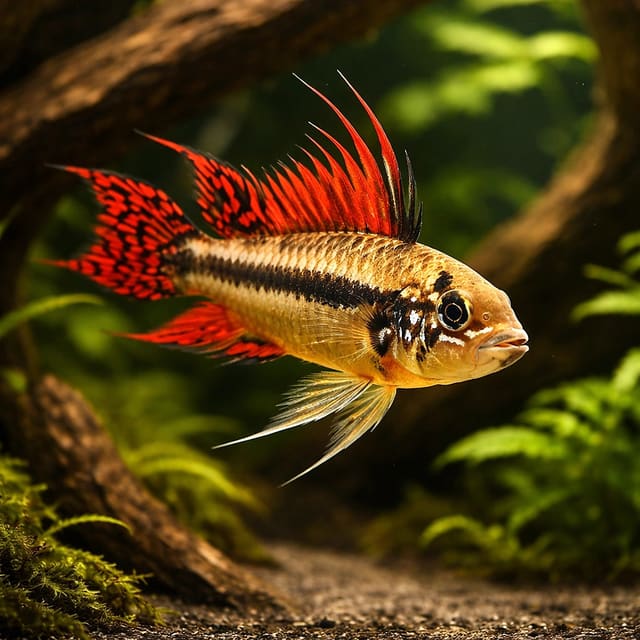
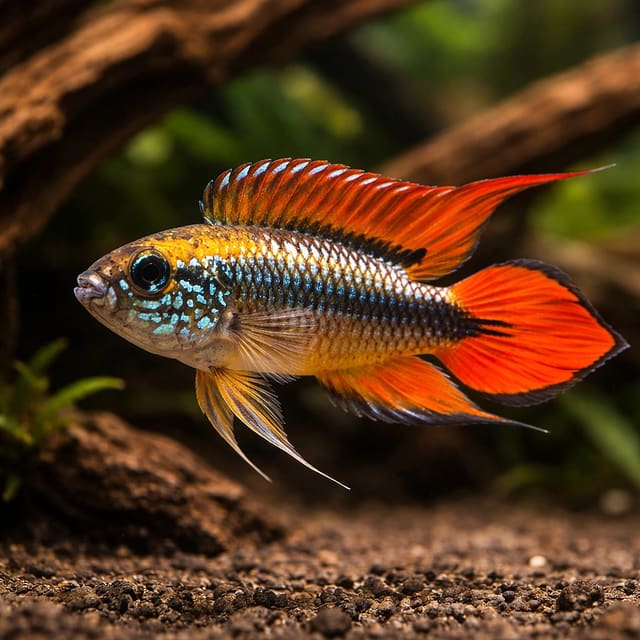
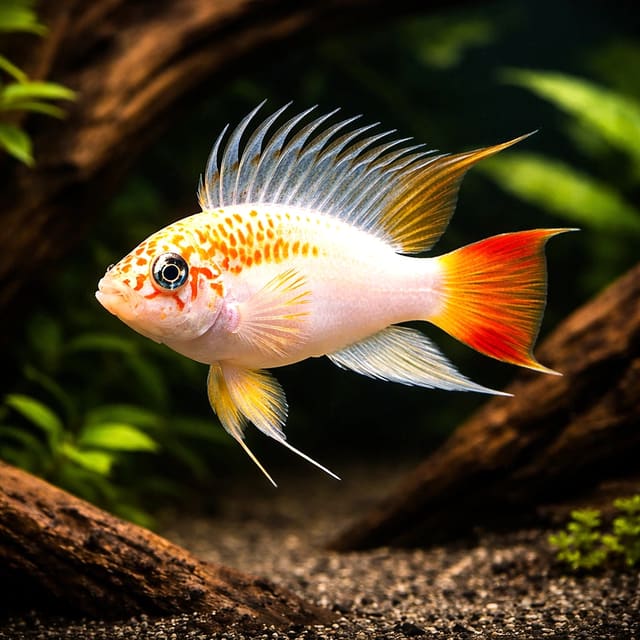
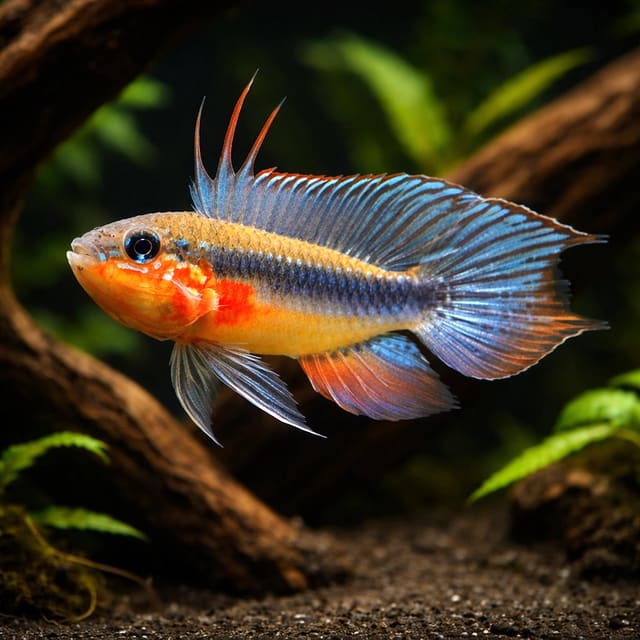
The gallery images are representative of this type of animal rather than photographs of the exact animal supplied, so colours can look slightly different from the live animal.
Choose by the aquarium’s adult plan rather than by which dispatch grade looks small enough for a temporary space. A young or smaller fish still needs an established aquarium prepared around the adult footprint, water conditions and territorial behaviour.
Keep this fish at 26–27°C, pH 6.0–7.0 and 4–10 dGH. The temperature is the overlap of FishBase, Seriously Fish and OATA’s dwarf-cichlid guidance. The pH target uses FishBase’s 5.0–7.0 environmental range narrowed by OATA’s 6.0–8.0 group range, while 4–10 dGH is shared by all three ranges. These routine targets create a clear test for whether the aquarium is a suitable match.
Use a base of at least 60 × 30 cm when planning a single pair. Seriously Fish equates that footprint to approximately 54 litres, while OATA recommends at least 60 litres for a dwarf-cichlid pair and at least 80 litres when mixing dwarf cichlids with other fish. Larger quarters are needed for a group.
| Suits | Not suited to |
|---|---|
| An established, biologically filtered aquarium | An aquarium without a mature working filter |
| Warm water maintained at 26–27°C | Water outside the planned species range |
| Soft water at 4–10 dGH and pH 6.0–7.0 | Hard, alkaline water that cannot be kept within range |
| Sand, caves, shade and broken sightlines | A bare base without territorial cover |
| Calm companions screened for water, activity and space | Very active or boisterous tank mates |
| A deliberately sexed group with several females per male | An assumed pair or sex ratio assembled from unsexed fish |
The decisive question is whether all parts of the plan work together. Correct temperature does not compensate for unsuitable hardness, and sufficient volume does not compensate for a bare footprint or disruptive companions.
Plan around 4.4 cm standard length, the FishBase maximum used consistently for this fish. Seriously Fish reports a different species figure of 7.5 cm standard length for males and 5 cm for females. Keep the 4.4 cm figure as the stated adult size while allowing generous floor space rather than reducing the aquarium around a small body measurement.
Seriously Fish regards base dimensions of 60 × 30 cm or more, approximately 54 litres, as acceptable for a single pair. FishBase likewise gives a minimum aquarium length of 60 cm. OATA’s broader dwarf-cichlid advice recommends at least 60 litres for a pair and at least 80 litres when these fish are mixed with other species. A group requires larger quarters than a single pair.
A useful layout test is to look from one end of the aquarium. If every cave and feeding patch is visible in one uninterrupted line, add roots, plants, branches or other cover. If a fish can leave a cave, move behind a barrier and reach another sheltered area without crossing the full open base, the structure offers more practical choices.
Do not move a smaller dispatch fish into an undersized temporary aquarium on the assumption that there will be time to upgrade. The filter, floor plan and stable water should already suit the adult plan before the fish arrives.
Maintain 26–27°C, pH 6.0–7.0 and general hardness of 4–10 dGH for routine care. Temperature and hardness sit within FishBase, Seriously Fish and OATA values. OATA’s dwarf-cichlid sheet gives 22–27°C, pH 6.0–8.0 and 4–12 dGH for the group; these are broad values, not a species-specific optimum. FishBase narrows the environmental temperature to 26–29°C and pH to 5.0–7.0, so the stated routine range stays within those limits.
Seriously Fish gives 22–29°C and 0–10 dGH. It also notes that some wild populations may require pH 3.0–4.0 to breed. That specialised breeding condition is not the routine target for this ornamental fish. Keep the everyday aquarium at pH 6.0–7.0 rather than pursuing extreme acidity.
OATA also gives carbonate hardness of 3–10 dKH for dwarf cichlids. Measure the water that will actually fill the aquarium, including any prepared replacement water. Our water chemistry guide explains what the main readings mean, while the water matcher helps compare measured values with this plan.
Record the result rather than relying on labels such as “soft” or “tropical”. A written temperature, pH, GH, ammonia, nitrite and nitrate result makes a change visible before it becomes a persistent husbandry problem.
Use a soft, sandy substrate with wood roots or branches arranged to form shady spots, caves and broken sightlines. Seriously Fish also accepts practical shelters such as ceramic flowerpots, suitable plastic piping and other artificial materials when they provide adequate cover and structure. The aim is not a single decorative centrepiece; it is a network of separate places where a fish can shelter, feed and leave another fish’s view.
Dried beech, oak or Ketapang almond leaves can be added as leaf litter. As the leaves decompose, they support beneficial microbial colonies that can become a secondary food source for fry, and they release tannins and other compounds appreciated by many populations. Leaves may be left to break down fully or removed and replaced every few weeks.
Run a well-established biological filter. The RSPCA explains that filtration supports bacteria which convert toxic ammonia to nitrite and then to safer nitrate; no fish should be kept without a well set up and maintained filter. In an aquarium of approximately 54 litres, Seriously Fish suggests gentle movement from a filter rated around 110–160 litres per hour. It also suggests roughly 75–100 W of heating to hold 22–29°C when the room is around 20°C.
Prepare and mature the aquarium before livestock is introduced. Our first tropical aquarium guide covers that preparation. Confirm zero ammonia and zero nitrite with tests rather than treating clear water as proof that the filter is ready.
Make appropriately sized animal-based foods the staple. Seriously Fish describes Apistogramma agassizii as primarily carnivorous and feeding mostly on benthic invertebrates in nature. Offer live or frozen Artemia, Daphnia and chironomid larvae such as bloodworm regularly. Most specimens may also learn to accept dried foods, with pelleted products generally preferred to flake.
OATA’s dwarf-cichlid guidance supplies the portion and schedule: feed once a day and offer only what the fish can eat within a few minutes. That schedule is group guidance rather than a species-specific feeding trial, but it gives a clear control against overfeeding. Uneaten food breaks down and releases waste into the water, so remove visible excess instead of leaving it among the sand or leaf litter.
Vary the named live, frozen and dried foods rather than relying on one item every day. Variety must remain consistent with the species’ recorded carnivorous diet. Do not increase the quantity merely because a fish responds eagerly; body condition, feeding interest and clean water are better checks than appetite alone.
Watch the fish while it feeds. Reduced intake or a loss of interest in food is one of OATA’s warning signs and should prompt an immediate water-quality check alongside observation of breathing, colour and swimming.
Carry out a 25% partial water change at least once every week. OATA recommends using a siphon to remove solid waste from the substrate, treating replacement tap water with conditioner to remove chlorine or chloramine, and testing the aquarium at least weekly. Keep ammonia at zero, nitrite at zero and nitrate no more than 20 mg per litre above the normal tap-water level.
Check the filter for blockages during the same routine. If the media needs cleaning, do not run it under the tap. Rinse it lightly in aquarium water removed during the partial water change, reducing the loss of the established bacterial population. Do not replace all mature media simply because it looks stained; the working bacterial community is central to processing fish waste.
If ammonia or nitrite is detected, treat the reading as an immediate filtration and stocking problem. Test again after corrective maintenance and avoid adding more fish while either remains above zero. If nitrate approaches its limit, review feeding, waste removal and the consistency of weekly water changes.
Water changes and filter care work together. Removing waste reduces the load entering the nitrogen cycle, while preserving mature filter bacteria maintains the biological process that converts ammonia and nitrite. A larger aquarium may make conditions more stable, but it still requires the same regular testing and maintenance decisions.
Receive the parcel in person and inspect it on the day it arrives. Follow the Tropical Fish Co delivery and Live Arrival Guarantee policy from the sealed parcel onward.
For a Live Arrival Guarantee claim, send the continuous unboxing video and order number on the same day. The video must begin with the sealed parcel, show it being opened and show the fish still inside the sealed bag.
OATA advises checking that ammonia and nitrite are zero before adding any fish. Confirm that the aquarium is within 26–27°C, pH 6.0–7.0 and 4–10 dGH before delivery, because acclimatisation cannot correct an unsuitable receiving aquarium.
Add livestock slowly. Every added fish and every increase in feeding raises the waste load that the established bacteria must process. Adding too many fish too quickly can leave too few nitrifying bacteria to handle ammonia and nitrite, producing new tank syndrome and potentially causing illness or death.
After release, use the prepared caves, shaded routes and calm feeding plan rather than rearranging the whole aquarium around the fish. Observe whether it can shelter, swim normally and reach food. If another resident repeatedly prevents those basic behaviours, act on the compatibility problem instead of waiting for physical damage.
Judge the aquarium by repeated observations and test results rather than by one calm moment after introduction. Healthy fish should have clear, bright eyes, undamaged fins, intact scales, no ulcerations or bumps, appropriate swimming and a steady interest in suitable food. Compare each observation with that fish’s normal behaviour rather than expecting every individual to occupy the same cave or feed in the same way.
Keep the weekly 25% water change and test schedule even when the fish looks settled. Stable appearance does not replace ammonia and nitrite testing, while a single unusual hiding period should be assessed alongside breathing, feeding, colour and water results.
If a health change persists, send our team the test results, aquarium volume, temperature, recent maintenance details and a clear description of the change. Those concrete details allow the immediate husbandry risks to be assessed without guessing at a treatment.
Match every companion for water, activity, space and breeding risk before combining it with this fish. OATA says dwarf cichlids can live in community aquariums, but every tank mate must have enough space if breeding makes the cichlids territorial. It favours shoals of dither fish, which can provide a sense of security and move away when territorial behaviour develops.
Avoid very active or boisterous tank mates. OATA specifically notes that species in Apistogramma can be shy and may not do well with those fish. A companion that reaches food first, continually crosses cave entrances or prevents retreat is a poor match even if its water ranges overlap.
Seriously Fish recommends captive-raised examples for a general community. Wild examples are best maintained alone or with small dither fish such as Nannostomus species and ideally should not be mixed with other Apistogramma. Apply that condition when planning around a fish known to be wild-origin; do not turn it into a claim that every Apistogramma combination behaves identically.
For a companion not named above, use the screening rule rather than treating it as universally safe: it must share 26–27°C, pH 6.0–7.0 and 4–10 dGH, remain calm enough for a shy dwarf cichlid, and leave enough base area for territories. Request a stocking assessment when the interaction or adult space requirement is unclear.
Use several females for one male only when the sexes are known and the aquarium is large enough for the group. FishBase supplies that social arrangement, while Seriously Fish states that a group needs larger quarters than the 60 × 30 cm pair footprint. Do not try to manufacture the ratio by assuming that several unsexed purchases will divide into the required sexes.
Provide more than one cave and separate the entrances with wood, plants, branches or other visual barriers. OATA notes that even settled pairs often chase one another and therefore need plenty of cover. During breeding, territorial behaviour can intensify, and all other residents need enough room to move away from the defended area.
This species is a substrate spawner that normally places eggs in crevices or cavities. FishBase records eggs on cave ceilings and care by the female parent; Seriously Fish likewise states that the female handles post-spawning care of eggs and fry. Those facts explain why caves can become defended centres rather than shared shelters.
A community that works outside breeding may need a different plan once a cave is guarded. Avoid companions that might disturb the site or eat fry when breeding is intended. If breeding is not the aim, the same territorial signals still require action: preserve feeding access, usable shelter and a safe retreat for every fish.
Plan around 4.4 cm standard length, the FishBase maximum used consistently for this fish. Give it a complete adult aquarium from the start rather than matching the tank to its dispatch size.
Use a base of at least 60 × 30 cm, approximately 54 litres, for a single pair according to Seriously Fish. OATA recommends at least 60 litres for a dwarf-cichlid pair and at least 80 litres for a community.
FishBase advises several females for one male. Build that group only from fish whose sexes are known, use larger quarters than the pair footprint and do not assume that several unsexed fish will create the ratio.
It suits a keeper prepared to maintain an established filter, 26–27°C, pH 6.0–7.0 and 4–10 dGH while managing caves and territorial behaviour. Those requirements matter more than a simple beginner label.
It is primarily carnivorous and feeds mostly on benthic invertebrates in nature. Offer live or frozen Artemia, Daphnia and bloodworm regularly, with suitable pellets, once daily in an amount eaten within a few minutes.
Keep it at 26–27°C, the overlap of FishBase, Seriously Fish and OATA, with pH 6.0–7.0 and 4–10 dGH. The pH uses FishBase’s range narrowed by OATA, while hardness overlaps all three.
It may be territorial, especially when breeding. Provide caves and broken sightlines, avoid very active or boisterous tank mates, and intervene if chasing prevents another fish from feeding or sheltering.
OATA favours calm shoals of dither fish after water, activity and space screening. Seriously Fish names small Nannostomus species for wild examples; avoid other Apistogramma with wild examples and avoid fry predators when breeding.
Start filming with the parcel sealed before floating the bag. It is hand-bagged in pure oxygen and packed in an insulated box, with a heat pack when needed; receive it in person, open it on the arrival day, float the bag for 20–30 minutes and send the continuous video with any Live Arrival Guarantee claim.
No reviews for this item yet. Bought one? Honest reviews only, good or bad.
What customers say about ordering from us
I have a small group of long finned mountain minnows. So was delighted to be able to order ten of this variety to increase the genetics in my tank . The ones I recieved are healthy but it’s to early to give a verdict on wether they are of a long finned type since they are small currently.
Gordon Walker · 23 Sept 2026
100% success travel and "installation". Pleased with quality of purchase. The Siamese fighter a bit "shy" so have not yet seen him at his best yet but looking good. Happy customer. GG
George E Garratt · 21 Sept 2026
Reviews of our shop, collected by Judge.me, an independent third-party review collector. Newest first.