−13%
Longfin Ram Cichlid (Mikrogeophagus ramirezi)
27–30°C · pH 4–7 · 54L
£11.30£12.99

Cruzi Dwarf Cichlid (Apistogramma cruzi) is a South American cave-spawning cichlid for a mature, sheltered aquarium with calm company. One live fish per purchase, dispatch grade 3–4 cm.
Apistogramma cruzi
Save when buying multiple fish. Each quantity is one fish; sex and pair formation are not guaranteed unless the selected variant explicitly states them.
Cruzi Dwarf Cichlid (Apistogramma cruzi) is a South American cave-spawning cichlid for a mature, sheltered aquarium with calm company. One live fish per purchase, dispatch grade 3–4 cm.
Cichlids are a family of roughly 1,800 accepted species, not one care type. Before buying, identify the exact species and source, then compare adult measurement, usable tank dimensions, social system, territory, tested water, diet and an exit plan. No family-wide minimum tank, water range or tank-mate list is safe.
Maintain these water conditions for optimal health and vibrant colors
Cruzi Dwarf Cichlid (Apistogramma cruzi) is a small South American cichlid for an aquarium built around shelter, careful feeding and room to establish territories. Its appeal is in watching a fish use the lower part of a thoughtfully arranged tank: the spaces beside wood, the entrances to caves and the sheltered routes between plants become part of the display. A mature aquarium with calm companions gives you a much better starting point than choosing it simply because the word dwarf suggests it will fit anywhere.
One purchase supplies one live fish. The listed dispatch grade is 3–4 cm. There is one standard listing rather than a choice of different sizes, and the number of fish ordered should follow your aquarium plan. Sex is guaranteed only when the selected option explicitly states male or female. This Cruzi Dwarf Cichlid listing has no sex-guaranteed option.
Small body size does not remove the need for space. For dwarf cichlids generally, OATA recommends at least 60 litres for a pair and at least 80 litres when mixing them with other fish. These are broad group planning figures, not a tested minimum for every arrangement of this species. The footprint, distribution of shelter and behaviour of the actual fish are as important as the volume. A tank can hold enough water yet still force every inhabitant past the same defended cave.
This is a good fish to consider when you enjoy observing behaviour as much as colour. Keep the front of some shelters visible from your usual viewing position, while leaving the fish places it can genuinely withdraw. You can then watch without continually moving decorations or disturbing the aquarium to find it. Successful cover offers both privacy and choice; filling every available space with solid objects does not necessarily make a better habitat.
Apistogramma cruzi belongs to the cichlid family, Cichlidae. Its documented distribution includes the Napo drainage in Peru and Ecuador and the Putumayo and Caquetá drainages in Colombia. FishBase describes slightly turbid, colourless water and records eggs deposited on cave ceilings, with the female tending them. These details make shelter and access to suitable caves useful considerations when designing a home aquarium, without requiring you to reproduce an exact wild locality.
Aquarium leaves, wood and plants can make an attractive setting, but dark brown water is not the defining requirement for this fish. Concentrate on measured water quality, a stable environment and a practical layout. Its native range describes the species; it does not identify where the individual fish in an order was bred or collected.
FishBase records a maximum of 5.1 cm standard length for a male/unsexed record. Standard length measures the fish without the tail fin, so that figure is not a snout-to-tail maximum. It should also remain separate from the smaller dispatch grade. Allow for a grown fish and its territorial behaviour when deciding whether the aquarium is suitable.
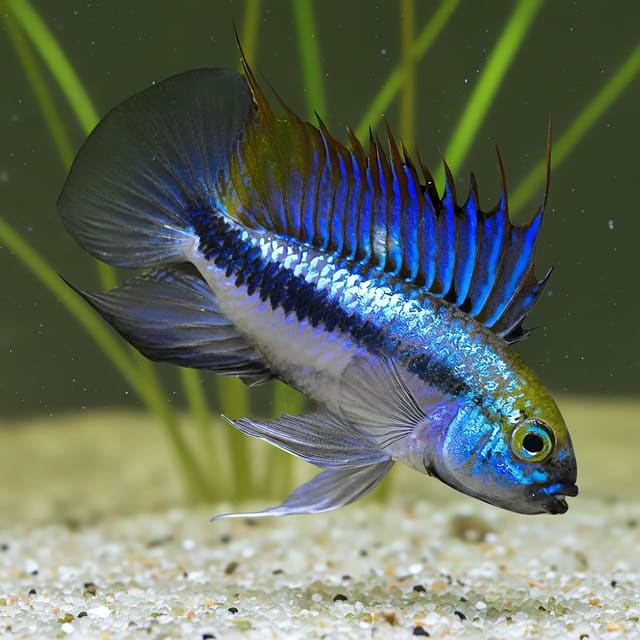
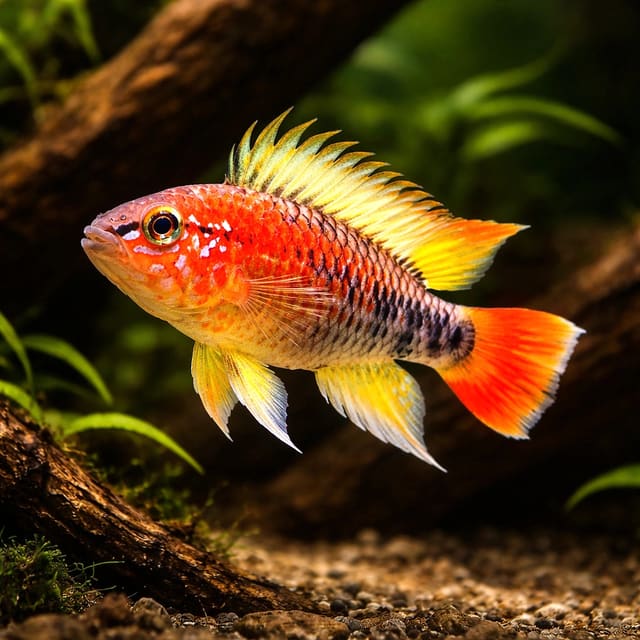
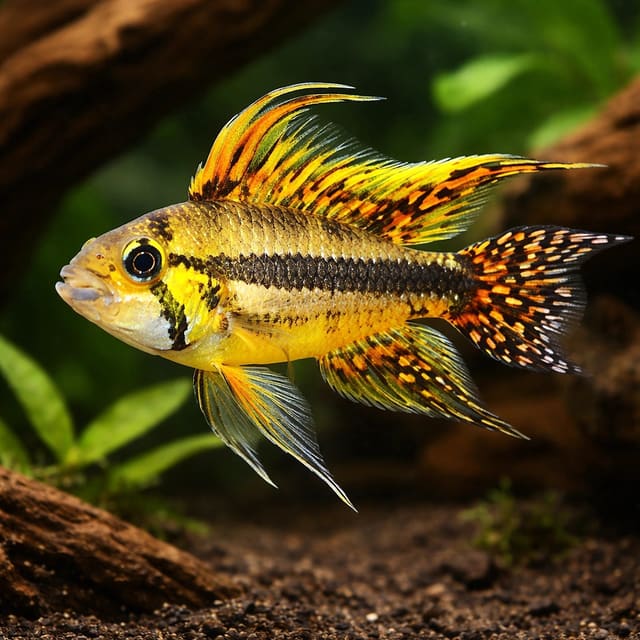
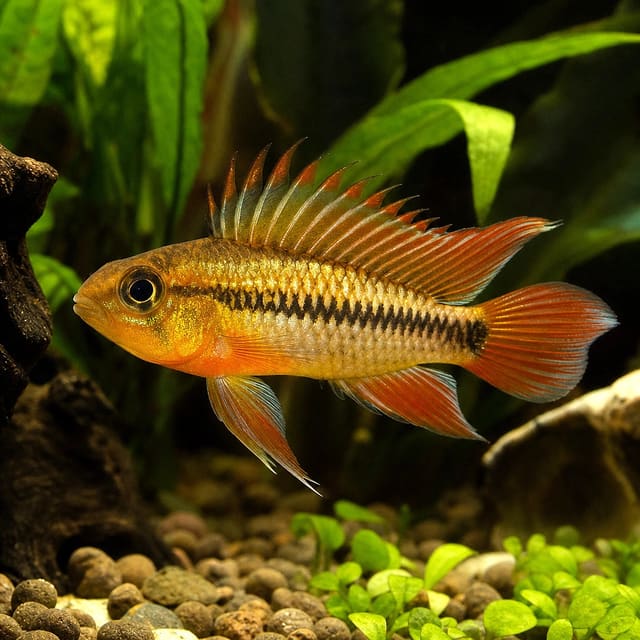
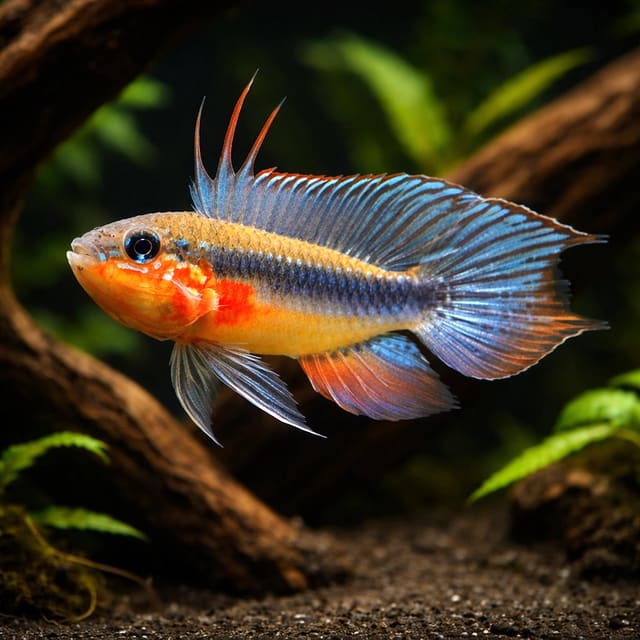
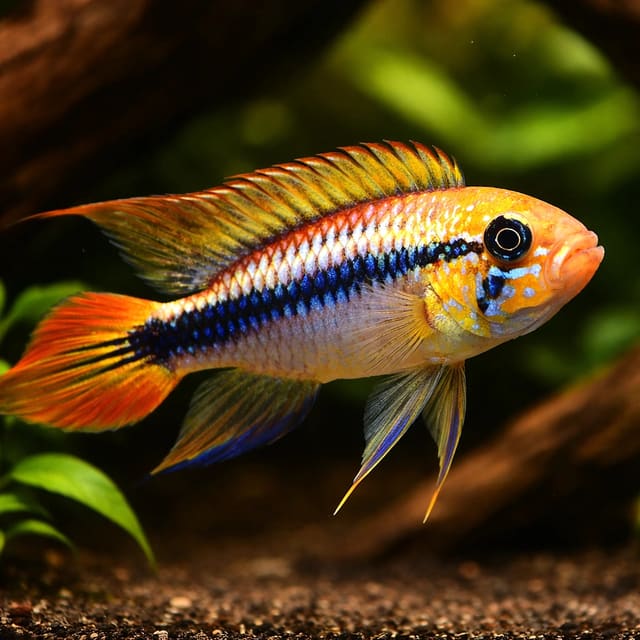
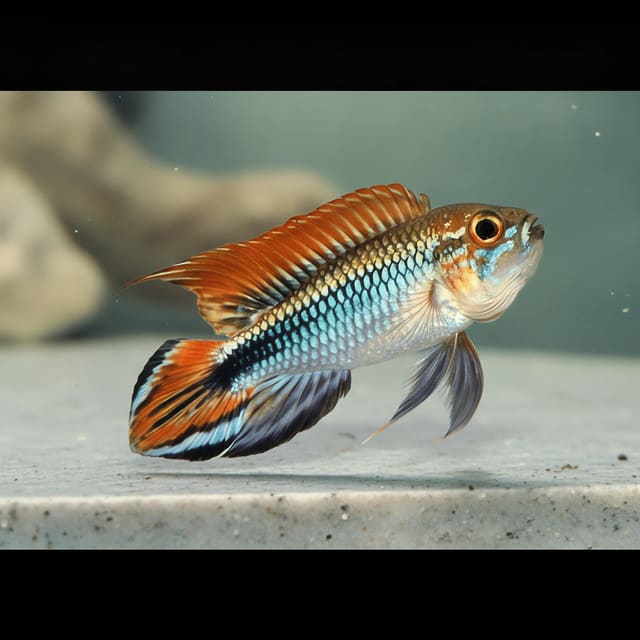
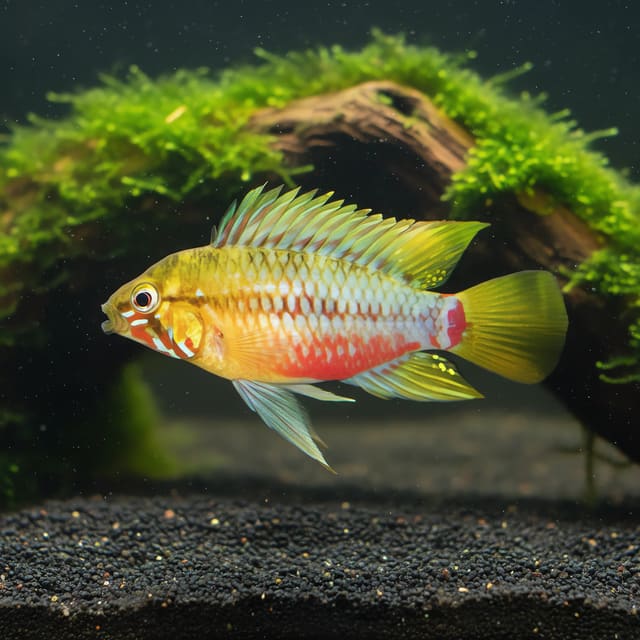
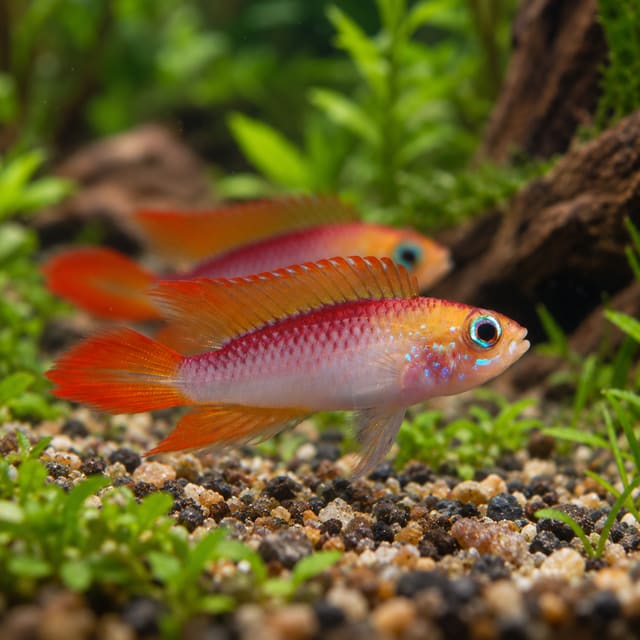
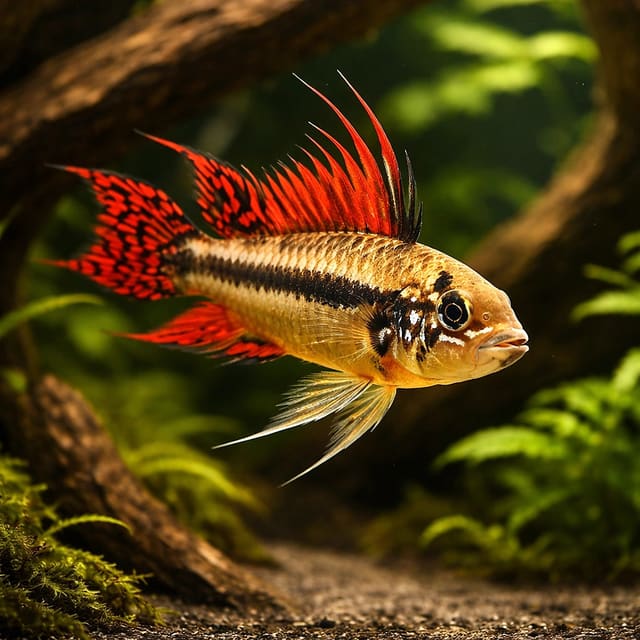
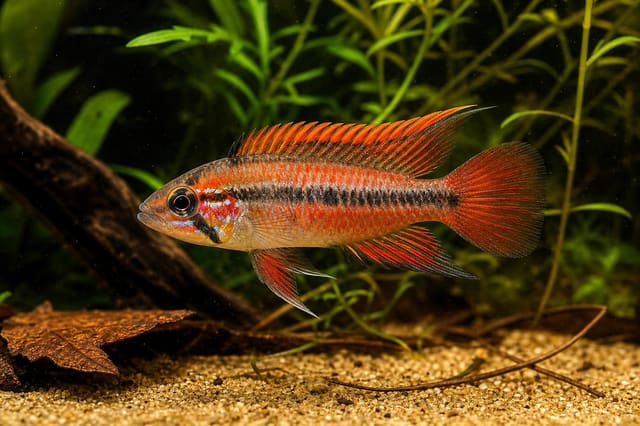
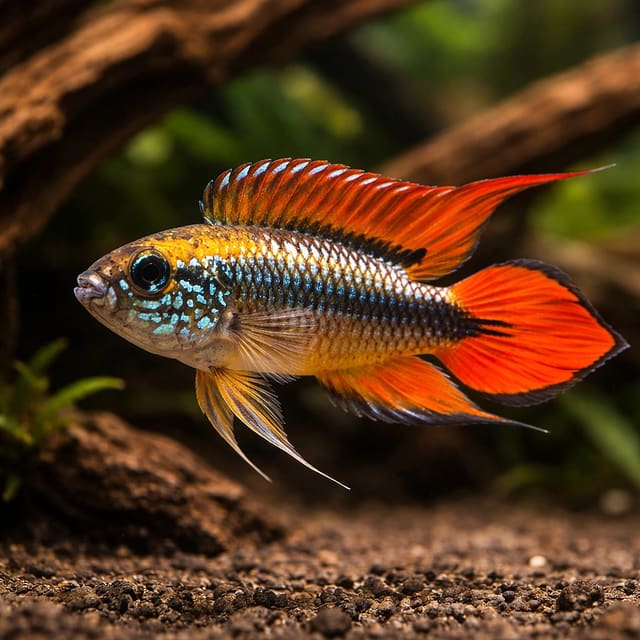
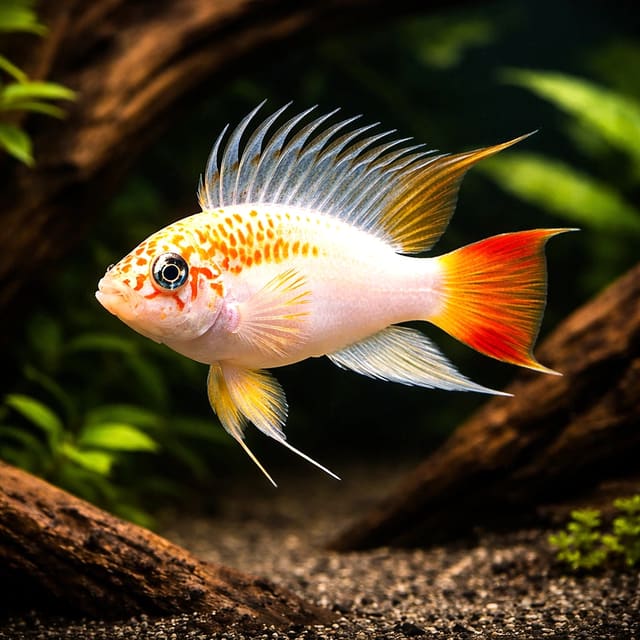
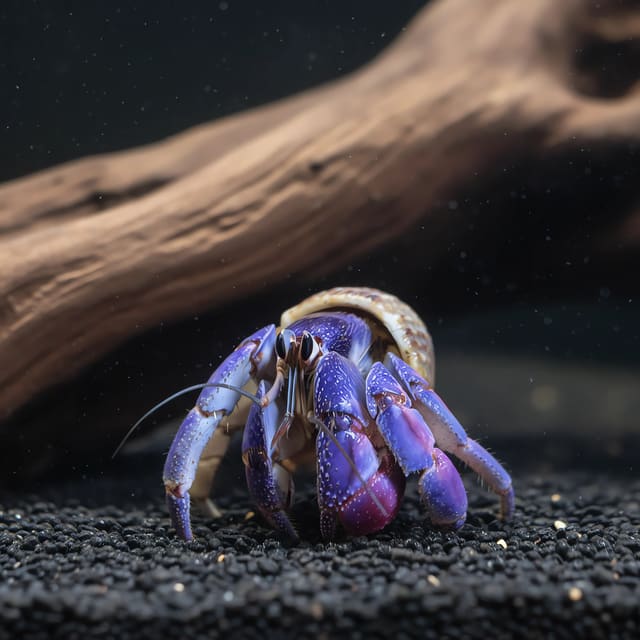
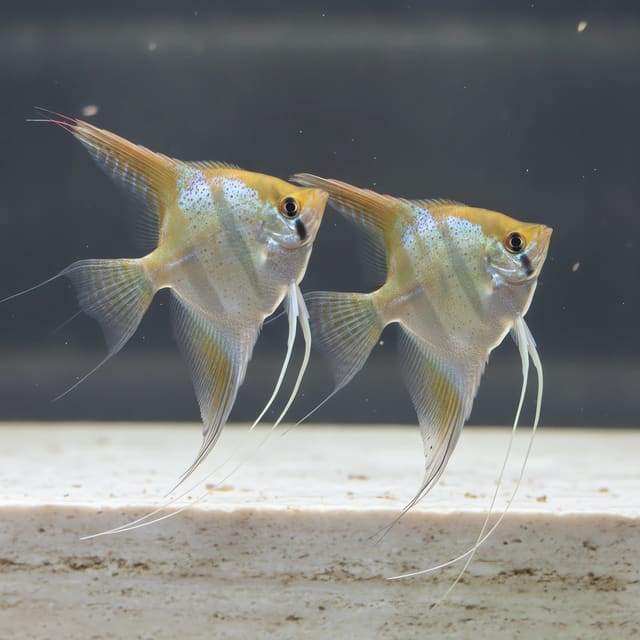
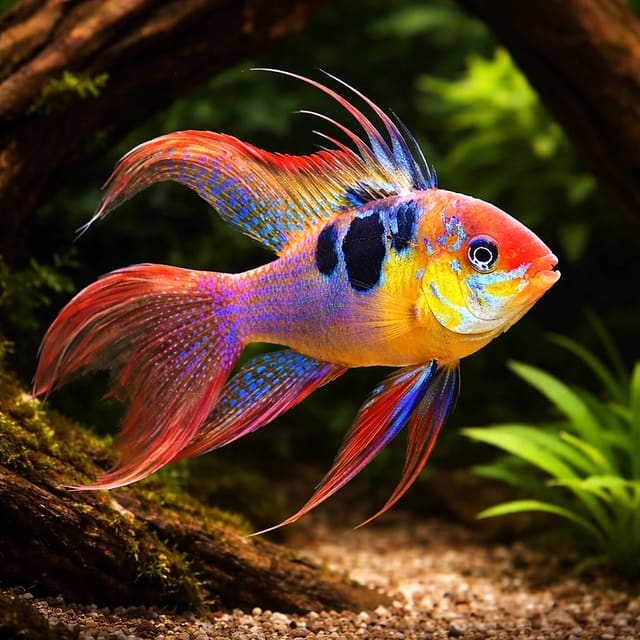
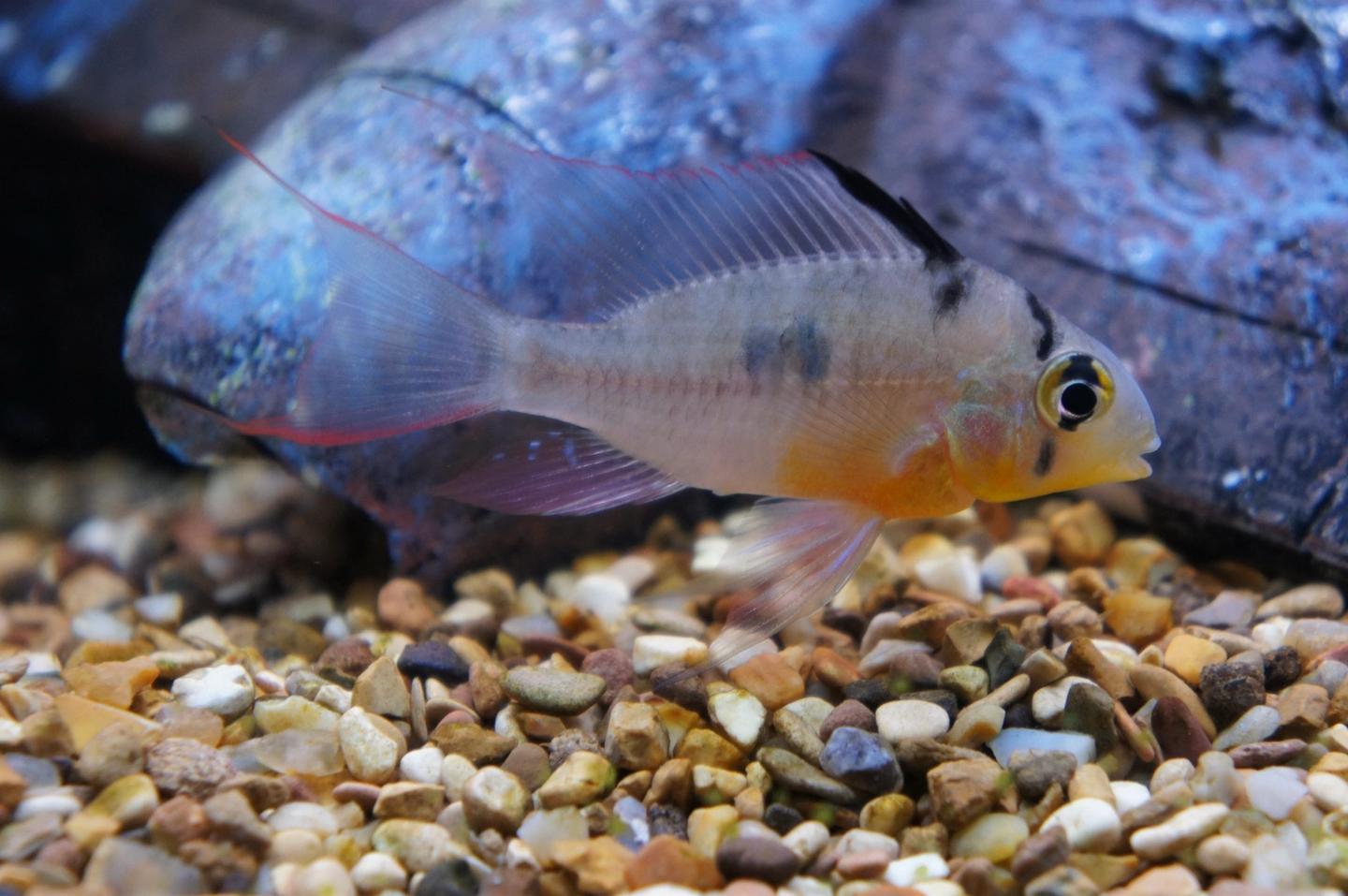
The gallery shows side views with dark flank markings, blue highlights and yellow tones in the fins. One image contains two fish; that view does not change the number supplied per purchase. The gallery images are representative of this type of animal rather than photographs of the exact animal supplied, so colours can look slightly different from the live animal.
Before ordering, have your tank dimensions, water-test results and current stocking to hand. Think about which areas the existing fish already use, how food reaches the bottom and what you could do if territorial chasing develops. These practical questions are more useful than trying to label an entire aquarium simply peaceful or aggressive. A calm shoal above the cichlid may behave very differently from another fish repeatedly searching its shelter.
For a broader shortlist, browse our South American cichlid collection. If you are comparing a Cruzi with the Asia Form Ram Cichlid, compare their individual care pages and adult housing plans: they are different species, in different genera, rather than interchangeable choices for one setup. That comparison is a way to choose the fish your aquarium can support, not a suggestion to keep both together.
A fully functioning biological filter is essential before the fish arrives. Fish release ammonia, and the filter's beneficial bacteria process that waste through nitrite and then nitrate. Both ammonia and nitrite are harmful. A clear-looking tank can still contain either, so use tests to establish readiness instead of relying on appearance or the number of weeks since the aquarium was filled.
Our first tropical aquarium guide explains the preparation involved. Work through that stage before adding livestock. Plants, mature-looking wood and expensive equipment do not themselves demonstrate that a filter can deal with the additional waste from fish and food. Readiness is something to measure.
Increase stocking gradually. An established aquarium has a biological capacity related to its existing waste load, and a sudden increase can overwhelm it. Keep the first days after an addition straightforward: feed with care, watch the fish and repeat water tests. Avoid treating a new purchase as the occasion to change every part of the aquarium at once, because several simultaneous changes make an emerging problem harder to understand.
For dwarf cichlids as a group, OATA gives the following broad guidance. Confirm the conditions in which these fish are being held before purchase and agree a suitable target for your aquarium. This chart is not a species-specific optimum for A. cruzi, and the endpoints should not be used as a reason to move an established fish abruptly between different conditions.
| Measurement | OATA dwarf-cichlid group guidance |
|---|---|
| Temperature | 22–27°C |
| pH | 6.0–8.0 |
| General hardness | 4–12°dH |
| Carbonate hardness | 3–10°dKH |
| Ammonia and nitrite | Zero mg/l |
| Nitrate | No more than 20 mg/l above the level in the source tap water |
Temperature, pH and hardness describe different aspects of water. Measuring one does not tell you the others. It is useful to test both the aquarium and the water you will use for changes, because maintenance introduces that replacement water repeatedly. Record the readings so that you can spot a trend and explain the conditions accurately if you need advice.
If these measurements are unfamiliar, read the water chemistry guide before attempting adjustments. A soft-water look created with leaves or wood is not a measurement of hardness, and the colour of the water cannot tell you whether the fish's needs are being met. Work from actual readings and a repeatable preparation routine.
The water matcher can help organise a comparison of measured conditions with published guidance. Use it as a starting point for questions about this species, with the group scope above in mind. It cannot assess territorial behaviour, filtration maturity or whether your maintenance routine produces stable water.
Use aquarium-safe sand or gravel and build shelter with plants, wood and suitable caves. OATA recommends a choice of potential territory sites for dwarf cichlids. This helps you avoid a layout in which one attractive cave becomes the only place all fish want to use. Spread useful shelter across the aquarium rather than placing every refuge in one crowded corner.
Look at the arrangement from the fish's height. A tall piece of wood can be decorative yet leave an uninterrupted view across the bottom. Smaller planting groups or a suitably placed cave may do more to break that view. Retain paths around objects so that a fish leaving a disputed area has somewhere to go without becoming trapped behind a decoration.
Live plants provide cover, while suitable artificial plants and ornaments can also serve that purpose. Choose the approach you can maintain well. Leaves and wood should complement the layout rather than make routine cleaning impossible. Leave access for a siphon and for checking behind shelters, especially where food might otherwise accumulate unnoticed.
Do not use decorative density as a substitute for aquarium space. Once plants and ornaments are in place, check the usable areas again. A layout should provide separate sheltered positions, routes between them and enough room to reach food. An attractive arrangement that leaves only a narrow corridor through the middle may need redesigning before fish are added.
Keep filtration running and make its operation easy to inspect. Check that the intake and outlet remain clear and that plants or loose material have not restricted circulation. Efficient waste processing matters even when the aquarium is designed to look quiet and natural. A hidden filter is still equipment you need to reach for maintenance.
Use a suitable heater and a separate thermometer to monitor temperature. Place the aquarium away from draughts, nearby heat sources and direct sunlight, as OATA advises. A stable location makes temperature control more predictable and also reduces disturbance from sudden movement, vibration and noise around the glass.
Give the aquarium a regular day and night cycle, with lighting suited to the plants and an arrangement that provides covered areas. The fish should have a choice between more exposed and sheltered spaces. If it starts avoiding an area, consider the entire setting: light, other fish, feeding access and water quality can all be relevant observations to discuss, rather than assuming one cause from hiding alone.
OATA's dwarf-cichlid guidance recommends a good-quality flake or granule with small live or frozen foods such as daphnia, brine shrimp or tubifex for variety. Choose food of a size the fish can take readily. The genus contains fish that feed heavily on tiny animals, but a home feeding plan should still provide a suitable staple rather than rely on one favourite treat.
Watch where the food goes. In a community, a feeding response at the surface does not demonstrate that a sheltered cichlid has eaten. Offer the portion where you can observe this fish taking it, without sending excessive food into caves or behind wood. The aim is reliable access to an appropriate amount, not a large quantity scattered everywhere in the hope that some reaches the bottom.
As broad guidance, OATA suggests one daily feed comprising only what dwarf cichlids can consume within a few minutes. Adjust the practical portion with advice for the fish's size and condition. Begin with a small amount, watch the response and remove leftovers. A fixed large pinch is difficult to judge when fish sizes, foods and community competition differ.
Pay attention to the individual over time. Is it taking food promptly, retaining a normal body profile and able to feed without being driven away? If another fish intercepts every offering, address access and the social arrangement. Adding much more food can leave the excluded fish hungry while increasing waste elsewhere in the aquarium.
Keep feeding observations separate from promises about colour or breeding. A varied appropriate diet supports normal husbandry; it is not a guarantee of a particular display or spawning result. If appetite changes sharply, test the water and examine what else has changed before repeatedly switching foods or increasing portions.
OATA recommends a partial water change of around 25% at least weekly for dwarf cichlids, with regular water testing. Treat that as a starting routine and use the aquarium's results to assess how it is performing. Nitrate trend, feeding, stocking and the condition of the filter help reveal whether the existing routine is keeping up with waste.
Prepare replacement water with conditioner where needed to remove chlorine or chloramine. Keep its temperature and chemistry suitable for the established aquarium. Use aquarium equipment you can keep clean and organised, and make preparation part of the routine rather than an afterthought when the tank is already partly drained.
Remove accumulated waste with a siphon, taking care around sheltered fish. Check the spaces beside caves, beneath feeding areas and behind objects where debris can collect. You do not need to dismantle the whole aquascape to maintain it well; planning access from the start lets you clean while leaving the fish's familiar shelter largely intact.
When filter media needs cleaning, OATA advises a light rinse in aquarium water removed during a water change. Do not rinse filter media under the tap, because chlorine or chloramine may damage the bacteria you are relying on. Check the manufacturer's instructions for the equipment too, and confirm that flow has resumed properly afterwards. A completed water change is a good moment to verify the heater, thermometer and filter together.
Read the current delivery and Live Arrival Guarantee policy before the confirmed delivery date. Tropical Fish Co hand-packs fish with oxygen in an insulated box and adds a heat pack when conditions call for it. Delivery uses a licensed live-animal courier, with tracking and the confirmed Thursday or Friday date sent by email. Arrange for someone to receive the parcel.
Open and inspect the parcel on the day it arrives. For a Live Arrival Guarantee claim, keep a continuous unboxing video showing the sealed parcel, its opening and the fish still in the sealed bag, and contact Tropical Fish Co the same day with your order number. This provides evidence of the arrival condition. Have the camera ready before opening so the beginning is included if it is needed.
Keep the receiving aquarium ready and follow the supplied acclimatisation advice. The store policy advises floating the bag for 20–30 minutes as part of gradual acclimatisation. Do not pour transport water into the aquarium. Reduce unnecessary disturbance and watch the fish after release, including whether it can find shelter without being pursued.
In the first days, compare behaviour with water-test results and feeding observations. A fish spending time under cover is not by itself a diagnosis of illness, but persistent exclusion, unusual breathing or failure to feed deserves attention. Contact the store with specific observations rather than waiting for several problems to accumulate.
Look for clear eyes, intact fins and scales, steady breathing and appropriate swimming. Learn the individual fish's usual pattern: where it rests, how it approaches food and how it moves around its neighbours. That familiar baseline helps you notice a change without expecting every fish to behave identically.
OATA highlights changes in colour, breathing, body condition, appetite, swimming and aggression as reasons to investigate. Test water promptly if you see a problem and seek advice from an aquatic specialist. Record the readings, when the change began and any recent additions or maintenance. These details are much more useful than guessing a disease from a single symptom.
Arrange everyday equipment so you can test, feed and maintain the tank without repeatedly moving its main shelters. Keep the thermometer readable, the filter accessible and a clear route for removing waste. These details are easy to overlook while building an aquascape, but they help you carry out routine care consistently once the fish has established familiar places.
Choose a viewing position from which you can see more than the open front. A fish may spend time near a cave entrance or behind planting while still behaving normally. Being able to check those areas quietly lets you distinguish ordinary use of cover from a fish that is being excluded by its neighbours. Avoid pulling apart the aquarium merely to make the animal more visible.
When you need advice, describe the aquarium concretely: its dimensions, the inhabitants, measured temperature and water values, feeding routine and the change you have noticed. Photographs of the layout can show a territorial bottleneck that a volume figure alone misses. Keeping a simple record also helps you tell whether a maintenance adjustment improved the situation.
For holidays or other absences, leave the person caring for the aquarium clear instructions for the established routine and contact details if something changes. Show them the normal feeding amount and how to check the equipment. A reliable routine is easier to continue when it is demonstrated, rather than leaving someone to guess from a full food container and a tank of unfamiliar fish.
Dwarf cichlids can live in community aquariums, but territorial behaviour must be part of the plan from the beginning. OATA notes that Apistogramma may be shy and fare poorly with very active or boisterous tankmates. Choose companions for their adult behaviour and feeding style, as well as their water requirements, rather than judging them only by the size they are when purchased.
Shoaling dither fish can help create a sense of security, according to the group guidance, provided they have enough room to move away from defended areas. The useful idea is calm activity elsewhere in the aquarium. Adding a busy shoal to an already crowded tank does not provide that benefit, and a shoal needs its own suitable group and swimming space.
Think about contact between fish across an ordinary day. A neighbour that rarely enters a cave area may have fewer encounters with its resident than one that continually searches the same floor space. Feeding can temporarily bring otherwise separate fish together, so watch those moments closely. A combination should be assessed during meals and territorial activity, not only while everyone is resting.
| Proposed company | Decision to make |
|---|---|
| Calm shoaling dither fish | Consider only with suitable water, room for the shoal and escape space around territories. |
| Very active or boisterous fish | Avoid combinations that intimidate the cichlid or dominate feeding. |
| Other territory holders | Assess competing use of caves and floor space before mixing. |
| Fish that disturb spawning sites | Reconsider where breeding behaviour is part of the plan. |
OATA discusses male–female pairs and one male with multiple females as arrangements used for dwarf cichlids generally. That is not a precise stocking recipe for this species or a guarantee that two fish will get along. Plan the actual group with advice, enough separate territories and a way to intervene if an individual cannot retreat or feed.
More caves are helpful only if they create usable choices. A dominant fish may still control several entrances that all face into one exposed area. Watch whether another fish can move between cover and food without repeated pursuit. Persistent hiding in an upper corner, damaged fins or repeated exclusion should prompt a change in the arrangement and expert advice.
Have the practical response ready before increasing the group. Suitable separation requires appropriate water, filtration and shelter; an empty spare container is not a complete fallback. If your aquarium cannot accommodate a workable social plan, choose a different stocking arrangement before buying extra fish to try to solve aggression.
FishBase specifically records eggs on cave ceilings and female parental care for this species. A shelter may therefore become more strongly defended when breeding activity develops. Leave room around potential spawning sites and observe the whole aquarium, since a territory that seems small can still block a route used by other inhabitants.
Decide whether your priority is a calm display or a deliberate breeding project. A community includes other fish with their own movements and feeding needs, and some may disturb a spawning site or eat fry. A planned dedicated aquarium gives you greater control over those interactions. Seek species-focused breeding advice before attempting changes to water or group structure solely to induce spawning.
Do not disturb a cave repeatedly to look for eggs. You can learn a great deal by observing guarding, movements around the entrance and the response to nearby fish. Keep normal maintenance practical and minimise unnecessary interference while remaining alert to water quality and to any animal that is being displaced.
A combination that looks settled shortly after introduction may change as fish grow or begin defending shelter. Reassess after additions, significant plant growth or changes to the aquascape. A plant that once divided territories may be trimmed away, or a growing decoration cover may narrow an escape route. These are ordinary management details that can alter how much usable space fish actually have.
Make room in your routine for watching quietly after feeding and at other times of day. You are looking for access: access to food, cover and undisturbed resting areas for every inhabitant. That gives a more useful picture of compatibility than the absence of a visible fight during a brief glance.
FishBase records 5.1 cm standard length for a male/unsexed record. Standard length excludes the tail fin, so this is not a whole-fish total-length maximum. Plan housing for a grown territorial fish rather than its dispatch size.
OATA's broad dwarf-cichlid guidance gives at least 60 litres for a pair and at least 80 litres for a mixed aquarium. These are group planning figures, not a species-specific guarantee; floor space, separate shelters and the actual stocking still need assessment.
Plan the group with advice for your aquarium and the actual fish. OATA discusses pairs or one male with multiple females for dwarf cichlids generally, but does not establish a fixed group number for this species. Provide separate territories and a practical response to persistent aggression.
It suits a keeper who can establish and test a filtered aquarium, arrange shelter and monitor territorial behaviour. Prepare those foundations and confirm the holding-water conditions before purchase; a small fish still needs a considered long-term setup.
Use suitable good-quality flake or granules with small live or frozen foods such as daphnia or brine shrimp for variety. Watch the fish eat and remove leftovers. OATA's broad guidance is a small daily portion consumed within a few minutes.
OATA's broad dwarf-cichlid guidance is 22–27°C, pH 6.0–8.0 and general hardness 4–12°dH. These are group ranges rather than a species-specific optimum. Confirm the fish's holding conditions and a suitable stable aquarium target before purchase.
Territorial behaviour is possible, especially around spawning sites. Keep calm companions, several sheltered areas and clear retreat routes. Persistent chasing that prevents another fish eating or resting needs intervention rather than being dismissed as normal.
Calm shoaling dither fish may be considered where water requirements and available space suit all inhabitants. Very active or boisterous companions can overwhelm shy Apistogramma. Evaluate each proposed combination, including feeding competition and access around caves.
Tropical Fish Co hand-packs fish with oxygen, insulation and weather-dependent heat support for a licensed live-animal courier. Be present on the confirmed delivery date and inspect the parcel the same day. Live Arrival Guarantee claims require same-day contact, the order number and continuous video from the sealed parcel through opening to the fish in its sealed bag.
FishBase: Apistogramma cruzi covers the recorded range, standard-length measurement and cave-spawning biology. OATA's dwarf-cichlid care sheet offers broader advice on feeding, aquarium layout and routine care. The RSPCA aquarium environment advice explains why an established biological filter is essential.
No reviews for this item yet. Bought one? Honest reviews only, good or bad.
What customers say about ordering from us
I have a small group of long finned mountain minnows. So was delighted to be able to order ten of this variety to increase the genetics in my tank . The ones I recieved are healthy but it’s to early to give a verdict on wether they are of a long finned type since they are small currently.
Gordon Walker · 23 Sept 2026
100% success travel and "installation". Pleased with quality of purchase. The Siamese fighter a bit "shy" so have not yet seen him at his best yet but looking good. Happy customer. GG
George E Garratt · 21 Sept 2026
Reviews of our shop, collected by Judge.me, an independent third-party review collector. Newest first.