Red Dorsal Agassiz's Dwarf Cichlid (Apistogramma agassizii) – Trade Colour Form
26–27°C · pH 6–7 · 54L
£22.99
A beautifully patterned Amazonian dwarf cichlid that thrives in soft, warm, acidic water and rewards keepers with fascinating behavior and breeding ca.
Apistogramma agassizii
Save when buying multiple fish. Each quantity is one fish; sex and pair formation are not guaranteed unless the selected variant explicitly states them.
Confirm your email, then we’ll send an availability message for this exact item if it returns within 180 days.
This request is only for this product—no newsletter or other promotions. A mail-provider retry may very rarely duplicate the same availability message. Unconfirmed addresses are removed after 48 hours. See our privacy policy.
A beautifully patterned Amazonian dwarf cichlid that thrives in soft, warm, acidic water and rewards keepers with fascinating behavior and breeding ca.

Cichlids are a family of roughly 1,800 accepted species, not one care type. Before buying, identify the exact species and source, then compare adult measurement, usable tank dimensions, social system, territory, tested water, diet and an exit plan. No family-wide minimum tank, water range or tank-mate list is safe.
Maintain these water conditions for optimal health and vibrant colors
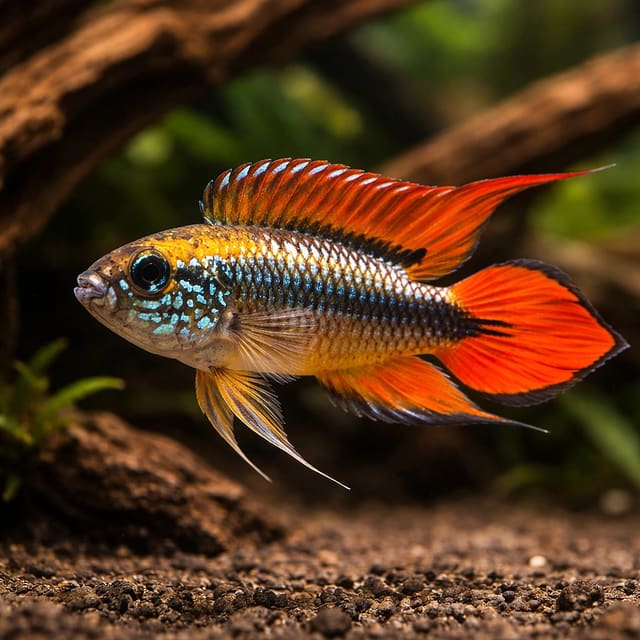
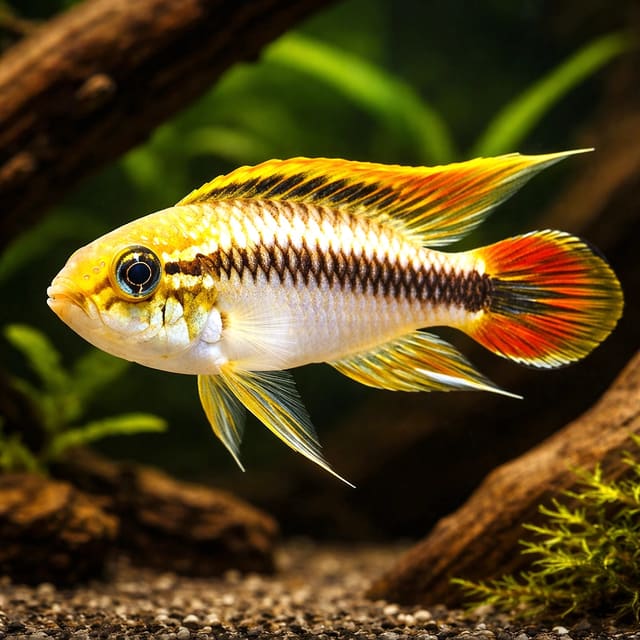
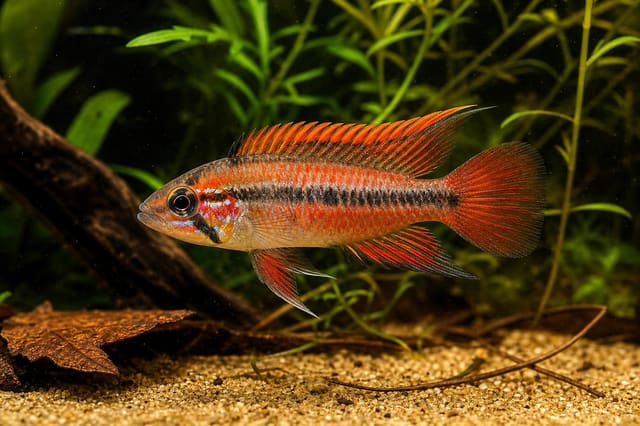
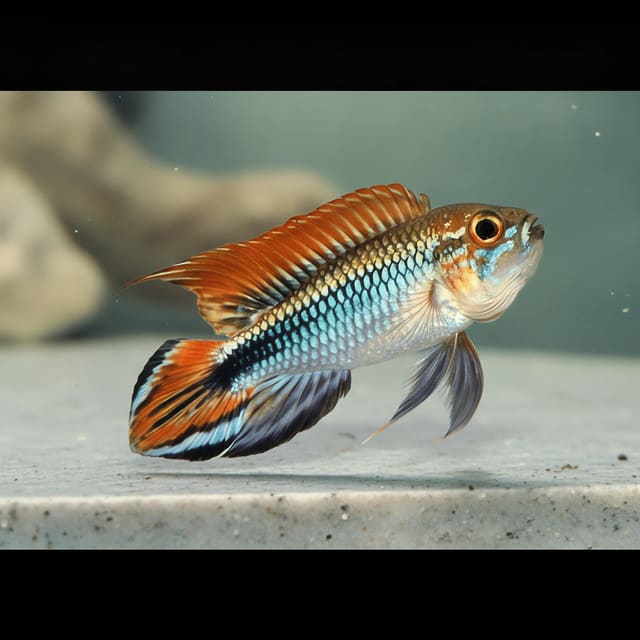
The Santarem form of Agassiz's Dwarf Cichlid (Apistogramma agassizi santarem) is a beautifully patterned Amazonian dwarf cichlid named after the Santarem region of its native range. Compact at around 3 cm and full of character, it brings the classic spade-tailed elegance of A. agassizii to a soft-water community.
This fish does best in warm, soft, gently acidic water. Target a pH of 5.5-7.0 with low hardness of 0-10 dGH, held at a steady 24-27°C, and give it a tank of at least 80 litres so a male can hold a territory without crowding its tank mates. A fine substrate with driftwood and shaded retreats lets it define its patch and bring out its colours, while broken sightlines keep its semi-aggressive streak in check.
As a carnivore it thrives on small frozen and live foods taken near the bottom, where it spends most of its time patrolling and foraging. Given the right surroundings, the Santarem is rewarding to watch and, with space and cover, displays the fascinating parental behaviour the genus is famous for. It can become territorial, so a well-considered layout helps a settled pair feel secure. Given a quiet, well-furnished aquarium it grows confident quickly, working its small territory and showing the spade-tailed finnage to full effect, while a gentle acclimatisation to your soft, acidic water helps a new fish settle without stress. Conditioned well on small meaty foods, a compatible pair will often display the absorbing parental behaviour the species is celebrated for, making it as rewarding to breed as it is to simply watch going about its day.
Suitable companions include small peaceful tetras, rasboras, corydoras catfish, otocinclus, peaceful dwarf pencilfish and non-aggressive small loricariids. Avoid large or boisterous cichlids, aggressive territorial fish, fin-nippers, large predators, fast feeders that outcompete it, and additional male Apistogramma in undersized tanks. Every Santarem ships with a licensed live-animal courier under our live arrival guarantee for safe UK delivery.
No reviews for this item yet. Bought one? Honest reviews only, good or bad.
What customers say about ordering from us
Easy website plenty of info on fish your buying great to pick a time slot
TRACEY DURRANT · 7 Oct 2026
Got some lovely fish thank you
Kevin Mackie · 7 Oct 2026
Reviews of our shop, collected by Judge.me, an independent third-party review collector. Newest first.