
 By Priya Ramesh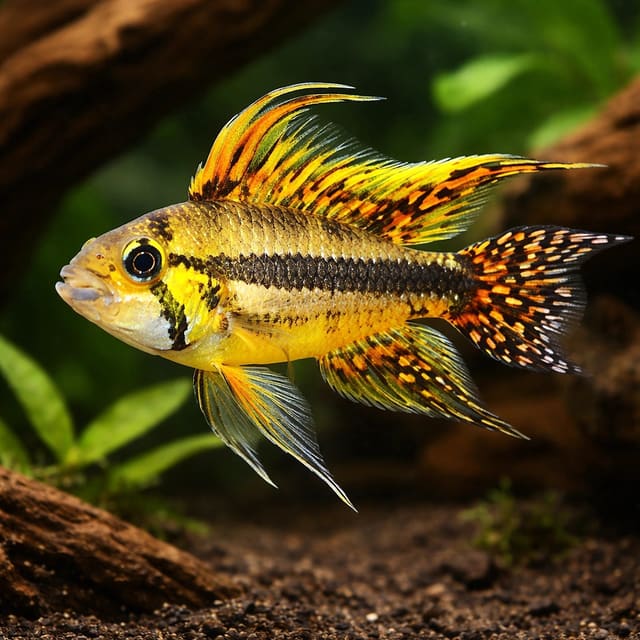
Moderate
Cockatoo Dwarf Cichlid (Apistogramma cacatuoides)
22–29°C · pH 5–6 · 54L
£10.99
South American Cichlids · Buying Guide
UK guide to the cockatoo dwarf cichlid (Apistogramma cacatuoides) — the beginner's apisto. Harem ratio, hard-water care, the red strains & in-stock fish.
10 products in stock today
Live prices and stock. Every fish covered by our Live Arrival Guarantee.
22–29°C · pH 5–6 · 54L

24–25°C · pH 6–6 · 54L
22–29°C · pH 5–6 · 54L
26–27°C · pH 6–7 · 54L
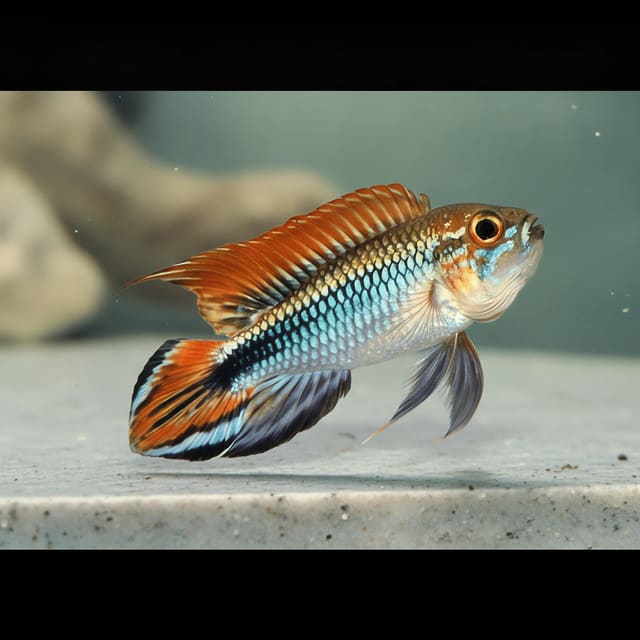
26–27°C · pH 6–7 · 54L
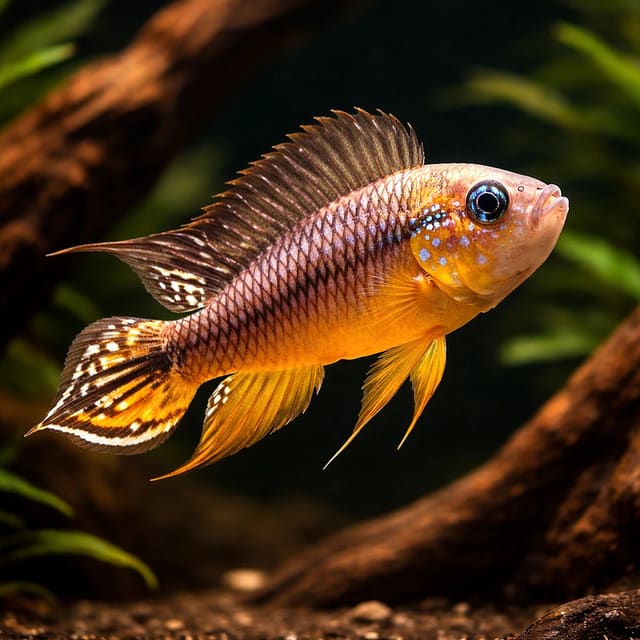
26–27°C · 54L

22–27°C · pH 6–8
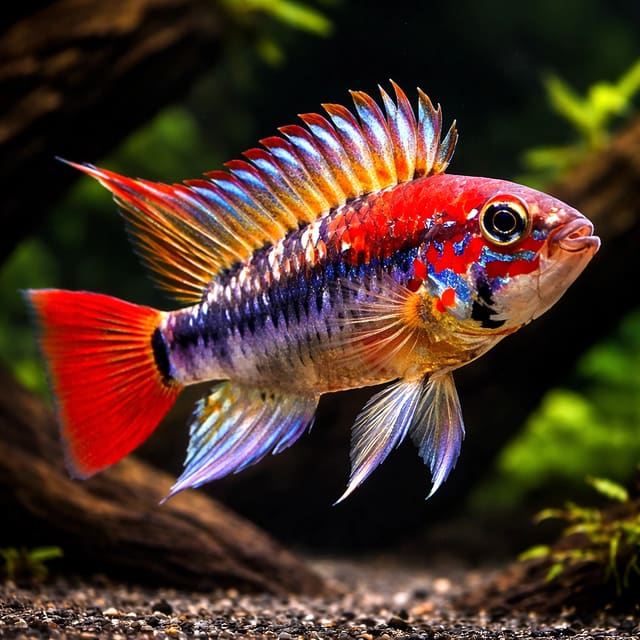
24–28°C · pH 5.5–7 · 41L
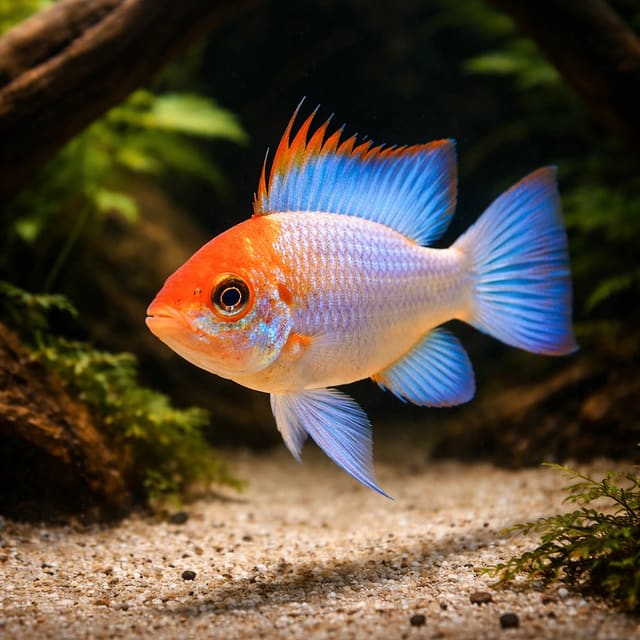
27–30°C · pH 4–7 · 54L
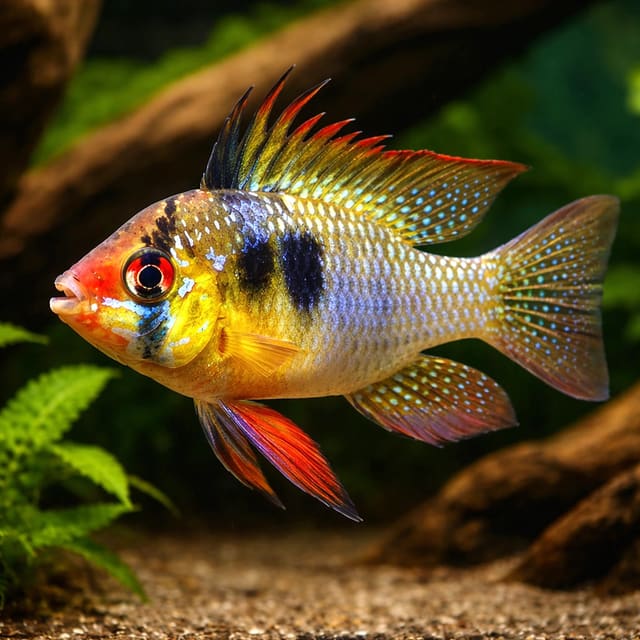
27–30°C · pH 5–7 · 54L
The shaded band shows the range apistogramma cacatuoides is comfortable in. Match it to your tap water before you buy.
Our trained assistant knows this apistogramma cacatuoides page inside out. Ask it anything — water parameters, tank mates, how many to buy — or have it read the guide aloud while you set up your tank.
You searched "apistogramma cacatuoides", which tells me you've already gone past the beginner livebearers and you want a proper cichlid with personality — but every care sheet you've found either lumps all apistos together as "fussy soft-water fish" or buries the two things that actually matter: how forgiving this particular species is about UK tap water, and how to set up the harem so it doesn't turn into a bloodbath.
I'm Priya Ramesh. I spent seven years keeping and breeding South American dwarf cichlids before I moved into discus, and the cockatoo cichlid is the apisto I still recommend most often. This is the page I'd hand a customer who says "I've got hard London water and I want my first apistogramma — which one, and how do I not kill it?" Nine times out of ten the answer is Apistogramma cacatuoides, and the how-not-to-kill-it is below.
If you want the wider genus — the soft-water specialists, the rarer species, the L-numbers of the apisto world — read our broader apistogramma guide first. This page is the species deep-dive for cacatuoides specifically: the one with the tall, spiky "cockatoo crest" dorsal fin that gives the fish its name.
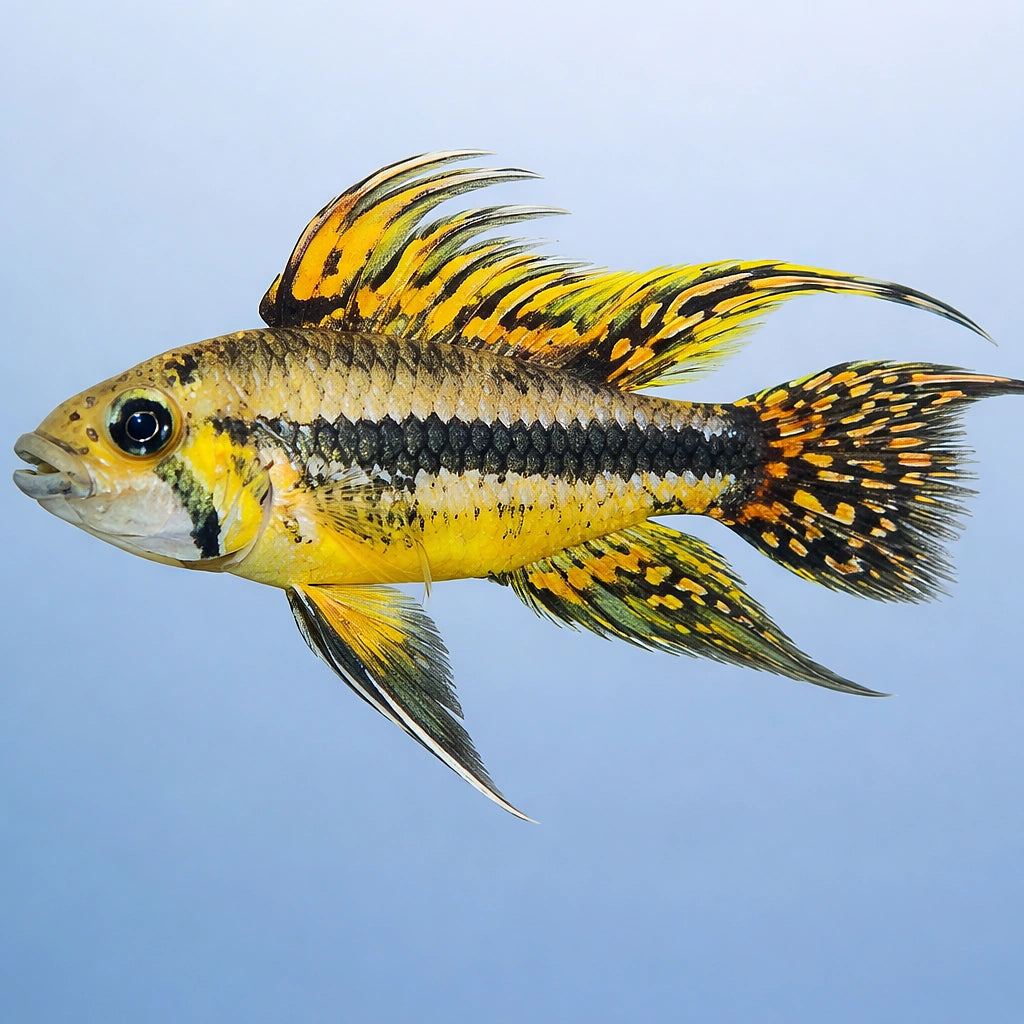
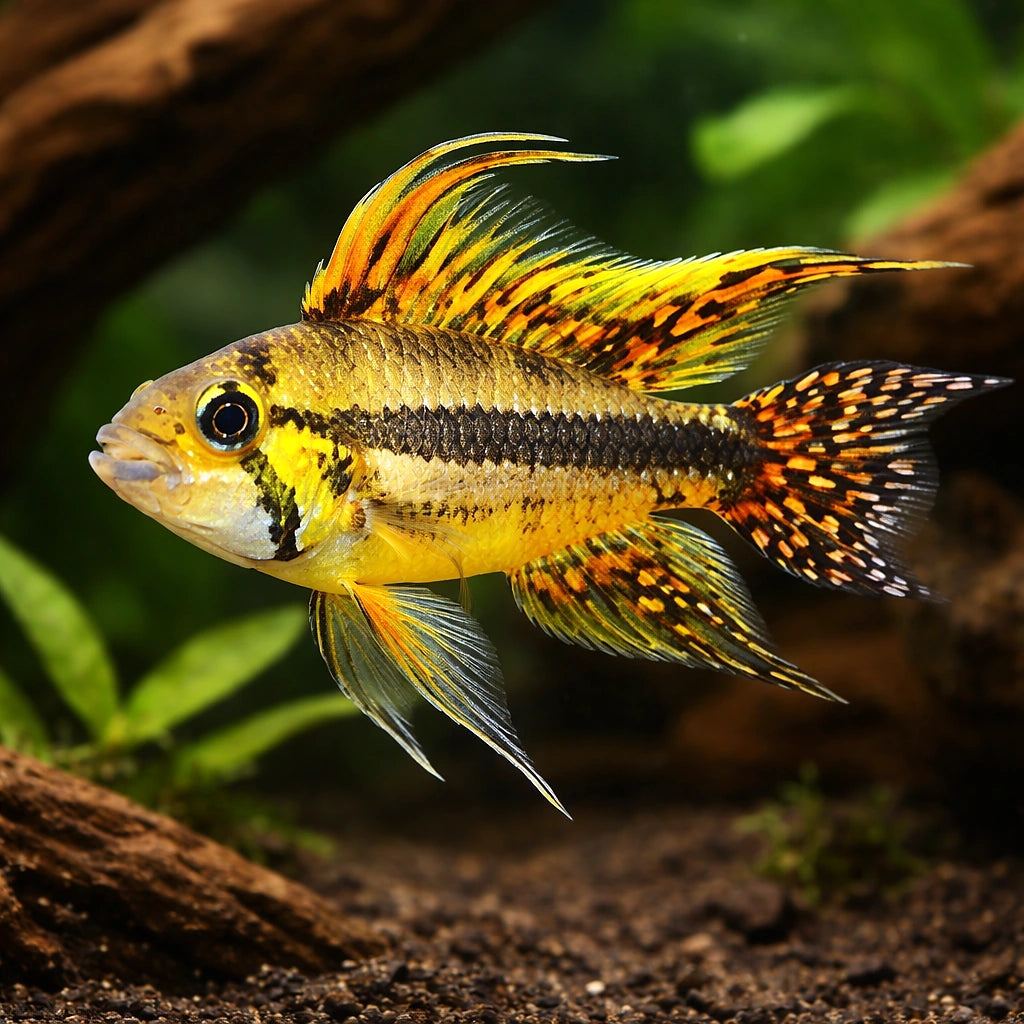
A male cockatoo cichlid with his dorsal raised. Those first few spiky dorsal rays — held up like a cockatoo's crest — are the trait the species is named for, and a dominant male flares them constantly to display. Product photo · our warehouse.
Three dwarf cichlids get sold as beginner-friendly in the UK. They are not equally forgiving, and the difference comes down to water. Here's the honest comparison I give customers:
| What matters | Cockatoo cichlid (A. cacatuoides) | German blue ram (M. ramirezi) | Kribensis (P. pulcher) |
|---|---|---|---|
| Adult size | Male ~7.5 cm · female ~5 cm | ~5–6 cm | ~8–10 cm |
| Hard UK water | Tolerant (tank-bred) | Wants soft & spotless | Very tolerant |
| Temperature | 24–28 °C | Hot: 28–30 °C | 24–26 °C |
| Forgiveness | High | Low — sensitive | High |
| Social set-up | Harem (1 male : 2–3 ♀) | Bonded pair | Bonded pair |
| Best for | First apisto in hard water | Experienced soft-water keepers | First cichlid, brackish-tolerant |
If your tap water is hard and you're new to cichlids, the cockatoo cichlid or the kribensis are the safe picks; save the German blue ram until you've got a soft-water, rock-stable tank under your belt [3].
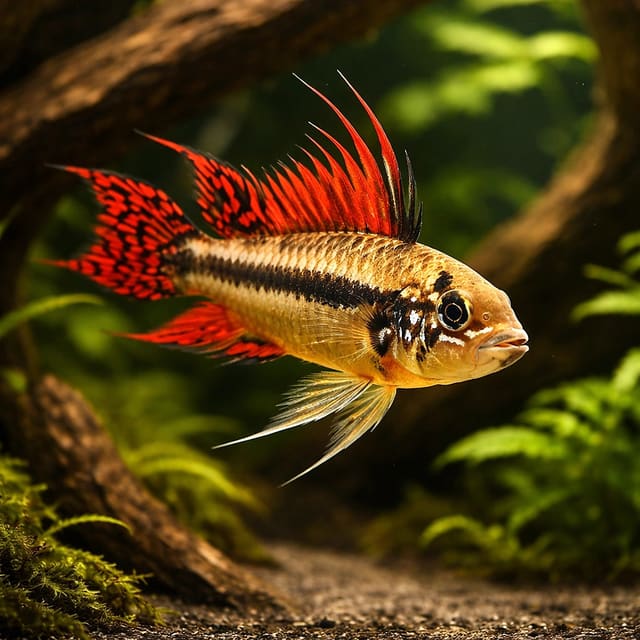
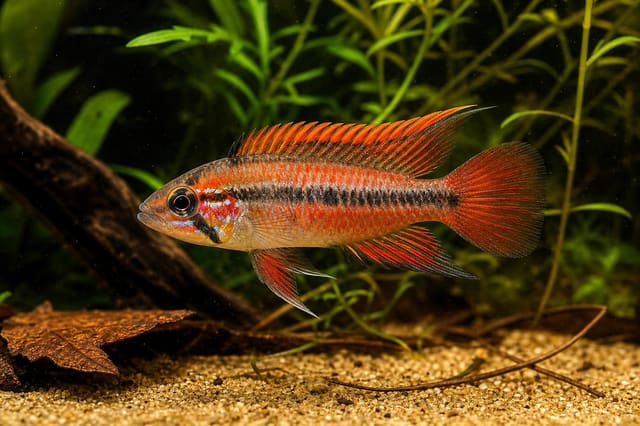
Cacatuoides colour names are trade strains, not separate fish — the wild-type, the orange and the reds are all the same species, differing only in how much red line-breeding has been packed into the tail and dorsal. We're upfront about that distinction at the tank. These are our current in-stock forms, from the natural wild-type up to the fiery double red:
The wild-type is no less hardy than the double red — you're paying for the intensity of the red genetics, not a tougher fish. If this is your first apisto, any of the three will do you proud; the wild-type just looks the way the fish does in the Amazon.
For a first cockatoo cichlid tank I'd run a 75-litre with a sandy floor, a piece of bogwood, and three or four small caves — coconut huts or clay pots — spread across the base so no two are right next to each other. Plant it up around the edges to break sightlines. Add one male and two or three females, feed live or frozen daphnia and brine shrimp, and add a shoal of dither fish up top. That's the whole recipe.
This is the single thing most new apisto keepers get wrong. Cacatuoides are harem polygynists — in the wild a dominant male holds a territory containing several females, each defending her own small patch and cave [3]. Recreate that in the tank: one male to two or three females [1].
Keep a single male with a single female and the maths goes against her — she absorbs the full force of his courtship and territorial energy with nowhere to hide. Give him two or three females and that attention spreads out, each female claims a cave, and the tank settles into a stable little society. If you only ever take one piece of advice from this page, take this one.
Two adult males in anything under a 120 cm tank usually means constant fighting — the subordinate male gets harassed into a corner and stops eating. For a standard home tank, run a single male with his harem. If you want multiple males, you need a long tank with enough floor space and broken sightlines for each to hold a separate territory [3].
Once you've kept cacatuoides, the rest of the genus opens up. These are closely-related dwarf cichlids we currently stock — its sibling species A. agassizii (the spade-tailed apisto), the rarer cruzi and macmasteri, all sharing similar harem care. Clearly different fish from the cacatuoides above, but the same family and the natural "next step":
The agassizii forms in particular are the obvious companion project — same harem set-up, same micro-carnivore diet — just keep each species in its own tank if you ever want to breed true, since closely-related apistos can hybridise.
The trick with a cacatuoides community is layering. The cichlids own the floor; everything else should live above them and act as dither fish — calm, mid-to-upper shoalers whose relaxed presence tells the apistos no predator is about, which actually makes the cichlids bolder and more visible [5]. These are the companions I trust:
Avoid: fin-nippers, anything large or boisterous enough to bully a 7 cm cichlid, and — critically — dwarf shrimp colonies you care about, because cacatuoides are micro-carnivores that will hunt and eat them [1].
Transcript / what you're seeing (0:00–0:20): a South American cichlid cruises slowly through a softly-lit planted tank, pausing to inspect leaves and the substrate before moving on. A cockatoo cichlid does the same on a smaller scale — methodically patrolling a defined territory near the bottom, nosing through sand and around caves rather than darting about. That slow, deliberate, "this-is-my-patch" body language is the sign of a settled, confident apisto; a fish that bolts for cover and stays hidden is usually stressed by bare décor or the wrong tank mates.
Sexing cacatuoides is easy once they mature. Males are noticeably larger (to ~7.5 cm), far more colourful, with the elongated spiky dorsal crest and extended, often lyre-shaped tail fins carrying the red markings. Females stay smaller (~5 cm) and plainer in everyday dress — until they breed [1].
Breeding needs little from you beyond a cave and good food. The female chooses a cave — a coconut hut or a small clay pot is ideal — lays her eggs on the ceiling, and then she alone guards and fans them, flushing a vivid lemon-yellow and turning fiercely protective of the cave entrance [3]. The male's job is to defend the wider territory, not the cave itself. Once the fry are free-swimming the yellow female herds them across the sand in a little cloud — and that, for my money, is one of the most rewarding sights in the whole hobby.
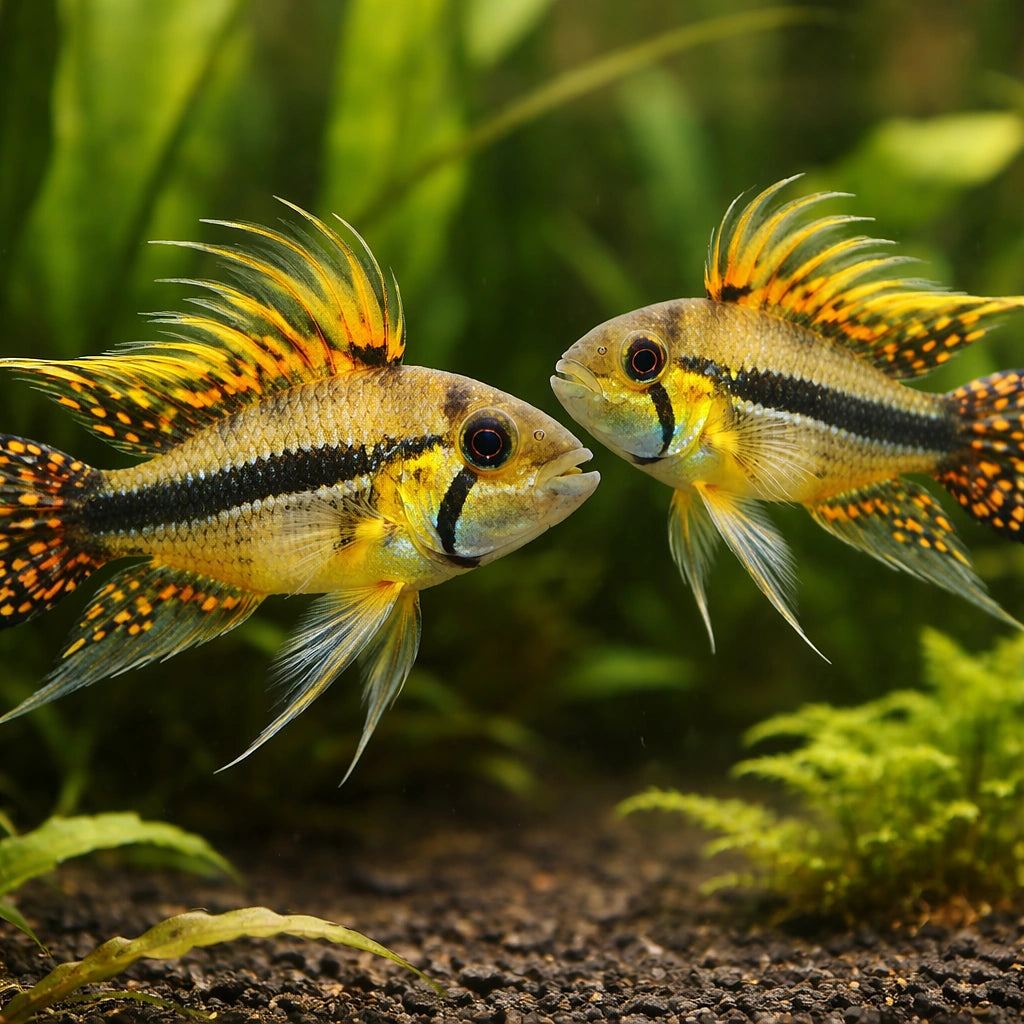
A cacatuoides pair in a planted set-up — the larger, more colourful crested male alongside a female. In a harem you'd have two or three females like this, each holding her own cave and territory under the watch of a single male.
Whether you buy from us or anyone else, these are the welfare markers that separate a healthy cockatoo cichlid from a problem fish:
Here's where cacatuoides breaks the usual apisto rule. Most of the genus are soft-water specialists, which makes UK keepers in hard-water areas fight their tap supply forever. The cockatoo cichlid — at least the tank-bred fish you'll actually buy — is genuinely tolerant: a broad pH band of roughly 6.0–8.0 and a wide hardness range around 5–19 dGH [3].
Thames Water, and most suppliers across the chalk-and-limestone belt of southern and eastern England, classify their supply as hard to very hard [4]. For a wild apisto that would be a problem; for tank-bred cacatuoides it's fine for general keeping — dechlorinate the tap and you're set. The one caveat: if you specifically want to breed and maximise fry survival, softer, slightly acidic water helps, and wild-caught fish (rare in the trade) genuinely need it.
Search your postcode on your water company's website (Thames Water, Severn Trent, Anglian, etc.) for a hardness figure. If you're in a hard-water area, tank-bred cacatuoides will be fine for general keeping. If you want to breed seriously, soften a portion of your change water with RO — but you don't need to for the fish simply to thrive [4].
Dwarf cichlids have a devoted UK following, and the best place to learn harem set-ups, strain genetics and where to source quality fish is the hobby itself, not a shop shelf:
Tank-bred cacatuoides are hardy, but they're still cichlids moving between two different water chemistries — and the females especially can be stressed by an abrupt swing, particularly when moving into hard UK tap [4]. Take it steadily:
Visual route into the rest of our UK live-fish range.
Explore Apistogramma, rams, angelfish, discus, acaras and Oscars. Compare adult space, water, temperament and the exact fish or pair offered.
Tropical fish for sale UK — tetras, cichlids, bettas, guppies and corydoras. Specialist delivery backed by our Live Arrival Guarantee.
Material factual claims cite the sources below; store policy and cautious inference are labelled in the article. Sources are grouped by type so you can judge their weight at a glance.
Peer-reviewed mate-choice study (DOI 10.3897/vz.60.e31012) — females discriminate between male colour morphs.
Used for size (male ~8 cm), family Cichlidae, western-Amazon range and trophic level.
Independent cross-check of water tolerance, harem polygyny, female brood care and the man-made red strains.
Video walk-through of apisto husbandry, harem set-up and cave breeding.
UK authority confirming much of southern England is supplied with hard to very hard water.
Fishkeeping moves fast and we want every guide spot-on. If you think something here is wrong, out of date, or could be clearer, tell us — our team reads every message and updates the page.
Suggest an editExplore Apistogramma, rams, angelfish, discus, acaras and Oscars. Compare adult space, water, temperament and the exact fish or pair offered.
Tropical fish for sale UK — tetras, cichlids, bettas, guppies and corydoras. Specialist delivery backed by our Live Arrival Guarantee.
Compare African lake, South American and Central American cichlids by adult size, water, social behaviour and aquarium footprint before choosing.
Keep cardinal tetras thriving in UK water: check tank size, group size, tank mates, temperature and cardinal vs neon differences before you buy.
Discus & Cichlid Expert · 15+ years in the hobby
Priya has bred discus commercially in Leicester since 2016 — supplying Tropical Fish Co and two other UK retailers with F1 tank-bred juveniles. Before that she spent seven years on South American dwarf cichlids. Her discus and cichlid guides on this site are written from the perspective of someone who has actually hatched, grown out, and shipped the fish — not from library research alone.