Black Ram Dwarf Cichlid (Mikrogeophagus ramirezi) - stunning dark colour morph

Mikrogeophagus ramirezi

Mikrogeophagus Ramirezi «Black» - UK

Moderate Care
Peaceful
£27.99In Stock

Buy Mikrogeophagus Ramirezi «Black» dwarf cichlids for sale UK for a bold, peaceful South American display fish. Order today with UK delivery.

CichlidsCommunity FishDisplay FishFreshwater FishLive FishModerate CareSouth American FishUK Delivery

Care at a Glance

Scientific Name
Mikrogeophagus ramirezi
Adult Size
5 cm
Lifespan
3 years
Care Level
Moderate
Temperament
Peaceful
Temperature
25–30°C
pH Range
5.5–7
Hardness
2–10 dGH
Minimum Tank
60L
Diet
Frozen bloodworm, brine shrimp, daphnia, micro pellets, flake

Premium Quality

Healthy, vibrant fish from trusted suppliers

Expert Care

Detailed care guides and support

Live Arrival Guarantee

Your fish arrives healthy or we'll replace it

Acclimated

Properly quarantined and ready for your tank

Quick Care Guide

Temperature
25–30°C
pH Range
5.5–7
Minimum Tank
60L
Adult Size
5 cm
Lifespan
3 years
Care Level
Moderate
Temperament
Peaceful
Diet
Frozen bloodworm, brine shrimp, daphnia, micro pellets, flake
Water Hardness
2–10 dGH
Tank Region
Bottom

Water Parameters

Maintain these water conditions for optimal health and vibrant colors

Temperature
25–30°C
25°CIdeal Range30°C
pH Level
5.5–7
5.5Ideal Range7
Water Hardness
2–10 dGH
2 dGHIdeal Range10 dGH

Why Choose This Fish?

Buy Mikrogeophagus Ramirezi «Black» dwarf cichlids for sale UK for a bold, peaceful South American display fish. Order today with UK delivery.

Mikrogeophagus Ramirezi Black is one of the most eye-catching dwarf cichlids for sale UK, and it earns that attention for more than just colour. This black ram cichlid for sale UK is a captive-bred South American dwarf fish with a calm temperament, a compact 5 cm adult size, and a reputation for showing fascinating pair bonds and courtship displays. If you are looking for colourful dwarf cichlids that fit a carefully planned community aquarium, this species is a standout choice. It suits aquarists who want a tropical dwarf fish UK option that is peaceful, elegant, and rewarding to keep in a planted layout.

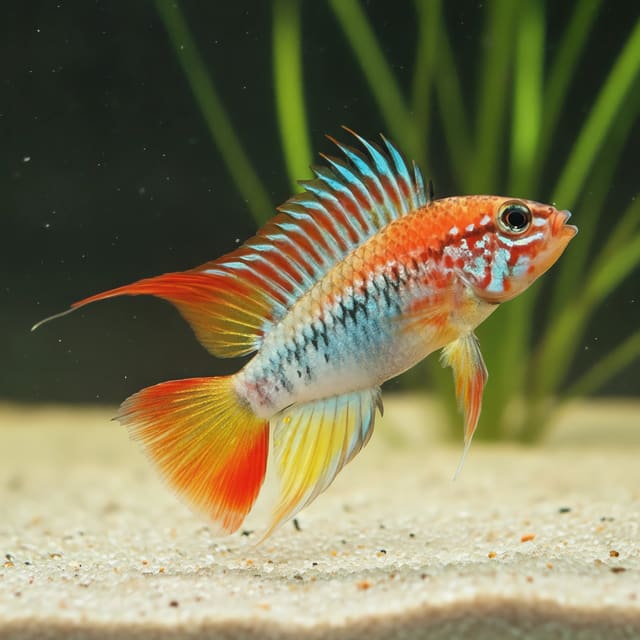
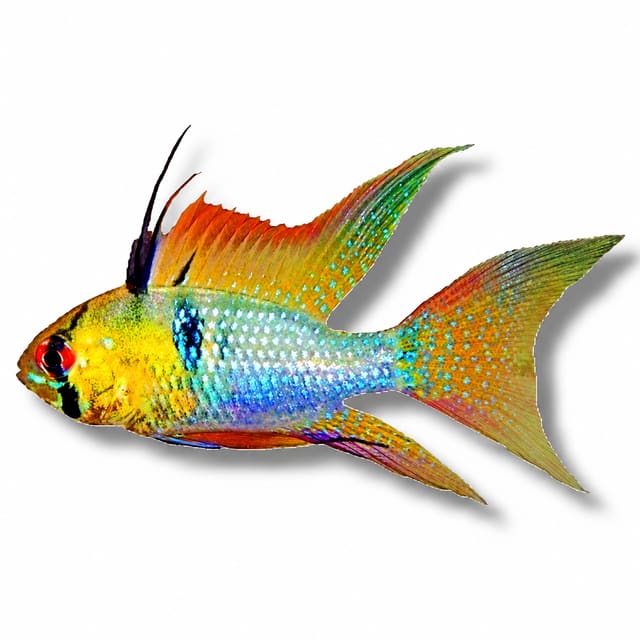
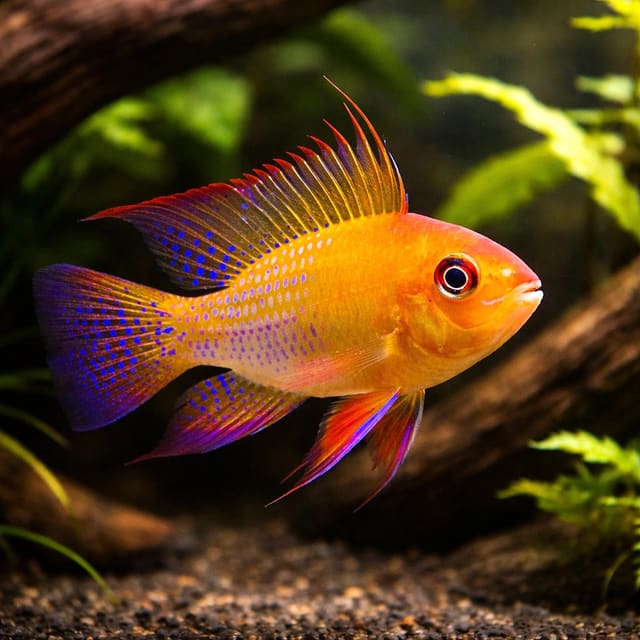
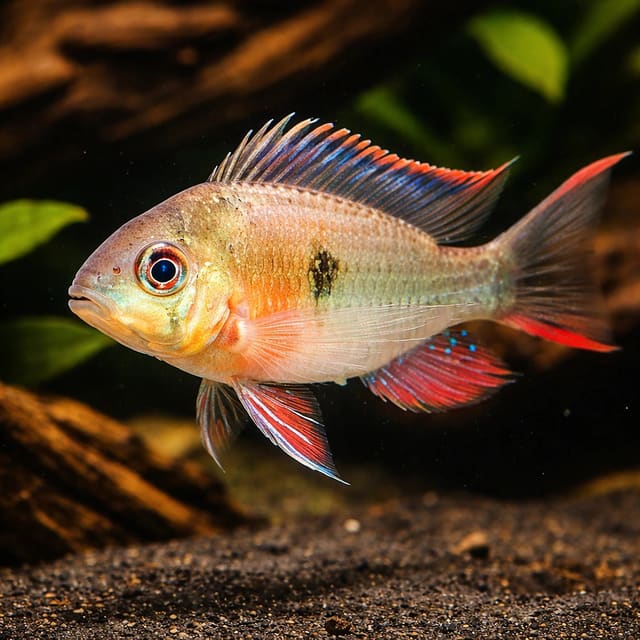
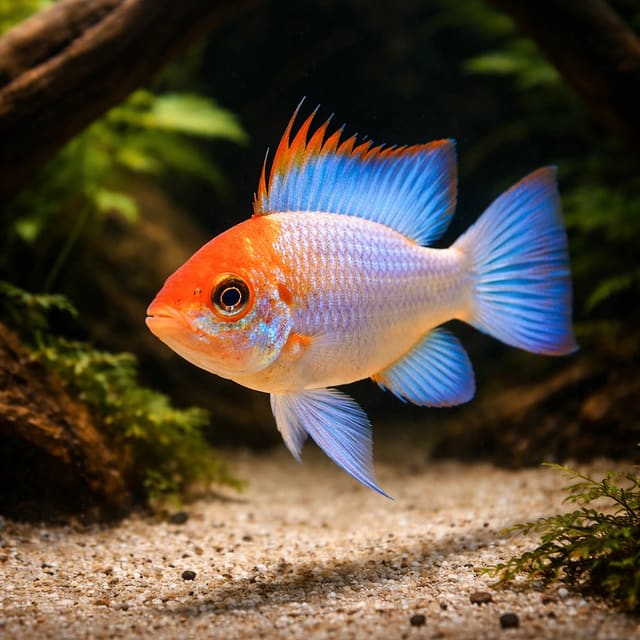
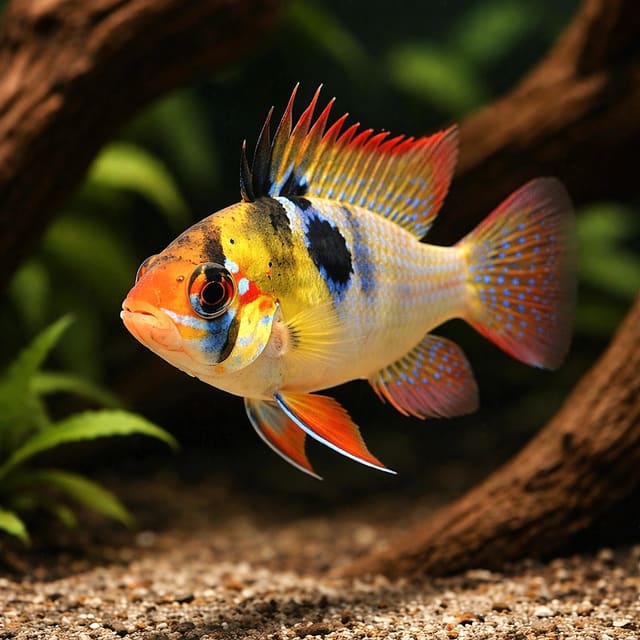
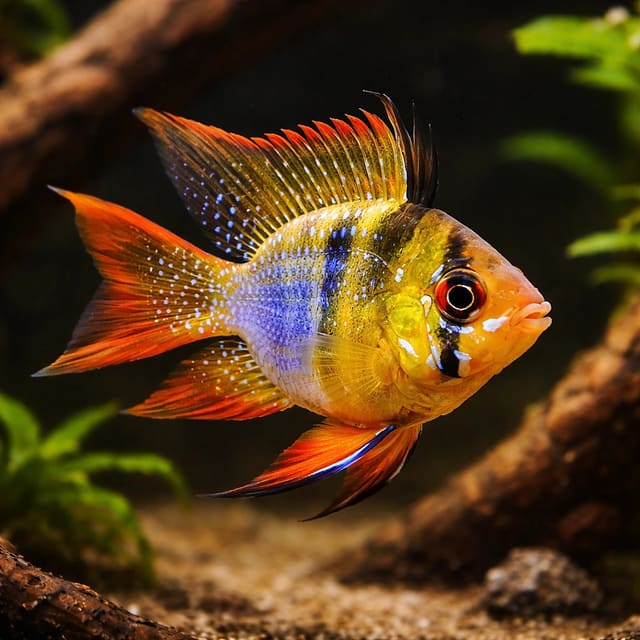
Because this species is sensitive to water quality, it is best matched to an experienced beginner or anyone ready to maintain stable conditions. The ideal approach is a warm, lightly stocked aquarium with soft water, gentle filtration, and plenty of cover. In the right dwarf cichlid planted tank setup, the black ram shows stronger colour, better appetite, and more natural behaviour. See our detailed photos showing the deep charcoal body tone, red eye detail, and fin edging that make this morph so distinctive. Whether you are searching to buy Mikrogeophagus Ramirezi Black UK, compare dwarf cichlids UK, or build a dwarf cichlid nano tank setup, this guide covers everything you need to know before you order.

🔹 Quick Facts

  • Scientific Name: Mikrogeophagus ramirezi
  • Common Name: Black Ram, German Black Ram
  • Care Level: Moderate
  • Adult Size: Around 5 cm / 2 in
  • Min Tank Size: 60 litres (16 gallons)
  • Temperature: 25-30°C (77-86°F)
  • pH Range: 5.5-7.0
  • Hardness: 2-10 dGH
  • Lifespan: Up to 3 years
  • Temperament: Peaceful, mildly territorial when breeding
  • Diet: Omnivore
  • Tank Zone: Lower to mid-level

Classification

  • Order: Cichliformes
  • Family: Cichlidae
  • Genus: Mikrogeophagus

The Mikrogeophagus genus includes some of the most popular South American cichlids for sale UK, especially for aquarists who want smaller, more manageable fish with real personality. Unlike many larger cichlids, these fish are known for pair bonding, substrate interaction, and elegant spawning displays on flat surfaces. They are often compared with Apistogramma for sale UK species, but ram cichlids are typically more open-water oriented and less cave-dependent than many Apistogramma. That makes them a strong option for planted aquariums and carefully stocked community setups.

Where Do Mikrogeophagus Ramirezi Black Come From? Natural Habitat Explained

The black ram is a captive-bred colour morph of Mikrogeophagus ramirezi, a species native to tropical South America. In the wild, the species is associated with slow-moving, warm, shallow waters in the Llanos wetlands and connected river systems of the Orinoco basin. Those environments are usually soft, acidic, and rich in plant cover, leaf litter, and submerged roots. That natural setting helps explain why Mikrogeophagus Ramirezi Black habitat design matters so much in aquariums: the fish thrives when it feels sheltered, warm, and secure.

In nature, these fish forage among fine substrate, plant stems, and detritus for tiny invertebrates, microfauna, and organic particles. That is why a soft sand base, gentle flow, and scattered cover are so effective in the home aquarium. They are not cave spawners in the same way as many Apistogramma species; instead, they prefer flat stones, broad leaves, or open surfaces for spawning. If you are planning a Mikrogeophagus Ramirezi Black for planted tank layout, think of shaded areas, open swimming lanes, and calm corners rather than dense rock piles.

Water in their natural range is typically warm, and that is reflected in the dwarf cichlid temperature requirements needed in captivity. Stable heat, low nitrate, and soft water are the foundation of good health. While captive-bred fish are more adaptable than wild imports, they still do best when the aquarium closely mirrors their natural conditions. This is one reason many aquarists consider them among the best dwarf cichlids for beginners who are ready to maintain good husbandry.

💡 Expert Tip

Mimicking the natural habitat improves colour, appetite, and pair bonding. Use leaf litter, driftwood, and dense planting to create shelter, then leave a clear front area so the fish can display naturally. This simple approach often reduces stress and makes Mikrogeophagus Ramirezi Black behaviour much easier to observe.

How Do You Set Up the Perfect Tank for Mikrogeophagus Ramirezi Black?

Tank Size Requirements

The Mikrogeophagus Ramirezi Black minimum tank size is 60 litres, but that is best viewed as a floor rather than a target. A single pair will be more stable in a 75-90 litre aquarium, especially if you want to keep tank mates. For a Mikrogeophagus Ramirezi Black tank size that supports breeding, social comfort, and water stability, larger is always better. In a Mikrogeophagus Ramirezi Black for small aquarium setup, the key is to keep the stocking light and the maintenance strict, because these fish dislike swings in temperature and chemistry.

Think about bioload as much as footprint. A ram cichlid may be small, but it is active, feeds often, and benefits from mature filtration. That is why a dwarf cichlid nano tank setup should be carefully planned rather than crowded. If you want a showpiece aquarium, the species also works well in a larger aquascape where its colour and courtship behaviour can be seen clearly.

Water Parameters

The best Mikrogeophagus Ramirezi Black water parameters are warm, soft, and stable: 25-30°C, pH 5.5-7.0, and 2-10 dGH. The most important part of Mikrogeophagus Ramirezi Black ideal water conditions is consistency. Sudden drops in temperature or rising nitrate levels can quickly affect appetite and immunity. Many keepers ask about Mikrogeophagus Ramirezi Black water temperature; in practice, 26-28°C is a very safe everyday range for long-term care.

For dwarf cichlid water hardness, soft to slightly moderate water is best. Hard water can be tolerated by some captive-bred fish, but it is not ideal for colour, breeding, or long-term vitality. If your tap water is hard, consider blending with RO water and re-mineralising carefully. The Mikrogeophagus Ramirezi Black pH level should remain on the acidic to neutral side, and quick changes should be avoided at all costs.

25-30°CWater Temperature
5.5-7.0pH Range
2-10 dGHHardness
60L+Minimum Tank

Filtration and Flow

Use a filter that provides strong biological filtration without blasting the fish around the tank. A sponge filter, air-driven unit, or gentle external filter works well. The goal is high oxygenation with low current, because this species comes from calmer water and does not appreciate aggressive flow. A mature filter also helps keep ammonia and nitrite at zero, which is essential for Mikrogeophagus Ramirezi Black health.

If you are building a planted display, pair the filter with a reliable heater and a thermometer for daily checks. Good equipment choices include a dwarf cichlid collection for inspiration, a quality adjustable aquarium heater, and a gentle external filter for planted tanks. These fish are especially rewarding in a mature aquarium that has already been cycled for 4-6 weeks.

Substrate, Plants, and Decor

The best dwarf cichlid substrate preference for this species is fine sand. Sand protects the mouth and gills when the fish sifts the bottom, and it also suits their natural foraging behaviour. A dark substrate can intensify the black body colour, while driftwood and leaf litter help create a more natural look. Use smooth stones or flat slate if you want to encourage spawning.

For a dwarf cichlid planted tank setup, choose hardy plants such as Cryptocoryne, Anubias, Java fern, and Amazon sword. Floating plants can soften the light and give shy fish more confidence. If you are planning Mikrogeophagus Ramirezi Black aquarium ideas, think layered: open front viewing area, dense back planting, and a few shaded territories. This species also does well in a Mikrogeophagus Ramirezi Black aquarium requirements setup that includes roots, broad leaves, and calm resting spots.

Lighting Requirements

Moderate lighting is ideal. Too much light can make the fish retreat, while too little can limit plant growth and reduce the contrast that makes the black morph so striking. A 6-8 hour photoperiod is usually enough for a planted tank, especially if floating plants are used to diffuse brightness. In a well-scened aquarium, the fish’s dark body and subtle blue sheen become much more visible against green plants and soft substrate.

🔹 Quick Setup Checklist

  • Cycle the tank for 4-6 weeks before adding fish
  • Keep temperature stable at 26-28°C
  • Use sand or very fine gravel
  • Add driftwood, leaves, and broad-leaf plants
  • Choose peaceful tank mates only
  • Test ammonia, nitrite, nitrate, pH, and hardness weekly

💡 Pro Tip

Always cycle the aquarium fully before adding ram cichlids. A mature tank with stable bacteria colonies, low nitrate, and gentle flow will dramatically improve survival, colour, and breeding success. This matters even more for live Mikrogeophagus Ramirezi Black for sale UK orders, because shipping stress makes clean water essential.

What Do Mikrogeophagus Ramirezi Black Eat? Complete Feeding Guide

This species is an omnivore, but it leans heavily toward meaty, protein-rich foods in captivity. In the wild, it picks at tiny crustaceans, worms, insect larvae, and organic matter. In the aquarium, the best Mikrogeophagus Ramirezi Black diet combines frozen foods, quality micro pellets, and a little flake food. The right Mikrogeophagus Ramirezi Black feeding guide focuses on variety, small portions, and foods that are easy to digest.

Staple foods should include frozen bloodworm, brine shrimp, daphnia, and high-quality micro pellets. These are ideal for daily conditioning and help support colour, growth, and spawning. For supplemental nutrition, add finely crushed flake, small live foods, and occasional enriched frozen blends. If you are comparing Mikrogeophagus Ramirezi Black diet options, remember that these fish often refuse coarse foods; they prefer small items that move naturally in the water.

Feeding frequency matters. Two small meals per day are usually better than one large feeding. This helps keep the fish active without overloading the filter. Many keepers searching for Mikrogeophagus Ramirezi Black for sale UK also ask about colour enhancement; the answer is not a gimmick food, but consistent nutrition, stable heat, and low stress. That is what brings out the best in most colourful dwarf cichlids.

Time Food Amount
Morning Micro pellets or fine flake Small pinch, eaten in 30-45 seconds
Evening Frozen bloodworm, brine shrimp, or daphnia Small portion, no leftovers

⚠️ Feeding Warning

Overfeeding causes ammonia spikes, dirty substrate, and rapid water quality decline. Remove any uneaten food after a few minutes, especially in smaller aquariums. Avoid feeding only bloodworm long-term, because a narrow diet can lead to digestive issues and poor conditioning.

Foods to avoid include large pellets, oily foods in excess, and anything with unnecessary copper-based additives. If you keep invertebrates nearby, always check medication labels carefully. For a balanced routine, pair your fish foods with quality options such as micro pellets for dwarf cichlids and frozen bloodworm packs. These help support Mikrogeophagus Ramirezi Black feeding guide routines and make daily care easier.

Mikrogeophagus Ramirezi Black Appearance: Colors, Patterns & Varieties

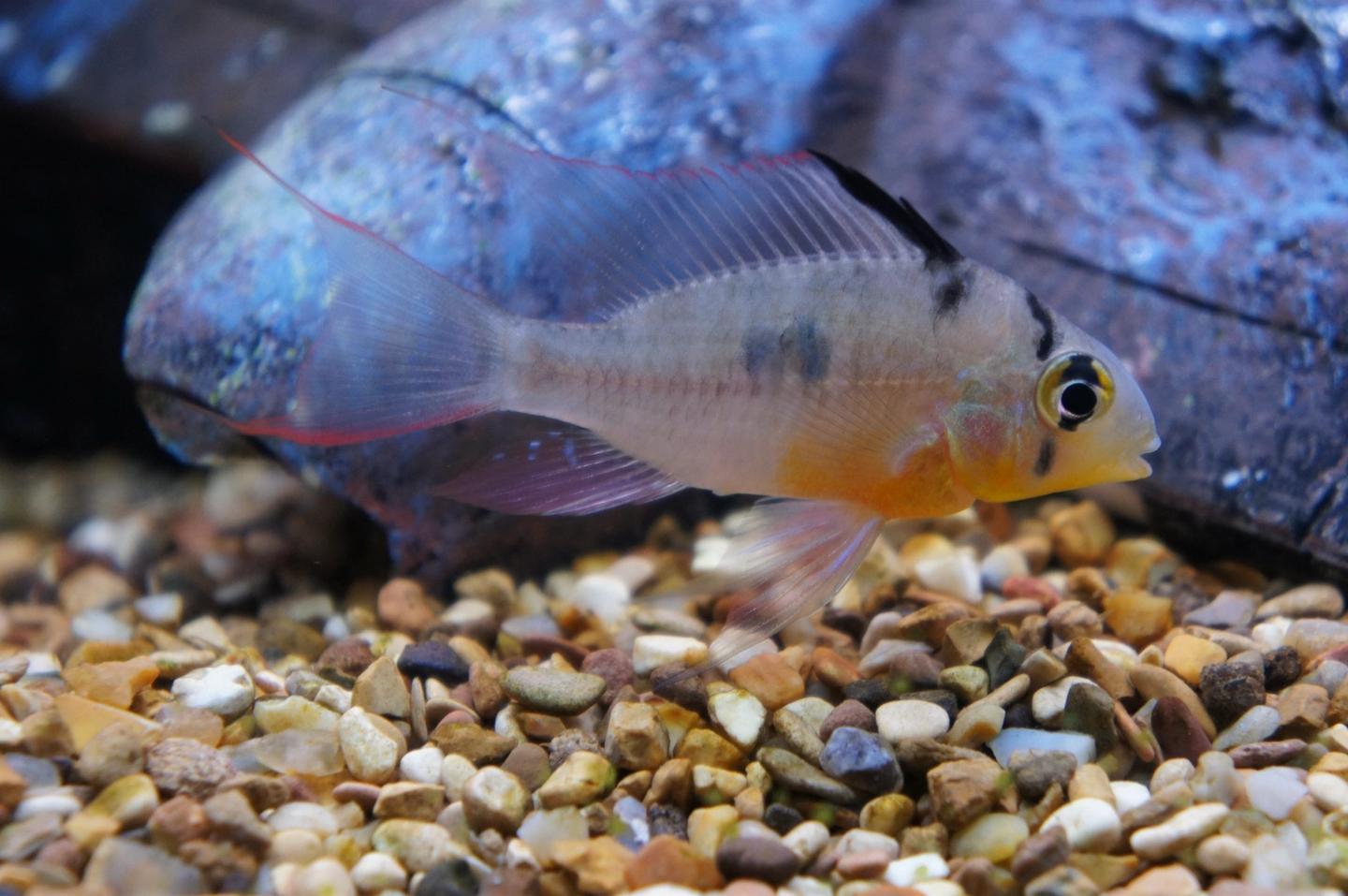
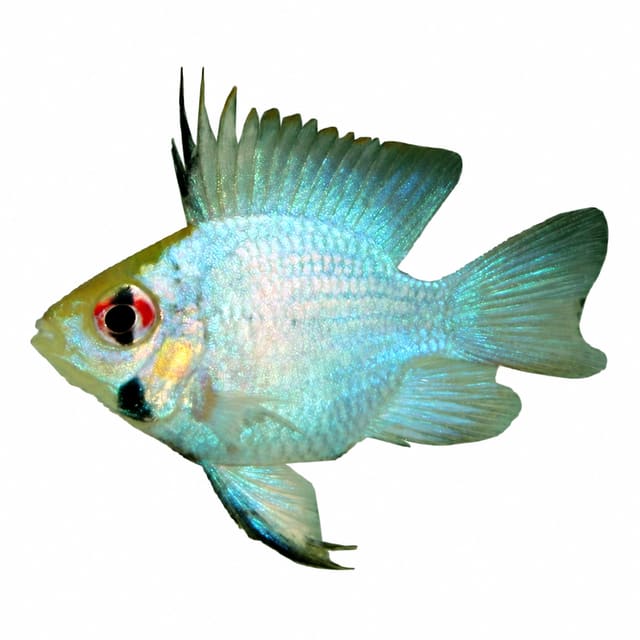
Adult black rams typically reach around 5 cm, with a rounded body, pointed dorsal fin, and flowing fins that give them a refined silhouette. The black morph usually shows deep charcoal to near-black body coloration, often with a subtle metallic blue or green sheen under the right lighting. Red or orange accents may appear in the eyes and fin edges, especially in healthy, well-fed fish. This is one reason the species is often listed among the colourful dwarf cichlids even though the base colour is dark.

Sexual dimorphism is subtle but useful. Males are often slightly larger, with longer dorsal rays and more pointed fin extensions. Females may show a rounder belly and a pinkish flush when mature or ready to spawn. In some fish, the first dorsal rays on males are more elongated, giving a taller, more dramatic profile. If you are comparing Mikrogeophagus Ramirezi Black colour variants, you may also see differences in intensity depending on strain, diet, and lighting.

Our photos show the intense chocolate-brown to black coloration achieved through stable warm water, dark substrate, and a stress-free environment. The body pattern can shift depending on mood; relaxed fish often show stronger contrast and more visible shimmer. This is why aquascaping matters so much for Mikrogeophagus Ramirezi Black aquarium ideas and why the species is a favourite in display tanks.

What Fish Can Live With Mikrogeophagus Ramirezi Black? Compatibility Guide

This species is peaceful, but it is not passive. During breeding, pairs become territorial around their chosen spawning site. Outside breeding, they do well with calm fish that will not outcompete them for food or harass them. That makes them a strong choice for peaceful dwarf cichlids for community tank setups and carefully planned freshwater cichlids UK aquariums.

Ideal tank mates include small tetras, rasboras, Corydoras, and Otocinclus. These species share similar water preferences and generally occupy different parts of the tank. If you want Mikrogeophagus Ramirezi Black with tetras, choose smaller species such as ember tetras, rummy nose tetras, or cardinal tetras, and keep them in proper shoals. A well-planted aquarium with visual breaks helps reduce stress and supports natural behaviour.

Species Compatible? Notes
Ember Tetra ✅ Yes Small, calm, and ideal for planted community tanks
Corydoras ✅ Yes Peaceful bottom companions; keep in a group
Otocinclus ✅ Yes Algae grazers that usually ignore ram cichlids
Apistogramma agassizii ⚠️ Caution Possible in larger tanks, but territorial overlap can occur
Large barbs ❌ Avoid Fast, nippy fish may stress the rams

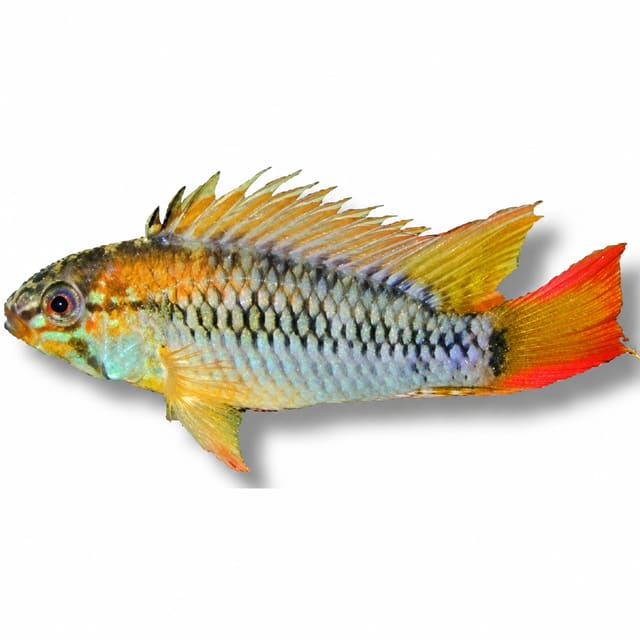
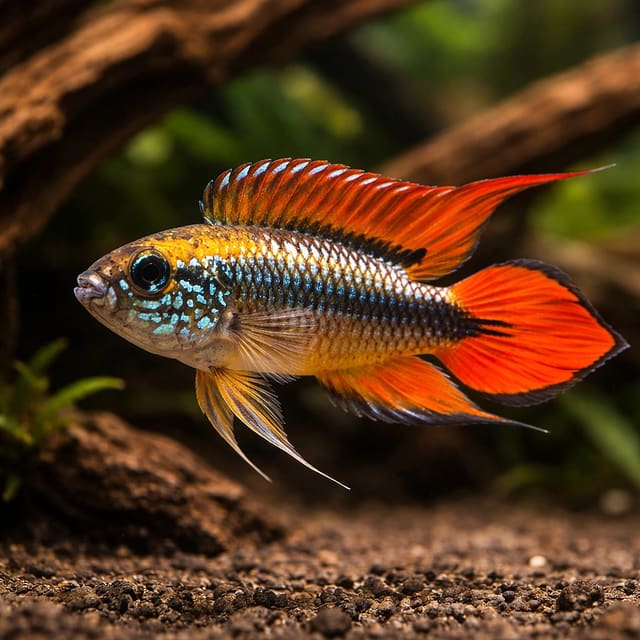
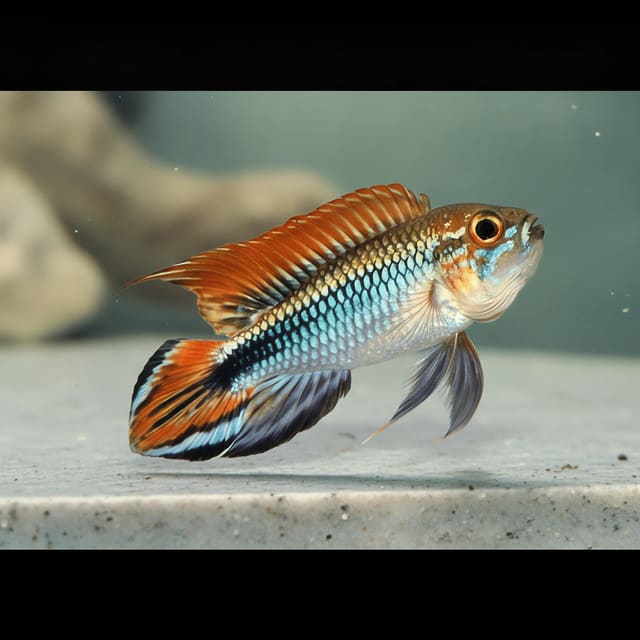
For comparison shoppers, this species sits well in a best dwarf cichlids comparison because it balances colour, size, and temperament. It is often considered one of the best dwarf cichlids for beginners if the keeper can provide stable warm water. It also ranks highly among dwarf cichlids for sale in UK listings because it offers strong visual impact without needing a huge tank. If you are building a broader collection, browse our South American cichlids UK range or compare it with Apistogramma Elizabethae, Apistogramma Hongsloi Red Stroke, and Apistogramma Agassizii.

💡 Always Quarantine New Arrivals

Quarantine new fish for 2-4 weeks before adding them to a community tank. This protects your existing stock and gives the ram time to settle, eat, and recover from transport stress. It is especially important when you order live dwarf cichlid delivery UK or Mikrogeophagus Ramirezi Black delivery UK services.

How Do You Breed Mikrogeophagus Ramirezi Black? Complete Breeding Guide

Breeding difficulty is moderate, and success usually depends on water quality, stable heat, and a compatible pair. The species is known for strong pair bonds, which is one reason aquarists enjoy Mikrogeophagus Ramirezi Black breeding. A dedicated breeding tank of 60-80 litres works well, with soft water, flat stones, and gentle filtration. Keep the temperature near 28-30°C to encourage spawning behaviour.

Before spawning, the pair often cleans a flat surface and becomes more selective about tank mates. This is where Mikrogeophagus Ramirezi Black spawning behaviour becomes visible: the fish may display side-by-side, quiver, and fan the chosen site. Eggs are usually laid on a stone, leaf, or slate, then guarded by both parents. The incubation period is typically around 48-72 hours depending on temperature, and fry become free-swimming a few days later.

For fry care, start with infusoria, liquid fry food, or very fine baby brine shrimp once they are large enough. Clean water is critical, because young rams are sensitive to pollution. A small sponge filter is ideal, since it provides biological filtration without strong suction. If you are serious about Mikrogeophagus Ramirezi Black breeding, condition the pair with live and frozen foods for at least two weeks before spawning.

Advanced Breeding Tip

Move the pair into a quiet breeding tank before they spawn, not after. Once a pair has bonded and chosen a site, they are much less likely to abandon eggs if the environment stays stable. Dark substrate, soft light, and one or two flat stones often improve spawning consistency.

Mikrogeophagus Ramirezi Black vs German Blue Ram: Which Should You Choose?

Comparison helps because both fish are sold as ram cichlids, but they suit slightly different goals. The black morph is chosen for its darker body tone and dramatic contrast, while the German blue ram is selected for brighter iridescence and classic colour. Both are peaceful dwarf cichlids, both need warm water, and both benefit from clean planted aquariums. If you want a darker, moodier display fish, the black morph is often the better fit.

Feature Mikrogeophagus Ramirezi Black German Blue Ram
Max Size 5 cm 5 cm
Care Level Moderate Moderate
Temperature 25-30°C 25-30°C
Price £27.10 Varies by strain
Best For Dark planted displays, community tanks Bright aquascapes, classic ram fans

When choosing between them, think about your aquascape and the look you want under your lighting. The black morph often stands out more against green plants and pale sand, while the blue ram can look more vivid under bright but gentle lighting. If you are building a list of dwarf cichlids to compare, also consider Mikrogeophagus Ramirezi Blue Brilliant and Ramirez Dwarf Cichlid Papiliochromis Ramirezi Asia.

What Are the Common Health Problems in Mikrogeophagus Ramirezi Black?

Healthy fish are alert, eat eagerly, hold their fins open, and show strong colour without clamped posture. The eyes should be clear, the gills should move evenly, and the fish should spend time exploring the substrate. Good Mikrogeophagus Ramirezi Black health starts with stable heat, low stress, and excellent filtration.

Common problems include stress-related loss of colour, bacterial infections after transport, and digestive issues from poor diet. Because these fish are sensitive, they can also suffer if nitrate rises or temperature fluctuates too much. If you notice hiding, rapid breathing, or refusal to eat, check water quality first. In many cases, a large water change, improved aeration, and a quieter environment will help before medication is even needed.

⚠️ Medication Warning

Never use copper-based medications with invertebrates in the system, as they can be lethal to shrimp and harmful to snails. If treatment is needed, move the fish to a hospital tank whenever possible. For any suspected parasite issue, quarantine and diagnosis are safer than guessing.

🔹 Quarantine Protocol

  • Use a separate tank for 2-4 weeks
  • Keep temperature stable at 26-28°C
  • Provide a sponge filter and hiding cover
  • Observe appetite, breathing, and feces daily
  • Perform small water changes every 2-3 days if needed

How Does Mikrogeophagus Ramirezi Black Behave in the Aquarium?

This species is active during the day and spends much of its time inspecting the substrate, hovering near plants, and patrolling a chosen area. It is generally peaceful, though a bonded pair may defend a spawning site. Many keepers enjoy the subtle social signals, from colour shifts to side-by-side courtship movements. That makes Mikrogeophagus Ramirezi Black behaviour one of the most interesting parts of keeping the fish.

To encourage natural behaviour, keep the tank warm, quiet, and well structured. A pair will often become more confident when they have shaded cover and open swimming space. In a larger community, they usually remain calm if tank mates are non-aggressive and food is distributed carefully. This is why they are often recommended among peaceful dwarf cichlids for community tank options.

Why Buy Mikrogeophagus Ramirezi Black from Tropical Fish Co?

We select fish that are already feeding well, showing good body condition, and adapted to aquarium life before they are offered for sale. Each ram is held under warm, stable conditions and monitored closely so you receive a fish that is ready for a well-managed home aquarium. When you order Mikrogeophagus Ramirezi Black online UK, you want more than a pretty fish; you want a specimen that has been prepared for life in a planted community tank.

Our packing process uses insulated materials, oxygen-safe handling, and tracked shipping to protect the fish in transit. During colder months, heat packs are used when needed, and we pack to reduce stress and maintain temperature stability. We also include practical care guidance for acclimation, feeding, and tank setup so you can get the best results from day one. If you are comparing Mikrogeophagus Ramirezi Black price UK options, remember that preparation, health, and safe arrival matter just as much as the purchase price.

Order your fish with confidence if you are looking to buy dwarf cichlid UK, buy dwarf cichlids online UK, or source a carefully selected live Mikrogeophagus Ramirezi Black for sale UK specimen. We also support customers searching for dwarf cichlid shop UK quality with species-specific advice, not generic instructions.

Why Choose Tropical Fish Co for Mikrogeophagus Ramirezi Black

  • Carefully selected black ram cichlids with strong body shape and active feeding response
  • Held in warm, stable water before dispatch to reduce shipping stress
  • Species-specific guidance for planted tanks, breeding, and community compatibility

To complete a balanced aquarium, consider peaceful companions and reliable equipment that match the warm, soft-water needs of this species. Good choices include Apistogramma cf. Viejita Gold, Apistogramma Hongsloi Red Stroke, and Apistogramma Elizabethae if you are building a South American display. For equipment, pair the tank with a gentle aquarium heater, a planted tank filter, and a soft fine sand substrate. For feeding, keep micro pellets for dwarf cichlids and frozen bloodworm food on hand. These additions make it easier to maintain a stable, attractive aquarium for one of the most distinctive South American cichlids UK hobbyists can keep.