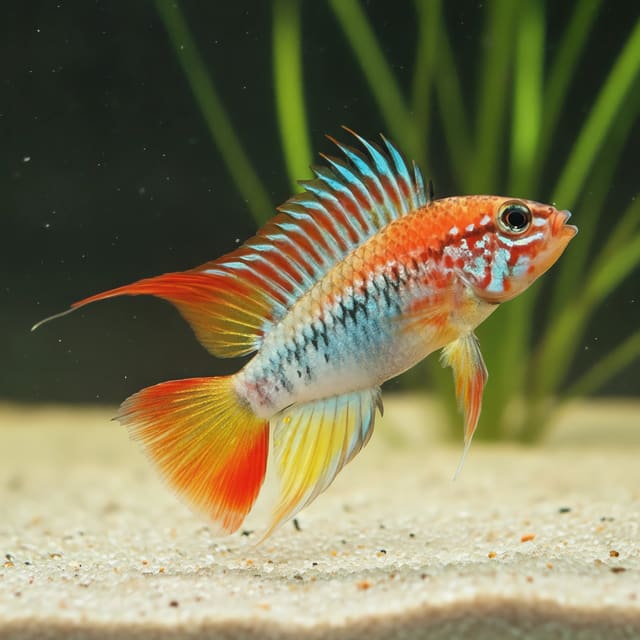
Cruzi Dwarf Cichlid (Apistogramma cruzi)
22–27°C · pH 6–8
£39.99

Bolivian Ram Cichlid (Mikrogeophagus altispinosus) for mature, peaceful planted aquariums. Provide fine sand, gentle filtration and calm companions. Each quantity is one fish in the selected size.
Adult size is the maximum length this species reaches at full maturity (scientific sources). The livestock you receive will be younger and smaller — pick a size above for the actual shipping size. Product-photo provenance and any image-specific limitations are stated on the listing.
Mikrogeophagus altispinosus
Save when buying multiple fish. Each quantity is one fish; sex and pair formation are not guaranteed unless the selected variant explicitly states them.
Confirm your email, then we’ll send an availability message for this exact item if it returns within 180 days.
This request is only for this product—no newsletter or other promotions. A mail-provider retry may very rarely duplicate the same availability message. Unconfirmed addresses are removed after 48 hours. See our privacy policy.
Bolivian Ram Cichlid (Mikrogeophagus altispinosus) for mature, peaceful planted aquariums. Provide fine sand, gentle filtration and calm companions. Each quantity is one fish in the selected size.
Adult size is the maximum length this species reaches at full maturity (scientific sources). The livestock you receive will be younger and smaller — pick a size above for the actual shipping size. Product-photo provenance and any image-specific limitations are stated on the listing.
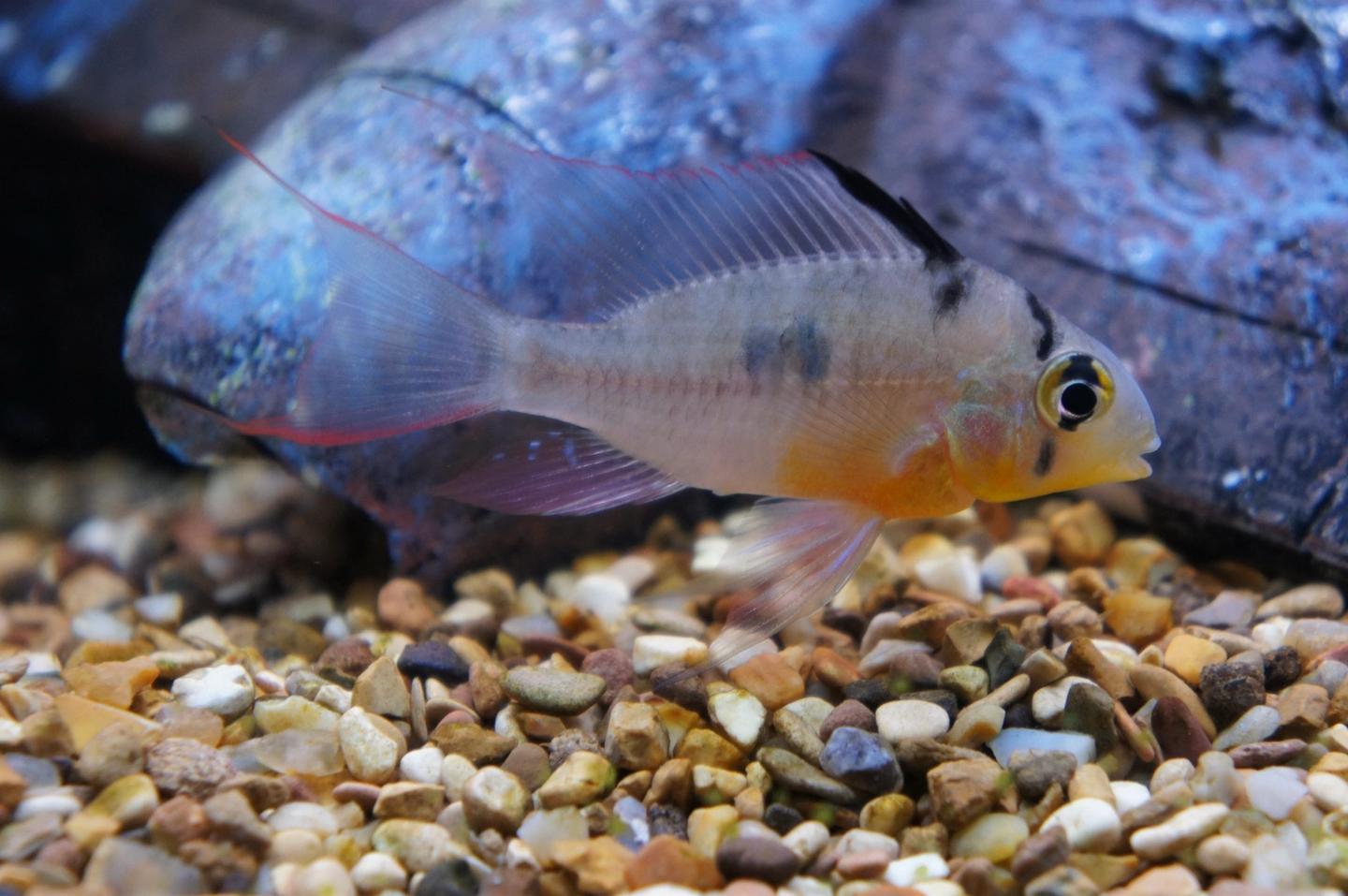
Cichlids are a family of roughly 1,800 accepted species, not one care type. Before buying, identify the exact species and source, then compare adult measurement, usable tank dimensions, social system, territory, tested water, diet and an exit plan. No family-wide minimum tank, water range or tank-mate list is safe.
Maintain these water conditions for optimal health and vibrant colors
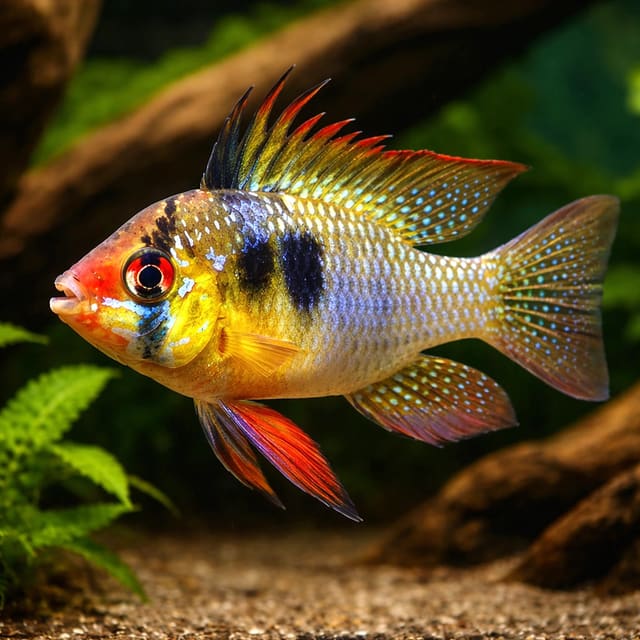
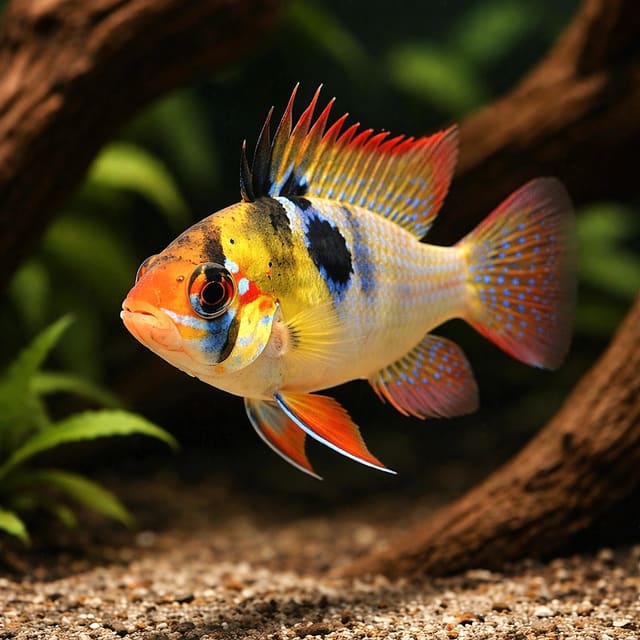
Bolivian Ram Cichlid (Mikrogeophagus altispinosus) is a peaceful South American dwarf cichlid with warm gold body colour, red edging on the fins and the steady, curious behaviour that makes rams so rewarding in a planted aquarium. It is calmer and more forgiving than the German Blue Ram, while still giving you genuine cichlid character: pair bonding, sand-sifting, careful territory use and attentive brood care when conditions are right.
This fish has also appeared in the trade under the older name Papiliochromis altispinosus and the common name Bolivian Butterfly Ram. These names refer to the same species, rather than different colour forms.
Each quantity is one fish in the selected size option. A male, female or established breeding pair is not guaranteed. Check the size selector for the available options before ordering; dispatch size is different from adult size.
The Bolivian Ram is one of the most useful choices for aquarists who want a colourful South American dwarf cichlid without the fragility or constant heat demand of some ram strains. FishBase places the species in the Guapore and Mamore drainages of Brazil and Bolivia, while aquarium references describe it as a fairly adaptable, hardy ram that still needs high water quality. In practice, that means it suits mature, well-filtered aquariums far better than brand new tanks, but it does not force you into extreme blackwater conditions.
Colour develops best after the fish settles. Expect a golden to olive body, a dark eye bar, a central flank mark and red or pink edging on the fins, often with blue highlights under good lighting. The look is more natural and subtle than a selectively bred Electric Blue Ram, which is exactly why many planted-tank keepers prefer it.
Plan the aquarium around floor space and structure. A pair can work from about 80 litres if the tank is mature and thoughtfully arranged, but 100-120 litres is more comfortable if you want dither fish or a small group. Use fine sand where possible, because this species naturally mouths and sifts the substrate while searching for food. Rounded stones, broad leaves and flat slate pieces can double as resting and spawning surfaces.
A good layout has open sand at the front, plants and wood along the sides, and broken sight lines so the fish can avoid one another when one becomes territorial. Cryptocoryne, Amazon swords, Java fern, floating plants, leaf litter and driftwood all suit the species. Filtration should be mature and steady, with gentle flow rather than a strong jet across the bottom.
Bolivian Rams are sand-sifting omnivores. Offer small sinking granules, quality cichlid foods and fine frozen foods such as daphnia, brine shrimp, bloodworm and cyclops. They will feed in midwater too, but many individuals are most confident when food reaches the lower half of the aquarium. Several small meals are better than one heavy feed, especially in tanks with sand where waste can build up if portions are too large.
Conditioning foods matter if you want stronger colour or breeding behaviour. Live foods and varied frozen foods are excellent, but keep them as part of a balanced routine rather than the whole diet.
This is a peaceful cichlid, not a pushy mixed-cichlid bruiser. Good companions include small to medium tetras, pencilfish, peaceful rasboras, Corydoras, Otocinclus and other calm community fish that do not nip fins or invade every bottom-level territory. Avoid aggressive cichlids, fin nippers, very tiny fry-sized fish and boisterous species that outcompete slower bottom feeders.
For a South American theme, pair Bolivian Rams with upper-level schooling fish and leave the lower level relatively uncluttered. They can live with other dwarf cichlids only in larger aquariums with clear territories. During spawning, even peaceful pairs may guard a chosen stone or pit, so a little extra space is worth it.
Bolivian Rams are open-spawning biparental cichlids. Pairs may clean a flat stone, broad leaf or shallow pit, then guard eggs and move larvae as they develop. FishBase notes egg care by the female and defence by both parents; hobby sources also report that pairs often form best when juveniles are allowed to choose partners naturally. If breeding is your goal, use a quiet tank, stable water, fine sand, flat stones and rich conditioning foods.
The best part of keeping them is everyday behaviour. They patrol slowly, inspect the substrate, display to one another and become much more confident once they know the tank is safe. A bare tank makes them nervous. A structured planted tank lets them behave like small, intelligent cichlids.
Read our delivery and live-arrival information before ordering, and have the mature aquarium ready before the fish arrive. Float the sealed bag for 20–30 minutes to equalise temperature, then net the fish across and discard the bag water. Ask for advice if your aquarium water differs substantially in pH or hardness. Keep the lights low for the first few hours. Offer a small meal only after the fish is upright, calm and exploring.
During the first week, prioritise stable water over chasing exact numbers. Test ammonia and nitrite, keep nitrate low, and avoid rearranging the tank while the fish are settling. A settled Bolivian Ram should show interest in food, hold its fins cleanly and spend time exploring the lower half of the aquarium.
No reviews for this item yet. Bought one? Honest reviews only, good or bad.
What customers say about ordering from us
I have a small group of long finned mountain minnows. So was delighted to be able to order ten of this variety to increase the genetics in my tank . The ones I recieved are healthy but it’s to early to give a verdict on wether they are of a long finned type since they are small currently.
Gordon Walker · 23 Sept 2026
100% success travel and "installation". Pleased with quality of purchase. The Siamese fighter a bit "shy" so have not yet seen him at his best yet but looking good. Happy customer. GG
George E Garratt · 21 Sept 2026
Reviews of our shop, collected by Judge.me, an independent third-party review collector. Newest first.