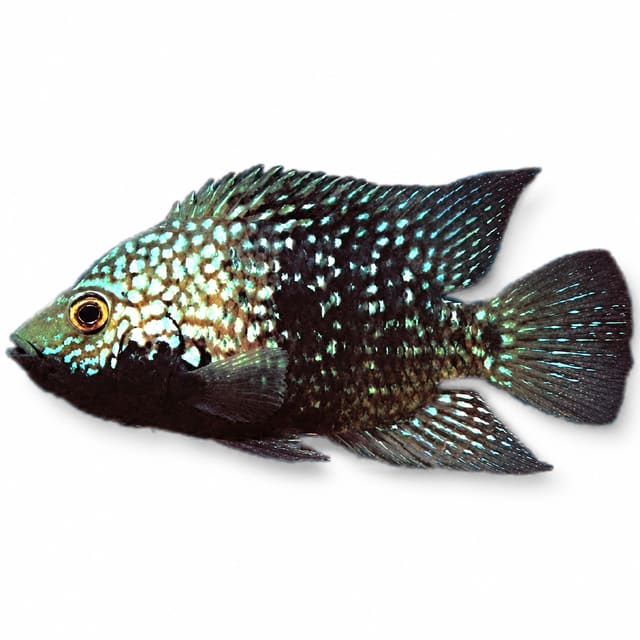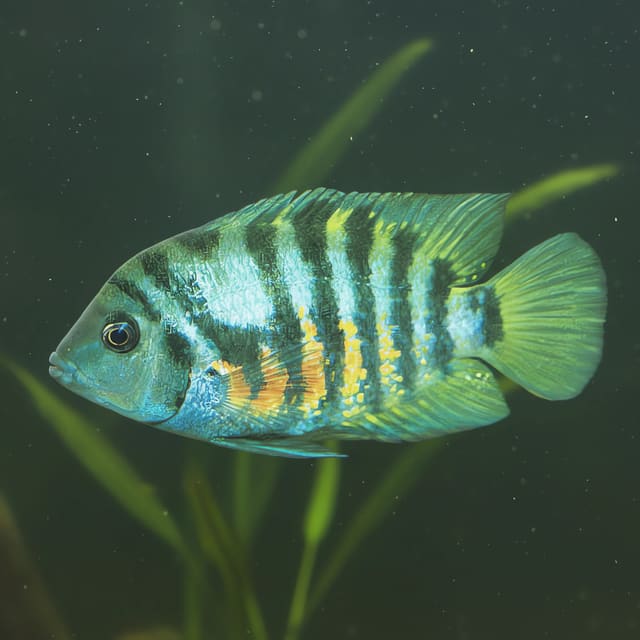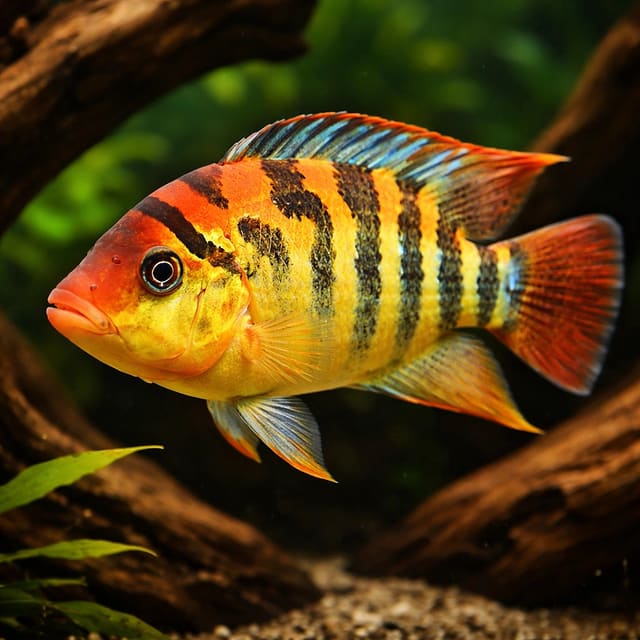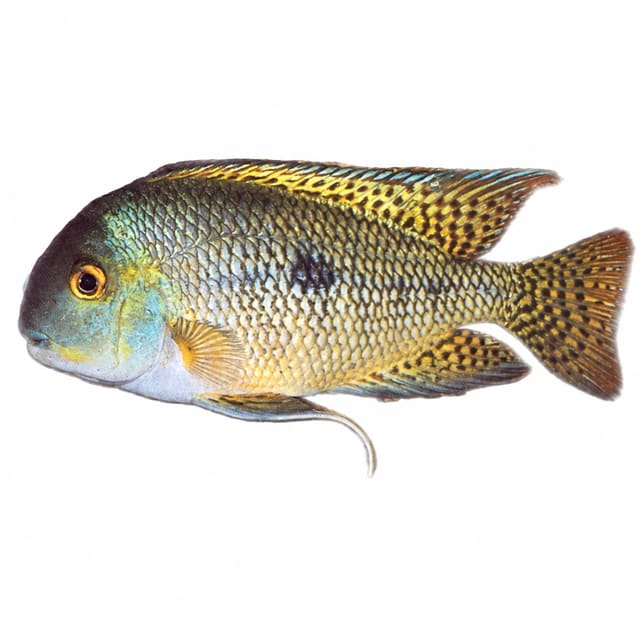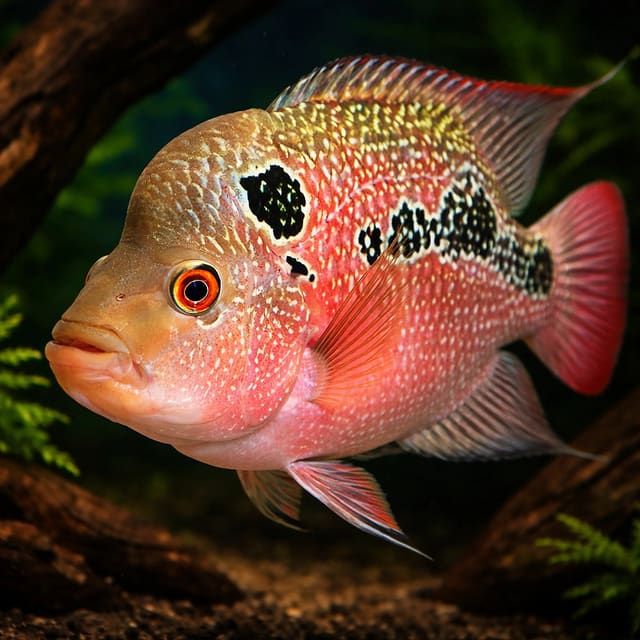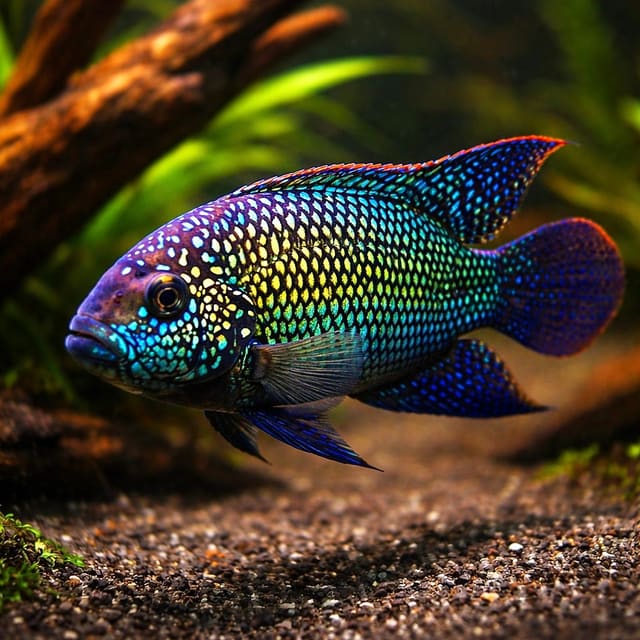
Jack Dempsey Cichlid (Cichlasoma octofasciatum bioce)
22–27°C · pH 7–8 · 243L
£5.99

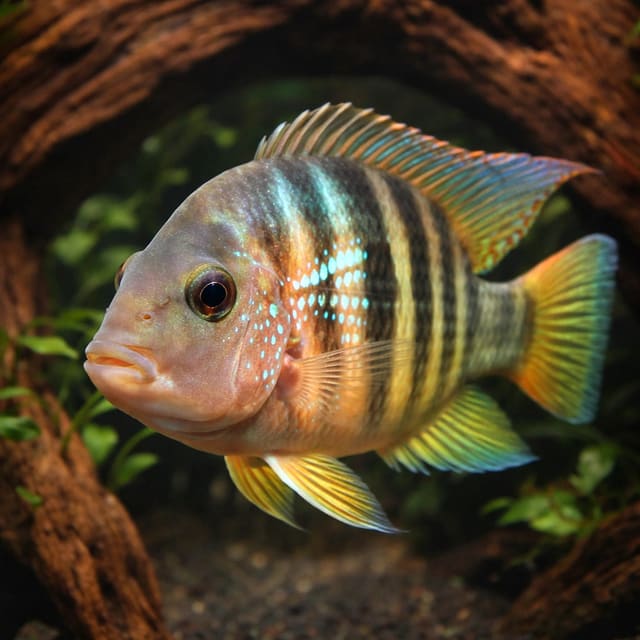
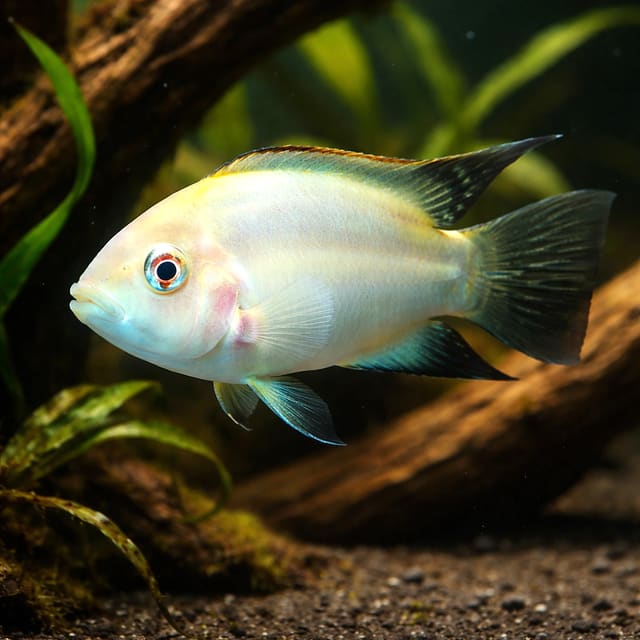
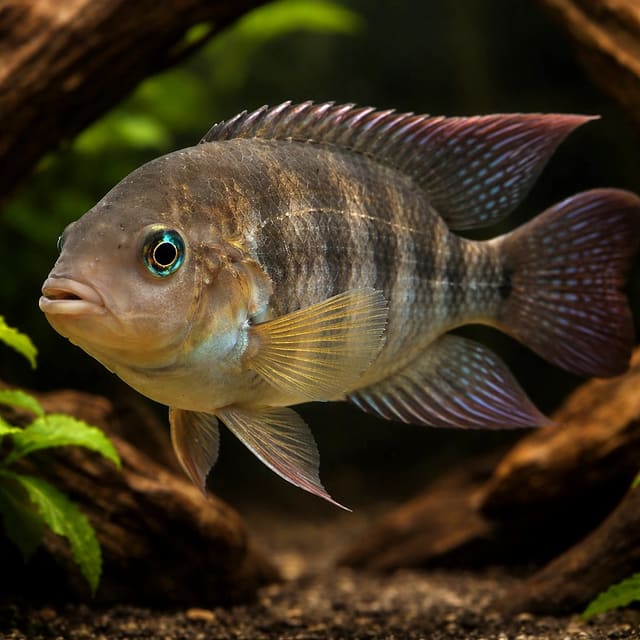
Firemouth Cichlid (Thorichthys meeki) is a Central American cichlid supplied as one fish in the selected size. Provide a mature spacious aquarium, sand, secure cover and an adult territory plan; sex is not guaranteed.
Adult size is the maximum length this species reaches at full maturity (scientific sources). The livestock you receive will be younger and smaller — pick a size above for the actual shipping size. Product-photo provenance and any image-specific limitations are stated on the listing.
Save when buying multiple fish. Each quantity is one fish; sex and pair formation are not guaranteed unless the selected variant explicitly states them.
Minimum of 2 per order.
Firemouth Cichlid (Thorichthys meeki) is a Central American cichlid supplied as one fish in the selected size. Provide a mature spacious aquarium, sand, secure cover and an adult territory plan; sex is not guaranteed.
Adult size is the maximum length this species reaches at full maturity (scientific sources). The livestock you receive will be younger and smaller — pick a size above for the actual shipping size. Product-photo provenance and any image-specific limitations are stated on the listing.
Cichlids are a family of roughly 1,800 accepted species, not one care type. Before buying, identify the exact species and source, then compare adult measurement, usable tank dimensions, social system, territory, tested water, diet and an exit plan. No family-wide minimum tank, water range or tank-mate list is safe.
Maintain these water conditions for optimal health and vibrant colors
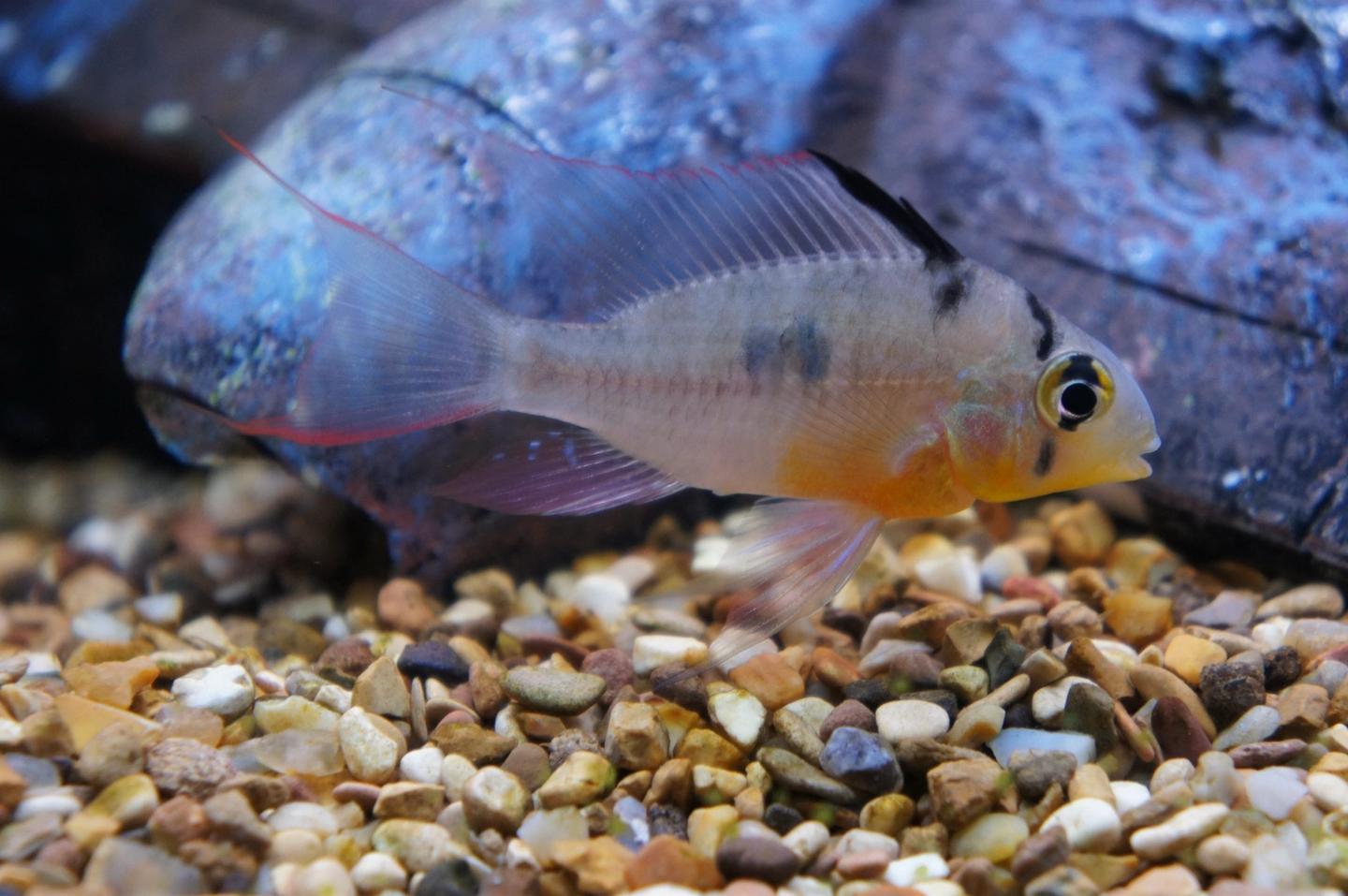
The Firemouth Cichlid (Thorichthys meeki) is a colourful Central American cichlid with a distinctive red or orange underside to the head. One purchase supplies one live fish in the selected size. It suits a keeper who can provide a mature aquarium, a sandy feeding area and enough floor space for territorial behaviour. Its appeal is the combination of substrate foraging, social interaction and displays; those behaviours also explain why a small, bare community tank is a poor choice.
The size you select is the size supplied, not the adult size. The choices are 3 - 4 cm, 5-6 cm, 6-7 cm and XL. XL is a trade size description rather than a stated measurement. Select the grade that fits your existing aquarium and the size of its inhabitants, then plan the permanent home around mature fish. Availability belongs to the live selector; the existence of a size choice does not mean that every grade can be ordered at the same time.
This listing does not offer male or female selection. A larger or brighter individual is not automatically a sexed fish, and buying two does not supply a bonded breeding pair. Seriously Fish notes that young Firemouths are difficult to sex. Adult differences can help an experienced keeper assess a fish, but they do not create a guarantee for this offer. Anyone planning a social group must have space for developing territories and a way to separate individuals if relationships change.
FishBase records a maximum of 17 cm total length. Seriously Fish gives 12 cm standard length. These use different measurements: total length includes the tail, while standard length stops at the base of the tail. They should not be averaged into a supposedly precise adult size. Use the larger total-length record when allowing for a mature fish, and remember that body depth, turning space and territory also matter.
For a single established pair, Seriously Fish describes a base of 120 × 30 cm, approximately 108 litres, as acceptable, with a larger aquarium preferable when other fish are present. That pair example is not a stocking allowance for a group. Outside spawning, its guidance favours eight or more Thorichthys in sufficiently large accommodation. The keeper therefore needs to choose a realistic social plan before buying, rather than treating one small pair tank as suitable for any number of Firemouths.
The species is native to Atlantic-slope waters of Mexico, Guatemala and Belize, including the Usumacinta and Belize river drainages. FishBase describes slow-moving lower and middle river sections, sand or mud bottoms, canals and rocky ponds, with vegetation offering protection. It is a Central American fish, even where shop navigation groups it with a wider cichlid collection. Its scientific name belongs in the family Cichlidae; older trade descriptions may use Cichlasoma meeki.
Those habitats suggest a useful aquarium arrangement: soft sand, shelter and open areas between structures. They do not mean that the aquarium should contain dirty water or stagnant corners. A mature filter, clean water and stable conditions remain essential. Similarly, a wide published temperature range is not a reason to move the heater from one extreme to another. Routine care should be settled and consistent.
| Suits | A spacious, established freshwater aquarium with sand, secure structure and a plan for adult territories. |
|---|---|
| Not suitable for | A nano aquarium, a newly filled tank, a tiny-fish display or a community that cannot accommodate breeding aggression. |
| Food | Fine prepared foods, suitable invertebrate foods and vegetable-containing ingredients offered as a varied diet. |
| Everyday priority | Observe feeding, breathing and social behaviour alongside regular water tests. |
Firemouths are not constant aggressors, but neither are they universally peaceful community fish. Seriously Fish describes a relatively manageable cichlid that becomes territorial while breeding and may eat much smaller fish. That combination calls for measured stocking decisions. Choose this fish because you can accommodate its adult behaviour, rather than hoping that a small dispatch grade will remain easy to fit around existing inhabitants.
Sex is guaranteed only when the selected option explicitly states male or female. This Firemouth Cichlid listing has no sex-guaranteed option.
Begin with the internal length and width of the aquarium. A long base gives fish room to forage and move between shelters; extra height cannot compensate for an inadequate footprint. The 120 × 30 cm base discussed by Seriously Fish is its example for a single pair. It is not a promise that every pair will remain settled there, and it is not the correct starting calculation for eight adults with other cichlids. More fish require more usable space, separate retreats and a stocking plan that remains workable after maturation.
Choose the social arrangement and the furnishings together. If you intend a group, picture several fish using the bottom rather than drawing one cave per fish on an empty plan. A dominant animal may defend the approach to a shelter as well as the shelter itself. Leave different routes between feeding areas, shaded places and open water so that one position does not control the whole aquarium. Observe the finished layout from the level at which the fish swim.
A label in litres is useful for comparing aquariums, but it describes neither territory nor actual water volume. Sand, rocks and wood displace water. A tall, narrow aquarium and a long aquarium with the same nominal capacity can offer very different opportunities. Treat the species-specific base recommendation as the important shape information, then consider filtration and maintenance alongside it. Avoid filling every useful part of the base with ornamental objects merely to make the tank look crowded with cover.
Firemouths take mouthfuls of substrate while seeking food and expel unwanted material. A soft sandy area gives this behaviour a suitable home. Use aquarium-safe material and avoid a rough or sharp feeding surface. The substrate is part of the fish's daily environment, not simply a background colour. Keep enough open sand accessible that fish can forage without having to work around a mass of solid objects.
Seriously Fish suggests smooth rocks, roots or branches, shaded places and caves. Artificial shelters can also be useful if they are safe and stable. Inspect openings for rough edges, narrow passages and places in which a growing fish could become trapped. A shelter that fits a small dispatch fish may become unsuitable later. Aim for a layout you can inspect and maintain without repeatedly dismantling the fish's entire environment.
Secure heavy structures so that substrate disturbance cannot undermine them. A fish moving sand should not be able to make a pile topple. Check the manufacturer's instructions for aquarium supports and protect the tank itself during installation. Wood and rock should provide visual breaks without creating inaccessible pockets full of uneaten food. Include safe access for a siphon, and make sure heaters and filter intakes remain reachable for routine checks.
Plants can provide cover, but the arrangement must account for digging and movement around the bottom. Place plants where their roots and leaves do not obstruct the main feeding area or make shelters unstable. Aquarium-safe artificial cover is an alternative where living plants do not remain secure. The useful test is whether the fish can retreat and whether the keeper can keep the area clean; a particular plant name is not a requirement for success.
A clear aquarium is not necessarily a mature aquarium. Fish release ammonia, and the biological filter supports organisms that process this waste through nitrite towards nitrate. Both ammonia and nitrite are harmful. The RSPCA's aquarium guidance explains why a functioning filter is fundamental to fish care. Start with a system whose filtration is established before adding the Firemouth, and confirm its readiness with water tests.
The tropical aquarium setup guide gives a practical route through preparation. Allow time for the filter to mature, make sure equipment works and record the water results. Adding a fish to provide a visual finishing touch before the system is ready creates an avoidable welfare problem. There is no benefit in rushing livestock into a tank because its plants and wood already look attractive.
New livestock increases the waste the system has to process. Add animals gradually rather than treating the filter as an unlimited capacity once it has matured. OATA's general American-cichlid guidance warns that stocking too quickly can overwhelm the developing bacterial population. The practical response is to plan additions, test after changes and keep feeding controlled. A successful first introduction does not prove that several further additions can safely follow immediately.
Filtration should remove waste and support good circulation without turning the sandy bottom into a continuously disturbed storm. Position the outlet so that water moves around the aquarium and the surface has movement. Check that fish can rest in sheltered places. Strong equipment specifications alone do not tell you what happens after media, pipework and décor affect the flow. Inspect the actual aquarium for trapped debris, blocked intakes and places where the fish struggle to hold position.
Seriously Fish reports species-level aquarium guidance of 20–32°C, pH 6.5–8.5 and hardness 2–15 dGH. This is a wide husbandry range, not a recommendation to cycle between its endpoints. FishBase's 26–30°C, pH 6.5–7.5 and hardness up to 10 dH describe the species' environmental record. They come from a different context. Neither set should be presented as a controlled experiment proving that every fish will thrive equally well at every value.
For ordinary aquarium planning, the OATA American-cichlid sheet provides broad group guidance of 22–27°C, pH 6.5–8.0 and 4–12 dGH. These values fall within the wider Seriously Fish figures, but the OATA guidance covers a group and is not a Firemouth-specific optimum. A practical routine setup can use that overlapping group range while respecting the fish's established water and the needs of every proposed companion. Keep the explanation attached to the numbers rather than turning one bare value into a universal rule.
Measure the aquarium itself. Test pH and hardness rather than guessing from the location of your home or from a description of the fish's native country. The aquarium water-parameters guide explains which measurements matter and why. The Water Parameter Matcher helps compare measured aquarium water with stated care guidance; consider that comparison alongside adult space and social requirements. Temperature should be checked with a separate thermometer as well as the heater setting. A dial shows the intended setting; it cannot prove that the aquarium is holding that temperature.
Prepare replacement water appropriately, including conditioner where chlorine or chloramine is present. Avoid abrupt changes made solely to chase a number from a care card. Before adjusting chemistry, check the original reading, the replacement water and the reason for the change. An aquarium that repeatedly swings between supposedly ideal values is not equivalent to a stable aquarium within suitable guidance. Consistency is particularly useful when introducing a fish whose previous water differs from the new home.
Thorichthys are benthophagous omnivores: they obtain food around the bottom and consume a mixture of animal and other edible material. Seriously Fish describes small crustaceans, other invertebrates, molluscs and organic detritus in the natural diet. FishBase also records algae as an important component. The sensible aquarium conclusion is a varied feeding plan that includes suitable prepared food and vegetable-containing ingredients, rather than an exclusive diet of large meaty treats.
Use high-quality fine-grade pellets or other suitably sized prepared foods as the base. Include a dried product containing vegetable matter, such as a Spirulina-containing food, and rotate appropriate frozen or live items. Artemia, daphnia and suitably sized bloodworm are useful examples from the supplied care guidance. Choose the particle size for the individual fish: a small dispatch grade should be able to take food comfortably, and food that falls into inaccessible crevices is not useful feeding.
Offer measured amounts and watch what is eaten. OATA's broad cichlid guidance suggests a modest daily feed consumed within a few minutes. Adjust practical portions to appetite and body condition rather than offering more because a confident fish continues approaching the feeding place. Uneaten food and excessive waste affect water quality. If more than one person feeds the aquarium, agree the routine so that an enthusiastic fish does not receive several unrecorded meals.
In a social aquarium, confirm that each Firemouth gets access to food. Seeing the most assertive animal eat tells you nothing about the one staying behind a piece of wood. Spread feeding appropriately across accessible areas, observe the whole group and check later for accumulated leftovers. If a fish consistently refuses food or loses condition, investigate the social arrangement and water conditions as well as the food itself. Do not mask the problem by repeatedly adding a different food to the tank.
Prepare the aquarium before the delivery day: filter operating, heater and thermometer checked, shelters secure and water tests acceptable. Arrange to receive the parcel in person. Tropical Fish Co uses oxygen-filled bags, insulation and weather-appropriate packing with a licensed live-animal courier. Read the delivery and Live Arrival Guarantee policy for the current arrangements and claim conditions; prepare a suitable destination aquarium before delivery.
Open and inspect the parcel on the day of arrival. For a Live Arrival Guarantee claim, the policy requires a continuous video beginning with the sealed parcel, showing it being opened and the fish still in its sealed bag, along with the order number. Contact Tropical Fish Co the same day if there is a problem. Keep that evidence step distinct from care: recording a parcel is not an acclimatisation method, and a guarantee does not make it safe to put a fish into an unready tank.
Follow the supplied introduction instructions. The store policy advises floating the bag for 20–30 minutes to bring temperature closer before release and acclimatising slowly. Transfer the fish without pouring transport water into the aquarium. Keep handling controlled and make sure the route into the tank is ready before opening the bag. Avoid repeatedly moving the fish to obtain a better view, and watch after introduction to see whether it can reach cover without being pursued.
A larger existing fish can make introduction more difficult even when the species combination was carefully chosen. Check the first interactions and return to observe once the initial attention has settled. A fish that disappears into shelter may simply be avoiding activity, but prolonged confinement caused by another animal needs action. Have the separation arrangement ready beforehand; finding a container only after aggression begins is a poor substitute for a proper backup aquarium.
OATA's broad American-cichlid advice recommends at least a weekly partial water change of 25%, with regular water testing. Treat this as a starting routine and respond to the actual aquarium's waste load and measurements. Remove solid waste from accessible substrate areas while leaving useful structure secure. Compare nitrate in the tank with the supply water; OATA's group guidance sets a limit of 20 mg per litre above normal tap-water levels rather than pretending that every supply starts with zero nitrate.
Check filters for blockages and avoid cleaning biological media under tap water. Rinse it lightly in removed aquarium water when cleaning is needed, preserving the useful bacterial population. Keep the manufacturer's guidance in mind when handling equipment. Replacing all media simply because it looks used can remove the biological function that the aquarium depends on. Water clarity and media appearance should be considered alongside flow and test results.
Watch the fish as individuals. Changes in feeding, swimming, breathing, colour, body condition or social position can reveal a developing problem. OATA advises testing water and obtaining experienced help when health changes occur. Record what changed and when, including recent additions or maintenance. Avoid selecting a treatment from one symptom or treating normal territorial display as a disease. Good observations are more useful than a photograph without information about the aquarium.
Before travel, leave clear instructions for the person responsible for the aquarium. Show them the normal feeding amount, thermometer, filter flow and any fish that tends to stay out of sight. A keeper who knows only that the fish need feeding may miss a blocked filter or a persistent chase. Routine care is a continuing commitment to water quality and behaviour, not just supplying food while you are away.
Seriously Fish describes Firemouths as gregarious outside spawning and favours groups of eight or more where the aquarium can properly accommodate them. That guidance concerns social keeping, not a licence to put eight fish into the pair-sized footprint. A group needs a substantially larger arrangement with enough separate places to forage and retreat. Choose it only when you can accommodate the adults and intervene if pair formation changes the balance.
A pair-focused setup is a different plan. Two unsexed purchases do not establish a pair, and two fish that share a tank peacefully as juveniles may not maintain the same relationship as adults. The single-pair aquarium example should be applied to a suitable established pair rather than used to promise that any two Firemouths will fit it. If your only available aquarium is a small community with no room for separation, this species is a poor addition.
Firemouths are substrate spawners, and both parents can take part in protecting a spawning site and young. The defended area may extend beyond the chosen rock or shelter. A companion that was tolerated yesterday may be chased today because it crosses the same patch of bottom. Judge compatibility over time rather than assuming that the absence of fighting on introduction settles the question.
Break lines of sight and provide ways to move away from a defended area. A decorative wall with only one narrow gap can make an escape route easy to guard. Feeding access matters too: a fish able to avoid a pair but unable to reach food is not receiving adequate accommodation. Persistent pursuit, damage or a fish confined to one corner is a reason to separate and reassess, rather than waiting for the subordinate animal to learn its place.
Similarly sized Central American cichlids are possible companions in the species guidance, provided each can establish adequate territory. That condition is decisive. Similar body length does not mean similar strength or disposition, and adding a more aggressive cichlid can make the Firemouth the bullied fish. Consider the mature size, water needs, activity and use of the bottom of every animal before attempting the combination.
Seriously Fish also discusses peaceful upper-water fish, including appropriate members of Poecilia and Xiphophorus. This supports considering the types named, not treating every livebearer as automatically compatible. The chosen species still needs appropriate water, sufficient adult size and space in the aquarium. A fish swimming higher in the water is not protected from a territorial cichlid merely by belonging to a different swimming zone.
Much smaller fish may be eaten. Avoid choosing tiny companions and hoping that regular feeding will remove the risk. Equally, the aquarium should not become a contest between aggressive animals of comparable size. Space, cover and careful selection reduce risk but cannot certify a combination. Keep a functioning separation option and use direct observation to assess whether the actual fish can feed and move normally.
If you enjoy watching a cichlid investigate sand and interact with its surroundings, a properly planned Firemouth aquarium can be rewarding. If the aim is a densely stocked peaceful display with tiny occupants, it is better to choose another plan. The distinction is practical: the same fish can appear manageable in generous, structured accommodation and difficult where it has no suitable space to express its behaviour.
Keep comparisons with other cichlids separate from stocking advice. A fish offered elsewhere in the shop is an alternative purchase, not automatically a tank mate. The protected navigation category is a way to browse, not proof of shared origin or shared requirements. The adult aquarium and the compatibility plan should be decided for the exact species, without relying on the colour, price or small sale size to make the choice.
The shop's cichlid collection is a browsing destination, while the species-specific care above explains this Central American fish. Choose each animal for its adult requirements and your actual aquarium.
FishBase records 17 cm total length for Thorichthys meeki, including the tail. Seriously Fish gives 12 cm standard length, which excludes the tail. Use the larger total-length record for adult space planning rather than confusing either measurement with dispatch size.
Seriously Fish describes a 120 × 30 cm base, approximately 108 litres, as acceptable for one established pair, with larger accommodation preferable. This pair example is not suitable for a group or mixed cichlid community; floor space, territories and the needs of all adults determine the larger setup.
Seriously Fish favours groups of eight or more outside spawning when the aquarium is large enough. A suitable established pair is a different arrangement. Plan the adult social setup and separation capacity first; purchasing two unsexed fish does not guarantee a pair.
A careful keeper can manage them in a mature, properly planned aquarium, but territorial behaviour makes them more demanding than a simple peaceful community. Prepare the filtration, sandy feeding area, shelters and adult stocking plan before buying.
Offer fine-grade prepared food, include vegetable-containing ingredients and vary it with appropriately sized live or frozen invertebrate foods. They forage around the substrate, so choose food they can reach and swallow, control portions and remove leftovers.
Seriously Fish gives 20–32°C, pH 6.5–8.5 and 2–15 dGH as species husbandry guidance. OATA's narrower 22–27°C, pH 6.5–8.0 and 4–12 dGH is broad American-cichlid guidance, not a Firemouth-specific optimum. Choose stable suitable conditions and avoid sudden changes.
Firemouths can defend territory while breeding and may eat much smaller fish. Similarly sized Central American cichlids and suitable peaceful upper-water fish are possibilities only where space, water conditions and individual behaviour allow. No combination is guaranteed.
Tropical Fish Co uses oxygen-filled bags, insulated packing and a licensed live-animal courier. Be present for delivery and inspect the parcel the same day. For a Live Arrival Guarantee claim, retain the order number and continuous video showing the sealed parcel being opened and the fish still in its sealed bag, then contact the store the same day.
FishBase provides the accepted species, native range and maximum total-length record. Seriously Fish supplies the species-level aquarium base, social guidance, substrate-feeding description and broad husbandry ranges. OATA's American-cichlid care sheet contributes general maintenance, water-testing and routine-care guidance; its group recommendations do not establish a species-specific optimum.
OATA American-cichlid guidance is useful alongside the species profile. General aquarium filtration and waste-processing principles are explained by the RSPCA. These references inform planning, while your aquarium's measurements and the behaviour of its inhabitants determine whether the setup is working. A record of maximum size or a wide environmental range is not a guarantee for an individual animal.
Independently collected by Judge.me from customers who bought this item. All reviews are shown.
Not happy with the size, but came in good condition.