By Kevin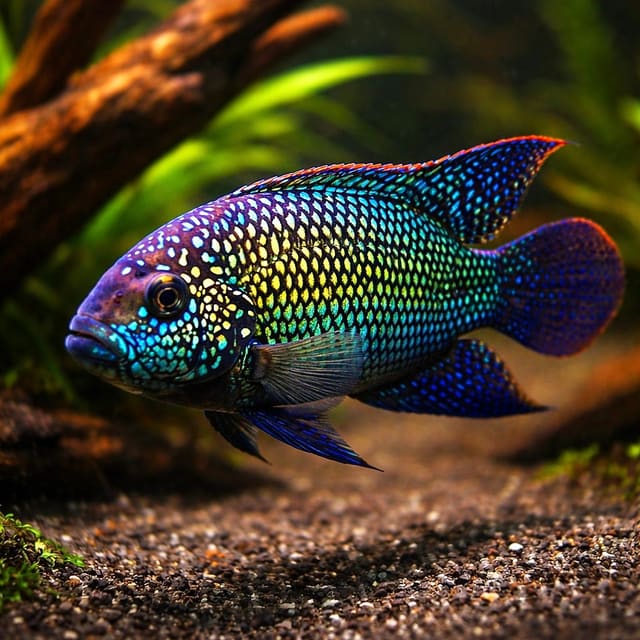
Jack Dempsey Cichlid (Cichlasoma octofasciatum bioce)
22–27°C · pH 7–8 · 243L
£5.69
South American Cichlids · Buying Guide
UK Jack Dempsey cichlid guide — real tank size, temperament, the Electric Blue morph, hard-water care, tank mates and in-stock fish. Read or listen.
10 products in stock today
Live prices and stock. Every fish covered by our Live Arrival Guarantee.
22–27°C · pH 7–8 · 243L

24–30°C · pH 6.5–8 · 300L
20–32°C · pH 6.5–8.5 · 108L

22–23°C · pH 6.5–8

20–28°C · pH 6–7.5 · 540L
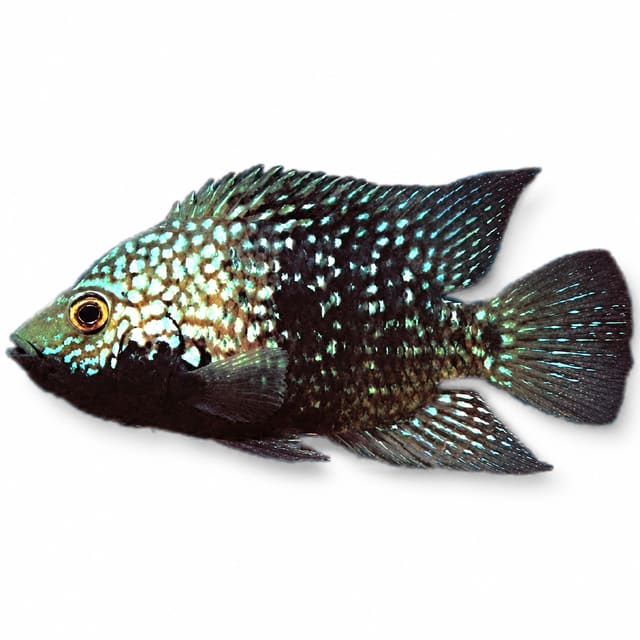
24–26°C · pH 7–8
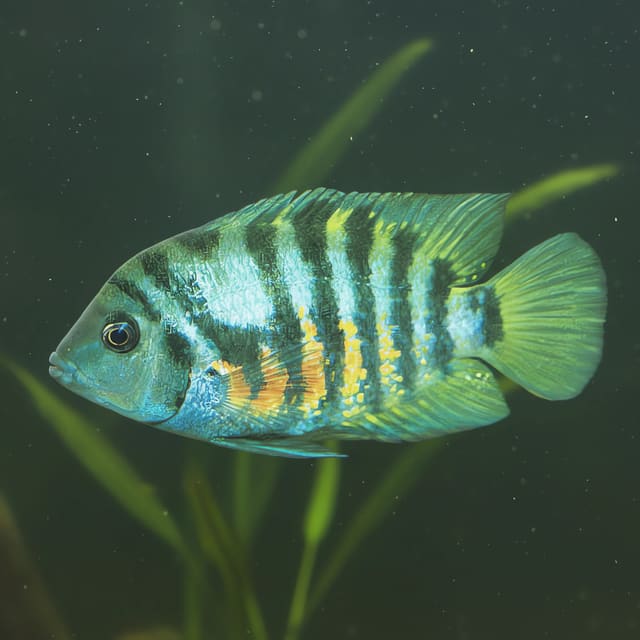
24–28°C · pH 6–8
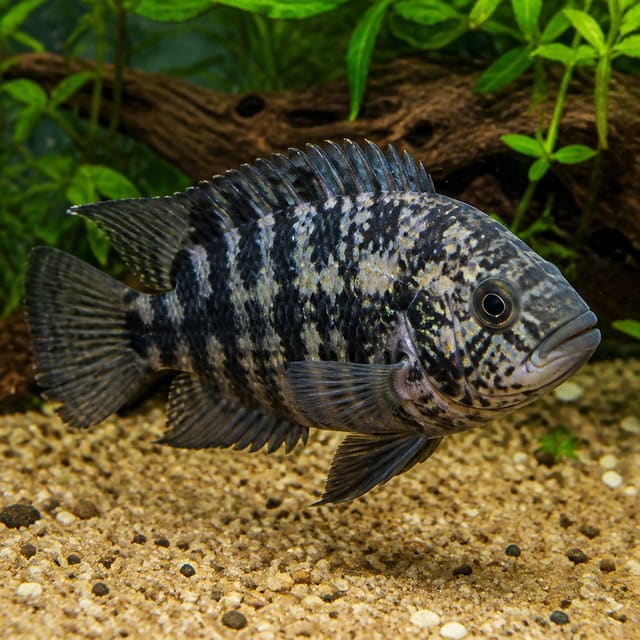
24–28°C · pH 7–8
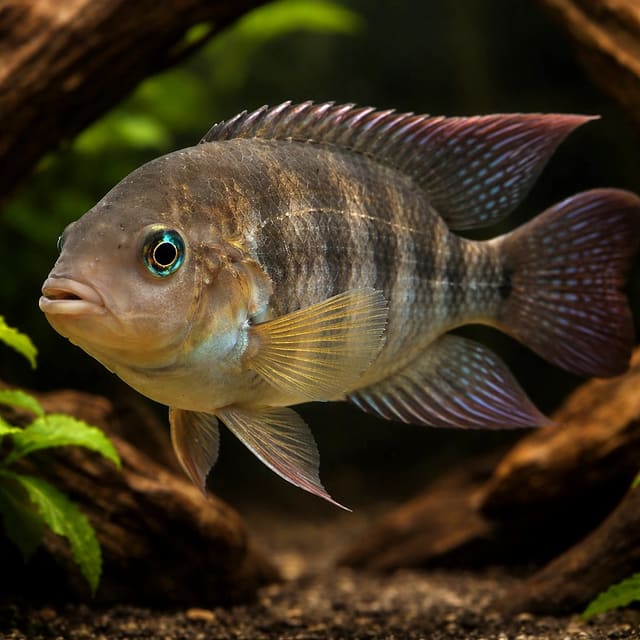
23–27°C · pH 7–8
23–28°C · pH 7–8 · 250L
The shaded band shows the range jack dempsey is comfortable in. Match it to your tap water before you buy.
Our trained assistant knows this jack dempsey page inside out. Ask it anything — water parameters, tank mates, how many to buy — or have it read the guide aloud while you set up your tank.
You searched "Jack Dempsey", which usually means one of two things: either a glittering blue-green adult caught your eye in a tank, or you've already bought a tiny one and you're starting to suspect it's going to get bigger — and stroppier — than the shop let on. Both are good reasons to read on.
I'm Kevin, the editor and owner here, and cichlids have been one of my keeping obsessions for the best part of fifteen years. The Jack Dempsey is a fish I love and a fish I'm careful about recommending, because the two things that decide whether you'll enjoy one — the real adult tank size and the temperament — are exactly the two things a quick shop chat tends to gloss over. This is the honest guide I'd give a friend who messaged me saying "I really want a Jack Dempsey — talk me into or out of it."
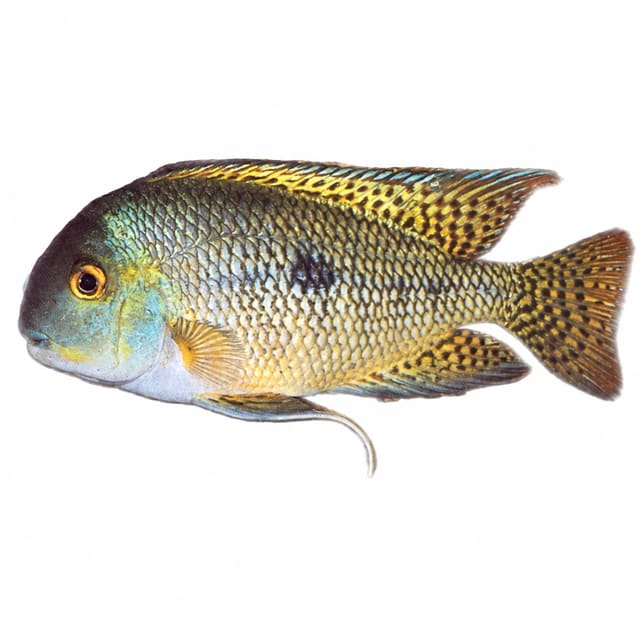
A standard Jack Dempsey in our holding tank. Those blue-green spangles aren't fixed pigment — they're structural colour that intensifies as the fish settles and gains confidence, which is why a happy Dempsey looks like a completely different animal to a stressed one. Product photo · our warehouse.
Before the care detail, the decision. A Jack Dempsey sits in the middle of the New World cichlid range — bigger and feistier than the dwarf cichlids, smaller and (slightly) more manageable than an Oscar or a Flowerhorn. Here's how it stacks up against the usual alternatives keepers cross-shop:
| What matters | Jack Dempsey | Electric Blue Jack Dempsey | Firemouth | Oscar |
|---|---|---|---|---|
| Adult size | ~25 cm | ~20 cm | ~15 cm | 30–35 cm |
| Tank (one fish) | ~200 L | ~150–200 L | ~120 L | 350 L+ |
| Temperament | Territorial / aggressive | Less aggressive, more delicate | Bluffs hard, mostly bark | Big, boisterous, messy |
| Hardiness | Very hardy | More delicate | Hardy | Hardy but huge bioload |
| Community-safe? | No — solo or pair | Cautiously, with robust mates | Often, in a big community | No — predator |
| Best for | Keepers wanting a hard cichlid in a normal-sized tank | Keepers wanting the colour with less fight | Cichlid beginners | Keepers with a very big tank |
If you want a serious cichlid but can't house an Oscar, the Jack Dempsey is the sweet spot — provided you respect the ~200 L floor [1]. If the aggression worries you, the Electric Blue morph is the gentler way in. If you want a community-tolerant centrepiece instead, read our Firemouth guide.
The single biggest Jack Dempsey mistake is buying a 5 cm baby for a 60-litre tank. It will reach ~25 cm and live 10–15 years [3]. A solo adult needs about 200 litres with a long 120 × 45 cm footprint; a bonded pair wants 250–300 litres or more. Floor space beats height — this is a bottom-patrolling territorial fish. If you can't commit to that tank now, buy a smaller cichlid instead and come back to the Dempsey later.
These are the two genuine Jack Dempseys in stock right now — the classic standard fish and the line-bred Electric Blue morph. Everything else lower down this page is a tank-mate or alternative big cichlid, clearly labelled as such; these two are the fish this page is actually about.
The standard fish is the bargain entry point and the tougher of the two; the Electric Blue is the showpiece and the gentler temperament, but it's a more delicate animal that wants more stable water. Pick based on how much fight you want in your tank, not just on looks.
The Electric Blue Jack Dempsey (EBJD) deserves its own section because it's so widely misunderstood. It is not a separate species and it is not a wild fish — it's a line-bred recessive colour morph of Rocio octofasciata, fixed by selective breeding so the whole body glows electric blue rather than carrying spangles on a dark base [3].
Three things follow from that recessive genetics:
This trips people up constantly. The Electric Blue Jack Dempsey is a ~20 cm Central American powerhouse (Rocio octofasciata). The Electric Blue Ram is a ~5 cm dwarf cichlid (Mikrogeophagus ramirezi) for peaceful nano and community tanks. Same two words, completely different fish and completely different care. If you actually want the tiny one, read our German Blue Ram guide instead.
Let's nail the numbers, because this is where Jack Dempsey keeping succeeds or fails. The species reaches about 25 cm [1], and it's a heavy-bodied, bottom-patrolling fish that claims territory.
Unlike shoaling fish, you don't "buy a group" of Jack Dempseys. The right number is one, or a genuine male/female pair if you intend to breed. Everything you add beyond that is a tank-mate decision, not a stocking-up of the same species.
For a first Jack Dempsey I'd run a single fish in a 200-litre tank with a sandy substrate, a couple of large bogwood pieces and a few rock caves to break the line of sight, an over-rated external filter (they're messy carnivores), and a heater set to 25 °C. Plant only with tough, attachable species like Anubias and Java fern on the wood — a Dempsey will redecorate anything rooted in the substrate. That's a calm, beautiful, low-conflict tank, and it's where I'd start.
Here's the honest rule: a Jack Dempsey is a predator that will eat anything small enough to fit in its mouth — tetras, guppies, dwarf shrimp, the lot [3]. It's also territorial, so even similarly-sized fish can get harassed. Plenty of experienced keepers conclude that the simplest, kindest setup is a solo fish or a single bonded pair, full stop [5].
If you do want company, the formula is: a big tank, robust similarly-sized cichlids, and an armoured bottom-dweller that can look after itself. Good candidates to consider — in a tank of 400 litres or more, with plenty of broken sightlines:
Avoid: anything small or peaceful, long-finned fish (fin targets), and a second Jack Dempsey unless it's a true bonded pair.
Transcript / what you're seeing (0:00–0:20): a planted tank with small fish cruising and shoaling through the mid-water and upper layers, calm and spread out. A Jack Dempsey tank looks nothing like this — instead of a peaceful crowd, you get one (or a pair of) large, deliberate fish patrolling the bottom third, claiming a cave or a piece of wood as territory. If you're imagining a Dempsey gliding peacefully among tetras like the clip above, that's exactly the mismatch this guide is trying to head off: those tetras would be lunch.
Jack Dempseys are carnivores and opportunistic predators [1], so feed accordingly — but don't overdo it, because they pile on weight and pollute heavily:
Feed once or twice a day, only what's eaten in a couple of minutes, and run more filtration than the tank "needs" — a well-fed Dempsey is a messy fish.
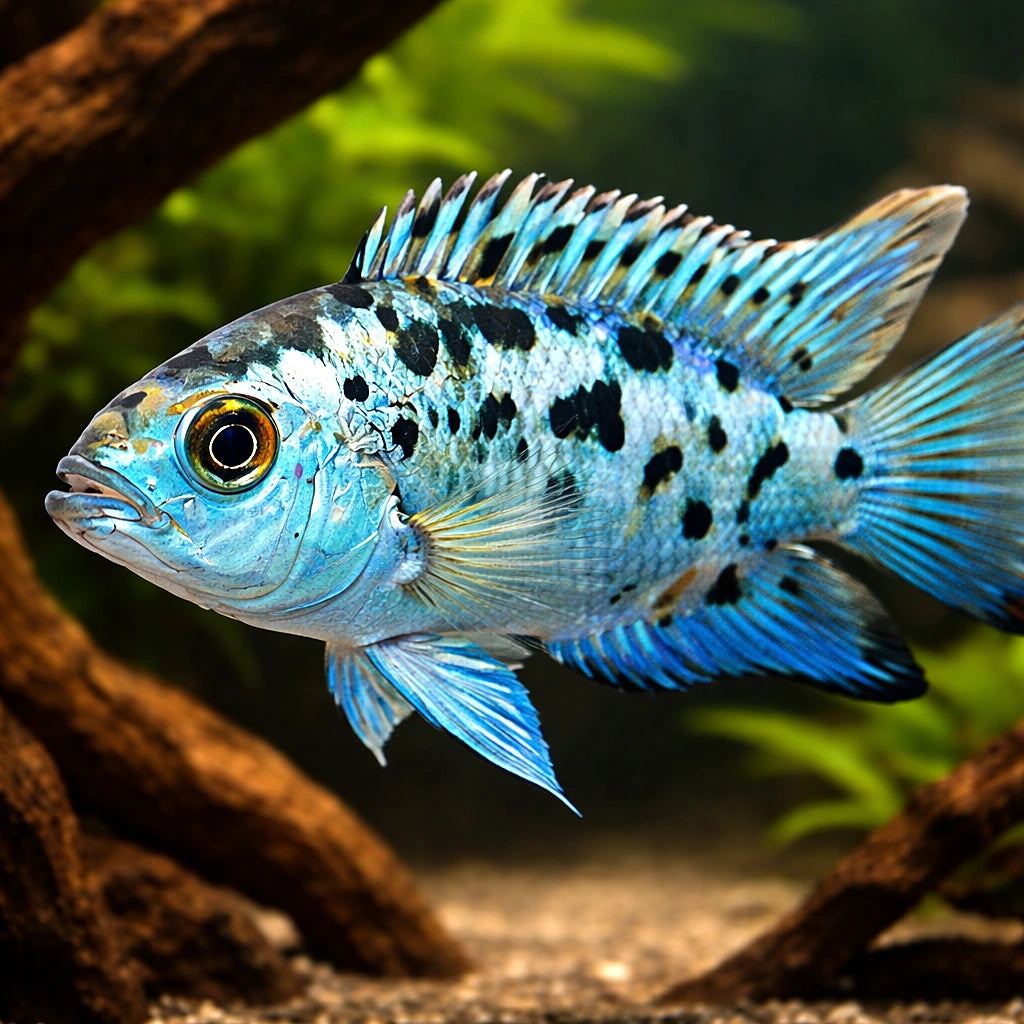
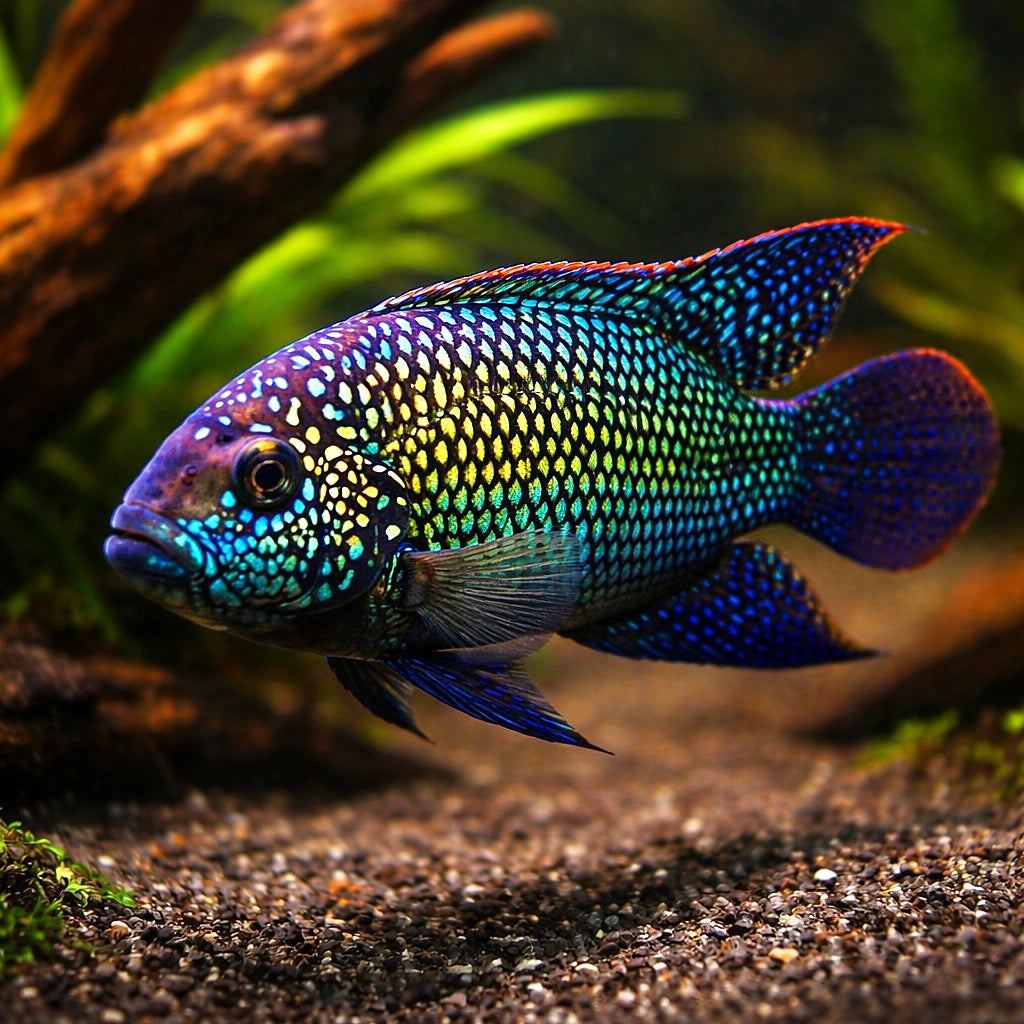
The Electric Blue Jack Dempsey (SKU S068). Compare it with the standard fish in the hero shot: the morph replaces the dark base and scattered spangles with an all-over electric-blue sheen. It's the same species — just a recessive colour line that's smaller, gentler and more delicate. Product photo · our warehouse.
Sexing adults isn't hard: males grow larger, develop longer, more pointed dorsal and anal fins, and tend to be more strongly coloured; females are rounder and often show a darker patch on the flank and gill cover [3]. They're substrate-spawners — a bonded pair will clean a flat rock or pit and lay eggs on it, then guard the eggs and fry together with the ferocity the name promises.
That parental aggression is exactly why breeding needs space and planning: a spawning pair will try to clear the entire tank of every other fish [5]. If you're not deliberately breeding, a solo fish sidesteps all of this. If you are, give the pair their own large tank and be ready to separate them if the bond breaks down.
Whether you buy from us or anyone else, these are the welfare markers that separate a healthy Jack Dempsey from a problem one:
Big New World cichlids reward you for learning from people who keep them, and the UK has a dedicated society for exactly this:
Jack Dempseys are hardy and tolerant of hard UK water [4], so they don't need the fussy, ultra-slow drip a sensitive soft-water fish demands. The priorities are temperature, calm, and immediate cover — a big, territorial fish settles fastest when it can claim a hiding spot straight away:
Visual route into the rest of our UK live-fish range.
Material factual claims cite the sources below; store policy and cautious inference are labelled in the article. Sources are grouped by type so you can judge their weight at a glance.
The peer-reviewed revision that erected the genus Rocio and moved octofasciata out of Cichlasoma (DOI 10.11646/zootaxa.1603.1.1).
Used for taxonomy, adult size, water-parameter ranges and Central American distribution (southern Mexico to Honduras).
Independent cross-check of tank size, temperament, diet, the Electric Blue morph and breeding behaviour.
Practical keeper walk-through of Jack Dempsey temperament, tank size and pairing.
Government source documenting how released Jack Dempseys establish feral populations — proof of hardiness and why you must never release one.
Fishkeeping moves fast and we want every guide spot-on. If you think something here is wrong, out of date, or could be clearer, tell us — our team reads every message and updates the page.
Suggest an editCompare African lake, South American and Central American cichlids by adult size, water, social behaviour and aquarium footprint before choosing.
Pleco fish guide for UK keepers: compare types, adult sizes, diets, tank planning, water and buying checks before choosing a suckermouth catfish.
Corydoras care for UK aquariums: compare popular cory catfish by adult size and temperature, then check tank, group, substrate, food and tank mates.
Editor & Site Owner · 15+ years in the hobby
Kevin is the editor and owner of Tropical Fish Co. He has kept freshwater tropical tanks for more than 15 years — starting with a single 60-litre planted tank and now running a rack of species tanks across his home and the shop. Every care guide on this site is written or reviewed by Kevin from first-hand experience, cross-checked against peer-reviewed sources, FishBase, and the hobby's most trusted references.