−15%
Easy
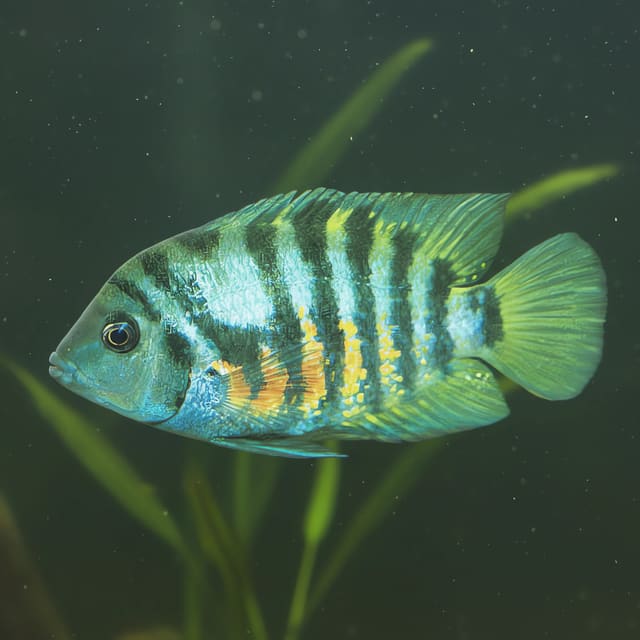
Electric Blue Acara (Andinoacara pulcher) – Neon Blue, 2–7cm Sizes
22–23°C · pH 6.5–8
£6.79£7.99

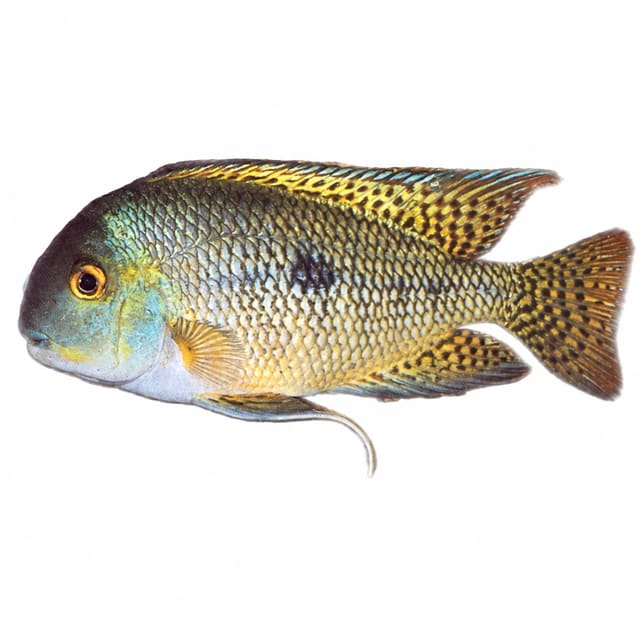
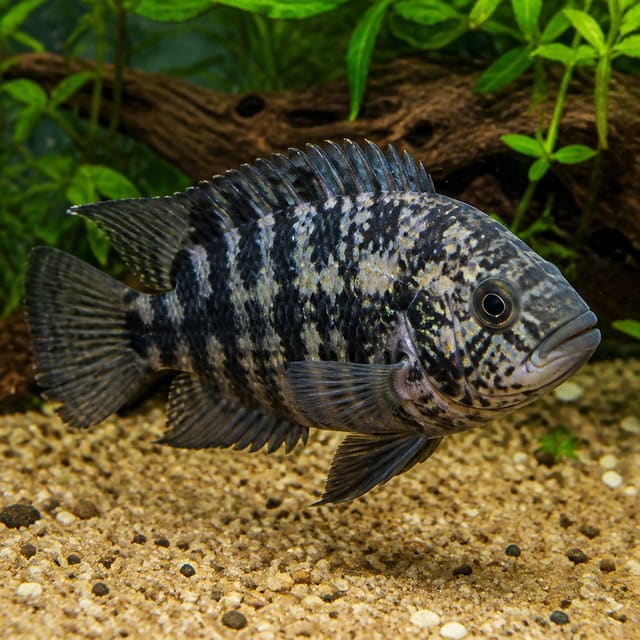
The Jack Dempsey Cichlid (Cichlasoma octofasciatum bioce) is a freshwater cichlid from the Atlantic slope of southern Mexico to Honduras that reaches 25 cm. It suits a keeper prepared for adult territorial behaviour; for a compatible adult pair, provide at least 243 litres with a 120 × 45 cm base and use 22–27°C and pH 7.0–8.0, the overlap of FishBase, Seriously Fish and OATA. Sold individually in sizes from 3–4 cm to XL.
Adult size is the maximum length this species reaches at full maturity (scientific sources). The livestock you receive will be younger and smaller — pick a size above for the actual shipping size. Product-photo provenance and any image-specific limitations are stated on the listing.
Cichlasoma octofasciatum
Save when buying multiple fish. Each quantity is one fish; sex and pair formation are not guaranteed unless the selected variant explicitly states them.
The Jack Dempsey Cichlid (Cichlasoma octofasciatum bioce) is a freshwater cichlid from the Atlantic slope of southern Mexico to Honduras that reaches 25 cm. It suits a keeper prepared for adult territorial behaviour; for a compatible adult pair, provide at least 243 litres with a 120 × 45 cm base and use 22–27°C and pH 7.0–8.0, the overlap of FishBase, Seriously Fish and OATA. Sold individually in sizes from 3–4 cm to XL.
Adult size is the maximum length this species reaches at full maturity (scientific sources). The livestock you receive will be younger and smaller — pick a size above for the actual shipping size. Product-photo provenance and any image-specific limitations are stated on the listing.
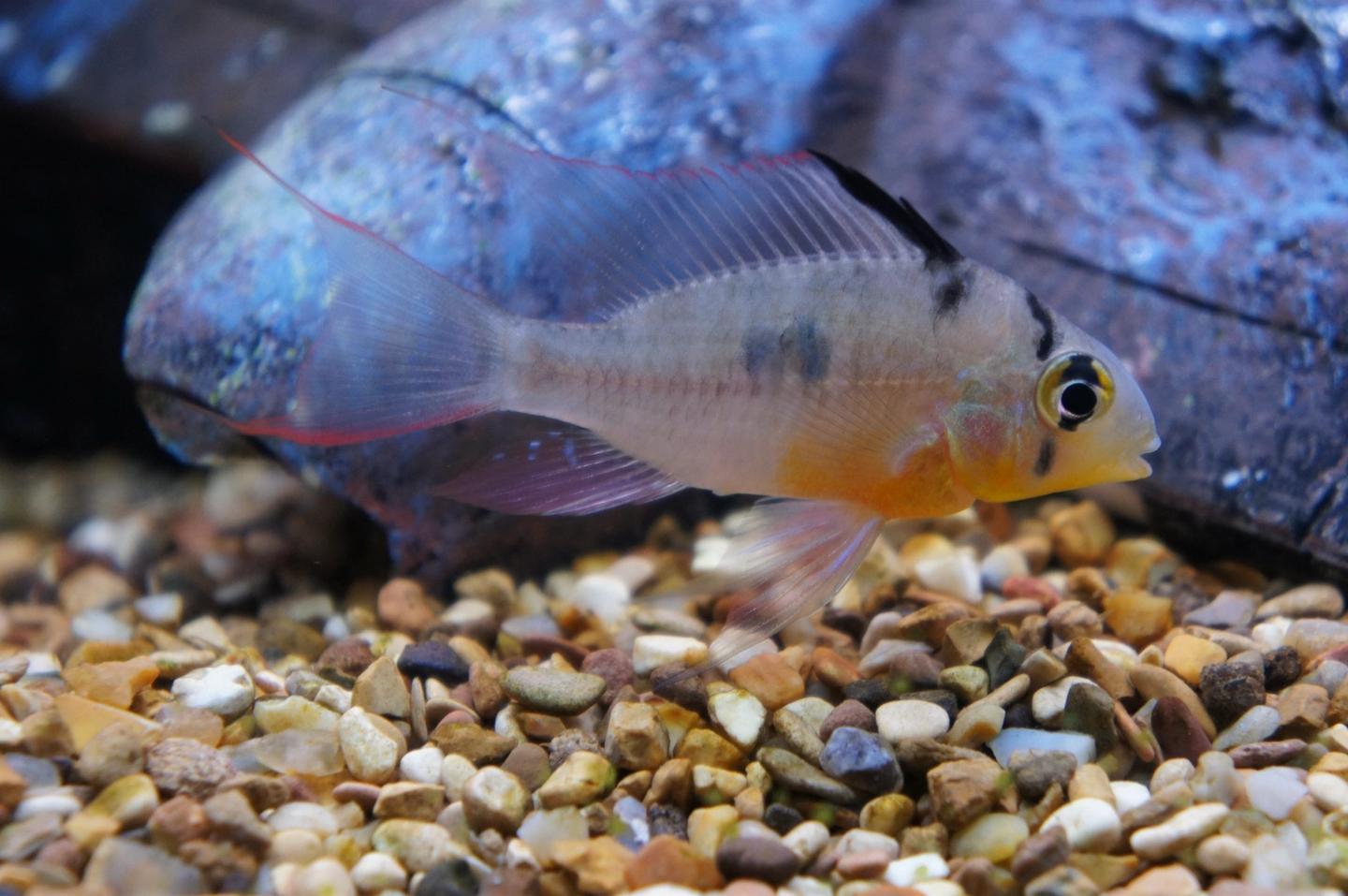
Cichlids are a family of roughly 1,800 accepted species, not one care type. Before buying, identify the exact species and source, then compare adult measurement, usable tank dimensions, social system, territory, tested water, diet and an exit plan. No family-wide minimum tank, water range or tank-mate list is safe.
Maintain these water conditions for optimal health and vibrant colors
The Jack Dempsey Cichlid (Cichlasoma octofasciatum bioce) is a freshwater member of the cichlid family from the Atlantic slope of southern Mexico to Honduras. It reaches 25 cm total length and suits a keeper who can plan around a large adult, territorial behaviour and carefully screened companions. FishBase records the 25 cm maximum and places adults in swampy areas with warm, murky water, weedy mud- or sand-bottomed canals and drainage ditches, and slow-moving lowland waters. FishBase now lists it as Rocio octofasciata.
For an adult pair, provide a base measuring at least 120 × 45 cm or an equivalent aquarium of about 243 litres. The Seriously Fish species profile applies that minimum to one adult pair and stresses the need for mature biological filtration. A very large aquarium will be needed if you wish to keep it with other cichlids.
Keep routine aquarium water at 22–27°C, pH 7.0–8.0 and 9–12 dGH. This is the overlap of FishBase’s recorded environment, the Seriously Fish aquarium range and OATA’s American-cichlid guidance; OATA gives 22–27°C for the group. Maintain ammonia and nitrite at zero rather than trying to compensate for poor water quality by changing pH.
| Suits | Not suited to |
|---|---|
| A keeper planning around a 25 cm adult | An aquarium chosen only for the juvenile’s dispatch size |
| A compatible adult pair in at least 243 litres with a 120 × 45 cm base | A cramped arrangement with no retreat from aggression |
| A mature, filtered freshwater aquarium | A biologically immature aquarium |
| Carefully screened companions too large to be prey | Fish small enough to be viewed as food |
One purchase supplies one Jack Dempsey Cichlid. Use the live size selector to choose 3–4 cm, 5–6 cm, 7–9 cm or XL. The size you select is the size supplied, not the adult size. Every choice therefore needs the same adult plan: a fish that can reach 25 cm and an aquarium arranged for mature cichlid behaviour.
A 3–4 cm or 5–6 cm fish is still far below the recorded maximum. Choosing a small dispatch size does not reduce its final space, filtration or compatibility needs. Have the adult aquarium and biological filter planned before bringing it home rather than relying on an uncertain later upgrade.
XL is the catalogue grade shown in the selector. It is not a numerical length and it does not mean that the fish has reached its 25 cm maximum. Base décor, water and companion decisions on the species’ adult requirements, not an assumption about what the grade represents.
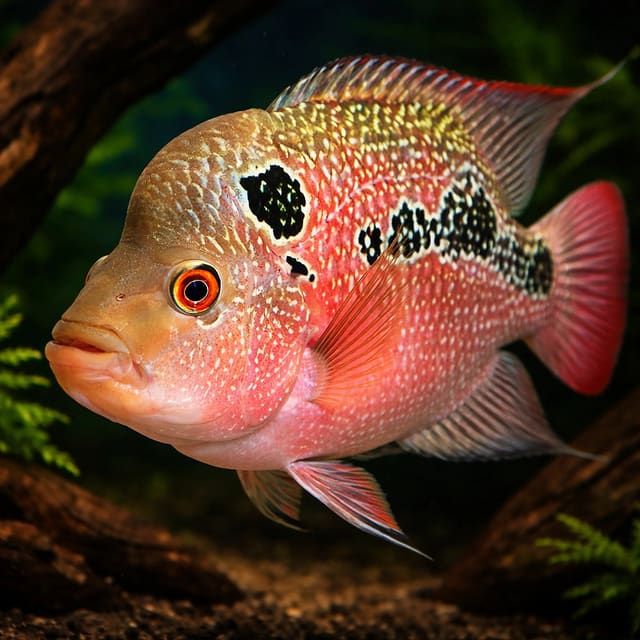
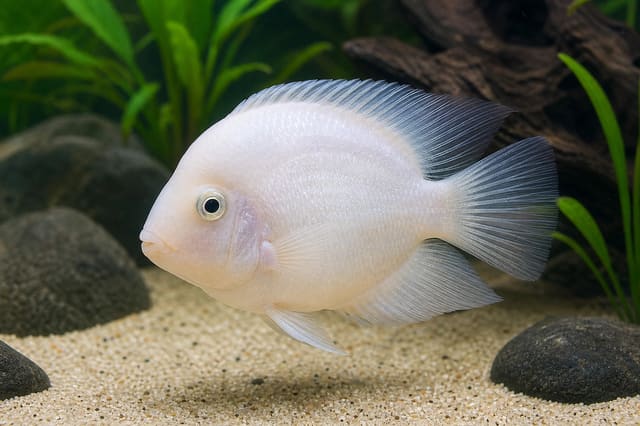
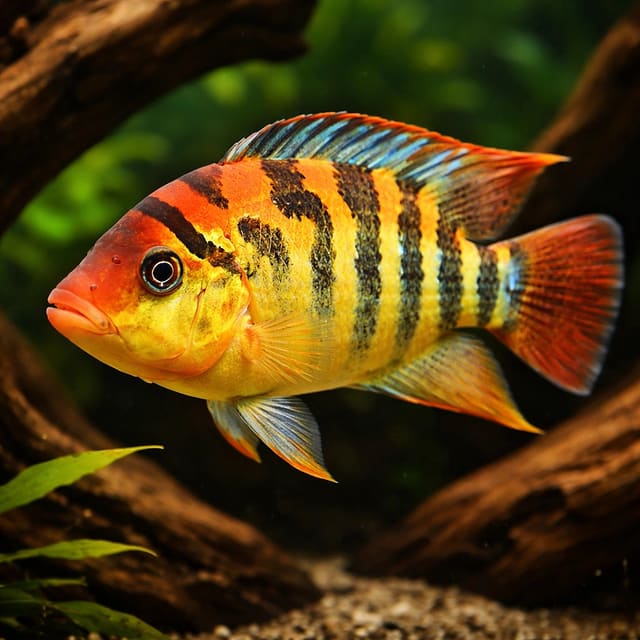
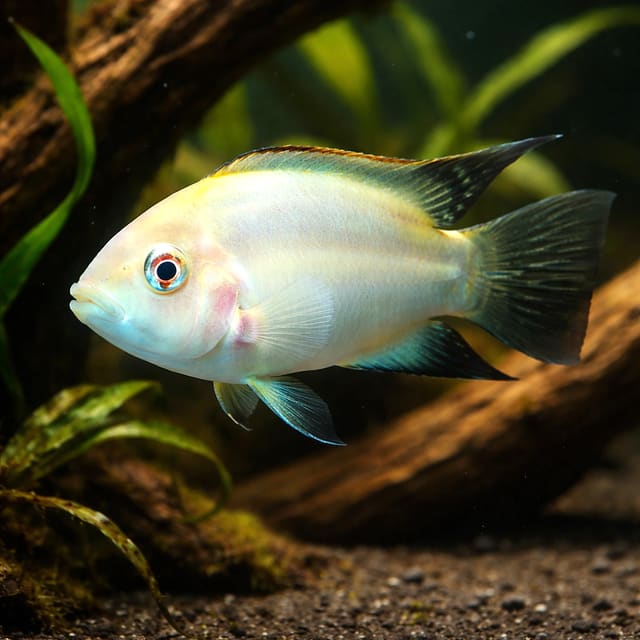
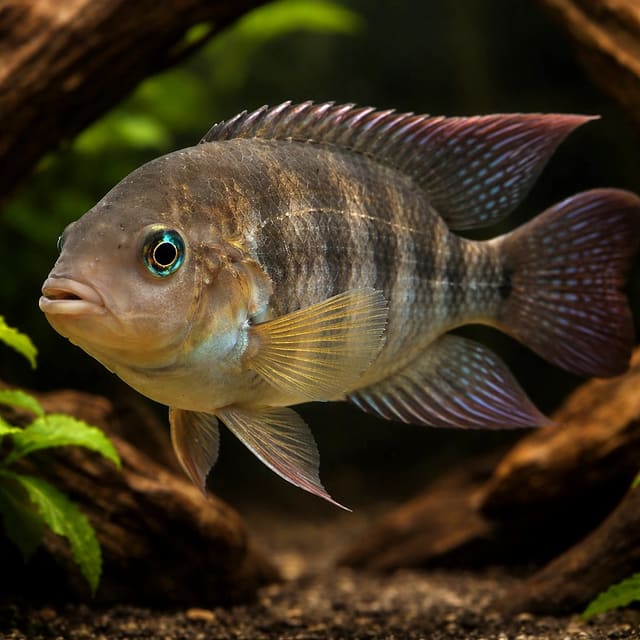
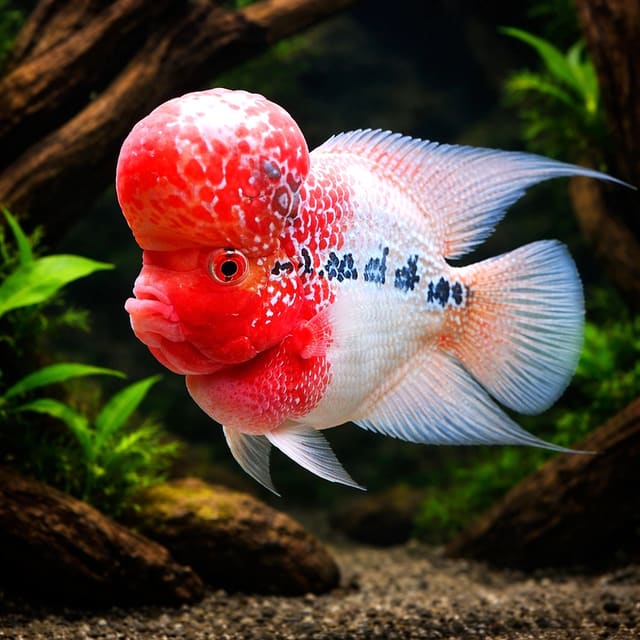
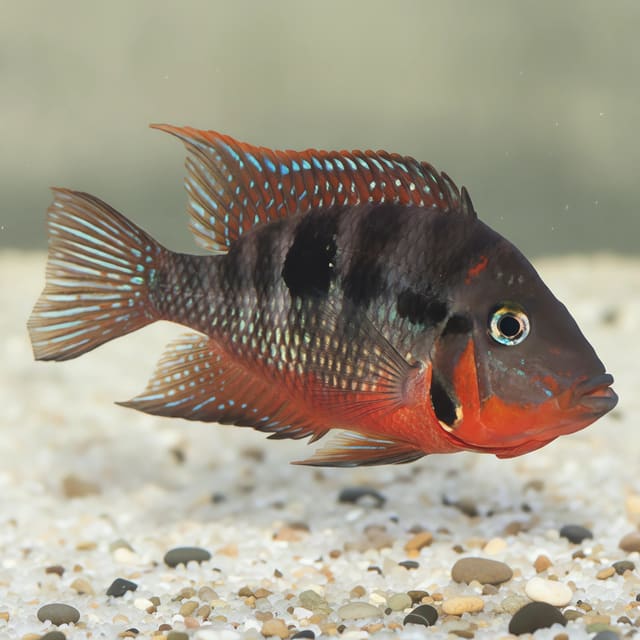
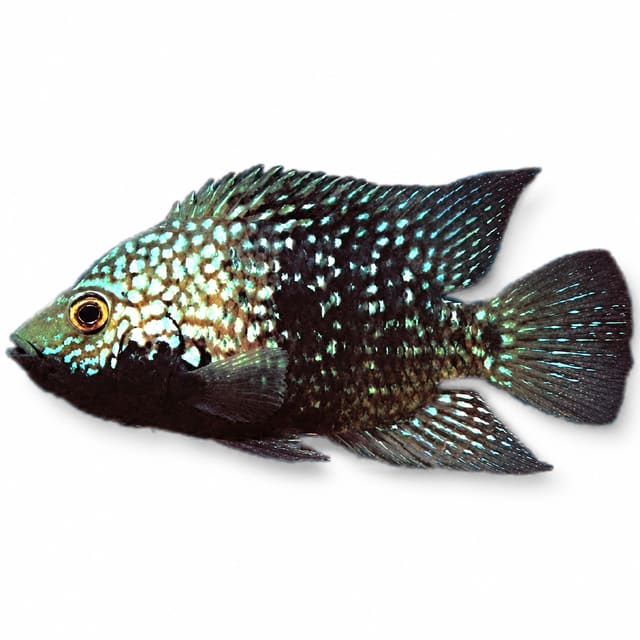
The gallery images are representative, based on reference photographs of this species, so colours can look slightly different from the live animal. Use the gallery to understand the cichlid’s general form and markings, while allowing for natural variation between individual fish.
Sex is guaranteed only when the selected option explicitly states male or female. This Jack Dempsey Cichlid listing has no sex-guaranteed option. Do not use dispatch size, colour or a gallery scene to choose on the assumption that it establishes sex.
Prepare a biologically mature aquarium before introducing this cichlid. For one adult pair, use a base of at least 120 × 45 cm or an equivalent aquarium of about 243 litres. The footprint gives the fish usable ground area for movement and territory; litres alone can hide an unsuitable tall, narrow shape.
A working biological filter converts toxic ammonia first to nitrite and then to safer nitrate. The RSPCA’s aquarium welfare guidance explains why every fish aquarium needs a properly established and maintained filter. Follow our first tropical aquarium guide to prepare and mature the system before livestock enters it.
At about 243 litres, Seriously Fish gives a turnover target of four to five times the aquarium volume each hour. That corresponds to a nominal flow of about 970–1,215 litres per hour. Treat the figure as a starting point: check that the installed filter can maintain clear water and zero ammonia and nitrite once the fish is being fed.
Seriously Fish estimates about 200–300 W of heating for a 243-litre aquarium kept within the species range when the room is around 20°C. Choose equipment for the actual water volume, room temperature and target of 22–27°C, then confirm the result with an aquarium thermometer rather than relying only on the heater dial.
Keep the aquarium at 22–27°C, pH 7.0–8.0 and 9–12 dGH. This is the working overlap of FishBase’s recorded environment, the Seriously Fish aquarium range and OATA’s American-cichlid guidance.
Test the aquarium rather than choosing a target by guesswork. Our water chemistry guide explains what temperature, pH, hardness, ammonia, nitrite and nitrate mean. Enter measured values into the water matcher to compare them with the working range for this fish.
If temperature, pH and hardness already fall inside the stated window, prioritise stability and water quality. Sudden adjustments can create a second problem without addressing waste. If a value sits outside the range, establish the tap-water value and aquarium value separately before deciding how to make any gradual correction.
Keep ammonia and nitrite at zero. OATA also advises keeping nitrate no more than 20 mg per litre above its normal tap-water level. Test at least weekly, and test promptly if breathing, swimming, feeding, colour or aggression changes. A reading above zero for ammonia or nitrite calls for immediate investigation of filtration, feeding and stocking pressure.
| Reading | Action |
|---|---|
| 22–27°C, pH 7.0–8.0, 9–12 dGH | Keep the routine stable and continue weekly testing |
| Ammonia or nitrite above zero | Check the filter and water quality immediately |
| Nitrate rising between changes | Review portions, waste removal and the water-change routine |
| Unexpected pH movement | Compare tap and aquarium readings before making a change |
Use soft sand where practical and arrange the aquarium around substantial pieces of wood, roots or branches. Seriously Fish describes sand as ideal rather than essential and notes that flat, water-worn rocks can be included. These choices suit a cichlid associated with mud- and sand-bottomed, slow-moving habitats and allow normal interaction with the lower part of the aquarium.
Expect rooted plants to be uprooted as the fish digs. Plants attached to décor and plants floating at the surface are the more practical choices because their roots do not depend on remaining in a carefully planted substrate. Leave access around furnishings so displaced waste can be removed during maintenance.
Use décor to form more than one visual area rather than leaving an uninterrupted open footprint. This does not make an incompatible combination safe, but it gives a retreating fish a chance to move out of direct view. In a pair or mixed arrangement, observe which areas each fish claims and make sure one animal is not being confined to a corner.
Relocating décor may interrupt an established boundary, but it is not a substitute for more space or separation when aggression continues. The fish’s behaviour should decide whether the layout works: normal patrols and feeding are preferable to constant hiding, pursuit or exclusion from food.
Feed a varied diet led by foods that match this cichlid’s preference for aquatic invertebrates. FishBase describes the wild diet as worms, crustaceans, insects and fish. Seriously Fish describes likely omnivorous feeding with a preference for aquatic invertebrates, then recommends sinking dried foods alongside frozen Daphnia, mosquito larvae, chironomid larvae such as bloodworm, and prawn or shrimp in the aquarium.
Choose an appropriately sized sinking dried food as the prepared part of the diet. Rotate it with frozen invertebrate foods instead of depending on one product every day. Prawn or shrimp can add further variety when cut to a size the fish can take cleanly.
| Food role | Supported choices |
|---|---|
| Prepared food | Appropriately sized sinking dried food |
| Frozen variety | Daphnia, mosquito larvae and bloodworm |
| Larger meaty item | Suitably sized prawn or shrimp |
| Custom mixture | Natural ingredients bound with gelatine |
Feed once a day and offer only what is eaten within a few minutes. This timing comes from OATA’s American-cichlid routine. Watch the fish take each item and stop adding food when feeding interest slows. Remove obvious uneaten food so it cannot break down and add waste to the aquarium.
Reduced food intake can accompany stress, water-quality trouble or pressure from another fish. If appetite changes, test ammonia, nitrite, nitrate and temperature, then observe whether the fish can reach food without being chased. Adjusting the menu alone will not solve exclusion by a companion or an unstable aquarium.
Change 25% of the water at least once each week, as OATA strongly recommends for American cichlids. Treat replacement tap water with a conditioner that handles chlorine or chloramine before it enters the aquarium. Use the water change to siphon solid waste from accessible substrate and to inspect the filter for reduced flow or blockages.
When filter media needs cleaning, rinse it lightly in aquarium water removed during the water change. Do not rinse established biological media under the tap because chlorine or chloramine may kill the beneficial bacterial population. Avoid cleaning every component so aggressively that the filter loses the bacteria responsible for processing waste.
Watch swimming, breathing, colour, body condition, fins, scales, feeding and temperament. Hanging at the surface, sitting on the bottom, erratic swimming, unusually fast or slow gill movement, loss of appetite, white spots, fluffy growths, damaged fins or a marked change in aggression all call for a water test and a close check of the aquarium.
If you are concerned about a health change, test the water and tell our team what changed, with the current temperature, pH, ammonia, nitrite and nitrate readings. Do not apply a treatment merely from a visual guess, because poor water or injury from conflict requires a different response from disease.
Have someone present to receive the fish because live animals must not be left unattended. Our delivery and Live Arrival Guarantee policy explains the packing and claim requirements, including opening and inspecting the parcel the same day it arrives. Fish are hand-bagged in pure oxygen, placed in an insulated poly box and given a heat pack when the weather calls for one.
OATA advises confirming that ammonia and nitrite are zero before adding a fish. Check temperature, pH and hardness as well, and make sure the planned retreat areas remain accessible. Add livestock gradually so the bacterial population in the filter can adjust as feeding and waste increase.
These steps assume the destination aquarium has already been matured, heated and tested. Acclimatisation cannot make an immature filter or unsuitable companion arrangement safe.
Confirm that the new fish can swim normally, reach food and use more than one area of the aquarium. Test water if breathing, balance, appetite or colour changes. In a shared aquarium, persistent pursuit, confinement to a corner or exclusion from food is a stocking problem that requires prompt separation or a revised arrangement.
Plan for a maximum recorded length of 25 cm total length. FishBase gives that figure for male or unsexed fish. Use 25 cm consistently for adult planning.
Growth rate depends on factors such as feeding, water quality and the individual fish, while XL has no numerical length attached to it. Check actual body length when aquarium planning depends on a measurement. Do not infer age, maturity or sex from a size label.
Young Jack Dempsey Cichlids can be maintained together, but Seriously Fish warns that they usually begin showing aggression towards one another as they become sexually mature. A juvenile arrangement that appears calm therefore needs an adult contingency rather than an assumption that the same social balance will continue.
When a compatible pair forms, the two fish are usually peaceful towards one another but hostile towards other Jack Dempsey Cichlids and similarly shaped fish. Reassess companions, retreat space and feeding access as behaviour changes. A second aquarium or secure separation plan is valuable whenever more than one territorial cichlid is being managed.
The lowest-risk social plan is one that does not force mature Jack Dempsey Cichlids other than a formed pair to share confined territory. OATA advises that most American cichlids do better singly or in pairs. For this species, young fish can be kept together, but they usually begin to show aggression towards one another as they become sexually mature.
A formed adult pair is usually peaceful towards one another. Provide at least a 120 × 45 cm base or about 243 litres for the pair, with separate visual areas and feeding access. Pair status does not make the aquarium peaceful for every other fish: avoid other members of its own species and similarly shaped fishes because a formed pair is hostile towards them.
Seriously Fish allows a well-chosen community with tankmates too large to be viewed as prey. This is a screening rule, not a promise that any named animal will be accepted. Adult size, body shape, territorial use of the lower aquarium and access to retreat space all matter. Other cichlids require a very large aquarium.
Use our cichlid collection to compare adult size and aquarium demands, then assess each proposed combination independently.
For a proposed mixed aquarium, check the tank’s length, width and volume, current temperature and water readings, the adult sizes of its residents, and how the décor divides the footprint. A decision made from “large tank” or “large fish” alone cannot account for territory, prey risk or similarly shaped rivals.
Avoid tankmates small enough to be viewed as prey. FishBase records fish among the wild diet, and Seriously Fish limits community companions to animals too large to be treated as food. Judge this against the Jack Dempsey’s 25 cm maximum rather than its dispatch size.
Avoid other Jack Dempsey Cichlids and similarly shaped fish with a formed pair. Other cichlids also require substantially more space than the minimum for one Jack Dempsey pair. Do not use matching aggression as a compatibility shortcut; two territorial fish can still injure one another.
Brief display and continuous pursuit are not the same decision. If one fish is repeatedly confined to a corner, prevented from eating or showing damaged fins or scales, separate the animals or move one to a suitable mature aquarium. Rearranging décor may reset boundaries, but it does not guarantee that an incompatible pairing will become stable.
No companion is universally safe with an adult Jack Dempsey Cichlid. Screen the actual animals, aquarium footprint and escape space, then keep a practical separation plan ready whenever more than one territorial fish is housed together.
A Jack Dempsey Cichlid reaches a recorded maximum of 25 cm total length. FishBase gives 25 cm for male or unsexed fish, so use that figure when planning adult space.
A Jack Dempsey Cichlid adult pair needs a base of at least 120 × 45 cm or an equivalent aquarium of about 243 litres. Seriously Fish applies this minimum to one adult pair; other cichlids require a very large aquarium.
Keep one fish or one compatible adult pair; OATA’s American-cichlid guidance says most do better singly or in pairs. Young Jack Dempsey Cichlids may coexist, but aggression usually develops as they mature; a compatible adult pair is usually peaceful with each other and hostile to other members of the species.
Choose a Jack Dempsey Cichlid only if you can provide a mature filtered aquarium, plan around a 25 cm adult and manage territorial aggression. It demands more compatibility planning than a simple peaceful community fish.
Feed a varied diet led by appropriately sized sinking dried food and frozen aquatic invertebrates such as Daphnia, mosquito larvae and bloodworm, with prawn or shrimp for variety. Feed once daily and only what it eats within a few minutes.
Keep this fish at 22–27°C, pH 7.0–8.0 and 9–12 dGH. This is the working overlap of FishBase’s recorded environment, the Seriously Fish aquarium range and OATA’s American-cichlid guidance.
Yes. Young fish usually begin to show aggression towards one another as they become sexually mature, and a pair that forms is usually peaceful towards each other but hostile to other Jack Dempseys and similarly shaped fishes.
Seriously Fish limits possible companions to tankmates too large to be viewed as prey in a well-chosen community. Other cichlids need a very large aquarium, and every combination requires screening for adult size, body shape, territory and retreat space.
It is hand-bagged in pure oxygen, placed in an insulated poly box and given a heat pack when weather calls for one, then carried by a licensed live-animal courier. Be present to receive it; before opening the parcel, start a continuous unboxing video showing the sealed parcel, the opening and the fish in the bag. Float the bag for 20–30 minutes, release the fish and keep the bag water out of the aquarium.
No reviews for this item yet. Bought one? Honest reviews only, good or bad.
What customers say about ordering from us
I have a small group of long finned mountain minnows. So was delighted to be able to order ten of this variety to increase the genetics in my tank . The ones I recieved are healthy but it’s to early to give a verdict on wether they are of a long finned type since they are small currently.
Gordon Walker · 23 Sept 2026
100% success travel and "installation". Pleased with quality of purchase. The Siamese fighter a bit "shy" so have not yet seen him at his best yet but looking good. Happy customer. GG
George E Garratt · 21 Sept 2026
Reviews of our shop, collected by Judge.me, an independent third-party review collector. Newest first.