−15%
Topaz Cichlid (Amatitlania myrnae)
22–27°C · pH 6.5–8
£16.99£19.99

An undescribed Amatitlania trade form from Honduras, sold as one unsexed fish per quantity. Plan 200L and 120cm+, structured cover and stable neutral-to-alkaline water; two fish are not a guaranteed pair.
Amatitlania sp. 'Honduran Red Point'
Save when buying multiple fish. Each quantity is one fish; sex and pair formation are not guaranteed unless the selected variant explicitly states them.
Confirm your email, then we’ll send an availability message for this exact item if it returns within 180 days.
This request is only for this product—no newsletter or other promotions. A mail-provider retry may very rarely duplicate the same availability message. Unconfirmed addresses are removed after 48 hours. See our privacy policy.
An undescribed Amatitlania trade form from Honduras, sold as one unsexed fish per quantity. Plan 200L and 120cm+, structured cover and stable neutral-to-alkaline water; two fish are not a guaranteed pair.
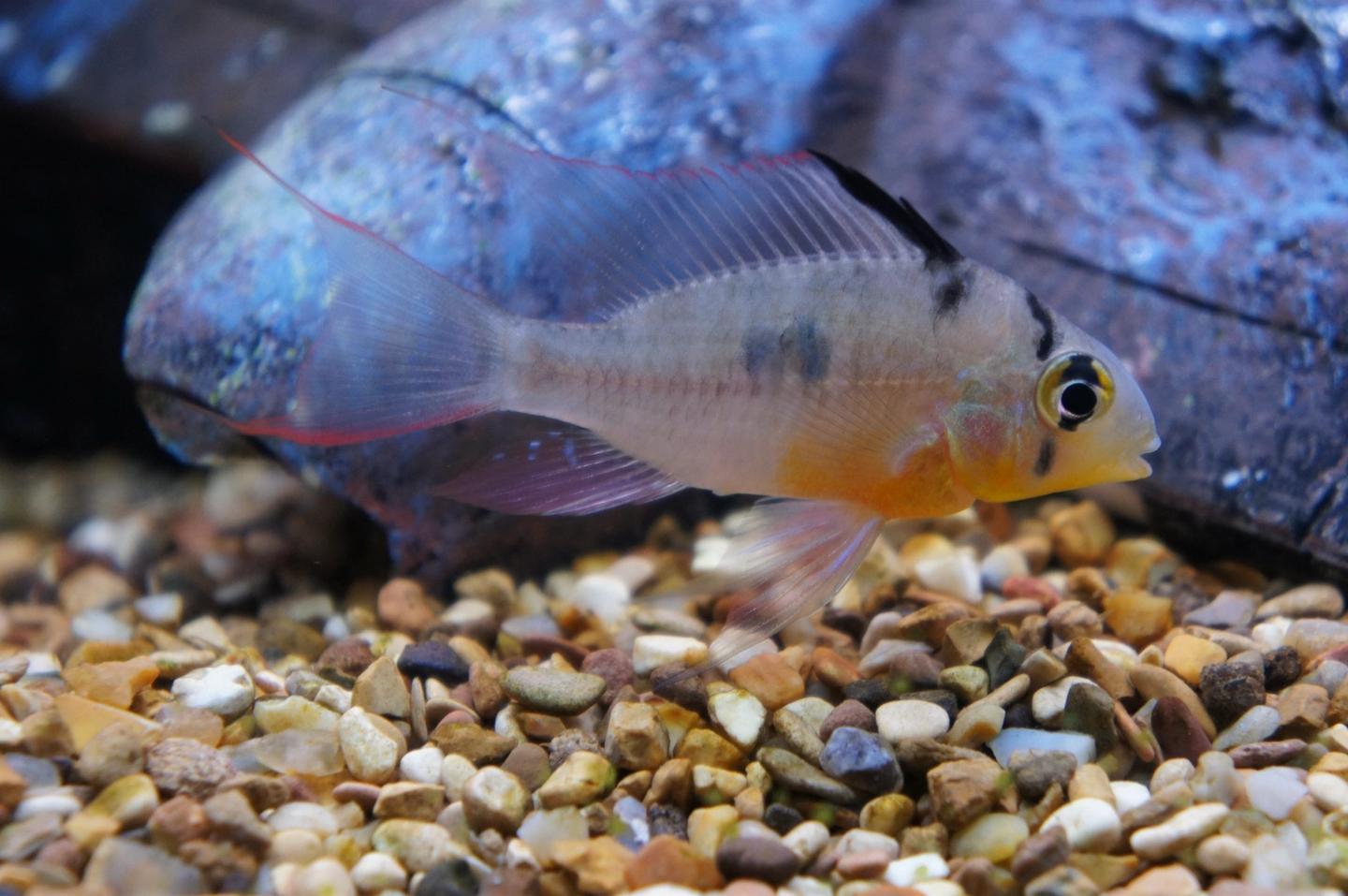
Cichlids are a family of roughly 1,800 accepted species, not one care type. Before buying, identify the exact species and source, then compare adult measurement, usable tank dimensions, social system, territory, tested water, diet and an exit plan. No family-wide minimum tank, water range or tank-mate list is safe.
Maintain these water conditions for optimal health and vibrant colors
Honduran Red Point Cichlid is the aquarium trade name used here for Amatitlania sp. 'Honduran Red Point', an undescribed Central American convict-type cichlid associated with Honduras. Older aquarium and our stock records may call it Cryptoheros sp. 'Honduran Red Point' or Blue Convict. Those names help identify the trade form, but this listing does not claim that the supplied fish is a formally described species, a proven Amatitlania siquia, or certified Rio Danli locality stock.
This cichlid is valued for its compact build, pearly blue or blue-green sheen and warm colour around the belly and fins. It is generally described as less forceful than the common Convict Cichlid, but it remains a territorial cichlid, especially around a spawning site. Choose it for a deliberately structured Central American aquarium, not as a colourful addition to a small peaceful community.
| Care point | Reviewed guidance | Why it matters |
|---|---|---|
| Listed identity | Amatitlania sp. 'Honduran Red Point' | The sp. label preserves the honest undescribed trade-form identity. |
| Older trade name | Cryptoheros sp. 'Honduran Red Point'; Blue Convict | These names aid recognition without being presented as a newer formal classification. |
| Origin | Honduras; aquarium accounts associate the form with the Rio Danli area | The supplied fish is not claimed as wild-caught or locality-certified without lineage records. |
| Adult size | Commonly around 10 cm; plan for up to about 13 cm | A cautious allowance protects swimming room when captive growth exceeds a short profile figure. |
| Minimum aquarium | 200 litres and 120 cm long for an adult pair or social plan | Length, territories and escape routes matter more than litres alone. |
| Temperature | Stable 23-26°C practical target | Published aquarium ranges differ; an overlap target avoids treating a broad range as a daily swing. |
| pH | Stable 7.0-8.0 | The fish is associated with neutral-to-alkaline water, but stability and acclimation to the source water remain important. |
| Water quality | Ammonia 0, nitrite 0, controlled nitrate and strong oxygenation | Territorial fish still need a mature biological filter and consistent maintenance. |
| Diet | Complete cichlid staple with suitable frozen and plant-rich variety | A varied omnivore diet supports condition without relying on rich feeder foods. |
| Behaviour | Territorial; usually calmer than a typical Convict Cichlid but not reliably peaceful | Breeding condition and individual temperament can change compatibility quickly. |
| Breeding | Pair-forming substrate spawner with parental care | A random two-fish order is not a proven pair. |
| Image | Illustrative aquarium representation | It cannot verify sex, lineage, locality, final colour or the exact dispatched fish. |
The most careful current display name is Honduran Red Point Cichlid (Amatitlania sp.). The abbreviation sp. is not an omission: it signals that the familiar aquarium form does not have a formal species name established by the evidence used for this listing. The older name Cryptoheros sp. 'Honduran Red Point' remains useful because it appears in trade catalogues, older articles and hobby searches.
The name Amatitlania siquia is often attached to Honduran Red Point fish online, but it should not automatically be applied to every fish sold under this trade name. The Nordic Cichlid Society's exact-form account specifically keeps the Rio Danli Honduran Red Point under Amatitlania sp. and advises against using A. siquia for that form at present. A 2017 phylogeographic study of 318 convict cichlids also found that the existing species labels did not align cleanly with genetic structure and described the taxonomy around A. siquia as imperfect.
That uncertainty does not make the fish less recognisable in the aquarium trade. It does mean the listing should separate what is known from what is assumed. We can state the trade identity, Central American relationship and husbandry needs. We cannot certify a collection locality, wild generation, pure lineage or formal species from a supplier name and a representative image alone.
Search-name note: Honduran Red Point, Honduras Red Point, Red Point Cichlid, Blue Convict, Amatitlania sp. 'Honduran Red Point' and Cryptoheros sp. 'Honduran Red Point' may all lead shoppers to this trade form. The names do not prove sex, pairing, locality or exact adult colour.
The Honduran Red Point is a close relative of the familiar Convict Cichlid, Amatitlania nigrofasciata. Both are compact Central American substrate-spawning cichlids with vertical patterning and active parental care. Honduran Red Points are commonly described as more blue or blue-green and less aggressive than a typical Convict. That is a useful comparison, not a guarantee that every individual will be gentle.
Blue Convict is an older or informal trade name for the Honduran Red Point in some shops. It should not be confused with every fish sold using the words electric blue, polar blue or blue parrot convict. Polar Blue Parrot Cichlids are hybrid, short-bodied fish with a different origin and body form. This listing is not for a Polar Blue Parrot Cichlid, and those popular search terms are not forced into the product title as if the fish were interchangeable.
Visible colour alone is also not a secure identification test. Lighting, stress, age, sex, hierarchy and breeding condition can alter the intensity of blue, orange and red. Closely related convict-type fish can hybridise in aquariums, so uncertain offspring should never be passed on under a confident locality or species label.
Specialist aquarium accounts associate the true Honduran Red Point form with the Rio Danli area of Honduras. Descriptions refer to clear, well-oxygenated rivers or streams with gravel, stones, woody cover and moderate current. Practical Fishkeeping's expert account notes pristine habitat and alkaline but relatively soft water, while other aquarium profiles give a wider mineral range. The useful lesson is not to chase one hardness number: provide clean, stable water, adequate buffering for a steady pH and strong oxygen exchange.
Translate the habitat into a structured aquarium with rounded stones, smooth gravel or sand, driftwood and several caves. Leave open swimming lanes as well as cover. A single central cave can become one defended bottleneck; several separated retreats and broken sightlines give a subordinate fish more than one route away from a territory.
Plants are optional. Tough species such as Anubias or Java fern can be attached to wood or stone, but rooted plants may be moved when the fish excavates around a spawning site. Do not rely on delicate plants to create the only cover. Every rock and decoration must remain secure if the substrate is dug away.
Published aquarium profiles vary. One profile lists a maximum around 10 cm, while the Nordic Cichlid Society's exact-form register gives up to about 13 cm. Use 10-13 cm as the responsible planning range rather than designing the aquarium around the smallest figure. Males may grow larger and develop longer fin extensions; females are often smaller and may show stronger warm colour around the belly.
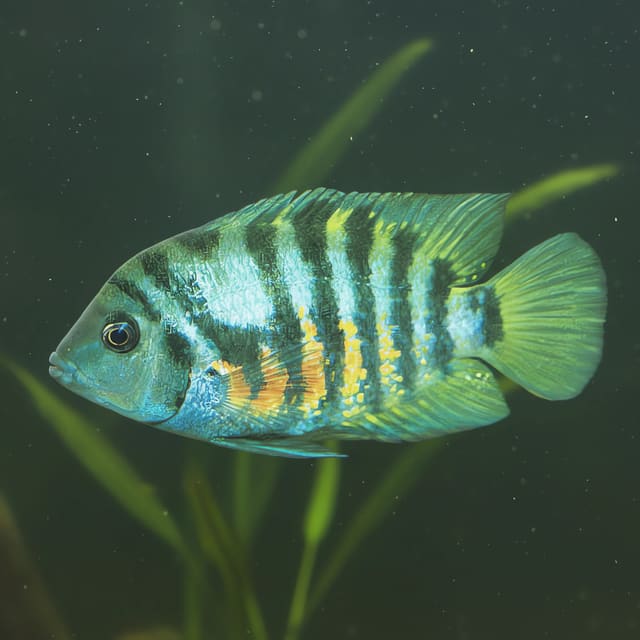
The expected fish is a laterally compressed, convict-type cichlid rather than the rounded short body of a Polar Blue Parrot. Adults may show a pearly blue or turquoise sheen, dark vertical bars or blotches, and orange-red accents around the belly, fins or caudal area. Juveniles can be plainer, and transport stress can mute colour temporarily.
The four size options describe approximate dispatch length only. A 6-8 cm fish is not automatically male, mature or more colourful. A 3-4 cm fish is not promised to develop the exact shade shown in an illustration. Sex cannot be guaranteed from the option label or the current gallery.
| What the selector or gallery can tell you | What it cannot promise |
|---|---|
| The selected approximate dispatch-size band | Adult sex, final length or maturity |
| The product's Honduran Red Point trade identity | Certified Rio Danli lineage or wild-caught status |
| Whether a live size option is currently available | A compatible social group |
| The quantity added to the basket | A male/female pair, bonded pair or breeding pair |
| An illustrative colour and body concept | The exact dispatched fish or a reliable identification photograph |
Use an aquarium of at least 200 litres and 120 cm in length as the conservative permanent starting point for an adult pair or social arrangement. A well-known expert article describes 100 litres and one metre as workable for the form, but the exact-form Nordic register recommends 200 litres and 120 cm. This retail guide uses the larger footprint because the fish is sold unsexed and individual aggression cannot be predicted.
A larger aquarium is required when other cichlids are present, when several Honduran Red Points are being grown on for eventual pairing, or when the layout cannot create independent territories. Litres alone are not enough. A tall narrow tank may hold the nominal volume while offering little horizontal separation, and an open aquascape may leave a chased fish nowhere to break contact.
Do not use quantity as a pairing formula. Two unsexed fish may be the same sex, may never bond and may injure one another. Several juveniles may coexist and then become incompatible as they mature. Have a cycled separation aquarium, secure divider or rehoming plan ready before conflict becomes an emergency.
The cichlid care guide explains territory and social planning in more detail. The aquarium water chemistry guide is useful before changing pH, GH or KH.
Keep the aquarium stable at about 23-26°C. Exact-form references span approximately 21-28°C, but the full published range is not a target for daily fluctuation. Use a dependable heater and an independent thermometer, and match replacement water carefully during maintenance.
A stable pH of 7.0-8.0 is a cautious practical target. Natural-habitat accounts describe alkaline yet relatively soft water, which is a useful warning against assuming that every Central American cichlid needs extremely hard water. Test the supply for pH, GH and KH before adding minerals or buffers. The goal is repeatable chemistry with adequate buffering, not a sudden correction to a number found online.
Ammonia and nitrite must remain at zero in a mature aquarium. Keep nitrate controlled relative to the source water and stocking load through measured feeding, appropriate biological filtration and regular water changes. Clear water is not proof that the biofilter can process waste.
Provide efficient filtration and continuous surface movement. Moderate current suits the stream-associated history, but the fish also needs sheltered areas away from a direct jet. Warm water holds less oxygen, and a crowded territorial aquarium can consume oxygen quickly. Keep an air pump or another emergency aeration option available.
| Test or observation | Target | Action if wrong |
|---|---|---|
| Temperature | Stable 23-26°C | Correct slowly and verify heater and thermometer agreement. |
| pH | Stable 7.0-8.0 | Check KH and source water; avoid a sudden chemical adjustment. |
| GH and KH | Measured, stable and suitable for a neutral-to-alkaline plan | Do not add salts or buffers without testing what is already present. |
| Ammonia | 0 mg/L | Protect oxygenation, stop adding livestock and investigate filtration immediately. |
| Nitrite | 0 mg/L | Treat as a filtration emergency and reduce stress while correcting the cause. |
| Nitrate | Low and controlled relative to the source | Review food, stocking, water changes and biological capacity. |
| Surface movement | Continuous gas exchange | Clear restrictions and add aeration if fish breathe rapidly or gather at the surface. |
Honduran Red Points are practical omnivores. Use a complete, correctly sized cichlid pellet or flake as the staple, then rotate suitable frozen foods such as brineshrimp, mysis, daphnia or mosquito larvae. Include foods with algae or plant material rather than feeding a permanently meat-heavy menu.
Offer small measured portions that are eaten promptly. A dominant fish may monopolise one feeding point, so watch whether every fish can approach food without crossing a defended territory. Spreading modest portions across more than one area can help, but uneaten food trapped behind rocks will still damage water quality.
Live feeder fish are unnecessary and can introduce disease, parasites or an unbalanced diet. Avoid mammalian meat and repeated rich meals. Colour-enhancing food cannot change sex, lineage or genetic pattern, and it should never be used as a substitute for clean water and reduced social stress.
Honduran Red Points are often described as more peaceful than common Convicts, but that comparison can be misunderstood. They are still cichlids that establish territories, choose spawning sites, dig and defend eggs or fry. A calm juvenile can become much more forceful after maturity or pairing.
A compatible established pair may share a territory, but two random fish are not automatically a pair. A rejected fish can be chased continuously and prevented from reaching food. Growing several juveniles can improve the chance of observing a natural pair, yet it also creates a later responsibility to remove the remaining fish safely.
Do not assume that adding target fish will solve aggression. Fast, robust dither or companion fish are sometimes used in large Central American setups, but they still need suitable water, adult space and safe routes. They must not be treated as disposable objects for a breeding pair to chase.
Rearranging the decor can reset territories, but it is not guaranteed to repair an incompatible relationship. Separate the fish before repeated harassment becomes injury. The welfare plan should exist before the fish arrives, not after aggression is already severe.
The safest starting point is a species-focused aquarium or a carefully planned Central American cichlid display with substantially more room than the minimum. Potential companions must share the same water, be large and robust enough for the social environment, and have protected feeding and retreat routes. Species names alone cannot guarantee individual compatibility.
Avoid small tetras, rasboras, guppies, timid gouramis, dwarf shrimp and other delicate animals expected to remain safe. Also avoid mixing Honduran Red Points casually with close Amatitlania or Cryptoheros forms. Similar fish can compete intensely and may hybridise, making the identity of any offspring uncertain.
Related listings are useful for comparing care, not as automatic tank-mate recommendations. You can compare the Topaz Cichlid, OB Convict Cichlid, Yellow Convict Cichlid and Zebra Convict Cichlid. Research the complete adult plan before combining any of them.
| Companion plan | Assessment | Conditions |
|---|---|---|
| Species-focused Honduran Red Point aquarium | Best starting direction | Allow adult territory, verify sexes over time and retain separation capacity. |
| Established compatible pair | Possible | Use a large structured aquarium and monitor both fish, especially around spawning. |
| Two random unsexed fish | Not a pair plan | They may be the same sex or incompatible; a second cycled space is essential. |
| Robust Central American cichlids | Possible only in a much larger aquarium | Match adult size and water, create separate territories and avoid lookalike relatives. |
| Other Amatitlania or Cryptoheros | Usually avoid | Aggression, competition and hybridisation are concerns. |
| Small or peaceful community fish | Unsuitable | They may be chased, stressed, outcompeted or eaten. |
| Shrimp and small invertebrates | Unsuitable as guaranteed companions | They may be hunted or harassed. |
Honduran Red Points are pair-forming substrate spawners. A compatible pair may clean a flat stone or protected cave surface, lay and fertilise eggs, and defend the site. Specialist accounts describe smaller broods than common Convicts, followed by active parental care of wrigglers and free-swimming fry.
Breeding behaviour can sharply increase territorial pressure. The pair may defend a larger area than expected and may turn against one another if the aquarium offers no escape. Provide more than one retreat, monitor feeding access and keep a mature separation option ready.
The phrase easy to breed can hide the difficult part. Responsible breeding includes forming a genuinely compatible pair, protecting both adults, maintaining water quality, avoiding hybridisation, feeding fry correctly and having space or homes for the offspring. This listing does not guarantee sex, fertility, pairing or a breeding result.
Healthy fish should become alert, balanced and responsive after settling. Watch breathing, appetite, posture, fins, skin and waste rather than relying on colour alone. A newly delivered fish may hide or appear pale, but persistent gasping, clamped fins, loss of balance, white spots, ulcers or refusal to eat needs prompt investigation.
Many apparent health problems begin with environment or social stress. Test ammonia, nitrite, nitrate, temperature and pH before choosing a medication. Check whether the fish can reach food and shelter without being attacked. Treating an aquarium blindly while leaving the cause in place can delay the correct response.
Quarantine new livestock where practical, using a cycled setup with compatible water and secure cover. Do not share wet equipment between aquariums without cleaning and drying it appropriately. Observe all fish after introductions because a new arrival can change the territorial balance even when no disease is present.
Do not order first and hope a new aquarium will cycle before dispatch. A calendar date does not prove filtration capacity, and bottled bacteria cannot replace testing. A resilient cichlid can still be harmed by ammonia, unstable temperature or immediate territorial attack.
Dim the aquarium lights and reduce activity around the tank before opening the parcel. Inspect the fish promptly and follow the current instructions supplied with the order. Do not leave a sealed transport bag floating for an extended period while temperature and water chemistry continue to change.
Use the guided acclimation timer alongside the current instructions. Avoid adding transport water to the aquarium. Release the fish near a prepared neutral refuge rather than directly into an established fish's defended cave, then observe breathing, balance and aggression from a distance.
Temporary hiding and muted colour are common after transport. Persistent gasping, loss of balance, visible injury or relentless attack is not something to wait out. Follow the Live Arrival Guarantee evidence process when relevant and separate any fish that cannot access shelter or food.
Select the dispatch-size band and quantity in the live buy box. Each quantity represents one unsexed fish of that selected size. The storefront may show a multi-fish quantity offer, but commercial wording does not identify sex and does not turn two fish into a breeding pair. Plan the aquarium and separation capacity first.
Eligible livestock orders are covered by our Live Arrival Guarantee when the current policy conditions and evidence steps are followed. First-time customers can use WELCOME10 for 10% off an eligible first order. Read the current terms before checkout; this listing does not promise a named courier, universal next-day service or a fixed delivery slot.
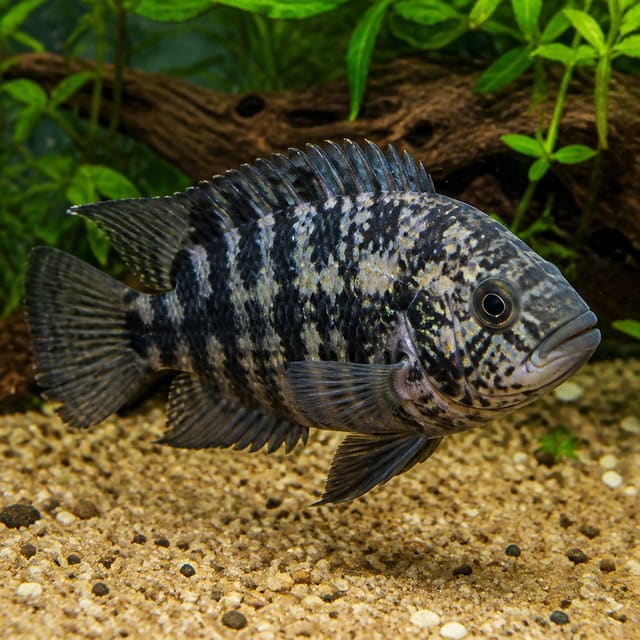
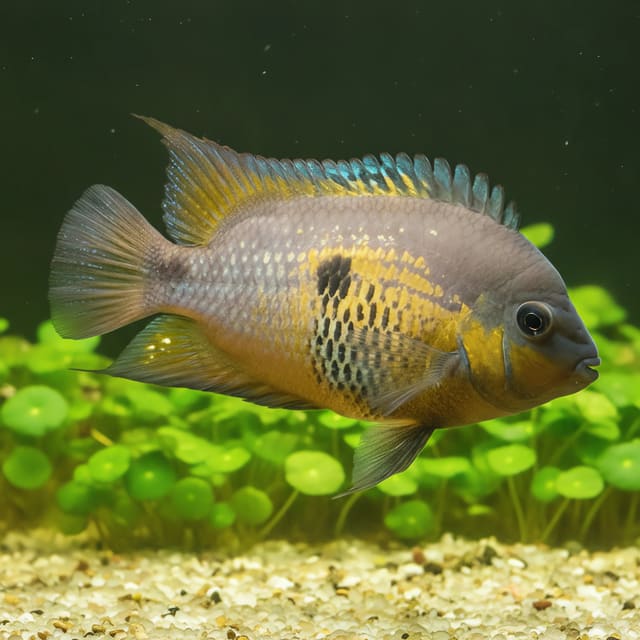
The existing customer-facing image is an illustrative aquarium representation rather than a verified photograph of the exact Honduran Red Point offered. It does not certify species, locality, lineage, sex or final adult colour. It should not be used to distinguish this fish from a Convict, Polar Blue Parrot or another Central American cichlid.
The careful listing name is Amatitlania sp. 'Honduran Red Point'. The older aquarium name Cryptoheros sp. 'Honduran Red Point' is still widely recognised. The fish is left at sp. level because the exact trade form is not treated here as a formally described species.
Not as a proven identity for every trade fish. The name A. siquia appears frequently online, but exact-form specialist guidance keeps the Rio Danli Honduran Red Point as Amatitlania sp. Taxonomic research also reports unresolved or imperfect species boundaries within the genus.
Blue Convict is used as an older or informal trade name for Honduran Red Point by some sellers. It is not a precise name for every blue convict-type fish. This listing is for the Honduran Red Point trade form, not a Polar Blue Parrot hybrid.
Published profiles commonly give about 10 cm, while an exact-form specialist register lists up to about 13 cm. Plan the permanent aquarium for 10-13 cm rather than assuming a juvenile dispatch size is close to adult size.
Use at least 200 litres and 120 cm of length for an adult pair or social arrangement. Choose a larger aquarium for tank mates, several growing fish or a complex layout. Horizontal territory and escape routes matter as much as volume.
A single specimen can be kept in a suitable planned aquarium, but its compatibility with tank mates still needs careful assessment. Do not add one to a small peaceful community simply because it is not forming a breeding territory.
No. Every size option is unsexed. Two fish may be the same sex, may never bond and may be incompatible. A purchase quantity, discount label or gallery image is not a sex or pair guarantee.
They are generally described as less aggressive than common Convicts, but they remain territorial cichlids and can become much more forceful when mature or breeding. Individual behaviour, aquarium length, layout and companions all matter.
A species-focused aquarium is the clearest starting point. Robust, appropriately sized Central American fish may work in a much larger structured aquarium, but peaceful community fish, shrimp and close lookalike relatives are poor default choices.
It is usually better to avoid the combination. The fish may compete strongly, and closely related convict-type cichlids can hybridise. If lineage matters, do not mix forms that cannot be identified reliably.
A stable 23-26°C and pH 7.0-8.0 are cautious practical targets. Test GH and KH as well, and avoid sudden chemical changes. Ammonia and nitrite must remain at zero.
Use a complete cichlid pellet or flake as the staple, with suitable frozen foods and some plant or algae content for variety. Feed measured portions and confirm that subordinate fish can reach food.
A compatible mature pair may spawn readily on a cleaned surface or inside a cave and then guard the eggs and fry. Responsible breeding is not automatic: the adults need space, the pair must remain compatible, and the keeper needs a plan for offspring and possible aggression.
No. The current image is illustrative and is not a verified specimen photograph. It does not promise the exact dispatched fish, sex, markings, locality or mature colour.
Eligible livestock orders are covered by the Tropical Fish Co Live Arrival Guarantee when the current policy conditions and evidence steps are followed. Read the delivery policy before checkout. This listing does not promise a named courier or universal next-day service.
This care profile was reviewed against an exact-form entry from the Nordic Cichlid Society species register, Central American cichlid expert Juan Miguel Artigas Azas's Honduran Red Point husbandry account, and Bagley and colleagues' peer-reviewed phylogeographic study of Amatitlania. The sources do not agree on every aquarium number, so the listing uses a cautious overlap for water and the larger specialist recommendation for permanent tank size.
Scientific names and aquarium advice can change as populations are studied and lineages are documented. The trade identity and our stock records are kept separate from claims that require collection data. That distinction makes the listing more useful to shoppers and search engines without manufacturing certainty.
No reviews for this item yet. Bought one? Honest reviews only, good or bad.
What customers say about ordering from us
I have a small group of long finned mountain minnows. So was delighted to be able to order ten of this variety to increase the genetics in my tank . The ones I recieved are healthy but it’s to early to give a verdict on wether they are of a long finned type since they are small currently.
Gordon Walker · 23 Sept 2026
100% success travel and "installation". Pleased with quality of purchase. The Siamese fighter a bit "shy" so have not yet seen him at his best yet but looking good. Happy customer. GG
George E Garratt · 21 Sept 2026
Reviews of our shop, collected by Judge.me, an independent third-party review collector. Newest first.