−15%
Easy
Electric Blue Acara (Andinoacara pulcher) – Neon Blue, 2–7cm Sizes
22–23°C · pH 6.5–8
£6.79£7.99

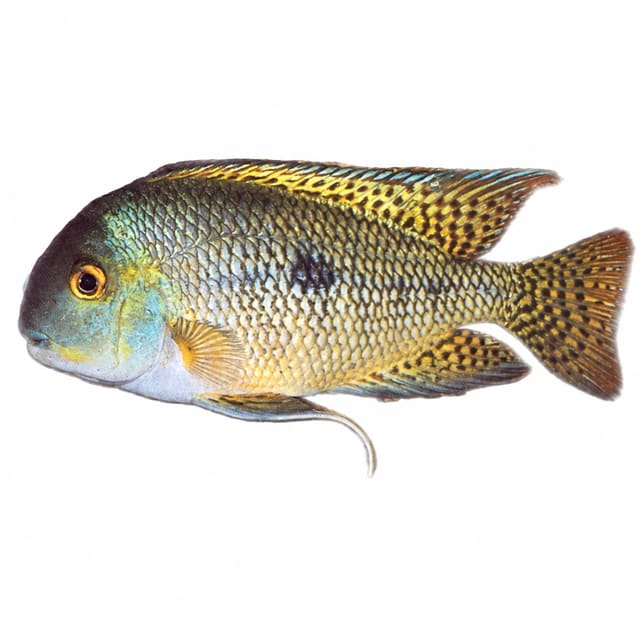
Zebra Convict Cichlid (Amatitlania nigrofasciata) is a bold Central American cichlid best chosen for a species-focused aquarium or a very large, carefully planned robust cichlid setup. It needs rock, wood and cave structure, a varied diet, and firm preparation for intense breeding territoriality.
Adult size is the maximum length this species reaches at full maturity (scientific sources). The livestock you receive will be younger and smaller — pick a size above for the actual shipping size. Product-photo provenance and any image-specific limitations are stated on the listing.
Amatitlania nigrofasciata
Save when buying multiple fish. Each quantity is one fish; sex and pair formation are not guaranteed unless the selected variant explicitly states them.
Zebra Convict Cichlid (Amatitlania nigrofasciata) is a bold Central American cichlid best chosen for a species-focused aquarium or a very large, carefully planned robust cichlid setup. It needs rock, wood and cave structure, a varied diet, and firm preparation for intense breeding territoriality.
Adult size is the maximum length this species reaches at full maturity (scientific sources). The livestock you receive will be younger and smaller — pick a size above for the actual shipping size. Product-photo provenance and any image-specific limitations are stated on the listing.
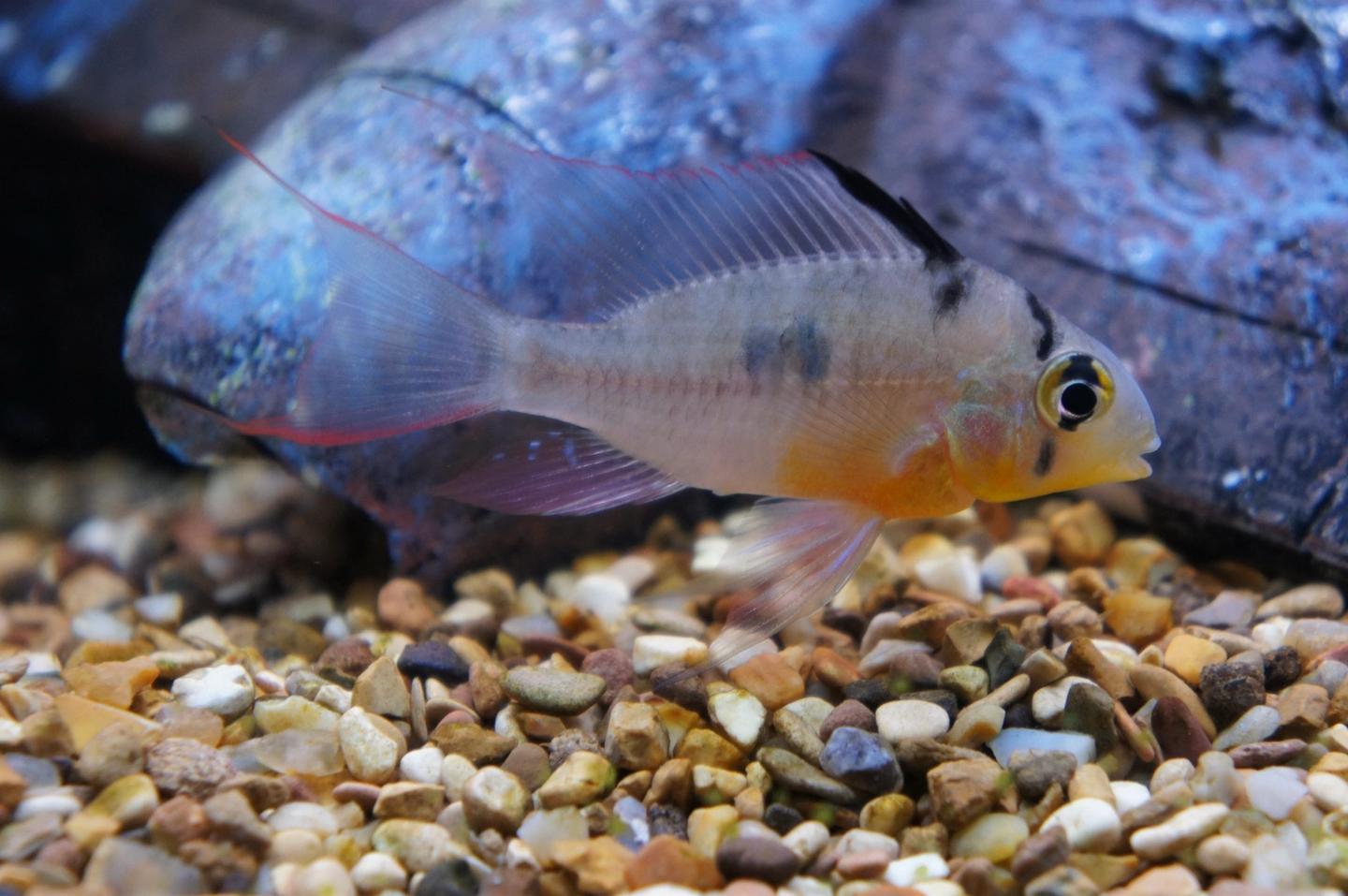
Cichlids are a family of roughly 1,800 accepted species, not one care type. Before buying, identify the exact species and source, then compare adult measurement, usable tank dimensions, social system, territory, tested water, diet and an exit plan. No family-wide minimum tank, water range or tank-mate list is safe.
Maintain these water conditions for optimal health and vibrant colors
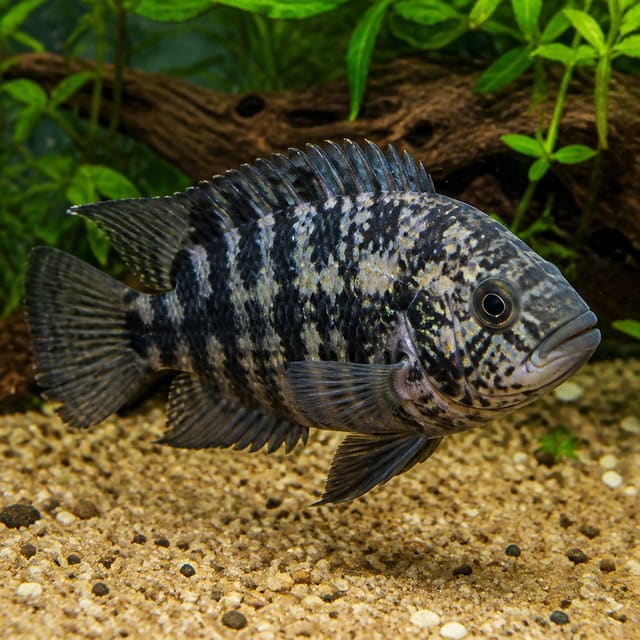
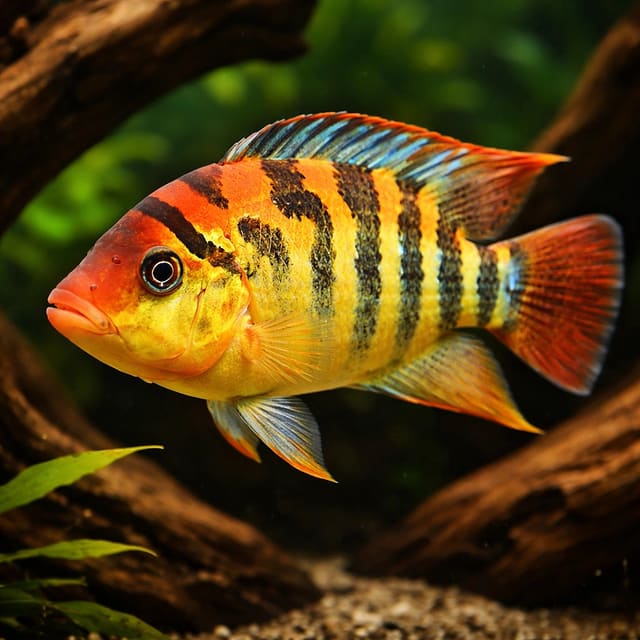
The Zebra Convict Cichlid (Amatitlania nigrofasciata) is a compact Central American cichlid with unmistakable dark vertical bars and an outsized territorial personality. It is engaging, alert and often highly interactive with its surroundings. The attraction is real cichlid behaviour: a fish that explores structure, claims a site and can display determined parental care. The same behaviour makes it a poor choice for an ordinary peaceful community.
This listing supplies one live fish in the chosen grade. The listed grades are 3–4 cm, 5–6 cm, 6–7 cm and XL. The size you select is the size supplied, not the adult size. The XL label is a shop grade rather than a new scientific length. A juvenile purchase must still be planned around the adult fish, its body depth and the territory that a settled or breeding pair may defend.
| Suits | A keeper who wants a species-focused cichlid aquarium and is prepared to manage territory, pairing and breeding aggression. |
|---|---|
| Not suited to | A small peaceful community, a tank of slow long-finned fish, or a layout with no spare space or separation plan. |
| Sold unit | One live fish per purchase, in the selected dispatch grade. |
| Adult planning | Plan conservatively for up to 15 cm standard length. |
FishBase lists 10 cm standard length, while Seriously Fish lists 15 cm standard length. Plan conservatively around 15 cm standard length so the aquarium still provides adequate turning room and territory as the fish matures.
Seriously Fish gives base dimensions of 90 × 30 cm or equivalent for one pair, and substantially more room for multiple pairs or other cichlids. That is more useful than turning dimensions into a litre claim. Footprint, cave placement and the ability to establish separate areas matter greatly because aggression is spatial: the fish does not defend an abstract water volume, it defends usable territory.
The best default is a species-focused aquarium prepared for one established pair. A very large, structured aquarium may allow robust Central American cichlids, but that is a specialist plan rather than a compatibility guarantee. A fish that seems manageable while young can become much more forceful when a pair forms. The keeper must have a practical way to separate surplus or targeted fish.
Rock, bogwood, roots and caves give the fish places to explore and potential spawning sites. Plants can be used, but the species digs and may uproot them. Build stable hardscape before the fish arrives, leave open swimming room, and protect the filter intake from displaced substrate. Compare other fish only after checking their adult behaviour, regional water needs and space requirements; another product is an alternative purchase, not automatically a tank mate.
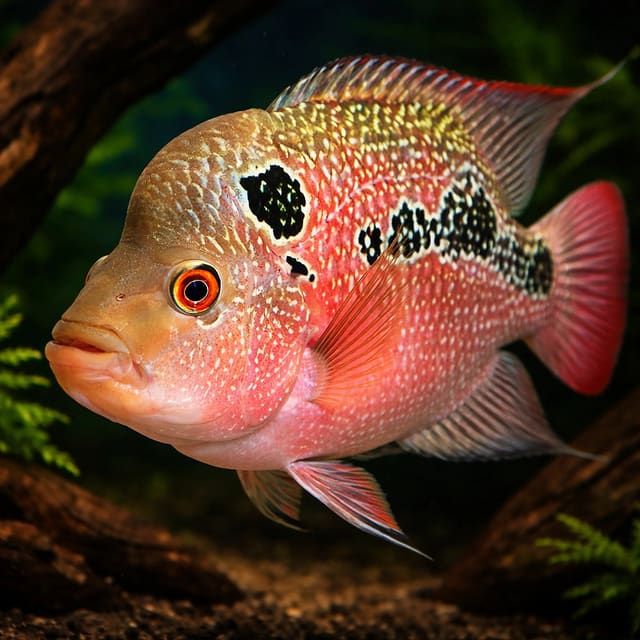
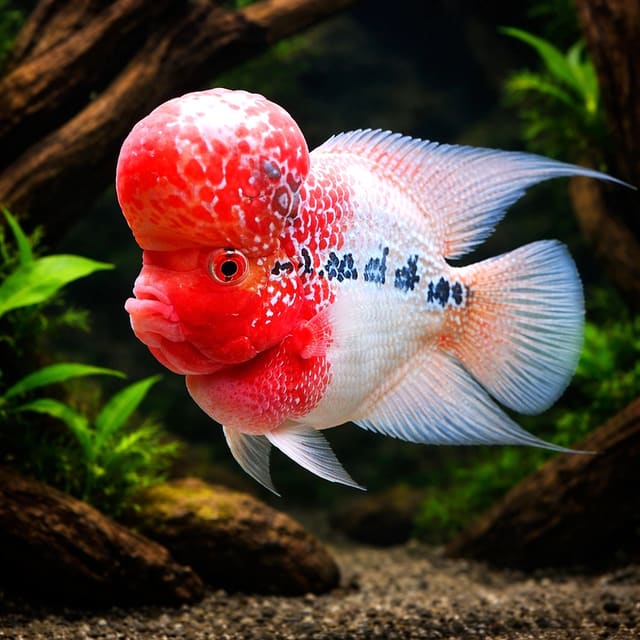
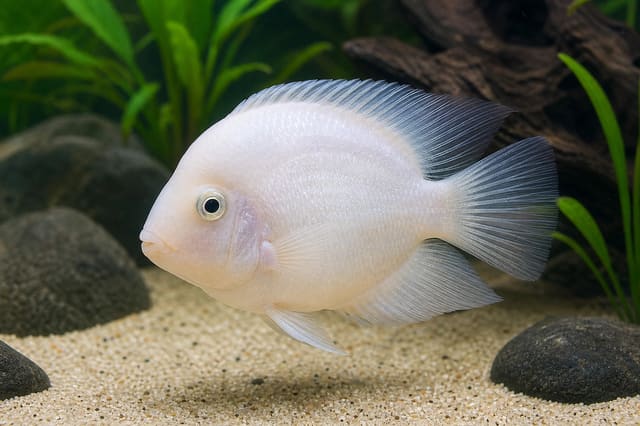
Sex is guaranteed only when the selected option explicitly states male or female. This Zebra Convict Cichlid listing has no sex-guaranteed option. Although mature fish may show sexual dimorphism, colour, fin shape or size cannot be used here as a promise about the fish supplied. Gallery images have been digitally enhanced to improve image quality. Natural colour, pattern, size and maturity can vary between live animals.
A convincing convict-cichlid aquarium works because the keeper plans for behaviour before colour. Start with the footprint and hardscape, then fit filtration, maintenance access and open swimming space around them. A pair needs a defensible cave or sheltered site, but the layout must not turn the entire aquarium into one unavoidable corridor through that site. Stable construction matters because these fish dig and can shift substrate around stones and ornaments.
Seriously Fish recommends 24–28°C, pH 6.0–8.0 and hardness 5–25 dGH for long-term aquarium care. Those species-level aquarium values are the appropriate routine target here. FishBase records wider wild environmental values of 20–36°C, pH 7.0–8.0 and 9–20 dH; those observations describe environments and are not an invitation to keep a home aquarium at extremes.
Choose a stable point within the species aquarium range that also suits any other animals present. Use a dependable heater and separate thermometer. Sudden shifts cause more practical difficulty than a well-chosen steady value. The water chemistry guide explains the common measurements, and the water matcher can help compare tested tap and tank water with the intended range.
Ammonia and nitrite should remain at zero. A mature biological filter is essential because cichlids are active feeders and waste can accumulate around hardscape. Test regularly and use partial water changes to control nitrate and dissolved waste. OATA's broad American-cichlid guidance recommends testing at least weekly and a weekly partial water change of 25%; adjust the routine to measured conditions without turning that general schedule into a substitute for observation.
Select a filter capable of keeping the aquarium clear and biologically stable without blasting the fish's chosen cave. Check intakes after digging because moved sand, leaves or debris can reduce flow. Position hardscape so it can be cleaned around, and leave access for a siphon. A dramatic rock display that traps waste in unreachable pockets creates avoidable water-quality work.
When the filter needs attention, do not rinse its media under the tap. Rinse suitable media lightly in water removed from the aquarium because tap-water chlorine or chloramine can damage the beneficial bacterial population. Treat replacement water with conditioner before adding it. Check temperature as well as chemistry after maintenance, especially when a larger water change is needed.
Observe breathing, posture, appetite and aggression during each routine. A fish sitting unusually at the surface, breathing faster, darkening, hiding more than usual or losing interest in food calls for immediate water tests and a check of filter flow. Behavioural change can also reflect social pressure, so inspect the whole aquarium rather than treating every symptom as a water problem.
Use rocks, bogwood and roots to create multiple potential sites. Clay flowerpots laid safely on their sides can serve as caves. Place heavy stones directly and securely so digging cannot undermine them. Avoid stacks that rely on loose substrate for support. The fish should be able to enter and leave a cave without becoming trapped, and the keeper should still be able to inspect the area.
Plants are possible, but Amatitlania nigrofasciata is an avid digger and may uproot rooted species. Plants attached to wood or rock are easier to protect than delicate stems in the substrate. Use planting for visual texture and cover, not as the only boundary between territories. Hardscape provides the dependable structure.
For a pair, create more than one potential spawning site before the fish arrives. This gives the animals choice and prevents all activity concentrating around a single ornament. In a specialist multi-cichlid aquarium, widely separated caves and large breaks between them are essential, but no arrangement removes the need to watch aggression and move fish when necessary.
The Zebra Convict Cichlid is an unfussy omnivore. FishBase records worms, crustaceans, insects, fish and plant matter in the diet, while Seriously Fish advises a varied aquarium diet. Use quality cichlid pellets or granules as the practical foundation and add appropriate frozen or freeze-dried foods for variety. Do not turn a natural-history list into an instruction to feed live fish.
OATA's general American-cichlid guidance suggests feeding only what the fish consume within a few minutes, once a day. Watch the individual and the aquarium rather than treating any schedule as permission to overfeed. Uneaten food and excess waste break down into toxic compounds, increasing the load on the filter and the frequency of corrective maintenance. The RSPCA's aquarium environment guidance also explains why a working biological filter is essential for processing fish waste.
Spread food so both fish in a pair can eat. A dominant animal may intercept everything at one point, especially when territory is active. Observe from a distance if the fish are wary of movement near the glass. Good body condition should be even rather than pinched, while persistent swelling or refusal to eat deserves investigation.
Both FishBase and Seriously Fish describe strong parental care. Eggs and fry can be defended vigorously by both parents. This is one of the species' most fascinating behaviours, but it changes the risk calculation for every other fish. A tank that appeared workable before spawning may become unsafe very quickly once a cave is selected.
Seriously Fish describes the species as easy to breed and notes that a group of juveniles may be grown on until a pair forms. That method requires a prepared destination for surplus fish. It is not enough to hope the unpaired fish will remain tolerated. In limited space, the male in particular may refuse other fish access to the territory.
Do not encourage breeding without a plan for fry. Convicts can be productive, and finding responsible homes may be difficult. The decision to provide a spawning site should include space, feeding, maintenance and future placement. Watching parental behaviour is rewarding only when the welfare of the adults, fry and any other stock is protected.
Complete the hardscape, test water and confirm the heater and filter before dispatch. If this is a first aquarium, work through the first tropical tank guide before livestock is ordered. Someone must be present to receive the live-fish parcel. Start a continuous unboxing video with the parcel still sealed, show the outer box opening and keep the fish visible inside the sealed bag before anything is disturbed; this preserves the evidence required for any Live Arrival Guarantee claim.
The delivery and Live Arrival Guarantee page carries the current policy and contact route. Keep lighting and room activity calm during introduction. Feeding can wait until the fish has recovered from transport and is holding itself normally.
Record water tests and maintenance, particularly in a newly stocked system. A written pattern makes it easier to see whether nitrate is rising faster, the filter is losing flow or feeding has increased. Review the pattern after a pair forms because territorial feeding and fry production can change both waste and access to food.
Check hardscape stability during maintenance without dismantling an occupied cave casually. Look for undermined stones, trapped debris and blocked routes. Replace or reposition unsafe items before they fail. The fish's digging is normal; the keeper's job is to make normal behaviour safe.
A correctly planned convict aquarium is not difficult because of delicate chemistry. It is demanding because the keeper must remain ahead of behaviour. Stable water, strong filtration and a varied diet are straightforward; managing territories, pair dynamics and surplus fish is the skill that determines whether the setup remains humane.
Base dimensions deserve deliberate attention. A long, shallow footprint can provide more usable territorial separation than a taller aquarium with the same nominal volume. Begin with a 90 × 30 cm base or equivalent for one pair, then add space when the layout, individual behaviour or presence of other cichlids requires it. Do not subtract hardscape from the calculation mentally: rocks and caves occupy room even while they make the remaining area more useful.
Walk through the layout from the fish's perspective. A pair should be able to reach its cave, feeding area and open water without every route passing beside a rival. The keeper needs a clear route for a net and siphon as well. If an injured or rejected fish could only be caught by collapsing the whole rock structure, the design is not ready for an aggressive cichlid.
Leave room for normal digging. A shallow depression near a cave may grow deeper during breeding activity. Stable rocks should remain stable even after nearby substrate moves. Check that ornaments have no narrow openings where a larger fish could become wedged, and keep heaters and intakes protected from direct impact.
Review the footprint as the fish approaches adult size. Planning around 15 cm standard length also affects turning room, cave diameter and the distance between territories. A layout suitable for a 3–4 cm juvenile should be treated as a starting arrangement, not a permanent guarantee.
Additions, removals and major décor changes can alter territorial boundaries. Make one considered change at a time, observe the pair and avoid adding new fish simply because the adults appear calm on a particular day. Breeding condition can transform behaviour rapidly, so a mixed setup needs spare capacity throughout its life.
After maintenance, confirm that each cave is still accessible and that rocks have not shifted. Watch both fish feed. One animal staying behind the heater, pressing into a top corner or refusing food while the other patrols is a social warning, even when no obvious wound is present.
If separation becomes necessary, act early. Move the threatened fish to a mature heated and filtered system, then reassess whether the pair or mixed community remains realistic. Returning the fish to the same unchanged territory often recreates the original problem.
Good planning allows the keeper to enjoy the species' confidence, digging and parental care without forcing other animals to absorb the cost. The aquarium should make normal behaviour safe, provide practical choices and support timely intervention.
Amatitlania nigrofasciata is not a general community fish. Seriously Fish describes it as aggressive and territorial, becoming particularly violent when breeding and willing to challenge fish several times its size. The correct starting point is therefore a species-focused aquarium, not a list of peaceful companions to try.
Plan for one established pair with the aquarium arranged around their territory. The phrase “one pair” does not mean that any two fish will coexist indefinitely. Pair formation and individual temperament require observation, and a rejected fish needs a safe alternative home. This listing does not sell a sexed pair and carries no sex guarantee.
A group of juveniles may be used by experienced breeders to allow a pair to form, but surplus specimens must be removed once territorial behaviour develops. That is a temporary pairing method, not a permanent group-size recommendation. Do not begin it without enough separation space and a realistic plan for every fish.
Seriously Fish allows robust Central American cichlids only in a very large tank. Treat this as a narrow specialist possibility, not a promise of compatibility. Each species needs a separate territory and an escape route that does not lead through the convict pair's cave. The keeper must be able to intervene before chasing becomes injury.
Small tetras, guppies, rasboras, peaceful dwarf cichlids, shrimp, slow fancy fish and long-finned animals are poor choices. Their size, pace or temperament gives them little defence against a determined pair. Toughness alone is not enough: another aggressive cichlid can create continual conflict rather than balance.
| Preferred plan | A dedicated aquarium for one established pair, with stable caves and open maintenance access. |
|---|---|
| Specialist possibility | Robust Central American cichlids in a very large, strongly structured aquarium with a removal plan. |
| Avoid | Small community fish, peaceful dwarf cichlids, shrimp, slow long-finned fish and any stock unable to escape a defended area. |
Intervene when one fish is pinned behind equipment, excluded from food, repeatedly chased across the whole aquarium, breathing hard without recovery or showing torn fins. Do not wait for a hierarchy to “settle” when an animal has no safe refuge. Territorial cichlids can escalate quickly around a spawning site.
Rearranging décor may interrupt a territory briefly, but it is not a substitute for adequate space or separation. A proper removal plan includes a cycled destination with heat and filtration, not a temporary unheated container. Nets and a partition should be accessible before they are urgently needed.
FishBase records approximately 100–150 eggs and vigorous care by both parents. Once eggs or fry are present, the defended radius can expand and previously tolerated fish may be attacked. This behaviour is normal for the species, but the consequences are the keeper's responsibility.
Even in a species-only pair tank, watch the relationship between the adults. Cooperation around one brood does not guarantee permanent harmony. Provide more than one shelter and enough room for one fish to retreat. If pursuit remains relentless, separate them.
Compatibility is therefore a continuing observation, not a decision made once at purchase. Review it after growth, a layout change, pair formation or spawning. The successful aquarium is the one that can adapt before normal cichlid behaviour becomes an emergency.
A stable pair still deserves separate feeding observations. Confirm that both animals leave cover, eat and return without prolonged pursuit. A fish that waits until every item is gone or remains pressed into a corner may be tolerating pressure rather than participating in a balanced pair.
Offer more than one cave even when the fish use only one. An unused shelter is valuable when the relationship changes, during maintenance or after spawning. Position it far enough away to function as a genuine retreat, and make sure the route to it remains open as substrate is moved.
Growth can alter a relationship that seemed settled as juveniles. Larger bodies require wider cave entrances and more turning room, while sexual maturity increases the significance of a chosen site. Reassess the whole footprint rather than assuming early harmony will continue unchanged.
Breeding success can also produce a stocking problem. Eggs and fry add feeding and filtration demand, and repeated broods require responsible future homes. Do not leave young fish in an increasingly crowded territory simply because the parents continue to guard them.
A keeper who cannot move one adult safely should reconsider keeping a pair. Prepared separation protects both fish and allows a calm decision about whether reintroduction is sensible. It is a normal part of responsible cichlid planning, not an admission that the aquarium has failed.
Plan this fish around a 15 cm standard-length adult, stable species-appropriate aquarium water and the store's current delivery policy. Wider wild environmental values are not routine home-aquarium targets.
FishBase lists 10 cm standard length, while Seriously Fish lists 15 cm standard length. Plan conservatively around 15 cm and remember that body depth, territory and behaviour matter as much as length.
Seriously Fish gives base dimensions of 90 × 30 cm or equivalent for one pair and substantially more space for multiple pairs or other cichlids. Floor dimensions and territorial structure are more useful than converting them into litres.
The species is usually planned as one established pair in a dedicated setup. A loose group of juveniles may form a pair, but surplus fish then need separating because territorial pressure rises sharply.
Its water care is adaptable, but its aggression makes it an advanced stocking choice. It suits a keeper prepared to build around territory, monitor pair dynamics and move fish if breeding behaviour makes the aquarium unsafe.
It is an unfussy omnivore. Use quality cichlid pellets or granules as the foundation and vary the diet with appropriate frozen or freeze-dried foods, feeding only what is consumed without leaving waste.
Seriously Fish recommends 24–28°C for long-term aquarium care, pH 6.0–8.0 and hardness 5–25 dGH. Keep values steady inside that species-level range rather than copying wider wild environmental extremes.
Yes, it is aggressive and territorial, with especially intense defence when breeding. Small, peaceful or slow long-finned fish are poor choices because a pair may attack animals much larger than itself.
A species-focused aquarium is the safest plan. Seriously Fish allows robust Central American cichlids only in a very large aquarium; even then, use separate territories and have a removal plan if aggression escalates.
Tropical Fish Co uses a licensed live-animal courier. Be present for delivery; for any Live Arrival Guarantee claim, record one continuous unboxing video from the sealed parcel to the fish still inside its bag and contact the shop the same day.
FishBase covers identity, maximum length, distribution and natural history. Seriously Fish covers aquarium dimensions, long-term water values, diet and behaviour. For wider maintenance guidance, see OATA's American cichlid care sheet and the RSPCA's aquarium environment guidance.
FishBase lists 10 cm standard length and Seriously Fish lists 15 cm standard length. Plan conservatively around 15 cm standard length. For long-term aquarium care, use the narrower 24–28°C range rather than wider wild environmental temperatures.
No reviews for this item yet. Bought one? Honest reviews only, good or bad.
What customers say about ordering from us
I have a small group of long finned mountain minnows. So was delighted to be able to order ten of this variety to increase the genetics in my tank . The ones I recieved are healthy but it’s to early to give a verdict on wether they are of a long finned type since they are small currently.
Gordon Walker · 23 Sept 2026
100% success travel and "installation". Pleased with quality of purchase. The Siamese fighter a bit "shy" so have not yet seen him at his best yet but looking good. Happy customer. GG
George E Garratt · 21 Sept 2026
Reviews of our shop, collected by Judge.me, an independent third-party review collector. Newest first.