Moderate
Firemouth Cichlid (Thorichthys meeki)
20–32°C · pH 6.5–8.5 · 108L
£5.39

The T-Bar Cichlid (Cichlasoma sajica) is a Central American cichlid from Costa Rica’s Pacific slope that reaches 9 cm standard length. It suits a prepared keeper planning one fish or a pair; keep 23–27°C and pH 7.0–8.0 as the FishBase and OATA overlap, and at least 15 dH from FishBase, with OATA’s 120-litre pair figure used as group guidance. Sold individually in 3 - 4 cm, 5 - 6 cm, 6 - 7 cm and XL dispatch sizes.
Adult size is the maximum length this species reaches at full maturity (scientific sources). The livestock you receive will be younger and smaller — pick a size above for the actual shipping size. Product-photo provenance and any image-specific limitations are stated on the listing.
Cichlasoma sajica
Save when buying multiple fish. Each quantity is one fish; sex and pair formation are not guaranteed unless the selected variant explicitly states them.
The T-Bar Cichlid (Cichlasoma sajica) is a Central American cichlid from Costa Rica’s Pacific slope that reaches 9 cm standard length. It suits a prepared keeper planning one fish or a pair; keep 23–27°C and pH 7.0–8.0 as the FishBase and OATA overlap, and at least 15 dH from FishBase, with OATA’s 120-litre pair figure used as group guidance. Sold individually in 3 - 4 cm, 5 - 6 cm, 6 - 7 cm and XL dispatch sizes.
Adult size is the maximum length this species reaches at full maturity (scientific sources). The livestock you receive will be younger and smaller — pick a size above for the actual shipping size. Product-photo provenance and any image-specific limitations are stated on the listing.
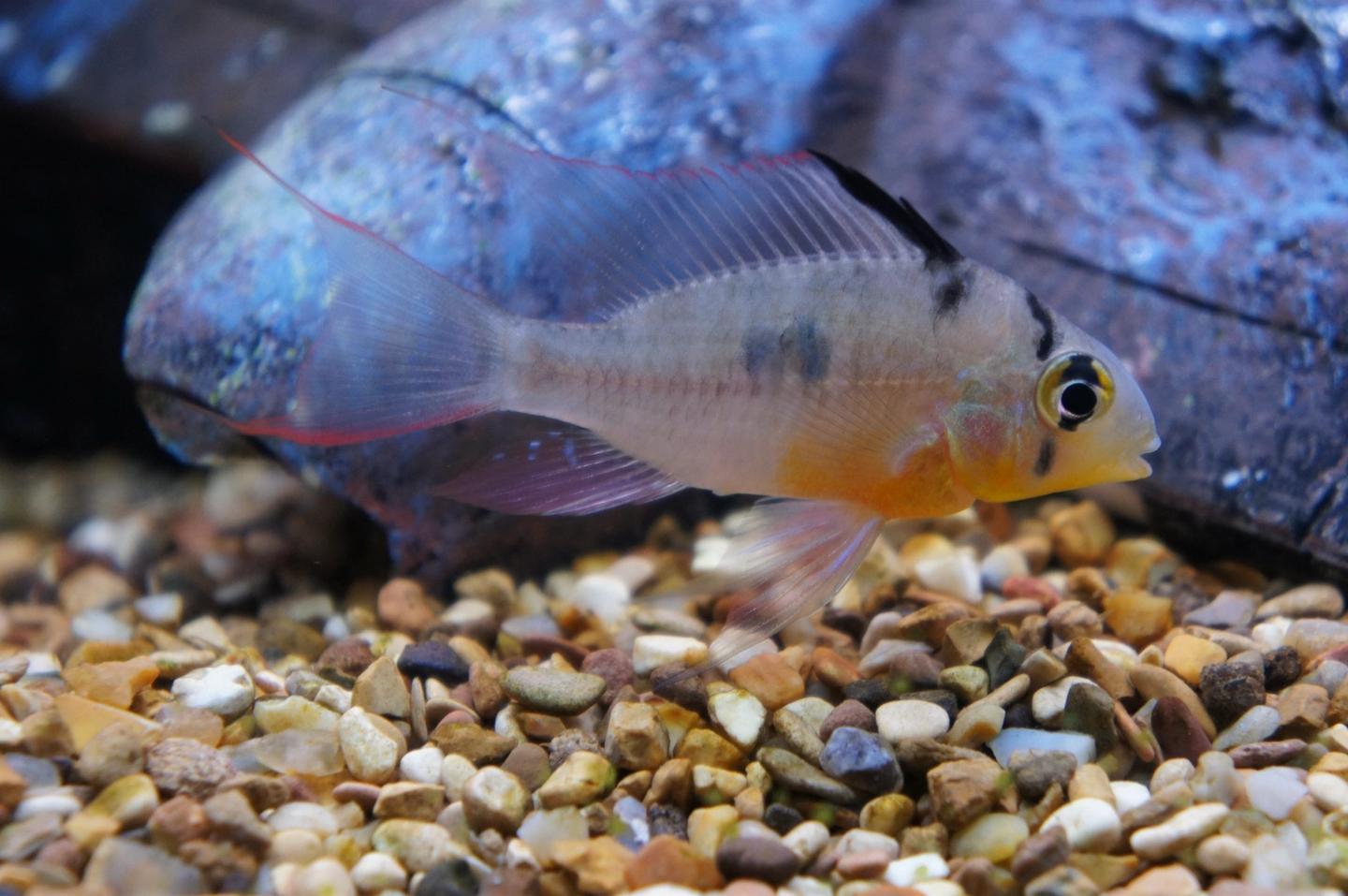
Cichlids are a family of roughly 1,800 accepted species, not one care type. Before buying, identify the exact species and source, then compare adult measurement, usable tank dimensions, social system, territory, tested water, diet and an exit plan. No family-wide minimum tank, water range or tank-mate list is safe.
Maintain these water conditions for optimal health and vibrant colors
The T-Bar Cichlid (Cichlasoma sajica) is a freshwater member of the cichlid family from the Pacific slope of Costa Rica in Central America. It inhabits streams, lakes, rivers and rivulets, and FishBase gives a maximum of 9 cm standard length. FishBase now lists it as Amatitlania sajica. This fish suits a prepared keeper who can provide hard tropical water, a mature filtered aquarium and deliberate compatibility planning rather than adding it casually to a mixed community.
Keep it at 23–27°C, pH 7.0–8.0 and at least 15 dH. The temperature and pH targets are the overlap between FishBase’s figures for the species and OATA’s American-cichlid guidance, which gives 22–27°C and pH 6.5–8.0 for the group. FishBase’s hardness figure begins at 15 dH, so use that species value instead of OATA’s softer 4–12 dH group band.
| Suits | Not suited to |
|---|---|
| A mature, filtered freshwater aquarium | An uncycled or unfiltered aquarium |
| Water held at 23–27°C and pH 7.0–8.0 | Soft water below the recorded 15 dH lower bound |
| Planning around one fish or a pair | Community stocking without a compatibility assessment |
| At least 120 litres when planning a pair | A pair housed below OATA’s smaller-cichlid baseline |
Plan the permanent aquarium around the 9 cm adult maximum. OATA recommends an aquarium of at least 120 litres for a pair of smaller American cichlids under 15 cm. Use that as a conservative pair-planning baseline and choose more space where other fish, territorial pressure or water stability make it sensible. Do not halve the pair figure automatically for one fish; adult size, usable space, filtration and the rest of the stocking plan still matter.
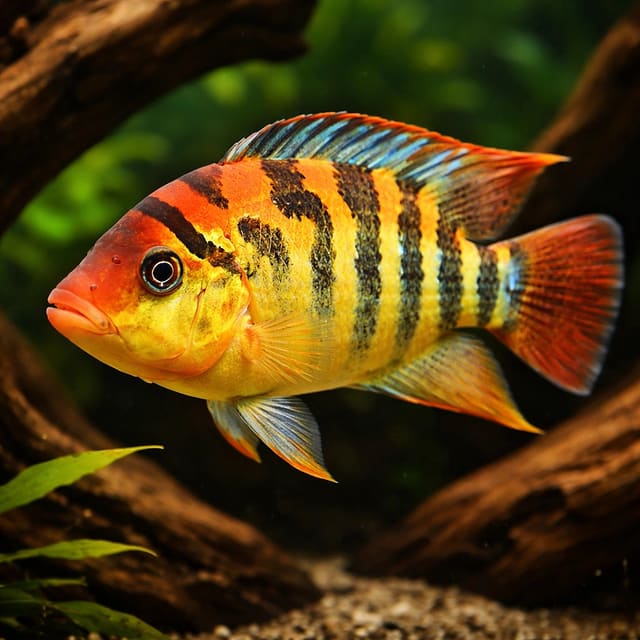
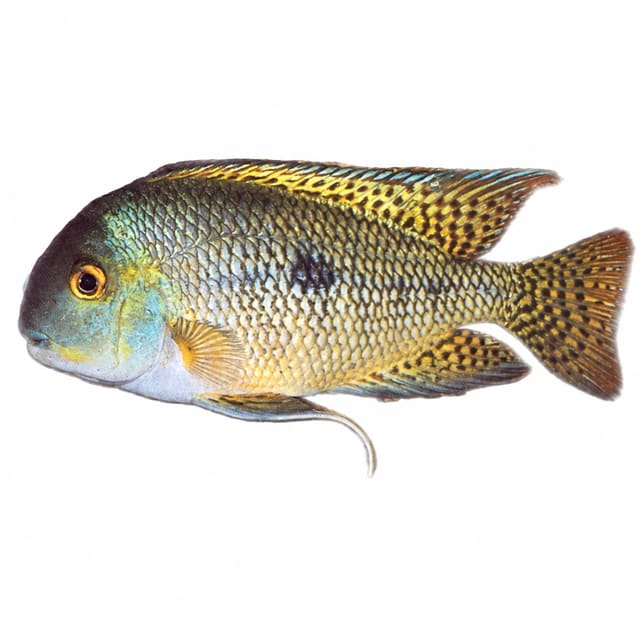
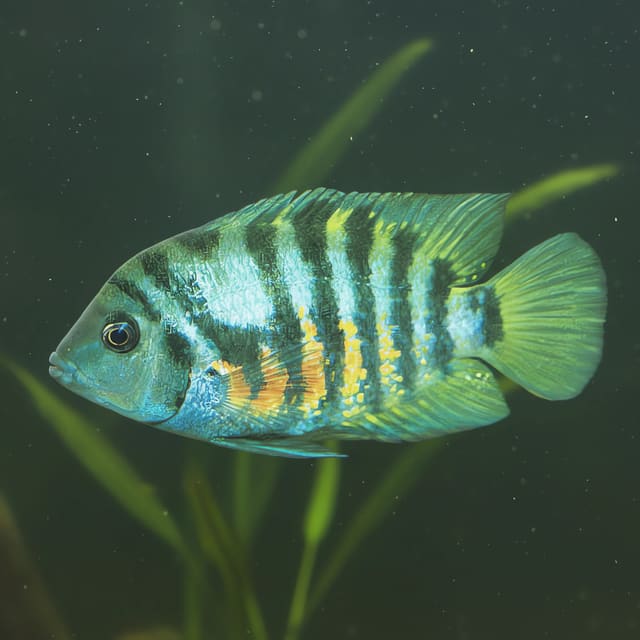
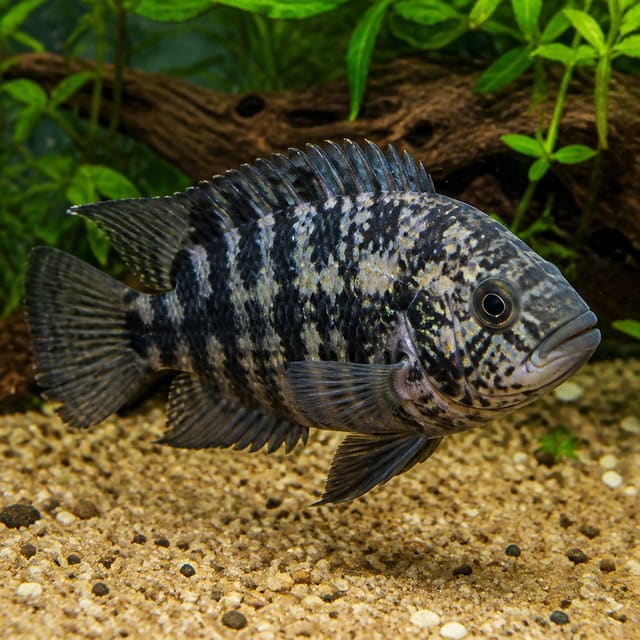
The T-shaped flank mark explains the common name. Wikipedia describes the Sajica cichlid as tan, with seven indistinct body bars. The third bar is usually the strongest and meets a dark horizontal stripe running from the gill cover, producing the characteristic T shape. These markings are more useful for understanding the name than for inferring sex, age or the exact appearance of an individual fish.
One purchase supplies one T-Bar Cichlid in the size chosen on the live selector. The labels are 3 - 4 cm, 5 - 6 cm, 6 - 7 cm and XL. The size you select is the size supplied, not the adult size. All dispatch labels describe the fish at dispatch; plan its permanent aquarium around the 9 cm adult reference.
Sex is guaranteed only when the selected option explicitly states male or female. This T-Bar Cichlid listing has no sex-guaranteed option.
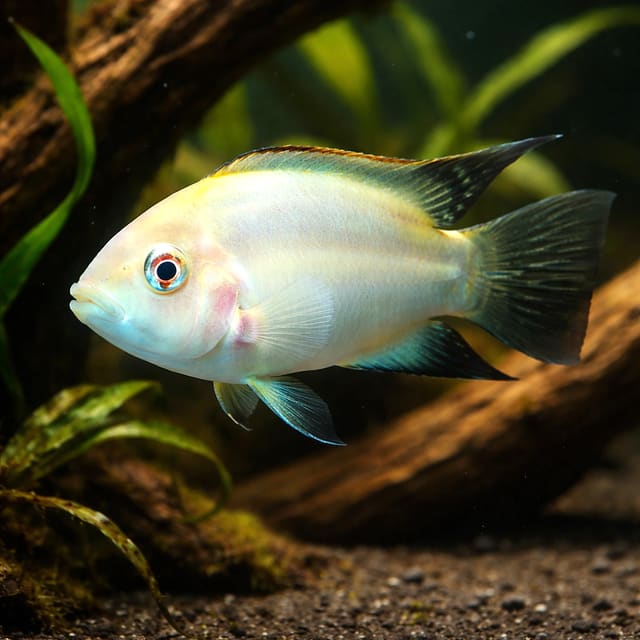
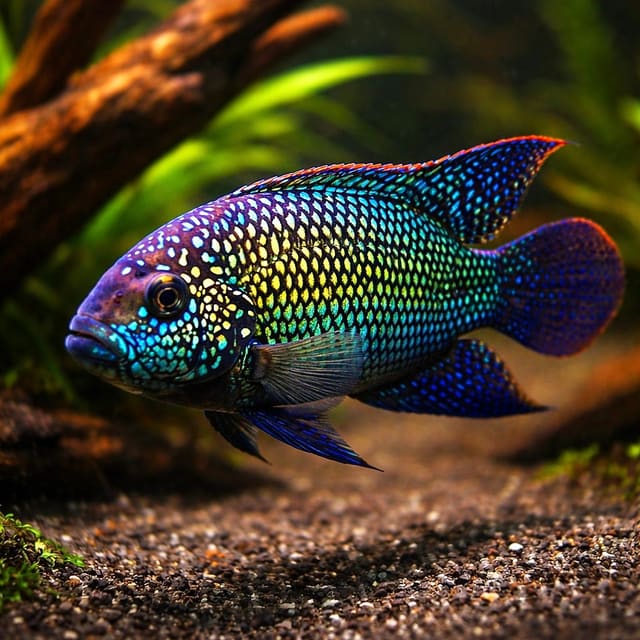
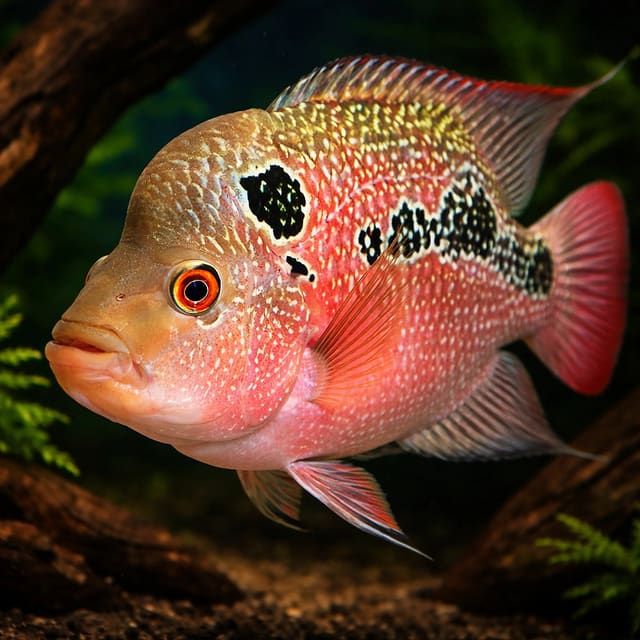
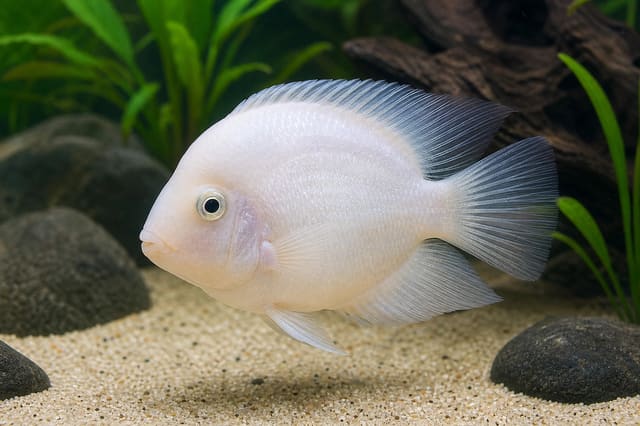
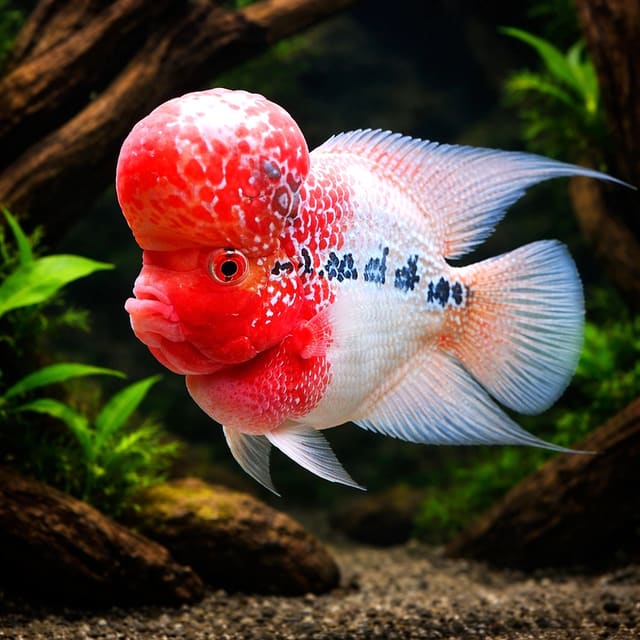
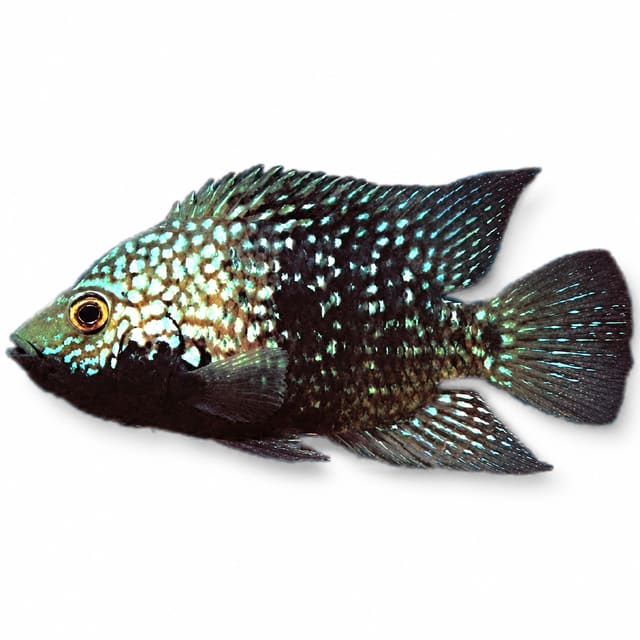
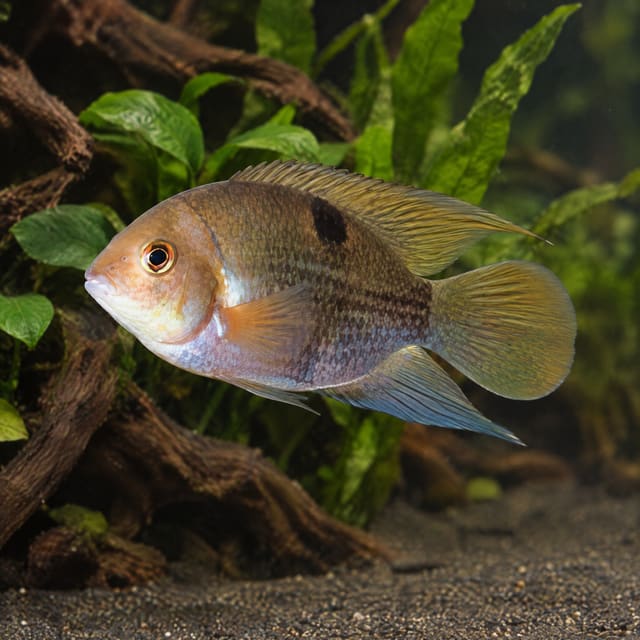
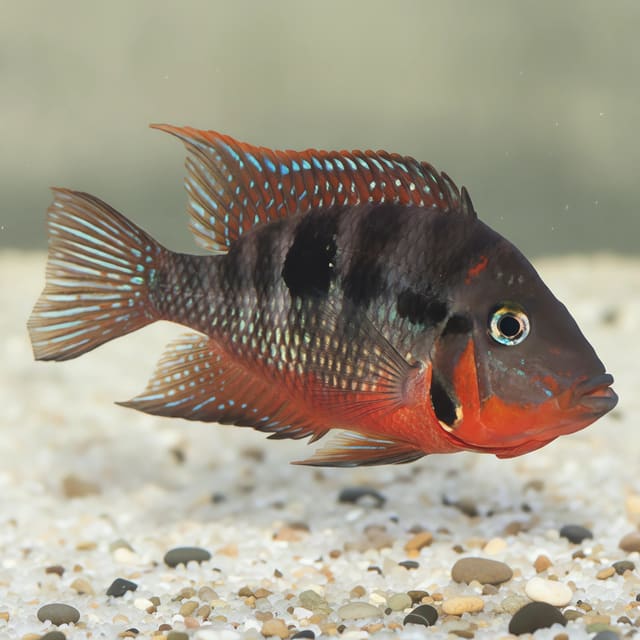
The gallery images are representative, based on reference photographs of this species, so colours can look slightly different from the live animal.
This is a Central American species, even where our navigation lists it among South American cichlids. Its native range is the Pacific slope of Costa Rica, and its freshwater habitat and water requirements should guide the setup rather than a broad retail category name.
Keep the aquarium at 23–27°C and pH 7.0–8.0. These are the practical overlaps between the species figures and the American-cichlid group range. For general hardness, use at least 15 dH: the species figure begins at 15 dH, while the group’s 4–12 dH band does not overlap it. Keep ammonia and nitrite at zero, and keep nitrate no more than 20 mg per litre above the normal level in your tap water.
| Value | Instruction |
|---|---|
| Temperature | Keep 23–27°C |
| pH | Keep 7.0–8.0 |
| General hardness | Keep at least 15 dH |
| Ammonia | Maintain 0 mg/l |
| Nitrite | Maintain 0 mg/l |
| Nitrate | Keep within 20 mg/l above tap-water level |
Test the aquarium rather than relying on how clear the water looks. Temperature, pH and hardness determine whether the basic environment fits this fish, while ammonia, nitrite and nitrate show how effectively the aquarium is processing waste. Our water chemistry guide explains what each measurement means, and the water matcher lets you compare measured values with the targets above.
A worked check is straightforward. Water at 25°C and pH 7.4 falls inside both routine ranges. If its general hardness is 16 dH, it also meets the recorded lower bound. The same aquarium at 10 dH misses that hardness instruction even though 10 dH sits within OATA’s softer American-cichlid band; use the species figure for this decision.
Choose an aquarium volume, heater and filtration plan that can hold these values consistently. A larger aquarium generally changes more slowly than a smaller one, which gives the keeper more time to detect a developing problem. Test at least weekly and compare results with the previous readings. A trend away from zero ammonia or nitrite deserves attention even before the fish shows a visible change.
Do not use pH alone as shorthand for suitable water. A tank can sit at pH 7.5 while remaining too soft, or it can meet hardness and still have unsafe nitrogen waste. Make the stocking decision only after checking the complete set of temperature, pH, hardness, ammonia and nitrite values.
Use a mature, filtered aquarium before adding this fish. The RSPCA explains that a working biological filter supports beneficial bacteria that convert toxic ammonia to nitrite and then to safer nitrate. OATA likewise requires a filter for every American-cichlid aquarium and advises confirming zero ammonia and zero nitrite before fish are introduced.
For a pair, start with at least 120 litres. That is OATA’s planning figure for a pair of smaller American cichlids under 15 cm. The T-Bar Cichlid reaches 9 cm standard length, but volume is not just a calculation based on body length: the aquarium must also provide stable water, usable swimming room, cover and enough capacity for the planned biological load.
When keeping one fish, choose a properly filtered aquarium around the adult 9 cm reference, stable water and the complete stocking plan. The 120-litre figure belongs to pair planning and should not simply be cut in half. Existing inhabitants still consume space and filtration capacity, and a cichlid’s use of the aquarium cannot be represented by litres alone.
For a pair, the same logic works in the other direction: 120 litres is a starting minimum, not a reason to stop considering layout or other occupants. More total space can improve environmental stability, but it does not remove the need to assess temperament. Decide on the full stocking plan before relying on extra volume as the answer to every compatibility question.
Use fine aquarium gravel or sand as the base. OATA recommends these substrates because many American cichlids dig or sift while feeding or breeding. FishBase places the wild T-Bar Cichlid around smaller rocks and gravel in rivers and rivulets, so a rock-led layout also reflects the surfaces this species uses naturally.
The wild fish inhabits moderate to strong currents but is not found in rapids. Let that natural history inform a layout with unobstructed water movement around rocks without turning the whole aquarium into rapid-like flow. Set the filter for effective waste processing and observe how the fish uses the resulting flow and space.
A cave or crevice has a clear biological purpose because FishBase describes spawning on sloping or vertical surfaces within such sites. Providing one does not guarantee a pair, spawning or successful rearing. It gives the fish a relevant sheltered structure while also adding visual cover to the aquarium.
Inspect the layout whenever substrate has shifted. Restore access around filter intakes and make sure waste is not accumulating behind inaccessible structures. If live planting repeatedly fails because it is disturbed, use secure artificial cover rather than continually resetting loose plants. The goal is a stable aquarium that still accommodates digging and routine cleaning.
Feed a specialised cichlid pellet or granule as the routine food, and supplement it with frozen or freeze-dried items. FishBase describes the wild diet as omnivorous and names algal filaments, aquatic insects, seeds and bottom detritus. OATA says specialised cichlid pellets or granules should be supplemented with frozen or freeze-dried items, and names daphnia, brine shrimp and bloodworm as items smaller species appreciate.
Offer only what the fish can finish within a few minutes, once a day. This portion rule matters more than filling the aquarium with a fixed number of pellets because food size and appetite vary. Watch the fish eat, stop adding food when interest falls, and remove uneaten material instead of allowing it to break down.
| Decision | What to do |
|---|---|
| Main food | Use a specialised cichlid pellet or granule |
| Variety | Supplement with frozen or freeze-dried items |
| Portion | Give only what is eaten within a few minutes |
| Frequency | Feed once daily |
Match the particle size to the individual fish’s mouth rather than assuming that one food size suits every dispatch grade. A smaller fish needs a form it can take cleanly; the XL label remains a dispatch description, not a licence to increase the number of daily feeds. Keep the same once-daily portion rule and judge the amount by what is actually eaten.
Stay present for the feed. Reduced intake or a lack of interest in food is one of OATA’s warning signs, while excess food creates a separate water-quality risk. Overfeeding produces more faeces and leaves food to decay, adding toxic waste that the filter must process.
If food remains after the normal feeding window, remove it and review the next portion before offering more. Also test ammonia and nitrite if appetite changes, because feeding behaviour and water quality should be considered together. Do not respond to reduced appetite by repeatedly adding different foods; first check the fish’s condition, behaviour and measured water values.
Change 25% of the aquarium water at least once every week. Use a siphon to remove solid waste from the substrate, treat replacement tap water with conditioner to remove chlorine or chloramine, and test the water at least weekly. The targets remain zero ammonia, zero nitrite and nitrate no more than 20 mg per litre above the normal tap-water level.
Tap water can contain chlorine or chloramine that harms the beneficial bacteria in filter media. Rinsing the media in the water removed during a partial change reduces bacterial loss while allowing loose debris to be cleared. Do not replace routine media care with aggressive washing that strips the biological filter.
| What you find | Immediate priority |
|---|---|
| Ammonia above zero | Review waste, feeding and filter function |
| Nitrite above zero | Check biological filtration and recent stocking |
| Rising nitrate | Review water changes, waste removal and feeding |
| Blocked filter | Clear the blockage without tap-rinsing the media |
The nitrate target is relative to the normal level in the tap water. If tap water already contains nitrate, compare the aquarium result with that baseline instead of treating 20 mg per litre as an absolute reading. Consistent records make that comparison clearer and show whether the gap is widening.
Maintenance also provides a weekly chance to inspect caves, rockwork and substrate movement. Restore safe access around the filter and siphon points without repeatedly dismantling the whole habitat. A stable routine protects both the fish and the bacterial population on which the aquarium depends.
Tropical Fish Co hand-bags fish in pure oxygen, uses an insulated poly box and adds a heat pack when the weather calls for it. Transport is handled through a tracked courier licensed to carry live animals.
The current delivery and Live Arrival Guarantee policy explains tracking, receipt, acclimatisation and the unboxing video required for a claim.
OATA advises confirming that ammonia and nitrite are zero before introducing fish. Have the mature aquarium ready with the planned temperature, pH and hardness, then continue the established weekly testing routine after introduction.
OATA advises adding fish slowly because the beneficial bacterial population must increase as stocking and feeding rise. Do not combine the arrival with several other livestock additions simply because the aquarium was previously mature.
Use the first observations to establish what is normal for that individual. Note swimming position, breathing, colour, appetite and hiding without turning one brief behaviour into a diagnosis. The useful comparison is whether those features change alongside water-test results.
If this fish is part of a wider stocking plan, complete the compatibility assessment before arrival. A larger aquarium and a mature filter address space and waste processing, but neither one establishes that unrelated fish will tolerate each other. Prepare a separation plan before trying a mixed cichlid arrangement.
Plan around a maximum of 9 cm standard length. Measure progress without treating rapid growth as the goal: stable water, appropriate feeding and body condition matter more than trying to reach a number quickly. The maximum is a planning reference for the identified species, not a promise that every individual will reach exactly the same length.
OATA recommends watching for changes in swimming, colour, temperament, breathing, physical appearance, body condition and feeding. Establishing the individual’s normal behaviour makes those changes easier to recognise.
When a change appears, test temperature, pH, ammonia, nitrite and nitrate first and inspect the filter for blockages. Water measurements turn a vague concern into a practical first check. If the fish remains abnormal or you are concerned about its health, contact us for further guidance rather than guessing at a treatment.
FishBase describes spawning in caves or crevices, with a preference for attaching eggs to an oblique or vertical surface. It reports around 200 offspring and notes that the young feed on the parents’ dermal mucus. These details explain why sheltered surfaces are relevant in the layout, but they are not a sexing method and do not change the offer’s sex disclosure.
Keep routine husbandry steady if reproductive behaviour changes how the fish uses its cave or surrounding space. Continue testing and watch the behaviour of every occupant. A sudden increase in hiding or aggression belongs in the same welfare assessment as breathing, feeding and water quality.
Use one fish or a pair as the starting plan. OATA says most American cichlids do better singly or in pairs, and warns that mixing American cichlids can be difficult because they vary in both size and temperament. Treat a community as a separate compatibility decision, not as the automatic next step after choosing a large aquarium.
| Check | Decision rule |
|---|---|
| Water | Every occupant must fit 23–27°C, pH 7.0–8.0 and at least 15 dH |
| Adult size | Compare mature dimensions, not dispatch sizes |
| Temperament | Plan for variation and monitor aggression or hiding |
| Space | Allow for the full stocking plan, cover and filtration load |
Judge temperament from the individual fish, the proposed companion and the aquarium together. American-cichlid temperament varies, and the practical answer depends on the individual fish, the proposed companion and the aquarium. After any introduction, check companions for damaged fins and increased hiding.
Use at least 120 litres as the OATA baseline for a pair of smaller American cichlids. Provide caves, cover and clear routes through the aquarium, then continue watching for changes in aggression and hiding. A pair plan describes the intended social arrangement; it does not guarantee that any two unsexed fish will form or remain compatible.
For one fish, do not fill the remaining space automatically with unrelated livestock. First calculate the combined biological load, check that every animal fits the water range and consider how each one uses the available cover. Filtration controls waste, but it cannot settle behavioural conflict.
For a mixed plan, contact us with the aquarium volume, measured water values and the common or scientific names of all intended occupants. That allows a stocking and compatibility assessment based on the actual combination rather than a generic tank-mate list.
Compatibility remains conditional. OATA names angelfish and severums as calmer American cichlids that may be combined with larger shoaling species in a robust community, but that example is not an automatic recommendation for a T-Bar Cichlid. It illustrates why the temperament of the exact cichlid must be considered before borrowing a community plan from another species.
Suppose a proposed companion fits 25°C but requires pH below 7.0. The temperature matches, yet the water plan fails because the T-Bar Cichlid target begins at pH 7.0. A different fish might match the temperature and pH but require soft water; that also fails against the instruction to use at least 15 dH. Complete every water check before comparing behaviour.
Next compare adult size and temperament. Use mature dimensions rather than the size seen in a shop or selector, and make sure the aquarium has enough space for the complete stocking plan. OATA says the more aggressive American cichlids must be kept alone or with equally aggressive cichlids, so a shared cichlid family label does not settle compatibility.
| If you find | What to do |
|---|---|
| A water-range mismatch | Do not combine the animals in that aquarium |
| An uncertain temperament match | Plan conservatively and prepare separation |
| Increasing aggression or hiding | Reassess stocking, space and water immediately |
| All checks align | Introduce gradually and continue close observation |
Run these checks for fish and invertebrates alike. Its wild diet includes aquatic insects, so screen any invertebrate companion as carefully as a fish. Base the decision on the exact proposed animal, its adult size, behaviour and water needs.
When comparing other species in our South American cichlid collection, treat the collection as a browsing route rather than a compatibility list. Compare each profile independently and remember that the T-Bar Cichlid itself comes from Central America.
Before mixing cichlids, decide how you would separate them if aggression rises. Continue watching swimming, hiding, breathing and feeding after introduction. A combination that passes the planning checks still needs observation because individual behaviour can change.
It reaches a maximum of 9 cm standard length according to FishBase. Use 9 cm as the adult planning figure rather than a dispatch-size label.
OATA’s American-cichlid guidance gives at least 120 litres for a pair of smaller species; use that as the pair-planning baseline with a mature filter.
OATA says most American cichlids do better singly or in pairs. Plan one fish or a pair, then assess compatibility separately before adding companions.
Plan it as a fish for a prepared keeper: it needs water of at least 15 dH, a mature filtered aquarium, weekly testing and a compatibility assessment before any companion is added.
Feed specialised cichlid pellets or granules once daily, supplemented with frozen or freeze-dried daphnia, brine shrimp or bloodworm. Give only what it eats within a few minutes.
Keep it at 23–27°C and pH 7.0–8.0, the overlap between FishBase’s species figures and OATA’s group guidance. Use general hardness of at least 15 dH from FishBase.
Treat aggression as a compatibility risk and check companions for damaged fins. OATA says American-cichlid temperaments vary and some may be very aggressive; monitor aggression and hiding.
OATA names larger shoaling fish as possible companions for calmer American cichlids, but that example is not an automatic match here. Compare adult size, water and temperament first.
Start a short continuous unboxing video before opening every parcel, showing it sealed, being opened and the fish still in the bag; keep this video for any Live Arrival Guarantee claim. Tropical Fish Co packs the fish in pure oxygen inside an insulated box, with a heat pack when needed, and uses a tracked licensed live-animal courier. Have someone at the delivery address to receive it, float the bag for 20–30 minutes and release without pouring bag water into the aquarium.
No reviews for this item yet. Bought one? Honest reviews only, good or bad.
What customers say about ordering from us
I have a small group of long finned mountain minnows. So was delighted to be able to order ten of this variety to increase the genetics in my tank . The ones I recieved are healthy but it’s to early to give a verdict on wether they are of a long finned type since they are small currently.
Gordon Walker · 23 Sept 2026
100% success travel and "installation". Pleased with quality of purchase. The Siamese fighter a bit "shy" so have not yet seen him at his best yet but looking good. Happy customer. GG
George E Garratt · 21 Sept 2026
Reviews of our shop, collected by Judge.me, an independent third-party review collector. Newest first.