Easy
Electric Blue Acara (Andinoacara pulcher) – Neon Blue, 2–7cm Sizes
22–23°C · pH 6.5–8
£6.19

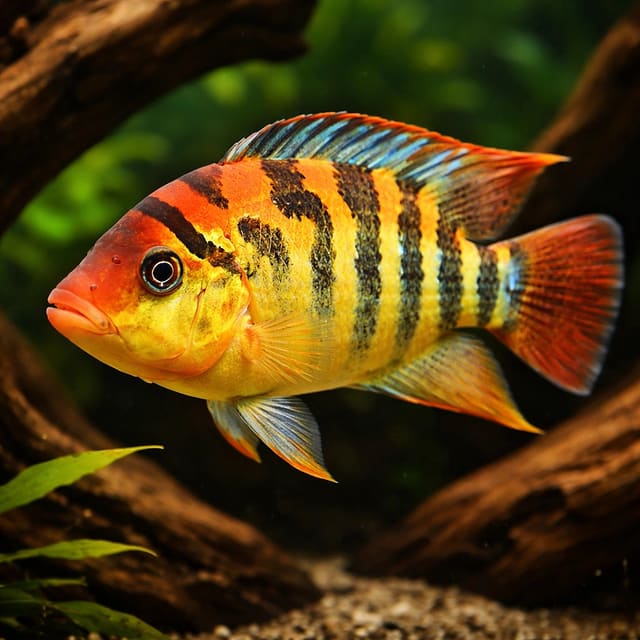
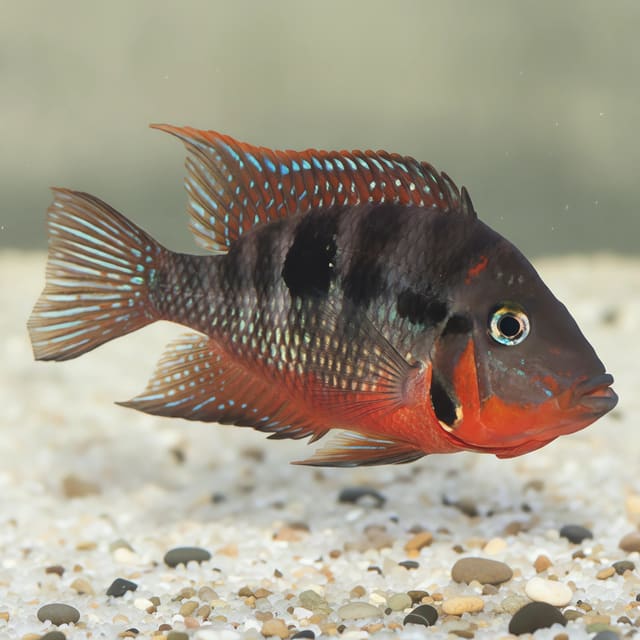
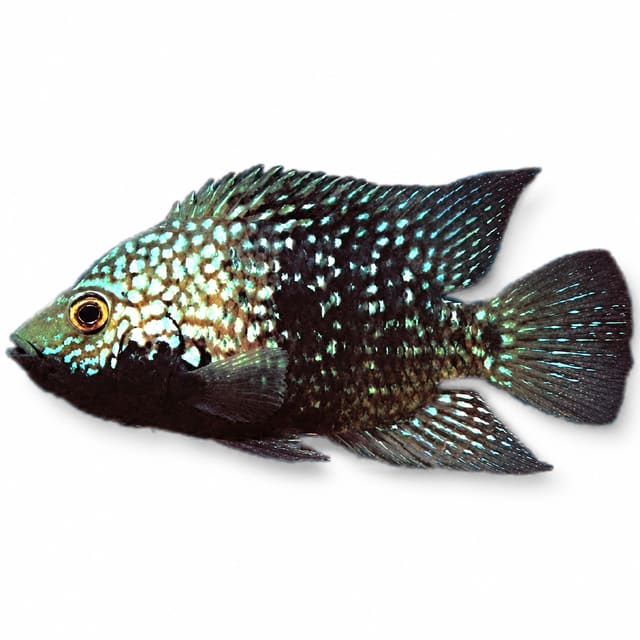
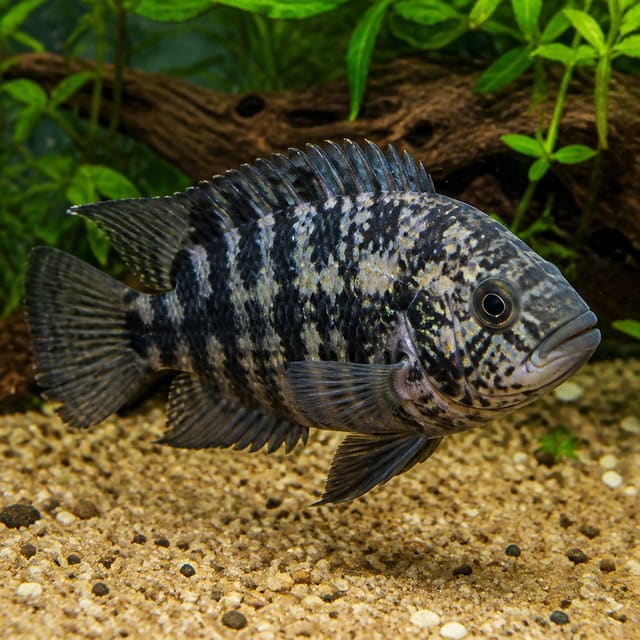
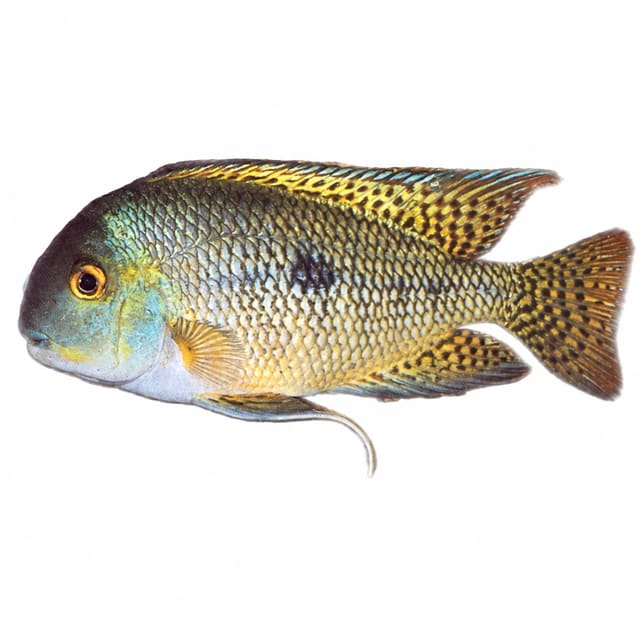
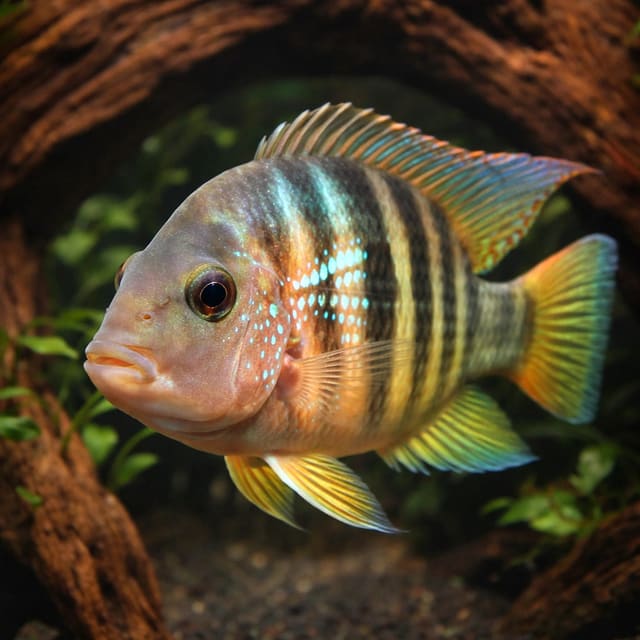
Salvini Cichlid (Trichromis salvini) is a territorial Central American cichlid for experienced keepers planning a large, mature, strongly filtered aquarium with structured cover and carefully chosen companions.
Adult size is the maximum length this species reaches at full maturity (scientific sources). The livestock you receive will be younger and smaller — pick a size above for the actual shipping size. Product-photo provenance and any image-specific limitations are stated on the listing.
Trichromis salvini
Save when buying multiple fish. Each quantity is one fish; sex and pair formation are not guaranteed unless the selected variant explicitly states them.
Salvini Cichlid (Trichromis salvini) is a territorial Central American cichlid for experienced keepers planning a large, mature, strongly filtered aquarium with structured cover and carefully chosen companions.
Adult size is the maximum length this species reaches at full maturity (scientific sources). The livestock you receive will be younger and smaller — pick a size above for the actual shipping size. Product-photo provenance and any image-specific limitations are stated on the listing.
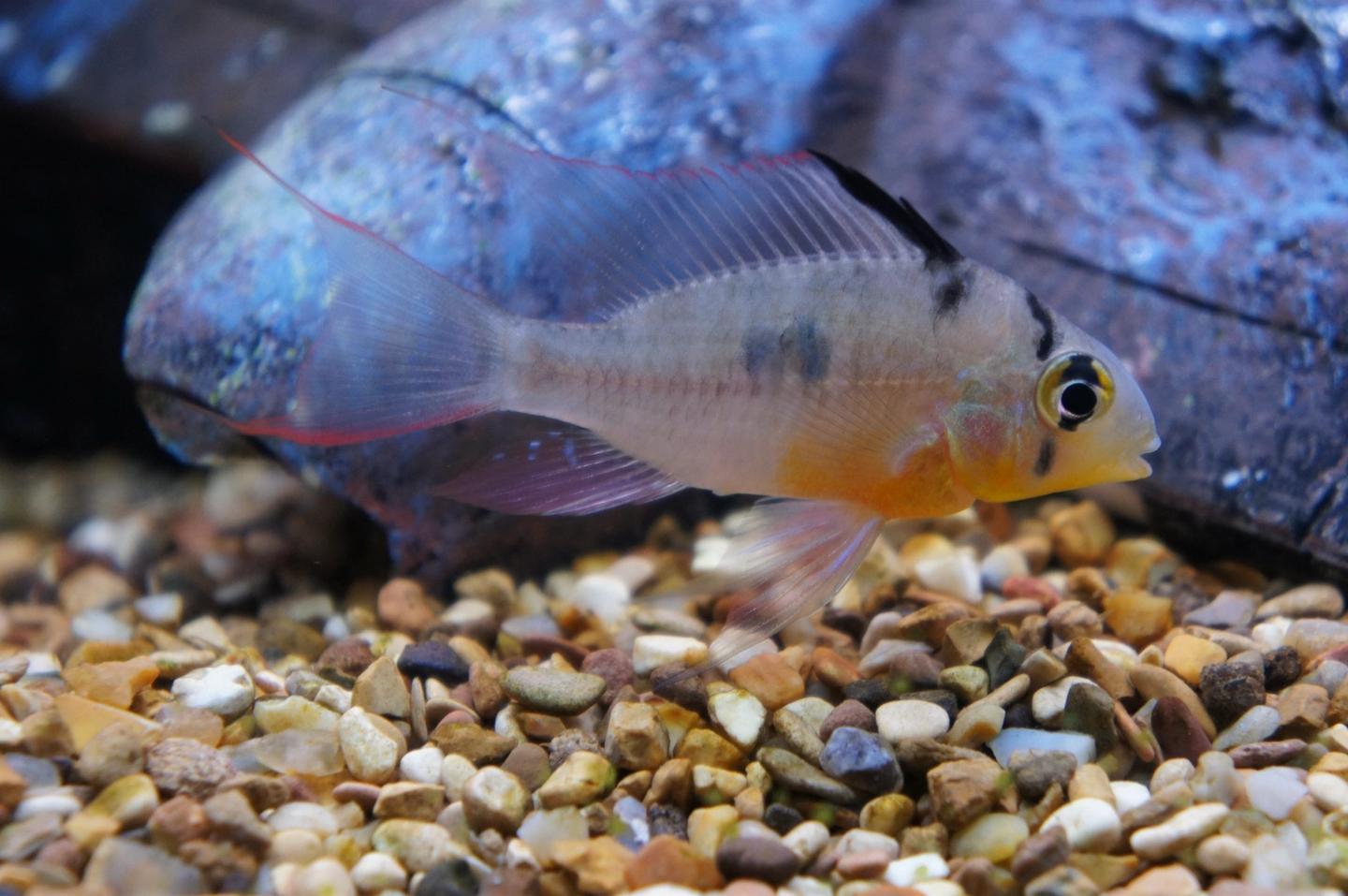
Cichlids are a family of roughly 1,800 accepted species, not one care type. Before buying, identify the exact species and source, then compare adult measurement, usable tank dimensions, social system, territory, tested water, diet and an exit plan. No family-wide minimum tank, water range or tank-mate list is safe.
Maintain these water conditions for optimal health and vibrant colors
Salvini Cichlid (Trichromis salvini) is a powerful-looking Central American cichlid for a keeper who wants one characterful fish to plan around, rather than a peaceful addition to an ordinary mixed community. One purchase supplies one live animal in the size chosen. The dispatch grades are 4–5 cm, 5–6 cm, 6–7 cm and XL; the live size control shows which can be selected at the time of ordering. The size you select is the size supplied, not the adult size.
The accepted name is Trichromis salvini. FishBase places the species in freshwater on the Atlantic slope from southern Mexico through Guatemala to Belize, while a general natural-history account also uses the names Salvin's cichlid, yellow-belly cichlid and tricolored cichlid. Its recorded maximum is 22 cm standard length, so even a small dispatch grade must be planned as a substantial adult. Treat that maximum as a firm warning against choosing the aquarium around the juvenile that first arrives.
| Identity | Salvini Cichlid, Trichromis salvini |
|---|---|
| What one purchase supplies | One live fish in the size chosen |
| Dispatch grades | 4–5 cm, 5–6 cm, 6–7 cm and XL |
| Recorded maximum | 22 cm standard length |
| Suits | Experienced cichlid keepers with a large, mature aquarium |
| Store care level | Advanced, principally because of adult scale and territorial compatibility |
| Broad aquarium range | 22–27°C; pH 7.0–8.0; 5–12 dGH, with source scope explained below |
The species comes from lower and middle river valleys and FishBase describes a preference for moderate to fast-flowing water. It feeds naturally on macro-invertebrates and small fishes. Those details help explain why a mature Salvini should not be treated like a small, slow community cichlid: it is built to move, feed decisively and use territory. They do not, by themselves, prescribe a particular pump setting, commercial food or stocking recipe. The practical aquarium plan below combines the species record with clearly labelled UK group care.
A buyer should begin with adult footprint, filtration and an exit plan for aggression. The useful question is not simply whether another fish is also called a cichlid, but whether both animals can share water conditions, feeding access and physical space once fully grown. A larger aquarium creates more room for separate shelters, yet volume alone cannot make an unsuitable combination safe.
The centimetre labels describe the fish at dispatch. XL is a shop grade rather than a scientific adult-length statement. None of the size labels promises male or female. Sex is guaranteed only when the selected option explicitly states male or female. This Salvini Cichlid listing has no sex-guaranteed option.
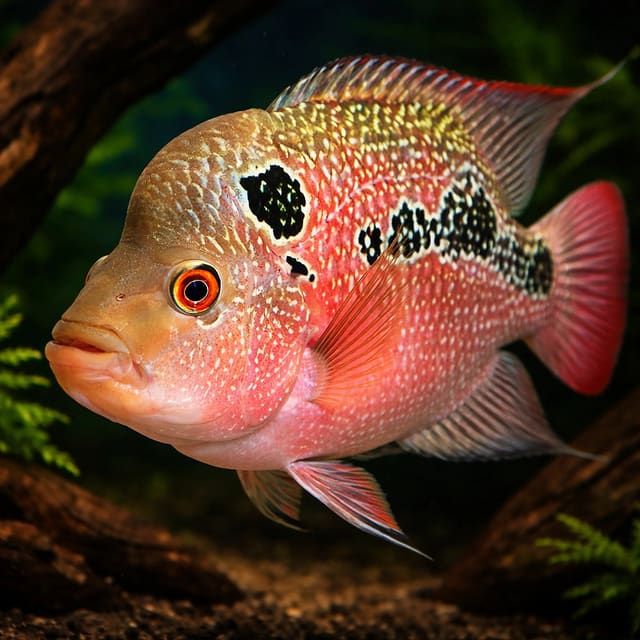
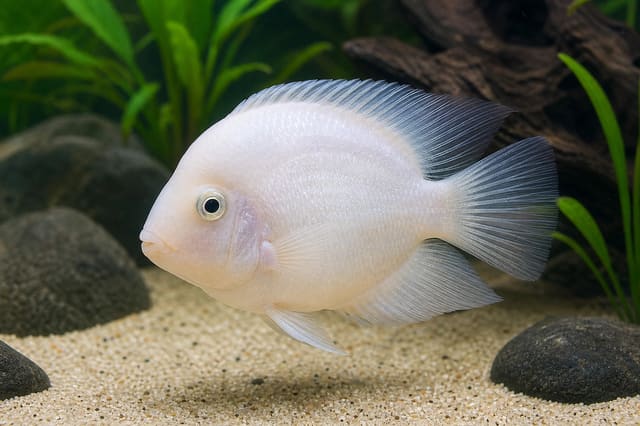
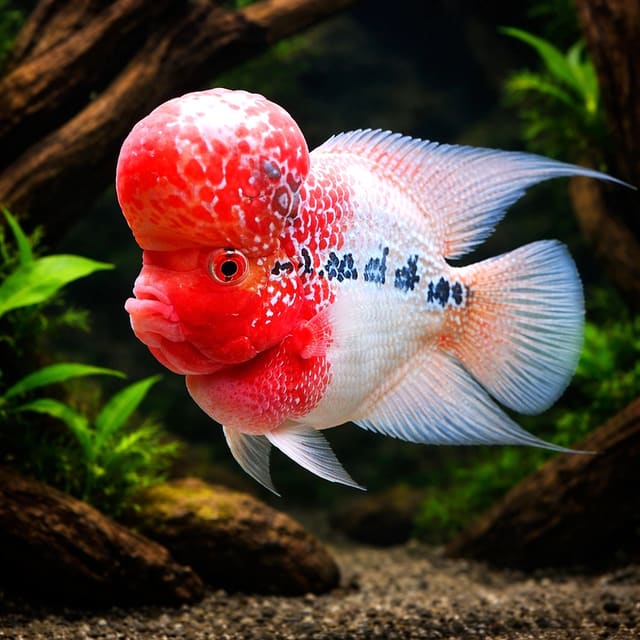
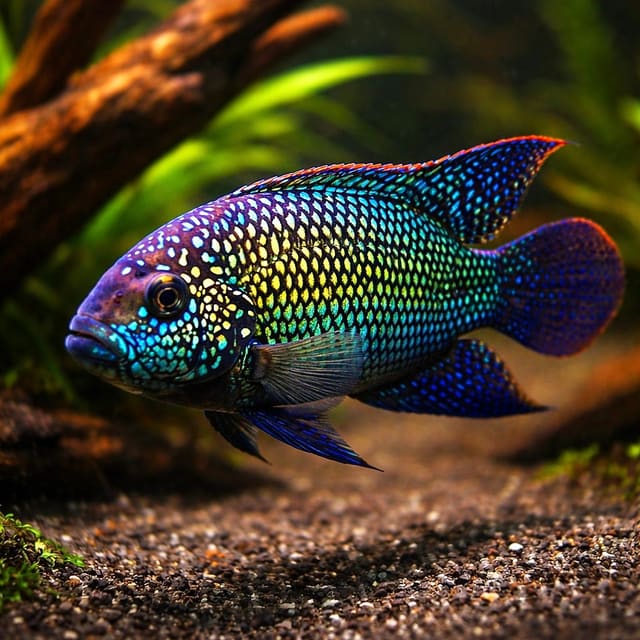
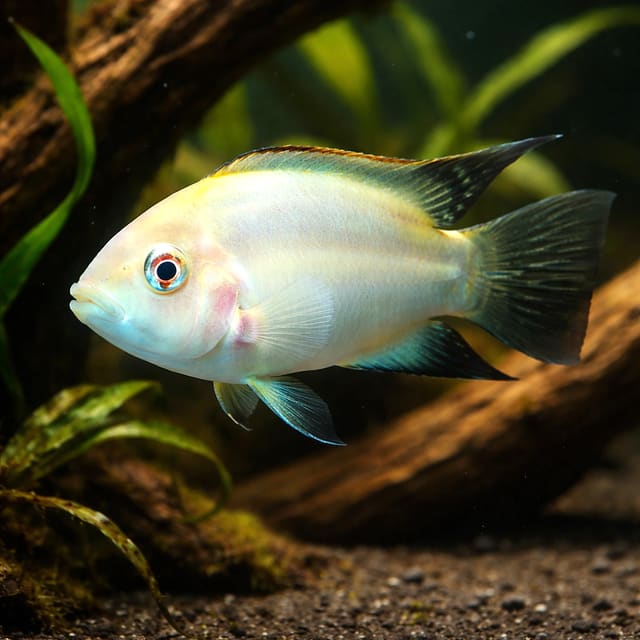
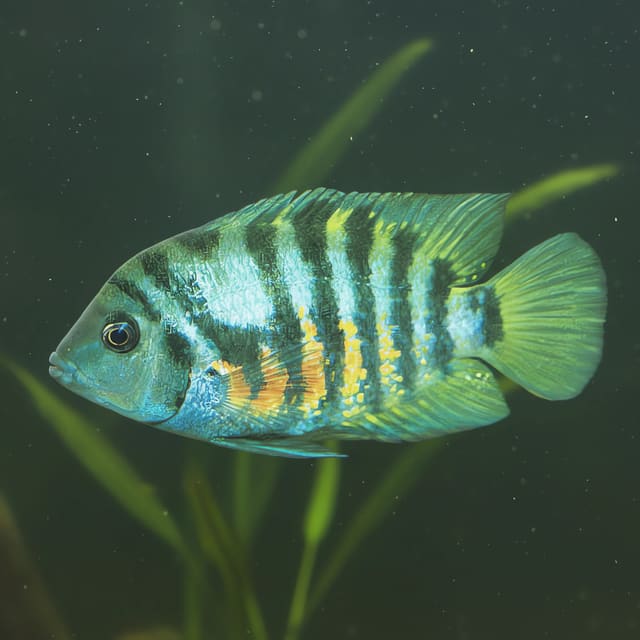
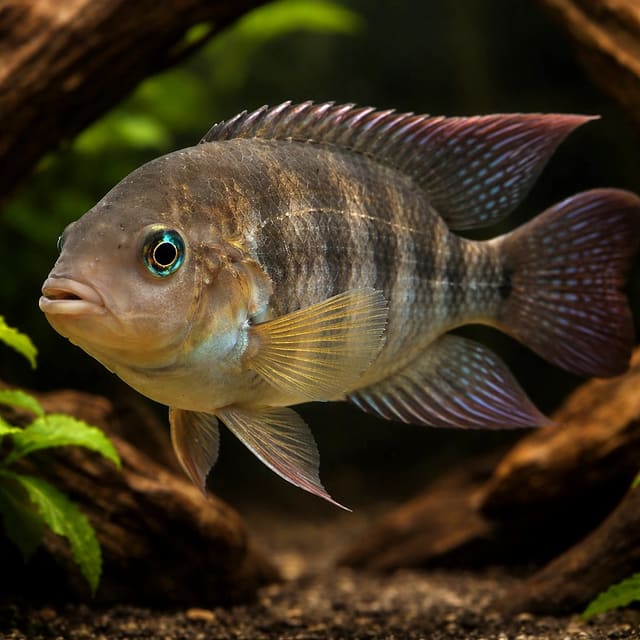
Colour, markings and maturity can differ between individuals and change as a fish develops. Gallery images have been digitally enhanced to improve image quality. Natural colour, pattern, size and maturity can vary between live animals. Choose by the written identity and dispatch grade, allowing for ordinary variation between individuals.
The 22 cm SL record puts Trichromis salvini in the larger end of the American-cichlid planning spectrum. The OATA American cichlid care sheet gives at least 300 litres for larger or more aggressive species over 15 cm. That figure is broad group guidance rather than a species-tested minimum, but it is the most responsible planning baseline in the supplied care material. Choose useful length and floor area as well as litres: a tall, narrow aquarium can hold the same water volume while offering less separation between territories.
Build the environment before choosing companions. Use stable rocks, roots or other aquarium-safe structures to form several shelters, with enough open water for a large fish to turn and swim freely. American cichlids may dig or sift the substrate, especially while feeding or breeding, so a fine gravel or sand bed is practical. Plants can be moved, uprooted or eaten by American cichlids; protect hardy attached plants if used and do not make delicate planting the only source of cover.
If this is a new system, follow the store's tropical aquarium set-up guide and establish biological filtration before the fish arrives. A tank can look clear while still lacking the bacteria needed to process ammonia. Add livestock gradually, because every addition raises the waste and feeding load that the filter must handle.
FishBase records the species in freshwater at 22–32°C, pH 7.0–8.0 and 5–20 dH. These are environmental records, not a recommendation to run an aquarium across the entire wild range. The OATA American cichlid guide gives 22–27°C, pH 6.5–8.0 and 4–12 dGH as broad aquarium guidance. A cautious working plan uses 22–27°C, pH 7.0–8.0 and 5–12 dGH: the temperature follows the narrower aquarium guide, while pH and hardness sit in the overlap of the group guide and the species environment record.
| Temperature | 22–27°C as broad American-cichlid aquarium guidance |
|---|---|
| pH | 7.0–8.0, within both the FishBase record and broad OATA guidance |
| General hardness | 5–12 dGH, an overlap rather than a species-specific optimum |
| Ammonia | 0 mg/l |
| Nitrite | 0 mg/l |
| Nitrate | OATA advises no more than 20 mg/l above the normal tap-water level |
Stability matters more than aiming for a decorative midpoint. Measure the aquarium and the replacement water before trying to alter chemistry. The store's water-chemistry guide explains the role of each reading, and the water matcher can help compare measured values with the scoped range used here. Make changes gradually; sudden shifts add stress even when the new number appears closer to a target.
A working biological filter is essential. The RSPCA aquarium guidance explains that fish release toxic ammonia, bacteria convert it to nitrite and then to the safer nitrate. This process needs established filter media and regular maintenance. Choose filtration for the eventual fish load, not only the juvenile present on day one, and keep the intake protected and accessible for cleaning.
The wild record describes moderate to fast-flowing river habitats. In the aquarium, provide good circulation and surface movement without forcing the fish to fight one narrow jet everywhere it rests. Arrange outlets so waste moves towards the filter while sheltered positions remain available. Watch the animal rather than assuming more flow is automatically better: normal posture, steady breathing and confident movement are more useful than a pump label.
Test ammonia and nitrite regularly, especially after arrival, feeding changes or filter work. Both should remain at zero. If either appears, reduce feeding, check the filter and take prompt corrective action based on measured water. Never solve poor water by repeatedly adding products without understanding the cause. A mature aquarium is a living treatment system and its bacteria need oxygenated water, an ammonia source and protection from chlorine.
OATA strongly recommends a partial water change of 25% at least once every week for American cichlids. Siphon solid waste from accessible substrate at the same time. Treat replacement tap water with a conditioner that deals with chlorine or chloramine before it enters the aquarium, and bring it reasonably close to the tank temperature to avoid a sudden swing.
Check filter inlets and outlets for blockage. When media needs cleaning, rinse it lightly in water removed from the aquarium; do not run it under the tap, because chlorine or chloramine can damage the beneficial bacteria. Inspect seals, heaters and electrical equipment during routine work, and record water readings so a slow trend is noticed before fish behaviour changes.
Temperature, pH, hardness and nitrogen waste should not be managed as unrelated targets. A water change affects several readings at once; feeding affects waste; filter flow affects how efficiently water reaches the biological media; and a territorial dispute can change where a fish feeds or rests. Record the date, the readings and any important observation together. A simple log makes it easier to distinguish a one-off test variation from a trend that deserves action.
When a value moves, confirm it with a second test before making a large correction. Check the source water and recent maintenance. A rising nitrate reading may point to accumulated waste or insufficient water changing, while ammonia or nitrite demands prompt attention to biological filtration and feeding. The objective is a repeatable routine that holds the aquarium inside its working range, not a sequence of sharp chemical adjustments.
Use the fish as an additional observation, never as a replacement for tests. Normal swimming and appetite do not prove that ammonia is zero, and one shy period does not prove the water is wrong. Combine behaviour, measured chemistry and equipment checks. This approach is especially valuable with a strong cichlid because social pressure and water quality can produce overlapping signs such as hiding, reduced feeding or fast breathing.
A juvenile uses less physical room and produces less waste than a full-grown fish, but the aquarium should be workable throughout that growth. Leave enough space around the filter intake for inspection, make heaters visible, and arrange heavy cover so a siphon can reach the main waste areas. An impressive structure that prevents maintenance will become a liability. Stable, accessible construction is more valuable than filling every centimetre with décor.
Think through routine tasks before the tank is occupied. Water-change equipment should be dedicated to aquarium use, replacement water should be prepared consistently, and a safe container should be available if a fish must be moved. Confirm that the lid, cables and pipework remain secure after maintenance. These ordinary details reduce rushed decisions when a large territorial fish needs attention.
Growth also changes compatibility. A combination that appears calm among small dispatch-grade fish can become crowded as bodies and territories expand. Review the stocking plan periodically rather than waiting for injury. Look at usable floor area, the number of shelters, feeding access and the filter's performance. If the aquarium no longer offers each resident a workable place, reducing stock is a responsible husbandry decision.
After introduction, compare the fish with its own normal pattern rather than expecting constant display. Note where it rests, how readily it feeds, whether both sides of the body and fins look intact, and how it uses each shelter. Check the same things at consistent times. A change from that baseline is often more informative than comparing one individual with a generic photograph.
Keep the routine uncomplicated while the fish settles. Offer controlled food, perform the established maintenance schedule and avoid several new additions at once. Test ammonia and nitrite more frequently after the bioload changes. If results remain at zero and nitrate follows a manageable pattern, the filter is responding as intended; if not, reduce inputs and correct the cause promptly.
Watch feeding access if companions are present. A territorial cichlid can appear healthy while another resident loses condition, and a shy newcomer can remain hidden without receiving enough food. Observe where every portion goes. Adjust distribution rather than simply increasing the total, because uneaten food hidden among décor adds waste without helping the fish that missed the meal.
Review the physical environment after routine cleaning. Confirm that rocks and roots remain secure, that the filter intake is unobstructed and that no shelter has become a trap. The goal is a stable system whose normal state is known, measured and easy to maintain. That baseline gives the keeper a sound basis for recognising changes in water, equipment or behaviour.
FishBase records wild Trichromis salvini feeding on macro-invertebrates and small fishes. OATA describes American cichlids broadly as omnivorous but often preferring meatier foods. In captivity, use a reputable complete cichlid pellet or granule as the practical base, varying it with suitable frozen or freeze-dried items. The objective is nutritional completeness and controlled portions, not an attempt to reproduce predation with live feeder fish.
OATA advises feeding American cichlids once a day, offering only what they consume within a few minutes. Remove uneaten food. Excess food becomes waste, raises the filtration burden and can drive ammonia or nitrate upwards. Adjust the portion to the fish's body condition and actual response; packet instructions on the food help with product-specific serving amounts, while observation prevents routine overfeeding.
Feed so that the Salvini can eat without excluding every companion. In a shared aquarium, distribute food across more than one point and watch the quieter fish. A bold cichlid finishing first is not proof that the whole aquarium has eaten. If appetite suddenly falls, test water and look for breathing, colour, swimming or social changes before adding more food.
Healthy fish should show clear eyes, intact scales and fins, controlled swimming and an appropriate feeding response. OATA asks keepers to notice changes such as hanging at the surface, sitting unusually on the bottom, erratic movement, darker or paler colour, faster or slower gill movement, white spots, fluffy growths, tissue damage, altered body condition or reduced appetite. These signs can have many causes, so start with water testing and a close equipment check.
Territorial stress may show as repeated hiding, loss of feeding access or fresh fin damage. Separate an injured or relentlessly targeted fish when necessary rather than waiting for the layout to fix a serious conflict by itself. Seek experienced aquatic-health advice for persistent symptoms. This page does not prescribe medication, because treatment depends on the problem and indiscriminate dosing can harm fish or the biological filter.
Read the current delivery and Live Arrival Guarantee policy before the delivery day. Someone must be present to receive live fish. Prepare the mature aquarium in advance and have the order number and a phone ready so the condition of the sealed parcel can be recorded immediately.
Keep close watch after release. Check breathing, balance, concealment and whether the fish can settle without immediate sustained harassment. Do not make several other stocking or equipment changes on the same day; a quiet observation period makes it easier to spot a problem and reduces the number of variables affecting the aquarium.
A Salvini Cichlid should be treated as an assertive fish whose compatibility depends on the whole aquarium. OATA's broad American-cichlid guidance says the more aggressive species may need to be kept alone or with equally aggressive cichlids. That is a safer starting rule than treating every robust-looking fish as a suitable companion. Individual temperament, adult size, available floor area and the distribution of cover all influence the result.
Keeping one Salvini as the main cichlid avoids assuming that an unsexed second fish will become a compatible mate. A true pair claim cannot be made from size or appearance, and this offer does not sell sexed fish. If an experienced keeper attempts a multi-cichlid aquarium, each animal needs room to feed, rest and retreat. A separate mature enclosure for separation is part of responsible stocking, not an admission that aggression will definitely occur.
| Consider only with care | Equally assertive American cichlids that share the water range and have adequate adult space |
|---|---|
| Avoid as a default | Peaceful community fish, timid feeders and animals unable to leave a defended area |
| Never infer | That a similar label, colour or purchase size makes two fish compatible |
| Watch after introduction | Feeding access, persistent chasing, hiding, damaged fins, breathing and body condition |
Match water first. A fish that requires a very different pH, hardness or temperature should not be forced into the overlap simply because it is large enough to resist chasing. Match feeding next: all residents must receive an appropriate diet without one dominant fish taking every portion. Then compare adult size and swimming style. The most useful answer is often to keep the Salvini alone rather than assemble a tense display around it.
Use rocks, roots and sturdy cover to provide more than one sheltered position. Keep routes open so a subordinate fish is not trapped in a dead end. Secure heavy structures before the fish digs beneath them. The layout should be stable enough for routine siphoning and inspection, because inaccessible pockets of waste work against water quality.
Observe at feeding time and during quiet periods. A short display is different from one fish repeatedly controlling the entire aquarium, but neither should be dismissed without watching the outcome. Persistent exclusion from food, constant hiding or progressive fin damage calls for intervention. Rearranging one shelter is not a substitute for enough space or a second safe enclosure.
Alternative products in the related-items area are shopping comparisons, not recommended tank mates. Assess any alternative on its own care requirements. Compatibility is never transferred from a product relationship field to a stocking decision.
FishBase records Trichromis salvini at up to 22 cm standard length. That is an adult planning figure rather than the length sent, so allow for a substantial cichlid even when starting with a smaller fish.
For American cichlids over 15 cm or with stronger aggression, OATA gives at least 300 litres as broad group guidance. Floor area, secure cover, filtration and the behaviour of every inhabitant still matter, so use 300 litres as a planning baseline rather than a species-specific guarantee.
Plan one fish as the cautious starting point. OATA advises that more aggressive American cichlids may need to live alone or only with equally assertive cichlids; do not assume that two unsexed juveniles will form a compatible pair.
It is better suited to an experienced keeper who can manage a large aquarium, territorial behaviour, powerful feeding responses and careful companion selection. Stable water and a mature filter are essential, but behaviour is the main reason for the advanced store rating.
Wild Trichromis salvini are recorded eating macro-invertebrates and small fishes. In the aquarium, broad American-cichlid guidance supports a quality cichlid pellet or granule with suitable frozen or freeze-dried foods, offered once daily in a portion eaten within a few minutes.
Use 22–27°C as broad American-cichlid aquarium guidance, with pH 7.0–8.0 and 5–12 dGH representing a practical overlap with the FishBase environmental record. Keep values stable and treat them as scoped guidance, not a promise that every individual prefers one exact point.
Treat it as a territorial, assertive cichlid rather than a general community fish. OATA notes that some American cichlids can be very aggressive, so monitor chasing, hiding, damaged fins and feeding access and be ready to separate fish if pressure persists.
The broad OATA rule for more aggressive American cichlids is to keep them alone or with equally aggressive cichlids. Any companions need compatible water, sufficient adult size, their own shelter and enough room to leave an aggressor's territory; there is no universal safe tank mate.
Tropical Fish Co hand-packs live fish in oxygenated bags inside an insulated box, adding a heat pack when conditions call for it, and uses a licensed live-animal courier. Record a continuous unboxing video from the sealed parcel through to the fish still in its sealed bag, then float the bag for 20–30 minutes before release. Contact the team the same day with the order number and video if a Live Arrival Guarantee claim is needed.
Wild environmental records describe where the species has been recorded; they are not aquarium targets by themselves. Group care values are labelled as broad guidance. The product offer confirms the dispatch grades and one-fish unit; its commercial details do not supply husbandry values.
No reviews for this item yet. Bought one? Honest reviews only, good or bad.
What customers say about ordering from us
I have a small group of long finned mountain minnows. So was delighted to be able to order ten of this variety to increase the genetics in my tank . The ones I recieved are healthy but it’s to early to give a verdict on wether they are of a long finned type since they are small currently.
Gordon Walker · 23 Sept 2026
100% success travel and "installation". Pleased with quality of purchase. The Siamese fighter a bit "shy" so have not yet seen him at his best yet but looking good. Happy customer. GG
George E Garratt · 21 Sept 2026
Reviews of our shop, collected by Judge.me, an independent third-party review collector. Newest first.