Easy
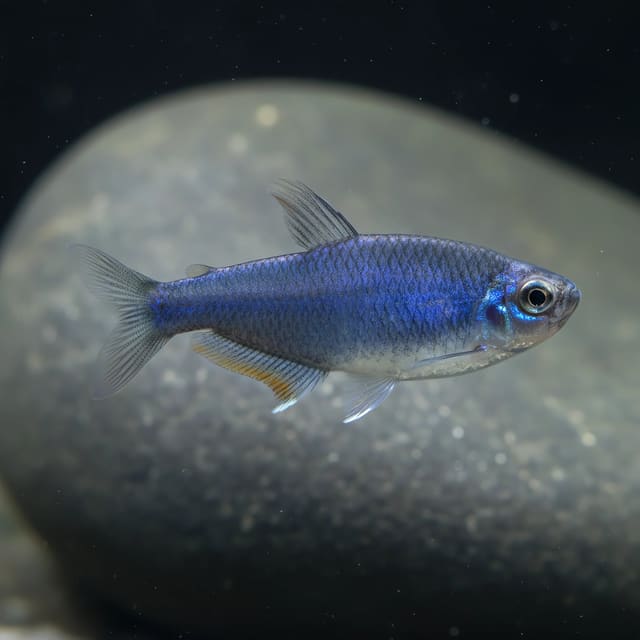
Electric Blue Acara (Andinoacara pulcher) – Neon Blue, 2–7cm Sizes
22–23°C · pH 6.5–8
£6.19
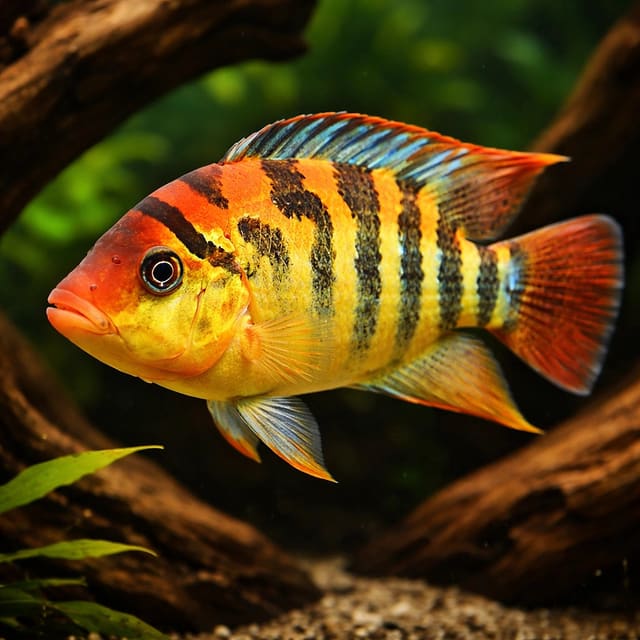
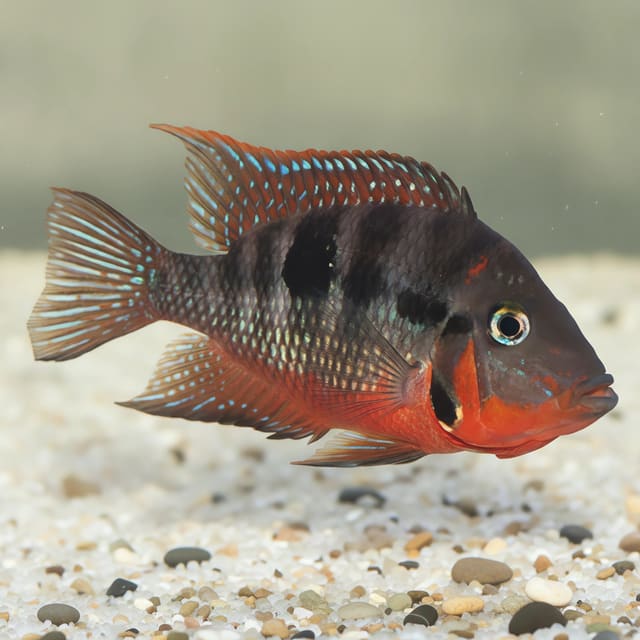
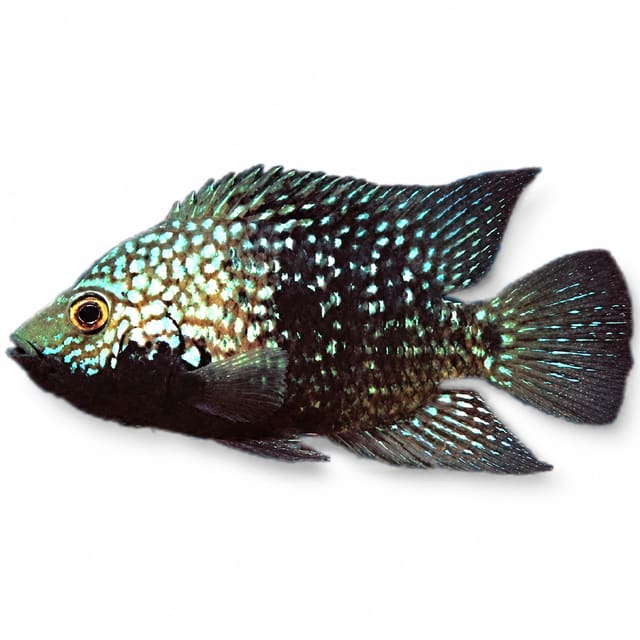
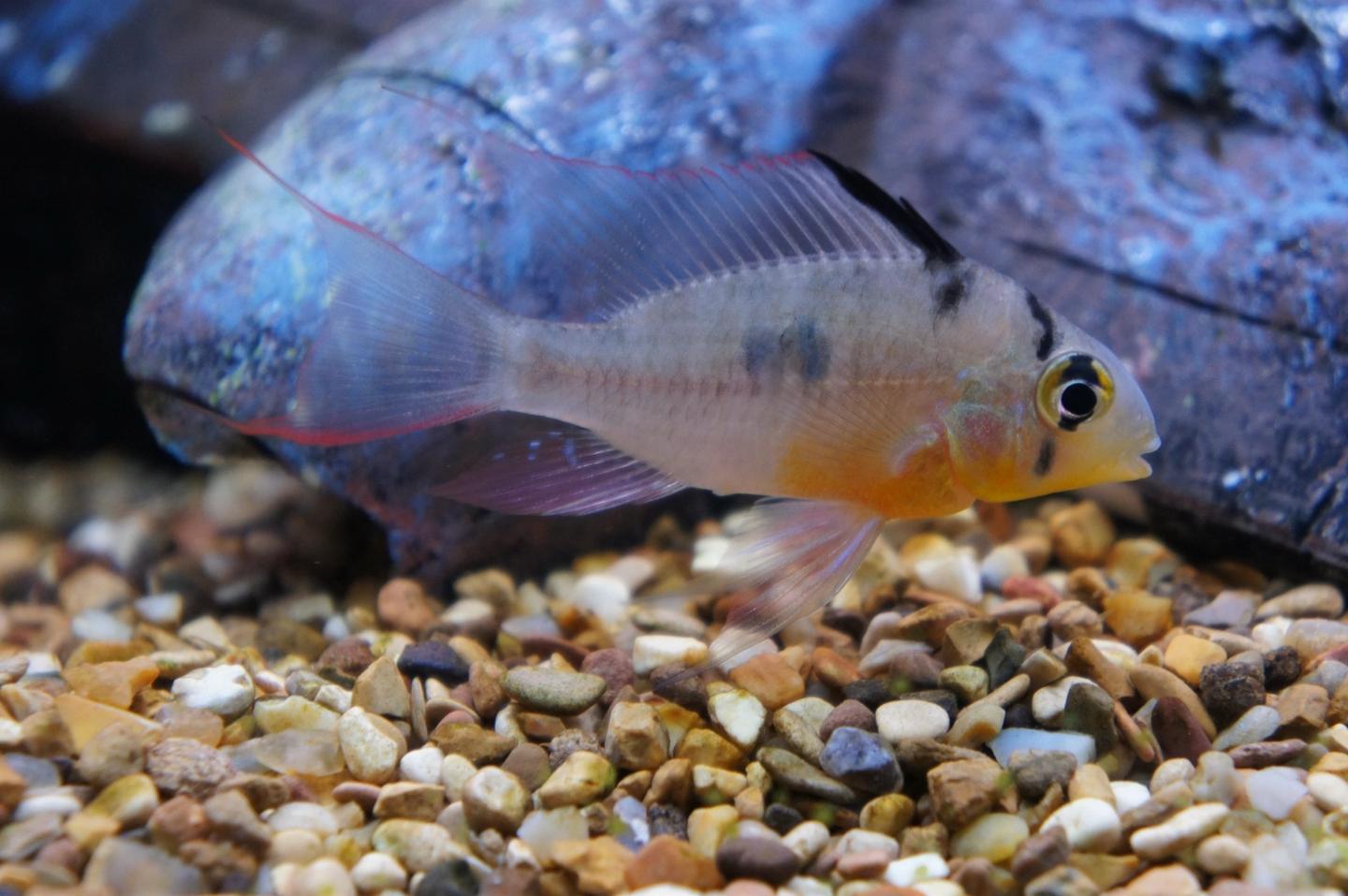
The Marbled Convict Cichlid (Amatitlania nigrofasciata) is a marbled colour form of the convict, a Central American cichlid from rivers in El Salvador, Guatemala and Honduras that reaches up to 15 cm standard length. Because it is aggressive and territorial, it suits a species tank for one fish or a single pair, kept at 24–28 °C, pH 7.0–8.0 and 9–20 dGH, values within both the Seriously Fish and FishBase ranges. Sold individually and supplied at 3–4 cm.
Adult size is the maximum length this species reaches at full maturity (scientific sources). The livestock you receive will be younger and smaller. Product-photo provenance and any image-specific limitations are stated on the listing.
Amatitlania nigrofasciata
Save when buying multiple fish. Each quantity is one fish; sex and pair formation are not guaranteed unless the selected variant explicitly states them.
The Marbled Convict Cichlid (Amatitlania nigrofasciata) is a marbled colour form of the convict, a Central American cichlid from rivers in El Salvador, Guatemala and Honduras that reaches up to 15 cm standard length. Because it is aggressive and territorial, it suits a species tank for one fish or a single pair, kept at 24–28 °C, pH 7.0–8.0 and 9–20 dGH, values within both the Seriously Fish and FishBase ranges. Sold individually and supplied at 3–4 cm.
Adult size is the maximum length this species reaches at full maturity (scientific sources). The livestock you receive will be younger and smaller. Product-photo provenance and any image-specific limitations are stated on the listing.
Cichlids are a family of roughly 1,800 accepted species, not one care type. Before buying, identify the exact species and source, then compare adult measurement, usable tank dimensions, social system, territory, tested water, diet and an exit plan. No family-wide minimum tank, water range or tank-mate list is safe.
Maintain these water conditions for optimal health and vibrant colors
The Marbled Convict Cichlid (Amatitlania nigrofasciata) is a marbled colour form of the convict cichlid, a tough, busy fish from the rivers of Central America. FishBase places the species in the cichlid family, Cichlidae, and records its native range on the Pacific slope from the Río Sucio in El Salvador to the Río Suchiate in Guatemala, and on the Atlantic slope from the Río Patuca in Honduras to the Río Jutiapa in Guatemala. It is not found in Nicaragua, Costa Rica or Panama, as was once thought, although it has been introduced elsewhere. Plan for an adult of up to 15 cm standard length.
It suits a keeper who wants one characterful cichlid, or a single pair, in an aquarium built around it. It is hardy, eats almost anything and is one of the easiest cichlids to breed, which is why Seriously Fish calls it a great beginner's species in many ways. The same profile is blunt about the catch: this is not a good community fish, and it becomes territorial and aggressive, especially when breeding.
That combination explains its reputation. The convict is one of the most widespread fish in the hobby because it is hardy and very adaptable, and it rewards a well-planned tank with remarkable parental behaviour: both parents guard and care for their eggs. Buy it for that, and give it the space and set-up it needs, rather than as a colourful addition to a mixed tank.
Shop labels can be confusing. FishBase lists the species as Amatitlania nigrofasciata, but you will also see it sold as Cichlasoma nigrofasciatum or Cryptoheros nigrofasciatus, earlier names for the same fish. The marbled pattern is one of several man-made colour forms of the convict, alongside the popular pink form and long-finned varieties.
| Suits | Not suited to |
|---|---|
| A species tank for one fish or a single pair | A community of small or peaceful fish |
| Keepers who want to watch both parents guard their eggs | Anyone with no plan for surplus young |
| A rocky layout with caves, bogwood and a sand or fine-gravel base | Delicate rooted planting it can dig up |
| Robust Central American cichlids of similar temperament in a very big tank | Calmer cichlids such as angelfish and severums |
Each purchase is one live Marbled Convict Cichlid, dispatched at 3–4 cm. That is a small fish with a lot of growing to do, so set up the aquarium for the 15 cm adult rather than for the fish in the bag. Care, temperament and breeding behaviour are those of the species: the marbled pattern changes the look, not the keeping.
Sex is guaranteed only when the selected option explicitly states male or female. This Marbled Convict Cichlid listing has no sex-guaranteed option. That matters if you are hoping for a pair: two fish bought together are two convicts, not necessarily a male and a female. The breeding section in the care tab explains how keepers usually end up with a settled pair, and what to do with the fish that are left over.
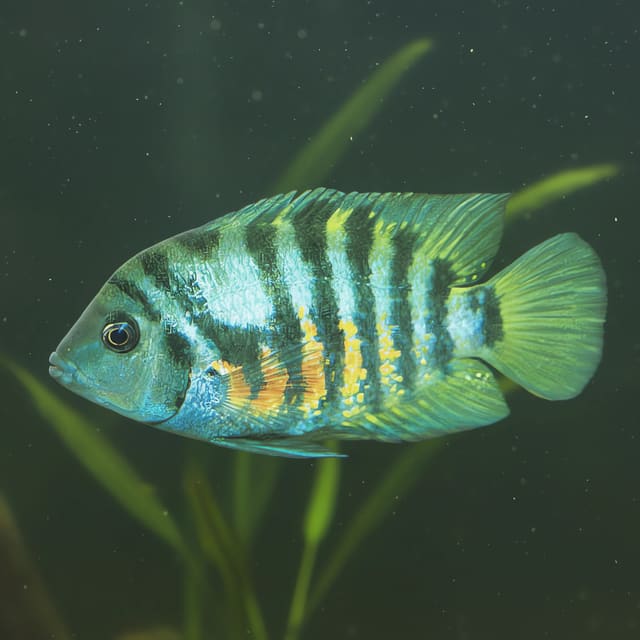
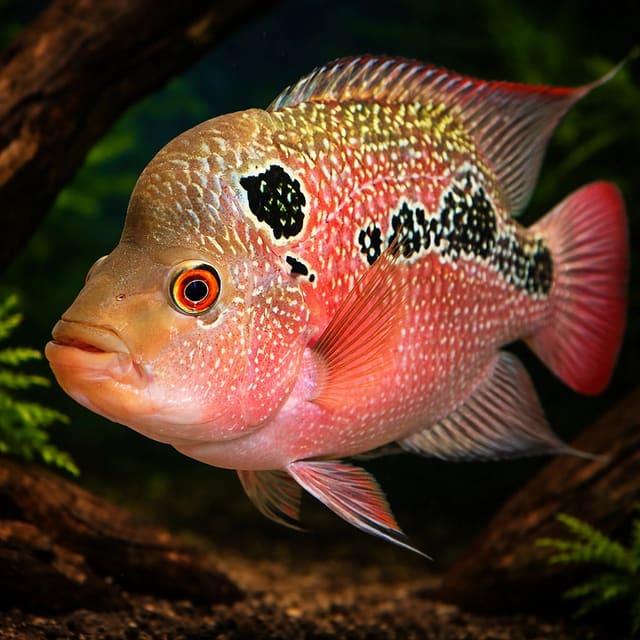
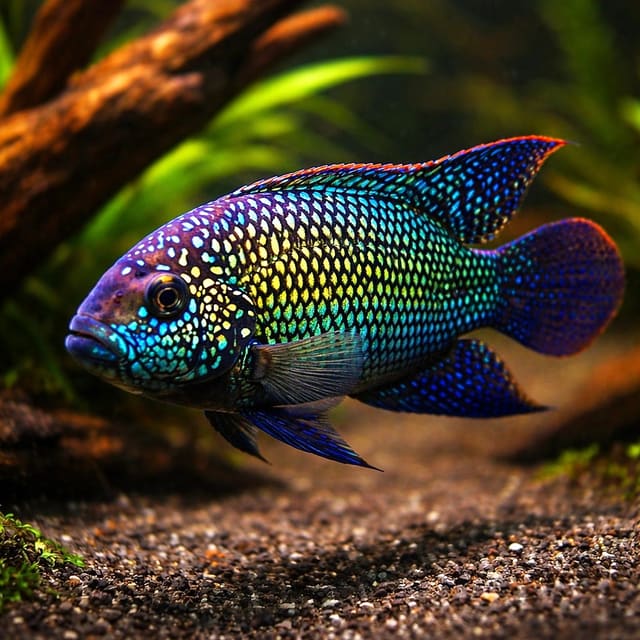
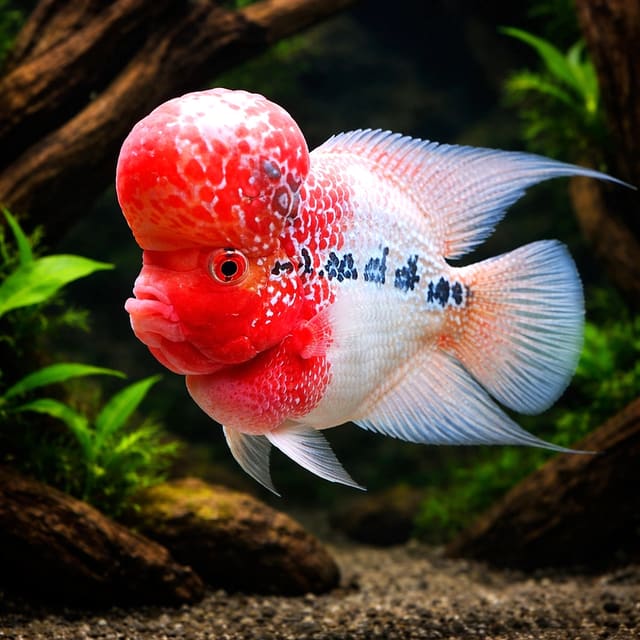
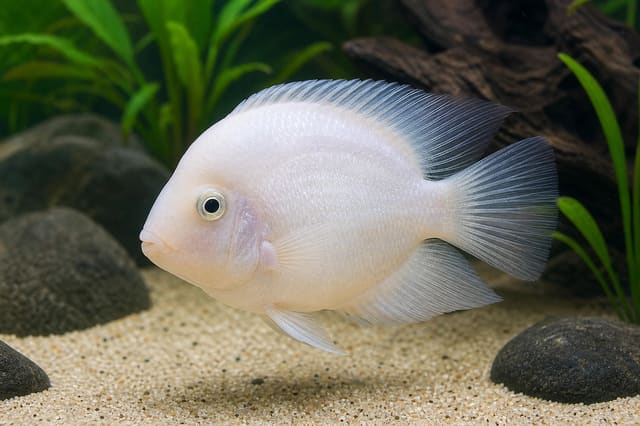
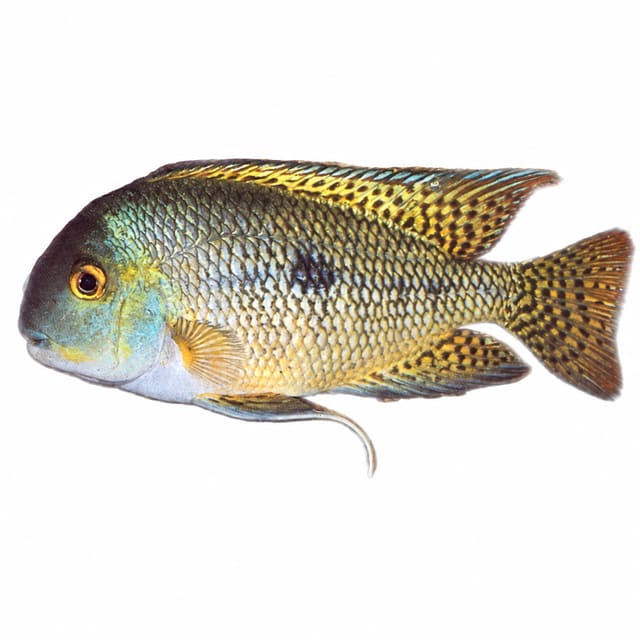
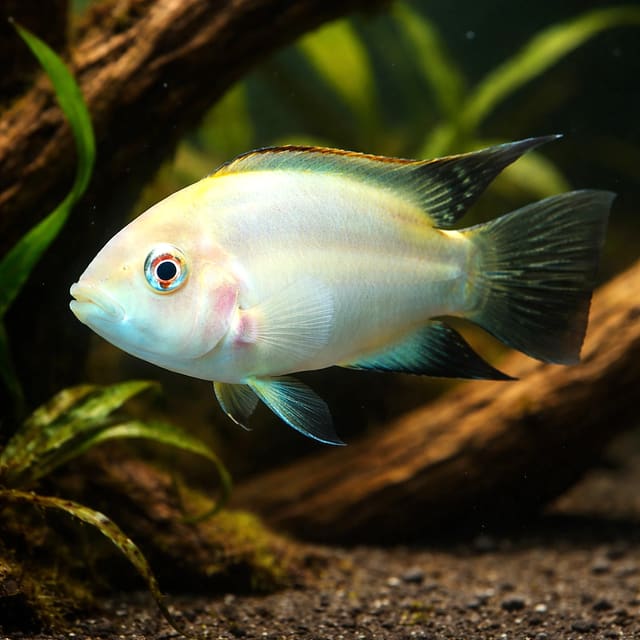
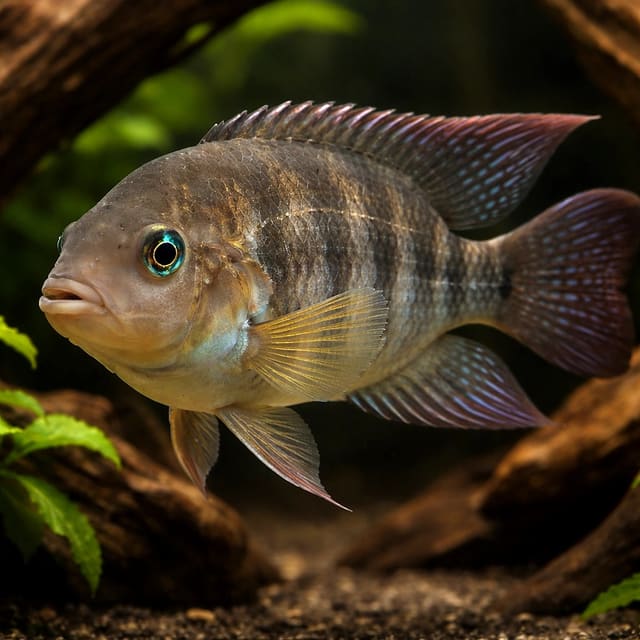
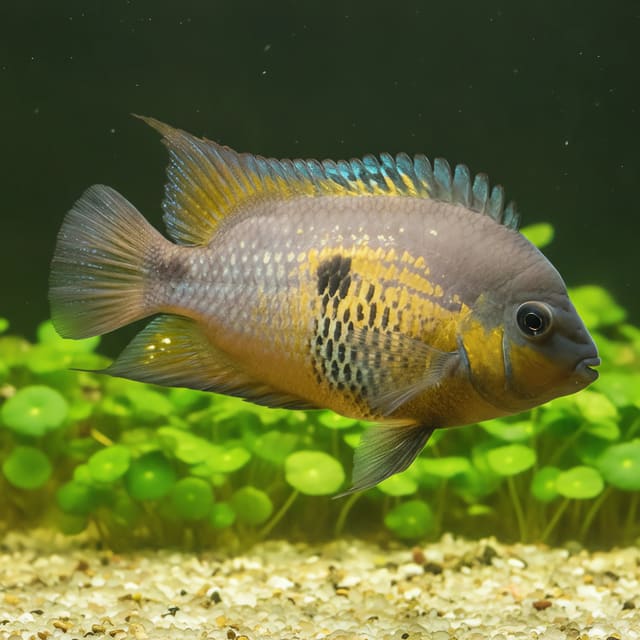
Gallery images have been digitally enhanced to improve image quality. Natural colour, pattern, size and maturity can vary between live animals. The shop files this fish in its South American cichlid collection, although the species itself comes from Central America, so compare its temperament carefully with anything else you are considering from that range.
Before you order, check four things:
| At a glance | Figure |
|---|---|
| Adult size | Up to 15 cm standard length |
| Supplied at | 3–4 cm |
| Water | 24–28 °C, pH 7.0–8.0, 9–20 dGH |
| Tank for one pair | Base of at least 90 × 30 cm |
| Keep as | One fish or a single pair |
| Temperament | Territorial and aggressive, most of all when breeding |
Start with the footprint. Seriously Fish gives an adult standard length of 15 cm and says a tank with a base of 90 × 30 cm, or equivalent, is adequate for a single pair; keeping several pairs, or adding other cichlids, needs something substantially bigger. FishBase records a smaller maximum of 10 cm standard length for a male or unsexed fish, and its aquarium note gives a minimum aquarium size of 80 cm for keeping the species in pairs. Planning for the larger 15 cm adult covers both.
OATA's care sheet for American cichlids adds broad guidance for the whole group: within reason, buy an aquarium as large as possible, and use at least 120 litres for a pair of the smaller species and at least 300 litres for larger or more aggressive species. A larger volume also keeps temperature and water quality more stable, which is the reason behind that advice.
| Your plan | Starting point |
|---|---|
| One fish on its own | At least the 90 × 30 cm base Seriously Fish gives for a pair, with room left for rocks and caves |
| One pair | A base of at least 90 × 30 cm, with several caves as spawning sites |
| Robust cichlid community | A very big tank; OATA puts larger or more aggressive species at 300 litres or more |
| Growing on a group to find a pair | Space for the whole group now, plus a second tank or new home for the fish you remove later |
The fish arrives at a fraction of its adult length, but the aquarium you set up should be the one it will live in as an adult. Put in the full-size tank, rock work and filtration before you order, and give the filter time to mature. OATA explains that adding fish too quickly, before the filter's bacteria have built up, leads to new tank syndrome, when ammonia and nitrite climb to levels that can make fish ill. Our ten-step guide to setting up a first tropical tank walks through preparing and maturing a new aquarium before any livestock goes in.
In the wild the convict lives in flowing water, from small creeks and streams to the shallows of large, fast rivers. FishBase describes it favouring rocky habitats, sheltering in cracks and crevices or among roots and debris, and it also turns up in warm pools fed by springs. An aquarium that copies that structure gives it the territory and refuges it looks for, and a well-run filter keeps the water clean and moving as a stream would.
Seriously Fish calls convicts avid diggers, and plants can be uprooted. If you want living greenery, accept that some of it will be moved around, and let rock and wood provide the main structure of the layout. Expect the sand to be reshaped too, particularly around a cave a pair has chosen.
A territorial fish defends the area around its chosen shelter. Spreading several caves across the tank, rather than piling them in one corner, gives a partner or any other occupant its own retreat, which is exactly why Seriously Fish stresses plenty of hiding places for this species.
On a 90 × 30 cm base, build three separate refuges: a rock cave towards one end, a clay pot on its side towards the other, and a tangle of bogwood and roots along the back. Leave open sand in front for digging and sifting. A pair then has a choice of spawning sites, and either fish has somewhere to go that is out of its partner's way.
Hold the aquarium at 24–28 °C, pH 7.0–8.0 and a general hardness of 9–20 dGH. Seriously Fish recommends 24–28 °C for long-term aquarium care and says somewhere on the alkaline side of neutral is ideal; the pH and hardness bands are where its species ranges (pH 6.0–8.0, 5–25 dGH) and FishBase's (pH 7.0–8.0, 9–20 dH) agree.
| Measure | Aim for |
|---|---|
| Temperature | 24–28 °C |
| pH | 7.0–8.0 |
| General hardness | 9–20 dGH |
| Ammonia | Zero |
| Nitrite | Zero |
| Nitrate | No more than 20 mg per litre above your tap water |
The last three rows come from OATA's sheet for American cichlids as a whole, which also gives 22–27 °C, pH 6.5–8.0 and 4–12 °dH across American cichlids generally. Where those figures differ from the first three rows, follow the values for this species.
FishBase records the species across 20–36 °C and notes that, where it has been introduced outside its range, it needs high temperatures to hold on, for example in waters warmed by power stations. Treat those numbers as the limits of where the fish has been found, not as aquarium targets. Seriously Fish describes it as tolerant of a fairly wide temperature range but still recommends 24–28 °C for long-term care, so hold that band with a heater and check it with a thermometer.
Test the water before the fish arrives and then every week. If your tap water is soft, pH and hardness may sit below the target band. Our guide to aquarium water parameters explains what each test measures and why it matters, and the water parameter matcher compares your own readings with the values on this page. Aim for steady readings inside these bands rather than chasing an exact number from week to week.
A worked example: tap water that tests at pH 7.6 and 14 dGH already sits inside both bands, so the job is simply to keep it there with regular water changes. Water at pH 6.8 and 6 dGH sits below the target bands, although still within Seriously Fish's wider limits of pH 6.0–8.0 and 5–25 dGH; if that is your tap water, read the water guide above before deciding how you will keep this fish.
Filtration comes first. The RSPCA's aquarium environment advice is that no fish should be kept in a tank without a well set up and maintained filter. Fish release ammonia, which is toxic; a working biological filter grows beneficial bacteria that convert it to nitrite, also toxic, and then to nitrate, which is safer. American cichlids can eat large amounts in one sitting, and OATA warns they can be stressed by even the smallest amounts of ammonia, so the filter and the routine around it carry a lot of weight.
In a 120-litre aquarium, a 25% change is 30 litres. Siphon those 30 litres from the gravel surface into a clean bucket, rinse any filter media that needs it in part of that removed water, then refill with conditioned tap water. In a 300-litre community tank the same routine means 75 litres each week, which is worth planning for before you choose a larger set-up.
Write each test result down. A nitrate reading that creeps upward over several weeks, or any ammonia or nitrite above zero, tells you to feed less, check the filter or change water sooner, before the fish shows signs of stress.
In the wild, FishBase records the species feeding on worms, crustaceans, insects, fish and plant matter. In the aquarium it is very unfussy: Seriously Fish says it will accept most foods offered and recommends keeping the diet varied so the fish develops the best condition. OATA describes American cichlids in general as omnivores that often prefer meaty foods.
OATA's advice for American cichlids is to feed only what the fish can eat within a few minutes, once a day. They can eat large amounts in one sitting, so overfeeding is easy; the result is extra waste and uneaten food that breaks down and releases toxic waste into the water.
Have the aquarium matured and tested before the parcel arrives: OATA advises checking that ammonia and nitrite are both at zero before any fish goes in. Each fish is hand-bagged in pure oxygen inside an insulated poly box, with a heat pack when the weather calls for it, and carried by a tracked, licensed live-animal courier. The full terms are on our delivery and Live Arrival Guarantee page.
The Live Arrival Guarantee depends on three things: someone at the address to receive the parcel, the parcel opened and inspected on the day it arrives, and the continuous unboxing video showing it still sealed. Film every delivery this way, even when all looks well as the lid comes off.
OATA describes a healthy fish as having clear, bright eyes, undamaged fins, intact scales and no ulcers or bumps, with appropriate swimming. Check for those signs over the first days, keep testing weekly, and add any later fish slowly: the filter's bacteria need to catch up each time the stocking and the feeding increase. For a convict, that usually means the tank stays as it is unless you are growing on a group to find a pair.
Small changes in behaviour usually show up before a problem becomes serious. OATA suggests watching American cichlids for these changes:
Test the water before anything else. OATA's advice whenever you are worried about a fish is to check water quality, and a reading of ammonia or nitrite above zero points straight back to the filter and feeding routine. If the readings are fine and the change continues, contact us with a description of what you are seeing.
Not every colour change is a warning. Seriously Fish notes that both fish in a pair intensify in colour when they are ready to spawn, and that females become more brightly coloured in spawning condition. If two fish have started cleaning a cave together, look at breathing, appetite and fins before assuming illness.
In a shared tank, torn fins or a fish that hides all the time can mean it is being chased. Convicts become downright violent when breeding, so separate fish before injuries build up rather than waiting to see whether things settle.
Few aquarium fish breed as readily as this one. Seriously Fish describes it as one of the most easily bred species in the hobby, ideal for a newcomer to cichlids and fish breeding, and FishBase notes that the species is also used in behavioural studies. If you want to watch parental care up close, it is an excellent choice, provided you plan for what follows.
Differences appear as the fish mature, so they are of little help at 3–4 cm. Seriously Fish notes that males tend to grow larger than females and develop pointed dorsal and anal fins, and some develop a nuchal hump. Females have a characteristic dark spot in the dorsal fin and become more brightly coloured in spawning condition.
Pairing is often as simple as putting a male and a female together; if that fails, Seriously Fish suggests growing a group of young fish on together and letting a pair form. When ready to spawn, both fish intensify in colour and the female selects and cleans a spawning site, so the caves and clay pots in your layout give her options. FishBase records around 100–150 eggs, vigorously guarded and cared for by both male and female. Seriously Fish encourages spawning with a varied diet and large weekly water changes of up to 50%.
Seriously Fish puts it plainly: this is not a good community fish, even though it is often sold as one. It is an aggressive, territorial species that becomes downright violent when breeding, and it will take on fish several times its own size and win with ease. Plan for the behaviour of the adult, not the small fish that arrives.
OATA's American cichlid sheet takes the same line for the whole group: the more aggressive species must be kept either alone or with equally aggressive cichlids. For this fish that leaves three sensible stocking plans.
| Plan | What it needs |
|---|---|
| One fish alone | The simplest option: a species tank where it has the whole layout to itself |
| A single pair | The 90 × 30 cm base from the care tab, several caves and a decision about fry before they arrive |
| Robust cichlid community | A very big tank shared only with robust Central American cichlids that are equally aggressive |
The first two plans are the ones Seriously Fish favours, since it recommends keeping the convict in a species tank. The third works only when space is generous and every companion can hold its own.
Seriously Fish says that in a very big tank it can be kept in a community of robust Central American cichlids. Before adding any companion:
Extra convicts are a question of space. If space is not an issue, Seriously Fish notes that additional pairs may form in other parts of the tank; in a smaller aquarium, surplus fish need moving once a pair has formed. A group grown on to find a pair is a temporary arrangement, not a permanent stocking plan.
If any answer is no, a single convict or a pair on its own is the better plan.
If you are weighing up a mixed cichlid tank, send us the aquarium's dimensions and what already lives in it, and we will go through the options with you before you order.
Plan for an adult of up to 15 cm standard length, the size Seriously Fish gives for the species. Males tend to grow larger than females, so use that 15 cm figure when you choose the aquarium, whichever sex your fish turns out to be.
For one fish or a single pair, give it a tank with a base of at least 90 × 30 cm, the footprint Seriously Fish describes as adequate for a pair. Several pairs, or a mix with other cichlids, need a much bigger aquarium; OATA's guidance for larger or more aggressive American cichlids is at least 300 litres.
Keep one fish on its own or a single pair; FishBase's aquarium note is to keep the species in pairs. Growing on a small group lets a pair form, but once it does, the extra fish need moving unless the tank is large, because the male will not tolerate other fish in his territory.
In many ways, yes. Seriously Fish calls it a great beginner's species because it is hardy, unfussy about food and one of the easiest cichlids to breed. The catch is temperament: it is aggressive and territorial, so it belongs in a species tank for one fish or a pair rather than a beginner's mixed community.
It accepts most foods. Use a cichlid pellet or granule as the base and add frozen or freeze-dried daphnia, brine shrimp and bloodworm for variety, as OATA suggests for the smaller American cichlids. Feed once a day, giving only what the fish can eat within a few minutes.
Keep it at 24–28 °C with a pH of 7.0–8.0 and a general hardness of 9–20 dGH. Seriously Fish recommends 24–28 °C for long-term care, and the pH and hardness bands sit inside both the Seriously Fish and FishBase ranges for the species.
Yes. Seriously Fish describes an aggressive, territorial fish that becomes downright violent when breeding and will take on fish several times its own size. Choose the tank and any companions with that adult temperament in mind from the start.
Only robust Central American cichlids that are equally aggressive, and only in a very big tank. Avoid small or peaceful community fish and calmer cichlids such as angelfish and severums. One fish or a single pair in a species tank is the most dependable plan.
It is hand-bagged in pure oxygen, packed in an insulated poly box with a heat pack when the weather calls for it, and carried by a tracked, licensed live-animal courier. Someone must be at the address to receive it, because live fish cannot be left unattended. Start a continuous unboxing video with the parcel still sealed and open it in one take, then float the bag for 20–30 minutes before releasing the fish, and never pour the bag water into your tank. For a Live Arrival Guarantee claim, send the shop that video and your order number on the same day; WhatsApp is fastest.
No reviews for this item yet. Bought one? Honest reviews only, good or bad.
What customers say about ordering from us
Easy website plenty of info on fish your buying great to pick a time slot
TRACEY DURRANT · 7 Oct 2026
Got some lovely fish thank you
Kevin Mackie · 7 Oct 2026
Reviews of our shop, collected by Judge.me, an independent third-party review collector. Newest first.