−13%
Advanced
Zebra Convict Cichlid (Amatitlania nigrofasciata)
24–28°C · pH 6–8
£5.21£5.99

The Yellow Convict Cichlid (Amatitlania nanolutea) is a freshwater cichlid from Central America that reaches 6.4 cm standard length. It suits a prepared cichlid keeper; OATA’s American-cichlid guidance gives 22–27°C, pH 6.5–8.0 and 4–12°dH, with single or assessed-pair planning. Sold individually in sizes from 3-4 cm to 5-6 cm.
Adult size is the maximum length this species reaches at full maturity (scientific sources). The livestock you receive will be younger and smaller — pick a size above for the actual shipping size. Product-photo provenance and any image-specific limitations are stated on the listing.
Amatitlania nanolutea
Save when buying multiple fish. Each quantity is one fish; sex and pair formation are not guaranteed unless the selected variant explicitly states them.
The Yellow Convict Cichlid (Amatitlania nanolutea) is a freshwater cichlid from Central America that reaches 6.4 cm standard length. It suits a prepared cichlid keeper; OATA’s American-cichlid guidance gives 22–27°C, pH 6.5–8.0 and 4–12°dH, with single or assessed-pair planning. Sold individually in sizes from 3-4 cm to 5-6 cm.
Adult size is the maximum length this species reaches at full maturity (scientific sources). The livestock you receive will be younger and smaller — pick a size above for the actual shipping size. Product-photo provenance and any image-specific limitations are stated on the listing.
Cichlids are a family of roughly 1,800 accepted species, not one care type. Before buying, identify the exact species and source, then compare adult measurement, usable tank dimensions, social system, territory, tested water, diet and an exit plan. No family-wide minimum tank, water range or tank-mate list is safe.
Maintain these water conditions for optimal health and vibrant colors
The Yellow Convict Cichlid is Amatitlania nanolutea, a freshwater member of the cichlid family Cichlidae. FishBase records the species as benthopelagic and gives its distribution as the Atlantic slope of Panama in the Guarumo River basin. It is a Central American cichlid, not a catfish, and reaches a recorded maximum of 6.4 cm standard length.
It suits a prepared keeper who will manage a cichlid aquarium rather than treating this fish as an automatic addition to a peaceful community. American cichlids vary greatly in temperament, and some members of the group may be very aggressive. Compatibility therefore depends on the behaviour of the individual fish, the proposed companions, the available space and the overlap in water requirements.
The wider Amatitlania genus is native to Central American fresh waters from El Salvador and Guatemala to Panama. That natural-history context helps place this fish within a group of fairly small cichlids, but aquarium decisions should follow the figures attached to this species and the clearly scoped American-cichlid guidance below.
| Suits | Not suited to |
|---|---|
| A keeper prepared to test water and maintain a biological filter | An unfiltered aquarium |
| A single-fish or deliberately assessed pair plan | An assumed shoaling plan |
| A keeper ready to screen temperament, adult size, water needs and space | Automatic addition to a community without compatibility screening |
| A pair plan using OATA’s reference of at least 120 litres | A pair plan below OATA’s stated group reference |
This is a good choice for a keeper who will test the water, control feeding, watch behaviour and change the stocking plan if aggression develops. Those decisions matter more than relying on the modest recorded length alone.
One purchase supplies one animal of the selected size. Choose between the labels 3-4 cm, 4-5 cm and 5-6 cm on the live size selector. The selector is the right place to make the size choice when ordering.
The size you select is the size supplied, not the adult size. These measurements describe the dispatch size. They do not replace the adult planning reference, aquarium-space decision or compatibility assessment.
Sex is guaranteed only when the selected option explicitly states male or female. This Yellow Convict Cichlid listing has no sex-guaranteed option.
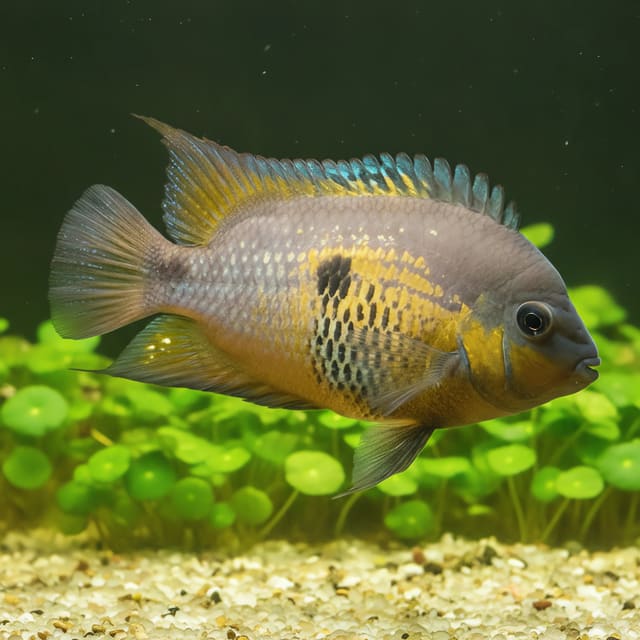
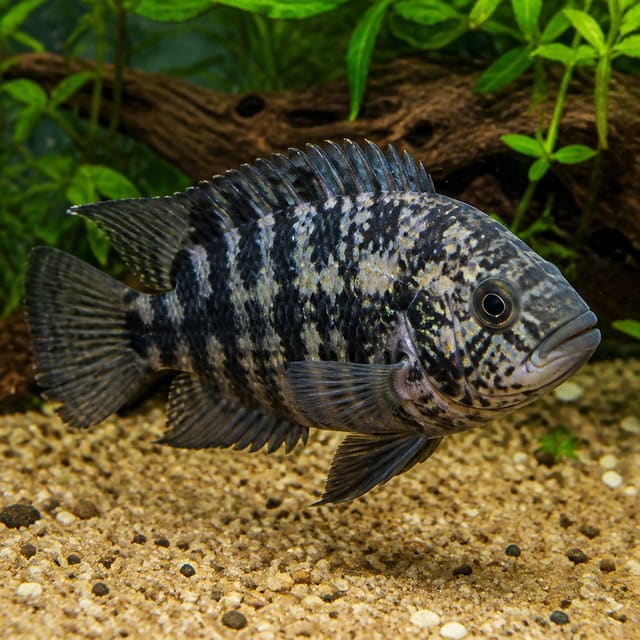
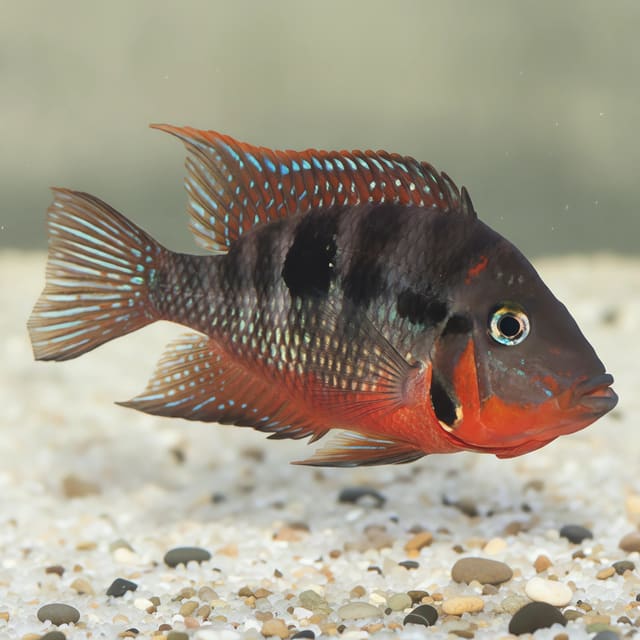
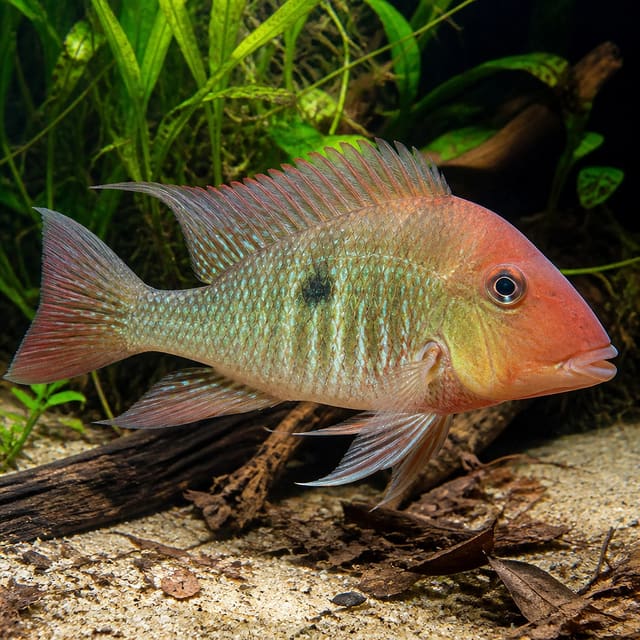
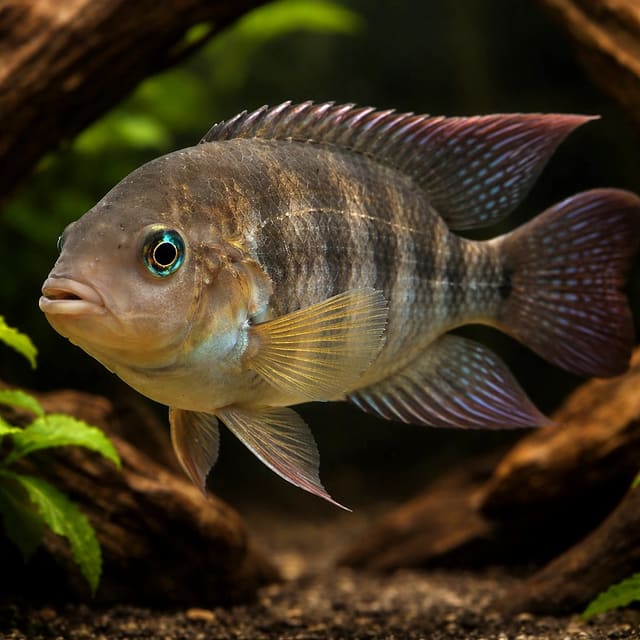
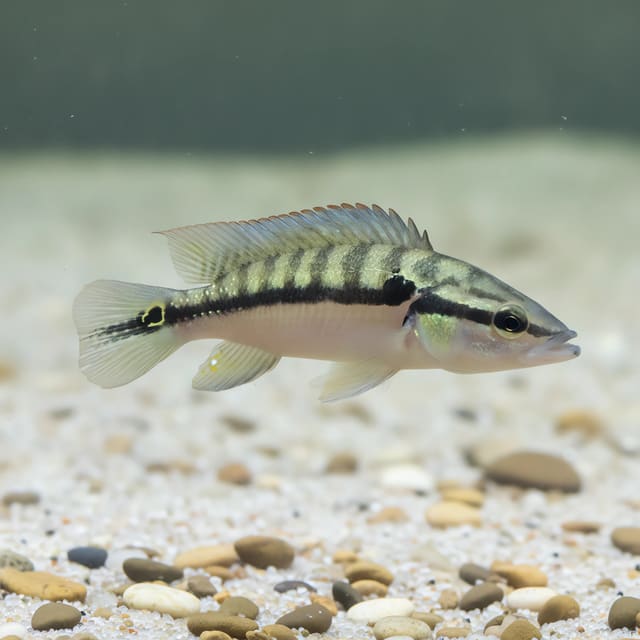
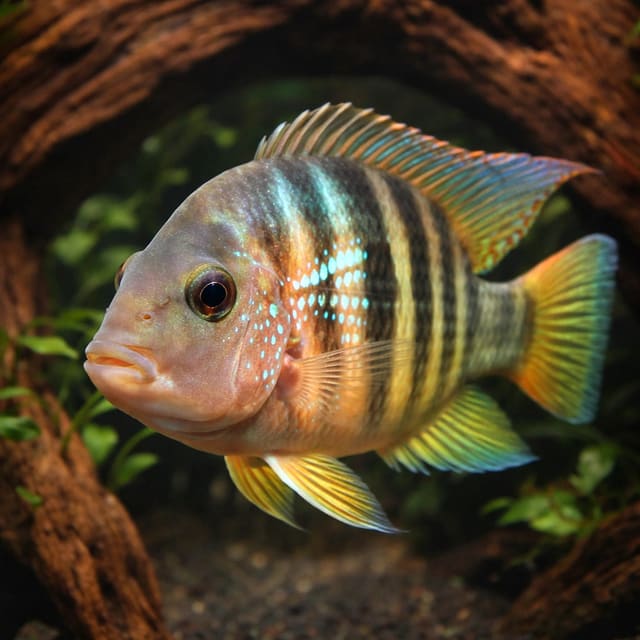
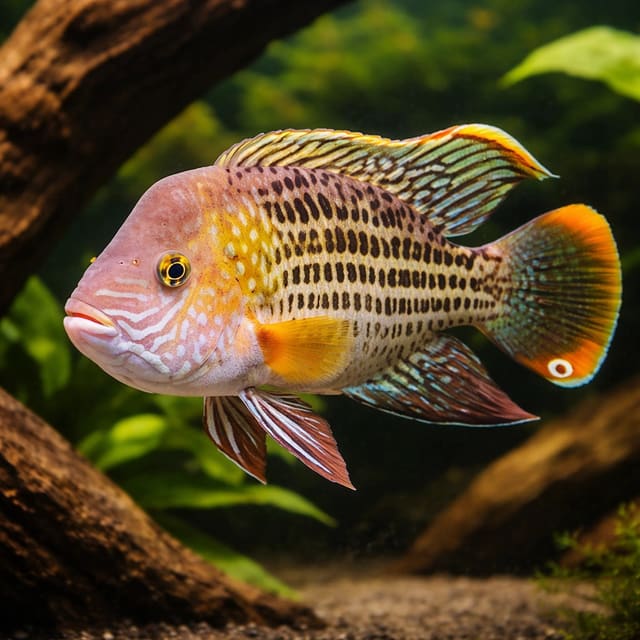
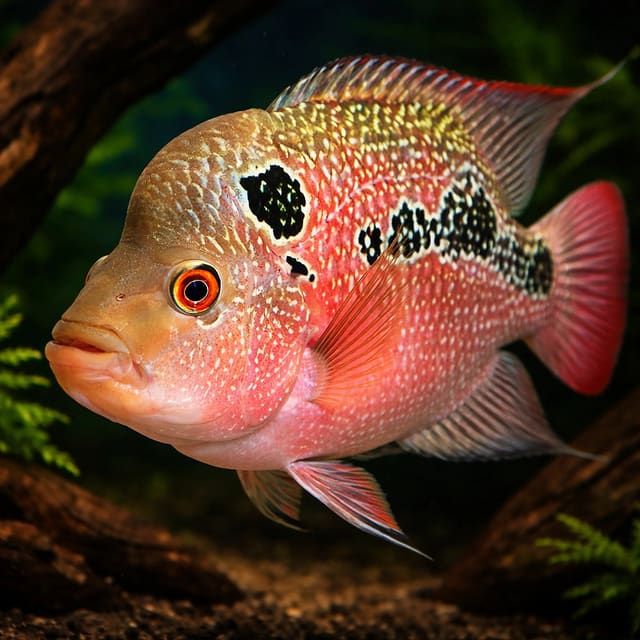
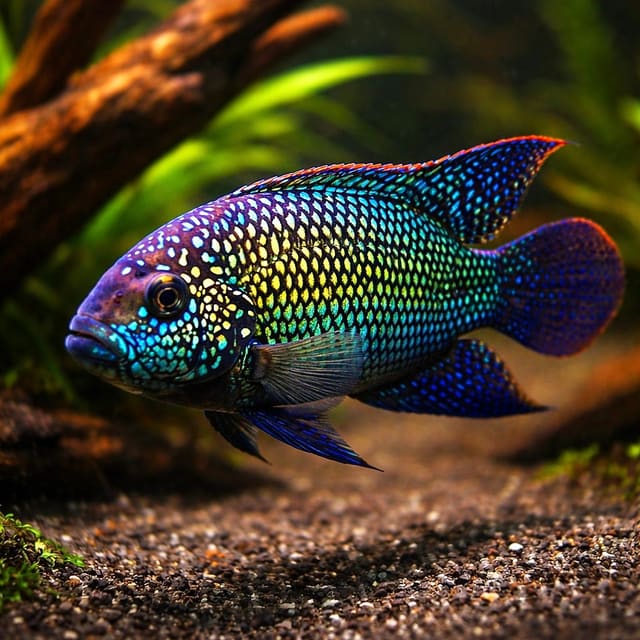
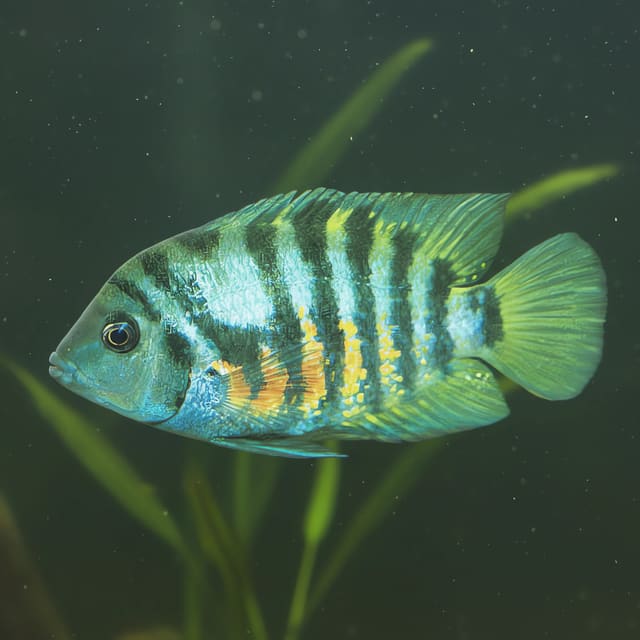
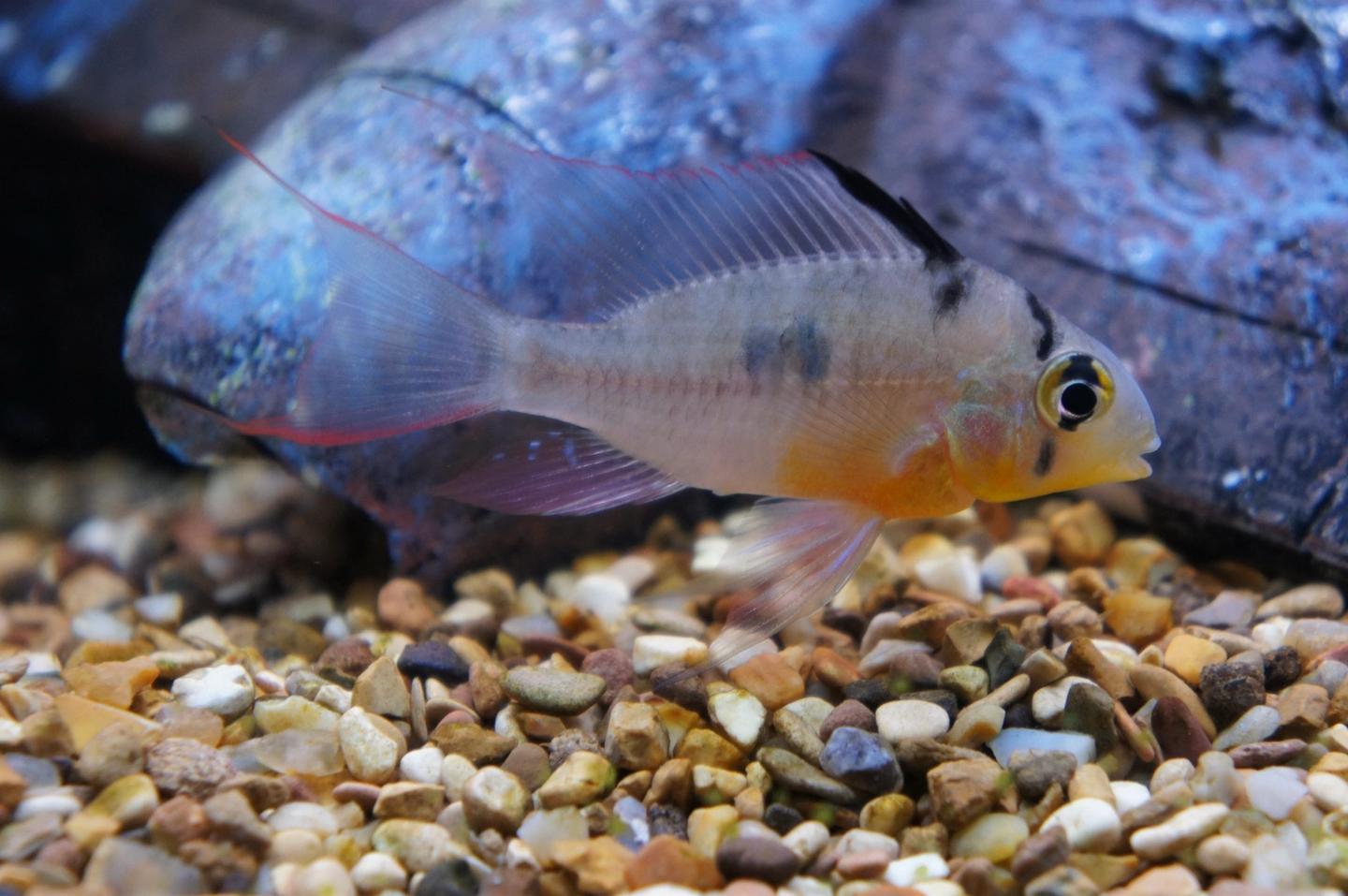
The gallery images are representative of this type of animal rather than photographs of the exact animal supplied, so colours can look slightly different from the live animal.
Dispatch size should guide practical preparation, such as confirming that the aquarium and stocking plan are ready for the selected fish. It should never be used to infer sex, maturity, origin or eventual behaviour.
FishBase records a maximum of 6.4 cm standard length for Amatitlania nanolutea. Treat that as the decisive species-level planning reference rather than using a dispatch label as the expected final measurement. The genus summary also notes that captive members may grow larger, so leave margin instead of treating 6.4 cm as a hard physical limit.
OATA’s American-cichlid guidance recommends an aquarium of at least 120 litres for a pair of smaller species under 15 cm. Treat that as a group planning reference rather than a species-specific minimum. Larger aquariums generally make temperature and water quality more stable, so the 120-litre figure is a floor for the stated pair scenario, not a target to reduce.
| Plan | Space decision |
|---|---|
| One fish | Assess the whole aquarium, filtration and other occupants; do not halve the pair reference mechanically. |
| A pair | Start at 120 litres and increase space when temperament or other occupants make that necessary. |
| Mixed cichlids | Choose the aquarium only after screening every species for adult size, temperament and water overlap. |
An aquarium that merely contains the fish is not the same as one that can keep waste controlled and accommodate changing behaviour. Allow room for a filter, fine gravel or sand and useful cover, then judge stocking against the aquarium’s total biological load.
If you are comparing this fish with others in our American cichlid collection, compare recorded adult measurements and care requirements rather than catalogue photographs or dispatch sizes.
OATA’s American-cichlid guidance gives 22–27°C, pH 6.5–8.0 and soft-to-medium general hardness of 4–12°dH. It also gives carbonate hardness of 3–10°dKH. Use these values together as broad aquarium guidance, not a species-specific optimum, and favour stability within the ranges.
| Measurement | Routine target |
|---|---|
| Temperature | 22–27°C |
| pH | 6.5–8.0 |
| General hardness | 4–12°dH |
| Carbonate hardness | 3–10°dKH |
| Ammonia | Zero mg per litre |
| Nitrite | Zero mg per litre |
| Nitrate | Not more than 20 mg per litre above the normal tap-water level |
Measure the aquarium instead of choosing a number from the middle of a range and assuming it has been reached. Our water chemistry guide explains what the principal readings mean, while the water matcher helps compare measured aquarium water with these targets.
The nitrate instruction is relative to the normal tap-water reading. If the tap water measures 15 mg per litre, the stated ceiling is 35 mg per litre: 15 plus 20. That calculation defines an upper limit, not a preferred target. Use maintenance to keep the aquarium from reaching it.
Temperature, pH and hardness should be checked as a set. A reading inside one range does not cancel an ammonia or nitrite problem. Before introducing the fish, confirm that ammonia and nitrite are both zero and that the remaining values are steady within the stated intervals.
Use fine aquarium gravel or sand. American cichlids may dig or sift the substrate while feeding or breeding, so choose a substrate that fits that behaviour and expect its surface to be moved. Keep enough access around the aquarium to inspect the substrate and remove accumulated solid waste during maintenance.
Provide cover while recognising that American cichlids may dig up or eat live plants. Plastic plants are one option identified in the group guidance when dependable cover is needed. If you use live plants, plan the display around the possibility that rooted growth may be disturbed rather than assuming the planting will remain unchanged.
The recommendation to use as large an aquarium as reasonably possible has a practical purpose: more water generally makes temperature and water-quality conditions more stable. Decorative choices should therefore leave sufficient usable water volume and should not prevent routine access to the substrate, filter or fish.
| Part of the setup | Decision to make |
|---|---|
| Substrate | Choose fine gravel or sand that can be siphoned during a water change. |
| Cover | Use planting or artificial cover while allowing for digging and possible plant damage. |
| Filter | Install an appropriately maintained filter before adding the fish. |
| Space | Use at least the 120-litre group reference when planning a pair of smaller American cichlids. |
Do not let a modest dispatch measurement drive the layout. A fish selected at 3-4 cm requires the same forward planning as one selected at 5-6 cm. Build for adult reference, water stability and the complete stocking plan from the start.
The result should be straightforward to maintain: substrate that can be cleaned, cover that can tolerate cichlid activity, clear access for observation and sufficient water volume for the intended occupants.
A filter is essential. The RSPCA’s aquarium welfare guidance explains that fish release toxic ammonia and that a working biological filter supports beneficial bacteria which convert ammonia to nitrite and then to the safer nitrate. Both ammonia and nitrite still need to read zero before this fish is introduced.
Prepare and mature the aquarium before livestock arrives. Our first tropical tank guide takes you through that preparation. Use test results to judge readiness rather than relying only on how long the aquarium has been running.
Add fish slowly because every increase in fish numbers and feeding requires the beneficial bacterial population to cope with more waste. Stocking too quickly or overstocking may lead to new tank syndrome, in which ammonia and nitrite rise because the biological filter cannot process the increased load.
| If the test shows | Action |
|---|---|
| Ammonia above zero | Do not add the fish; restore water quality and confirm a zero result. |
| Nitrite above zero | Do not add the fish; allow the biological filter to recover and retest. |
| Stable values in range | Proceed with the stocking and acclimatisation plan. |
| A rising result after stocking | Test the full set, carry out the appropriate maintenance and reassess feeding and stocking pace. |
A mature filter is not a substitute for maintenance. It works as part of a routine that controls feeding, removes waste and preserves the bacteria in the filter media.
American cichlids are generally omnivorous and often prefer meaty foods. Use specialised cichlid pellets or granules as the principal prepared food and supplement them with frozen or freeze-dried items. For smaller cichlids, examples in the group guidance include daphnia, brine shrimp and bloodworm.
Feed once a day and offer only what the fish can eat within a few minutes. This timing gives a clear stopping rule: the correct meal is defined by what is consumed in that short period, not by how much the fish appears willing to take in one sitting.
| Observation | Response |
|---|---|
| Food is eaten within a few minutes | Keep the portion measured and consistent while monitoring body condition. |
| Food remains after the feeding period | Reduce the next portion and remove leftovers before they break down in the aquarium. |
| Waste increases | Review portion size, test the water and carry out the scheduled maintenance. |
| Interest in food falls | Check behaviour, breathing, appearance and water quality for other changes. |
Overfeeding creates more faeces and may leave uneaten food to release toxic waste as it decomposes. A larger helping is therefore not an improvement when the fish already consumes an adequate meal within the stated time.
Keep the prepared and supplementary foods within the American-cichlid pattern rather than building an unnecessarily complicated menu. The essential decisions are a suitable cichlid food, measured portions, one feeding each day and observation of what is actually eaten.
When more fish are introduced, remember that increased feeding also increases the load on the biological filter. Adjust stocking slowly and continue checking ammonia and nitrite rather than increasing both fish numbers and food abruptly.
Change 25% of the aquarium water at least once every week. Use a siphon to remove solid waste from the gravel or sand while taking out the water. Treat replacement tap water with a conditioner that removes harmful chlorine or chloramine before it enters the aquarium.
If the filter needs cleaning, do not run it under the tap because any chlorine or chloramine present may kill the beneficial bacterial population that has established in the media. Instead, it should be rinsed lightly in the tank water which is removed during a partial water change, as this reduces the amount of bacteria which are lost.
| Maintenance mistake | Better action |
|---|---|
| Waiting for cloudy water | Follow the weekly change and testing schedule even when the aquarium looks clear. |
| Cleaning a filter by running it under the tap | If the filter needs cleaning, do not run it under the tap. Rinse it lightly in tank water removed during a partial water change. |
| Preparing replacement water | Use conditioner before the water enters the aquarium. |
| Testing only after a problem | Test at least weekly and compare results over time. |
Clear-looking water can still contain ammonia, nitrite or excess nitrate, so appearance cannot replace testing. The weekly measurements show whether the filter, feeding amount and stocking level are working together.
American cichlids may be stressed by even small amounts of ammonia. A reliable routine therefore protects the fish by preventing waste from becoming a visible emergency and by preserving the bacterial population that processes it.
Arrange for someone to receive the parcel because live fish cannot be left unattended. The fish is hand-bagged in pure oxygen and packed in an insulated poly box, with a heat pack when the weather calls for it.
Follow our delivery and Live Arrival Guarantee policy throughout receipt and acclimatisation.
Before the delivery, use OATA’s aquarium checks to confirm that the filter is working, ammonia and nitrite are zero and the water remains within the planned temperature, pH and hardness ranges. These checks belong in the preparation routine so the aquarium is ready before the sealed parcel is opened.
Introduction adds a new waste load to the aquarium. Keep later stocking gradual so the filter’s beneficial bacteria can adjust as fish numbers and feeding increase. The same caution applies whether this fish is the first occupant or an addition to an established aquarium.
| Checkpoint | Required result |
|---|---|
| Before opening | Continuous filming begins with the parcel sealed |
| During opening | Outer box remains visible and the fish is shown inside the sealed bag |
| Floating period | 20–30 minutes |
| Bag water | Kept out of the aquarium |
Keep the arrival process simple and prepared. The aquarium should already meet the fish’s requirements; acclimatisation is not the time to finish maturing a filter or make major changes to the stocking plan.
Learn the fish’s normal behaviour and appearance by observing it consistently. Healthy fish should have clear, bright eyes, undamaged fins, intact scales, appropriate swimming and no ulcerations or bumps. Regular observation makes a change easier to recognise.
If you see one of these changes, test the water promptly. Check ammonia and nitrite first because both should remain at zero, then review nitrate, temperature, pH and hardness against the normal readings for the aquarium.
| If you see | Do this |
|---|---|
| Changed breathing or swimming | Test the full water set and check filter operation. |
| Reduced feeding | Check water quality, body condition and whether food remains uneaten. |
| Increasing aggression | Reassess space, stocking and whether the fish needs to be kept alone. |
| Damaged fins or scales | Review behaviour and compatibility as well as water quality. |
Do not wait for several signs to appear before checking the aquarium. A single change from the fish’s normal pattern is enough reason to test. If you are concerned about the health of the fish after checking the water, contact us for further guidance.
Record test results and observations together. That connects what the fish is doing with the condition of the aquarium and gives a clearer basis for the next husbandry decision.
Mixing American cichlids can be difficult. Temperament varies across the group: calmer species may fit robust communities with larger shoaling fish, while more aggressive species may need to live alone or with equally aggressive cichlids. Treat every proposed mix as an individual stocking decision.
The honest compatibility limit is that membership of the same broad cichlid group does not make two fish automatic companions. A matching temperature range is only one part of the decision, and a similar dispatch size says little about adult behaviour.
| Proposal | Decision rule |
|---|---|
| Another American cichlid | Assess adult size, temperament, water overlap and the total aquarium space. |
| A larger shoaling fish | Consider it only as part of a robust community plan matched to the cichlid’s observed temperament. |
| A new fish added quickly | Slow the stocking pace so beneficial bacteria can respond to increased waste and feeding. |
| An aggressive individual | Reassess the mix and keep it alone if the behaviour requires that plan. |
Do not use the Yellow Convict Cichlid’s recorded 6.4 cm maximum as proof that it will be passive. Size and temperament are separate screens. Observe the actual fish after introduction and respond to changed aggression, hiding, swimming or feeding.
A successful compatibility plan remains conditional throughout the fish’s time in the aquarium. Water tests show whether the biological load works; observation shows whether the behavioural arrangement works.
OATA’s guidance says most American cichlids do better either singly or in pairs, while some particular species require different social arrangements. For this fish, use one animal or a deliberately assessed pair as the practical starting choice rather than assuming it should form a shoal.
One purchase supplies one animal, so a pair plan requires two purchases and an aquarium assessed for both fish. Use at least 120 litres as the American-cichlid planning reference for a pair of smaller species under 15 cm.
| Plan | Main responsibility |
|---|---|
| Single fish | Provide the same filtered water, adult-size planning and observation routine. |
| Two fish | Use the pair space reference and watch whether their actual behaviour remains workable. |
| Mixed aquarium | Screen every occupant for adult size, water needs, temperament and total biological load. |
Adding a second fish also adds feeding and waste. Increase stocking slowly so the beneficial bacteria in the filter can respond. Continue testing ammonia and nitrite for zero rather than assuming an established aquarium can absorb every addition immediately.
Sexing American cichlids varies by species, and some may show few external differences unless breeding. Base the purchase on the option wording and the intended care plan, not on colour, dispatch size or the gallery image.
If aggression rises, hiding increases or feeding changes, reassess the arrangement promptly. The appropriate response may be to keep an aggressive fish alone rather than persisting with a pair or community plan that is not working.
The pair reference should remain attached to its full context: at least 120 litres, suitable filtration, controlled stocking and close observation. It is not a guarantee that any two individual fish will live together successfully.
FishBase records Amatitlania nanolutea at a maximum of 6.4 cm standard length. Plan the aquarium around that adult reference rather than the 3-4 cm, 4-5 cm or 5-6 cm dispatch measurement.
OATA’s group guidance recommends at least 120 litres for a pair of smaller American cichlid species under 15 cm. Assess a single fish against the whole stocking plan rather than mechanically halving that pair reference.
OATA’s American-cichlid guidance says most members of the group do better singly or in pairs. Start with one fish or a deliberately assessed pair, and keep an aggressive individual alone if the arrangement does not remain workable.
OATA describes American cichlids as usually undemanding aquarium inhabitants that present relatively few keeping challenges, but their temperaments vary and some may be very aggressive. Choose this fish only if you can maintain a mature filter, test the water and respond to behavioural changes.
OATA’s American-cichlid guidance recommends specialised cichlid pellets or granules with frozen or freeze-dried supplements such as daphnia, brine shrimp or bloodworm for smaller species. Feed only what it can eat within a few minutes, once a day.
OATA’s broad American-cichlid guidance gives 22–27°C, pH 6.5–8.0 and general hardness of 4–12°dH, not a species-specific optimum. Keep ammonia and nitrite at zero and nitrate no more than 20 mg per litre above the normal tap-water level.
American-cichlid temperament varies, and some members of the group may be very aggressive. Monitor aggression, hiding, feeding and fin condition, then reassess the stocking plan and keep an aggressive individual alone when required.
Screen every proposed companion for adult size, water overlap, temperament, aquarium space and total biological load. Mixing American cichlids can be difficult, so contact us for a stocking and compatibility assessment of the exact animals you intend to keep together.
Someone must be present to receive it. Film every delivery continuously from the sealed parcel as it is opened, showing the fish still inside the sealed bag before anything is disturbed; then float the bag for 20–30 minutes, release the fish and never pour the bag water into the aquarium.
No reviews for this item yet. Bought one? Honest reviews only, good or bad.
What customers say about ordering from us
I have a small group of long finned mountain minnows. So was delighted to be able to order ten of this variety to increase the genetics in my tank . The ones I recieved are healthy but it’s to early to give a verdict on wether they are of a long finned type since they are small currently.
Gordon Walker · 23 Sept 2026
100% success travel and "installation". Pleased with quality of purchase. The Siamese fighter a bit "shy" so have not yet seen him at his best yet but looking good. Happy customer. GG
George E Garratt · 21 Sept 2026
Reviews of our shop, collected by Judge.me, an independent third-party review collector. Newest first.