Advanced
Flowerhorn Cichlid
22–27°C · pH 6.5–8
£90.99

Flowerhorn cichlid (Cichlasoma flowerhorn) is an ornamental hybrid cichlid that first emerged in Malaysia’s aquarium market. It suits keepers prepared to plan around adult size and temperament; OATA’s American-cichlid guidance gives 22–27°C, pH 6.5–8.0 and 4–12°dH. Sold individually in dispatch sizes from 4–5 cm to 12–15 cm.
Cichlasoma flowerhorn
Flowerhorn cichlid (Cichlasoma flowerhorn) is an ornamental hybrid cichlid that first emerged in Malaysia’s aquarium market. It suits keepers prepared to plan around adult size and temperament; OATA’s American-cichlid guidance gives 22–27°C, pH 6.5–8.0 and 4–12°dH. Sold individually in dispatch sizes from 4–5 cm to 12–15 cm.
Cichlids are a family of roughly 1,800 accepted species, not one care type. Before buying, identify the exact species and source, then compare adult measurement, usable tank dimensions, social system, territory, tested water, diet and an exit plan. No family-wide minimum tank, water range or tank-mate list is safe.
Maintain these water conditions for optimal health and vibrant colors
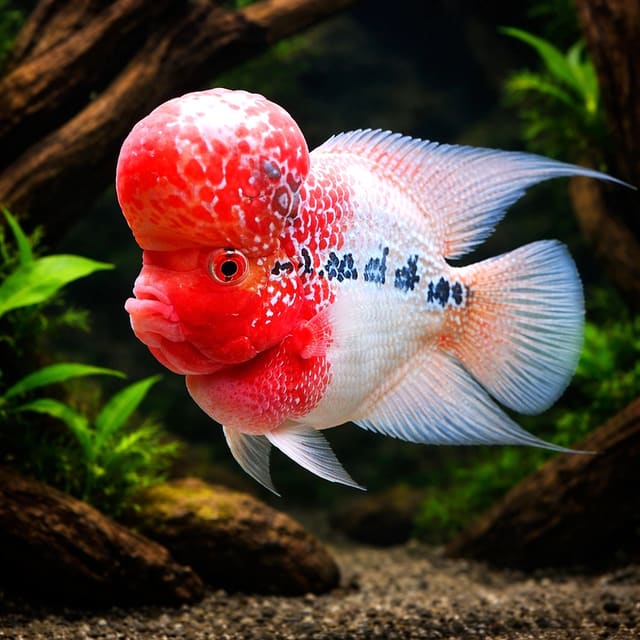
Flowerhorn cichlid (Cichlasoma flowerhorn) is an ornamental hybrid cichlid recognised for vivid colour and the prominent forehead growth called a nuchal hump. It first emerged in Malaysia’s aquarium market rather than evolving as a wild species. This fish suits a keeper prepared to plan its aquarium around adult size, individual temperament, mature filtration and measured water conditions.
The flowerhorn history and hybrid summary records that these fish first emerged during the late 1990s before becoming popular across parts of Asia, Europe and the United States. Appearance can vary substantially between individuals.
A flowerhorn suits a keeper prepared to make decisions around the individual fish rather than relying on colour, hump size or dispatch length. American cichlids vary widely in adult size and temperament. Establish the expected adult category, choose the aquarium accordingly and assess any proposed companion against the fish’s observed behaviour.
| Suits | Not suited to |
|---|---|
| A mature, filtered aquarium planned around adult size and temperament | An aquarium without a well set up and maintained filter |
| A keeper able to test water and control stocking pace | An automatic, unscreened community plan |
| Single housing or an individually assessed pairing plan | Release into a pond, river, drain or natural waterway |
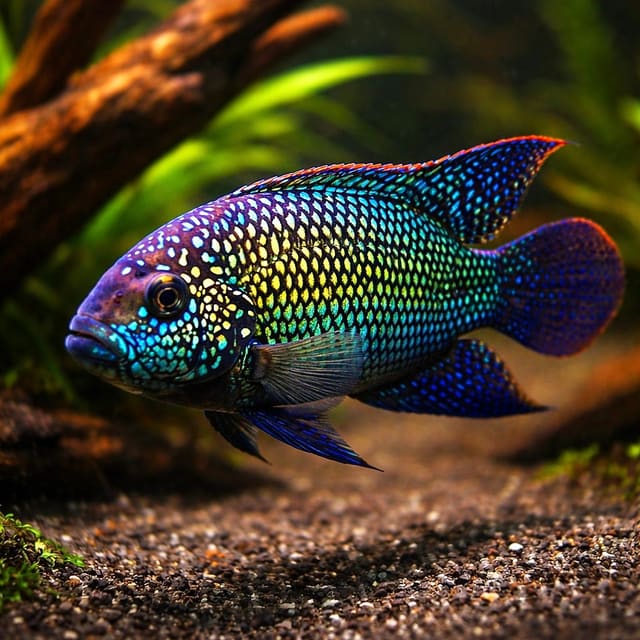
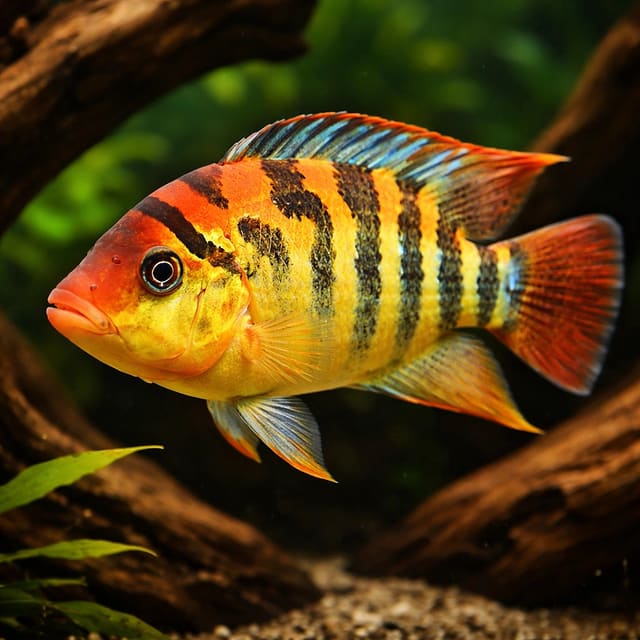
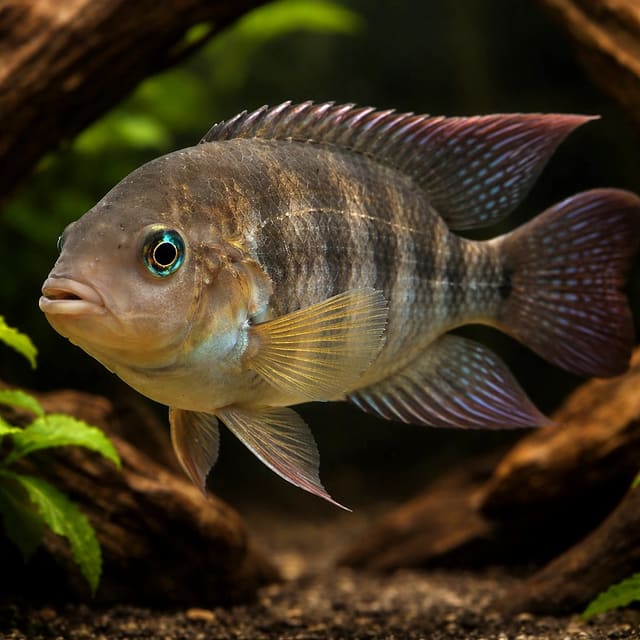
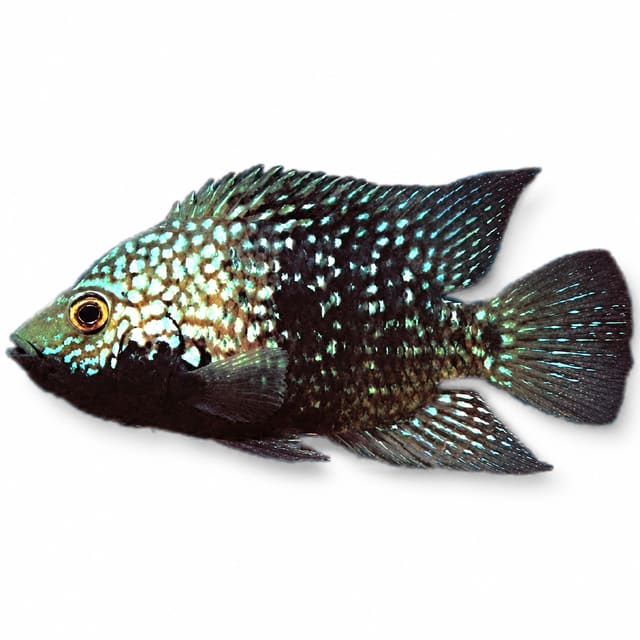
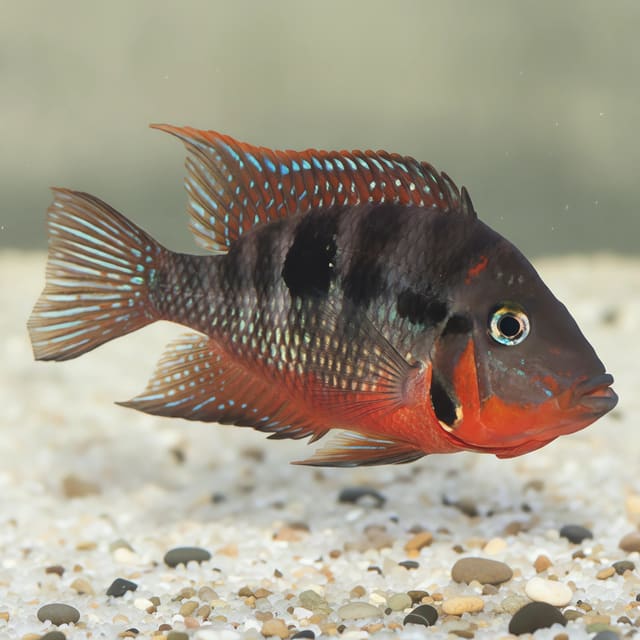
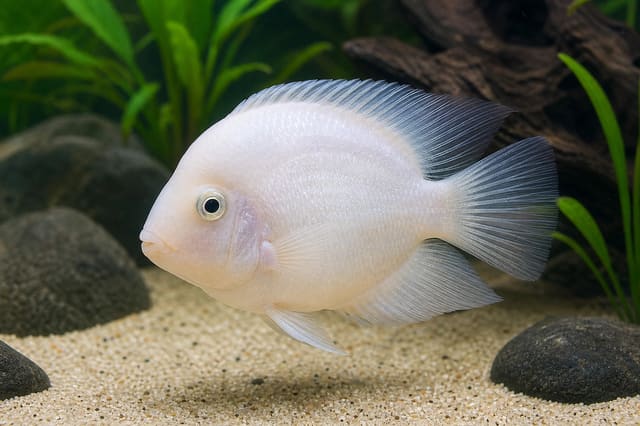
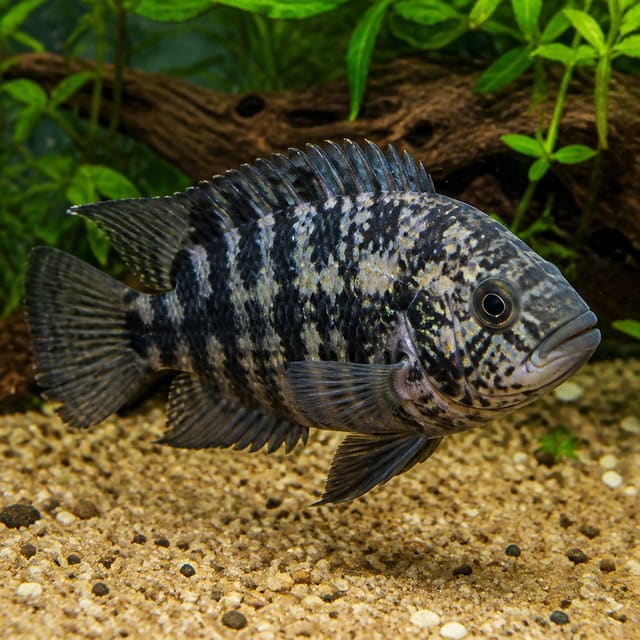
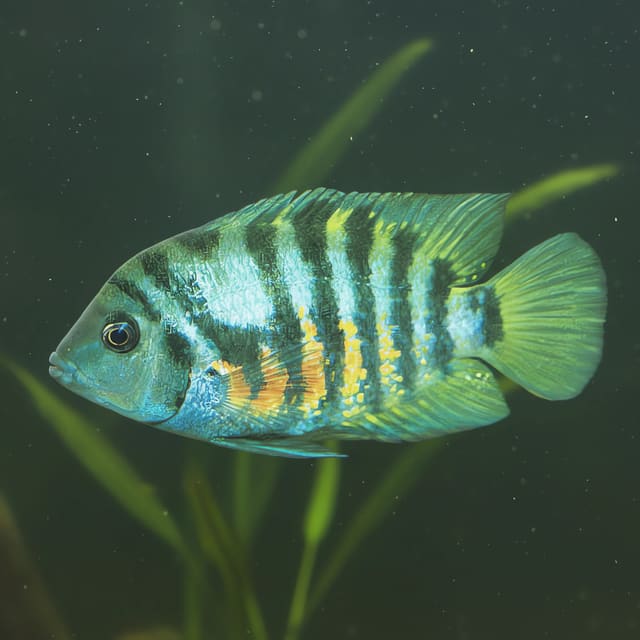
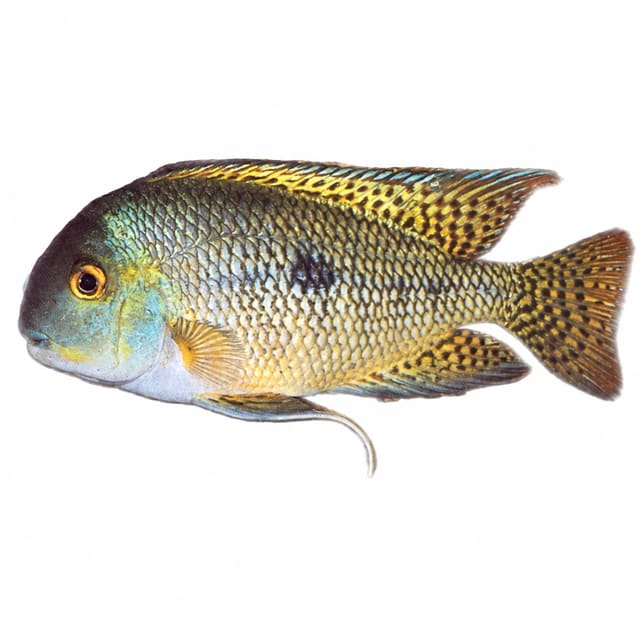
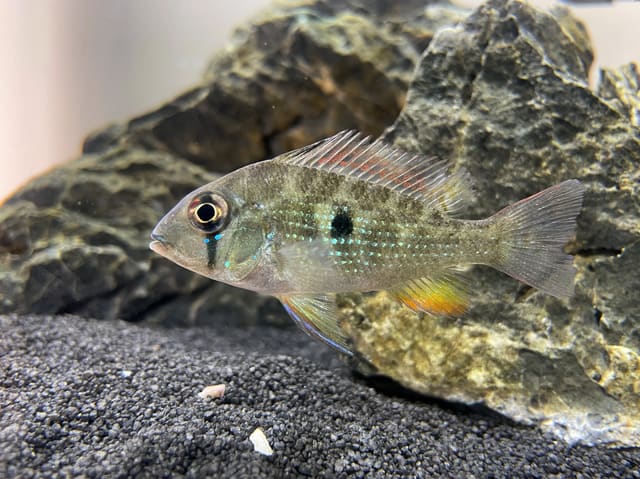
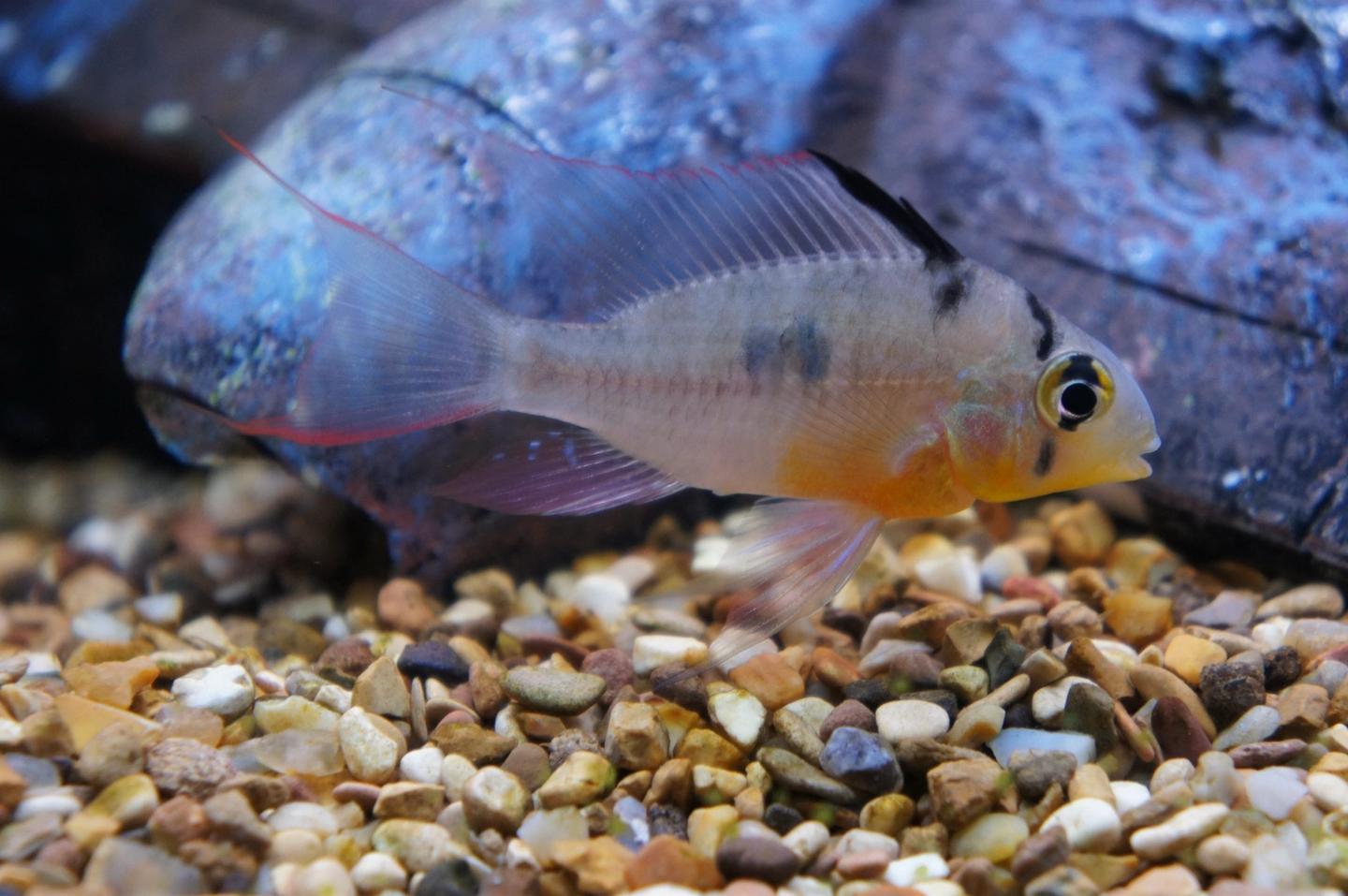
The identifying features are visual rather than a promise that every animal will look alike. Expect individual differences in colour, markings and head shape. The characteristic form includes a deep body, vivid colouring, pearling, dark flank markings and a forehead hump.
Flowerhorns found outside aquariums result from release. Released populations have become invasive pests in places including Singapore and Malaysia. Never release this fish, aquarium water, plants or other livestock into a pond, river, drain or natural waterway. If your keeping plans change, arrange a responsible aquarium rehoming route instead.
One purchase supplies one animal in the size selected through the live size selector. The listed dispatch sizes are 4–5 cm, 6–7 cm, 7–9 cm and 12–15 cm. The size you select is the size supplied, not the adult size.
Use the dispatch measurement to plan the immediate introduction and feeding portion, then base the permanent aquarium on the fish’s expected adult category and temperament. A larger starting size does not establish sex, maturity or final size.
Sex is guaranteed only when the selected option explicitly states male or female. This Cichlasoma flowerhorn listing has no sex-guaranteed option.
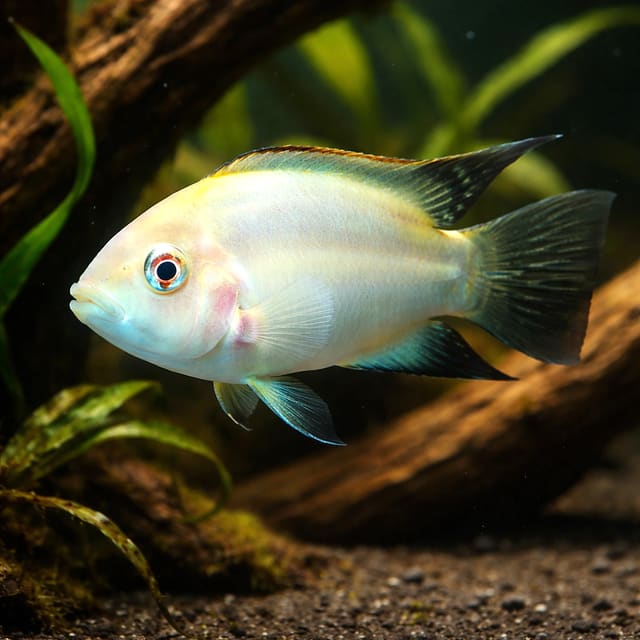
This is a hybrid rather than a wild species, so the care advice here follows its parent group. The gallery images are representative, based on reference photographs of this kind of animal, so colours can look slightly different from the live animal.
OATA’s American-cichlid guidance gives 22–27°C, pH 6.5–8.0 and general hardness of 4–12°dH for the group. These are broad parent-group values for planning this hybrid’s aquarium rather than an individual optimum.
| Decision | Planning figure |
|---|---|
| Temperature | 22–27°C |
| pH | 6.5–8.0 |
| General hardness | 4–12°dH |
| Smaller-species pair | At least 120 litres when adults remain under 15 cm |
| Larger or aggressive fish | At least 300 litres when adults exceed 15 cm or temperament requires it |
Confirm which aquarium bracket applies before committing to the permanent setup. The volume thresholds are starting points: OATA recommends choosing as large an aquarium as reasonably possible because greater water volume makes temperature and water quality more stable.
Review the current delivery and Live Arrival Guarantee policy before ordering, and use the live selector for the dispatch sizes shown on the product page.
Choose the permanent aquarium from the adult planning category, not by fitting the fish into the smallest volume that accommodates its arrival size. American cichlids range from smaller fish to animals reaching much larger dimensions, and their space requirements also change with temperament.
For a pair of smaller American cichlids that remain under 15 cm, use an aquarium of at least 120 litres. For larger fish over 15 cm, or for a more aggressive individual, use at least 300 litres. Establish the applicable category for this flowerhorn line and individual before stocking.
| If the assessment finds | Use this starting point |
|---|---|
| Adults under 15 cm and a suitable pair | At least 120 litres for the pair |
| Adult size over 15 cm | At least 300 litres |
| A more aggressive temperament | At least 300 litres and a separately assessed stocking plan |
| Adult category still being established | Resolve the category before choosing the permanent aquarium |
Aquarium volume affects more than swimming room. A larger body of water changes more slowly when waste, replacement water or room conditions affect it, giving the filter and keeper more opportunity to maintain stable conditions.
Calculate the aquarium around every animal that will live in it. Do not treat the minimum for one category as extra capacity for unassessed companions. Each additional fish increases feeding and waste, and the filter’s bacterial population must expand to process that increased load.
Increase livestock slowly rather than filling all intended positions at once. Rapid stocking can overwhelm the biological filter and cause new tank syndrome, in which ammonia and nitrite rise because too few nitrifying bacteria are processing the waste.
A working biological filter is essential. The RSPCA’s aquarium filtration guidance explains that fish release toxic ammonia, beneficial filter bacteria convert it to toxic nitrite, and further bacterial processing produces the safer end product nitrate.
Our first tropical aquarium guide explains how to prepare and mature the system before livestock arrives. Clear water alone is not a substitute for testing because dissolved ammonia and nitrite are not assessed by appearance.
Food entering the aquarium ultimately affects water quality. Eaten food becomes fish waste, while uneaten food breaks down directly in the water. Both routes add work for the biological filter. Feed a controlled portion once daily and remove the reason for excess waste by reducing a portion that repeatedly remains uneaten after a few minutes.
Every additional fish and every increase in feeding raises the biological load. Avoid combining a new fish, a major stocking increase and heavier feeding in one unmonitored step. Make stocking changes slowly and keep the established weekly testing routine in place.
| Result | Decision |
|---|---|
| Ammonia above zero | Pause livestock additions and check husbandry and filtration |
| Nitrite above zero | Pause livestock additions and check husbandry and filtration |
| Both at zero | Continue routine monitoring and controlled stocking |
| Filter flow reduced | Check the filter for blockages |
Set and monitor the aquarium within 22–27°C, pH 6.5–8.0 and general hardness of 4–12°dH. Carbonate hardness guidance is 3–10°dKH. Use measured results from the aquarium and tap water when deciding whether the setup is suitable.
| Water measure | Target or limit |
|---|---|
| Temperature | 22–27°C |
| pH | 6.5–8.0 |
| General hardness | 4–12°dH |
| Carbonate hardness | 3–10°dKH |
| Ammonia | Zero mg per litre |
| Nitrite | Zero mg per litre |
| Nitrate | Not to exceed 20 mg per litre above the normal tap-water level |
Test the aquarium before introduction and at least once every week afterwards. Ammonia or nitrite above zero means the biological system is not processing the present waste load safely. Check feeding, stocking pace, filter condition and maintenance before adding further livestock.
Read our water chemistry guide for the role of each measurement, then use the water matcher to compare your measured aquarium values with the range above.
The nitrate figure is measured relative to the normal level in the tap water used for replacement water. If the tap-water reading is 10 mg per litre, the aquarium should not exceed 30 mg per litre under the stated limit. If the tap reading is 20 mg per litre, the corresponding ceiling is 40 mg per litre. Test both sources with the same units so the comparison remains meaningful.
Weekly results are most useful as a sequence. Record the date, ammonia, nitrite, nitrate, pH and temperature together. A result moving towards a limit gives you an earlier maintenance signal than waiting for a visible change in the fish.
Use fine aquarium gravel or sand. American cichlids may dig or sift the substrate while feeding or breeding, so the base should be chosen with that normal group behaviour in mind.
Live plants may be dug up or eaten by American cichlids. If planted cover is central to the design, accept that it may be disturbed. Plastic aquarium plants can provide cover without depending on rooted growth, while an open section of accessible substrate makes routine siphoning practical.
| Setup choice | Reason |
|---|---|
| Fine gravel or sand | Suitable for fish that may dig or sift |
| Accessible substrate areas | Allow solid waste to be removed with a siphon |
| Plastic aquarium plants | Provide cover where live plants may be disturbed or eaten |
| Weekly visual inspection | Reveals accumulated waste and changes to the layout |
Check the substrate during each weekly partial water change. Pass the siphon over areas where solid waste has collected rather than allowing debris to remain beneath cover. The aim is to remove waste while changing part of the water, not to dismantle the whole aquarium each week.
Keep the filter intake and accessible cleaning areas clear enough to inspect for blockages. A design that prevents access to accumulated waste makes the weekly routine harder, while a layout with visible, reachable substrate lets you respond before debris breaks down.
Cover should help the fish use the aquarium without obstructing observation. You should still be able to see the eyes, fins, scales, breathing, swimming and feeding response well enough to notice a change from the individual’s normal condition.
American cichlids are generally omnivorous and often prefer meaty foods. Use specialised cichlid pellets or granules as the prepared portion, supplemented with suitable frozen or freeze-dried foods.
Smaller American cichlids can take foods such as daphnia, brine shrimp and bloodworm. Larger fish can be offered larger items such as cockles, lancefish or prawns. Choose a piece size the selected dispatch size can take readily rather than assuming one format suits every size.
Feed once a day and offer only what the fish consumes within a few minutes. This schedule creates a clear portion limit and gives you a daily opportunity to observe appetite, swimming and body condition.
| What you observe | What to do next |
|---|---|
| Food eaten within a few minutes | Keep the portion controlled and continue observing condition |
| Food repeatedly left behind | Reduce the next portion |
| Reduced interest in food | Test water quality and inspect the fish for other changes |
| Body condition increasing | Review portion size and avoid excess feeding |
| Body condition decreasing | Check intake, competition, behaviour and water quality |
Overfeeding creates excess faeces and leaves uneaten food to decay. That breakdown releases waste into the aquarium and increases the load on the biological filter. Adding more food is therefore not a neutral decision even when the fish appears eager to feed.
Use one repeatable daily portion as your baseline. If food remains after a few minutes, reduce the next meal rather than extending feeding time. If another fish is present, observe whether both animals can feed without one being displaced; feeding competition is part of the compatibility assessment.
Judge the routine by appetite, body condition and water-test results together. Colour or hump size is not a reason to exceed the portion the fish can consume cleanly.
Carry out a 25% partial water change at least once every week. Use a siphon to remove solid waste from the substrate and treat replacement tap water with conditioner to remove chlorine or chloramine before it enters the aquarium.
Do not rinse established biological filter media under the tap. Chlorine or chloramine may kill the beneficial bacterial population responsible for processing ammonia and nitrite. When cleaning is needed, rinse the media lightly in aquarium water removed during the partial water change.
| Maintenance action | Purpose |
|---|---|
| 25% partial change at least once a week | Removes part of the dissolved and solid waste load |
| Substrate siphoning | Collects waste held in gravel or sand |
| Tap-water conditioner | Removes harmful chlorine or chloramine |
| Light rinse in removed tank water | Reduces debris while limiting bacterial loss |
| Blockage check | Identifies restricted filter operation |
Testing and maintenance work together. A weekly water change does not replace the need to measure ammonia and nitrite, while a good test result does not remove the need to siphon waste and inspect the filter.
Keep the routine consistent when feeding or stocking changes. A larger food portion or another fish increases waste, so continue watching the results rather than assuming the established schedule will absorb every change automatically.
Learn the individual fish’s normal swimming, colour, breathing, temperament and feeding response. Changes in these areas can give an earlier warning than waiting for a severe visible problem.
If behaviour, breathing, appearance or appetite changes, test ammonia and nitrite first and include pH, temperature and nitrate in the same check. Water quality is a direct husbandry factor and gives you an immediate set of measurements to compare with the fish’s usual conditions.
| Checkpoint | Action |
|---|---|
| At each daily meal | Observe swimming, breathing, appetite and competition |
| At least weekly | Test water and inspect fins, scales, eyes and body condition |
| After a stocking change | Watch for altered aggression, hiding or feeding access |
| After maintenance | Confirm normal swimming and breathing resume |
When a concerning change persists, record the test results and the signs you can see, then contact us for health guidance. Do not treat a visible symptom in isolation from ammonia, nitrite, temperature and the recent feeding or maintenance history.
Clear, bright eyes, intact scales, undamaged fins and appropriate swimming are useful comparison points. The most important reference is the same fish’s normal pattern, because individual colour and behaviour can vary.
Most American cichlids do better either singly or in pairs, but the appropriate arrangement varies between the different fish in this group. Treat a single-animal setup and a pair as separate plans with different space, behaviour and stocking decisions.
One purchase supplies one animal, which allows you to assess that individual before considering another cichlid. Confirm its adult category, monitor its temperament and make sure the aquarium meets the applicable volume threshold. Single housing still requires a mature filter, cover, controlled feeding and the complete water-testing routine.
A pair is a behavioural relationship, not simply two animals of the same trade name. Sex is not guaranteed for these sizes, and sexing American cichlids varies considerably. Some show obvious differences, while others may show no clear differences unless breeding.
Use at least 120 litres only for a suitable pair from a smaller species remaining under 15 cm. If the adult category is over 15 cm or either individual is more aggressive, the American-cichlid planning threshold rises to at least 300 litres. Confirm that the proposed pair and aquarium fit the same plan before combining them.
| Proposed arrangement | Decision check |
|---|---|
| One flowerhorn | Assess adult category, aquarium volume and individual temperament |
| Proposed pair | Confirm pairing requirements and assess both individuals |
| Additional cichlid | Recalculate space, biological load and aggression risk |
| Community aquarium | Complete the full tank-mate screen before introduction |
Do not add another fish merely to fill visible space. Aquarium volume, filtration and water values must suit every resident, while observed aggression, hiding or loss of feeding access can make an apparently spacious arrangement unsuitable.
There is no universal tank-mate list for this hybrid. American cichlids vary from calmer fish that can sometimes enter robust communities to aggressive individuals that must be housed alone or only with equally aggressive cichlids.
| Assessment | Stocking response |
|---|---|
| Aggressive individual | Keep alone or consider only equally aggressive cichlids under a complete assessment |
| Calmer individual | Continue screening size, water values, feeding access and aquarium capacity |
| Temperament unclear | Do not mix until the individual has been assessed |
| Existing fish show stress | Pause additions and reassess the plan |
Avoid placing an aggressive individual with calmer fish. A shared temperature or pH range is only one part of compatibility; it does not resolve aggression, space use, feeding competition or the extra load placed on the filter.
Ask us for a stocking and compatibility assessment using the aquarium volume, measured water values, present livestock and the size of each fish. Those details allow a more useful decision than matching common names alone.
If you decide a community arrangement is preferable, compare other choices in the South American cichlid collection. Treat that collection as a set of fish to assess individually, not as a list of automatic flowerhorn companions.
Complete compatibility decisions before introducing another fish. Check that ammonia and nitrite are zero, confirm the aquarium is large enough for the intended adult category, and make sure the present fish is feeding and behaving normally.
The beneficial bacteria in a mature filter must increase when more fish are added and feeding rises. Rapid stocking can create new tank syndrome because the filter population cannot yet process the extra ammonia and nitrite.
Increased aggression, unusual hiding, erratic swimming, reduced feeding or changed breathing may signal that the social arrangement needs attention. Ammonia or nitrite above zero indicates that the biological load also needs attention. Treat these as connected parts of the same stocking decision.
| Change after introduction | Immediate decision |
|---|---|
| Aggression increases | Pause further additions and reassess compatibility |
| A fish hides more than normal | Check social pressure, feeding access and water quality |
| Food remains uneaten | Reduce the next portion and inspect appetite |
| Ammonia or nitrite rises | Pause additions and check filtration, feeding and maintenance |
If a social plan cannot be maintained responsibly, use an aquarium rehoming route. Never solve a failed pairing or community attempt by releasing a fish into a natural waterway.
Plan its permanent aquarium around the adult category established for the individual line, not its dispatch length. OATA uses at least 120 litres for a suitable pair of smaller American cichlids under 15 cm and at least 300 litres for fish over 15 cm or more aggressive individuals.
Use at least 300 litres if the fish falls into OATA’s larger, over-15 cm category or shows a more aggressive temperament. The 120-litre threshold applies only to a suitable pair of smaller American cichlids remaining under 15 cm.
Most American cichlids do better singly or in pairs, but assess this hybrid individually. One fish can be planned as a single-animal setup; combine two only after checking pairing requirements, adult category, aquarium volume and temperament.
It suits a keeper who can mature and maintain a biological filter, test water every week, control feeding and plan around adult size and individual temperament. Prepare the aquarium before introduction and keep ammonia and nitrite at zero mg per litre.
Feed specialised cichlid pellets or granules with suitable frozen or freeze-dried foods. OATA advises one meal daily, limited to what the fish consumes within a few minutes, with food size matched to the fish’s present size.
OATA’s American-cichlid group guidance gives 22–27°C, pH 6.5–8.0 and general hardness of 4–12°dH. Keep ammonia and nitrite at zero mg per litre and nitrate no more than 20 mg per litre above the normal tap-water level.
American cichlid temperament varies, and some individuals may be very aggressive. Assess this fish before mixing it, avoid placing an aggressive individual with calmer fish, and keep an aggressive fish alone or only consider equally aggressive cichlids after a complete assessment.
Calmer American cichlids such as angelfish and severums may enter robust communities with larger shoaling fish, but that rule does not make them automatic companions for this hybrid. Screen every proposal for adult size, temperament, water values, aquarium capacity and feeding access.
Someone must be present to receive the parcel. Start filming every delivery before opening the sealed parcel, continue without a break while it is opened and show the fish still inside the sealed bag; then float the bag for 20–30 minutes before releasing the fish, and never pour the bag water into the aquarium.
No reviews for this item yet. Bought one? Honest reviews only, good or bad.
What customers say about ordering from us
I have a small group of long finned mountain minnows. So was delighted to be able to order ten of this variety to increase the genetics in my tank . The ones I recieved are healthy but it’s to early to give a verdict on wether they are of a long finned type since they are small currently.
Gordon Walker · 23 Sept 2026
100% success travel and "installation". Pleased with quality of purchase. The Siamese fighter a bit "shy" so have not yet seen him at his best yet but looking good. Happy customer. GG
George E Garratt · 21 Sept 2026
Reviews of our shop, collected by Judge.me, an independent third-party review collector. Newest first.