By Priya Ramesh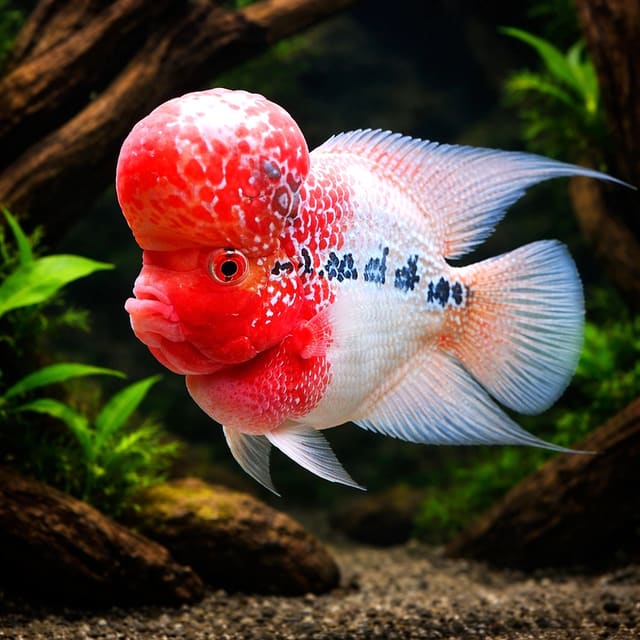
Advanced
Flowerhorn Cichlid
22–27°C · pH 6.5–8
£90.99
South American Cichlids · Buying Guide
Honest UK flowerhorn guide - real tank size, why they live alone, the kok, water, feeding and welfare-first buying advice. See flowerhorns in stock.
7 products in stock today
Live prices and stock. Every fish covered by our Live Arrival Guarantee.
22–27°C · pH 6.5–8
22–27°C · pH 6.5–8

20–28°C · pH 6.2–8.2
22–27°C · pH 6.2–8
24–30°C · pH 5–7 · 648L
23–27°C · pH 6.2–8 · 81L
22–26°C · pH 6.2–7.5
The shaded band shows the range flowerhorn is comfortable in. Match it to your tap water before you buy.
Our trained assistant knows this flowerhorn page inside out. Ask it anything — water parameters, tank mates, how many to buy — or have it read the guide aloud while you set up your tank.
You're standing in front of a tank of palm-sized flowerhorns, the colours are unreal, one of them is "dancing" at your finger through the glass, and the label says hardy and easy to feed. All true. What the label doesn't say is that the fish in front of you is a 25-30 cm hybrid cichlid that has to live completely alone in a 200-250 litre tank - and that it will fight, injure or kill almost anything you ever try to keep with it.
I'm Priya Ramesh, and cichlids are my corner of Tropical Fish Co. I've kept and bred South and Central American cichlids for over a decade, and the flowerhorn is the fish I have the most blunt conversations about - more blunt even than oscars. Not because it's hard to keep alive (it's tough and adaptable), but because it's routinely sold to people picturing a colourful community centrepiece, when it's the opposite: a one-fish-per-tank tank-buster with a genuine temper. This guide is the conversation I'd have across the counter when someone asks "can I get a flowerhorn?": what it actually is, what it needs, why it lives alone, and how to do right by it.
The decision this page helps you make is simple: can you give one fish a 200 L+ tank to itself for 10-12 years? If yes, a flowerhorn is unlike anything else in freshwater - it'll know you, follow you and eat from your hand. If you wanted tank mates and a community, this is the wrong fish, and I'd rather you found that out now.
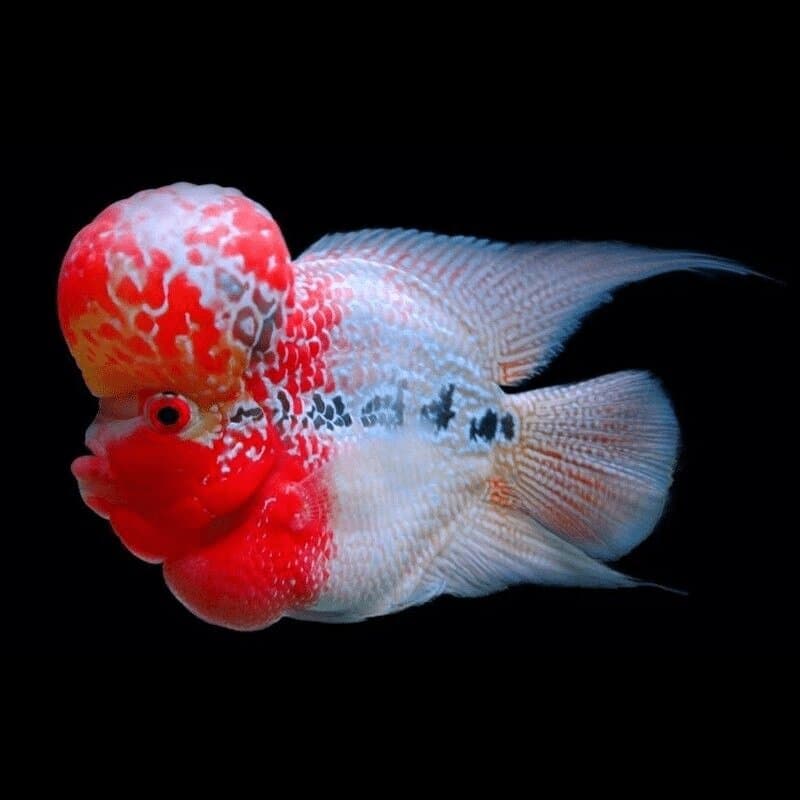
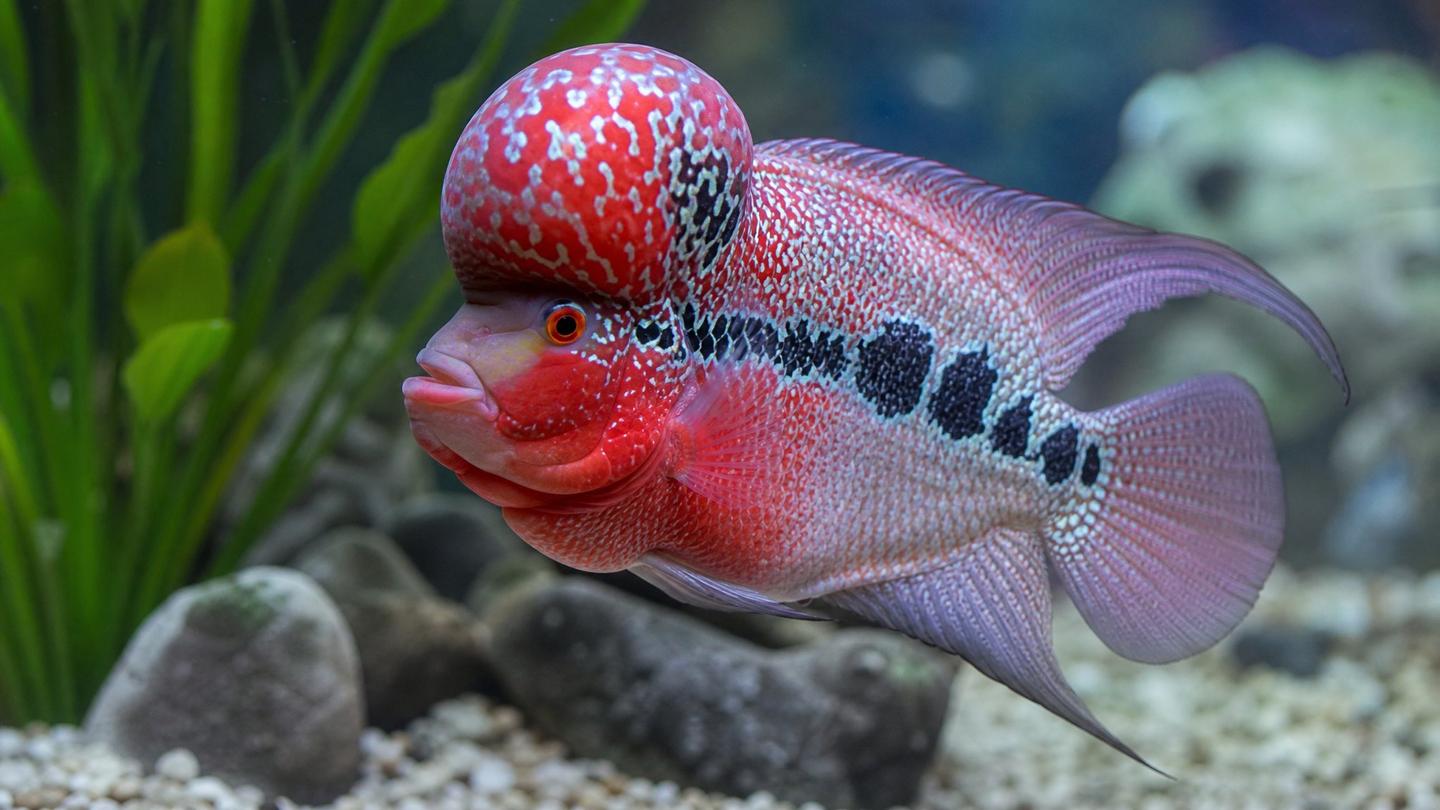
A "big head" flowerhorn showing the prized kok (the forehead hump), pearl scaling and the row of dark "flower" blotches along the flank. This is one of our own stock fish. The hump is mostly fatty tissue and grows with maturity. Credit: Tropical Fish Co.
Flowerhorns get written about endlessly, but most of it repeats the same lines. Here are the ones worth knowing:
People shopping for a flowerhorn are usually weighing it against other big "wet pet" cichlids. The honest comparison - all of these need a serious tank, none is a beginner community fish:
| Large cichlid | Adult size | Aggression | Min tank (one) | Kept solo? |
|---|---|---|---|---|
| Flowerhorn (hybrid) | 25-30 cm+ | Very high - tank-wide territory | 200-250 L | Yes - one per tank |
| Oscar (Astronotus ocellatus) | 30-35 cm | Territorial / predatory | 450 L | Solo or a bonded pair in 600 L+ |
| Red devil (Amphilophus labiatus) | ~28 cm | Very high | 250 L+ | Usually solo |
| Convict cichlid | 8-12 cm | High for size | 110 L | Pair (will breed readily) |
| Firemouth cichlid | 12-15 cm | Moderate, bluffs | 150 L | Pair or with robust tank mates |
If you want a giant you can keep with companions, an oscar in a big enough tank is the easier brief - see our oscar guide. If you specifically want the kok, the colour and a fish that treats you like its world, the flowerhorn is the one - but accept the solo tank as part of the deal.
This is the section that should make or break your purchase. A flowerhorn reaches 25-30 cm (some lines larger) [5], and it is aggressive enough to live only on its own [4]. The honest numbers:
The single biggest flowerhorn welfare failure is buying it as a "centrepiece" for a community tank. A mature flowerhorn claims the entire tank as territory and will harass, injure or kill tank mates - including other flowerhorns. Don't design a community around it, don't add "a few fast fish to dilute aggression", and don't assume a big tank makes it safe. Plan a species-only tank for one fish from day one. If you wanted a community, choose a different fish.
A big tank is only half the job - flowerhorns are demanding on equipment because of how much they eat, waste and rearrange:
Get the filter and water-change routine right and a flowerhorn is a robust, long-lived fish. Skimp on them and even this hardy hybrid struggles.
Here are the flowerhorns we have in stock this week - genuine flowerhorn hybrid lines, sold as growing fish for a tank of their own:
Flowerhorns settle far better bought as robust juveniles and grown on in their final tank than moved as stressed adults. A juvenile also lets you watch the fish develop - the kok, the pearling and the flower row all intensify with maturity, especially on males. Just have the solo 200 L+ tank cycled and ready before the fish arrives, not "soon".
I'll be straight, because this is where flowerhorns get people into trouble: the safe number of tank mates for a flowerhorn is zero. A flowerhorn is a hybrid of aggressive Central American cichlids, and an adult defends the whole tank [5][4]. Anything small enough to fit in its mouth is food; anything peaceful gets bullied to death; anything its own size means two territorial giants in one box.
If you want the foundations of housing any large, territorial cichlid before you commit, start here:
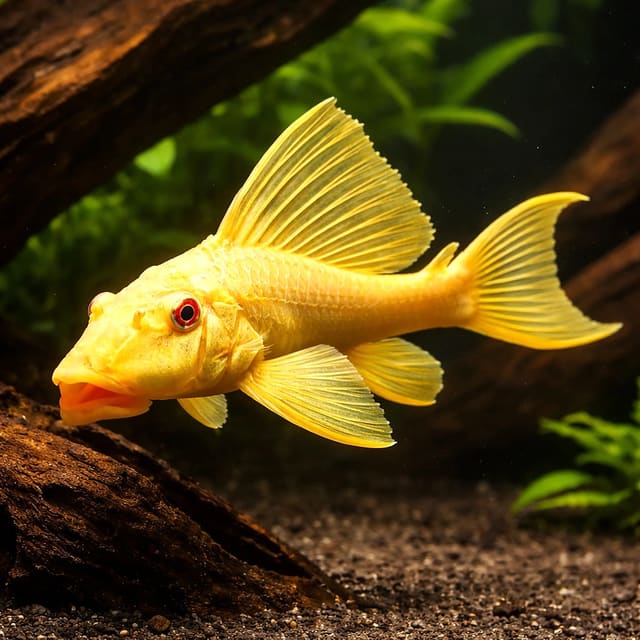
Some very experienced keepers, in large tanks, run a single armoured catfish alongside a flowerhorn as a managed risk - a big pleco or robust Synodontis that's nocturnal, thick-skinned and stays out of the way. This is not a "safe combination"; it's a calculated one, with a spare tank or a divider on standby in case the flowerhorn turns on it. If you're set on trying it, these are the only sort of fish I'd even discuss - large, tough, bottom-dwelling, and never small or mid-water:
| Possible (risky) companion | Adult size | Why it's less likely to be killed |
|---|---|---|
| Common / gold pleco (Hypostomus) | 30-40 cm | Armoured, nocturnal, ignores the flowerhorn's mid-water space |
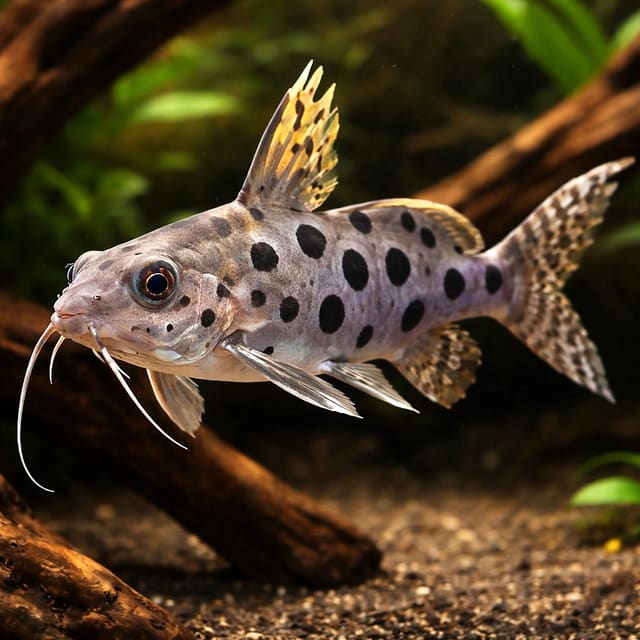
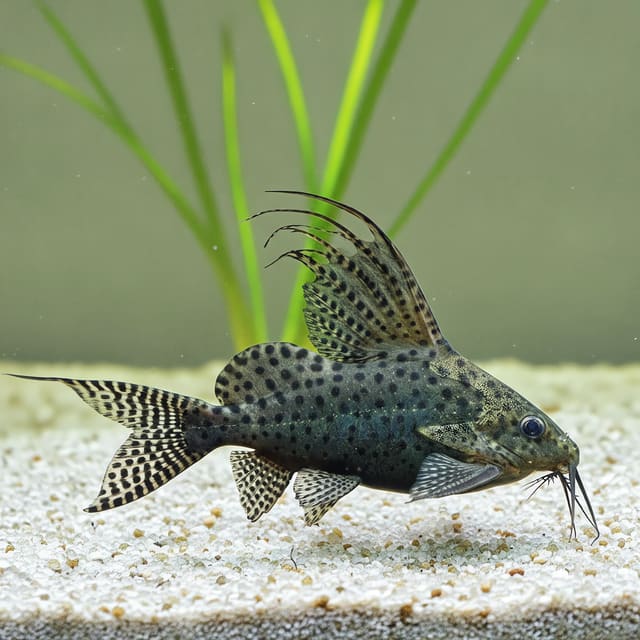
| Featherfin / large Synodontis | 15-20 cm | Thick-skinned, robust African catfish that hold their ground |
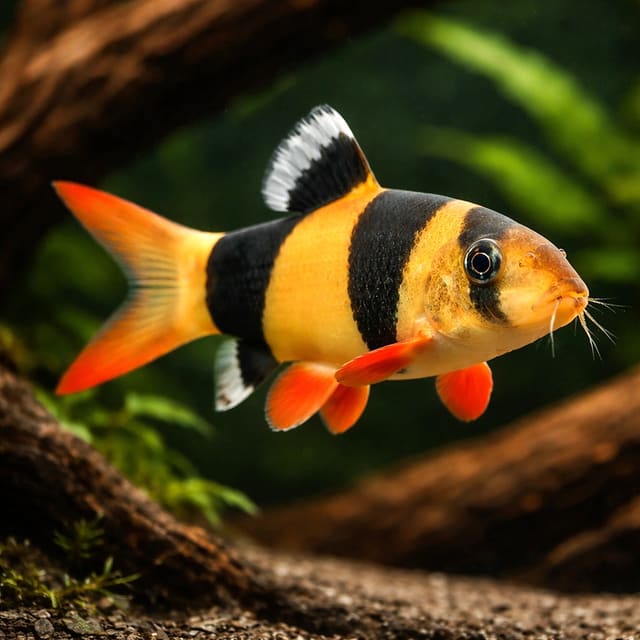
| Clown loach (Botia macracantha) | ~30 cm | Large, fast, shoaling - too big to swallow, too quick to corner |
This is the classic. A ram cichlid (Mikrogeophagus ramirezi) is a gorgeous 5 cm dwarf - and in a flowerhorn tank it's a snack, not a friend. The same goes for any tetra, gourami, guppy or small mid-water fish: a flowerhorn will hunt or harass them to death. If you've seen rams or small fish listed near flowerhorns, keep them firmly apart - rams belong in a peaceful community tank. The only honest "tank mate" answer for a flowerhorn is: keep it alone.
If, instead, you've decided to keep your flowerhorn solo (the right call for most people) and the catfish above caught your eye for a separate tank, here they are - just don't drop them in with the flowerhorn:
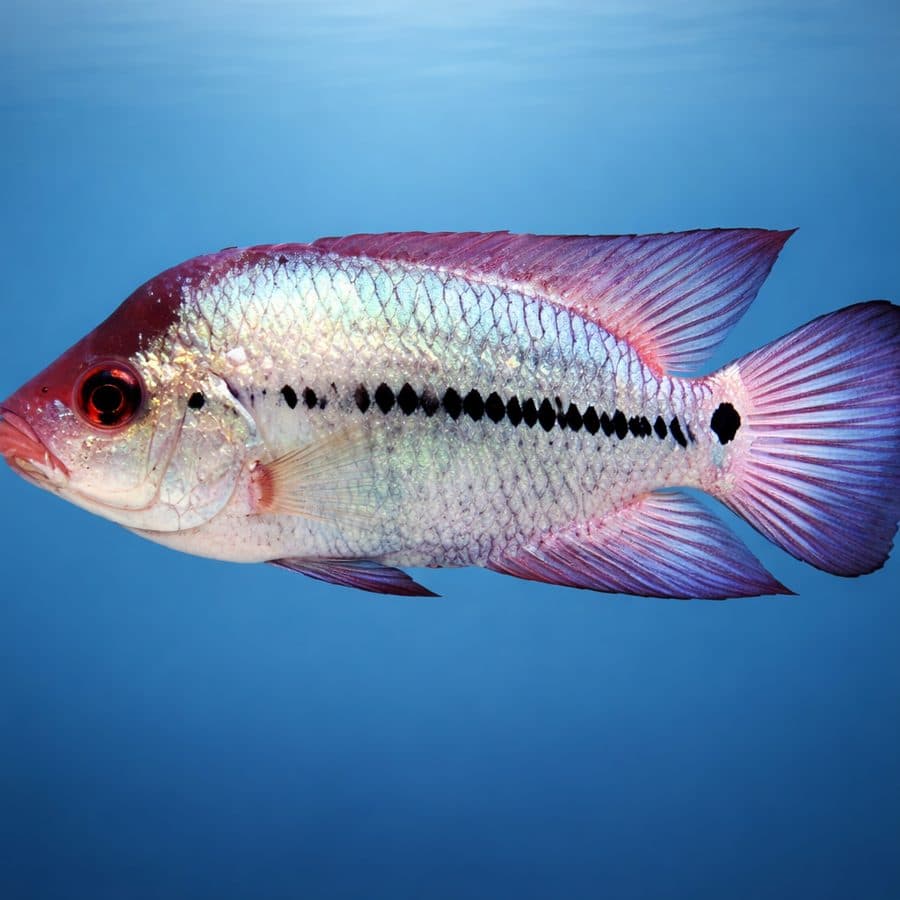
A "thai silk" flowerhorn - a line bred for an all-over metallic silver-blue sheen rather than the classic red-and-flower look. Same hybrid, same solo-tank care; the colour is the only real difference. Credit: Tropical Fish Co.
Flowerhorn "types" - big head, thai silk, kamfa, golden monkey, SRD and the rest - are line names for selectively bred looks, not different species. Care, size, temperament and the solo-tank rule are identical across all of them [1]. Choose on the kok shape, colour and flower markings you love; the tank, filter and food bill don't change.
A note on UK water: a flowerhorn is a hybrid of hardy cichlids and happily tolerates the hard, alkaline tap water common across south-east England, where supplies are classified as hard [6]. Unlike soft-water fish such as wild discus, you don't need RO or chemistry games for a flowerhorn. What matters is cleanliness, not chemistry - which brings us to feeding.
Flowerhorns are omnivores with a big appetite, and they eat - and waste - a lot. Get the diet and filtration right and most "flowerhorn diseases" never appear.
Don't panic if your flowerhorn's hump shrinks for a while. Across cichlids, the nuchal hump is condition- and hormone-linked tissue - a peer-reviewed study showed it functions as a status signal that trades off against swimming performance [2]. In practice that means a male's kok flexes with maturity, breeding hormones, diet and stress. A settled, well-fed, parasite-free fish in clean water tends to carry the biggest, roundest hump - so a good kok is mostly good husbandry, not a magic food.
If your flowerhorn develops small pits around its head and along the lateral line (head-and-lateral-line erosion), read it as a water-quality and diet alarm, not just something to medicate. Increase water changes, vary the diet with frozen and vegetable foods, remove activated carbon, and lower stress. Caught early it reverses; ignored for months it scars permanently.
Flowerhorns are hardy travellers, but a juvenile still arrives stressed. Our live-animal courier delivers in an insulated, oxygenated bag; your job is a calm transition into a tank that's already cycled and waiting. The flowerhorn-specific protocol:
Because a flowerhorn lives alone, there's no tank-mate aggression to manage on arrival - but do make sure the tank is fully cycled and stable first. A big, messy fish in an immature tank is the fast route to trouble.
Flowerhorns range from a few pounds for an unsorted juvenile to hundreds for a graded show fish, and price tells you very little about health. A cheap juvenile from a clean tank is a better buy than an expensive adult that's been stunted - so judge the fish and the tank it came from. A welfare-marker checklist that works for any retailer, anywhere:
Trust the markers over the signage every time. A healthy flowerhorn from a clean, single-fish setup is worth waiting for - and worth paying a little more for.
Flowerhorns inspire serious dedication, and the UK has good places to learn from people who keep them properly - which matters with a fish this demanding:
A common thread runs through all of them: nobody who's kept a flowerhorn long-term recommends a community tank or a small one. Listen to the people who've done the years.
If a flowerhorn's solo-tank, full-on temperament gives you pause, a different large cichlid might suit you better - and if it doesn't, you've got the reading to do it right.
Every claim above is sourced - see the References block below. If you're weighing up a flowerhorn and you're not sure you can give one fish a tank to itself, ask us first. We'd always rather talk you into the right setup than sell you a fish that ends up alone in too small a box - which, with a flowerhorn, it always should be.
Visual route into the rest of our UK live-fish range.
Material factual claims cite the sources below; store policy and cautious inference are labelled in the article. Sources are grouped by type so you can judge their weight at a glance.
Peer-reviewed study of the cichlid nuchal hump - finds it works as both an ornament (female preference) and an armament (winning territory), with real swimming-endurance costs. Context for the flowerhorn kok.
FishBase entry for a PARENT species of the flowerhorn (not the hybrid itself). Source for the Central American origin and ~28 cm adult size of the founding stock - a flowerhorn has no species page of its own.
Documented hybrid origin - Central American cichlid crosses developed in Malaysia/Taiwan from the 1990s. Used honestly as the source for the man-made, no-single-species point.
Husbandry cross-check on a flowerhorn parent species - temperament, tank footprint and aggression of the Central American cichlids the hybrid descends from.
UK hobbyist source confirming flowerhorns grow to ~30 cm, become very aggressive and territorial, and are a one-fish-to-a-tank cichlid.
Walkthrough of flowerhorn tank setup, solo keeping, feeding and the kok.
UK tap-water hardness classification - context for keeping a hard-water-tolerant hybrid in south-east England.
Fishkeeping moves fast and we want every guide spot-on. If you think something here is wrong, out of date, or could be clearer, tell us — our team reads every message and updates the page.
Suggest an editCompare African lake, South American and Central American cichlids by adult size, water, social behaviour and aquarium footprint before choosing.
Learn which freshwater aquarium water parameters to test, how to read ammonia, nitrite, nitrate, pH, GH and KH, and when a result needs action.
Discus & Cichlid Expert · 15+ years in the hobby
Priya has bred discus commercially in Leicester since 2016 — supplying Tropical Fish Co and two other UK retailers with F1 tank-bred juveniles. Before that she spent seven years on South American dwarf cichlids. Her discus and cichlid guides on this site are written from the perspective of someone who has actually hatched, grown out, and shipped the fish — not from library research alone.