−12%
Moderate
African Glass Catfish (Pareutropius debauwi)
22–27°C · pH 6–8
£12.31£13.99

The Featherfin Synodontis (Synodontis eupterus) is a mochokid catfish from the White Nile, Niger, Volta, Chad, Kwa Ibo and Cross basins that reaches 30 cm standard length. It suits a mature, filtered aquarium planned around that adult size; the FishBase–OATA overlap is 22–26°C and pH 6.2–7.5, with 4–15°dH using OATA’s lower guide and FishBase’s upper record. Sold individually in dispatch sizes from 2–3 cm to 20–25 cm.
Adult size is the maximum length this species reaches at full maturity (scientific sources). The livestock you receive will be younger and smaller — pick a size above for the actual shipping size. Product-photo provenance and any image-specific limitations are stated on the listing.
Synodontis eupterus
The Featherfin Synodontis (Synodontis eupterus) is a mochokid catfish from the White Nile, Niger, Volta, Chad, Kwa Ibo and Cross basins that reaches 30 cm standard length. It suits a mature, filtered aquarium planned around that adult size; the FishBase–OATA overlap is 22–26°C and pH 6.2–7.5, with 4–15°dH using OATA’s lower guide and FishBase’s upper record. Sold individually in dispatch sizes from 2–3 cm to 20–25 cm.
Adult size is the maximum length this species reaches at full maturity (scientific sources). The livestock you receive will be younger and smaller — pick a size above for the actual shipping size. Product-photo provenance and any image-specific limitations are stated on the listing.
Maintain these water conditions for optimal health and vibrant colors
The Featherfin Synodontis (Synodontis eupterus), also called the featherfin squeaker, is a freshwater mochokid catfish from Africa’s White Nile, Niger, Volta, Chad, Kwa Ibo and Cross basins. FishBase records a maximum of 30 cm standard length. It suits a keeper prepared to plan a mature, filtered aquarium around that adult size rather than around the much smaller fish that may arrive.
This is a benthopelagic species, meaning that its activity is associated with the lower part of the water column and the bottom. FishBase records it over muddy bottoms and rocks in the wild and identifies it as an upside-down species. Those details make lower-level space, accessible shelter and deliberate feeding more important than choosing it simply as a decorative addition.
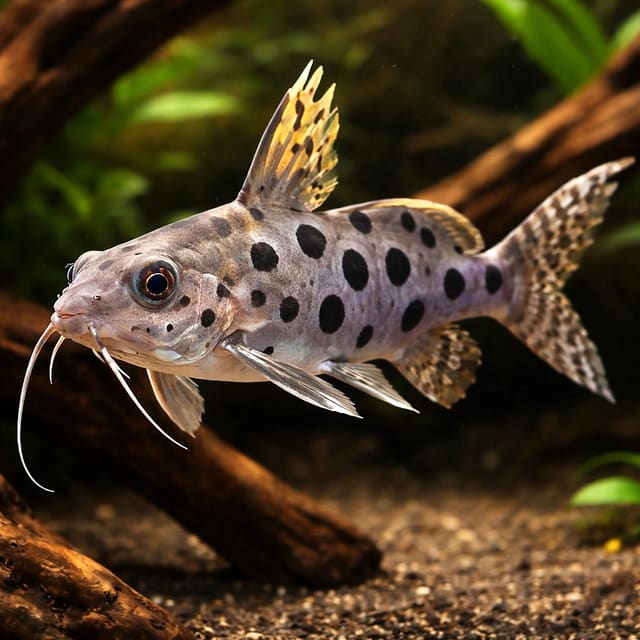
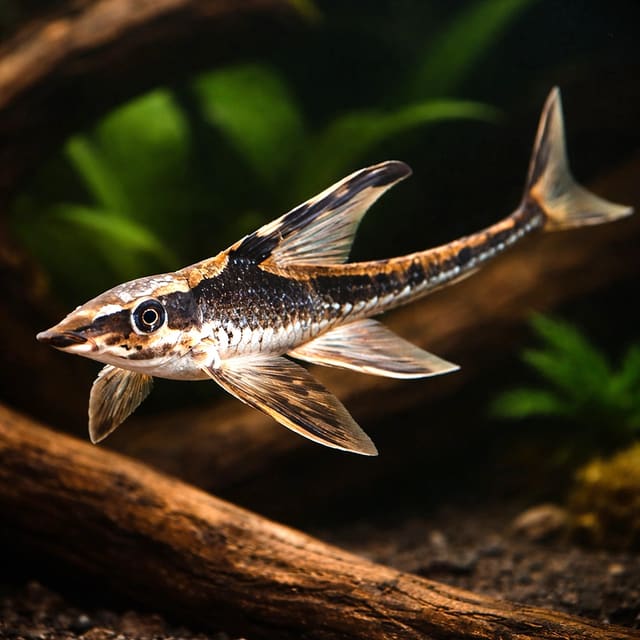
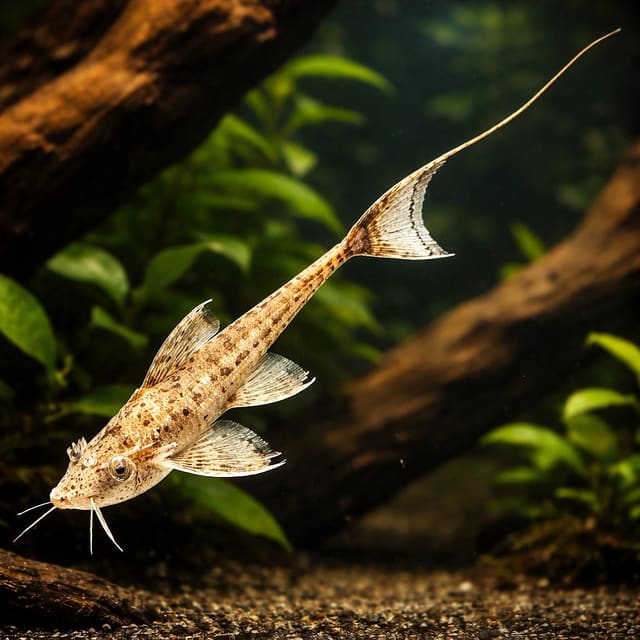
The high, feather-like dorsal fin is central to the common name. A Wikipedia account of its natural history also explains that featherfin squeakers can make noises to communicate with one another. These are features of the species, but they do not determine sex, social requirements or compatibility with another fish.
The decisive planning figure is 30 cm standard length. Standard length excludes the tail, so the complete fish requires more room than a simple 30 cm object. Before choosing it, check that the aquarium can accommodate the adult body, an accessible refuge, an effective biological filter and unobstructed routes around the lower level.
FishBase describes a wild diet based mainly on insect larvae with algae also taken. Aquarium feeding should therefore be deliberate and species-appropriate; this catfish must not be treated as a clean-up animal that survives on whatever other fish leave behind.
One purchase supplies one Featherfin Synodontis from the selected size. Use the live size selector to choose from the labels 2 - 3 cm, > 7 cm, 4-4.5 cm, 5-6 cm and 20-25 cm. The size you select is the size supplied, not the adult size.
Every selection needs an aquarium planned around the 30 cm adult maximum. A smaller dispatch fish does not make a small aquarium a suitable long-term home, while the 20-25 cm grade already needs routes and shelter sized for a substantial catfish. Check the aquarium itself rather than using the dispatch label as a space recommendation.
Do not infer sex, age or origin from the selected size. A length label describes the fish’s dispatch size and nothing more.
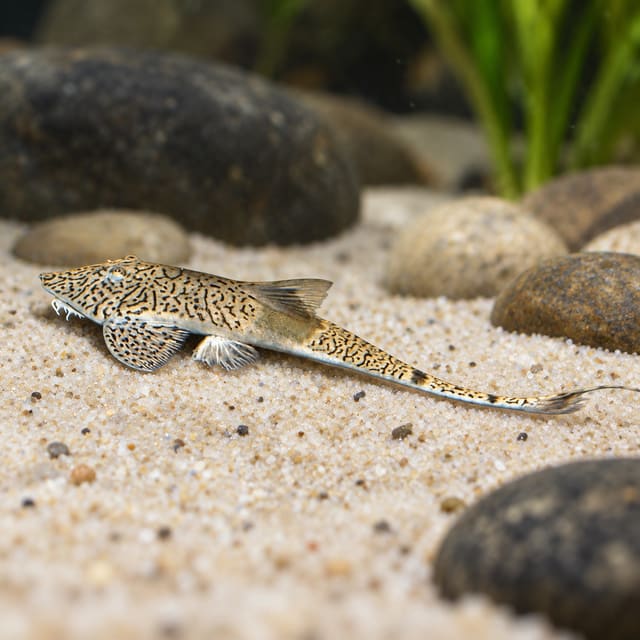
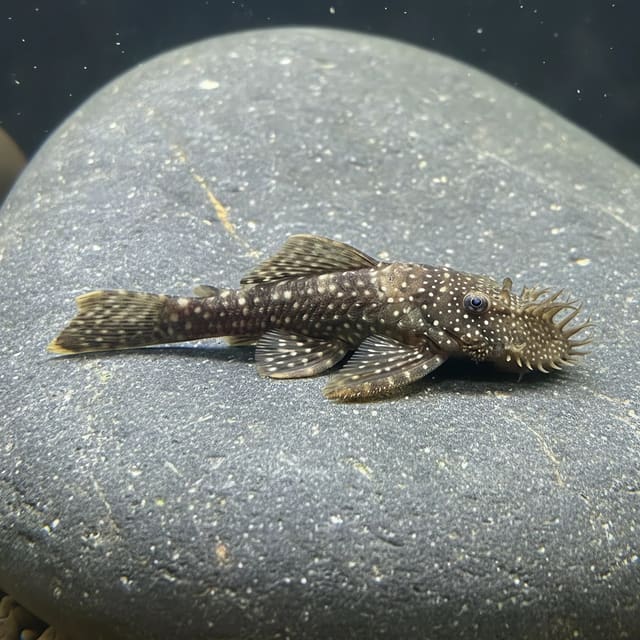
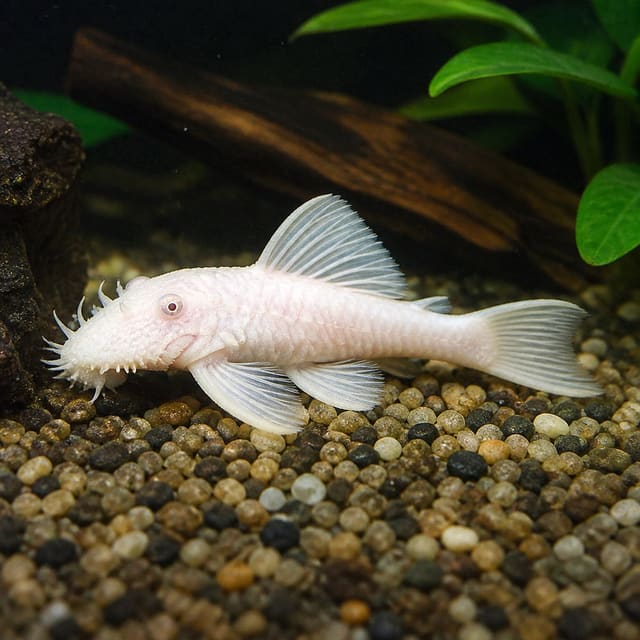
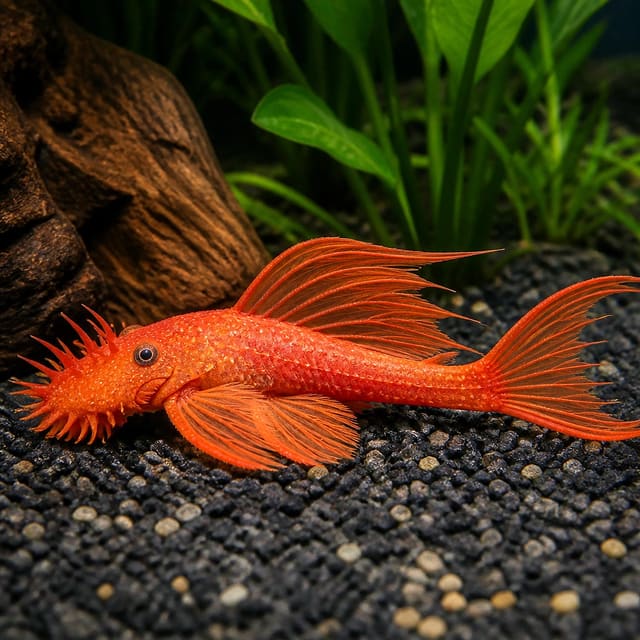
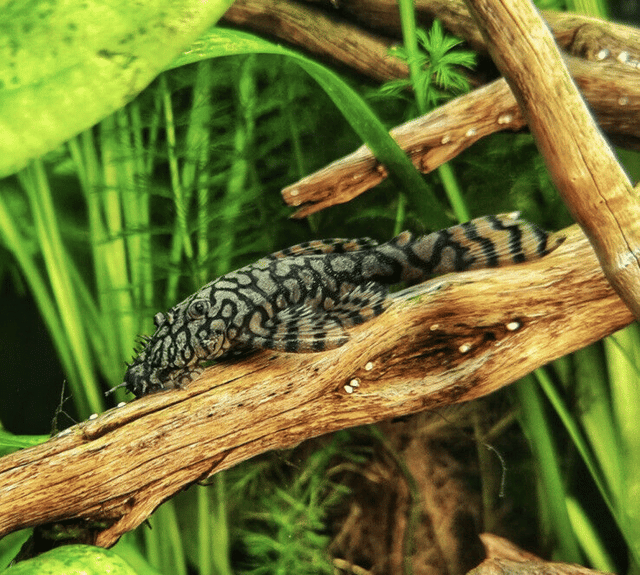
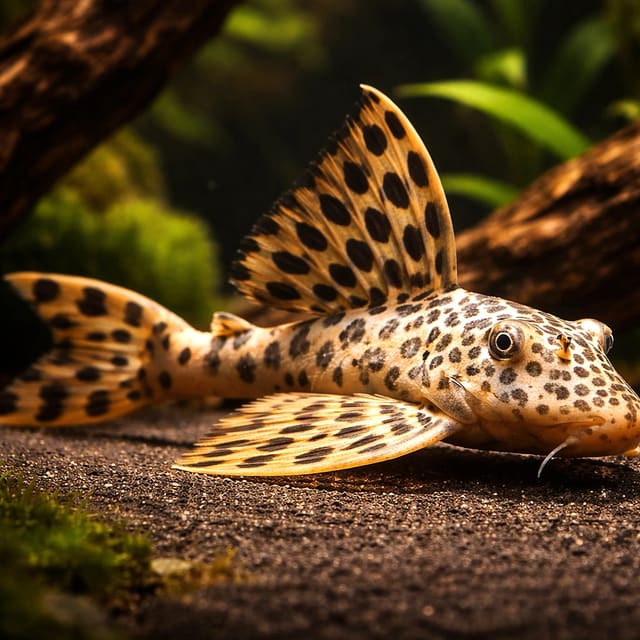
The gallery images are representative of this type of animal rather than photographs of the exact animal supplied, so colours can look slightly different from the live animal.
The gallery shows the characteristic body and dorsal-fin profile for identification and visual reference. It does not turn visible markings, body proportions or apparent sex into a promise about the individual fish dispatched.
Choose this catfish when you can provide a well-matured, filtered freshwater aquarium, keep the routine water within the FishBase–OATA overlap, feed an appropriate sinking diet and reserve enough lower-level space for a 30 cm adult. Delay the purchase if the aquarium is newly set up, unfiltered or planned only around the selected dispatch size.
| Suits | Not suited to |
|---|---|
| A mature aquarium with an effective biological filter | An unfiltered aquarium or one with measurable ammonia or nitrite |
| Planning around a 30 cm standard-length adult | Space planned only around a juvenile dispatch size |
| Routine water at 22–26°C and pH 6.2–7.5 | Water that cannot remain within the stated range |
| Deliberate sinking food based on its recorded diet | Depending on scraps left by other fish |
| Case-by-case assessment of a mixed community | Assuming all catfish share one temperament or social rule |
A mature aquarium means that the biological filter has established the bacteria needed to process fish waste. Maturity is not achieved simply by filling the aquarium and bringing it to temperature. Ammonia and nitrite must both test at zero before the fish is introduced.
If another catfish would suit the plan better, browse the catfish and plecos collection. Compare adult size, water range, diet and social needs separately rather than treating members of a broad retail category as interchangeable.
Plan every dimension and lower-level route around a Featherfin Synodontis reaching 30 cm standard length. FishBase also reports a recorded specimen length of 22.2 cm, but the 30 cm maximum remains the figure to use for the long-term aquarium, shelter and access routes.
OATA’s freshwater-catfish guidance recommends an aquarium of at least 80 litres for a shoal of smaller species such as Corydoras or for smaller plecos, then says much larger aquariums are needed for bigger species. A Featherfin Synodontis reaching 30 cm belongs in that larger-species decision, so do not use the 80-litre small-catfish benchmark for this fish.
Use the adult measurement for the first layout, not as a future upgrade target. Moving a substantial catfish later can be avoided by preparing the final-scale aquarium before introduction.
A larger water volume also changes more slowly than a smaller one, helping temperature and water quality remain stable. Volume alone is not enough, however: the fish still needs usable lower-level routes, shelter and filtration that can process the aquarium’s total waste load.
Keep the Featherfin Synodontis at 22–26°C, pH 6.2–7.5 and 4–15°dH. Temperature and pH are the overlap between FishBase’s species environmental range and OATA’s freshwater-catfish group guidance. The hardness range uses OATA’s 4°dH lower guide and FishBase’s 15°dH upper record; it is not a species-specific optimum.
Choose a stable point inside each range instead of allowing conditions to move repeatedly between the limits. A reading of 24°C and pH 7.0, for example, sits inside both stated ranges. That example is a way to check a measured result, not a requirement to alter stable water that already falls within the full range.
| Measurement | Action |
|---|---|
| 22–26°C | Keep the temperature stable within this range. |
| pH 6.2–7.5 | Compare the aquarium and replacement water before making a change. |
| 4–15°dH | Use this hardness band for routine planning. |
| Ammonia 0 mg/l | Do not add fish while ammonia is detectable. |
| Nitrite 0 mg/l | Do not add fish while nitrite is detectable. |
| Nitrate | Keep it from exceeding 20 mg/l above the normal tap-water level. |
Read the water chemistry guide before changing pH or hardness. Test both the aquarium and its replacement water so that a correction does not create a sudden swing.
Use the water matcher to compare measured values with 22–26°C, pH 6.2–7.5 and 4–15°dH. If a result falls outside the range, identify whether the aquarium, source water or maintenance routine has changed before adding the fish.
Use a well-set-up and maintained biological filter. The RSPCA explains that fish release toxic ammonia, which filter bacteria convert first to nitrite and then to the safer nitrate. The aquarium is not ready for this catfish until both ammonia and nitrite test at zero.
A filter is essential regardless of aquarium size. It must remain running and able to process the total waste created by all fish and feeding in the aquarium. Adding several animals quickly or increasing food sharply can leave the established bacterial population unable to process the new load.
OATA calls the ammonia and nitrite rise caused by insufficient nitrifying bacteria “new tank syndrome”. It can make fish ill or cause death, so visual clarity is not a substitute for a test result. Clear water can still contain ammonia or nitrite.
Follow the first tropical aquarium guide when preparing a new system. For an established aquarium, confirm that the filter is operating normally and that adding another fish will not be combined with several other changes to stocking or feeding.
Keep the filter running through routine maintenance. Clean it only when needed and preserve its bacterial media using the water-change method described below.
Feed a suitable sinking food based primarily on insect or other invertebrate ingredients, with algae represented in the diet. FishBase records that wild Featherfin Synodontis feed mainly on insect larvae and also take algae. That biology should determine the main food rather than the idea that every catfish can live on leftovers.
OATA advises feeding catfish the appropriate sinking food once a day and offering only what they can eat within a few minutes. This fish must receive its own food at the lower level; food eaten elsewhere in the aquarium does not show that the catfish has fed.
Uneaten food releases waste as it breaks down, increasing the work required from the biological filter. A larger portion is therefore not a substitute for observing access. Feed enough for the fish to eat within the stated few-minute period, then use body condition and continued interest in food as part of routine observation.
Changes in feeding can be an early warning. OATA recommends watching for reduced intake or loss of interest in food alongside changes in swimming, colour, breathing and body condition. If appetite changes, test ammonia and nitrite before assuming that the food itself is the only cause.
Do not use this catfish as an aquarium-cleaning method. Its recorded diet and daily feeding requirement remain the same even when other fish drop food to the bottom.
Provide accessible shelter in the form of wood, suitable pots or caves while preserving clear routes around the aquarium’s lower level. OATA notes that many catfish appreciate these forms of cover. Size each opening and route for the 30 cm adult rather than for the dispatch-size fish.
FishBase records the wild species over muddy bottoms and rocks and describes it as benthopelagic. Use that natural history to understand why the bottom and lower water column matter, but keep the aquarium layout practical: the fish must be able to enter, leave and move between the spaces provided.
Live plants can provide cover, although OATA notes that some catfish may eat or dig them up. Treat planting as part of the layout to monitor, not as a substitute for wood, pots or caves. Plastic plants and suitable ornaments are alternatives when live plants do not remain practical.
The gallery scene shows one spotted grey catfish above pale sand with plants behind it, but that image describes the scene rather than prescribing a substrate or planting scheme. Base the aquarium decision on accessible space, shelter, filtration and measurable water conditions.
At least once every week, make a partial water change of 25%. Test ammonia and nitrite at least weekly, keep both at zero and monitor nitrate so that it does not exceed 20 mg/l above the normal tap-water level. These checks give the filter and water-change routine a measurable outcome.
Treat replacement water with tap-water conditioner to remove chlorine or chloramine before it enters the aquarium. Match its temperature closely enough to avoid a sudden change, and compare pH or hardness whenever the source water or treatment method has changed.
Use a siphon when needed to remove solid waste from the bottom, especially around feeding areas and decor where sinking food can collect. Removing waste supports the filter; it does not replace the water tests or the partial change.
Observe swimming, colour, temperament, breathing, appearance, body condition and feeding. Warning changes include hanging at the surface, erratic swimming, becoming darker or paler, hiding more than normal, slower or faster gill movement, white spots, fluffy growths, loss of fins or scales, weight change and reduced feeding.
If any of these changes appear, test water quality first and contact us for health guidance. Record the ammonia, nitrite, nitrate, temperature and pH results so that the next decision starts with measurements rather than guesswork.
Be present to receive the parcel. The fish is hand-bagged in pure oxygen, placed in an insulated box and accompanied by a heat pack when the weather calls for it. A licensed live-animal courier carries the parcel, and it must not be left unattended.
Follow the Tropical Fish Co delivery and Live Arrival Guarantee policy in this order:
Keep the sealed parcel, opening and fish-in-bag stages in the same continuous recording. The video is required for a Live Arrival Guarantee claim, together with the order number. Contact us the same day if there is an arrival problem.
Complete the aquarium checks separately from opening the parcel. Temperature should be 22–26°C, pH 6.2–7.5, hardness 4–15°dH, and ammonia and nitrite both 0 mg/l. Confirm that the filter is running and that the adult-scale refuge remains accessible.
After release, continue the normal observation routine. Test the water if swimming, breathing, colour or feeding changes, and avoid responding to one concern by making several unmeasured changes at the same time.
Treat every mixed community as an individual stocking decision. OATA explains that catfish range from small and peaceful to large and predatory and advises caution when mixing some species. That broad variation means the word “catfish” is not enough to establish whether two animals should share an aquarium.
Assess each proposed companion against the Featherfin Synodontis requirements: 22–26°C, pH 6.2–7.5, 4–15°dH, a mature biological filter, deliberate sinking feeding, accessible lower-level shelter and space planned around a 30 cm adult. A companion must fit the same aquarium without preventing those needs from being met.
| Screening question | Decision |
|---|---|
| Do its water requirements fit 22–26°C and pH 6.2–7.5? | Continue only when the routine ranges are compatible. |
| Can the filter process the combined waste load? | Confirm with zero ammonia and nitrite after gradual stocking. |
| Can the Featherfin reach its sinking food? | Use a feeding plan that allows direct observation. |
| Will adult-scale shelter remain accessible? | Check the physical layout before adding either animal. |
| Is the proposed behaviour based on its own care needs? | Do not infer compatibility from a shared retail category. |
Do not treat Corydoras, Otocinclus or smaller plecos as automatic companions merely because OATA discusses them as community catfish. Its companion comments describe those groups, not a pairing with Synodontis eupterus.
For a specific mixed plan, ask us with the aquarium dimensions, measured water values, existing livestock and adult sizes. The decision should cover the complete aquarium rather than one pair of names in isolation.
Add fish slowly and observe the aquarium after every stocking change. OATA warns that increasing the population too quickly can exceed the capacity of the filter bacteria, producing unhealthy ammonia or nitrite. Compatibility therefore includes biological capacity as well as visible interaction.
A change in aggression or hiding is a reason to review the whole setup. Test the water, confirm feeding access and inspect how the layout is being used. If one animal is being harmed or prevented from meeting its care needs, separate the unsafe interaction rather than waiting for repeated injury.
The dispatch size is only the starting measurement. Reassess usable space, shelter entrances, food access and the filter load as the catfish approaches its 30 cm adult maximum. A community that physically fits around a small fish may require a different arrangement as that fish grows.
Do not assign a fixed group number to this species from a rule written for another catfish. OATA notes that some catfish are shoaling and others prefer to live alone. Plan any additional catfish only after checking the needs of each named animal and the capacity of the complete aquarium.
It reaches a recorded maximum of 30 cm standard length according to FishBase. Standard length excludes the tail, so plan the aquarium, routes and shelter around a fish whose complete body extends beyond that measurement.
Use an aquarium much larger than OATA’s 80-litre benchmark for shoals of smaller catfish and plan every dimension around the 30 cm adult maximum. Check usable lower-level routes, adult-scale shelter and filtration rather than relying on volume alone.
Use no fixed group number for this species. OATA’s freshwater-catfish guidance says social needs range from shoaling to living alone, so assess any multi-catfish plan individually; one purchase supplies one fish.
Choose it only if you can prepare a mature, filtered aquarium, plan space around a 30 cm adult, test the water weekly and provide deliberate sinking food. No beginner rating should replace those practical checks.
FishBase records a wild diet mainly of insect larvae with algae also taken. Feed an appropriate sinking food based primarily on insect or other invertebrate ingredients with algae represented, once daily in an amount eaten within a few minutes, following OATA’s feeding guidance.
Keep it at 22–26°C and pH 6.2–7.5, the FishBase–OATA overlap, with general hardness of 4–15°dH using OATA’s lower guide and FishBase’s upper record. Keep ammonia and nitrite at 0 mg/l.
Treat it as a case-by-case community fish: OATA says catfish compatibility varies and recommends watching for changes in aggression or hiding. Monitor every interaction and separate animals if one is being harmed or prevented from feeding or using shelter.
Use no universal companion list. Screen every proposed animal against 22–26°C, pH 6.2–7.5, adult space, filtration, feeding access and shelter, and do not assume that other catfish are compatible merely because they share a retail group.
Start filming with the parcel still sealed before you open it or float the bag. The Tropical Fish Co policy requires someone to receive it, same-day inspection in one continuous take and the fish shown in its sealed bag; then float the bag for 20–30 minutes before release. A licensed live-animal courier carries the oxygen-bagged fish in an insulated box, with a heat pack when the weather calls for it.
No reviews for this item yet. Bought one? Honest reviews only, good or bad.
What customers say about ordering from us
I have a small group of long finned mountain minnows. So was delighted to be able to order ten of this variety to increase the genetics in my tank . The ones I recieved are healthy but it’s to early to give a verdict on wether they are of a long finned type since they are small currently.
Gordon Walker · 23 Sept 2026
100% success travel and "installation". Pleased with quality of purchase. The Siamese fighter a bit "shy" so have not yet seen him at his best yet but looking good. Happy customer. GG
George E Garratt · 21 Sept 2026
Reviews of our shop, collected by Judge.me, an independent third-party review collector. Newest first.