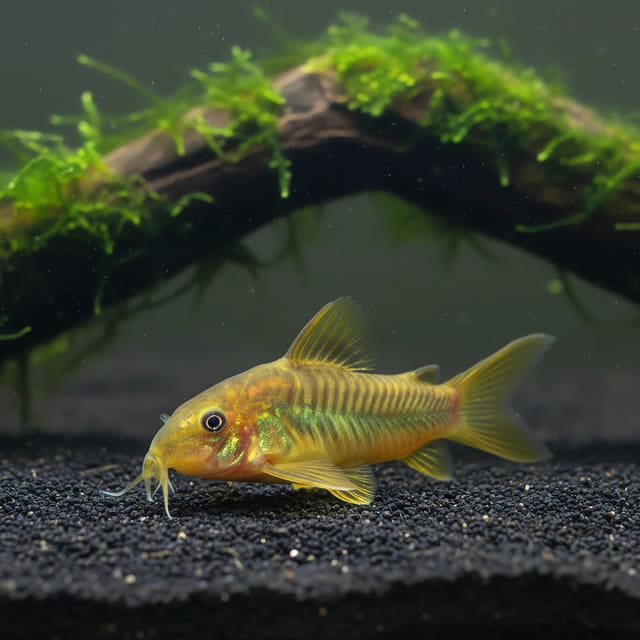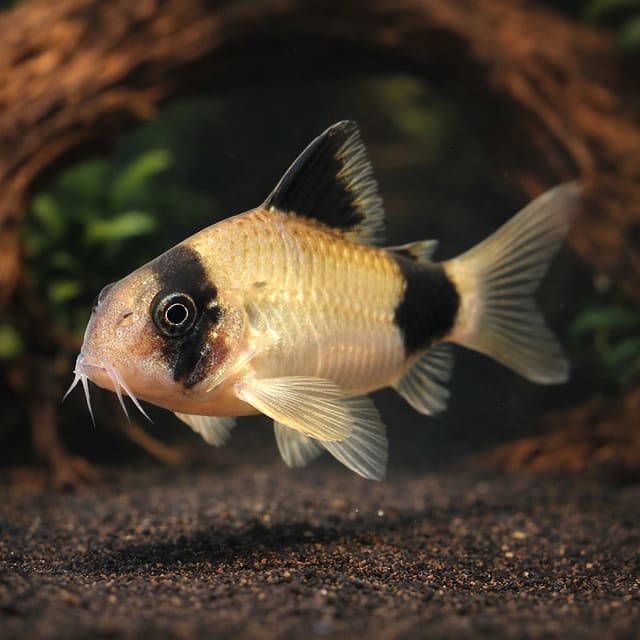
Panda Cory Catfish (Corydoras panda)
22–25°C · pH 6–7.4
From £8.69Some sizes on sale

The Common Pleco / Suckermouth Catfish (Hypostomus plecostomus) is an armoured catfish from the coastal Guianas that reaches 25 cm standard length. It suits keepers who can provide an established filter and match its FishBase environmental range of 20–28°C, pH 6.2–8.2 and hardness up to 28 dH. Sold individually in sizes from 4 cm to 25–30 cm.
Adult size is the maximum length this species reaches at full maturity (scientific sources). The livestock you receive will be younger and smaller — pick a size above for the actual shipping size. Product-photo provenance and any image-specific limitations are stated on the listing.
Hypostomus plecostomus
The Common Pleco / Suckermouth Catfish (Hypostomus plecostomus) is an armoured catfish from the coastal Guianas that reaches 25 cm standard length. It suits keepers who can provide an established filter and match its FishBase environmental range of 20–28°C, pH 6.2–8.2 and hardness up to 28 dH. Sold individually in sizes from 4 cm to 25–30 cm.
Adult size is the maximum length this species reaches at full maturity (scientific sources). The livestock you receive will be younger and smaller — pick a size above for the actual shipping size. Product-photo provenance and any image-specific limitations are stated on the listing.
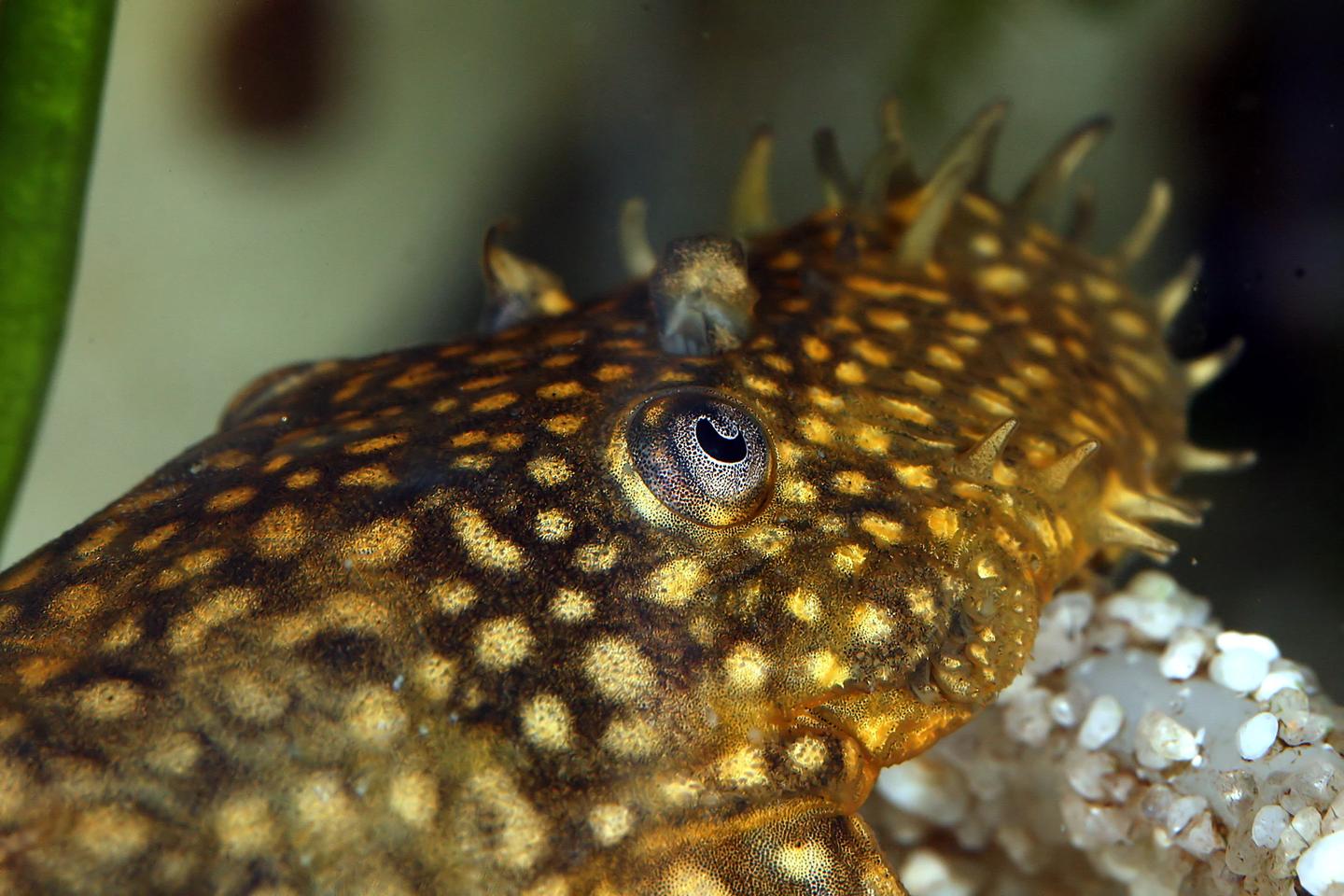
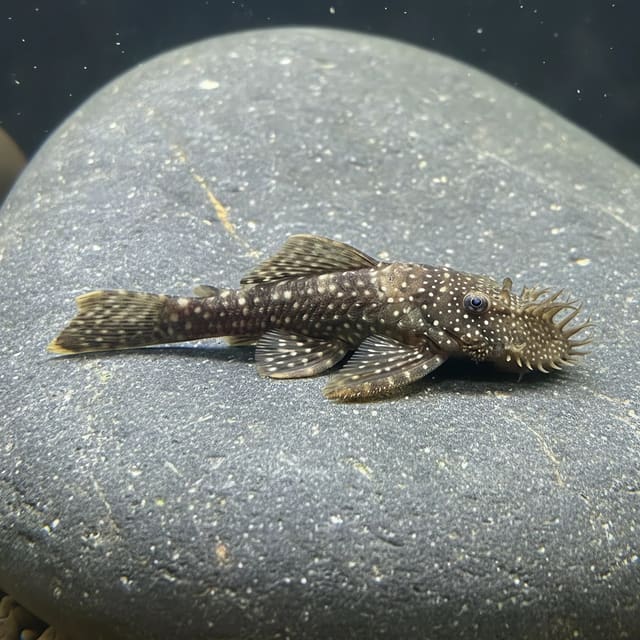
For one typical common bristlenose, start with a mature, filtered aquarium of at least 90 litres, useful floor area, wood and cover. OATA reports about 15 cm adult length, 22-27°C, pH 6-8 and 4-12 dGH. Confirm the exact trade identity before applying species-level claims.
Maintain these water conditions for optimal health and vibrant colors
The Common Pleco / Suckermouth Catfish is Hypostomus plecostomus, a tropical South American member of the armoured catfish family Loricariidae. It comes from the coastal Guianas, from the Oyapock River basin to the Essequibo River basin, and suits a keeper prepared to plan around its adult measurement, lower-area space, deliberate feeding and established filtration. Its familiar common names can be applied loosely within the aquarium trade, so the scientific identity matters when comparing adult size and water requirements.
FishBase records a maximum of 25 cm standard length for this species. That figure is the decisive starting point for choosing the aquarium footprint, shelter and overall stocking load.
The fish is demersal, meaning it is associated with the lower part of the water column. A suitable aquarium therefore needs useful floor area rather than relying on height alone. Check that the layout leaves an unobstructed route between resting, feeding and open areas, with enough room for the full-sized fish to reposition without being hemmed in by decorations.
The species is recorded from freshwater and brackish environments in the coastal Guianas. Its natural distribution is more precise than the broad “Amazon and Orinoco” description sometimes attached to common plecos.
Wikipedia describes longitudinal rows of armour-like scutes covering the upper head and body. Those protective plates give the fish its recognisable armoured appearance, but they do not reduce its need for stable water, careful feeding and a properly established filter.
| Suits | Not suited to |
|---|---|
| Keepers planning around a 25 cm standard-length fish | An aquarium planned only around the selected dispatch size |
| A furnished aquarium with useful lower-area space | A layout with most floor routes blocked by decoration |
| An established and maintained biological filter | An unfiltered or unstable aquarium |
| Deliberate feeding alongside regular maintenance | Using an algae eater as a substitute for maintenance |
This is a considered choice for a keeper prepared to measure the aquarium, test the water every week and maintain the filter. Its algae-grazing role can be useful, but it must never be used as a substitute for maintenance or sensible stocking.
One purchase supplies one animal in the size selected. The live selector lists 4 cm, 5 cm, 6 cm, 7.5 cm, 10 cm, 15 cm, 20 cm and 25–30 cm sizes. Use the live size selector to choose the dispatch measurement.
The size you select is the size supplied, not the adult size. A 4 cm or 5 cm choice changes the measurement at dispatch; it does not create a small-growing form. Plan every size around the recorded maximum of 25 cm standard length.
| Selector wording | What it means |
|---|---|
| 4 cm to 20 cm | An exact dispatch-size choice shown by its label |
| 25–30 cm | A dispatch-size choice within that stated range |
| One purchase | One animal in the selected size |
| Adult planning | Use the 25 cm standard-length record, not the dispatch measurement |
For a smaller selected fish, prepare the adult arrangement before ordering rather than depending on an unplanned move later. For a larger selected fish, measure clear access through the aquarium lid and around fixed decoration so the layout can receive the animal without hurried changes.
Sex is guaranteed only when the selected option explicitly states male or female. This Common Pleco / Suckermouth Catfish listing has no sex-guaranteed option.
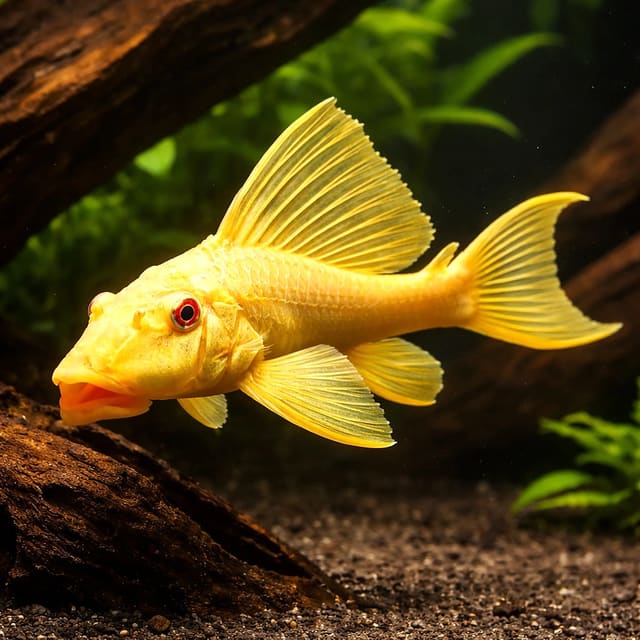
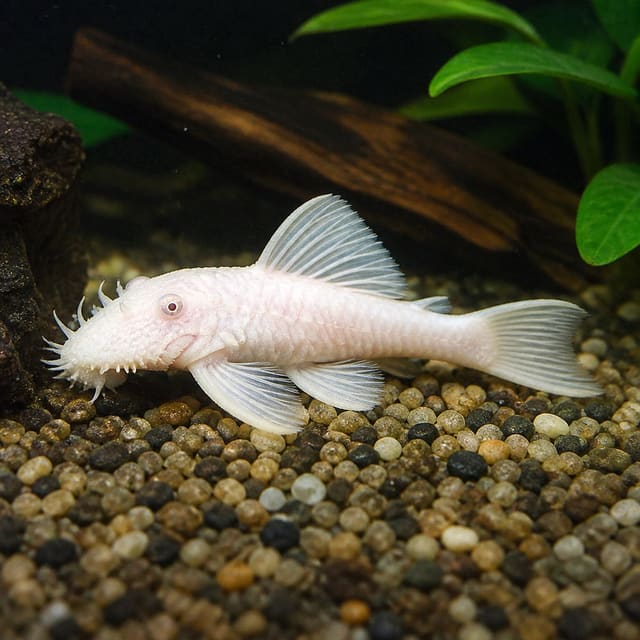
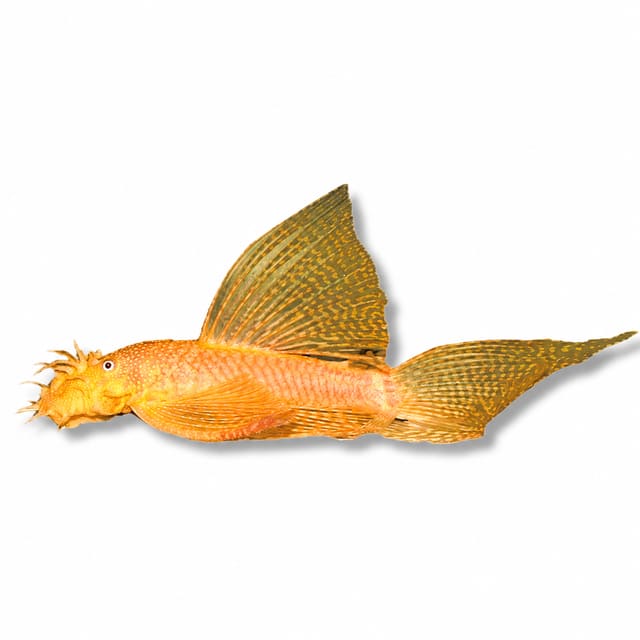
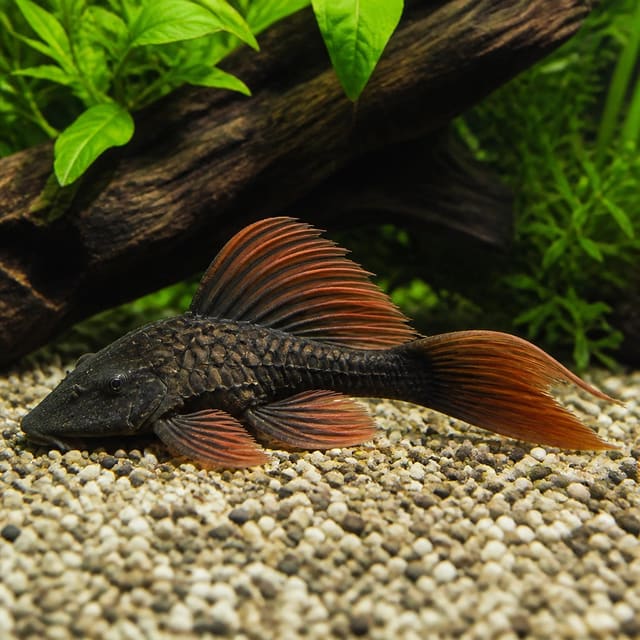
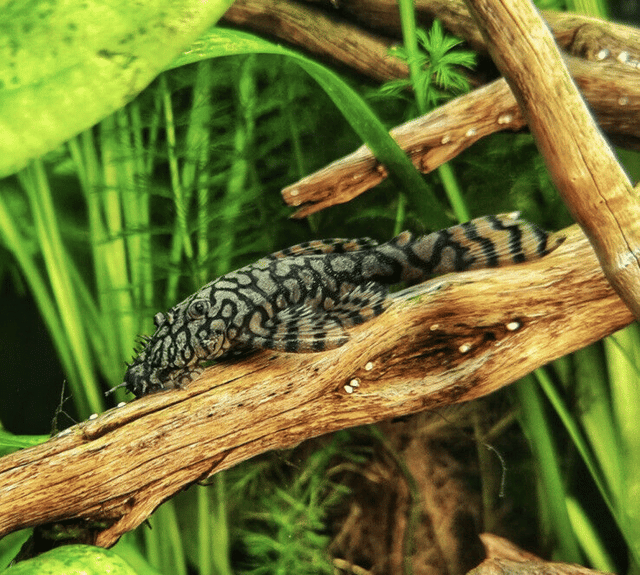
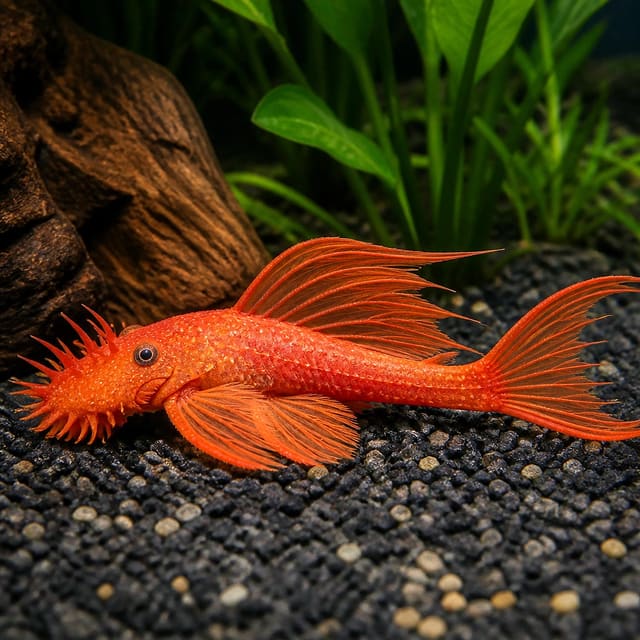
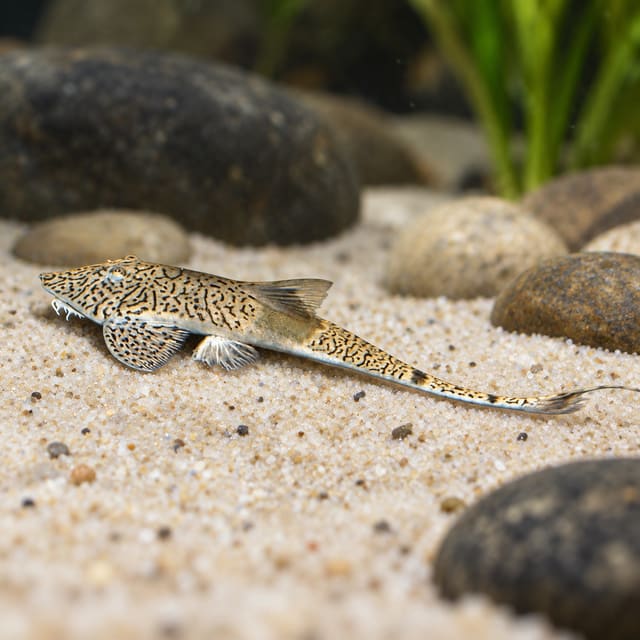
Some gallery images have been digitally enhanced to improve image quality. They show the listed type of animal rather than guaranteeing the exact markings of the individual supplied, so natural colour and pattern can vary.
You can compare this offer with the wider catfish and plecos collection, but compare scientific identity and adult measurements rather than the word “pleco” alone. Different loricariids can have very different planning needs.
Before ordering, read the current delivery and Live Arrival Guarantee policy for packing, receipt, acclimatisation and claim instructions.
Start with the recorded maximum of 25 cm standard length. Measure the usable floor area after wood, plants, stones and equipment have been installed, then judge whether the full fish can move between open and sheltered areas without the route narrowing around it.
OATA advises choosing an aquarium as large as reasonably possible because larger systems offer more stable environmental conditions. For this animal, combine that principle with the species measurement rather than selecting a tank from the dispatch size.
A single litre figure cannot describe shape, clear floor area, decoration or the other animals sharing the system. Prioritise a generous footprint, an established filter and a layout designed around the adult body. A tall aquarium with little usable floor can offer fewer practical options than a longer system with comparable volume.
Before moving from a small selected size to a permanent arrangement, decide where the adult shelter, feeding area and service access will sit. This prevents a later conflict between the fish’s route and equipment that cannot easily be moved.
| If the plan shows | Action |
|---|---|
| A narrow decorated route | Remove or reposition obstacles before introduction |
| Most floor space already occupied | Reduce the stocking plan or choose another aquarium |
| No accessible shelter | Add stable cover while preserving open movement |
| A future upgrade with no date | Prepare the adult arrangement first |
Match the aquarium to 20–28°C, pH 6.2–8.2 and hardness up to 28 dH. FishBase records these as environmental values for the species, so use them as a stable matching window rather than a single aquarium optimum.
Do not choose a companion merely because its published range touches one edge of these values. Look for meaningful overlap across temperature, pH and hardness, then consider whether your measured aquarium remains inside that overlap through ordinary maintenance.
| Water value | Planning use |
|---|---|
| 20–28°C | Environmental temperature window for compatibility screening |
| pH 6.2–8.2 | Compare with measured aquarium pH and every proposed companion |
| Hardness up to 28 dH | Use the full stated range and compare it with your measured hardness |
| Ammonia and nitrite | Maintain both at zero mg/L under aquarium guidance |
OATA’s tropical algae-eater guidance gives zero mg/L ammonia and zero mg/L nitrite for the group, with water testing once a week. These are broad welfare targets rather than a preferred set point for H. plecostomus.
Use our water chemistry guide to identify the values to measure and understand why a stable reading matters. Record the results rather than relying on water that looks clear: appearance cannot show ammonia, nitrite, pH or hardness.
Enter current readings into the water matcher to compare the aquarium with the stated window. If a value falls outside the overlap needed by the whole community, adjust the stocking plan before adding the fish instead of trying to force several incompatible requirements into one aquarium.
Consistency matters alongside the numerical range. Test after significant maintenance and continue the weekly record so gradual movement is noticed before it becomes a larger problem.
A working biological filter is essential. The RSPCA explains that fish release toxic ammonia; beneficial bacteria in a biological filter convert it to nitrite, which is also toxic, and then to the safer nitrate stage. The filter must therefore be established and maintained rather than treated as equipment that works fully as soon as it is switched on.
Choose filter access as carefully as filter position. If wood or fixed decoration prevents routine service, the layout makes essential maintenance harder. Leave enough working space to inspect the equipment and clean appropriate parts without removing the fish’s shelter.
Do not use algae growth as a water-quality indicator. Algae can persist for several reasons, and OATA notes that recurring algae can point to maintenance or water-chemistry issues. Adding an algae-grazing fish does not correct the underlying cause or replace filtration.
| If a test shows | Immediate priority |
|---|---|
| Ammonia above zero | Treat it as a water-quality problem and review filtration, stocking and feeding |
| Nitrite above zero | Address the toxic reading rather than adding more livestock |
| Repeated instability | Pause stocking changes and identify the cause |
| Stable weekly results | Continue the same testing and maintenance discipline |
A clear aquarium can still contain dissolved waste. Use measured results, filter function and consistent records as the basis for decisions.
OATA recommends aquarium gravel or sand, with live plants where practical. Plastic plants and suitable ornaments such as plant pots or model caves can provide shelter when live planting is not used. Apply that advice while preserving the clear floor route needed by a demersal catfish with a recorded maximum of 25 cm standard length.
Start by mapping three functions: an open movement route, at least one sheltered resting area and an accessible feeding location. These areas can sit close together, but decoration should not make the fish pass through a body-width gap to move between them.
A shelter chosen for a small dispatch size can become restrictive as the fish grows. Inspect the opening and internal dimensions during routine maintenance. Replace or reposition it before it becomes difficult for the fish to enter, leave or turn around.
| Layout problem | Better decision |
|---|---|
| Decoration covers most of the base | Remove pieces and restore a continuous open route |
| Cover has only one tight entrance | Choose a roomier, stable shelter |
| Food disappears behind ornaments | Create a feeding point that can be inspected |
| Filter access is blocked | Reposition cover before livestock is introduced |
More decoration is not automatically better. The useful arrangement is one that provides security while allowing movement, feeding checks, substrate cleaning and filter maintenance. Photographing the empty finished layout from above can help reveal narrow routes that are difficult to judge through the front glass.
Feed for the species’ recorded diet of algae and small crustaceans. FishBase records this wild diet, while OATA’s tropical algae-eater guidance recommends supplementing grazing with prepared algae-based wafers or flakes and fresh vegetables such as cucumber.
Place prepared food and vegetables where this bottom-associated fish can reach them, then watch whether it feeds before other inhabitants take the food. Adjust the amount by observing what the fish eats, and remove uneaten remains before they break down and add waste to the water.
| Food or observation | Action |
|---|---|
| Algae-based wafer or flake | Use as a prepared dietary supplement |
| Fresh cucumber | Offer as vegetable variety after careful washing |
| Fish reaches prepared food | Continue to check access as the fish and community change |
| Food left to break down | Remove it and reduce the next portion |
| Other fish reach it first | Change the feeding location or sequence |
Choose organic vegetables or wash them thoroughly because pesticide residues may harm fish or invertebrates. Prepare only what you intend to use and remove deteriorating pieces rather than letting the aquarium act as storage.
Watch feeding access in a community. A wafer placed on the bottom is not automatically reserved for the catfish, and flakes may be consumed before reaching the lower area. Use an inspectable feeding point and confirm that the intended animal feeds rather than judging the routine by whether the food disappears.
Adjust portions from observation, not from dispatch size alone. A selected size tells you the animal’s measurement when supplied; it does not establish a fixed portion. Changes in the number of fish, prepared food or vegetable quantity should be followed by the normal weekly water checks.
Algae control remains a maintenance task. Review lighting, stocking, feeding and water chemistry when algae persists instead of adding more animals or withholding prepared food from this one.
Complete the aquarium, establish the biological filter and test the water before the fish arrives. Our first tropical aquarium guide sets out the preparation and maturation process. Use measured water results, not a calendar date alone, to decide whether the system is ready.
Avoid last-minute rebuilding once the animal is being introduced. Moving large decorations can disturb the substrate, block equipment or remove the planned shelter. Finish those decisions while the aquarium is still empty of the new fish.
The first feeding plan should already be in place. Have an algae-based prepared feed and a carefully washed vegetable option ready, then place the food where you can confirm that the fish reaches it. An algae-covered surface is not a substitute for deliberate food.
| Ready signal | What it demonstrates |
|---|---|
| Zero mg/L ammonia | The current test is at the required welfare target |
| Zero mg/L nitrite | The current test is at the required welfare target |
| Stable temperature and pH | The aquarium can be compared meaningfully with the species window |
| Accessible filter and shelter | Routine care can proceed without dismantling the layout |
Keep the test results and intended feeding amount written down. A short baseline makes later changes easier to recognise and gives every household member the same care plan.
Test water quality once a week and record the results. The core targets from the algae-eater guidance are zero mg/L ammonia and zero mg/L nitrite. Track temperature, pH and hardness alongside them so you can compare the aquarium with the species window and recognise gradual changes.
Carry out a 25% water change at least once a week, following OATA’s tropical algae-eater guidance. Use the weekly test record to spot changes in waste processing or stability.
| Check | Decision it supports |
|---|---|
| Ammonia and nitrite | Whether filtration, stocking and feeding remain within the system’s capacity |
| Temperature and pH | Whether conditions remain stable and inside the planned overlap |
| Hardness | Whether the aquarium remains within the selected community range |
| Uneaten food | Whether the amount offered or feeding access needs adjustment |
| Shelter opening | Whether growth has made the current cover restrictive |
| Clear floor route | Whether plants or moved decorations have reduced usable space |
Change one controllable part of the routine at a time where practical. If you alter stocking, food quantity and the layout together, it becomes harder to identify which change affected waste, access or behaviour.
Use the first month to confirm that the plan works in practice. During each weekly check, compare the latest result with the initial baseline, inspect whether food is being reached and confirm that the filter can still be serviced without disturbing the shelter.
If feeding, movement or general condition changes, test the water first and review recent alterations to food, stocking, equipment or layout. Contact us for help with health changes rather than choosing a treatment from appearance alone.
Continue the same method after the first month. Regular records are more useful than an occasional intensive check because they show whether the aquarium is staying stable over time.
Treat compatibility as a set of conditions rather than a universal list. Begin with water overlap: every proposed inhabitant must fit a stable point within the Common Pleco’s environmental range of 20–28°C, pH 6.2–8.2 and hardness up to 28 dH. A match at only one extreme is weaker than a broad overlap that suits both animals.
Next compare adult measurements. Use the recorded maximum of 25 cm standard length for H. plecostomus, not the selected dispatch size. Check that the complete community leaves enough usable floor, shelter and maintenance access after every fish is considered at its planning size.
Filtration capacity belongs in the same decision. A pairing that fits physically can still fail when the full stocking and feeding plan exceeds what the established system can process while maintaining zero mg/L ammonia and nitrite.
| Proposed match | Decision rule |
|---|---|
| Water ranges overlap well | Continue to the adult-space and behaviour screens |
| Ranges meet only at an edge | Choose a stronger match rather than operating at a limit |
| Both depend on the same floor area | Map routes, shelter and feeding access before proceeding |
| One animal blocks the food | Change the feeding plan or reject the pairing |
Apply the same five screens to the exact species, size and number you intend to keep.
Do not decide the number of Common Plecos from a small dispatch size. Assess each animal against the 25 cm standard-length maximum, then include the space used by every other bottom-associated inhabitant. Number, body size, shelter and feeding access must be considered together.
Draw the aquarium base as a simple rectangle and mark fixed wood, stones, plant pots, caves, filter fittings and dense plants. What remains is the usable route. Then mark each intended shelter and feeding point. This exercise shows whether several animals are being assigned the same small patch of floor.
| What the plan reveals | Response |
|---|---|
| One continuous route with cover | Continue to water, feeding and filtration checks |
| Several dead ends | Reposition decorations before adding animals |
| One shared feeding point | Add inspectable access or reduce competition |
| No room for adult shelters | Reduce the proposed number |
Decide whether to keep one or more by assessing adult floor use, cover, feeding access and filter capacity. Every additional animal requires a fresh assessment of those same needs.
Do not use visual sex traits to arrange a pair or group. The offer has no sex-guaranteed option, and dispatch size or gallery appearance cannot establish the sex supplied.
Other bottom dwellers may use the same floor, shelter or sinking food even when their water needs overlap. Build separate access into the design instead of expecting the animals to divide the aquarium evenly themselves.
Review the plan again after decoration is installed. A layout that looks generous on the tank dimensions can become restrictive once large ornaments and equipment occupy the base. Use the furnished aquarium, not the empty measurements, for the final judgement.
Complete one final assessment using the exact aquarium, measured water and intended community. This prevents a familiar common name or algae-grazing role from replacing the practical decisions that determine whether the fish fits.
| Answer | Next step |
|---|---|
| All screens pass | Choose the dispatch size through the live selector |
| Water does not overlap | Select a fish suited to the measured aquarium |
| Adult floor space is uncertain | Measure the furnished base again |
| Several animals share one shelter | Redesign the layout or reduce the stocking plan |
| Filter performance is unstable | Resolve water quality before adding livestock |
For a stocking and compatibility assessment, contact us with the aquarium dimensions, measured temperature, pH and hardness, current inhabitants, filter details and a photograph of the furnished layout. Those details allow a more useful answer than a tank-mate name alone.
If the proposed community changes later, repeat the same assessment. Compatibility is conditional on the aquarium, animal sizes, numbers and care requirements remaining workable together.
The Common Pleco / Suckermouth Catfish reaches a FishBase-recorded maximum of 25 cm standard length, so plan its aquarium around that adult measurement rather than its dispatch size.
Plan a generously sized aquarium around its 25 cm standard-length maximum, useful lower-area space, stable shelter and maintenance access; OATA advises choosing an aquarium as large as reasonably possible because larger systems are more stable.
Decide the number case by case using adult floor space, shelter, feeding access and filter capacity; assess every animal at the 25 cm standard-length maximum rather than its selected dispatch size.
Hypostomus plecostomus suits a keeper who can establish and maintain biological filtration, test the water weekly, provide deliberate food and plan the furnished aquarium around a 25 cm standard-length fish.
FishBase records algae and small crustaceans in its wild diet; OATA’s tropical algae-eater guidance recommends prepared algae-based wafers or flakes and thoroughly washed vegetables such as cucumber. Place the food where the fish can reach it, adjust the amount by observation and remove uneaten remains.
Match it to FishBase’s environmental range of 20–28°C, pH 6.2–8.2 and hardness up to 28 dH, then choose a stable point that also fits every other aquarium inhabitant.
Assess its behaviour case by case, checking adult space, lower-area use, shelter and feeding access before combining it with another animal.
Choose companions only when their temperature, pH and hardness needs overlap, the furnished aquarium has enough adult space and shelter, each animal can reach its food, and the filter can maintain zero mg/L ammonia and nitrite.
Film every delivery continuously from the sealed parcel as it is opened, with the fish still inside the sealed bag, and have someone present to receive it. Float the bag for 20–30 minutes before releasing the fish, and never pour the bag water into the aquarium.
Independently collected by Judge.me from customers who bought this item. All reviews are shown.
Absolutely great fish really doing well too. Loves the ornaments and is fun to watch up the glass really nice interesting to look at