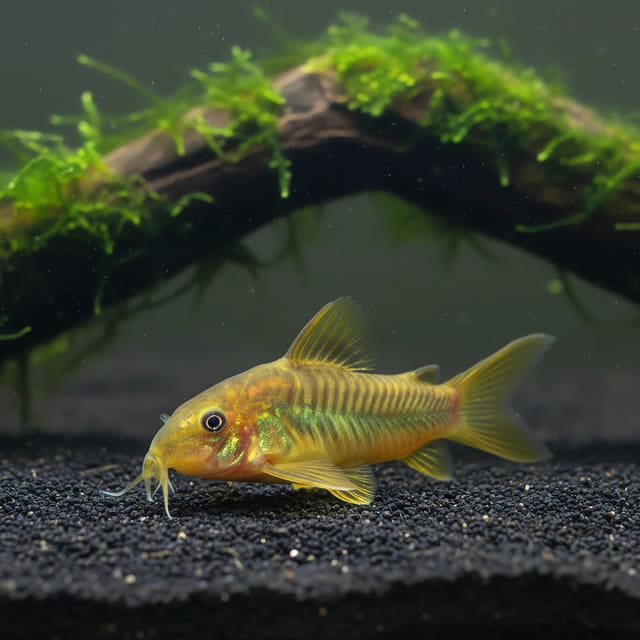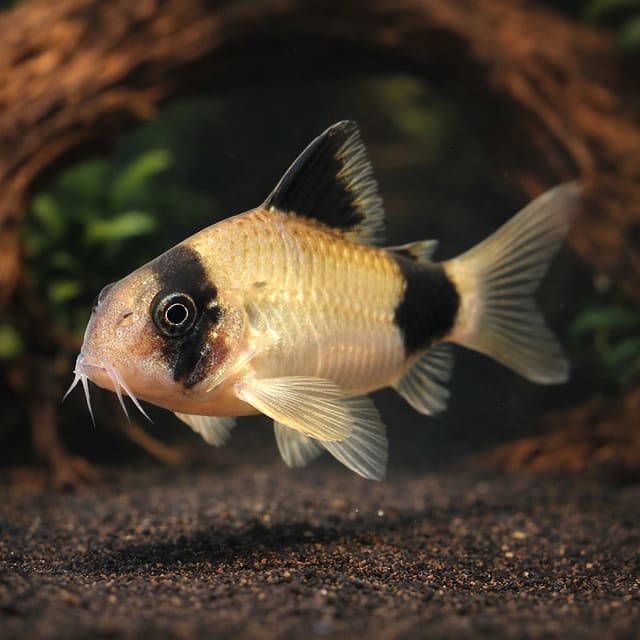
Panda Cory Catfish (Corydoras panda)
22–25°C · pH 6–7.4
From £8.69Some sizes on sale

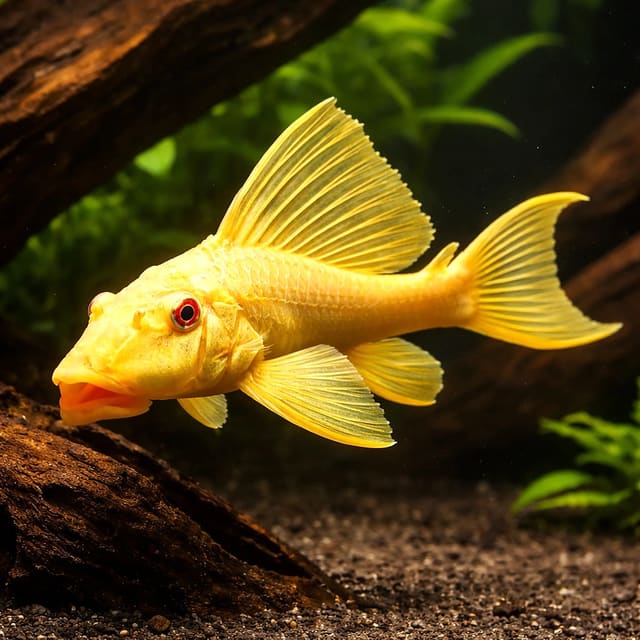
The Leopard pleco (Pterygoplichthys gibbiceps) is a nocturnal, algae-feeding armoured catfish recorded at up to 50 cm total length. One purchase supplies one animal in the selected dispatch size; plan a spacious, mature, filtered aquarium around its adult dimensions and 23–27°C water.
Adult size is the maximum length this species reaches at full maturity (scientific sources). The livestock you receive will be younger and smaller — pick a size above for the actual shipping size. Product-photo provenance and any image-specific limitations are stated on the listing.
Pterygoplichthys gibbiceps
The Leopard pleco (Pterygoplichthys gibbiceps) is a nocturnal, algae-feeding armoured catfish recorded at up to 50 cm total length. One purchase supplies one animal in the selected dispatch size; plan a spacious, mature, filtered aquarium around its adult dimensions and 23–27°C water.
Adult size is the maximum length this species reaches at full maturity (scientific sources). The livestock you receive will be younger and smaller — pick a size above for the actual shipping size. Product-photo provenance and any image-specific limitations are stated on the listing.
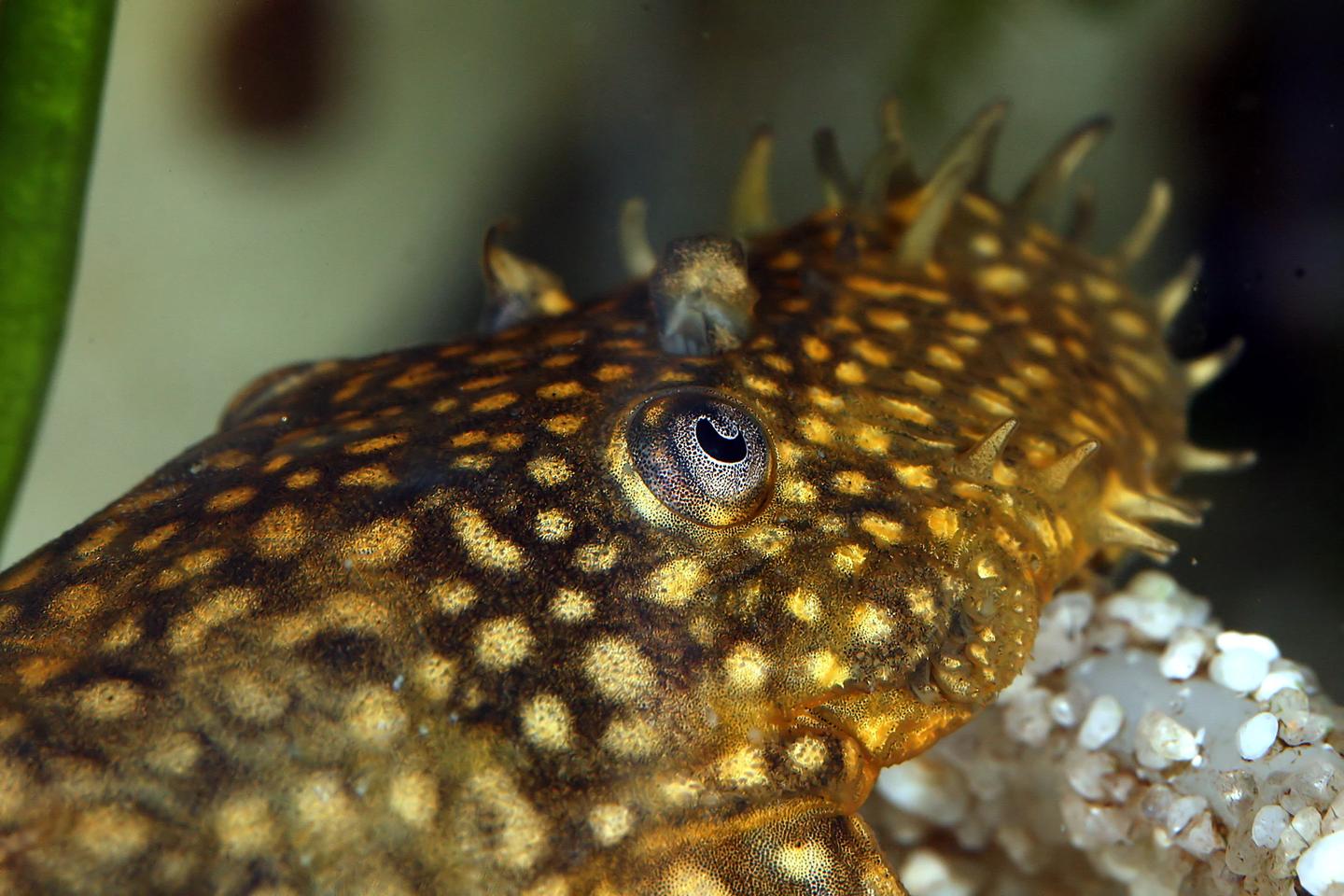
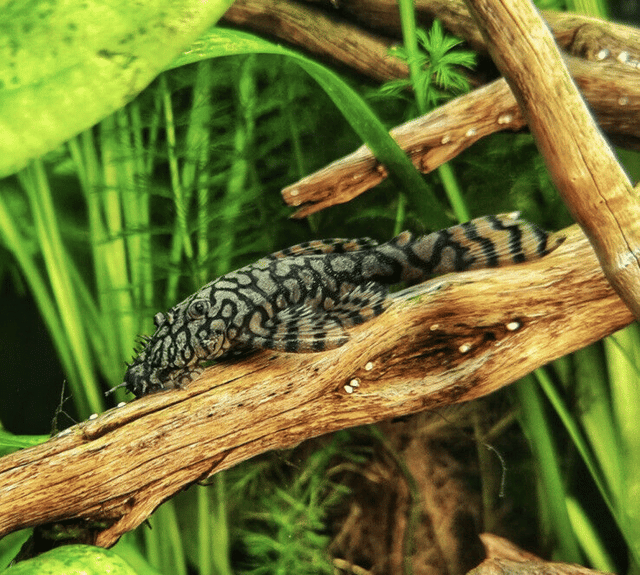
For one typical common bristlenose, start with a mature, filtered aquarium of at least 90 litres, useful floor area, wood and cover. OATA reports about 15 cm adult length, 22-27°C, pH 6-8 and 4-12 dGH. Confirm the exact trade identity before applying species-level claims.
Maintain these water conditions for optimal health and vibrant colors
This is the Leopard pleco, Pterygoplichthys gibbiceps, a large freshwater armoured catfish for a keeper prepared to plan around a recorded maximum of 50 cm total length. Its small dispatch grades can make the long-term commitment easy to underestimate, so begin with the adult fish rather than the size arriving at your aquarium.
One purchase supplies one animal of the selected option. The live size selector carries the labels shown below; use it to make your choice rather than treating any static description as a stock statement.
| Selector group | Dispatch-size labels |
|---|---|
| Smaller sizes | 3 cm, 4 - 5 cm, 5 - 6 cm, 6-7 cm, 8 cm |
| Medium sizes | 10 cm, 12-13 cm, 15-20 cm |
| Larger sizes | 20-30 cm, 30-40 cm, 40-50 cm |
The size you select is the size supplied, not the adult size. A 4 - 5 cm fish therefore needs the same long-term planning as a larger grade; the difference is its dispatch size, not its eventual care ceiling.
Sex is guaranteed only when the selected option explicitly states male or female. This Leopard pleco listing has no sex-guaranteed option.
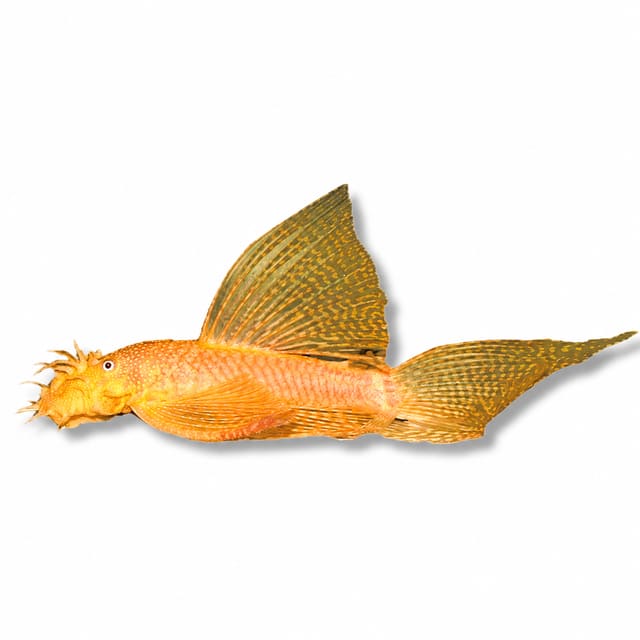
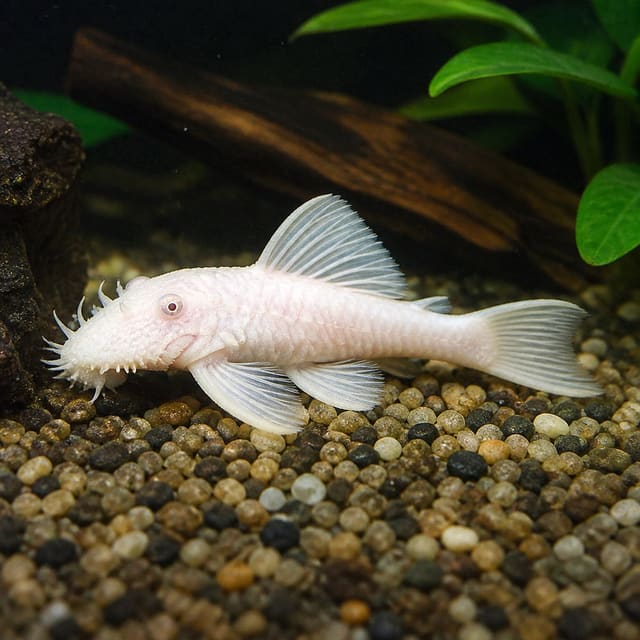
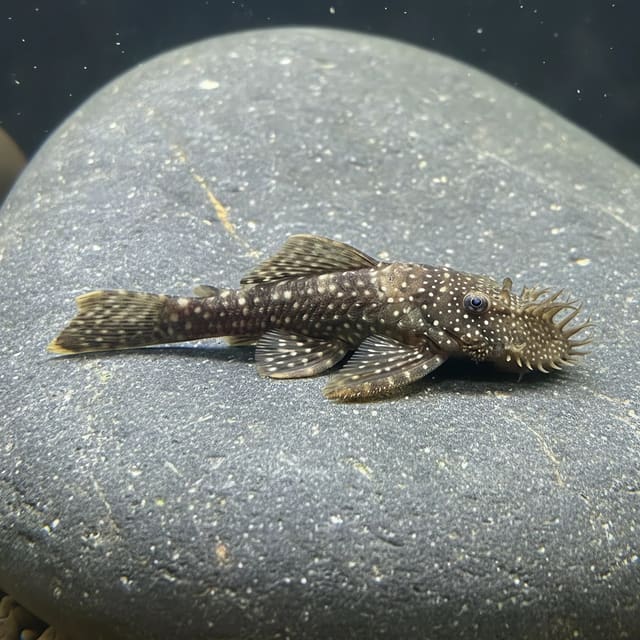
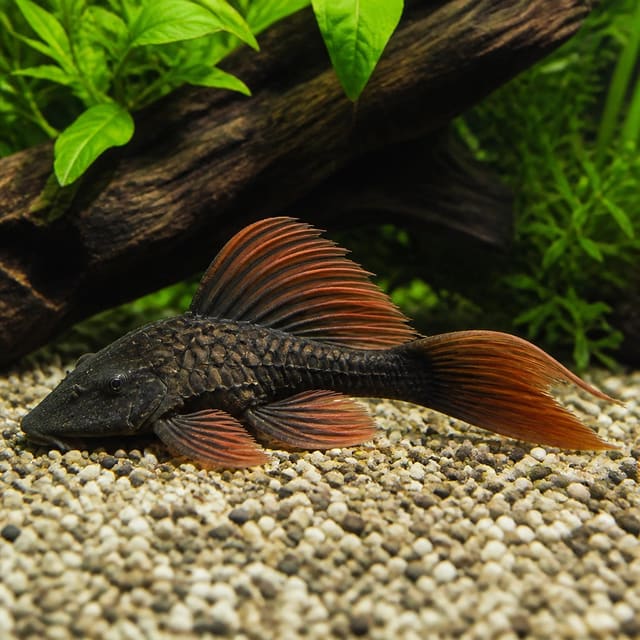
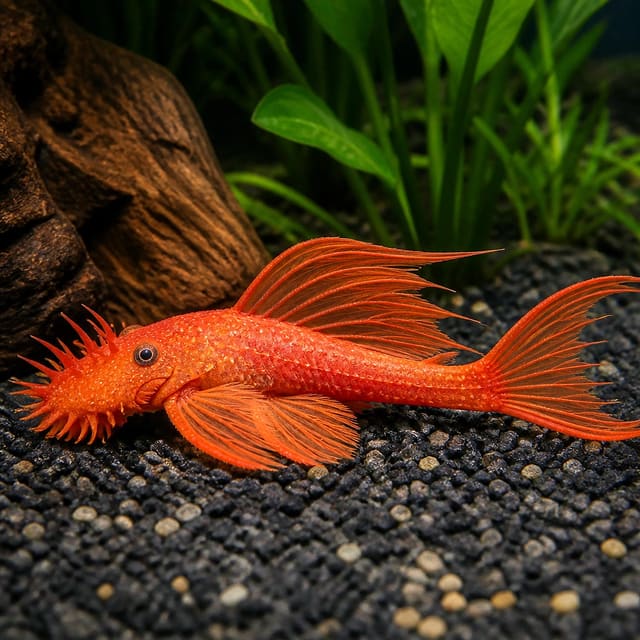
The gallery images are representative, based on reference photographs of this species, so colours can look slightly different from the live animal. Browse our catfish and pleco collection when comparing this large species with other bottom-dwelling fish.
FishBase identifies Pterygoplichthys gibbiceps as a freshwater member of Loricariidae, the armoured catfish family. It is a demersal fish, meaning its normal living zone is associated with the bottom rather than open water. The hobby also uses the group word plecostomus for suckermouthed armoured catfish, but the scientific name is the safest way to keep this animal distinct from smaller plecos.
Wild biology explains several of the aquarium decisions. FishBase describes it as nocturnal, algae-feeding and capable of facultative air breathing. Expect the most useful feeding observations around the darker part of the daily cycle, but never treat access to atmospheric air as a replacement for a working biological filter or suitable water quality.
A natural-history summary for the species places it in Brazil, Ecuador, Peru and Venezuela within the Amazon and Orinoco basins. FishBase likewise records the middle and upper Amazon and Orinoco basins and gives its conservation category as Least Concern.
Use those distribution details to understand the animal, not to infer how an individual was reared or collected. Dispatch size, colour and gallery imagery do not establish origin. The practical aquarium decisions are its substantial adult length, bottom-oriented activity, feeding access and the capacity of the complete system to process fish waste.
FishBase records a maximum of 50 cm total length for male or unsexed fish. It also records a species-level environmental range of 23–27°C, pH 6.0–8.0 and 5–19 dGH. Keep routine aquarium values inside those boundaries and favour stability over repeatedly chasing a particular point in the range.
| Decision | Planning value |
|---|---|
| Maximum recorded length | 50 cm total length |
| Temperature | 23–27°C |
| pH | 6.0–8.0 |
| General hardness | 5–19 dGH |
| Living zone | Bottom-oriented |
| Activity | Nocturnal |
| Suits | Not suited to |
|---|---|
| Spacious, mature, filtered aquariums planned around a 50 cm adult | Small aquariums planned around a juvenile dispatch size |
| Water held within 23–27°C, pH 6.0–8.0 and 5–19 dGH | Systems outside any of those ranges |
These figures create three linked tests. First, the aquarium must accommodate the full length and body of the adult rather than merely holding a juvenile. Second, the filter must be established and maintained so that ammonia and nitrite are processed. Third, every proposed companion must overlap the stated water range without losing access to its own space or food.
Do not substitute algae grazing for maintenance. This fish feeds on algae in nature, but an aquarium algae problem can indicate a maintenance or water-chemistry issue. The animal still needs deliberate feeding, and the aquarium still needs regular testing, filter care and appropriate stocking.
This combination of adult size and system planning makes suitability depend more on the aquarium than on the keeper’s experience label. A carefully prepared system is the starting point; a small aquarium does not become suitable simply because its water readings are within range.
Plan the aquarium around a fish that may reach 50 cm total length. Prioritise usable floor area, an unobstructed route around the layout and shelter that remains accessible as the body becomes longer and broader. A tall aquarium does not compensate for a footprint that leaves too little room for a bottom-oriented adult to turn and move between resting and feeding areas.
OATA’s tropical algae-eater advice is group-level guidance: within reason, choose an aquarium as large as possible because larger aquariums offer more stable temperature and water quality. Apply that principle firmly to this species because its maximum recorded length is already substantial.
Those comparisons are planning aids, not growth forecasts. They show why equipment and space should not be chosen around the smallest selector label. Moving a growing fish later can be disruptive, while preparing its long-term aquarium first keeps filtration, shelter and water chemistry tied to one stable plan.
Prepare and mature the system before the animal arrives using our first tropical aquarium guide. The goal is a functioning habitat with established filtration, not an empty container that happens to hold the adult length.
Measure the bottom after the shelter, plants and equipment are positioned. A nominally large aquarium can lose useful floor area when broad ornaments divide the base into short dead ends. Trace one continuous route from the shelter to the feeding point and back again, then check that the route remains usable beside filter intakes and heaters.
Use the 50 cm maximum as a scale marker during this audit. A cave entrance, gap or turning point that appears generous beside a small dispatch grade may be restrictive beside that marker. Rework the layout before introduction if the route depends on spaces that only the juvenile can use.
Use 23–27°C, pH 6.0–8.0 and 5–19 dGH as the bounded planning ranges for this fish. Test the aquarium itself rather than relying on a tap-water assumption, because décor, maintenance and biological activity can affect what the animal experiences between water changes.
Begin with our aquarium water-chemistry guide if you need to identify which readings to measure and why. Then enter the measured values into the water matcher to compare the aquarium with the stated ranges.
| Test result | Decision |
|---|---|
| Temperature below 23°C | Stabilise it within 23–27°C before introduction. |
| Temperature above 27°C | Return it gradually to the stated range and retest. |
| pH below 6.0 or above 8.0 | Resolve the mismatch before choosing this fish. |
| Hardness below 5 or above 19 dGH | Choose a suitable water plan before introduction. |
| Values inside all three ranges | Keep monitoring for stability and check the complete stock plan. |
A single reading inside the limits is only a snapshot. Record results on the same day each week so a trend becomes visible. If a reading changes, retest before making another adjustment; repeated large changes can make the environment less predictable than holding a steady value comfortably within the range.
There is no need to force the aquarium to the middle of every range. A stable 24°C, pH 7.0 and 10 dGH all sit within the stated boundaries, as do other combinations inside each range. The correct choice is one your aquarium can maintain consistently and that also overlaps the requirements of every proposed companion.
A temperature of 24°C does not complete the water check if pH or hardness remains outside its boundary. Treat the three ranges as one gate: temperature, pH and hardness must all pass before introduction. Record the complete set together so a later comparison does not pair readings taken under different aquarium conditions.
If one value drifts while the others remain steady, confirm the result with another test before altering the plan. This separates a testing anomaly from a continuing trend and reduces the risk of reacting to one isolated number.
RSPCA aquarium welfare guidance explains why a working biological filter is essential: fish release toxic ammonia, beneficial bacteria convert it to toxic nitrite and then to the safer nitrate. Set up and maintain filtration for the whole stocked aquarium rather than judging it by the Leopard pleco’s dispatch size alone.
OATA’s algae-eater guidance calls for a filter in every aquarium and regular water testing once a week. Its fish examples use targets of zero mg per litre for ammonia and zero mg per litre for nitrite. These are practical action limits: a detectable result means the system needs attention rather than another animal.
If ammonia or nitrite is detected, pause additions, check filter operation and remove decomposing food. Resume the normal plan only after the aquarium has returned to zero mg per litre for both and repeated tests show that the result is stable.
Persistent algae can point to an underlying chemistry or maintenance problem. Adding an algae-feeding fish does not correct the cause, and the fish itself contributes waste that the filter must process. Diagnose the aquarium through testing, maintenance and stocking rather than increasing the number of grazers.
A larger aquarium can dilute change more effectively, but volume never replaces filtration or testing. The useful sequence is simple: establish the filter, confirm safe readings, introduce livestock carefully and continue the same checks after the animal settles.
Keep the first stable set of readings as the aquarium’s baseline. After the Leopard pleco is introduced, compare later results with that baseline before changing the stock plan. Stable temperature, pH and hardness do not cancel a detectable ammonia or nitrite result; all readings must support the next decision.
When either toxic waste reading appears, stop at the current stock level. Confirm filter operation, remove decomposing food and repeat the tests. This pause prevents another addition from increasing demand on a system already showing that its biological processing needs attention.
FishBase describes the wild Leopard pleco as feeding on algae. In the aquarium, treat that biology as a feeding clue rather than permission to leave the fish to clean the glass. OATA advises that algae-grazing fish need their diet supplemented with prepared algae-based food and, ideally, suitable fresh vegetables.
Because this animal is nocturnal, place the food where it can find it during its active period and where faster fish cannot take the entire portion first. Observation matters more than automatically adding more food: confirm that the pleco reaches the ration, then adjust the next portion to reduce leftovers.
| What you observe | Next action |
|---|---|
| Food remains uneaten | Remove it and reduce the next portion. |
| The pleco never reaches the food | Change placement or timing before increasing quantity. |
| Food is eaten with little residue | Keep the portion steady and continue weekly testing. |
| Ammonia or nitrite is detected | Remove waste, check filtration and restore zero readings. |
Cucumber and prepared algae food complement natural grazing; neither makes aquarium maintenance optional. Likewise, visible algae is not a reliable ration because its amount and nutritional contribution can change. A measured feed gives you something concrete to observe and adjust.
Do not turn feeding into an uncontrolled mixture of leftovers. This routine is narrow and useful: algae-based prepared food, carefully cleaned cucumber, direct observation and prompt removal of excess.
A missed ration does not automatically mean the portion was too small. Watch whether another fish reaches it first, whether the feeding point is blocked and whether the pleco approaches after the brighter period. Correct access or placement before adding more food, because an inaccessible larger portion still becomes waste.
Connect feeding observations with water tests. Residue followed by detectable ammonia or nitrite is a clear reason to remove excess, inspect filtration and reduce the next portion. Clean results and little residue support keeping the measured amount steady.
Start with aquarium gravel or sand and provide cover. OATA recommends live plants where practical; plastic plants and suitable ornaments such as plant pots or model caves can provide shelter when live plants are not used. Arrange those elements around the 50 cm adult planning length rather than filling every part of the bottom.
| Area | Purpose |
|---|---|
| Sheltered area | A retreat accessible to the adult body. |
| Open route | Movement between shelter and feeding surfaces. |
| Feeding area | A place where the prepared ration can be observed. |
| Service area | Access for removing food and checking equipment. |
Check the layout from the fish’s bottom-oriented perspective. A cave that looks generous from above may have a narrow entrance, while dense ornaments can leave no continuous route across the aquarium floor. The practical test is whether the full-grown fish can enter, leave and turn without the layout using all of its movement space.
Nocturnal activity also changes how you observe the aquarium. A quiet fish during the brightest part of the day may become active later, so check whether it reaches food during the darker period before concluding that a ration was ignored. Keep the observation brief and consistent rather than repeatedly disturbing its shelter.
Uneaten food can decompose and release toxic waste. Leave enough access to remove it, especially from behind caves and plants. Shelter that cannot be inspected may conceal residue, while a feeding point in view lets you connect appetite, portion size and water-test results.
Use plants and ornaments as cover, not as a substitute for aquarium size. The adult-length plan, working filter and weekly testing remain the foundations; the layout should make each of those jobs easier.
Reach each feeding and shelter area with the tools used to remove residue. If an ornament prevents access, move it before the fish arrives rather than accepting a trap for decomposing food. The same check should leave filter intakes visible and equipment accessible without dismantling the animal’s main retreat.
After changing décor, trace the open bottom route again. Added cover is useful only when it preserves movement, feeding access and cleaning access for the adult plan.
Before the delivery window, confirm that someone can receive the parcel and that the aquarium is already running within 23–27°C, pH 6.0–8.0 and 5–19 dGH. Prepare a clear route to the aquarium so the sealed bag can be handled calmly without leaving the fish unattended.
Follow our current delivery and acclimatisation policy: float the bag for 20–30 minutes before releasing the fish, and never pour the bag water into the aquarium.
Continue the same weekly record of ammonia, nitrite, temperature, pH and hardness. Compare results with the starting values rather than waiting for a visible problem. Review food placement if the ration is repeatedly missed, and reduce it if residue remains.
Look for a consistent routine rather than demanding daytime activity from a nocturnal fish. If feeding or behaviour changes abruptly and remains different after you have checked water and equipment, contact us for guidance on the change. Do not begin a disease treatment from appearance alone.
Judge the first period through several connected observations: access to shelter, later activity, food access, filter operation and water-test results. Quiet daytime behaviour on its own fits a nocturnal animal, whereas a change accompanied by detectable ammonia or nitrite requires immediate attention to the aquarium.
Keep the initial stock unchanged while these patterns become clear. This gives the filter results and feeding observations a single cause to assess rather than adding another animal before the aquarium’s response can be understood.
Use a conditional compatibility screen rather than a universal list of named tank mates. Published biology establishes that this is a bottom-oriented, nocturnal algae feeder, but the outcome of a particular combination depends on the complete aquarium, the individual animals and whether every fish can use its normal space and reach food.
Only proceed when all five conditions are met. A candidate that overlaps the temperature range but requires water outside the pH or hardness limits fails the screen. Likewise, matching chemistry does not rescue a plan that leaves too little adult floor space or prevents this fish reaching its ration.
Plan the initial purchase around the one selected animal supplied. Any additional pleco or bottom-dwelling fish requires a fresh assessment of adult dimensions, shelter, feeding access and filtration rather than an assumption that similar aquarium zones make the animals compatible.
Temperament outcomes remain conditional, so ask us for a stocking and compatibility assessment using the aquarium dimensions, current livestock, measured water values and filter details. Those concrete details allow a useful decision; a tank-mate name by itself does not.
Suppose a proposed companion overlaps 23–27°C but needs pH outside 6.0–8.0. Stop there; extra floor space cannot repair the chemistry mismatch. If all water values overlap, move to adult dimensions and map the actual bottom route after every shelter and item of equipment is included.
When water and space both pass, identify how each animal reaches food. A combination still fails if one fish consistently removes the pleco’s ration before its active period. The final gate is biological capacity: ammonia and nitrite must remain at zero mg per litre before further additions are considered.
Run the compatibility check before choosing the dispatch size. A smaller Leopard pleco does not reduce the adult-space obligation, and a larger grade does not change its water range. The selector controls the size supplied; it does not create different long-term stocking rules.
| Question | Decision rule |
|---|---|
| Do the temperature ranges overlap? | Proceed only if the shared range falls within 23–27°C. |
| Do pH and hardness overlap? | Proceed only inside pH 6.0–8.0 and 5–19 dGH. |
| Is the adult footprint sufficient? | Count a 50 cm Leopard pleco and every companion at adult size. |
| Can each fish reach its food? | Provide distinct feeding access and observe the first meals. |
| Does filtration remain stable? | Require zero mg per litre ammonia and nitrite. |
Range overlap can be tested without guessing at an ideal midpoint. If another animal’s temperature range ends below 23°C or begins above 27°C, there is no shared temperature band. Apply the same intersection test to pH and hardness, then reject the combination if any one of the three water tests fails.
Next, draw the usable bottom route after shelters, plants and equipment are included. Count only space the adult fish can actually enter and move through. This prevents decorative open water above a crowded floor from being mistaken for usable pleco space.
Finally, test the plan after introduction through feeding and weekly water results. If the pleco repeatedly misses its food, change placement or timing before increasing quantity. If ammonia or nitrite appears, pause further additions and restore zero readings by checking filtration and removing decomposing food.
This process gives compatibility one clear home: water overlap first, adult space second, feeding access third and biological capacity throughout. Recheck the same sequence whenever the stock list, layout or equipment changes.
A new cave can reduce the usable bottom route, a new fish can alter food access and additional livestock increases the demand placed on filtration. Repeat the complete screen rather than checking only the part that prompted the change.
Write down the shared temperature, pH and hardness bands, then sketch the adult layout and mark each feeding place. This short exercise exposes conflicts before animals are combined and gives later observations a clear baseline. If the plan only works while one animal remains juvenile, it does not pass the adult-space test.
Pterygoplichthys gibbiceps is a freshwater armoured catfish native to the Amazon and Orinoco basins. FishBase records a maximum of 50 cm total length.
One purchase supplies one animal of the selected option. Sex is not guaranteed by this offer, and the live selector should be used to choose the dispatch size.
The selector labels are 3 cm, 4 - 5 cm, 5 - 6 cm, 6-7 cm, 8 cm, 10 cm, 12-13 cm, 15-20 cm, 20-30 cm, 30-40 cm and 40-50 cm.
Plan around the 50 cm maximum recorded length, substantial usable floor space, accessible shelter and a mature biological filter rather than the selected dispatch size.
Start the stocking plan with the one animal supplied. Assess any additional bottom fish separately for full adult space, shelter, feeding access, water overlap and filtration capacity.
Keep the aquarium within 23–27°C, pH 6.0–8.0 and 5–19 dGH, with ammonia and nitrite at zero mg per litre.
Offer algae-based wafers or flakes and thoroughly washed cucumber in a measured portion, confirm that the fish reaches it and remove uneaten food before it decomposes.
Start filming the sealed parcel before opening it, then record continuously as you open it and show the fish inside the sealed bag. Float the bag for 20–30 minutes before release, never pour the bag water into the aquarium and make sure someone is present to receive the parcel.
Require overlapping water values, enough floor space for a 50 cm adult, accessible food and shelter, and filtration that maintains zero ammonia and nitrite.
No reviews for this item yet. Bought one? Honest reviews only, good or bad.
What customers say about ordering from us
I have a small group of long finned mountain minnows. So was delighted to be able to order ten of this variety to increase the genetics in my tank . The ones I recieved are healthy but it’s to early to give a verdict on wether they are of a long finned type since they are small currently.
Gordon Walker · 23 Sept 2026
100% success travel and "installation". Pleased with quality of purchase. The Siamese fighter a bit "shy" so have not yet seen him at his best yet but looking good. Happy customer. GG
George E Garratt · 21 Sept 2026
Reviews of our shop, collected by Judge.me, an independent third-party review collector. Newest first.