Easy
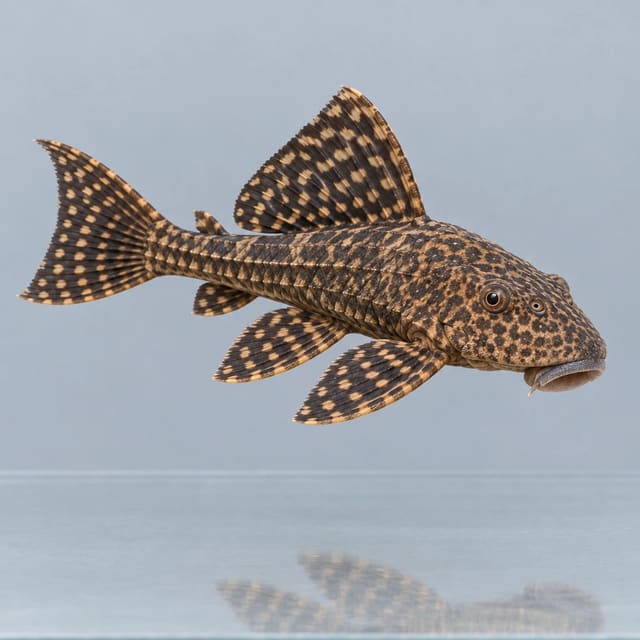
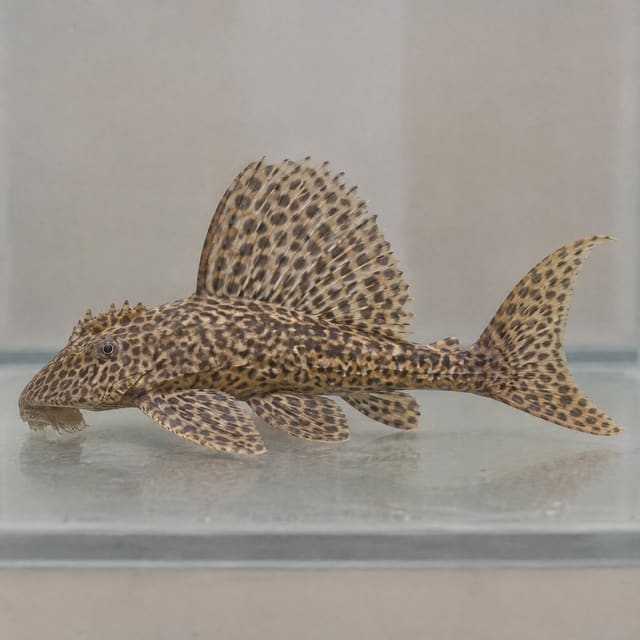
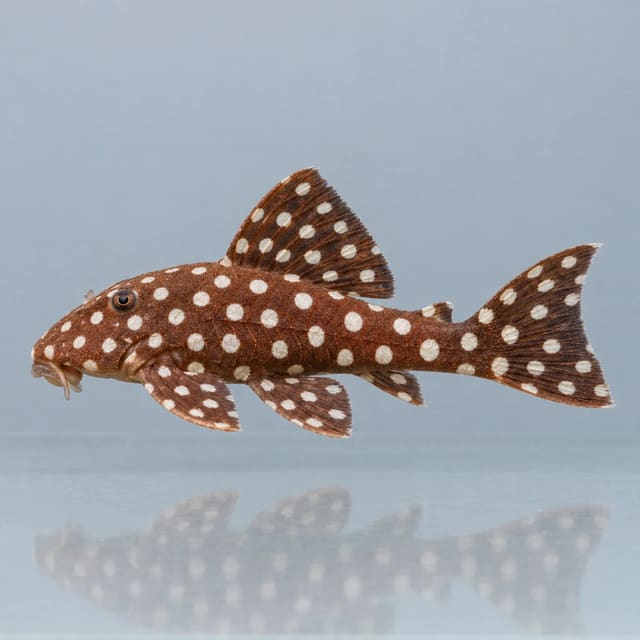
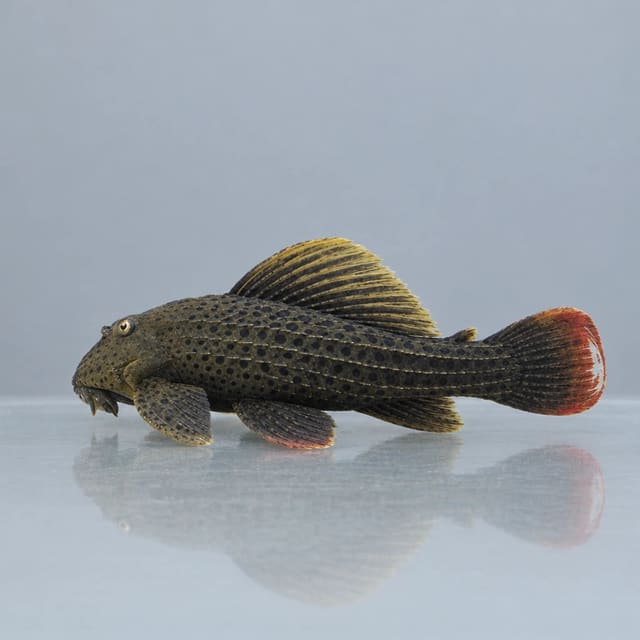
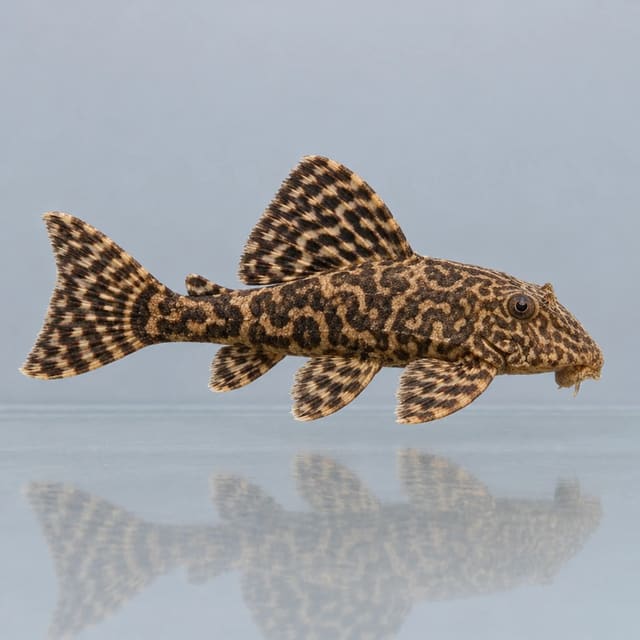
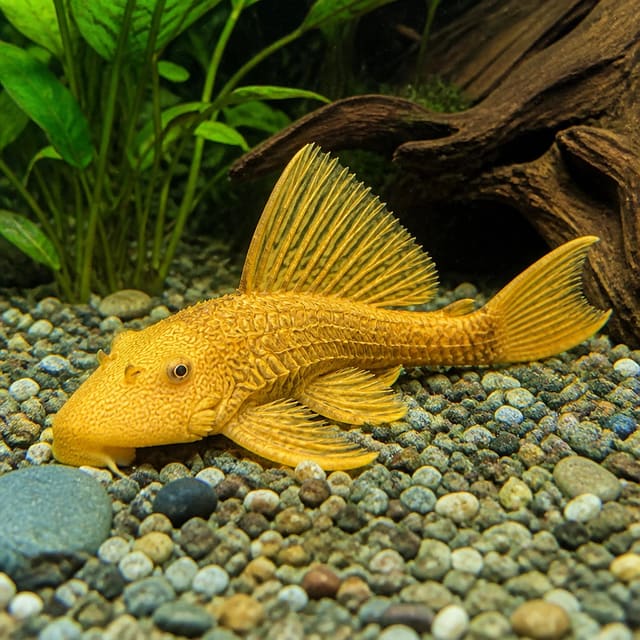
Gold Sailfin Pleco (Pterygoplichthys gibbiceps)
22–28°C · pH 6–7.5 · 500L
£36.69
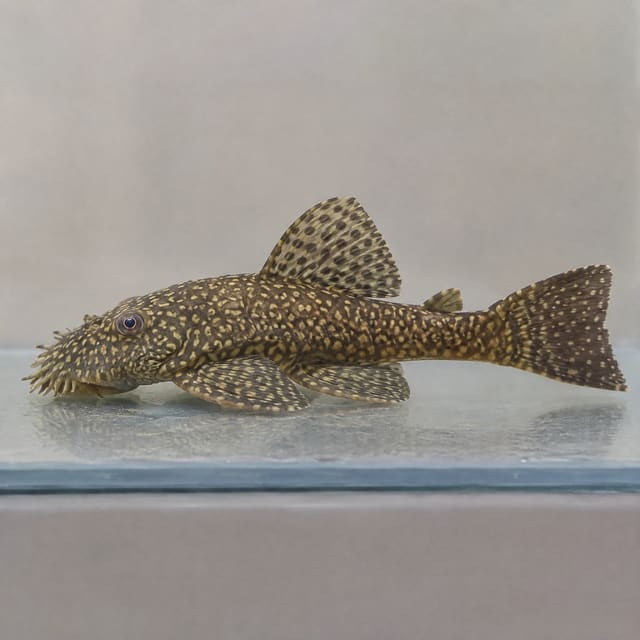
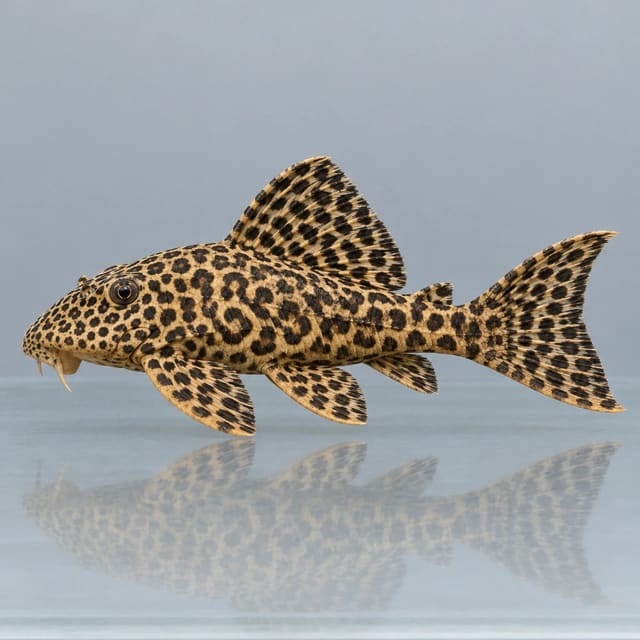
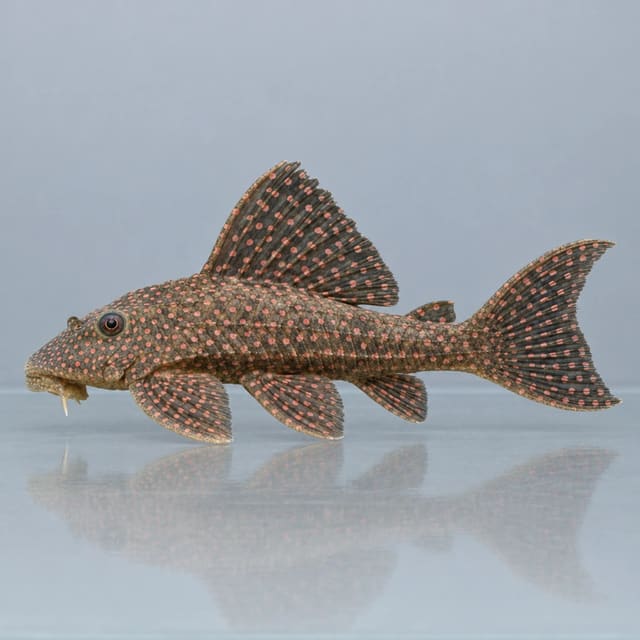
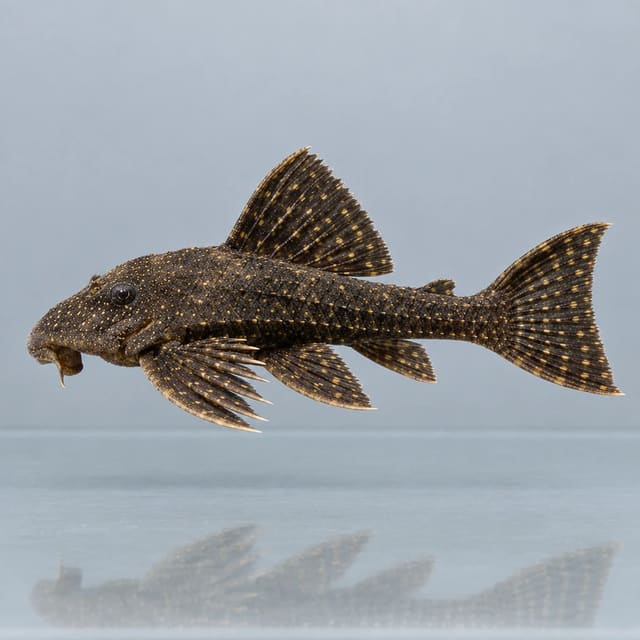
The Albino Sailfin Pleco is a farm-bred, red-eyed gold form of Pterygoplichthys pardalis (L021), the Amazon sailfin catfish, with a tall many-rayed dorsal fin. It is hardy and peaceful but grows to 40–50 cm or more, so it needs an aquarium of 180 cm and over 500 litres with heavy filtration. Sold individually as one live fish of 5–6 cm.
Adult size is the maximum length this species reaches at full maturity (scientific sources). The livestock you receive will be younger and smaller. Product-photo provenance and any image-specific limitations are stated on the listing.
Pterygoplichthys pardalis
The Albino Sailfin Pleco is a farm-bred, red-eyed gold form of Pterygoplichthys pardalis (L021), the Amazon sailfin catfish, with a tall many-rayed dorsal fin. It is hardy and peaceful but grows to 40–50 cm or more, so it needs an aquarium of 180 cm and over 500 litres with heavy filtration. Sold individually as one live fish of 5–6 cm.
Adult size is the maximum length this species reaches at full maturity (scientific sources). The livestock you receive will be younger and smaller. Product-photo provenance and any image-specific limitations are stated on the listing.
‘Pleco’ is a loose aquarium-trade label, not one species or one care sheet. Before buying, confirm the scientific name or defensible L-number, adult size and measurement method, required footprint, temperature and water, diet, social plan and source. No universal pleco tank size, menu or algae result is honest.
The Albino Sailfin Pleco is a pale, red-eyed form of Pterygoplichthys pardalis, the Amazon sailfin catfish. In place of the dark leopard spots of the wild fish, its body is creamy gold to apricot, with a faint net of orange markings on the head and armour plates, and its tall, sail-like dorsal fin carries many golden rays. It is a striking fish for a big display aquarium, but it is also one of the largest plecos in the trade, and the most important fact on this page is its adult size: 40–50 cm or more.
The species was described by Castelnau in 1855 from the Amazon River in Brazil, and lives across the lower, middle and upper Amazon basin. ScotCat records that albino forms first reached the UK in the early 1990s from breeding programmes in the Czech Republic, and that the fish is now bred in fish farms in the Far East and in Florida. The albino form comes from these breeding programmes, so the fish on sale are farm-bred.
| Name | What it means |
|---|---|
| Albino Sailfin Pleco / Albino Pleco | Trade names for the albino form; Planet Catfish lists Albino Pleco for the species |
| L021 and L023 | Two L-numbers the species was given in the past, according to ScotCat and Planet Catfish |
| Amazon Sailfin Pleco / Amazon sailfin catfish | Common names for the wild-coloured species (Planet Catfish, FishBase) |
| Common Pleco | A loose trade name used for several large plecos, including this one |
| Chocolate Pleco | A name Planet Catfish and Practical Fishkeeping report for pale, farm-bred forms |
| Liposarcus pardalis | An older genus name; ScotCat explains it was moved back to Pterygoplichthys after Armbruster's 2004 study |
You can compare it with the other big sailfins in our Pterygoplichthys plecos, our L-number plecos, the wider South American catfish category and the full catfish and plecos range.
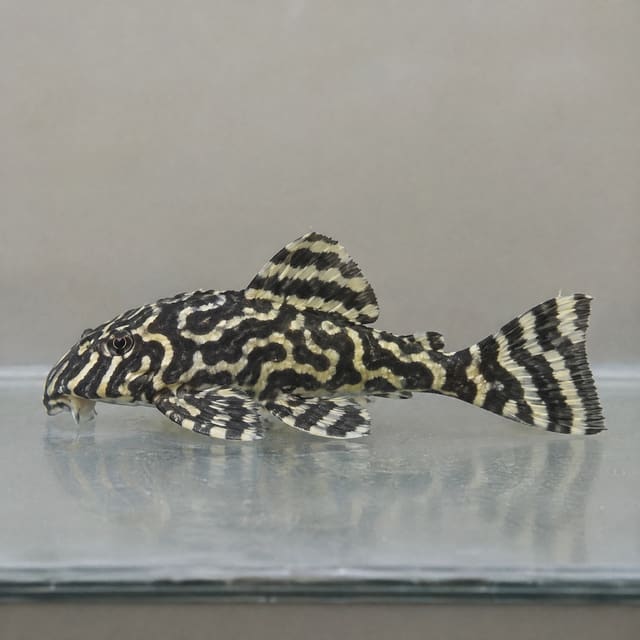
Planet Catfish gives a simple test: Pterygoplichthys have ten or more rays in the dorsal fin, while most other plecos, including the large Hypostomus sold as the Common Pleco, have eight or fewer. Among the sailfins, P. pardalis is most easily confused with P. disjunctivus: Planet Catfish says the belly is spotted in P. pardalis and vermiculated (wormy-lined) in P. disjunctivus. Our Gold Sailfin Pleco and Leopard Sailfin Pleco are a different species again, P. gibbiceps, which Planet Catfish names after the hump on its head; ScotCat notes that P. pardalis lacks that hump.
Planet Catfish gives a size of 423 mm standard length (body without the tail), ScotCat 50 cm, Practical Fishkeeping over 50 cm, and FishBase a maximum of 57.8 cm total length. Practical Fishkeeping describes 5 cm plecs bought for small tanks reaching 20 cm "all too frequently and quickly", and owners then struggling to cope. ScotCat puts it plainly: it grows too large for the majority of home aquariums.
The fish on this listing is 5–6 cm, the size at which most people underestimate it. Buy it only if you can give it a very large aquarium for the whole of its life.
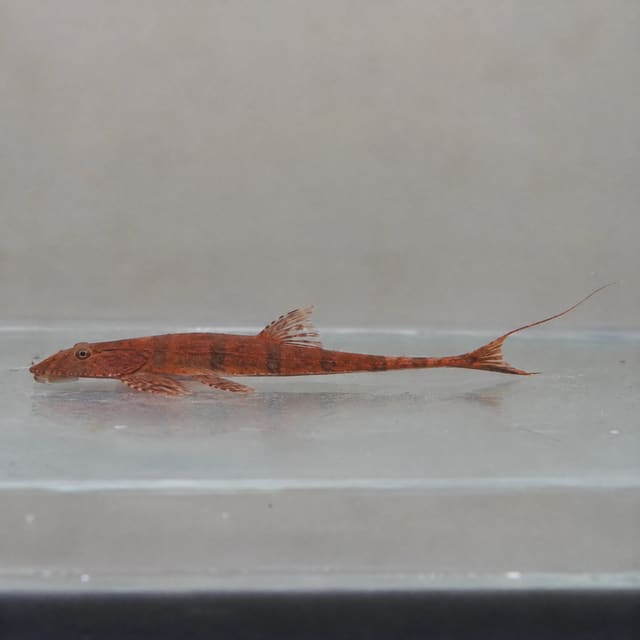
If the answer to any of these is no, a Bristlenose Pleco gives you a suckermouth catfish that stays a manageable size; Practical Fishkeeping recommends Ancistrus and other small grazers as better choices for ordinary aquariums.
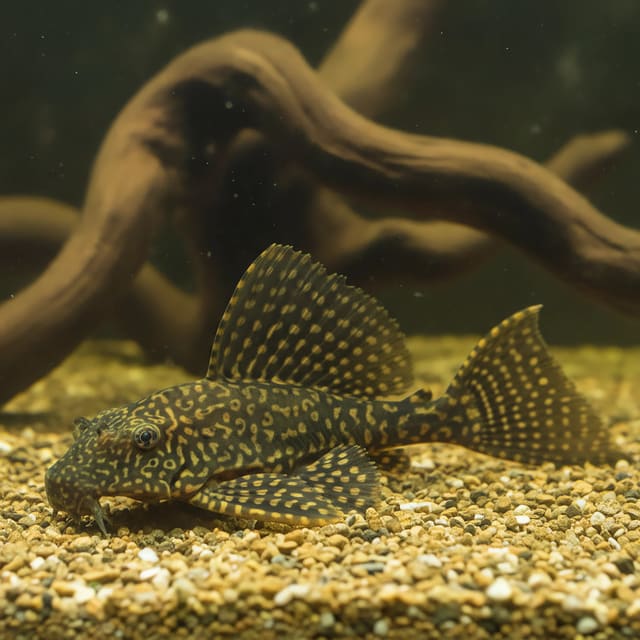
One purchase supplies one live, farm-bred Albino Sailfin Pleco of 5–6 cm. Sex is not specified: Planet Catfish says males and females can be told apart only by the shape of the genital papilla in mature fish, which takes a trained eye. The photographs show the form, not the individual you will receive; the depth of the gold and apricot tones and the faint head pattern vary from fish to fish.
Read our delivery and Live Arrival Guarantee information before ordering and have the aquarium mature and at temperature.
OATA's guidance on very large fish says adults usually need an aquarium in excess of 500 litres, and lists larger pleco species among them. ScotCat gives a tank of 6 ft (180 cm) or over, and Practical Fishkeeping says adults need tanks of many hundreds of litres. OATA accepts that small juveniles can start in smaller tanks, but warns that many grow quickly, so the large tank should be planned, and ideally running, before the youngster outgrows its first home. Our tank volume calculator works out what your aquarium really holds.
Practical Fishkeeping recommends bogwood, rocks and ceramic or plastic pipes for shelter, with the décor kept simple, and Planet Catfish says large plastic or ceramic pipes make the best hiding places. Planet Catfish adds that larger fish will uproot plants without meaning to. OATA's advice for very large fish is to secure rocks and ornaments so they cannot be knocked over, to protect heaters from damage and to fit a fish-proof cover.
Planet Catfish notes that fish sold today are pond-bred and hardy, and adapt to most water conditions beyond the ranges published for the species. The sources still differ on the ideal values, so aim for the band where they overlap.
| Source | Temperature | pH | Hardness |
|---|---|---|---|
| Planet Catfish | 21–26°C | 6.0–7.5 | not given |
| FishBase | 23–28°C | 7.0–7.5 | 10–20 dH |
| ScotCat | 25–30°C | 5.5–7.5 | not given |
| Practical Fishkeeping | about 26°C | neutral | medium |
Aim for about 25–26°C and pH 7.0–7.5 with medium hardness. UK tap water differs widely between regions, so test your water, or read your water company's report, before deciding whether it needs any adjustment; because this fish is so adaptable, stable conditions matter more than hitting an exact figure. Our water chemistry guide explains the readings.
The habitat values have some leeway; the waste readings do not. OATA's limits for every fish are zero ammonia, zero nitrite and nitrate no more than 20 mg per litre above your tap water. A fish of this size produces a great deal of waste, so test at least weekly.
Practical Fishkeeping calls heavy-duty external power filtration vital, because common plecs are greedy feeders. OATA adds that one or more large aquarium filters, or even a pond filter, may be needed to cope with the solid waste of a very large fish. FishBase lists the species as a facultative air breather, so an occasional trip to the surface for air is normal; leave space under the cover. Our guide to understanding aquarium filtration helps you size the system.
ScotCat describes the species as an omnivore that takes vegetable and meaty foods plus flake, tablet and pellet foods, and notes that it eats algae when young but not so much when older. Practical Fishkeeping recommends commercial staples such as algae wafers alongside vegetables every day, suggesting courgette, cucumber, mange tout, sweet potato and broad beans, which can be blanched and frozen. Good staples include green algae wafers and sinking pleco tablets.
OATA advises feeding once a day and giving only what is eaten within a few minutes, allowing grazing fish up to 30 minutes. Leftover vegetables foul the water quickly, so remove them the next morning.
OATA recommends double-bagging catfish because their spines can pierce a bag. Switch off the aquarium lights, float the sealed bag for 10 minutes, then add small amounts of tank water over up to 20 minutes before releasing the fish and discarding the bag water. Our guide to acclimatising new fish covers each step. A young pleco usually hides in its first days; place a wafer near its chosen cave at lights-out.
| When | What to check |
|---|---|
| Day 1 | Lights off, no food. Make sure a pipe or cave is free. |
| Days 2–3 | Offer a small wafer and a slice of vegetable at lights-out. |
| Days 4–5 | Test ammonia and nitrite; both must read zero. |
| Day 7 | Normal 25% water change; check the belly is rounded and the fins are clean. |
OATA's signs of good health are clear eyes, intact fins, no ulcers or bumps and steady breathing. With a fast-growing pleco, also measure it every month or two, so you know when it is time to move it to the large aquarium rather than finding out when it is cramped.
| Observation | Action |
|---|---|
| Sunken belly | Increase vegetables and wafers; feed at lights-out near its cave. |
| Fish approaching 20 cm in a tank under 500 litres | Move it to the large aquarium now; Practical Fishkeeping describes this as the size at which many owners struggle. |
| Rising nitrate between water changes | Add filtration or change more water; reduce leftover food. |
| White spots, clamped fins or fast breathing | Test the water first, then treat; see our white spot treatment guide. |
Planet Catfish calls it peaceful as far as large plecos go and suitable with almost any medium-sized community fish, and ScotCat says its robust nature lets it live with most large fish. Practical Fishkeeping warns that it can clash with other large catfish if there are not enough hiding places. As an adult it shares the tank with other big fish rather than a small community.
| Suits | Avoid |
|---|---|
| Large, peaceful fish such as the Silver Dollar and Tinfoil Barb | Other large plecos without enough caves and floor space |
| Robust South American cichlids such as the Severum and Oscar, in a big enough tank | Small, slow fish in a cramped tank |
| Other big-tank fish that share 25–26°C | Ordinary community tanks under 500 litres |
Our tank mates checker and stocking calculator help with both questions, and the common pleco guide and pleco care guide cover large plecos in more depth.
OATA reminds keepers that very large fish live longer than small ones and should be looked after for their whole lives, and states that releasing aquarium animals or plants into the wild is illegal, usually causes a lingering death and can harm native wildlife. This is not a theoretical risk: Munson and colleagues published the first UK records of wild sailfin plecos in 2024, a P. pardalis and a P. joselimaianus caught in 2021 in a side channel of the River Kelvin in Glasgow. FishBase notes that the species has been introduced to countries outside its native range, and Practical Fishkeeping describes the damage it does where it becomes established. If you can no longer keep it, contact an aquatic shop or a rehoming group.
Breeding is not realistic at home. Practical Fishkeeping describes spawning in burrows about a metre long, with up to 7,000 eggs per spawn, and Planet Catfish says the fish on sale are bred commercially in outdoor ponds in the United States and the Far East.
It is the albino form of Pterygoplichthys pardalis, the Amazon sailfin catfish, one of the fish sold as the common pleco. Planet Catfish lists the trade codes L021 and L023 and the names Albino Pleco and Amazon Sailfin Pleco for the species.
Very big. Planet Catfish gives 423 mm standard length, ScotCat 50 cm, Practical Fishkeeping over 50 cm, and FishBase records 57.8 cm total length. The fish you receive is 5–6 cm, but plan for an adult of 40–50 cm or more.
OATA says very large fish usually need an aquarium in excess of 500 litres as adults, and ScotCat gives a tank of 6 ft (180 cm) or more. A youngster can start smaller, but plan the large tank before you buy.
Not on its own. ScotCat says it eats algae when young but much less as it grows, and Practical Fishkeeping stresses that it is a greedy feeder that needs daily food and heavy filtration. For algae control in an ordinary aquarium, a bristlenose pleco is a better choice.
It is hardy: Planet Catfish says pond-bred fish adapt to most water conditions. Aim for about 25–26°C and pH 7.0–7.5 with medium hardness, where the published ranges overlap, and keep ammonia and nitrite at zero.
It is an omnivore. Feed sinking algae wafers and pleco tablets with fresh vegetables such as courgette, cucumber, mange tout, sweet potato and broad beans, as Practical Fishkeeping suggests, plus some meaty food.
No. Our Gold Sailfin Pleco is Pterygoplichthys gibbiceps, named for the hump on its head, which P. pardalis lacks. The albino sailfin is a pale, red-eyed form of P. pardalis.
Never. OATA states that releasing aquarium animals into the wild is illegal and harms native wildlife, and Munson and colleagues recorded the first wild sailfin plecos in the UK, in Glasgow, in 2021. If you can no longer keep it, contact an aquatic shop or rehoming group.
No reviews for this item yet. Bought one? Honest reviews only, good or bad.
What customers say about ordering from us
Easy website plenty of info on fish your buying great to pick a time slot
TRACEY DURRANT · 7 Oct 2026
Got some lovely fish thank you
Kevin Mackie · 7 Oct 2026
Reviews of our shop, collected by Judge.me, an independent third-party review collector. Newest first.
Moved by UK carriers licensed to handle live animals
Hand-packed with oxygen bags, poly box, heat pack
Email photos the same day; an optional unboxing video helps us review problems faster — claim terms apply
Klarna & PayPal Pay in 3 at checkout